Tower of Babel. Pieter Bruegel the Elder. 16th century
After the deluge, God renews a covenant with creation, and the descendants of Noah begin to fulfill God’s command “to increase and multiply and fill the earth.”
But then something else happens: human beings want to be together, so they build a city. A common origin and language draws them together, not just as families or clans, but in a larger society. They look for human flourishing in a city. (Genesis 11,1-9)
Unfortunately, they overreach. They want to get their heads into the heavens and so they plan a tower into the sky. Like Adam and Eve reaching for the Tree of the Knowledge of Good and Evil, they want to be like gods, “presuming to do whatever they want,” Their tower becomes a Tower of Babel. It collapses and they’re scattered over the world, leaving their city unfinished.
It’s important to recognize that the Genesis story does not claim God’s against human beings building a city. The bible, in fact, often sees the city as a place favoring human flourishing. In the Book of Jonah, God values the great city of Nineveh. Jesus sees Jerusalem, the Holy City, cherished by the Lord, the place where he dwells. The Spirit descends on his church in the city. The Genesis story sees the city as good, but it can be destroyed by sin and human pride..
The picture at the beginning of this blog is a painting of the Tower of Babel by the 16th century Dutch artist, Pieter Bruegel the Elder. It’s situates Babel in Antwerp, one of the key seaports of the time. Its shaky structure suggests it’s too ambitiously built. Still incomplete, it may not last. So the painter offers a warning against ambition and not caring for people, especially the needy.
It’s interesting to note that Pope Francis encourages mayors from cities to plan well. Commentators say the pope, conscious of a rising isolationism that’s affecting nations and international bodies today, sees cities to be agents for unifying peoples. They’re important places for humans to flourish. The United Nations also sees cities as key resources in the challenge that comes with climate change.
The picture at the end? You don’t have to be told. A great city. Still, its greatness will be judged, not by its big buildings or businesses, but how it encourages human flourishing.
Here’s a favorite picture of mine from the Staten Island Ferry. You say it’s a picture of the New York skyline? I say it’s a picture of water that gave birth to the city. True, isn’t it? The water was here first. The city came to be because water brought the world here, making the city a capitol of world trade and drawing millions of human beings to this place
Now look at it. The man who built the new World Trade Center claims it’s the tallest building in the country, challenging the heavens–like Babel.
Be careful, though, about challenging the heavens and forgetting about the earth. Be careful about the waters that brought you where you are. No fish or oysters here to eat now. Little space for the waters to go when they rise. And they will.
Don’t forget– the water was here first. It’s a “vision thing.” That’s what Pope Francis says in “Laudato si”.
This week’s readings from Genesis are good readings for improving our vision. In the weeks before we read from the Letter to the Hebrews, so you might say that from the heavens we’re now reflecting on the earth.
It’s good to reflect on creation, Genesis reminds us. God looks on what has been made and finds it good. Our account from Genesis today describes the creation of man (“man” here is a term for man and woman). Man is not immediately placed on the bare earth. No, he is placed in a garden where “various trees grow that were delightful to look at and good for food, with the tree of life in the middle of the garden and the tree of the knowledge of good and evil. “
Human beings, created by God, are called like God to find creation good. iThe Genesis account singles our the various trees that are delightful to look at and good for food, but all creation, from the sun and the stars to the simplest organisms, is to be looked at with delight.
We’ll read for two weeks in our lectionary from the Book of Genesis and then we’ll be reading from the Book of Sirach which continues the Genesis message. Learn the Lord’s wisdom from the sands on the seashore, from heaven’s heights and earth’s depths, Sirach teaches. Like the Book of Genesis, it tells us to learn from the world we live in.
The scriptures in our lectionary are not assigned arbitrarily. The compilers of our lectionary after Vatican II carefully planned the way our lectionary unfolds.
The land where Jesus lived spoke to him and inspired so many of his parables. The sea did too.
Jesus went out along the sea. All the crowd came to him and he taught them. As he passed by, he saw Levi, son of Alphaeus, sitting at the customs post. Jesus said to him, “Follow me.” And he got up and followed Jesus. (Mark 2:13)
From the Jordan where he heard his Father’s voice and the Spirit rested on him, Jesus went to Capernaum on the Sea of Galilee where he taught crowds and called disciples.
I remember looking quietly on the waters of the Sea of Galilee years ago on a visit.. At night a stillness centuries old takes over. The waters of the Jordan flow into it on their way to the Dead Sea. The river winds almost 200 miles from the Golan mountains in the north into the Sea of Galilee, then on to the Dead Sea in the south, a direct distance of about 60 miles. The river falls almost 3,000 feet on its way to the Dead Sea,.
.Jesus’ ministry began in the Jordan River. The waters spoke to him more strongly than they do to us today. The Jordan was sacred to the Jews from the time they miraculously crossed it on their way to the Promised Land. The great Jewish prophet Elijah came from a town near the river’s banks. Later he sought safety from his enemies there.
Elijah’s successor, the Prophet Elisha, also came from the Jordan. He told the Syrian general Namann to bathe in the river to be cured of his leprosy, and he was cured. Ancient hot springs near Tiberias on the Sea of Galilee still witness to the river’s curative powers.
At the time of Jesus, the river’s fresh flowing waters were the life-blood of the land, making the Sea of Galilee teem with fish and the plains along its banks fertile for agriculture. Pilgrims from Galilee followed the Jordan on their way to Jericho and then to Jerusalem and its temple. The river always spoke of life.
The Jordan Today
The river is still life to the region. It’s the primary source of its drinking water and crucial for its agriculture. Its water is a major point of controversy today between Israel and its Arab neighbors.
Nourishing Prophets
The Jordan nourished prophets. Somewhere near Jericho John the Baptist preached to and baptized pilgrims going to the Holy City. The place– hardly a desert as we may think of it– offered enough food for survival, like the “ grass-hoppers and wild honey” John ate. It was also an uncultivated place that taught you to depend on what God provided.
Jesus taught this too. “I tell you do not worry about your life, what you will eat, or drink, or about your body, what you will wear… Your heavenly Father knows that you need them all.” (Mt 6, 25 ff) The desert was a place for learning to put worry aside and trust in the goodness of God.
Water is a sign of life. When Jesus entered the waters of the Jordan, he acknowledged his heavenly Father as the ultimate Source of Life, the creator of all things. Like the prophets Elijah and John the Baptist, Jesus remained in this wilderness near the water for forty days before his divine mission. He also baptized and taught there with his first disciples. He readied himself there to depend on God for everything.
The Jordan after Jesus
Later, when the Roman empire accepted Christianity in the 4th century, Christians came to the Jordan River in great numbers on Easter and on the Feast of the Epiphany to remember the One baptized there. They bathed in the sacred waters, and many took some of it home in small containers.
Early Christian pilgrims like Egeria, a nun from Gaul who came to the Holy Land around the year 415 AD, left an account of her visit to the Jordan where Jesus was baptized. Monks who settled near the river knew a place called Salim, near Jericho. The town, associated with the priest Melchisedech, was surrounded by fertile land with a revered spring that flowed into the Jordan close by. Here’s Egeria’s description:
“We came to a very beautiful fruit orchard, in the center of which the priest showed us a spring of the very purest and best water, which gives rise to a real stream. In front of the spring there is a sort of pool where it seems that St. John the Baptist administered baptism. Then the saintly priest said to us: ‘To this day this garden is known as the garden of St. John.’ There are many other brothers, holy monks coming from various places, who come to wash in that spring.
“The saintly priest also told us that even today all those who are to be baptized in this village, that is in the church of Melchisedech, are always baptized in this very spring at Easter; they return very early by candlelight with the clergy and the monks, singing psalms and antiphons; and all who have been baptized are led back early from the spring to the church of Melchisedech.”
A 19th Century Pilgrim at the Jordan
Christians in great numbers visited the Jordan River. Towards the end of the 19th century, an English vicar, Cunningham Geikie, described Christian pilgrims following the venerable tradition of visiting its waters.
“Holy water is traditionally carried away by ship masters visiting the river as pilgrims to sprinkle their ships before a voyage; and we are told that all pilgrims alike went into the water wearing a linen garment, which they sacredly preserved as a winding sheet to be wrapped around them at their death.
“The scene of the yearly bathing of pilgrims now is near the ford, about two miles above the Dead Sea, each sect having its own particular spot, which it fondly believes to be exactly where our Savior was baptized…
“Each Easter Monday thousands of pilgrims start, in a great caravan, from Jerusalem, under the protection of the Turkish government; a white flag and loud music going before them, while Turkish soldiers, with the green standard of the prophet, close the long procession. On the Greek Easter Monday, the same spectacle is repeated, four or five thousand pilgrims joining in the second caravan. Formerly the numbers going to the Jordan each year was much greater, from fifteen to twenty thousand….”(Cunningham Geikie, The Holy Land and the Bible,Vol 2, New York, 1890 pp 404-405)
The Jordan and Christian Baptism
Today, every Catholic parish church has its baptistery where the mystery of the baptism of Jesus is celebrated for new believers. Some eastern Christian churches call their baptisteries simply “the Jordan.”
Today the site of Jesus’ Baptism, according to archeologists, is in Jordanian territory at el-Maghtas, where a large church and pilgrim center has been built following excavations begun in 1996 by Jordanian archeologists. It is probably the “Bethany beyond the Jordan” mentioned in the New Testament where Jesus was baptized and John the Baptist preached.
The Jordan River offers its own commentary on the mystery of death and resurrection of Jesus, expressed in his baptism. At one end of the river is the Sea of Galilee brimming with life, and at the other end is the Dead Sea a symbol of death. The river holds these two realities together, and if we reverse its course we can see the gift God gives us through Jesus Christ.
Like him, we pass through the waters of baptism from death to life.
Noah’s ark, the Magi, the Slaughter of the Innocents. “They’re just myths,” you hear it said. I don’t like those stories dismissed that way, because it easily leads to a further dismissal: ”Is any of it true? Probably not.”
We think straight reporting is the only thing true. “Just the facts, Mam.” Everything else is fake news. But are these stories fake?
“The Secrets of Noah’s Ark” a recent Nova program on PBS examining the biblical story makes good sense to me. In early times, floods were common in the “Fertile Crescent” the area in Mesopotamia {modern Iraq} where the Tigris and Euphrates Rivers and the ancient city of Babylon were located. So you had to keep boats handy– you never know.
You had to be ready for a great flood too, but people have short memories and people then, as now, tend to forget “the big ones.” “As it was in the days of Noah, so it will be at the coming of the Son of Man. In those days before the flood, they were eating and drinking, marrying and giving in marriage, up to the day that Noah entered the ark. They did not know until the flood came and carried them all away.” (Matthew 24, 37-38)
I suspect some Babylonian priests– meteorologists and story tellers of their time– came up with a flood story thousands of years before the Noah story to keep the people of their day on their toes – and maybe challenge some early climate change deniers too. It reinforced important advice: “ Keep your boats in good shape and make sure there’s also a big boat around for ‘the big one.’”
Exile of Jews to Babylon
In 587 BC, thousands of Jews were driven from Jerusalem, destroyed by Babylonian armies, and were forced to make the thousand mile journey in Babylon. It was their Exile. When they heard the story of the great flood they saw it as a symbol of their own tragic circumstances. “By the rivers of Babylon, we sat and wept, remembering Zion.” (Psalm137)
Returning from exile, the Jews incorporated their version of the flood story into the Torah. It became a reminder to keep the covenant God made with them and beware of living unfaithfully as “in the days of Noah.”
Does real history underlie the story of the Magi and the Slaughter of the Innocents? Begin with Herod the Great, ruler of Palestine then, whom secular sources and many archeological monuments from the time describe quite well. Herod was a micro-manager who built fortified palaces in Jerusalem, the Herodium outside Bethlehem and other places to keep watch over his kingdom.
Citadel, Herod’s Palace Fortress, Jerusalem
Herodium, Mountain Fortress of Herod the Great
He promoted trade with the outside world; he built the seaport of Caesarea Maritima on the Mediterranean Sea and cultivated the trade routes from Yemen and other eastern parts that led all the way to Rome. He would have kept tabs on those arriving with spices and luxury goods of all kinds. He knew who came and went.
Were the Magi wealthy eastern traders, quite knowledgeable about the religious world of the people with whom they traded? Did they hear of the Child in Bethlehem? Herod’s advisors and everyone else knew Bethlehem was associated with the legendary King David and there were prophecies about an heir to his throne coming from there. Did the foreigners visit the Child, bring their gifts, gold, frankincense and myrrh, the prizes of their trade, and then quickly leave, well aware of Herod’s paranoia, quick temper and brutality.
Given Herod’s jealous hold on power, the story of the slaughter of the Innocents in Matthew’s Gospel doesn’t seem unlikely, True, it’s not mentioned in any secular source, but neither are many other tragic stories of the time. Bethlehem, after all, was a small town, off the beaten track. The death of perhaps 20 or so infants might go unnoticed and be quickly forgotten.
Matthew’s story is hardly a myth. Rather, it sees things through God’s eyes. The star points to the real power guiding human history; the magi represent the rest of the world coming to adore the Child. Angelic powers are always at our side. The slaughtered infants are like so many tragic deaths that seem to question God’s promise of life, but God doesn’t forget, the story says, even if human history doesn’t remember. “The souls of the just are in the hands of God and no torment shall touch them.”
If you ever visit Bethlehem, go to see the Herodium, Herod’s massive fortified palace looking down on the nearby town. Joseph wouldn’t need much urging to take the Child and his mother from this place,would he? Go to the Citadel in Jerusalem built on the highest spot in the city. You can walk where Herod once walked and imagine him looking down on his kingdom. But it was not his kingdom, after all, it was God’s. Go to Caesaria Martima, the splendid port city created by Herod. Did the Magi’s caravans reach here?
Then ask yourself if the stories of Jesus’ birth and infancy are myths.
“No future without history.” Don’t omit faith in that history.
I remember a guide explaining the Black Forest in Germany to visitors years ago. The Romans called it “black”, he said, because it was such a forbidding, dark land. Now, of course, it’s one of the loveliest spots in Europe, where visitors enjoy nature and its farms provide some of the best produce on the continent. It’s become a model for environmental planning in northern Europe.
Monks fleeing from dangerous conditions in the towns along the Rhine River were the first settlers here, our guide said.
Were they just fearful escapees, I asked, or did a vision of faith bring them here? Were they inspired by the Book of Genesis to create a new garden here, where they would live close to the earth, their buildings and lifestyle taking on the rhythms of nature, in the Benedictine tradition. Or were they just refugees?
I wondered too if the many small chapels found in the Black Forest today (see above) suggest that the people coming after the monks absorbed that same ideal?
Europe and North America have become increasingly secularized. It’s not just that people aren’t going to church; it’s evident also in a way people today see and understand things– past, present and future– without reference to the spiritual. I notice it in the documentaries, like Ken Burns’ new documentary on Leonardo DaVinci. A spark of wonder with him started it all.
Our guides on our trip along the Rhine some years ago were polished, informed, personable presenters, but spiritual realities didn’t have much of a place in their explanations.
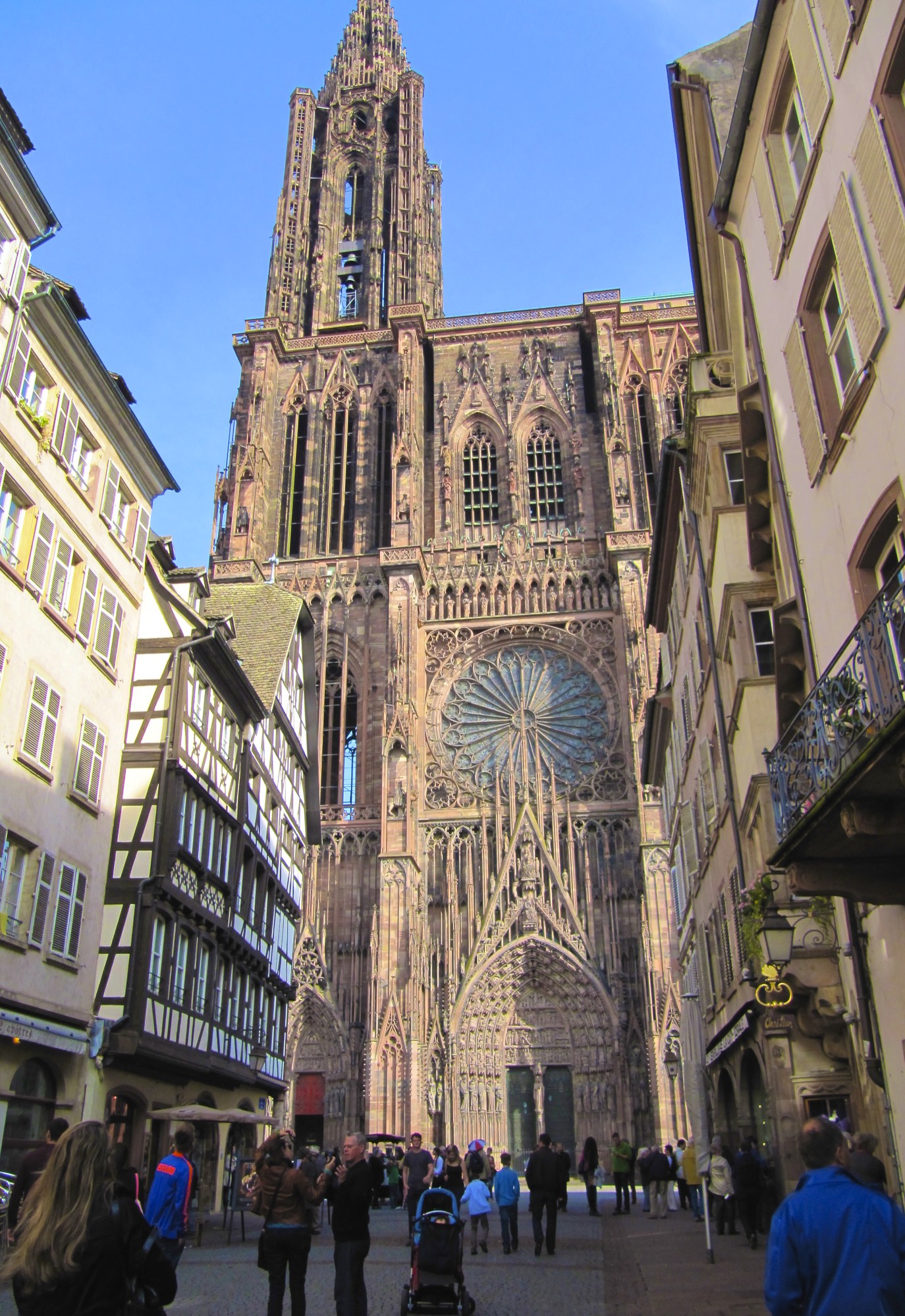
An example? Our guide in Strasbourg on the way to the cathedral through the maze of shops and colorful streets suggested that the great cathedral with its exquisite spire was a beacon drawing shoppers to the city’s abundant bazaars. A medieval version of MacDonald’s Golden Arches?
Medieval planners of the cathedral would be jolted by a suggestion like that. They built their great churches as places of splendor for relieving the monotony, squalor and hardships people experienced in their cities. Seeing them, people walking the streets saw beauty pointing to the heavens. Within them people knew themselves as the people of God.
A billboard for Donald’s? We have no future without history.
“The Vatican said recently he doesn’t exist,” our guide informed us as we looked up at the imposing statue in Cologne Cathedral in Germany a few years ago, Then, we passed quickly on.
Afterwards, I told him the Vatican didn’t say Christopher never existed, but as of now there is no historical evidence for the popular saint who carries the little child on his shoulders. For one reason or another, no historical evidence exists for a good number of our early saints.
It’s more than finding a Christopher in history, however. If you look at what he’s doing, there have been–and still are– many Christophers. (Bearers of the Christ Child) His holiness can be unrecognized, but very real. He’s there in the women and men who day after day carry children on their shoulders, getting them where they must go and keeping them from the dangers little children face.
Caregivers of all kinds do the same thing. I watch them here at our place, where we have a number of priests and brothers who can’t get around, getting them into wheelchairs and getting them to where they have to go. Not much glamor in that job, but a lot of people need carrying, especially today.
The media seems to thrive on violence today. Gangs taking on gangs, macho heroes blowing up cities, killing thousands. Non-stop violence.
Christopher was a sign to generations past that strength is more than swinging a sword. You’re strong when you serve the weak.
We need you today, St. Christopher. Pray for us. Inspire us.
For the injustices against the native peoples and the land God provided,“Lord, have mercy.”
For the brave missionaries that ministered to them. “Thanks be to God.”
The native peoples are often forgotten in the story of the “discovery” of America. Our heroes tend to be the settlers who came on ships, built towns and cities, explored the land and gave us what we have today. But it came at a price.
If you ever visit New York harbor by way of the Staten Island Ferry look at the shores now crowded by the buildings and piers of today. Native peoples once fished, hunted and traded in large numbers here. The water was fresher then, fish and shellfish plentiful, the air cleaner, the earth less damaged by human activity.
The National Museum of the American Indian , located in the old customs house across from Battery Park near the ferry, is a good place to remember the role of the native peoples in the story of America. They traded with the Europeans; they were their guides into an unknown land; they provided many of the foods that fed growing populations in Europe and America. They respected the land more than those who came after them.
A young Indian woman, Kateri Tekakwitha and a Jesuit priest, Isaac Jogues, are figures to remember in the customs house. They represent the clash of civilizations that occurred when Europeans and native peoples met. Across the street from the customs house is the statue of Christopher Columbus.
Europeans brought disease. Smallpox disfigured and partially blinded Kateri Tekakwitha, a young Mohawk woman who lived along the Mohawk River past Albany, NY. The native peoples had no immunity to small pox and other diseases. Three out of ten died from it. By some estimates 5 million native people lived in North America when the first Europeans arrived. Within a hundred years there were only 500,000. Besides disease, the major cause of their diminishment, the native peoples also suffered from wars and greed.
At the museum, besides Kateri Tekakwitha remember Father Isaac Jogues, the Jesuit missionary who, while attempting to advance peace-keeping efforts with the Mohawks at Ossernonon (Auriesville) was killed by a war party on October 18, 1646. Previously, in 1642 Jogues had been captured by this same tribe. He escaped in 1643, fled here to New Amsterdam (New York City) and then was put on a ship for France by a kindly Dutch minister.
The French missionaries came to the New World out of the turmoils of the Old World expecting a new Pentecost among the native peoples here, but it didn’t turn out that way. Instead, disease and political maneuvering made the native peoples suspicious of foreigners and the seed of the gospel fell on hard ground.
Letters back to France from the early Jesuits–marvelously preserved in “The Jesuit Relations”–often express the missionaries’ disappointment over their scarce harvest, but it didn’t stop them. They were well grounded in the mystery of the Cross.
“My God, it grieves me greatly that you are not known, that in this savage wilderness all have not been converted to you, that sin has not been driven from it. My God, even if all the brutal tortures which prisoners in this region must endure should fall on me, I offer myself most willingly to them and I alone shall suffer them all.” St. John de Brebéuf
The Indian woman and the priest persevered. We forget how difficult it is when civilizations clash– like now. We remember the Christian missionaries: Saints John de Brébeuf and Isaac Jogues, Priests and their compassions on October 19th..
Columbus, Central Park, NYC
Indian behind symbols of European trade and expansion: Customs House, New York City
Here’s a video on the Jesuit Martyrs at Auriesville:
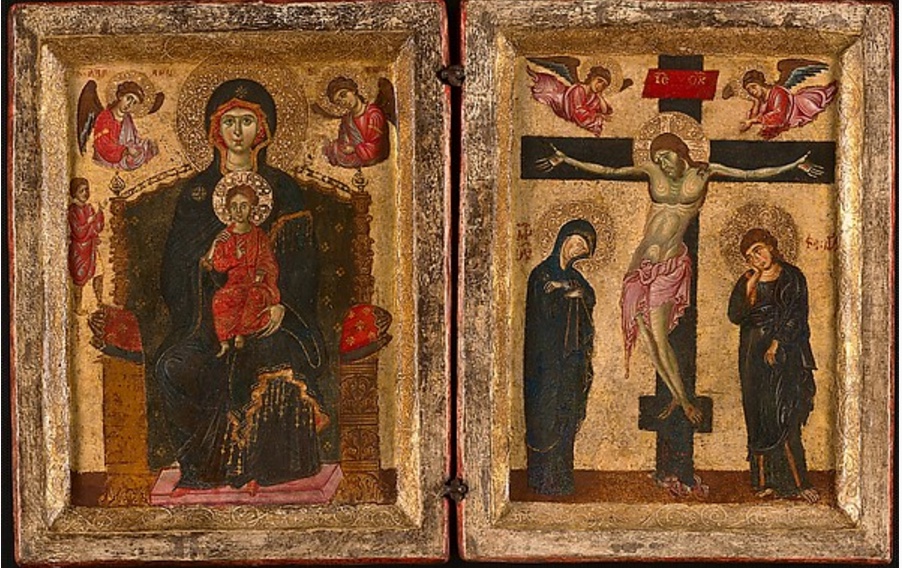
A 13th century European pilgrim to the Holy Land brought this icon home as a reminder of his pilgrimage. What places did that pilgrim visit? Surely, Bethlehem where Jesus was born, and Jerusalem where he was crucified and rose from the dead. In both places , Mary was there with her Son.
In the picture on the left Mary is a joyful mother holding her Son, a divine Son whom the angels praise. She is a daughter of Abraham, Isaac and Jacob, a daughter of the human family whom she represents. She never loses that joy, which she invites us to share.
In the picture on the right, Mary stands with John, an image of the church, beneath the cross of Jesus. Angels are astonished at the sight. Jesus seems to enfold his mother and the disciple whom he loves in his arms..
The gospel reading from St. John for the feast of Mary’s Sorrows says simply that Mary stood by the cross of Jesus. She’s a brave woman, not afraid to come close to the fearful place where Jesus was put to death. The Book of Judith, ordinarily the 1st reading for the feast, praises Judith, the brave and wise Jewish woman who’s not afraid to stand with her people at a dangerous moment in their history. Two women of courage face suffering and the challenge it brings.
The prayers, traditions and art of this feast take up the theme of Mary standing by the cross. She’s remembered in poetry, music and art. “Stabat Mater” Here’s an example in Gregorian Chant and Pergolesi’s magnificent baroque setting.
At the cross her station keeping
Stood the mournful mother keeping
Close to Jesus to the last.
Women mystics, like St.Bridgid of Sweden, a mother herself and an important pilgrim to the Holy Land, saw the life of Jesus, particularly his passion, through a mother’s eyes. Wouldn’t Mary draw close to her Son’s cross and then hold him in her arms as they brought him down. The gospels do not mention it, but women like Bridgid were sure it was so.
Women mystics like Bridgid gave us the Pieta.
A study of the Pieta in art in early medieval France shows the various ways this scene was pictured in art before Michaelangelo’s Pieta became an overpowering icon surpassing others. “Often she is viewed as caught up in the horror of the moment, but she is also shown praying or even gazing into the distance, as if contemplating comforting memories or the reunion to come. Her demeanor ranges from youthful innocence—the Purity that Time cannot age—to careworn maturity—Our Lady of Sorrows.”
Sorrow. like joy, has a range of faces. Mary shows us them all.
August 24th is the feast of the apostle Bartholomew, also identified as Nathaniel, from Cana in Galilee, only a few miles from Nazareth. Like Nazareth, Cana attracted little interest in Jesus’ time, yet it played a major role in Jesus’ early life and mission.
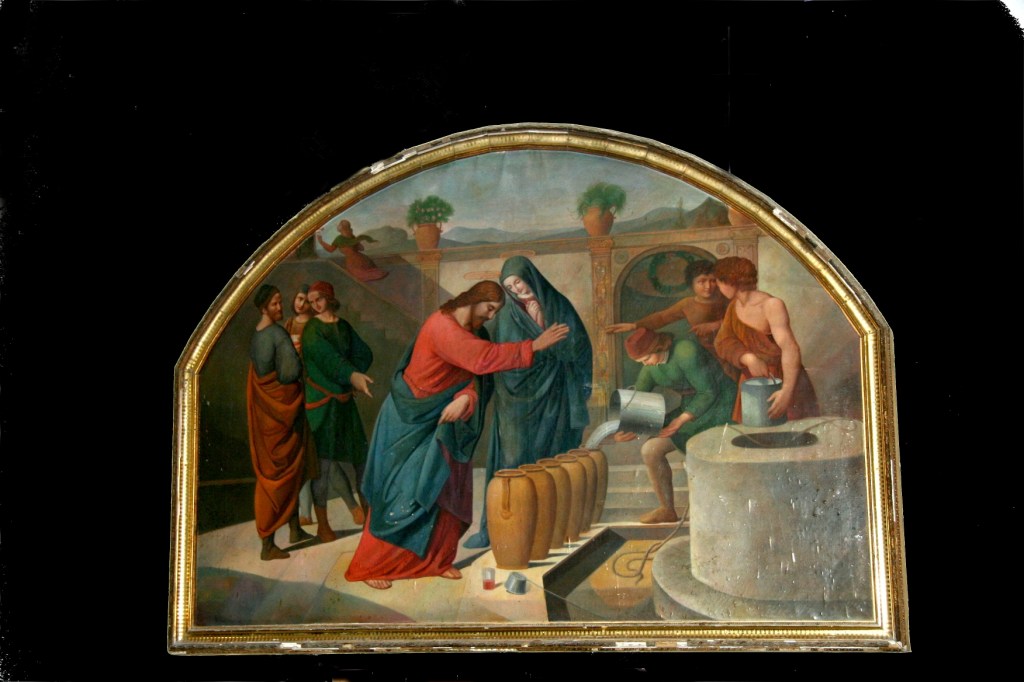
In John’s gospel, Jesus turns water into wine at a wedding in Cana, his first “sign” that God’s kingdom would come. (Jn 2, 1-12) The family faced a wedding nightmare: the wine was running out and embarrassment was sure to come.
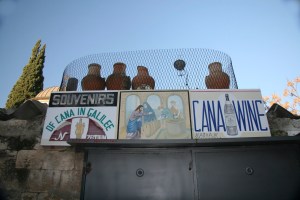
Catholic Church, Cana
Was the family related to Jesus? Or Bartholomew? At least they were close. Why else would Jesus, his mother and his disciples be at the celebration?
The miracle was special,. More than saving a family from embarrassment, it’s a sign in John’s gospel of God’s great love for ordinary people in ordinary towns everywhere. God delights in them, says the Prophet Isaiah, whose words often accompany the Cana miracle, Cana signifies poor Israel, whom God loves with all the ardor of a “young man marrying a virgin,” God’s love, bountiful, restoring, overflowing with delight, goes out to this poor place, as well as poor places everywhere.
Jesus performed another miracle at Cana, John’s gospel says, another sign of the coming kingdom. Besides the miracle at the wedding, Jesus cured the dying son of a government official from Capernaum, whose ” father came to Cana because he heard that Jesus was there. (John 4.46-54) Jesus saved his son from death.
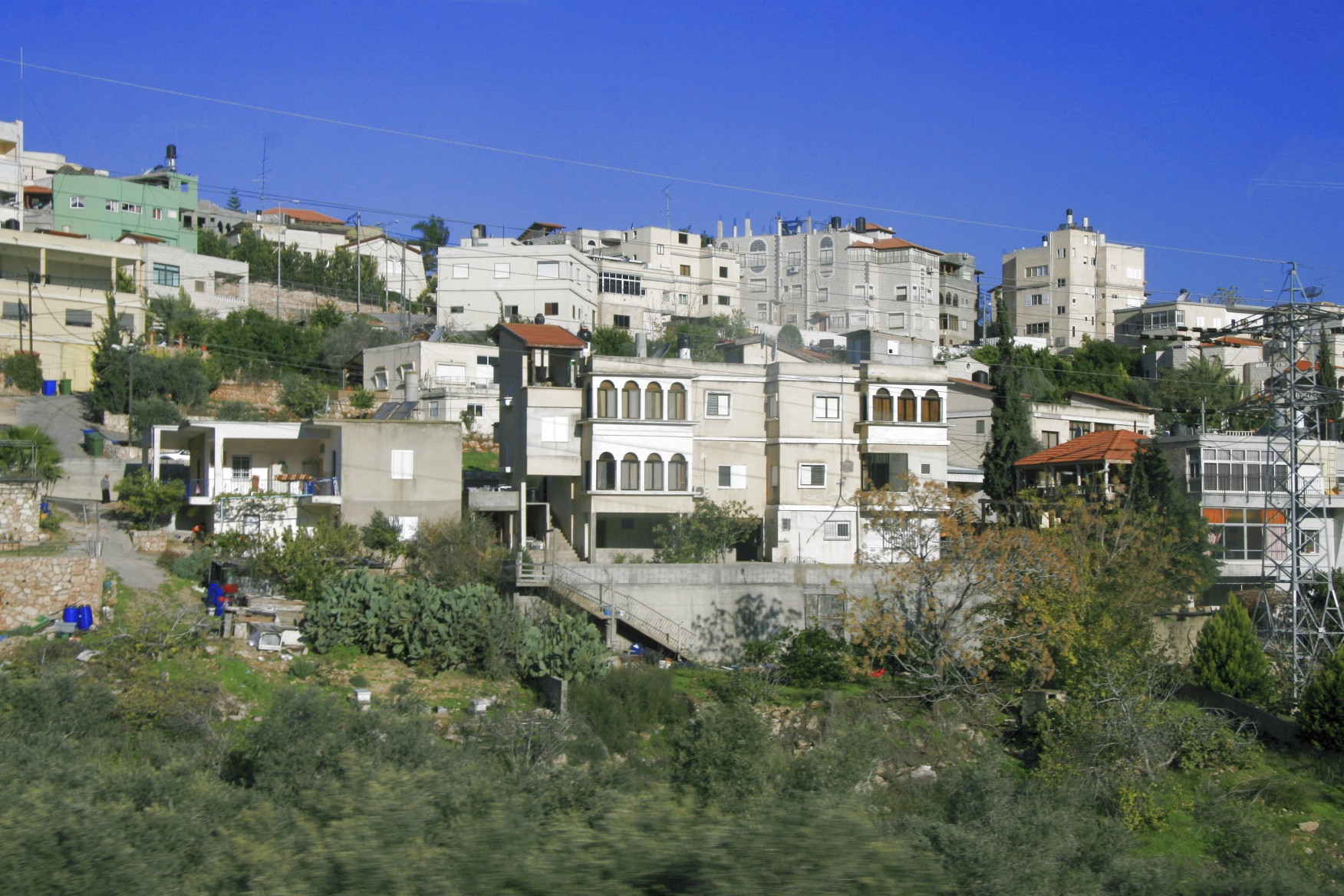
Through the centuries Cana hasn’t prospered much. It’s not much to look at today. In the late 19th century, a visiting English vicar described it this way:
“ (Kefr Kenna) lies on high ground, but not on a hill…A broad prickly pear led to the group of houses which perhaps represents the New Testament Cana. Loose stones were scattered around the slope. There may be, possibly, 150 inhabitants, but one cannot envy them their huts of mud and stone, with dunghills at every corner. Huge mud ovens, like great beehives, stood at the sides of some of the houses.
“ In one house a worthy Moslem was squatting on the ground with a number of children, all with slates on which verses of the Koran had been written, which they repeated together. It was the village school, perhaps like that at Nazareth eighteen hundred years ago.
“ A small Franciscan church of white stone with a nice railed wall, with a beautiful garden at the side, had over its doorway these startling words in Latin: ‘Here Jesus Christ from water made wine.’ Some large water jars are shown inside as actually those used in the miracle, but such mock relics, however believed in by simple monks, do the faith of other people more harm than good.”
Cana’s still a poor town. Like other poor places in the world it’s waiting to be raised up to share in the splendor of the heavenly Jerusalem. God loves poor places like this, the Cana miracle says. Bartholomew came from here.
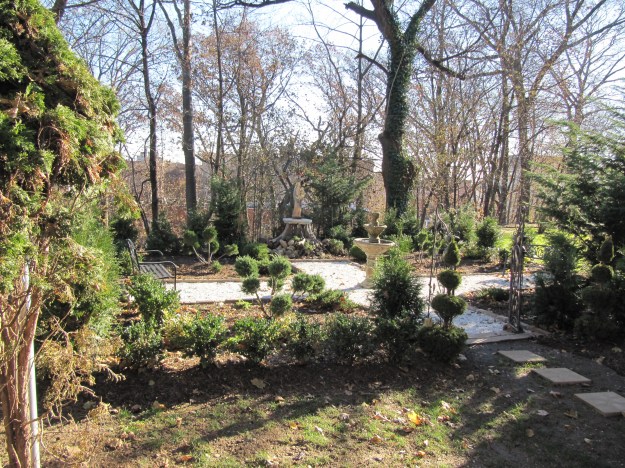
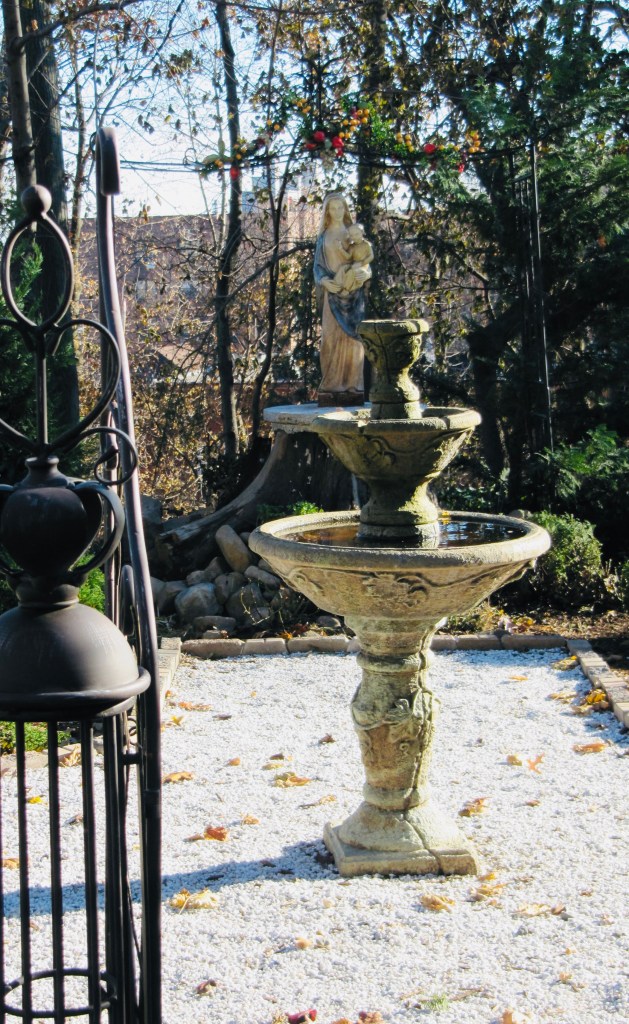
Mary Garden, Passionist Monastery, Jamaica, New York
Today’s reading from Genesis begins the second creation account (Genesis 2,4..) which pays particular attention to the creation of human beings. But it begins with water, welling up from the earth bringing life to the earth and finally the human family.
Water is at the heart of the garden God provides for Adam and Eve. We have a fountain in the center of our Mary Garden signifying water’s vital role in the garden that was Eden and in the world we live in today.
Pope Francis speaks repeatedly of the role of water in our common home of creation and our need to care for it. Here are some of his reflections from his 2018 World Day of Prayer for the Care of Creation. Notice his strong objection to attempts to privatize water by commercial groups.
“On this World Day of Prayer for the Care of Creation, which the Catholic Church for several years now has celebrated in union with our Orthodox brothers and sisters and with participation of other Churches and Christian communities, I would like to draw attention to the question of water. It is a very simple and precious element, yet access to it is, sadly, for many people difficult if not impossible. Nonetheless, “access to safe drinkable water is a basic and universal human right, since it is essential to human survival and, as such, is a condition for the exercise of other human rights. Our world owes a great social debt towards the poor who lack access to drinking water, because they are denied the right to a life consistent with their inalienable dignity” (ibid., 30). Water invites us to reflect on our origins. The human body is mostly composed of water, and many civilizations throughout history arose near great rivers that marked their identity. In an evocative image, the beginning of the book of Genesis states that, in the beginning, the spirit of the Creator “swept over the face of the waters (1:2)”. In considering the fundamental role of water in creation and in human development, I feel the need to give thanks to God for “Sister Water”, simple and useful for life like nothing else on our planet. Precisely for this reason, care for water sources and water basins is an urgent imperative. Today, more than ever, we need to look beyond immediate concerns (cf. Laudato Si’, 36) and beyond a purely utilitarian view of reality, “in which efficiency and productivity are entirely geared to our individual benefit” (ibid., 159). We urgently need shared projects and concrete gestures that recognize that every privatization of the natural good of water, at the expense of the human right to have access to this good, is unacceptable. For us Christians, water represents an essential element of purification and of life. We think immediately of baptism, the sacrament of our rebirth. Water made holy by the Spirit is the matter by which God has given us life and renewed us; it is the blessed source of undying life. For Christians of different confessions, baptism also represents the real and irreplaceable point of departure for experiencing an ever more authentic fraternity on the way to full unity. Jesus, in the course of his mission, promised a water capable of quenching human thirst for ever (cf. Jn 4:14). He prophesied, “If any one thirst, let him come to me and drink (Jn 7:37). To drink from Jesus means to encounter him personally as the Lord, drawing from his words the meaning of life. May the words he spoke from the cross – “I thirst” (Jn 19:28) – echo constantly in our hearts. The Lord continues to ask that his thirst be quenched; he thirsts for love. He asks us to give him to drink in all those who thirst in our own day, and to say to them, “I was thirsty and you gave me to drink” (Mt 25:35). To give to drink, in the global village, does not only entail personal gestures of charity, but also concrete choices and a constant commitment to ensure to all the primary good of water.”







 The Victor's Place