Category Archives: Passionists

Bethany, November 15

I arrived at the Passionist house of St Martha in Bethany, late this morning. Here’s where I am in gospel terms: “When they drew near Jerusalem and came to Bethphage on the Mount of Olives, Jesus sent two of his disciples, saying to them, ‘Go into the village opposite you, and immediately you will find an ass tethered, and a colt with her. Untie them and bring them to me. And if anyone should say anything to you, reply, ‘ The master has need of them. Then he will send them at once.”

(Mark 21, 1-9)

The gospel continues that the disciples did this and a large crowd welcomed him, some spreading their cloaks on the road, others cutting branches to strew before him.

“The crowds preceding him and those following  kept crying out and saying: ‘Hosanna to the Son of David, blessed is he who comes in the name of the Lord.’”

So here’s where Jesus started his Palm Sunday entrance into Jerusalem.  He knew this place well,  must have been a place where they  believed in him. In Bethany he was accepted, at least as “Son of David.”

As I traveled here, courtesy of Catholic Travel, the streets to Bethphage were crowded with Muslims getting ready for their major feast of Eid-Ul_Adha, the Feast of Sacrifice, celebrated for the next several days at the conclusion of the Hajj. The sacrifice celebrated is the Sacrifice by Abraham of his first born son Ishmael. It’s a joyful feast that calls Muslims to a spiritual awakening. Cf. http://www.religioustolerance.org/isl_feast.htm

We know too little about Muslims and their spirituality. The website cited above quotes an western newspaper account some years ago warning of terrorist attacks at the conclusion of this feast. It’s like predicting Christian terror attacks after our easter celebrations. The feast actually calls for forgiveness of enemies and peace with your neighbor. Presents given out and food for everyone, especially the poor.

You could hear a special call to celebration in the muzzim’s  call this evening to this Muslim neighborhood.

Our visitors from St. Marys all got off safe from the hotel early this morning; now they are winging their way home.

At The Tomb Of Jesus: November 14

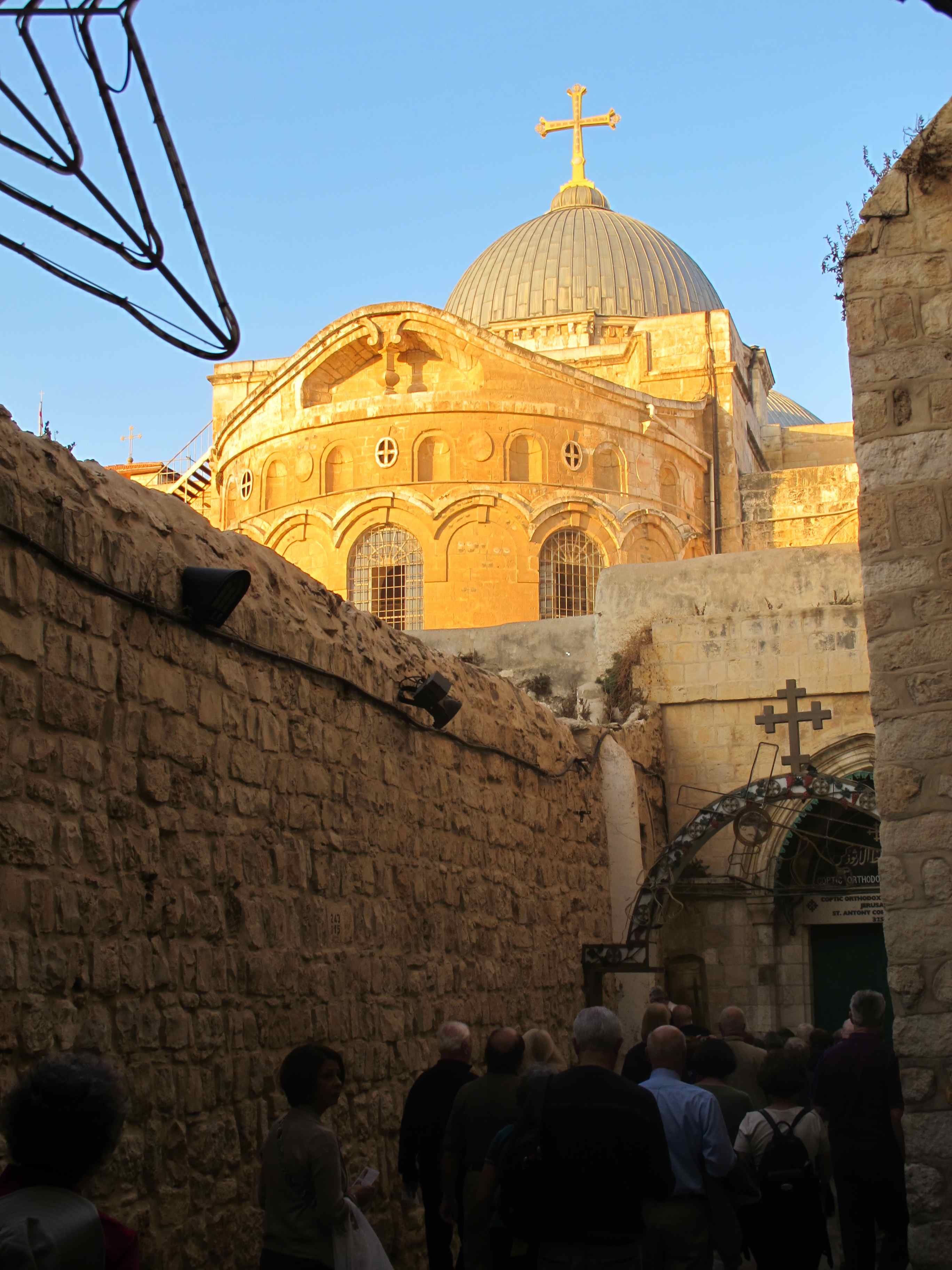
Early this morning,  Sunday,  like the women in the gospel we went to the tomb of Jesus at the Church of the Holy Sepulcher, entering the Old City by way of Herod’s Gate. Hardly any shops were open on the narrow streets before the Via Dolorosa except the bakeries where they were making fresh bread.

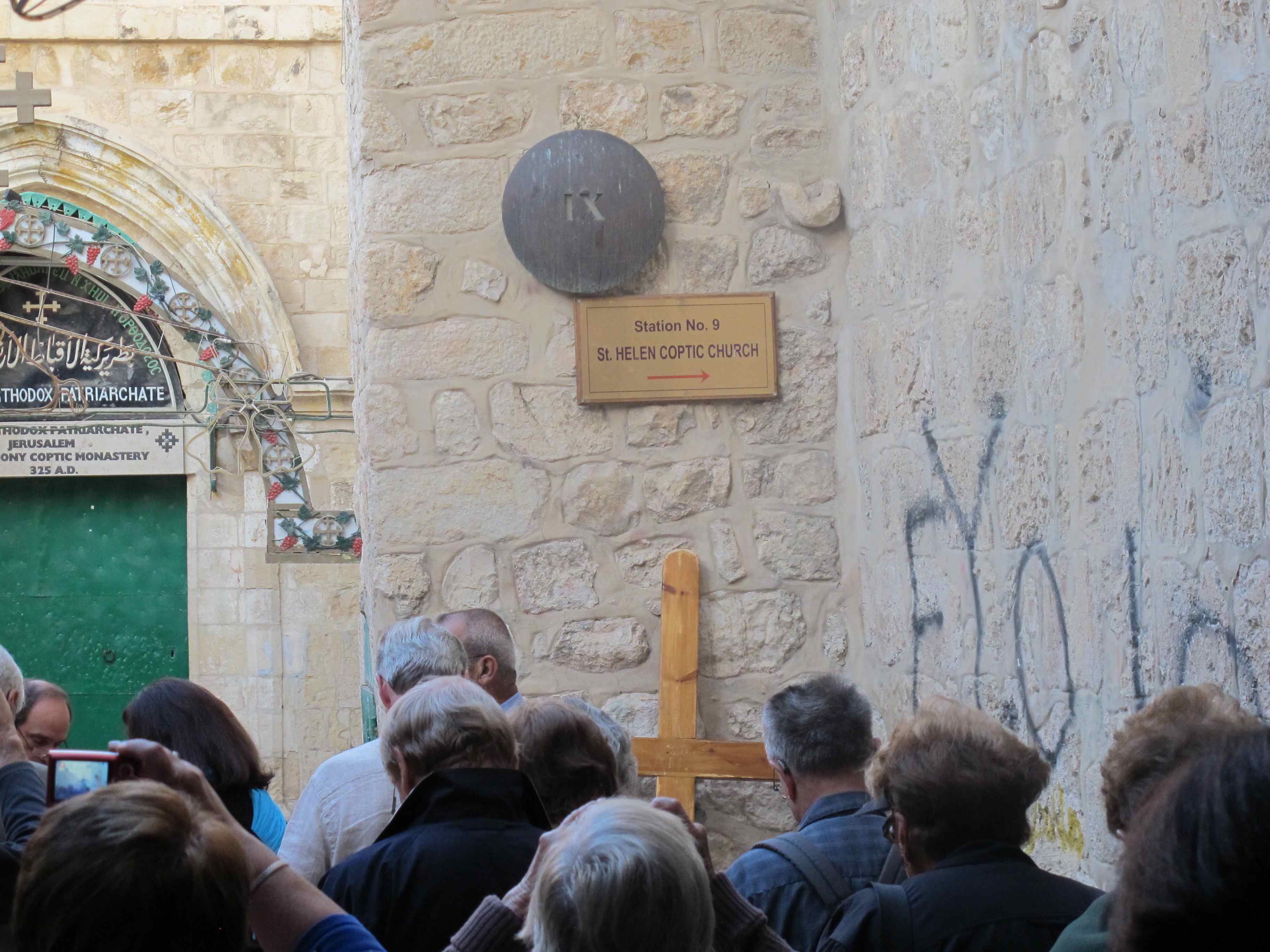
We walked the quiet dark street, the Via Dolorosa, the Street of Sorrow, up to the church and prayed the Way of the Cross marked out on different stations along the way.

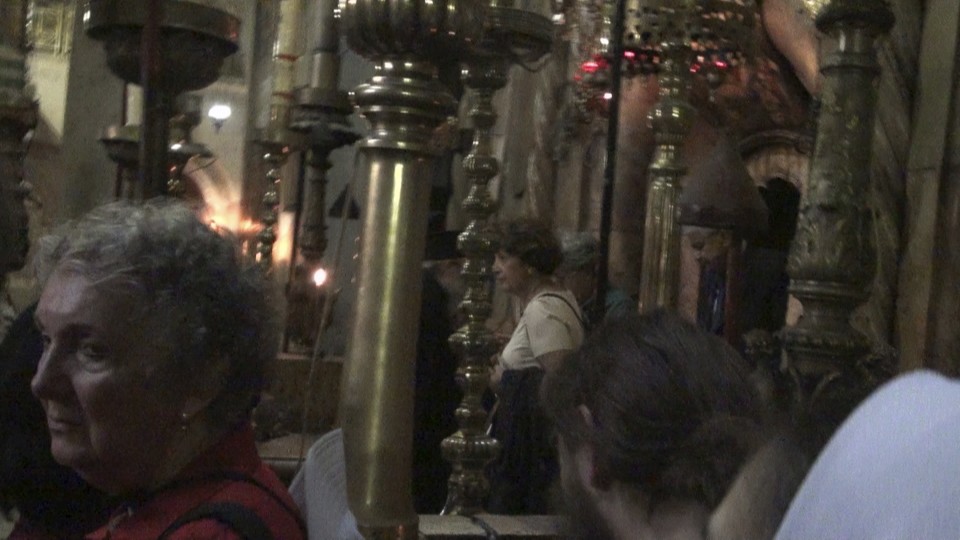
We entered the church through a side door to a small chapel where an Ethiopian liturgy was going on shrouded with clouds of incense and celebrated with ancient chanting.  They are here with the Armenians, the Copts from Egypt, the Greek Orthodox, and Roman Catholics– all with their Sunday liturgies in progress in different parts of the church.

Since the lines were not yet long going into the tomb of Jesus, we got in line and entered the tomb in small groups of three or four.

Then we had Mass in the Roman Catholic Chapel, where we read the Easter gospel from Mark that tells of the women coming to the empty tomb on Easter morning.

From the church we went to the Jaffa Gate, boarded the bus, and headed for our hotel for breakfast.

Tomorrow most of us go home. I stay for a few days with the Passionists at Bethany.


Exploring Jerusalem: November 13

We went early this morning at 7:30 to the Western Wall, where many Jews were devoutly praying on the Sabbath. The Presence of God dwells beyond the wall, according to the Jews. Women and men pray separately at the wall. No pictures were allowed today.

The Temple Mount was closed today so we couldn’t visit it.

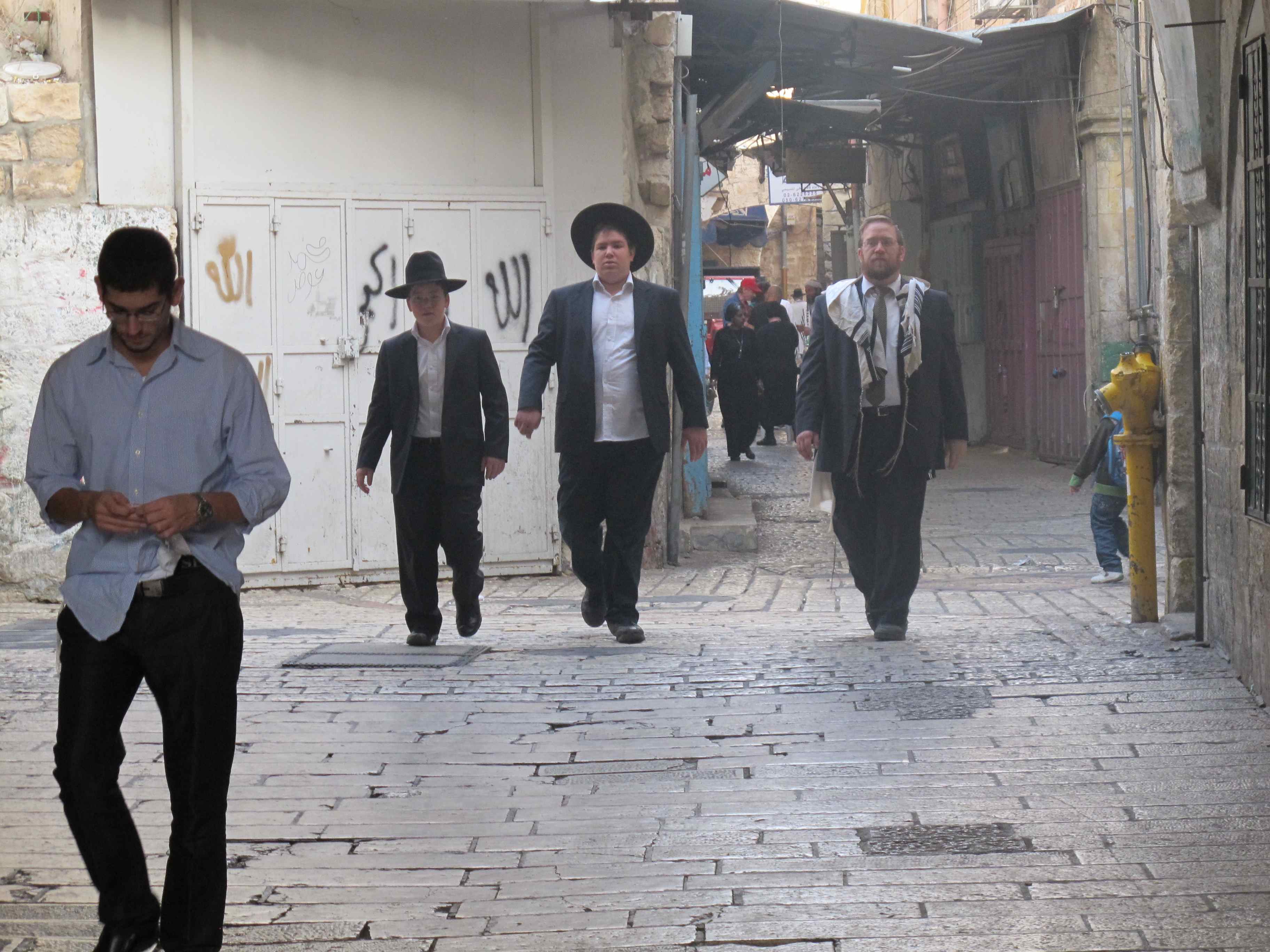
We walked then through the narrow streets of the Old City as the Muslim and Christian shops were opening. Joseph gave us some freshly baked Jerusalem bread to eat. By the time we reached the Via Dolorosa, the traditional path that Jesus took to his death, the streets were crowded with pilgrims, from Brazil, Russia, Korea, Singapore and Eastern Europe, as well as natives of Jerusalem.

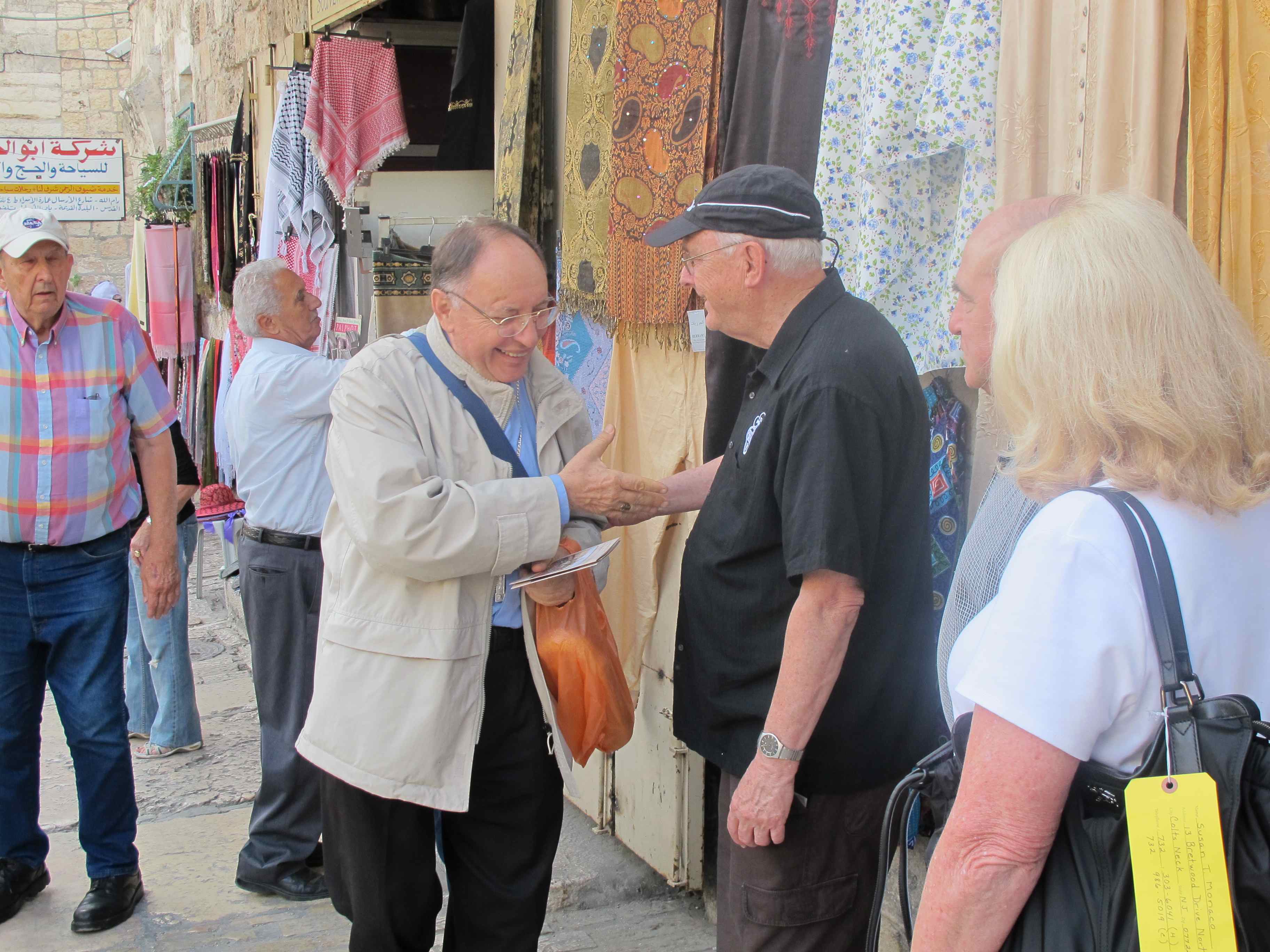
I met a bishop from Brazil who knew the Passionists there.

We walked the Via Dolorosa to the Convent of the Sisters of Sion, an order of nuns founded by a Jewish priest-convert, whose purpose is to work for better relations between Christians and Jews.  Their convent is built on the site of the Fortress Antonia, where Roman soldiers were garrisoned at the time of Jesus. While excavating for the convent years ago, an early street and part of the soldiers’ barracks were uncovered.

In this place early pilgrims, entering the city from the Mount of Olives, commemorated the trial of Jesus by Pilate, his scourging and mockery by the soldiers–the beginning of his way to Calvary carrying his cross, as Joseph explained.

Afterwards, we entered the area of Bethesda, where Jesus cured the paralyzed man who had been waiting for 38 years to be cured but no one would help him into the healing pool when it bubbled up. (John 5,1-19) The ruins of the pool from the time of Jesus have been excavated, along with an ancient Byzantine church built over the ruins, but you have to follow the ground plan carefully to sort them out, because centuries overlay centuries.

The Crusaders’ church of St. Ann, built in the 12th century, is one of the most beautiful churches in Jerusalem.  When we were there it was filled with the songs of the different pilgrim groups taking advantage of its wonderful acoustics.

We went from there by bus to the Church of St. Peter in Gallicantu on the eastern slopes of Mount Sion where we celebrated Mass.  Some believe it was here that Jesus was brought before Caiaphas, the High Priest, and accused of blasphemy. In the area luxurious homes from the time of Jesus have been found, so it is likely that prominent Jewish leaders lived here.

Next to the church is a steep path down from Mount Sion to the Kidron Valley below, which dates to the time of Jesus, and it could have been the path he took after the Last Supper and the path those who seized him in the garden took to bring him to Caiaphas.

The Gallicantu church recalls the condemnation of Jesus by the Jewish leaders and also the denial of Peter. The weathervane of the rooster over the church is a reminder that a cock crowed after Peter denied Jesus three times.

The afternoon was devoted to plundering the local stores.

In the evening we went to a Church of the Gethsemani for a holy hour. In the dark church–we were the only ones there–we read the gospel accounts of Jesus in the Garden from Matthew, Luke and John as we sat around the open rock before the altar. Each of the evangelists tell the same story but draws a different lesson. In Matthew’s account Jesus relies on his Father for everything, and so leads his followers to go to the Father for life. In Luke’s account, Jesus is strengthened from heaven for what he must do, and so are we when we pray. In John’s account, Jesus is already glorified, even in the midst of his sufferings. God’s sovereign power never fails, even in the midst of suffering.

Capernaum, Tabgha, the Jordan

Today we went to a number of place closely connected with the ministry of Jesus: Capernaum, called “the Town of Jesus” because so many incidents recorded in the gospels took place here, and Tabgha where tradition says he fed the crowd with bread and met his disciples after his resurrection. We ended the day at the Jordan River where we renewed our baptismal vows and visited the church of the Beatitudes.

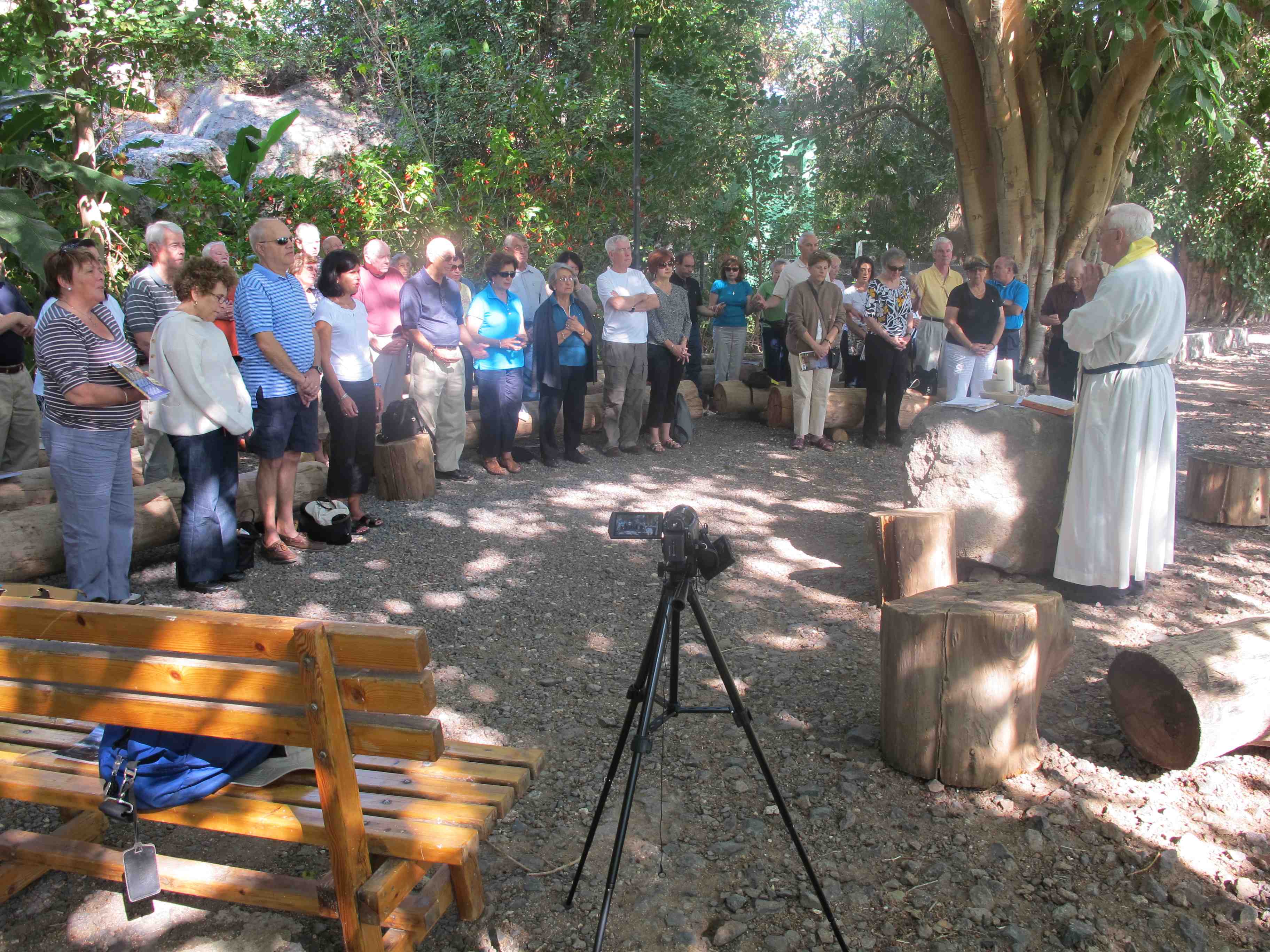
We began at Tabgha with morning Mass celebrated at a small wooded site along the Lake of Galilee and our reading was from John’s gospel which tells the story of Jesus meeting his disciples there after his resurrection. He provides them with a miraculous catch of fish, then Jesus questions Peter, “Do you love me?”

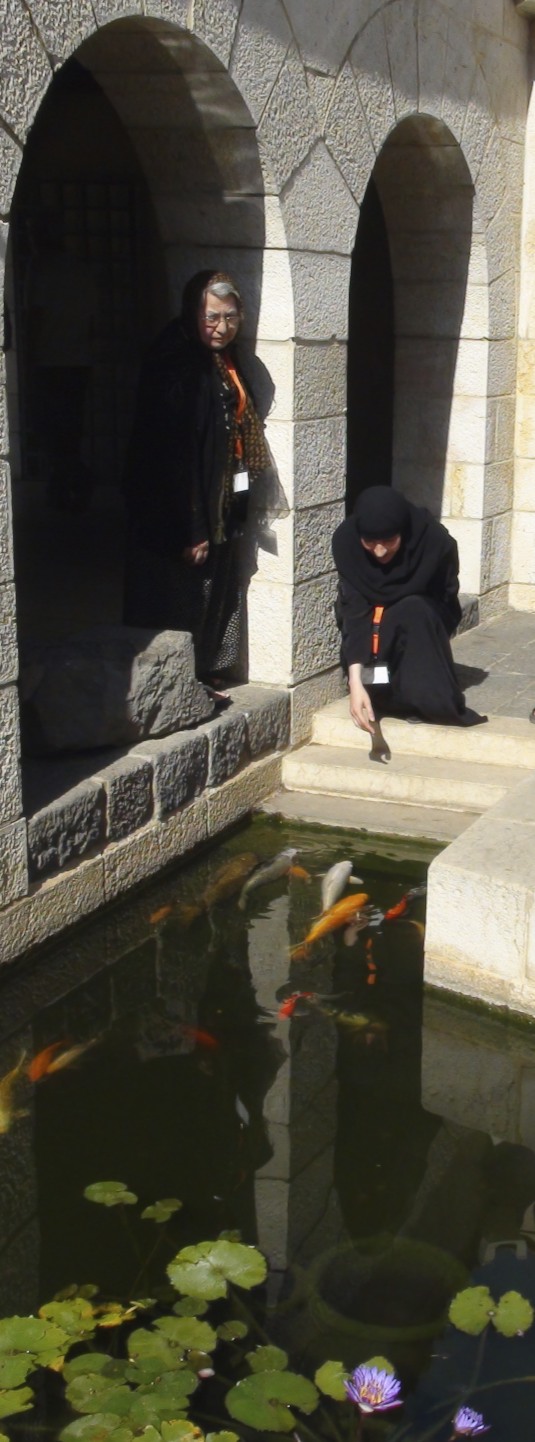
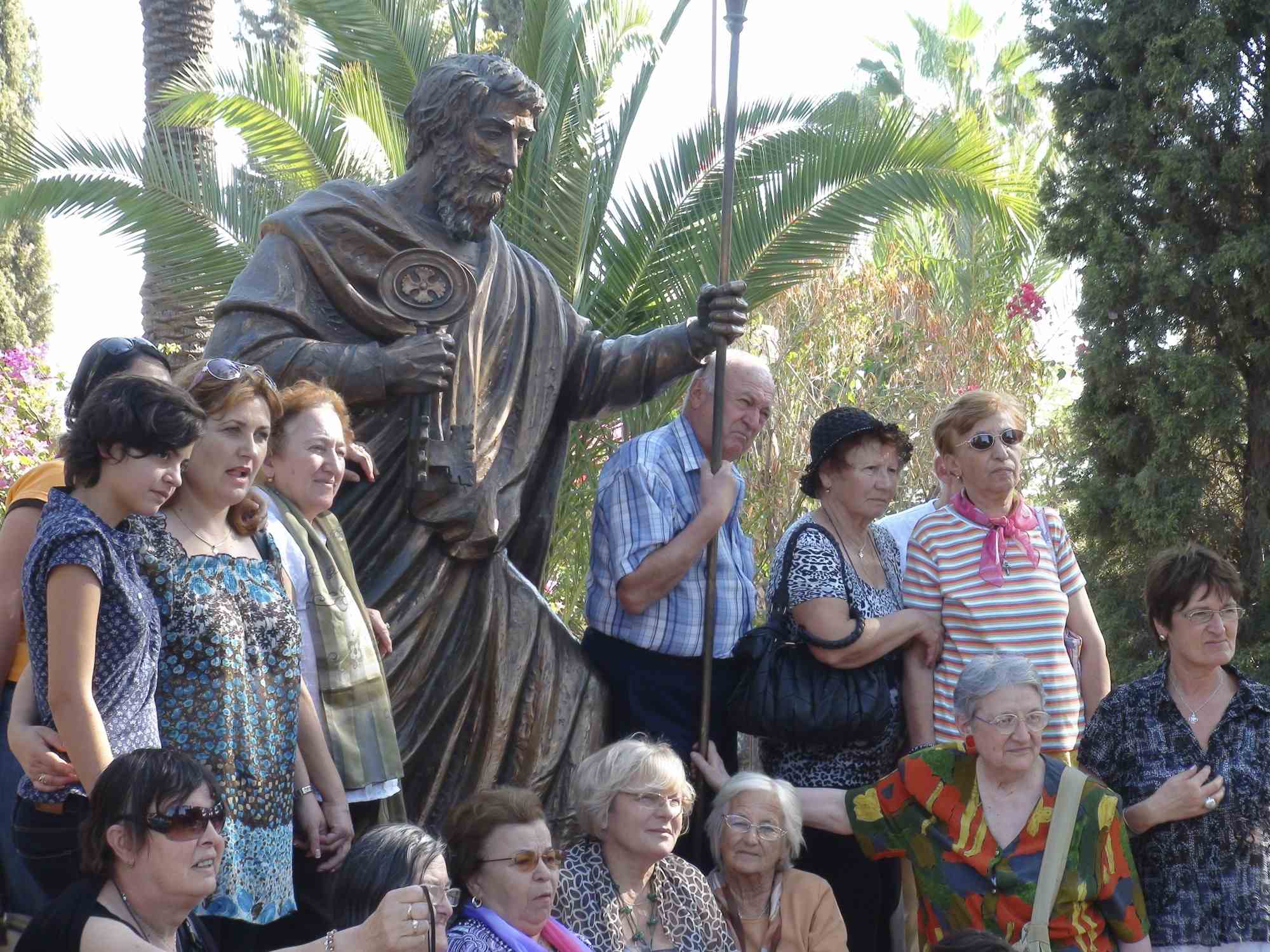
Then, we went to the Church of the Primacy, a short distance away and the Church that recalls the miracle of the loaves and fish. There are crowds of pilgrims in the Holy Land today. A large number seem to come from Russia, as well as from Goa, Korea, Houston, California. Here’s a Russian nun feeding fish at the Church of the Loaves and Fish. Also some friends of Peter holding on to his statue at Capternaum.

Capernaum is truly extraordinary. The ancient ruins from the time of Jesus present a striking indication of the place where he spent some of his most important years.

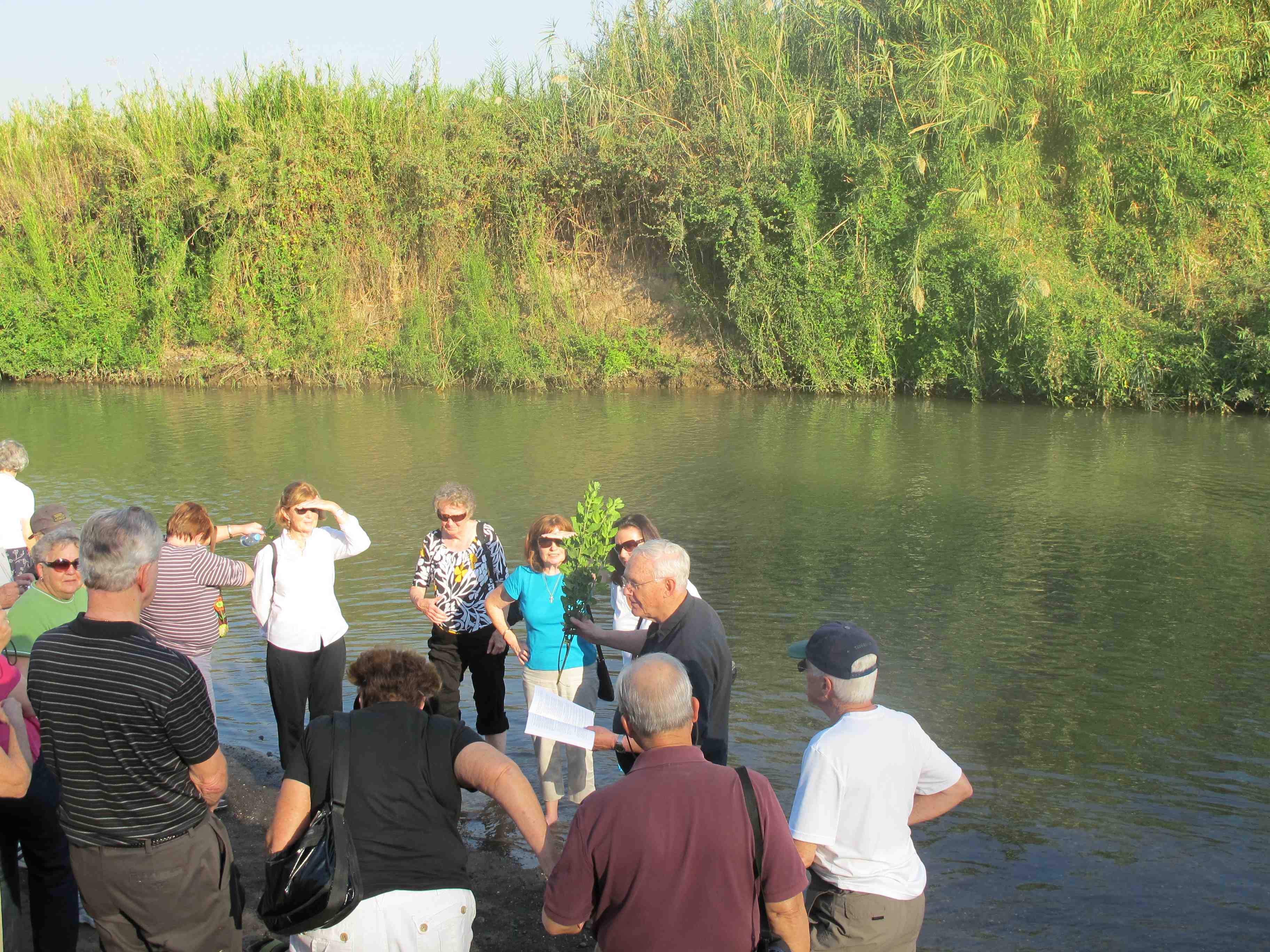
We went to the Jordan River to renew our baptismal vows, not at the spot that’s favored for baptisms these days at the southern end of the Lake of Galilee, but at a stretch of the river that feeds into the northern part of the lake.

Here we are at the Jordan getting sprinkled.


Tomorrow we pull up our tents and head to Mount Tabor, then south along the Jordan River, to Jericho and Qumran, then up to Jerusalem.  Joseph is taking us there.

Go, Tell It to the Mountains

Mountains were important for the ancient people of the Holy Land who lived at a time when maps were unreliable and directions from Google unavailable. The businesslike system of Roman roads didn’t reach everywhere. Going to distant places wasn’t easy, and so with no one to guide you, often the best you could do was to climb to high ground and get your bearings.

No wonder great mountains were considered sacred places. You could see far and wide from them. Yet, more important, mountains were also places for spiritual vision. The Jews knew that God had spoken to Moses on Mount Sinai and others experienced God on mountains too.

As a new Moses, Jesus taught on the Mount of Beatitudes, according to Matthew’s gospel.  (Mt 5-7) He called his disciples and after his resurrection sent them out to the whole world from a mountain in Galilee. (Mk 3,13; Lk 6,12, Mt 28,16)  He often prayed and reflected on a high place.(Lk 6,12)  As he set off for Jerusalem, he took his disciples up a high mountain and revealed his glory to prepare for the difficult journey that would lead to his sufferings and death. (Mt 17; Mk 9; Lk 9,28)

Mountains were places for making decisions and facing dangers. Early in his ministry, the devil tempted Jesus on a high mountain.(Mt 4,8) On the Mount of Olives as his disciples admired the beautiful buildings of the temple in Jerusalem, Jesus warned his followers that what they saw would be completely destroyed and wars and earthquakes and persecutions were coming besides. (Mk 13,3)  From that same mountain, as looked over at the moonlit city the night before he died, Jesus could see his own approaching death.

Mount Carmel: November 8th

We’re going to some of these holy mountains on our pilgrimage to the Holy Land this November. November 8th we will visit  Mount Carmel, where the Prophet Elijah, to whom Jesus is often compared in the gospels, communed with God and faced the cunning King Ahab, Queen Jezebel and the priests of Baal.

As Jesus preached and performed miracles, he reminded many Jews of the great prophet who worked mighty deeds and challenged the powerful.   Like Elijah, who was hounded by powerful leaders, Jesus was opposed by the powerful of his time. Was he the messenger of God’s coming kingdom?

This majestic mountain, set so prominently by the sea, was a place of worship for the  ancient Phoenicians, the Egyptians before the Jews and the Romans revered it as a holy place.

Mount of the Beatitudes: November 9th

The beautiful eight- sided church on the hillside outside the ruins of Capernaum, which we will visit, recalls the eight beatitudes summarizing the teaching of Jesus. “When Jesus saw the crowds he went up the mountain, and after he sat down, his disciples came to him. Then he taught them and began to speak…” (Mt 5, 1) His teaching, about prayer, forgiveness, reliance of God, patience, generosity, make his followers the salt of the earth and the light of the world. The “Sermon on the Mount” is found in chapters 5-7 of Matthew’s gospel.

Mount Tabor:November 10

None of the evangelists name the mountain where Jesus was transfigured, but Christian tradition gradually designated Mount Tabor, seven miles from Nazareth and close to other places where he ministered.  By the 5th century Christian scholars like St. Jerome had settled on the site.

From Tabor, rising like a great globe 1500 feet from the plains of Jezreel, you can see to the northeast Mount Hermon, Nazareth and the mountains that hide the Sea of Galilee To the southeast is the depression where the Jordan River winds its way to the Dead Sea. Mount Nebo, where Moses saw the Promised Land before his death, was there. Branching off the road along the Jordan River was the road to Jerusalem. As Jesus and his disciples stood on Tabor, the world they knew lay before them.

“This is my beloved Son, listen to him, ”  God says of Jesus, and his clothes become a dazzling white, anticipating his resurrection.  “It is good to be here,” the disciples say. In a transitory way, the mystery of the Transfiguration anticipates God’s promised kingdom, which comes through Jesus.

St. Luke in his gospel says that Jesus and his disciples went up the mountain of the transfiguration to pray. Painful and hard as the journey ahead will be, it will end in glory for them and for the whole world..

The Mount of Olives: November 13th

The Mount of Olives, overlooking the ancient eastern walls of Jerusalem, hold precious memories of  Jesus and his time in the city, especially the memory of his death and resurrection.  We’ll visit the Garden of Gethsemani on the lower slopes of the mountain, where he prayed and was arrested on Holy Thursday evening.

During the time of feasts, when the city was over-crowded, the Mount of Olives provided shelter for the overflow of pilgrims who came to the Holy City. The road leading to Bethany, where Jesus stayed with the family of Lazarus, winds over the mountain through the olive groves that still grow there.

“When he was sitting on the Mount of Olives, opposite the temple,” Jesus spoke of the destruction of the temple and various catastrophes that would mark “the birth pangs” of a new age. (Mk 13,3 ff)  According to the Acts of the Apostles, Jesus ascended into heaven from the Mount of Olives. (Acts 1,12)

In the Byzantine period, the Mount of Olives was a favorite place for Christian religious and pilgrims to stay while visiting the Holy Land.

Nov 6 Tel Aviv to Tiberias on the Sea of Galilee

The drive from the airport to Tiberias is about two hours. Israel and the occupied territories are about the size of New Jersey, so our trips to different sites will not be too long.

This is the land of Jesus and we’re going first to where he was raised and began his mission: Galilee. In the scriptures he’s called a Galilean, from Nazareth. Our hotel is in Tiberias on the Sea of Galilee, where we will be staying for four days. It’s not too far from Nazareth and Capernaum and other Galilean towns mentioned in the New Testament.

On a map of 1st century Palestine you can see where these places were.

Our official guide will tell us a great deal about Tiberias and the surrounding area, but let me say something about the city where we will be staying.  Today it’s a Jewish city of modern resorts, hotels and spas, but it’s also one of Judaism’s holy cities. Let’s look at it at the time of Jesus.

Herod Antipas

It was built by Herod Antipas,  Tetrarch of Galilee, around the year 20 AD. He made the city his capital and  named it after his patron, the Roman Emperor Tiberius.

Herod Antipas (4 BC-39 AD) is mentioned a number of times in the New Testament. Jesus called him “that Fox.”  He ordered John the Baptist beheaded and later wondered if Jesus might be John come back from the dead.

Pontius Pilate sent Jesus to Herod before sentencing him to death, but Jesus didn’t say a word to him. One other interesting connection to Herod: Johanna, wife of Herod’s steward Cusa, was a follower of Jesus who stood with Mary and the other women at his cross.

Like his father, Herod the Great, Herod Antipas loved to build, and his splendid Greco-Roman city of Tiberias arose from 20 and 27 AD, while Jesus lived in Nazareth. It had a Roman gate, stadium, spacious squares with marble statues,  a grand palace with a golden roof and a large synagogue. To pay for it, Herod relied on his tax-collectors in the cities and towns in his district–places like Capernaum and Nazareth– to squeeze the fishermen and farmers for whatever they could get.

The ruins of Herod’s city lie south of the present city of Tiberias.

Talmudic Judaism

After the destruction of Jerusalem and its temple by the Romans in 70 AD,  pharisees and scribes from the city flocked to Tiberias and made it a base for reconstituting Judaism. Instead of the temple, they made the synagogue the center of Jewish life and worship. Tiberias itself became the site of over 12 synagogues and an important place for Jewish learning.  A rabbinic school established in the city eventually produced the Palestinian Talmud, a written collection of rabbinic teachings on Jewish laws and traditions, around the beginning of the 4th century. Jewish historians describe the early centuries after the destruction of Jerusalem as the Time of Talmudic Judaism.

The Gospel of Matthew

Some scholars say the Gospel of Matthew, the most contentious and polemical of the gospels, may have been written near Tiberias around the year 90 AD. (Other places they suggest are Antioch in Syria and Sepphoris, not too far from Nazareth)  The gospel certainly reflects the struggles between the Jewish authorities in Tiberias and the Jewish Christians of Galilee over the future of Judaism. The sharp critique of the scribes and pharisees in the 23rd chapter of Matthew is an example of the contentious spirit that must have existed on both sides.

It would be good to keep Matthew’s gospel in hand as we travel around Galilee.

Peter’s confession at Caesaria Philippi that Jesus is “the Christ, the Son of the Living God”, the highpoint of the Matthew’s gospel, makes a claim that the Jewish authorities from Tiberias would fiercely dispute.  After all, Jesus came from nearby, inconspicuous Nazareth where his own neighbors rejected him.  Did he really rise from the dead? Rumors were that his disciples stole his body from the tomb. Perhaps he resembled Elijah, or John the Baptist, or one of the prophets, but he could be a false prophet too.

The Jewish authorities would also question the credentials of the chief followers of Jesus–  uneducated fishermen and unpopular tax-collectors. Could they be authentic teachers in Israel?

Modern scriptural studies point out the real life situations that influenced the creation of our gospels. They didn’t drop down from heaven, they came from people struggling over the questions Jesus asked Peter: “Who do people say that I am?” “Who do you say that I am?” They were written to answer his critics then, and we hear these old disputes even now.

For example, Matthew’s gospel speaks to questions about the origins of Jesus, born of a virgin and conceived through the power of the Holy Spirit.  Matthew’s Jesus speaks to the crowds from a mountain, like Moses, not in a synagogue like the Pharisees. The gospel is filled with Old Testament references backing up his claims. Matthew’s gospel  challenges the story that after his resurrection his body was stolen by his own disciples. Matthew takes on the task to disprove that story.

Finally, Peter, the fisherman, and Matthew, the tax-collector are star witnesses of Matthew’s gospel. “Flesh and blood” hasn’t revealed this to them, but the Father in heaven.

Did the Christians Lose?

I think the followers of Jesus lost the battle with the new Jewish establishment in Galilee at the end of the 1st century, and many moved on to other places. Only some  remained in Galilee. The final words of Jesus to his eleven disciples in Matthew’s gospel seem to indicate a call to other places.

“The eleven disciples went to Galilee, to the mountain to which Jesus had ordered them.  When they saw him they worshipped, but they doubted. Then Jesus approached and said to them, “All power in heaven and on earth has been given to me. Go, therefore, and make disciples of all nations, baptizing them in the name of the Father, and of the Son, and of the Holy Spirit, teaching them to observe all that I have commanded you. And behold, I am with you always, until the end of the age.”  Mt 28, 16-20

Fourth Century Christian Expansion

The Christian presence in the Holy Land increased when Constantine gained control of the Roman empire in the 4th century and favored the Christian Church. As Christians came to the Holy Land and built churches and shrines over the places where tradition said Jesus lived and ministered,  Galilee remained a Jewish stronghold.

When Muslims conquered the Holy Land in the 7th century, Christians and Jews alike came under their rule. Because of harsh Muslim rule under the Seljuk Turks and their destruction of the great Christian shrine of the Holy Sepulcher in Jerusalem in the 11th century,  Crusaders from Europe invaded Palestine and re-established a Christian presence again. Evidence of Crusader churches and fortresses can be seen today.

Muslims, Jews and Christians

Muslims regained control of the Holy Land in the 13th century and remained in power  till the 20th century. Under Ottoman rule, Jews were treated more favorably than Christians, but as the fortunes of the Ottoman Empire declined so did the economy of Palestine. By the 19th century , Jewish and Christian and Muslims saw a land that was poor and neglected.

As the nation states formed in Europe in the 17th century, persecutions of the Jews increased and Jewish aspirations to return to their ancestral lands strengthened. By the 19th century Jews from Russia and Poland were settling again in parts of Palestine, in Jerusalem as well as in Galilee. After the holocaust, the Jewish population dramatically increased.

The Christian presence today is small and increasingly limited to shrines at Christian holy places, sustained especially by religious like the Franciscans.

Tiberias Then and Now

An English visitor to Tiberias towards the end of the 19th century offers an interesting glimpse of this Jewish city at the time:

“The Jews are very numerous in Tiberias,  it and Safed being, after Jerusalem and Hebron, the two holiest towns; for the Messiah is one day, they believe, to rise from the waters of the lake and land at Tiberias, and Safed is to be the seat of his throne.

“Prayer must be repeated at Tiberias at least twice a week, to keep the world from being destroyed. The worship in the synagogue seems to be in some respects peculiar, since the congregation seek to intensify different parts of the service by mimetic enforcement of its words.  Thus, when the Rabbi recites the passage, “Praise the Lord with the sound of the trumpet,” they imitate the sound of the trumpet through their closed fists; when a tempest is mentioned , they puff and blow to represent a storm; and when the cries of the righteous in distress are spoken of in the Lesson, they all set up a loud screaming.

“The Israelites of Tiberias are chiefly from Russian Poland, and do not speak German. Poor, thin, and filthy, they are certainly far from attractive;  but the women are neatly dressed, many of them in white and look much better than the men. “  Cunningham Geikie, The Holy Land and the Bible,Vol 2, New York, 1890 p 543

Tiberias today little resembles the city the visitor describes then.
Betrayal

Jn 13:21-33, 36-38
Reclining at table with his disciples, Jesus was deeply troubled and testified,
“Amen, amen, I say to you, one of you will betray me.”
The disciples looked at one another, at a loss as to whom he meant.
One of his disciples, the one whom Jesus loved,
was reclining at Jesus’ side.
So Simon Peter nodded to him to find out whom he meant.
He leaned back against Jesus’ chest and said to him,
“Master, who is it?”
Jesus answered,
“It is the one to whom I hand the morsel after I have dipped it.”
So he dipped the morsel and took it and handed it to Judas,
son of Simon the Iscariot.
After Judas took the morsel, Satan entered him.
So Jesus said to him, “What you are going to do, do quickly.”
Now none of those reclining at table realized why he said this to him.
Some thought that since Judas kept the money bag, Jesus had told him,
“Buy what we need for the feast,”
or to give something to the poor.
So Judas took the morsel and left at once. And it was night.

When he had left, Jesus said,
“Now is the Son of Man glorified, and God is glorified in him.
If God is glorified in him, God will also glorify him in himself,
and he will glorify him at once.
My children, I will be with you only a little while longer.
You will look for me, and as I told the Jews,
‘Where I go you cannot come,’ so now I say it to you.”

Simon Peter said to him, “Master, where are you going?”
Jesus answered him,
“Where I am going, you cannot follow me now,
though you will follow later.”
Peter said to him,
“Master, why can I not follow you now?
I will lay down my life for you.”
Jesus answered, “Will you lay down your life for me?
Amen, amen, I say to you, the cock will not crow
before you deny me three times.”

Tuesday, Holy Week

The gospels from Monday to Thursday in Holy Week take us away from the crowded temple area in Jerusalem where Jesus spoke to the crowds and his avowed enemies and bring us into homes where “his own” join him to eat a meal. In Bethany six days before Passover he eats with those he loved: Martha, Mary and Lazarus, whom he raised from the dead. In Jerusalem on the night before he dies he eats with the twelve who followed him.

During the meal in Bethany, Mary anoints his feet with precious oil in a beautiful outpouring of her love. But the gospels for Tuesday and Wednesday point out, not love, but betrayal. Friends that followed him abandon him. Judas betrays him for thirty pieces of silver and walks into the night; Peter will deny him three times; the others flee. Jesus must face suffering and death alone.

Are we unlike them?

Does a troubled Jesus face us too, “his own,” to whom he gave new life in the waters of baptism and Bread at his table. Will we not betray or deny?  Will we not go away?

Surely the gospels are not just about long ago; they’re also about now.

Love Poured Out

Jn 12:1-11
Six days before Passover Jesus came to Bethany,
where Lazarus was, whom Jesus had raised from the dead.
They gave a dinner for him there, and Martha served,
while Lazarus was one of those reclining at table with him.
Mary took a liter of costly perfumed oil
made from genuine aromatic nard
and anointed the feet of Jesus and dried them with her hair;
the house was filled with the fragrance of the oil.
Then Judas the Iscariot, one of his disciples,
and the one who would betray him, said,
“Why was this oil not sold for three hundred days’ wages
and given to the poor?”
He said this not because he cared about the poor
but because he was a thief and held the money bag
and used to steal the contributions.
So Jesus said, “Leave her alone.
Let her keep this for the day of my burial.
You always have the poor with you, but you do not always have me.”

The large crowd of the Jews found out that he was there and came,
not only because of him, but also to see Lazarus,
whom he had raised from the dead.
And the chief priests plotted to kill Lazarus too,
because many of the Jews were turning away
and believing in Jesus because of him.

Monday, Holy Week

A gift of life leads to a sentence of death. We’re called to a meal in Bethany by these verses of John’s gospel. It follows the resurrection of Lazarus and is given to honor Jesus by his friends. It will be the last meal the gospel records before the Passover supper he will eat with his disciples.

Faithful Martha serves it; Lazarus newly alive, is at the table. But the one who draws our attention most is Mary, their sister. Sensing what is to come, she kneels before Jesus to anoint his feet with precious oil and dry them with her hair. “And the house was filled with the fragrance of the oil.”

The precious oil that fills the house is an effusive sign of her love and gratitude; it also signifies an anointing of Jesus for his burial.

Only in passing does the gospel mention the evil in play that will bring Jesus to his death. Judas, one of his own disciples, “the one who would betray him” complains that the anointing is a waste, but his voice is silenced. This is a time for believers to pay tribute to the one they love.

How fitting to begin Holy Week with this gospel! This week we recall the events that lead to the crucifixion, death and resurrection of Jesus. These events are surrounded by mysteries too many to name. But we don’t have to name them all.

Like Mary, we kneel and pour out the precious oil of our love on him who brings us life by giving up his own life.

3rd sun lent c

Some of the deepest questions we ask about God are often answered in the scripture readings we listen to at Mass. For example, we ask sometimes if God is punishing us in tragedies like earthquakes, or accidents or those occasional acts of violence that suddenly happen. That’s the question Jesus answers in today’s gospel as his listeners wonder why 18 people were killed when a tower fell on them, or why were people allowed to die in some riot that the Roman procurator, Pontius Pilate, put down by slaughtering everyone in sight.

Jesus tells them God’s not punishing the people who were involved in those tragedies. Tragedies are part of life; they’re sharp reminders that life on earth isn’t permanent or without risk. Jesus says you have to be ready for the moment that God calls you. “Ask not for whom the bell tolls;” it tolls for you and for me.

Another question we ask is quite different. Does God care about us at all? And here we can turn to the 1st reading from the Old Testament about Moses and his vision of God on Mount Horeb. Moses at the time was a man on the run. He’d killed an Egyptian and had fled from Egypt to hide as a shepherd in the Sinai desert. His people, the Jews, were slaves in Egypt.

As he ascends the mountain tending his sheep, he sees a burning bush and suddenly hears a voice. “Don’t come any nearer. Take the shoes off your feet; you’re on holy ground…I’m the God of your ancestors, of Abraham, Isaac and Jacob.”
wpid-dsc00367-2010-03-5-21-57.jpg

Haiti

Haiti: The God of Tough Places, the Lord of Burnt Men

Transaction Publishers, New Brunswick, NJ  2010   $29.95

Fr. Richard Frechette, CP, Passionist priest and medical doctor, has served the poor in the tough, burnt land of Haiti through floods, revolutions and the recent catastrophic earthquake of January 12, 2010 which left 200,000 dead.

There’s not much he hasn’t seen. But here’s a book of stories that reveal what all of us find hard to see: there’s a mighty, joyful goodness in that tough, burnt land. Frechette uncovers the graces of God in the chaos, violence and poverty of “Calvary hill,” Haiti today.

He has eyes that see in the dark, beyond the defeat most see. His stories of Haiti’s poor, especially its children in the pediatric hospital and slum schools he directs, reveal  goodness, spiritual strength and wisdom. Here the poor speak, whom Jesus called blessed.

The book’s twenty or so stories introduce us to a land that few of us have a heart to visit, but all of us should learn from.  Most are set in the context of the feasts of the Christian liturgical year, which Fr. Rick says,  “empowers us to make grace present, concretely in our world.”

With poetic insight and faith he tells us about grace present.

Available at www.crossplace.com

Passionist Press

526 Monastery Place

Union City, NJ  07087

201 867 6400