Category Archives: Passionists

27th Sunday A: News from the Vineyard

For audio version of the sermon, see below:

I visited the Holy Land some months ago and stayed for five days in East Jerusalem at St. Martha’s, a house belonging to my community, the Passionists. East Jerusalem is a crowded, predominantly Muslim part of the city, but once you go through the gates of St. Martha’s you’re in a world that reminds you of Jesus.

In his time the area was called Bethany, where Jesus stayed when he came to Jerusalem to celebrate the Jewish feasts. Martha, Mary and their brother Lazarus lived there. Jesus spent his last days there before he was arrested, sentenced to death, crucified under Pontius Pilate, died and was buried. The traditional tomb where Lazarus was raised from the dead is only a short distance away from that house.

St. Martha’s is on a hillside of the Mount of Olives; a grove of olive trees surrounds the house and the trees still produces good oil, the priests who live there say. You can see a cave where the olives were pressed, probably dug at the time of Jesus or before. On the western end of the property are the foundations of small houses that archeologists believe go back to the time of Jesus.

When I hear Jesus using a parable about a vineyard, which he often does, I see the vineyards and olive groves of Bethany. Jesus used the world around him when he wished to teach. He’s in Jerusalem shortly before his death when he speaks this parable, Matthew’s gospel says. The olive trees and vineyards of Bethany were there before him. Likely, some of the vineyards were let out to tenant farmers who were expected to make a return to the owners at the harvest.

So Jesus explains what’s happening to him through a parable, which the Prophet Isaiah also used before him. “There was a landowner who planted a vineyard, put a hedge around it, dug a wine press in it, and built a tower. Then he leased it to tenants and went on a journey.

Notice how much the owner of the vineyard did before entrusting it to the tenants. He did everything. The vineyard is a tremendous gift that he put into their hands. Then, at harvest time the tenants seize the owner’s servants who are looking for his share. Those are the prophets who came to Israel before me, Jesus is saying. They were reviled and mistreated and killed.

“Finally, he sent his son.” And they will kill me, Jesus is saying.

The parable is a stark story about the goodness of God and the ingratitude of Israel. It’s about a lack of response to the gift that was given; it’s about the failure to see that God expects a return for his gifts. “No,” the tenants say, “This belongs to us.”

We can look at the parable as Jesus’ words to the chief priests and elders of Jerusalem long ago. But suppose Jesus was here speaking to us. What would he say? Would he look around and say, “You have a beautiful church here and you come from nice homes. This is a good area; you have good roads, good schools, a lot of nice things. Are you using all this the way you should? Are you using these gifts I’ve given you?”

Maybe we would say. “This is all ours. It belongs to us. We can do what we want with it all.”

Sounds a little like the parable then, doesn’t it?
26th Sunday: Knowing Jesus

To hear the audio of today’s homily please select the audio below:

Religious education programs begin in most parishes this month. Many of the programs involve young people, of course, but we are all called to grow in faith, no matter how old we are.

Unfortunately, adults often see faith as something you learn as a child and that’s it.

The Catholic writer Frank Sheed once said the problem with adult Catholics is that they don’t keep engaged in the faith they learned as children. He used the example of our eyes. We have two eyes. Let’s say one of them is the eye of faith; the other is the eye of experience. 

As children we may see the world with two eyes; but as adults we may see the world only with the eye of experience, losing the focus that faith gives, another dimension. Faith helps us to see.

Jesus said to his disciples “you are all learners.” Not only children learn, all of us learn. We’re lifelong learners, lifelong believers, even till the end.”

I was talking to a man last week who said “You know, I go to church pretty regularly; I try to live a good life, but I would like to know Jesus.”

I told him that’s what we’re trying to do all our lives–to know Jesus.

I told him to get a good bible, like the New American Bible, and start reading it. Listen to the readings in church that tell us what Jesus said and did. This is a time he reveals himself to us, as one of the Eucharist prayers says it so well:

“You are indeed Holy and to be glorified, O God, who love the human race and always walk with us on the journey of life. Blessed indeed is your Son, present in our midst when we are gathered by his love, and when as once for the disciples, now for us, he opens the scriptures and breaks the bread.”

From what we know of Jesus, he bravely faced the issues of his time and its questions and challenges.  Knowing Jesus, then, means that we face the issues and challenges of our time as bravely as we can. 

Let me point out one of today’s challenges– our changing climate.  Last Tuesday evening at the United Nations Summit on Climate Change,  the Vatican Secretary of State Cardinal Pietro Parolin brought a message from Pope Francis.

He said that after thirty years of study we have to admit there are critical days ahead. We know that “the entire international community is part of one interdependent human family…There is no room for the globalization of indifference, the economy of exclusion or the throwaway culture so often denounced by Pope Francis,”

Our faith “warns agains the risk of considering ourselves the masters of creation. Creation is not some possession that we can lord over for own pleasure; nor, even less, is it the property of only some people, the few: creation is a gift, it is the marvelous gift that God has given us, so that we will take care of it and harness it for the benefit of all, always with great respect and gratitude” (Pope Francis, General Audience, 21 May 2014).

It’s not just a matter of some technical changes like emission reductions, the cardinal continued. We need “ to change our lifestyles and the current dominant models of consumption and production.”

Knowing Jesus means living as Jesus would if he were with us today.

We’re all learners. The consoling thing is that we can start anywhere, anytime to know Jesus. The gospel readings for this week and last week tell us that. The workers going into the vineyard and two sons in today’s reading tell us the invitation is always there, so let’s take it.

The Kingdom of God is Coming, It’s Here: 25th Sunday

To listen to the audio for this week’s homily please select the audio slider below:

Matthew 20,1-19   25th Sunday A

The kingdom of God is coming, it’s here, Jesus says in the gospels. Often he describes the kingdom of God as a harvest, as he does in today’s gospel from Matthew. It’s an abundant harvest, bigger than you think. Pray that God’s kingdom come, he says to his disciples. Pray that it comes here on earth as in heaven. Don’t underestimate the kingdom, the harvest God sends.

It looks like the owner of the vineyard in our parable today has underestimated the size of his harvest. The first crew he sends out at 9 in the morning aren’t enough, so he calls more workers at noon, then 3 in the afternoon. At 5 in the afternoon he’s still adding to his workforce. Looks like he didn’t expect much.

That’s one of the first lessons to draw from the gospel. Don’t underestimate the power of God. Unfortunately, that’s what we do. We can expect too little from God. We forget that his kingdom will come on earth as it is in heaven. We think he has nothing or little to do with human affairs, or our world or the things here on earth.

The workers in the vineyard don’t seem to appreciate a big harvest either. They’re interested in something else– how much they’re getting paid and how much the other fellow is getting paid. The owner’s not fair, they say, because he pays the last workers the same as those who came first to work in the vineyard. They’re concerned with themselves, blinded as they are by envy and jealousy.

“Are you envious because I am generous,” the owner of the vineyard, who now seems to be a figure of God, says to them. Is this another lesson to draw from the parable? Envy and jealousy and measuring everything from our own perspective blinds us to God’s generosity. They blind us to the coming of God’s kingdom.

On his way through the towns of Galilee, Jesus announced the coming of the kingdom of God. He was bringing it to the world. It was an abundant harvest, yet even as he announced it, powerful voices were denying it was true. The scribes and Pharisees called him a false teacher, even his own disciples’ and his own family didn’t understand him. Still, he proclaimed God’s great kingdom. In the darkness of calvary he proclaimed it to a thief on a cross, and then he proclaimed it to his own disciples as he rose from the dead.

But let’s admit it, as we look at our world today we don’t see signs of a great harvest. Where is the harvest Jesus spoke of? Where is the kingdom of God. The kingdom of God seems far off, hardly here or ready to come. We’re living in a post-modern age, they say, when cynicism and questioning touch everything.

More than ever, we need to look at our world, not with our own eyes, but with the eyes of Jesus.

I like the story from John’s gospel describing Jesus meeting the Samaritan woman on his journey from Jerusalem to Galilee. It’s a hot afternoon; Jesus is tired and stops by a well to get a drink of water. It’s not a friendly place; the Samaritans don’t like the Jews and the Samaritan woman doesn’t like this Jew sitting at their well. But as they talk a new world appears, a light pierces the darkness and  the woman recognizes Jesus as the Messiah and calls the people of her town to see him.

“‘In four months the harvest will be here’”? Jesus says to his disciples, “ I tell you, look up and see the fields ripe for the harvest” He sees the kingdom of God coming in this small unexpected event. In the awakened faith of the woman before him, he sees the kingdom come.

That’s one of our greatest challenges today, to look up and see, in simple signs and in spite of everything, that the fields are ripe for the harvest. The kingdom of God has come.

Visiting the Rhine River

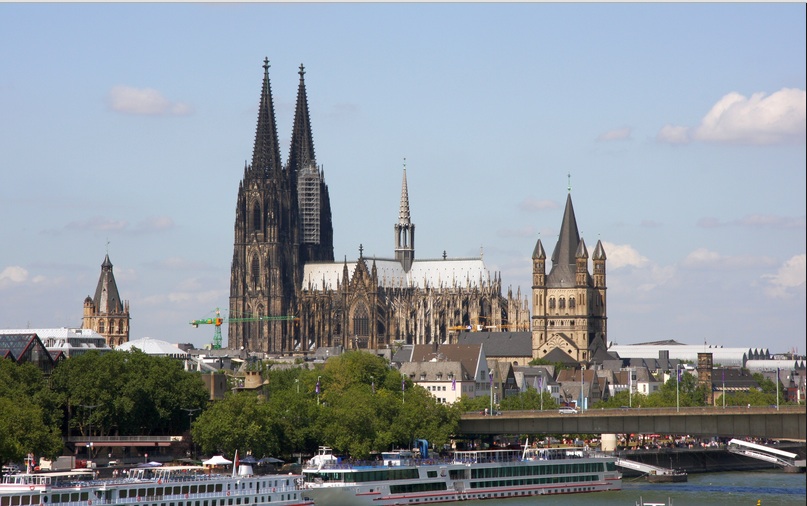
Cologne

I’m going in October with a group from St. Mary’s, Colts Neck, NJ, on a river cruise on the Rhine. This river was a path Christian missionaries took to bring the gospel to all nations. We’ll visit cities like Strasbourg and Geneva, places connected to the Protestant Reformation in the 16th century.

In his book “Trent and All That: Renaming Catholicism in the Early Modern Era”, Harvard University Press, 2000, John W. O’ Malley, S.J. says that historians today are wary of using the words Reformation and Counter-Reformation to describe these historical periods. Recent historical research indicates the names don’t altogether fit the reality of the two movements.

“Reformation” means reform, the reform of something broken or in need of new life. In the case of the Catholic Church, it implies it was in shambles because of superstition and abuses of power. But recent social research indicates that the Catholic experience at the time was still quite vital, for the most part. True, the papacy was in need of reform, other abuses were present as they always are, but ordinary Catholic life was far from lifeless.

“Counter-Reformation,” or “Catholic Reform” usually mean that reform of the Catholic Church took place mainly through the efforts of the Council of Trent and a renewed papacy. But recent research questions the determining part played by the council and the popes in the life of the church at the time.

Historians in the past tended to see the Catholic Church then only in terms of the papacy and council bodies like Trent. They didn’t see its complexity exemplified by its confraternities, religious orders, saintly mystics and patterns of devotion. Social historians today are aware of the vitality in the Catholic Church that existed in its ordinary fabric. Its renewal didn’t just come from above, but from below.

The medieval cathedrals at Strasbourg and Cologne, which we’re going to visit, are examples of the profound faith of the medieval church. They weren’t built to satisfy the vision of a powerful bishop or ruler; they expressed the faith of a dedicated people. We can read what they believed and how they thought about life in those great cathedrals.

One of the O’Malley’s insights I liked was his comment on the lecture on the Counter Reformation by H. Outram Evennett, an English historian, some years ago at Trinity College. Rejecting the thesis that the Reformation was solely a reaction to a decayed medieval church, Evennett opined that both the Reformation and Counter Reformation “were two different outcomes of the same general aspiration towards ‘religious regeneration’ that pervaded the 14th and 15th centuries.”

Does this indicate that both Catholicism and Protestantism are moving in sync towards a place together in the modern world? I hope so.

This Sunday we listen to one of the parables of the kingdom, the Workers in the Vineyard, from Matthew’s gospel. Like the workers, squabbling among themselves, we’re often blind to the larger patterns of God’s plan unfolding in history. In a post-modern society of questioning and doubt it’s also difficult to believe in a plan for the world. There’s a harvest on its way and it’s an abundant one. My homily’s on that.

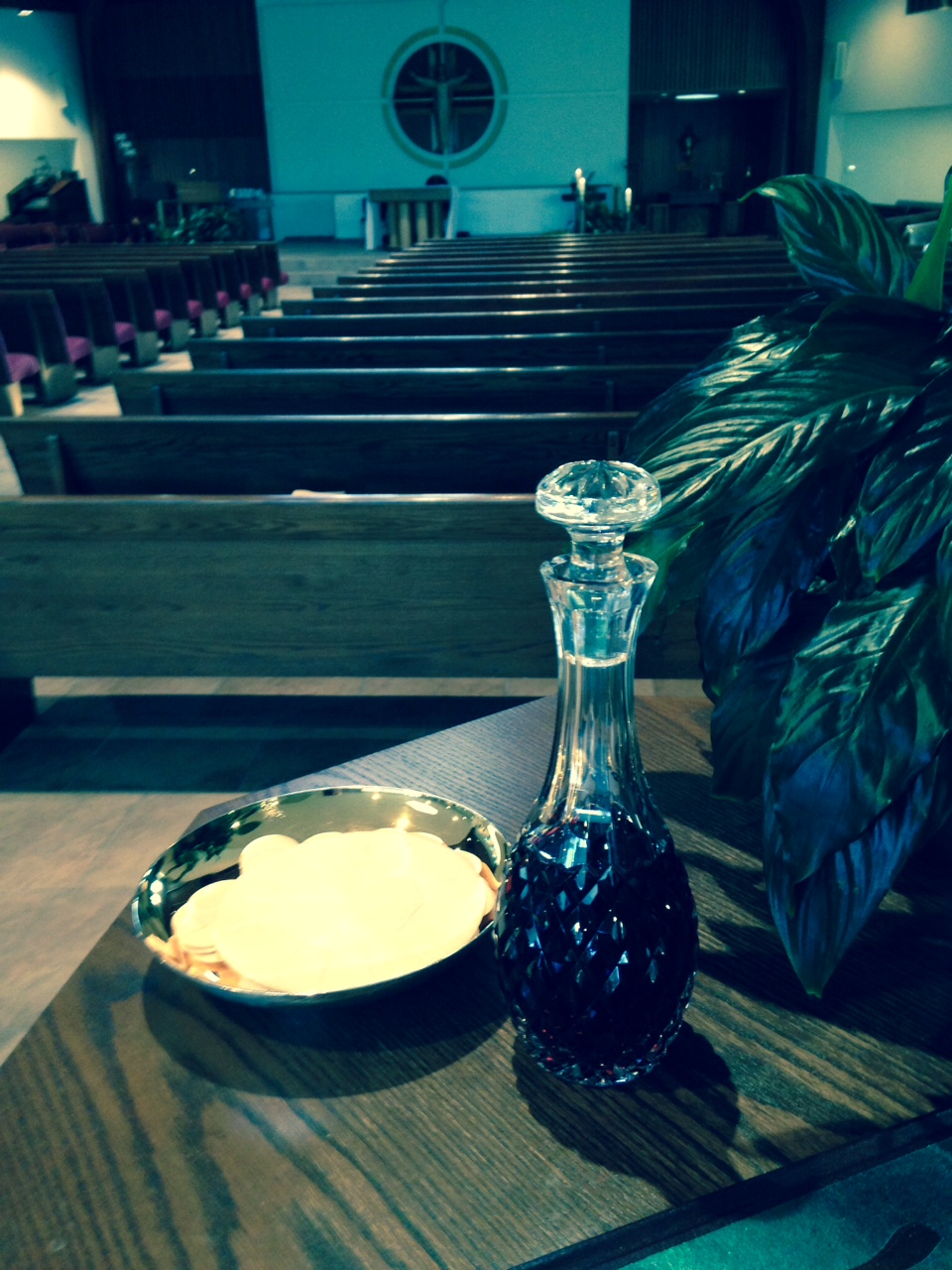
Bread and Wine

photo

The German theologian Romano Guardini years ago recommended in a little book “Sacred Signs” that we let the signs and the words of the liturgy guide our prayer. He was a key figure in initiating recent liturgical reforms in the Catholic Church, which made the signs and prayers of the liturgy better able to communicate the mysteries we celebrate.

I suspect, though, that in our liturgical prayer today the words of the liturgy–the scripture readings and the homily–get more of our attention than the signs.

Maybe we need to pay more attention to signs like bread and wine. They’re sacred signs we can take for granted.

In our prayer over the bread at Mass we say: “Blessed are you, Lord God of all creation, for through your goodness we received the bread we offer you, fruit of the earth and work of human hands, it will become for us the bread of life.” The bread we offer is the fruit of the earth and work of human hands. It’s a sign of all creation, of everything that the “God of all creation” gives us, of everything our hands have fashioned.

“The word bread stands for everything,” Augustine said in one of his commentaries on the Lord’s Prayer. (Epistle to Proba) Early commentators like Tertullian, Cyprian and Origen wrestled with that petition, “Give us this day our daily bread.” Does it mean just the food we eat, or does it mean the wisdom we need? Is Jesus Christ our daily bread? I like Augustine’s explanation because it’s so open-ended.

Scientists say that our universe came into existence about 15 billion years ago. About 3.5 billion years ago life began on our planet. Bread and wine represent that universe; they’re brought to the altar to tell its story.

About 200,000 years ago human life emerged on our planet. 200,000 years of human life are represented in the bread and wine, and our lives are part of the human story represented in bread and wine.

We believe that God created our world and it’s good, according to the Book of Genesis. There’s a plan for this universe, a plan conceived in God’s wisdom and love. In its opening chapters, Genesis poetically describes the beginning of our universe, but then turns quickly to the journey of the human family from its beginnings .

God’s plan, however, involves, not just the human family, but also the universe itself. All creation is waiting for the kingdom of God to be revealed. The bread and wine are signs of it.

Certainly human beings have an important role in the coming of God’s kingdom, as the incarnation of Jesus Christ makes clear. We’re not slaves, cogs in the wheel, as life grinds on. We represent God here in the universe and have to exercise a godlike care of this world. Each of us has a part to play that God’s kingdom come. We share in the promise.

We know too that the mystery of evil is at work in our world, a mystery also represented in the bread and wine. When Jesus took bread into his hands at the Last Supper, he saw a sinful world ready to put him to death, but he still took the bread in his hands. His blood would be poured out, but he still took the chalice to drink from it.

How magnificent is his response. He takes all created reality, all human existence, the goodness and evil of life in his hands, embracing them all with God’s love and care. From his hands he gives them to us, blessed by his presence.

“This is my body.” “This is my blood.” Incarnate in this great universe he gives life to it and to us.

In communion, Jesus gives himself to us in bread and wine, the signs of the world in which we live. We’re to live in that great world and have a role in it to fulfill. The Word made flesh is our bread of life, our food and drink, who gives wisdom and power to us.

Father Thomas Berry, a Passionist priest who taught me long ago, had a passionate love of the universe and a concern that the universe story enrich our way of looking at life. In one of his writings he saw the universe story enriching our understanding of the sacraments. It does.

How do you tell people they’re wrong? 23rd Sun. A


To listen to the audio of today’s homily please select below:

One of the hardest things we have to do in life is to tell somebody they’re wrong. Our readings today are about that. You need help correcting people. The Gospel of Matthew (18,15-20) today suggests that sometimes help may be sitting right next to you.

Awhile ago, on a crowded train from Toronto to New York I had  hoped to pass the long ride by napping and reading a book. But around Buffalo, two women got on and sat across from me.  One of them must have been hard of hearing because at least half the car could hear her conversation.

They never stopped talking, about food, clothes, their families, their health, the different medicines they were taking.  Then, one woman brought up her husband. She had had trouble with him. After the kids got married, he started to drink and he got nasty when he drank. It got so bad, she said, that she told him to get out of the house and get straightened out. She wasn’t going to leave the house; he had to get out.

Well, he got mad, she said, and went to live his brother for awhile, but after a couple of months he was back. He told her she was right. He stopped drinking. It was a hard thing being so strong with him, she said, she loved him very much,  but she remembered the story in the bible where the father threw his son out of the house and after awhile he came back.

The other woman said she knew that story too and wondered where it was in the bible.

I was ready to chime in and tell them that story’s in St. Luke’s gospel, chapter 15, and actually the father didn’t throw the son our of the house. He left on his own. But something told me to keep my mouth shut.

Just then, another woman a few seats down the aisle turned to the women and said, “You must be angels sent by God. I’ve been praying for months, trying to figure out what to do with my son, and I think you’ve got the answer.”

Her son was on drugs, she said. “He’s a good kid, but he’s in the wrong crowd.” He was having a bad influence on his younger brothers and sisters, but she felt she had to keep him home. He just couldn’t manage on his own. Her husband was no help; he wanted to ignore the problem.

She talked to her minister in church and he told her she was being too easy on her son, but she wasn’t convinced.

Now, listening to these women, she felt God was telling her something. She had to be like that father in the gospel story that threw his son out of the house. She was going to look that story up in the bible.

Again, I was going to tell them the location of the story in St. Luke’s gospel and that the father doesn’t really throw the son out of the house, but I thought better of it. Maybe the version they had in their minds was the version God meant them to hear.

By the time the train reached Albany where two of the women got off, they were all fast friends. They had exchanged phone numbers and emails and promises to keep in touch, and they were thanking God for this time on the train as a  special grace.

Sometimes we think the scriptures are about a world long gone. But this gospel isn’t about a world long gone. It’s also about those three women– and all of us– who sometimes need to say and do hard things and don’t know how to do it.

God sends help, often in the simplest ways–maybe even on a long train ride. That one, I remember,  ended up in New York City 5 hours late.


Pentecost

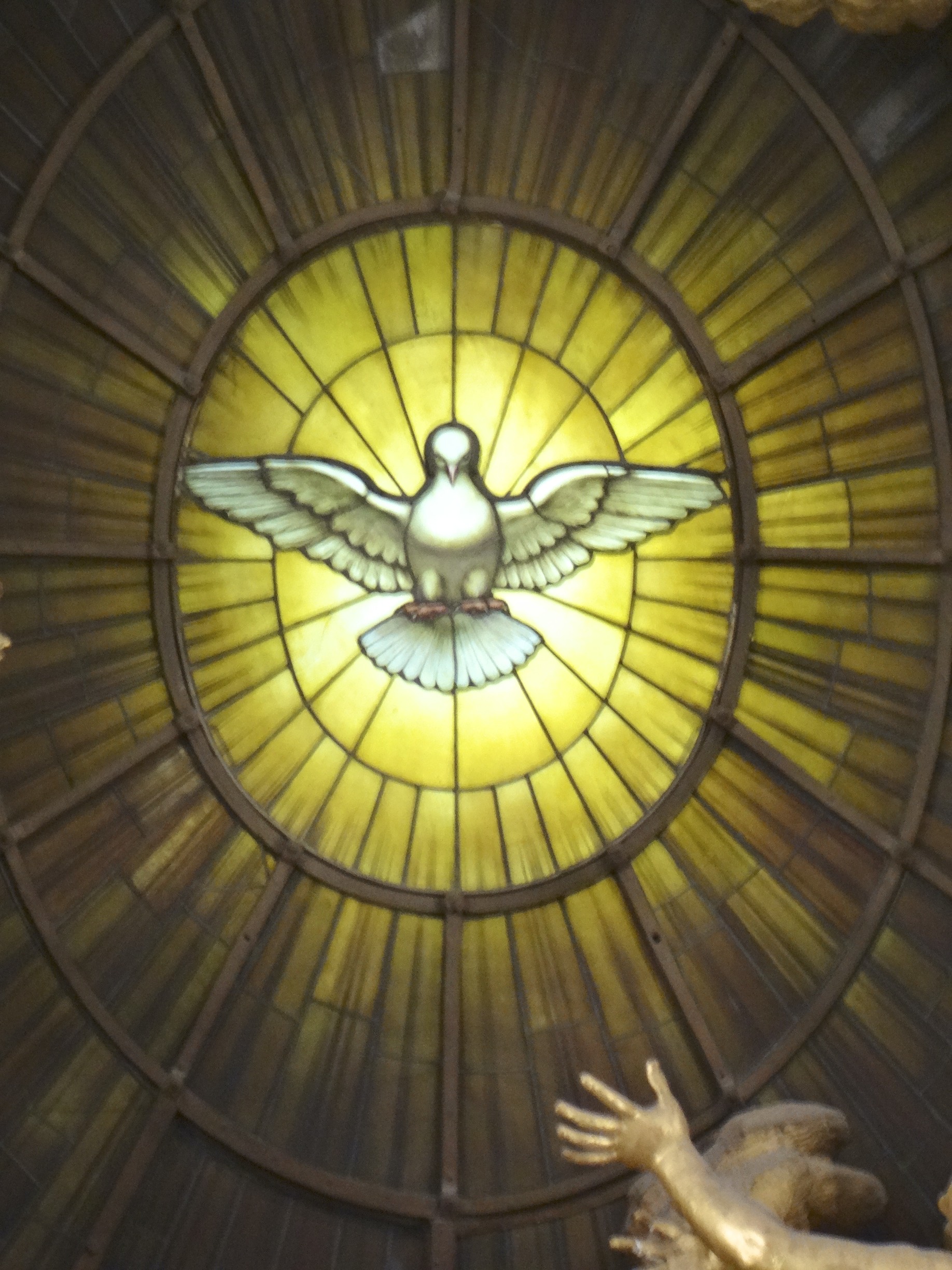
DSC00804
The scriptures for the Feast of Pentecost describe the coming of the Holy Spirit in dramatic terms. Strong winds and tongues of fire come upon the disciples of Jesus in the Upper Room,  the Cenacle,  fifty days after the resurrection of Jesus. They’re filled with energy and joy. It seems like an unrepeatable experience.

Then, immediately, confidently, they preached the gospel to people from the ends of the earth who are amazed at their new knowledge and new words

Certainly the Holy Spirit gave them a burst of new enthusiasm that day.  We marvel–as their first listeners did– how these ordinary Galileans were transformed by the gifts they were given.   Peter eventually made it to Rome. John may have gotten to Ephesus in Asia Minor. Maybe Thomas got to India. Inspired by the Holy Spirit, “their message went out to all the earth.” Transformed, they began a universal church centered on Jesus Christ.

But, like the other mysteries of our faith, Pentecost is repeatable, on-going.  It’s not one burst of enthusiasm, a jump-start never to happen again. Without the strong wind or tongues of fire we experience the Holy Spirit too, usually in quieter ways.

Behind the Chair of St. Peter in the Vatican Basilica, the artist Bernini, created a beautiful alabaster window where a steady light pours into the dark church through the image of the Holy Spirit,  in the hovering form of a dove.

Day by day, the light comes quietly through the window. Day by day, the Holy Spirit dispenses light for the moment, graces for the world that is now. As Jesus promised, the Holy Spirit dwells with us. The Spirit remains with us as Jesus’ final gift.

“Lord, send out your Spirit and renew the face of the earth…Come, Holy Spirit, and fill our hearts with the fire of your love.”


The Mount of Olives

Mt. of Oliv
Mount of Olives Jesus


DSC00145
DSC00140

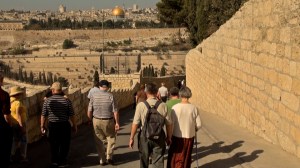
Mountains last for the centuries. The Mount of Olives, the two mile mountain ridge facing the Old City of Jerusalem goes back well beyond the time of Jesus Christ, over two centuries ago. On its slopes, olive trees that gave it its name still grow.

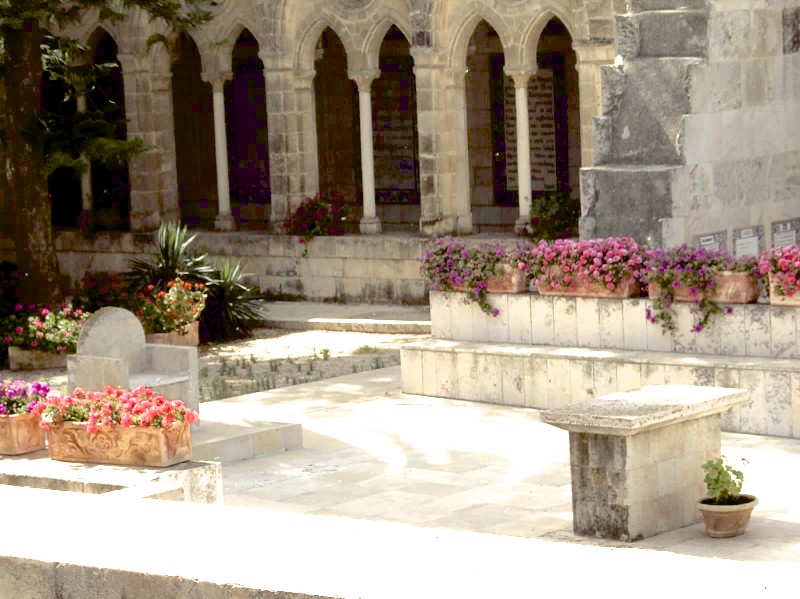
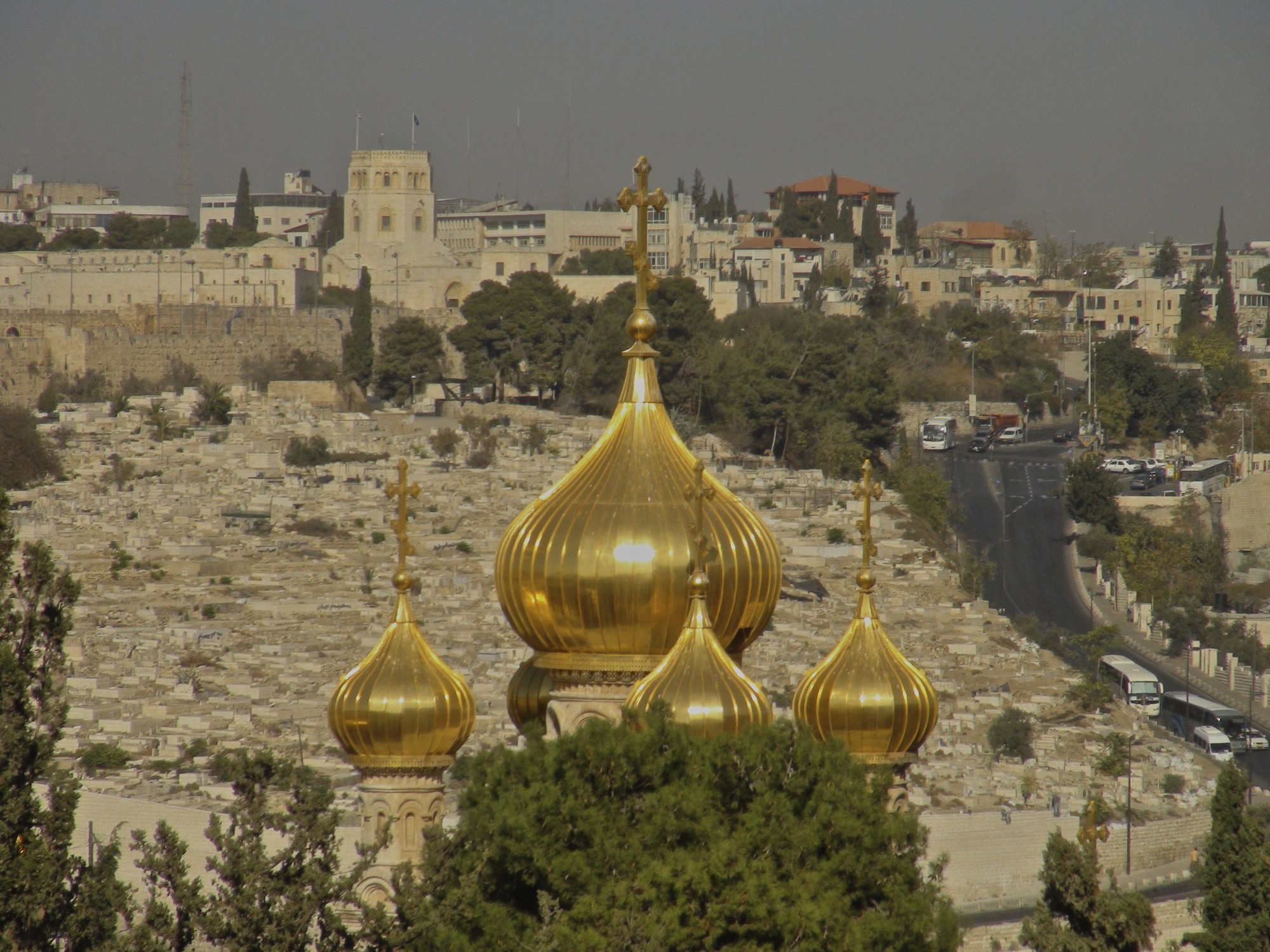
Ancient tombs along the mountain and into the Kidron Valley below tell us this place is holy. One day “God’s feet will stand on the Mount of Olives,” calling the dead to be raised, the Prophet Zechariah said. (Zechariah 14,4) The tombs are mostly Jewish, though some ancient Jewish-Christian tombs are there.  Mary’s tomb is near the garden of Gethsemane. Facing the ruins of the temple and the holy city, the tombs signify humanity waiting for the promise of resurrection on the last day. 

Jesus knew this mountain as a boy when he came to Jerusalem to celebrate the Jewish feasts. Most likely he stayed on this mountain at Bethany, a village on its eastern slope. Galilean pilgrims to Jerusalem stayed there. (Luke 21,37-38)

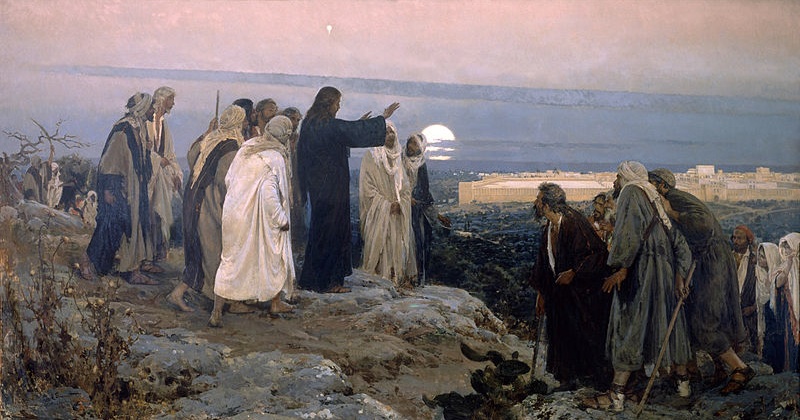
As many do today, he must have stopped on top of the mountain to gaze at the ancient city across the way. The gospels say he spoke here to his disciples about the days to come. (Mark 13,3-27; Matthew 24,3-25,46) He wept over the city here: “Jerusalem, Jerusalem, you who kill the prophets and stone those sent to you, how many times I yearned to gather your children together, as a hen gathers her young under her wings, but you were unwilling! Behold, your house will be abandoned, desolate.” (Luke 19,29-44) 

Roman legions under Titus fulfilled that prophecy in 70 AD, when they destroyed Jerusalem and its temple. Some of the stones thrown down from the temple can still be seen at the base of the old walls.

Mt.olives

Days before he was crucified, Jesus rode down this mountain to the city on a donkey from Bethphage, surrounded by followers and admirers who sang and danced and cast palm branches before him. (Mark 11,1,11; Matthew 21,1-11; Luke 19, 28-40; John 12,12-19) The ancient path down the mountain to the city may well be the one he took.

Jesus weeping over Jerusalem

On the night before he died, Jesus came with his disciples to pray here in a garden at the foot of the mountain. He fell into an agony as he prayed. Judas, a disciple, knew the place and led soldiers here to arrest him and lead him away to be tried and humiliated and crucified. (Mark 14, 32 ff; Matthew 26,36 ff; Luke 22,39ff;John 18,1ff)

When Jesus died, Matthew’s gospel says “The earth quaked, rocks were split, tombs were opened, and the bodies of many saints who had fallen asleep were raised. And coming forth from their tombs after his resurrection, they entered the holy city and appeared to many.”(Matthew 24, 51-54) The tombs around the Mount of Olives, all the dead, Matthew indicates, received the promise of Jesus’ resurrection. “He descended into hell.” Like the tomb of Jesus, every grave opens to the promise of risen life.

According to Saint Luke, Jesus taught his disciples for 40 days and then ascended into heaven from the Mount of Olives. (Luke 24,50; Acts 1,1 ff) No wonder, then, that Christians early on were attracted to this holy place with so many associations to Jesus.

By the 5th century, the Emperor Constantine built a large church on the top of this mountain over the spot where tradition said Jesus taught and prayed with his disciples and ascended into heaven. It was called Eleona, after the emperor’s mother, Helena, an early pilgrim devoted to the Holy Land. (See picture below) Luke’s unique view of the ascension, which inspired the building of this church, also inspired our celebrations of the Feast of the Ascension and Pentecost and the easter season.

eleona
IMG (672)
93.1

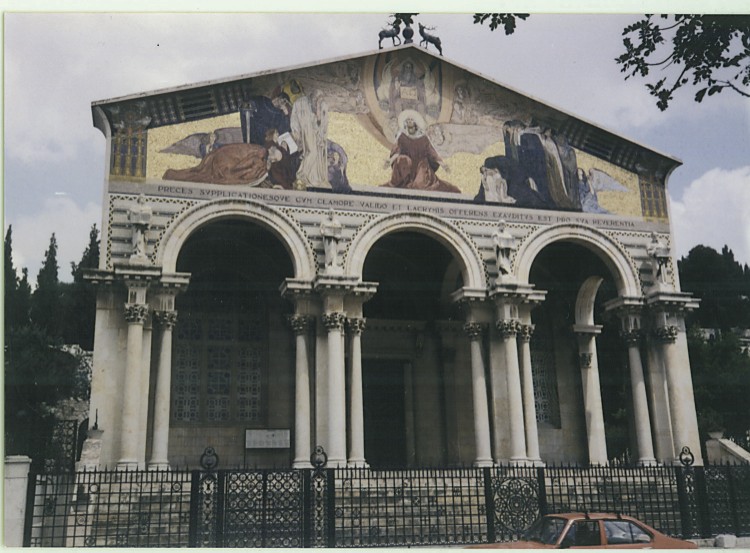
In the Byzantine era, great numbers of Christians flocked to the three major shrines built by Constantine: the church over the tomb of Jesus in Jerusalem; the church over the cave in Bethlehem and the church on the Mount of Olives where he ascended into heaven. Soon other churches were built to mark events in Jesus’ life. On the Mount of Olives, a church marked the place where Jesus wept over Jerusalem, “Dominus Flevit,” another where he prayed in agony. Over the centuries they were destroyed and rebuilt.

DSC00143

Over time, the Mount of Olives has been a Christian sanctuary where monks and nuns built large monasteries and pilgrims came, as once Jewish pilgrims from Galilee did. As once Jesus did.

Holy places help us see holy mysteries in concrete ways. They give us insight into the scriptures and the mysteries of faith.

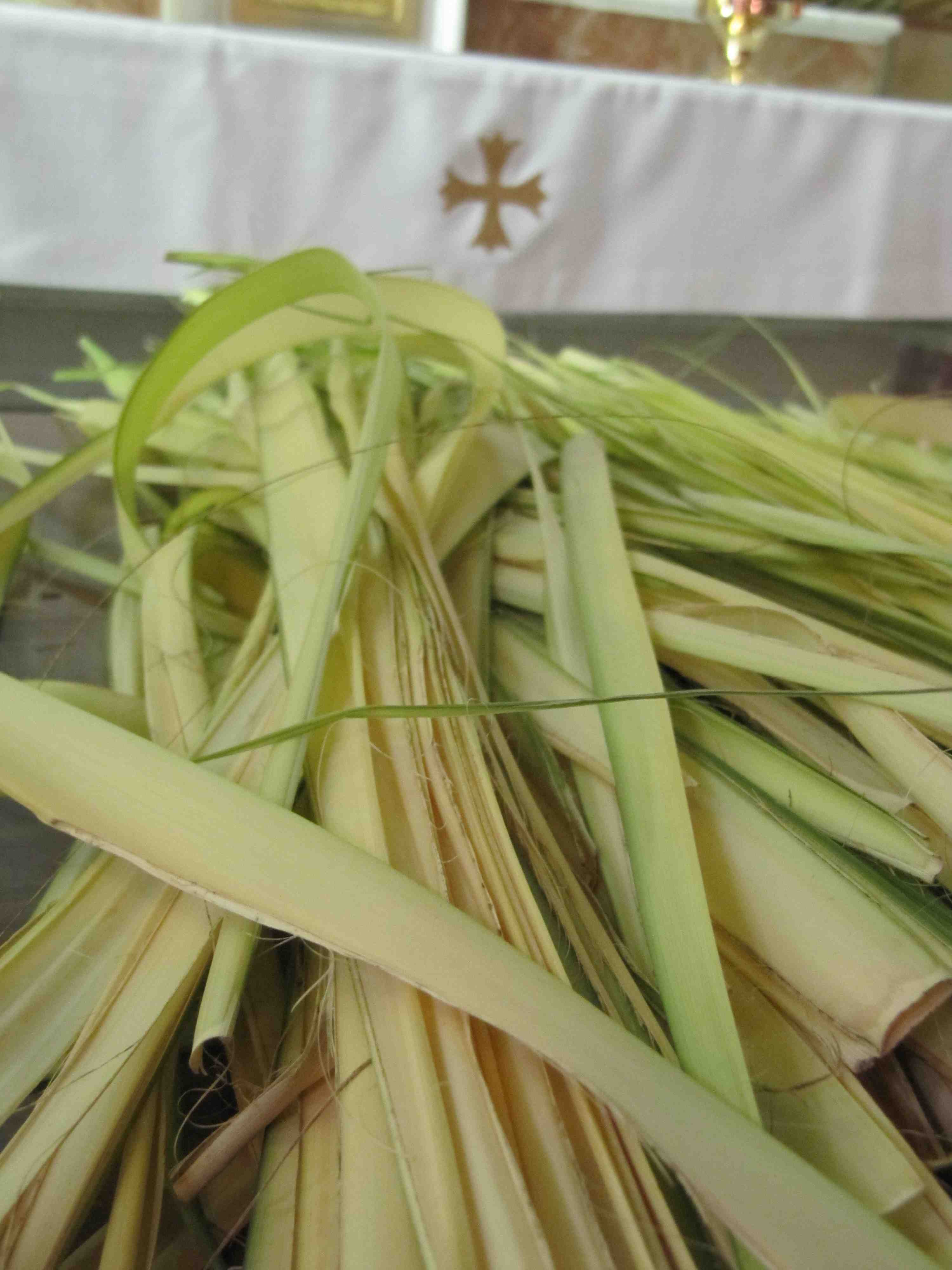
Where is your Palm today?

You took some palm home with you Palm Sunday? Where is it today?

Following Jesus isn’t a one day thing, it’s a lifelong journey. Stay at his side day by day. To enter Jerusalem, he sat on a humble beast of burden, the donkey, who carried the burdens of the poor.

Follow him on his way and make it your way too.

Feast of the Dedication of the Church of St. John Lateran

Today, is the feast of the Dedication of Church of St. John Lateran in Rome. It seems to me you can see much of the history of the Roman Catholic Church here in this building, one of the great pilgrim churches of Rome.I wrote about this ancient 4th century church, the “mother of all churches” elsewhere.

In a homily for this feast, St. Caesarius of Arles says that this church, like all churches, reminds us we’re temples of God. “And if we think more carefully about the meaning of our salvation, we shall realize that we are indeed living and true temples of God. God does not dwell only in things made by human hands, nor in homes of wood and stone, but rather he dwells principally in the soul made according to his own image and fashioned by his own hand. Therefore, the apostle Paul says: The temple of God is holy, and you are that temple.”

The ancient baptistery at the Lateran church, pictured above, is an entrance to this church. Through baptism we belong to the great church whose Lord, Jesus Christ, shares his life with us.

The beauty of a church reminds us of the beauty of our souls, Caesarius says: “Whenever we come to church, we must prepare our hearts to be as beautiful as we expect this church to be… Just as you enter this church building, so God wishes to enter into your soul, for he promised: I shall live in them, I shall walk through their hearts.”