Category Archives: Passionists

Is It Possible To See God?

Can we, poor creatures we are, know God and enter God’s presence, the inaccessible God? Can our hearts be pure enough to see God? St. Gregory of Nyssa asks that question in his commentary on the beatitude “Blessed are the pure of heart, for they shall see God.”

The “Hand of the Word” help us attain it.

“Does the Lord really encourage us to do something that is beyond our nature and our powers to accomplish? Surely not. Look at the birds: God has not created them without wings. Look at sea creatures: God has not designed them as land animals. Wherever we look, the law of each creature’s being does not demand that it should do something that it is beyond its own nature to do.

“Let us reflect on this and not despair of the purity of heart that the Beatitude speaks of. John, Paul and Moses did not, in the end, lack the sublime blessing of seeing God. Paul said There is laid up for me a crown of justice, which the Lord, the just judge, will render to me; John lay on Jesus’ breast; and Moses heard God say to him, I have known you above all. It is certain that those who said that the contemplation of God was beyond human power were themselves blessed. But blessedness comes from the contemplation of God, and seeing God is something that comes to those who are pure of heart. It follows logically that purity of heart cannot be an unattainable thing.

“So if some, with Paul, truly say that the contemplation of God is beyond human power, yet the Lord himself contradicts them by promising the sight of God to those who are pure of heart.”

We shouldn’t set our sights low.

Corpus Christi


To listen to today’s homily, please select the audio below:


I missed my train last week because I wasn’t paying attention to signs in the subway announcing delays due to track repairs. Keep your eye on signs.

Today’s Feast of the Solemnity of the Body and Blood of Christ calls our attention to the signs of bread and wine; They’re sacred signs Jesus gave us; we can take them for granted. They point to a great mystery.

Our first reading today from the Book of Exodus points to the altar where Moses called the people to remember through signs the life they received from God. It’s a covenant moment, Moses says. God graciously gives himself to us and we are called to give ourselves to God. That’s what we do here at our altar as we bring the signs of bread and wine.

The prayers we say help us to understand these sacred signs. In our prayer over the bread at Mass we say: “Blessed are you, Lord God of all creation, for through your goodness we received the bread we offer you, fruit of the earth and work of human hands, it will become for us the bread of life.”

The bread we offer, the wine we offer are signs of creation and the human efforts that are part of creation. They’re signs of everything that the “God of all creation” gives us, of everything that comes from our hands. “The word bread stands for everything,” Augustine said in one of his commentaries on the Lord’s Prayer. (Epistle to Proba)

The bread and wine stand for everything. Let’s think of what that means. Scientists say that our universe came into existence about 15 billion years ago. The bread and wine stand for the 15 billion years our universe has been in existence. About 3.5 billion years ago life began on our planet. The bread and wine represent that 3.5 billion years of life on our planet. When they’re brought to the altar the whole universe is brought here.

About 200,000 years ago human life emerged on our planet. 200,000 years of human life are represented in the bread and wine. Our lives are part of the human story represented in the bread and wine .

We believe that when Jesus sat down with his disciples at the Last Supper and took bread and wine into his hands he took all creation, all life, all human life, he took us into his hands.

“This is my body.” “This is my blood,” he said. He is God in human flesh giving himself to us and to everything that God made. In a love poured out, he renews the covenant God makes with us and with creation.

Of course, we can miss the signs.

5th Sunday B: He Takes Our Hand

Audio version of homily here:

If you’ve had the opportunity to visit the Holy Land, you may have visited Capernaum, the fishing village on the Sea of Galilee which was the base of Jesus’ ministry in Galilee.  Archeologists have uncovered much of that town in recent years; you  can see the ancient black basalt stones of houses from the time and the foundations of a synagogue where Jesus may have taught and prayed. It’s a fascinating place.

Jesus called this place home after he came from the Jordan River where he was baptized. Nearby, along the shore of the Sea of Galilee, he called Peter and his brother Andrew, James and his brother John, to  follow him. On the Sabbath day, he began his ministry by going into the synagogue where he taught and  all were amazed at his teaching. That same remarkable day, he drove out an evil spirit from a man in the synagogue.

The synagogue wasn’t the only place Mark’s gospel mentions that day. He tells us Jesus  left the synagogue and went with Peter and Andrew into their house, a short distance from the synagogue, where he would stay much of his time in Galilee.

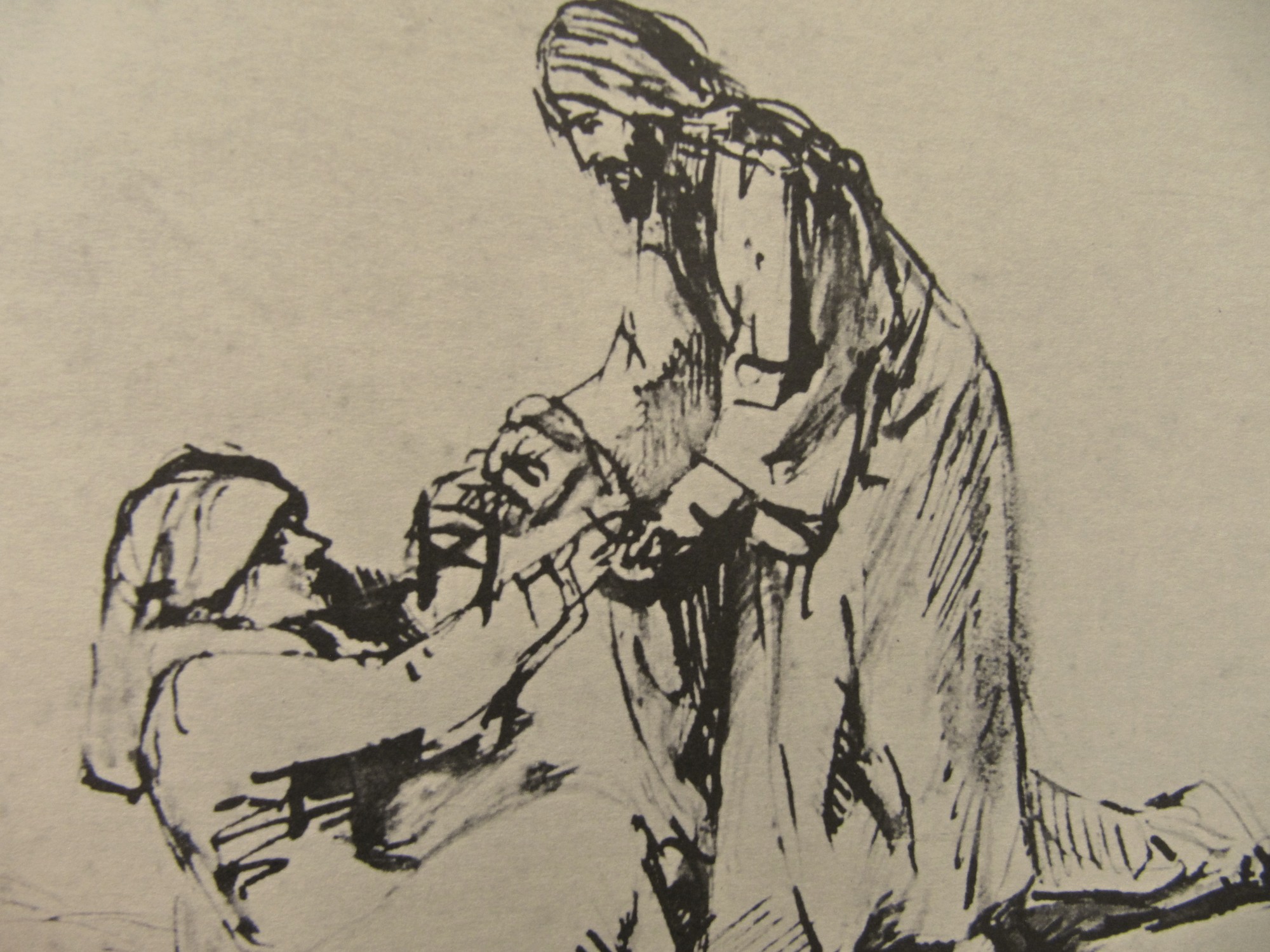
In recent times,  Franciscan archeologists have identified its location of what they call “Peter’s house” among the houses closely packed together. (See the picture above) The house is actually a compound where a number of families lived together. Peter’s mother in law was in bed with a fever. Jesus “approached her, took her hand, and raised her up. Then the fever left her and she waited on them.”

This may seem to be a minor healing when you compare it to some of the miracles Jesus worked: the paralyzed man who would later be lowered through the roof of Peter’s house, the lepers, the blind, the deaf, the dead like Lazarus or the daughter of Jairus.

But maybe this healing tells us something important, namely, that God is concerned for our every need, however small it may seem when compared to others. Think of it: shortly before this, in the Jordan River, the heavens opened and God said of Jesus “This is my beloved Son, listen to him.”

Now here the Son of God comes to this small village, to this little house, and his first concern is to take this woman by the hand and raise her up. As he does on other occasions, he gives the woman the power to live and do again what she did before. “She waited on them.”

We may think that God as interested only in great things. Jesus, the image of God, shows us God is interested in the smallest things. The very hairs of our head are numbered. The smallest concerns that no one sees, but God sees.

After Peter’s mother in law is healed, others come from Capernaum and all over, crowding around the door. And Jesus meets them all. The same Lord of heaven and earth, the same Jesus, the Risen Christ who always walks with us is with us here.

The Woman who touched Jesus’ Garments

Mark 5, 21-43

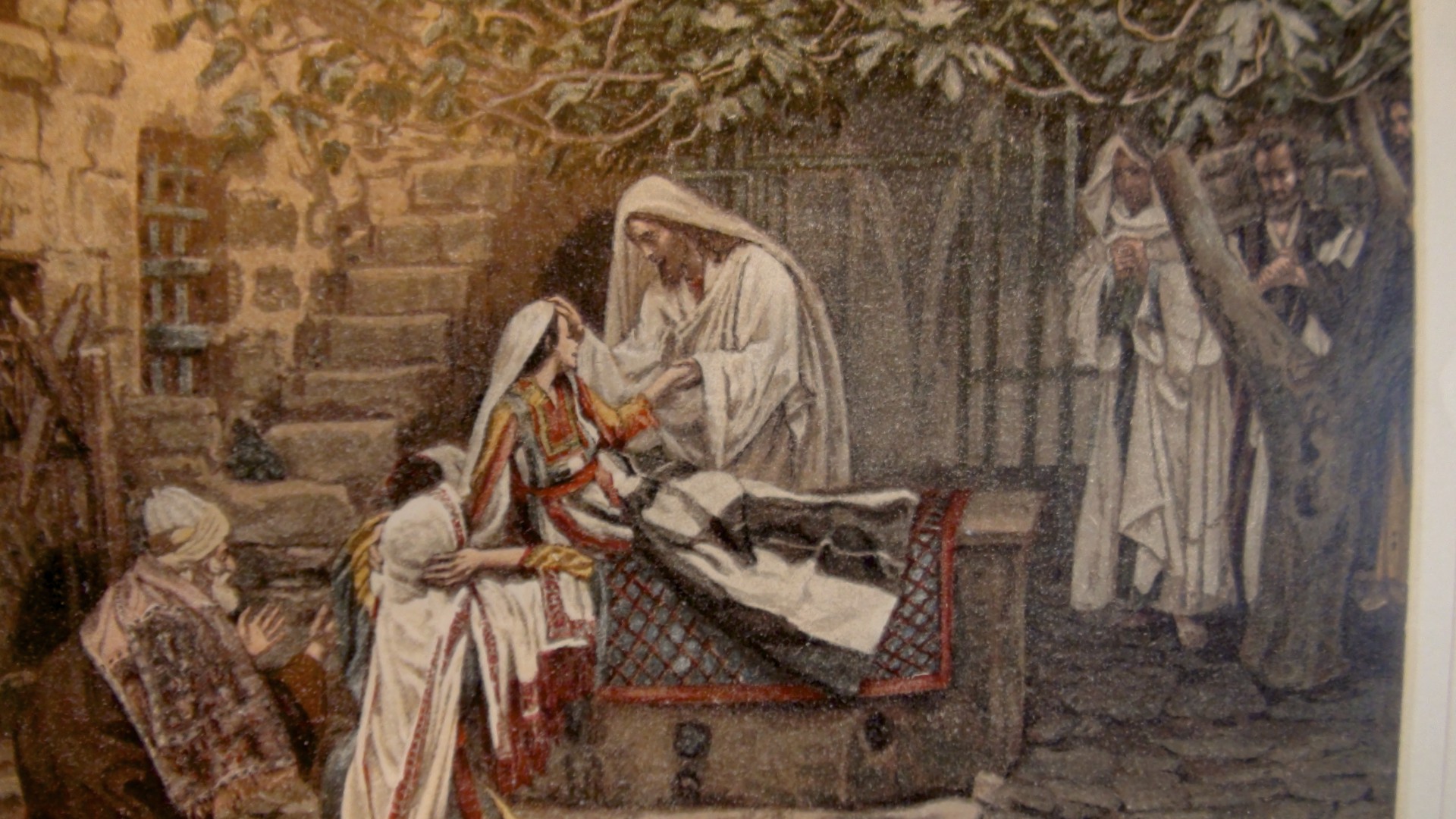
We read this story today at Mass. Why does Mark insert the story of the woman who touched Jesus’ garments into the story of the dead girl brought back to life? Was it simply that she happened to meet him on his way to the girl’s house? Maybe there’s another reason.

A picture of the woman touching the garments of Jesus is one of the oldest pictures  found in the catacombs of Rome, where early Christians buried their dead. Is it there  to remind them that those who died had also touched the garments of Jesus? They didn’t see him, but he met them in signs.

Those buried there believed in him and were baptized with water; they received his life through that sign and entered into the mystery of his death and resurrection. They received his body and blood in the signs of bread and wine, and so like the woman they touched his garments.  His power and life went out to them.

The Gospel of Mark was written in Rome, most scholars say. Is Mark’s arrangement of the  stories of Jesus raising the dead girl to life and the woman touching his garments a way of teaching Roman Christians about the mystery of death? Jesus was with them on their last journey.

In preparing the Catechism of the Catholic Church after the Second Vatican Council the Roman authorities responsible for the catechism instructed publishers to put the picture from the catacombs of the woman touching the garments of Jesus at the beginning of the section on the sacraments.

She’s an example, an image of the present church which knows Jesus through sacraments.  She helps us believe in the power of simple signs.

An Unclean Spirit

Our gospel today is from the first chapter of Mark.  Jesus has come from his baptism in the River Jordan,  gathered disciples and is living at Peter’s house in Capernaum along the Sea of Galilee. He enters the synagogue in the town and amazes people with his teaching. They’ve never heard anyone like him.

But a man in the synagogue with an unclean spirit challenges him.  I’m not sure what an unclean spirit is, and neither do most of the commentators on this gospel. The man certainly reacts violently to Jesus, shouting out:
“What have you to do with us, Jesus of Nazareth? Have you come to destroy us? I know who you are—the Holy One of God!” (Mark 1,21-28)

In other words: “Keep away from us; you’re only going to bring us trouble.” The man just wants to be left alone. Even in the synagogue he wants to be left alone. Even if Jesus is from God, the man just wants to be alone. “Get away from us!” he says.

That strong reaction to Jesus was not limited to the synagogue in Capernaum. It continued as he made his way to Jerusalem. The rejection was sometimes strong, sometimes people just ignored him. Mark see that rejection as diabolic.

No matter how wise his teaching, how compassionate his healing, how loving his words, Jesus was rejected.  In the end, his enemies killed him.

We believe the gospel repeats itself, and so it’s repeated today as we hear it.  “If today you hear his voice, harden not your hearts.” Can we reject Jesus too? As we sit in our synagogue today, do we reject him in signs of his presence and in faith?

Belief in Jesus Christ is at the heart of everything. “I believe in God, the Father Almighty…I believe in Jesus Christ…I believe in the Holy Spirit.” Believing means hearing Jesus, listening to him, offering ourselves to him, entering into friendship with him, hoping in his strength, waiting patiently to receive what he promises.

Believing is not something we do occasionally; we believe day by day. There’s always the danger of losing faith in him. “Leave us alone,” we say, “You want to destroy us.” We can prefer isolation to communion with the One God has sent.

So maybe an unclean spirit is not rare at all. Maybe we could call it that cloudy, dark spirit that can take hold of us, so we don’t see the light. Deliver us, Lord, from an unclean spirit.

Rejection of Jesus was not unusual in his day, as the gospel of Mark reminds us, and it’s not unusual today. Today, however, it’s influenced by some different factors.

For example, our western world resists the idea of Jesus as a unique Savior and Teacher. We live in a pluralistic society, and so when we say Jesus is a unique Savior and Teacher, we seem to deny the truth in other religions and religious teachers.

What about the Dalai Lama? What about Buddhism, Hinduism, the religion of native Americans? Don’t they teach the truth? When you claim that Jesus is unique, do we deny there’s truth in other religions and religious teachers?

In answer to that, we can say that we believe a human search for God goes on from the beginning of the human race. The human spirit is always searching for God and its search has been blessed by wisdom and spiritual insight. So other religions religions have been blessed with truth.

But the uniqueness of Jesus comes from the fact that God approaches us.  He sends us his Son. Jesus is his Word to us. His revelation is something we couldn’t arrive at on our own. We didn’t earn it. “This is my beloved Son, hear him,” God says from the heavens when Jesus is baptized. God takes the initiative and calls us into friendship with him, eternal friendship. It’s a promise beyond what we could dream of.

And Jesus not only promises new life, but he takes away what hinders us from enjoying a life with God. He takes away sin. He took away the unclean spirit that was there in the man in the synagogue.

I think there are other factors today that contribute to the rejection of Jesus, particularly in our western world. We’re proud of our individuality and there’s a fear following Jesus causes us to lose our own personalities and dreams. Jesus will take over our lives and impose on us a mold of his own.  We don’t like losing our individuality–not at all.

There’s a fear too that a code of morality will be imposed on us that will deaden our lives and make us scared to love and to live. For many Christianity appears to be a religion of cold moralism, but it isn’t.

The man in the synagogue with the unclean spirit may not be too far from us, then. “Be quiet! Come out of him!” Jesus cried out. We may need that healing ourselves.

Reading Churches

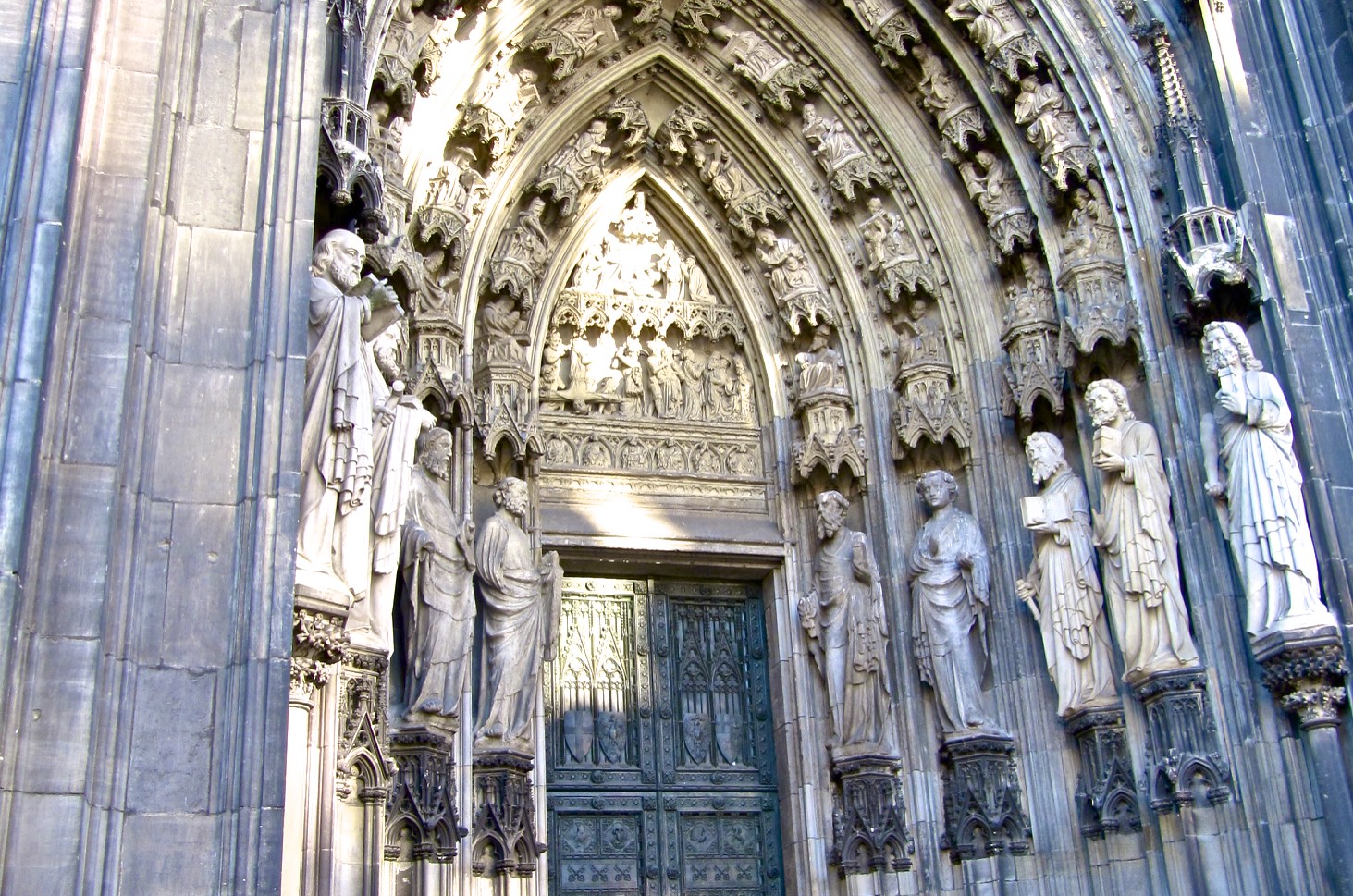
door cologne

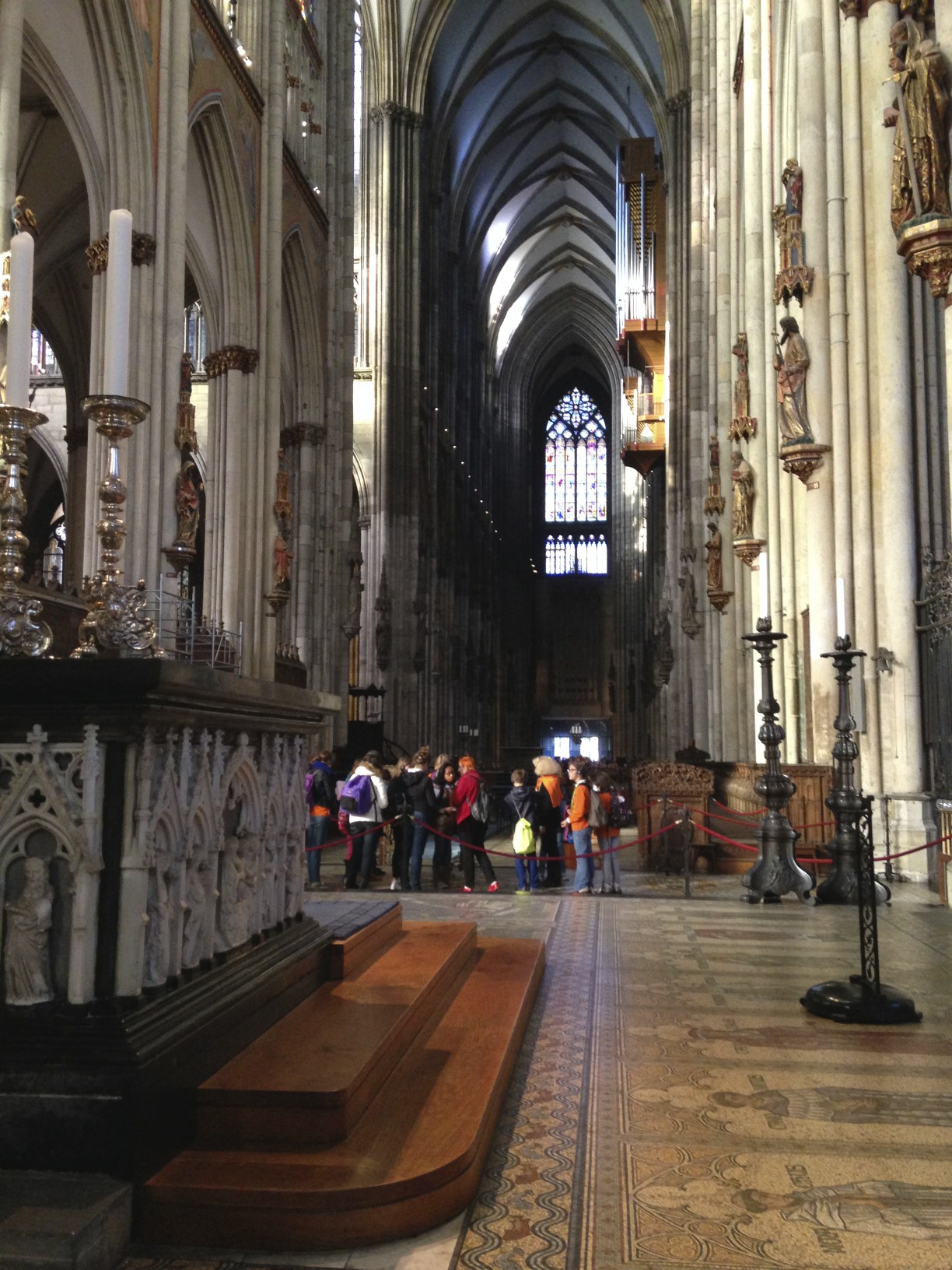
We hurry through doors, because we want to get inside. But cathedral doors are not ordinary doors; they try to slow you down and get you ready for what’s inside.

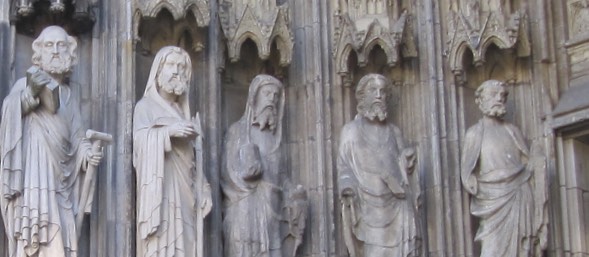
cologne apostles

The apostles stand at the western door of the Cologne Cathedral. Peter and Paul are nearest the door itself. Above them is the scene of their martyrdom under Nero. They’ve given their lives to the truth that’s told here, that Jesus Christ, the Son of God, was sent from above, and by his death and resurrection he calls us to follow him to glory. They’re teachers of faith who invite us to believe. You might call this door a version of the Apostles’ Creed.

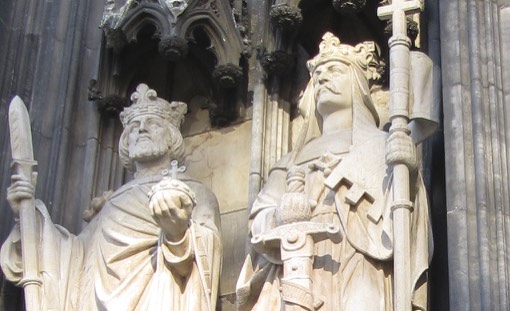
cologne rulers

Earthly rulers, like Charlemagne, stand at the door too, witnesses of another authority. The faith is to be lived on earth as well as heaven.

The images of prophets, teachers, martyrs and saints on the outside and within the cathedral echo the same promise. The Cologne Cathedral was an important church that welcomed pilgrims from other parts of northern Europe and so, besides the Three Kings, images of the popular saints honored at other shrines along the pilgrim routes of Europe, like St. James of Compestelo, are found there. It encouraged a common vision of life that made the various peoples one.

IMG_1816

In days when people couldn’t read, they read the cathedral’s stained glass, paintings and sculpture. With them can we see the building’s reach into the heavens pointing to a world above, a world where the promises of God will be fulfilled?

Last Suppercloseup

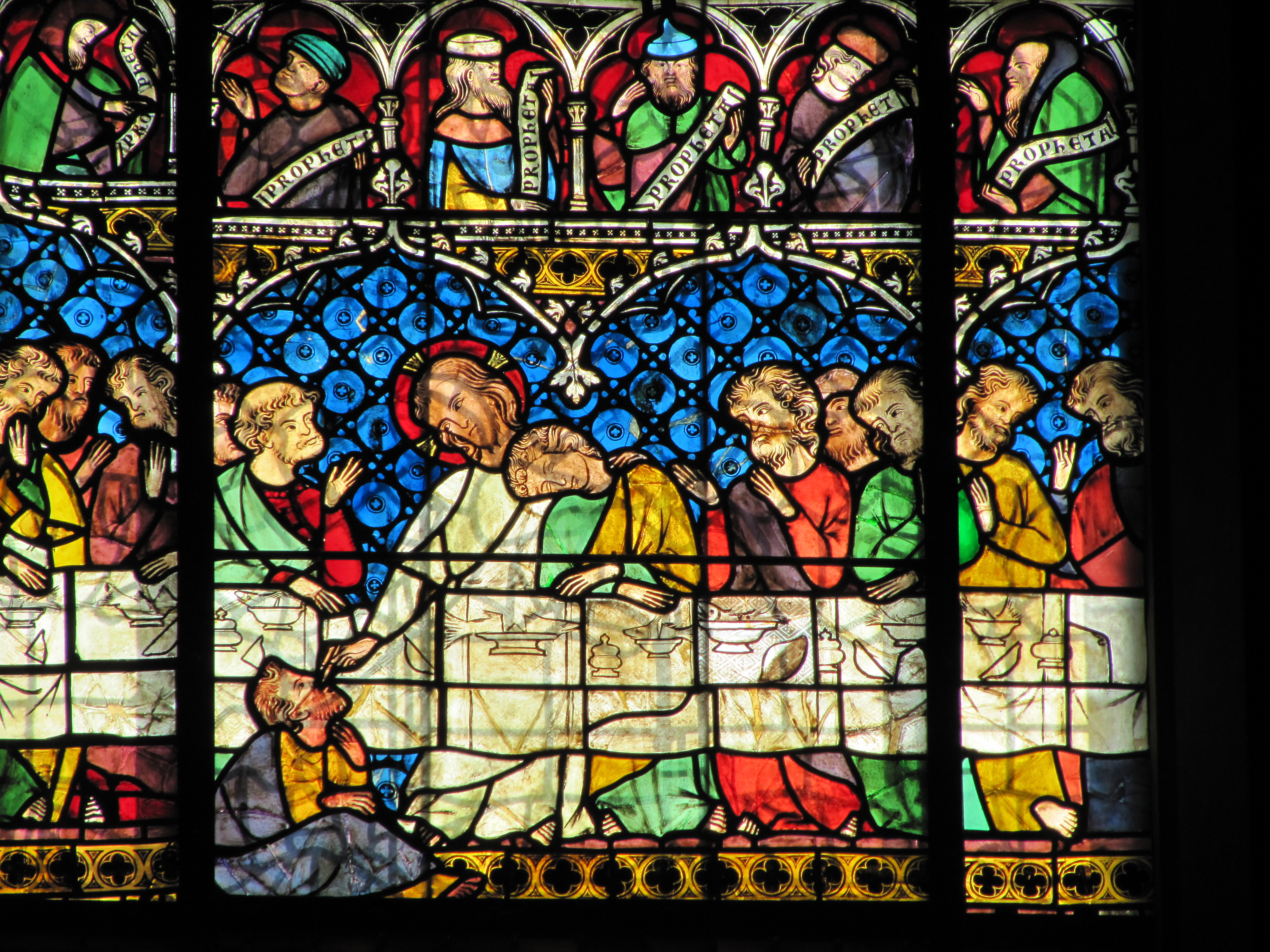
I took a picture of a stained glass window of the Last Supper in the Strasbourg Cathedral. Jesus hands a morsel to Judas, who then goes out into the night. How beautifully the artist captures the sadness of the Lord.

The Three Kings

IMG_0920

Three Kings 2

The Three Kings who visited the Infant Jesus are honored at a shrine in Germany’s Cologne Cathedral, where their relics were placed after being brought there in the 12th century from Italy. Images of the kings appear everywhere in this part of Germany; the rich gold reliquary holding their remains is one of the cathedral’s treasures.


“The purported relics,” our guide told us a few weeks ago, as if settling the matter.

But suppose we ask : “ Why were relics of the Three Kings brought there in the first place?” That invites some speculation.

The earliest Christian churches often traced their faith to those who brought it to them. Rome, for example, looked to the apostles Peter and Paul. Greece honors Peter’s brother Andrew for bringing the faith to their land. Other parts of the Christian world claimed other apostles, like Simon and Jude.

I wonder if Cologne, the Roman colony along the Rhine, at the “limes,” the end of the world, saw the Three Kings as appropriate patrons for their church so far from the land of Jesus as well as from the early churches first blessed by his gospel. Late in receiving the faith, did this land see the Three Kings as the bearers of the faith to them? They were not left out.

“Go out to the whole world,” Jesus told his disciples.

The cathedral reliquary (above) portrays Jesus in glory as Teacher and Lord. On the bottom left is a scene of the Three Kings paying homage to the Child on Mary’s lap. They come from the ends of the earth. On the bottom right, Jesus is baptized in the River Jordan, sanctifying not only the waters of that river but the waters of the Rhine as well. A simple portrayal saying everything: All nations are called to the promise of his life.

IMG_0908


30th Sunday: Pope Francis’ Synod


To hear the audio of today’s homily please select the audio slider below:

“Love God and love your neighbor as yourself,” Jesus says. The question then is: How do we love God and neighbor in the world we live in, for example, in our families? That’s the question the recent Synod of Bishops considered, the synod convened by Pope Francis who invited church leaders from around the world to join him in looking at the times in which we live, “the signs of the times,” and see how we can adapt to the changing conditions of society.

For two weeks in Rome, leaders of the Catholic church studied reports they received previously from all parts of the world, shared their reflections and made some preliminary recommendations. Now, the pope asked them to bring their reflections home to be discussed by their local churches and then return to Rome to continue the process with him next year.

It’s a long, extended process, over two years; it’s not finished yet.

You can read about the synod in your diocesan paper or online, and I hope you do, because it gives us an interesting look at family life in all parts of the world. You can find the working paper from the synod on the Vatican website.

http://www.vatican.va/roman_curia/synod/documents/rc_synod_doc_20140626_instrumentum-laboris-familia_en.html#Difficult_Pastoral_Situations

http://press.vatican.va/content/salastampa/en/bollettino/pubblico/2014/10/13/0751/03037.html

Let me mention a few things from the working paper for the synod. As you might suspect, it reflected on the family from the perspective of the bible and church tradition, but then in Part II it takes up the challenges a family faces today.

One is a perennial challenge: lack of communication in families. Husband and wife not talking to each other, children not talking to parents. Where there’s no communication in a family, there’s a loss of meaning and an experience of love. (64)

Families can also be torn apart by violence and abuse, an abuse that can be psychological, physical or sexual. Families can be damaged by addictions to alcohol and drugs. The synod then mentions some dangers today from the social media and the internet, particularly pornography. (66)

Let me quote from its document: “… Television, smart phones and computers can be a real impediment to dialogue among family members, leading to a breakdown and alienation in relationships within a family, where communication depends more and more on technology. In the end, the means of communication and access to the Internet replace real family relationships with virtual ones. This situation runs the risk of leading to not only the disunity and breakdown of the family but also the possibility that the virtual world will replace the real one.” (68) The people on television, video games, become more real than the people in your home.

The economy and work also influence families. Let me quote again: “The pace of work can be fast and sometimes even exhausting…and increasingly hectic life leaves little opportunity for moments of peace and family togetherness…Increasing job insecurity, together with the growth of unemployment and the consequent need to look for work elsewhere, have taken their toll on family life. “ (70)

There’s a need for governments and businesses to make sure there are decent jobs and just wages, as well as programs that assist families and children. (71)

I think you can see from these few examples that the synod is looking at real life situations.

The 3rd chapter of the synod document gets most attention in the media. “Difficult Pastoral Situations.” The first difficult situation it mentions is the increasing number of couples, particularly in North America and Europe who are living together, without getting married. They do this for different reasons, the surveys say. Sometimes its because of “financial need, unemployment and lack of housing.” Sometimes it the “fear of making a commitment and the idea of having children. They don’t want to make definitive decisions or have responsibilities that come with marriage. The leaders of the church are asking–and we all have to ask– how can we help young people enter into the long term relationship which is marriage? (82)

Another difficult situation, “especially in Europe and across America is the very high number of people who are separated, divorced or divorced and remarried.” Because of their situation, many of them can’t receive Holy Communion. The questions being asked is what can we do to help these people and how can we make them and their children feel at home in the church?  (86)

The final difficult situation is about same sex marriage. The synod is rejecting the view that homosexual unions are the same as the traditional union of man and woman. “Yet, at the same time, we need to make clear that men and women with homosexual tendencies ‘must be accepted with respect, compassion and sensitivity.’” (110)

There’s an opposition, then, to “redefining” marriage between a man and a woman through laws permitting a union between two people of the same sex. We’re trying to find a balance between the Church’s teaching on the family and a respectful, non-judgmental attitude towards people living in such unions. (113)

I began with the simple words of Jesus, “You shall love God and your neighbor. Not easy in a complex world, but we’re called to do just that.

When Pope Francis called for the synod he asked the bishops to consult their people and listen to them. He asked for transparency in discussing these issues. He recognizes there will be different ideas and different solutions concerning these challenges. He said we are on a journey. It’s a unique process the pope has begun and I hope we all can enter into it.

The Passion of Christ

passion site

Monday on the Feast of St. Paul of the Cross we launched a new website on the Passion of Christ.

http://passionofchrist.us/

The website has a commentary on the Passion Narratives by Fr. Don Senior, CP, and information on Passion sites, devotions, prayers, spirituality and recent studies.

In recent studies, for example, there’s a review by Fr. Paul Zilonka, CP. of Bill O’ Reilly’s recent book “Killing Jesus.”

It’s a work in progress. A lot more material will be added in days to come, so drop in every once in awhile. The Passion of Jesus is at the heart of the mission of the Passionists, the community I belong to. It’s a mystery that can feed your soul.  I would be grateful for any suggestions you may have.

The site will play on any computer, iPad or smart phone. We hope eventually to develop the website into a multi-lingual site that will literally reach the whole world.

I’m very grateful to the person who did such a beautiful job in formatting the site. A work of art in itself. A special grace brought this site about.

On to the Rhine

Rhine

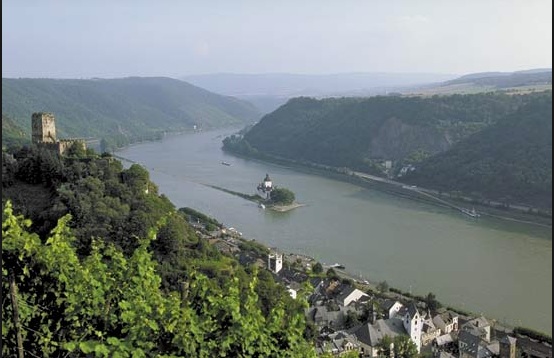
I’m going with a group on a cruise of the Rhine River leaving Wednesday. Here are a few notes about the trip for those on the cruise and those who may wish to follow us.

The Rhine River is a living history book as it winds its way 820 miles from the Swiss Alps to the North Sea.

Look for signs of Roman forts along the way. The ancient Romans tried to make the Rhine a kind of “Iron Curtain” to contain the barbarian tribes that wanted to enter the empire. They also found the fertile lands near the river good for growing grapes and other crops, so some of the forts became centers of trade, like Mainz.

After the Peace of Constantine (312 AD), Christianity brought the gospel to the lands along the Rhine. St. Boniface is an important figure. (c. 675 – 5 June 754 AD) A missionary from England he preached to the various Germanic tribes, became bishop of Mainz, and established monastic settlements along the river to fulfill his mission.

Boniface

Should he be our patron for the trip? “In her voyage across the ocean of this world the church is like a ship pounded by the waves of life’s different stresses. Our duty is not to abandon ship, but to keep her on course…Let us stand fast for what is right and prepare our souls for trial…Let us be neither like dogs that do not bark nor silent onlookers nor servants who run away before the wolf.”

In the 12th century with the growth of cities majestic cathedrals, like those in Strasbourg and Cologne, were built. Castles and buildings of local rulers line the river’s banks as defenses against invaders and symbols of power.

In the 14th century, the shrines and churches of the Franciscans and the mendicant orders appear. The 16th century brought the Reformation. We hope to sample some cathedrals and churches along the river.

The Rhine was a battleground through the centuries; the last two world wars have left their mark on the lands along the river.

We land in Basel, where John Calvin wrote his “Institutes” in 1536, a defense of Protestantism which he sent to Francis 1 of France. Francis kept France Catholic, however, and Calvin fled to Geneva and made it into a key Protestant center that had influence worldwide.

I hope to reflect particularly during our trip on the Reformation and the relationship of Protestants and Catholics today. Much has changed since the stormy beginnings in the 16th century. Pope Francis recently remarked to a group of European bishops that “Speaking about God has become more and more marginal” in Europe. The pope, a strong advocate of ecumenism, hopes all Christians will come together to face the challenge.

We will see many churches and signs of its Christian past on our trip down the Rhine from Basel to Amsterdam, but I don’t think we’ll hear much about God or see many signs of Christian practice. Europe is increasingly secularized.

Some books that I’ll bring along on the trip.

“A Brief History of Spirituality” by Philip Sheldrake, Blackwell Publishing, 2007. Sheldrake has a wonderful gift for summarizing spiritual movements like monasticism and relating them to the world in which they take place.

“The World of Catholic Renewal 1540-1770” by R. Po-Chia Hsia, Cambridge University Press. The Catholic Church responds to the Reformation. A good study in social history.

“Concise Dictionary of the Christian Church” E.A. Livingstone, Oxford 1977 Just what it says: a lot of concise information about the Christian Church.

I also mentioned the Rhine trip in a previous blog: