Category Archives: Passionists

Is God at the Convention?

Our political conventions are beginning. A time, especially this year, when we wonder about our future. No perfect candidates, no perfect plans, no perfect solution. Should we pay any attention at all?

I’m thinking of John Henry Newman, the illustrious 19th century English theologian who converted from Anglicanism to Catholicism in 1845. An Italian Passionist priest, Fr. Dominic Barbari, received him into the church.

Newman’s conversion came through his efforts to bring the Church of England, then struggling against the rationalism of the Enlightenment, back to its orthodox Christian roots. He sought the answer in studying  early Christianity and its development to the present day. The Oxford Movement begun by Newman and other university friends strongly affected the Anglican church and other Christian churches of his time.

Originally convinced that the Catholic Church was corrupt and unfaithful to the gospel, Newman came to accept it as the Church founded by Jesus Christ. An important reason for his acceptance was his study of the Donatists, a 4th century Christian group that split from the larger church over who should be members of the church. The Donatists believed that the church should be a church of saints, not sinners.

Newman came to understand that the Church develops over time, and its development takes place in the real world, which is the world of saints and sinners. The spirituality he arrived at was anchored in this reality. We live in a world of weeds and wheat. “Nothing would be done at all if one waited until one could do it so well that no one could find fault with it.” We don’t live in a perfect world or a perfect church.

The world we live in is blessed by God with a purpose and a mission. No, it’s not perfect nor will it ever be perfect.We may cringe at the circus our political world can create these next few weeks. But that doesn’t mean we don’t try to make politics live up to its ideals. In all the hoopla God is at work.

 

16th Sunday: Martha and Mary

Martha Mary 2

To listen to today’s homily, select the audio file below:

This Sunday at Mass we read from the Gospel of Luke about the visit of Jesus to Martha and Mary.

It’ s hard for us to keep the gospels separate and let each evangelist tell the story he wants to tell, and so when we hear about Martha and Mary in Luke’s gospel, we can’t help but think about the Martha and Mary in John’s gospel, who live in Bethany, whose brother Lazarus dies and whom Jesus will raise from the dead.

In John’s gospel Martha seems to shine, as she runs to meet Jesus and expresses her faith  when her brother dies:

“’Lord, if you had been here, my brother would not have died. But even now I know that whatever you ask of God, God will give you.’

“Jesus said to her, ‘Your brother will rise.’ Martha said to him, ‘I know he will rise, in the resurrection on the last day.’

Jesus told her, ‘I am the resurrection and the life; whoever believes in me, even if he dies, will live,kand everyone who lives and believes in me will never die. Do you believe this?”* lShe said to him, ‘Yes, Lord. I have come to believe that you are the Messiah, the Son of God, the one who is coming into the world.’” (John 11, 21-27)

You can’t ask for a stronger expression of faith than that, can you?

But Luke presents the two women differently in his gospel. So let’s hear his story. This is the only mention Luke makes of Martha and Mary in his gospel. It’s all he tells us about them. He doesn’t say they live in Bethany or that they have a brother named Lazarus who died and was raised.

No, this story is part of Luke’s journey narrative of Jesus on his way to Jerusalem. Luke wants to tell us that Jesus the prophet is making his way to Jerusalem and when he enters your house you should listen to him. That’s what Mary does, she listens to him. Martha is too concerned with taking care of things and she misses what he says.

I suppose we can say that like Martha we can get so caught up with what we’re doing that we miss what Jesus the prophet wants to say to us. We might be doing very good things, but we all need to listen more. We might be the best people, but even the best people may not listen enough.

Still, I  find it hard not to praise  Martha as we listen to Luke’s gospel. St. Augustine obviously had a soft spot for her. He says that Martha cared for the “Word made flesh,” who was hungry and thirsty, tired and in need of human care and support. “She longs to share what Mary enjoys, his presence, his wisdom and his gifts. And she will find her desires fulfilled.

“Martha, if I may say so, you will find your service blessed and your work rewarded with peace. Now you are much occupied in nourishing the body, admittedly a holy one. But when you come to the heavenly homeland you will find no traveller to welcome, no one hungry to feed or thirsty to give drink, no one to visit or quarrelling to reconcile, no one dead to bury.”

“No, there will be none of these tasks there. What you will find there is what Mary chose. There we shall not feed others, we ourselves shall be fed. What Mary chose in this life will be realized there in full. She was gathering only fragments from that rich banquet, the Word of God. Do you wish to know what we will have there? The Lord himself tells us when he says of his servants, Amen, I say to you, he will make them recline and passing he will serve them.”

13th Sunday C: On the Journey

To listen to today’s homily, please select the audio file below:

We’re reading the Gospel of Luke the Sundays of this year. At the beginning of his gospel, St.Luke promises to put down in an orderly way the events that have been fulfilled in Jesus Christ. As we listen to his account he wants us to realize that what we hear Jesus say to his disciples and to others he says to us. When we hear what happens to Jesus we are also hearing what happens to us.

In the 9th chapter of his gospel, part of which we read this Sunday, Luke describes a crucial turning point in the life of Jesus. After teaching and healing and performing wonders for a time in Galilee, Jesus asks his disciples, “Who do people say I am?” Then, he asks them, “Who do you say I am?” Of course, Luke wants us to face that same question too. “Who do we say Jesus is?”

Jesus then announces he must go up to Jerusalem. Listen to the way Luke describes his decision “When the days for Jesus’ being taken up were fulfilled, he resolutely determined to journey to Jerusalem, and he sent messengers ahead of him.” This is a journey when the days for Jesus being taken up were fulfilled. In other words, this is a journey when Jesus will pass from this world to his Father. He is journeying to Jerusalem to suffer and die and rise again. He will be “taken up.”

And he doesn’t make this journey alone. At this point in the gospel, Jesus calls his disciples to follow him, Luke says, but the evangelist wants us know that he’s calling everybody to follow him, not just a designated few. Greater than Elijah, Jesus gives his mantle to many followers who’ll share his journey and they’re taken up with him to share his reward, and he sends messengers ahead of him to gather as many as they can.

There’s a simple criteria Jesus gives for following him. “Take up your cross daily and follow me,” he says in Luke’s gospel. It’s an everyday cross he wants us to take up, not the cross of wood that he himself bore; it’s not nails in our hands and feet or scourges on our back that we’re asked to bear. It’s the everyday cross that we carry all the time, wherever we are. It’s the cross we carry on our journey of life, all our life. Sometimes it comes from ourselves, from sickness, or old age, or disappointments, or worry, or the constant pressures of living everyday. Sometimes it comes from the world we live in with its violence and uncertainties. It’s always there and Jesus tells us to carry it.

In today’s gospel the Lord says something more about following him; some of what he says we may find hard to understand. For example, what does he say to the man who wants to bury his father before following him? “Let the dead bury their dead.” What does he say to the one who wants to say goodbye to his family first? “ “No one who sets a hand to the plow and looks to what’s left behind is fit for the kingdom of heaven.” Sounds hard and unreasonable, doesn’t it?

Hard and unreasonable, until we see how important it is to follow Jesus. If life is a journey, and it is, where are we going? Do we think this is all there is? If life is a journey, do we make it alone? If life is a journey, does it stop at death? If it doesn’t stop at death, who will take us beyond it? If life is a journey from this world to another world, who will be with us all days to bring us to that world?

We can see how important it is to follow Jesus Christ?

Some, of course, think he makes no difference. They can go it alone. Some think Christ is just a “back-up,” when you need him he’ll be there. Some think he brings power and success for living here and now. But look at what he says in today’s gospel: “Foxes have dens and birds of the sky have nests, but the Son of Man has nowhere to rest his head.” Jesus doesn’t assure us of a nice house or a good living. In today’s gospel, too, his disciples want to set fire on the Samaritans who refuse them hospitality, but Jesus turns his back on them.

For the next four months our Sunday gospels are mostly from the journey narrative of Luke. We will be hearing what Jesus says to those he meets on the journey. Let’s listen as if he’s speaking to us. On the way to Jerusalem Jesus calls followers. None of them are perfect, by any means. In Luke’s narrative it’s the lost sheep, the prodigal children, the forgotten poor, a blind man on the road, a crooked tax collector who follow him. He calls us too. Let’s listen to him.

We’ll hear warnings in the weeks ahead which we should take to heart. “You are a fool,” God says to the man who thinks only about building bigger barns. Let’s listen to him. We’ll hear about stopping and helping others, as the Good Samaritan did. Let’s listen to him.

12 Sunday C: The Everyday Cross


To listen to this week’s homily, please select the audio file below:

Three gospels, Mark, Matthew and Luke, are called the synoptic gospels because they seem to “see” the story of Jesus in the same way. They were written some years apart. Scholars say Mark is the earliest, written around the year 70 AD. Matthew perhaps around the year 80 AD, and Luke between 80 and 90 AD.

All three recall the same story, but each introduces changes and additions of their own to teach the communities they’re writing for. We may hardly notice the differences, but they’re there.

For example, today’s gospel from Luke recalls an important incident that’s found in all three gospels. After ministering and teaching in Galilee for a time, Jesus announces he is going up to Jerusalem to suffer, die and rise again.

In all three gospels, Jesus asks his disciples “Who do people say I am?” Their answers are pretty much the same: ‘John the Baptist’ others ‘Elijah’ still others, ‘One of the ancient prophets has arisen.’”

Jesus then asks his disciples, “Who do you say I am?” All three gospels report Peter’s response: “You are the Messiah.”

Then, Jesus announces he is going up to Jerusalem and he tells his disciples to follow him. The three synoptic gospels agree on the basics of this crucial incident in the story of Jesus.

But notice in Luke’s gospel two interesting variations in Jesus’ call to follow him. “Jesus then said to all, ‘If anyone wishes to come after me, he must deny himself and take up his cross daily and follow me. For whoever wishes to save his life will lose it, but whoever loses his life for my sake will save it. “”

Jesus speaks to “all,” not just to a few disciples, Luke says. He invites all, not just the chosen twelve, or the Jewish people, or Jewish-Christians to follow him. Luke’s gospel insists that Jesus reaches out to everyone. All are invited to follow him and all, not a designated few, have to take of their cross.

Notice, too, the subtle change Luke makes in Jesus’ call to take up our cross. It’s a “daily” cross we are to take up. “If you want to come after me, you must deny yourself and take up your cross daily and follow me.” It’s an everyday cross, not the cross of wood that Jesus bore; it’s not nails in our hands and feet or scourges on our back that we’re asked to bear.

What’s an everyday cross, we may ask? Open your arms wide and what do you see? We’re formed like a cross. That’s what we carry everyday–ourselves. Maybe it’s sickness or disappointment or weariness or worry about something or someone. Maybe it’s putting up with a world that wont change or dreams that wont come true.

The cross we take up is there, everyday, in ourselves and the world we live in, and our patience wears out bearing it.

“Take up your cross daily and follow me,” Jesus says in Luke’s gospel. By adding one word, the evangelist makes clearer what Jesus would say.

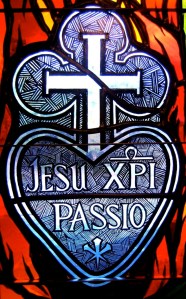
The Passionist Charism

Sign
Recently, Father Joachim Rego, superior general of the Passionists, sent a letter to “the Passionist Family” commemorating the approval of the Passionist Rule 275 years ago, on June 11, 1741, by Pope Benedict XIV. Father Joachim addressed the letter to ‘brothers, sisters and friends in the Passionist Family.” He was writing not just to professed members of his community but to everyone attracted to its charism.

When Pope Benedict approved the Passionists as a religious family in the Catholic church 275 years ago, he was heard to say, “This is the last community to be called into the church; it should have been the first.” The pope, considered the greatest pope of the 18th century, was devoted to the Passion of Jesus. He renovated the Church of the Holy Cross in Rome, where the ancient relics of the passion, brought to the city by Helena, the mother of the Emperor Constantine, were venerated. Still more, he wanted to rebuild faith in the mystery of the Passion of Jesus at a time when many were becoming forgetful of this great mystery.

In our times, too, many forget this mystery, as well. Let’s keep it in mind.

In his letter, Father Joachim calls attention to a “rescritto”, a special condition that was part of the pope’s letter of approval: “This ‘special condition’ required the Passionists to commit themselves to preach and serve in those areas and islands where, due to the unhealthy environmental conditions, the people are abandoned and forgotten.

“From our very beginnings, the Church has named our special vocation to show a preferential option for the suffering, the marginalized, and the “the crucified” of their times. As we remember this joyful moment for Paul of the Cross and his first companions on 11 June 1741, may we – his companions today ‐ also take the occasion to review and renew our commitment and vocation to keep alive the memory of the Passion of Jesus as the greatest act of God’s love and mercy, and to promote this memory in the lives and hearts of people today…” especially those who are poor and neglected; we seek to offer them comfort and to relieve the burden of their sorrow.” (Const.#3)

“Let us keep challenging ourselves as Passionists to ‘look back’ and appreciate with greater depth the SPIRIT of our Holy Founder, so that we may ‘look forward’ to live and practice with fidelity our Passionist vocation in the various contexts of the church and the world of today.”

I like Father Joachim’s call to look back to the spirit that brought the Passionists into the church and then ask how can we make it present today. A religious community’s rule is important, but charism precedes a rule and keeps it alive. How do we reach out to the suffering, the marginalized and the crucified today?

11th Sunday C: The Mercy of God

To listen to today’s homily, please select the audio file below:

This Sunday there are two stories about forgiveness in our liturgy at Mass. From the Second Book of Samuel we hear the story of King David whose sin is pointed out to him and then declared forgiven by the prophet Nathan. The gospel reading from Luke tells the story of Jesus forgiving a sinful woman in the house of a Pharisee, who can’t seem to believe in forgiveness when he sees it.

The two stories complement each other. They remind us that forgiveness is not a simple matter; it’s a mysterious gift of God.

King David’s sins are well known and nothing to be proud of. He lusts after Bathsheba, the wife of Urriah, one of his officers. When David fails to disguise his adultery, he arranges to have Urriah killed and then marries his wife. The king’s sins are more than sins of lust or murder; his sin is an abuse of power. David’s the king, with absolute power over his subjects, answerable to no one, he thinks. He can do anything he wants and no one stands in his way. Unfortunately, he’s lost a sense of guilt; his conscience doesn’t bother him. He’s a king who can do no wrong.

Notice, though, that David recognizes sin and injustice in others. When the prophet Nathan tells him the story of someone who robs a poor man of his precious lamb, David immediately wants to right the wrong. Nathan says “ You are that man.” But David’s blind to his own sin, and so the prophet must awaken him to see what he has done. If you’re blind to sin, how can you be forgiven?

Finally, David admits; “‘I have sinned against the LORD.’ Nathan answered David: ‘The LORD on his part has forgiven your sin, you shall not die.’”

Now, the woman in Luke’s gospel who goes to the house of the Pharisee, unlike David, knows she’s a sinner and rejoices in the forgiveness she finds in Jesus. She expresses herself with that extravagant gesture of love. “Bringing an alabaster flask of ointment, she stood behind Jesus at his feet weeping and began to bathe his feet with her tears. Then she wiped them with her hair, kissed them, and anointed them with the ointment.”

In Luke’s story, it’s the Pharisee who’s blind. He can’t see forgiveness or the love behind it. He’s blind to God’s love, first of all, welcoming the sinner, and to the woman’s love that comes from being loved so much. He doesn’t seem to think forgiveness exists and he doesn’t understand it.

Simon, the Pharisee in our story, is like the Pharisee in Luke’s parable about the two men praying in the temple. He sees himself “unlike the rest of humanity, greedy, dishonest, adulterous.” He’s too good to need forgiveness. His blindness comes from self-righteousness.

Luke’s gospel is filled with sinners. Let’s be like them: the sinful woman, the prodigal son, the tax-collector Zacchaeus. They all recognize they’re sinners and they end up rejoicing at a banquet. They enjoy the mercy of God.

10th Sunday C: Raising the Dead

To listed to today’s homily please select the  audio file below:

All this week and most of the following week our readings at Mass are about the Prophet Elijah from the Book of Kings. Jesus, remember, is often compared to Elijah. “Who do people say I am?” he asks his disciples. “Some say you are Elijah,” they answer. On the Mount of Transfiguration Moses and Elijah appear with Jesus in glory. Elijah is a prophet who helps us know Jesus.

He’s a mysterious prophet, first of all. We know little about his origins. The scriptures call him, “Elijah, the Tishbite.” Like Jesus, his origins are mysterious.

Elijah is also a lonely prophet. By “lonely” I don’t mean he chooses to avoid people or prefers a solitary life. Elijah is lonely because he got into trouble with the powerful establishment of his day and is continually on the run, hiding out in caves and wadis. His loneliness comes because he fearlessly challenges the wicked king Ahab and his notorious wife Jezebel, who have absolute control over Israel. He himself has no political party, no cadre of followers to back him up. Yes, people like what he’s doing, but when danger comes, they abandon him, like the disciples who abandoned Jesus when danger came to him.

Like Jesus, Elijah speaks the truth and defends the truth, but speaking the truth and defending the truth can also make you unpopular. It can be a lonely, thankless path.

Our reading today from the Book of Kings is from the first part of Elijah’s mission. On God’s authority the prophet announces to King Ahab a drought is coming to the land of Israel. Because Ahab and his people are unfaithful to God no rain will fall, no crops will be harvested, no money will come in from trade. Of course, the king and his queen are furious and want Elijah’s head.

On a pilgrimage to the Holy Land some years ago, I remember standing on Mount Carmel in northern Israel, which is Elijah’s traditional home, looking out to the east and to the south. Our guide pointed east toward the Jordan valley, where Elijah went to hide from Ahab and Jezebel near a mountain stream, the Wadi Cerith. The king knew every water hole, every hiding place and he sent his soldiers out to hunt down the prophet. No one would be foolish enough to shelter or give food to an enemy of the king. But God kept Elijah safe and alive. A poor widow with an only son took him in.

That’s where we find Elijah in today’s reading. He’s in hiding with a poor widow and her only son. The only people who will take him in. But suddenly, the widow’s son dies. This poor woman trusted in God, taking Elijah in, and now her only son is taken from her. She has no one else, nothing else in this world.

You can hear in our reading the poor woman’s anger and regret as she lashes out at the prophet she’s taken in. Is this the way God rewards her good deed? “Why have you done this to me, O man of God?” Elijah too bitterly complains to God: “O LORD, my God, will you afflict even the widow with whom I am staying by killing her son?” He’s fed up with it all.

Then, he calls on the God of life to bring back this boy. He places his body on the dead body of the son, and God raises the boy to life and Elijah gives him to his mother. “Your son is alive.”

The story of Elijah is an old story, but it’s filled with interesting insights into our world and the way God works in it. Elijah himself is a powerful prophet; he raises the widow’s son to life. But really, he’s powerless most of the time, just a poor man on the run, not knowing where to go or what to do next. The world he’s challenging doesn’t seem to change. No matter what he says, Ahab and his wife Jezebel seem to keep running things. The society is corrupt and people are too afraid to do anything about it.

But God keeps the prophet going. In the worst of times, God tells Elijah to be faithful. Even when he is ready to give up, God calls him again, to speak the truth, even to raise the dead.

I mentioned earlier that Jesus reminded people of his time of Elijah. “Some say you are Elijah,” they said. Today’s gospel story would give them reason to compare the two. Jesus raises a widow’s son as they are carrying him from the town of Naim for burial. But it might also be true that people see their own times like the times of Ahab and Jezebel. They were living in a tough, unjust world they couldn’t see being changed. To do that, you would need someone who could raise the dead.

Feast of Corpus Christi

To listen to today’s homily, please select the audio file below:

A man I know built himself an oven and bakes bread “the old way,” he told me. He goes about the process meticulously: the flour’s carefully chosen, the right amount of water is used, the fire that bakes the bread is just the right temperature. It takes time, but what a feast results!

Bread

I mentioned to him how so many homilies on the Eucharist from the days when they baked bread “the old way” see profound spiritual mysteries in this same process. The flour represents creation itself; the water and the fire represent the work of the Holy Spirit whom we invoke in this sacrament. “The Sacraments are a privileged way in which nature is taken up by God to become a means of mediating supernatural life.”(Laudato Si 235.) Simple created realities like water, oil, bread and wine speak for all creation.

In our prayer over the bread at Mass we say: “Blessed are you, Lord God of all creation, for through your goodness we received the bread we offer you, fruit of the earth and work of human hands, it will become for us the bread of life.”

The bread we offer, the wine we offer are signs of creation and the human efforts involved in creation. They’re signs of everything that the “God of all creation” gives us and of everything that comes from our hands. “The word bread stands for everything,” Augustine said in one of his commentaries on the Lord’s Prayer. (Epistle to Proba) No wonder Jesus chose these two precious signs to give himself to us.

The bread and wine stand for everything. Think what that means. Scientists say that our universe came into existence about 15 billion years ago. The bread and wine stand for the 15 billion years our universe has been in existence. About 3.5 billion years ago life began on our planet. The bread and wine represent that 3.5 billion years of life on our planet. When they’re brought to the altar the whole universe is brought here. About 200,000 years ago human life emerged on our planet. 200,000 years of human life are represented in the bread and wine. Our lives are part of the human story represented in the bread and wine .

We believe that when Jesus sat down with his disciples at the Last Supper and took bread and wine into his hands he took all creation, all life, all human life into his hands.. “This is my body.” “This is my blood,” he said. He is God in human flesh giving himself to us and to everything that God made. In love poured out, he renews the covenant God makes with us and with creation.

Pope Francis in his letter “Laudato Si.” emphasizes the cosmic dimension of the Eucharist. Our created world is there with the dignity and purpose bestowed on it. As he takes bread and wine into his hands, Jesus takes the whole universe to himself. “ Joined to the incarnate Son, present in the Eucharist, the whole cosmos gives thanks to God. Indeed the Eucharist is itself an act of cosmic love: Yes, cosmic! Because even when it is celebrated on the humble altar of a country church, the Eucha¬rist is always in some way celebrated on the altar of the world. The Eucharist joins heaven and earth; it embraces and penetrates all creation. The world which came forth from God’s hands returns to him in blessed and undivided adoration: in the bread of the Eucharist creation is projected towards divinization, towards the holy wedding feast, towards the unification with the Creator himself.” (LS, 236)

We celebrate this great mystery on the “humble altar” of our church. The created universe as it was, as it is and as it will be is before us. A marvelous sacrament, so simple in appearance and so tremendous in reality.

Trinity Sunday


DSC00528

A story’s told that St. Augustine, the great philosopher and intellectual, was walking along the seashore one day when he saw a little boy playing in the sand, taking water from the sea in a small bucket and pouring it into a hole he had dug. Back the forth the boy went.

“What are you doing?” Augustine asked, “Do you think you can put the whole sea into that little hole?”

“No,” the little boy answered, “And neither can you put God into that small mind of yours no matter how smart you think you are.”

The story reminds us that our minds are limited before the mystery of God, even the smartest, most brilliant mind. God is beyond us. The Feast of the Holy Trinity is, first of all, a reminder of our limits before the mystery of God.

And yet, this feast also says that God invites us to know him, as Father, Son and Holy Spirit. As Father, God is the creator of heaven and earth. All creation ultimately comes from God’s hand. Creation itself is God’s gift;  through the created world we come to know God.

God has also invited us to known him in Jesus Christ, who was born of Mary over two thousand years ago, who walked this earth and died on a cross, who rose from the dead and remains with us.  We have his words, his actions, his promises. He’s our Savior and Redeemer, a sign of God’s love;  he’s promised us life eternal..

The Holy Spirit also is God with us, within us, guiding us and our world to our common destiny.

Yet, though God reveals himself, we’re still like the little boy on the seashore. We’re looking at an unmeasured sea that we approach with the little buckets of our minds. We can’t grasp it all. Even the most accessible person of the Trinity, Jesus Christ, remains a mystery to us.

Remember the story of the conversion of Paul the Apostle. Saui, the unbeliever, was on his way to the City of Damascus to persecute the followers of Jesus, when suddenly a blinding light throws him from his horse. “Who are you, Lord?” Paul cries out. “I am Jesus whom you persecute, “ the voice from the blinding light says.

Jesus Christ is like the blinding light of the sun. Yes, he is human like us, but he shares in the nature of God, who is brighter than sunlight. He blinds us when we try to see him. God dwells in light inaccessible, the scriptures say, and so even though we know much about Jesus, even though the scriptures and great saints and scholars describe him, he’s still beyond anything we can know.

Like the sun, Jesus is a blinding light, and yet, paradoxically, his light shines into the darkness of creation to give life and light.  St. John says: “No one has ever seen God. The only Son, God, who is at the Father’s side, has revealed him.” (John 1,18)

As people of faith we’re not like those who say you can’t know God at all or like those who say God doesn’t exist because my mind cannot grasp him. Yes, we have to admit that we are children of the Enlightenment, that movement in our western world that says there’s no need to pay much attention to God. Pay attention to the world at hand. Pay attention to yourself. That’s what’s important.

As people of faith we know God is important. God reveals himself to us little by little. God is the most important reality we can know and love.

The Feast of the Holy Trinity is a reminder of God’s invitation to know him, to serve him in this life, to pray to him and to be with him one day where we will know him much more. It’s an invitation God extends every day, all our lives. Father, Son and Holy Spirit.
.

Fifth Week of the Easter Season

Monday Acts 14, 5-18
John 14, 21-26
Tuesday Acts 14, 19-28
John 14, 27-31
Wednesday Acts 15, 1-6
John 15, 1-8
Thursday Acts 15, 7-21
John 15, 9-11
Friday Acts 15, 22-31
John 15, 12-17
Saturday Acts 16,1-10
John 15, 18-21

Through the Easter season until the Feast of Pentecost our first reading at Mass on ordinary days is from Luke’s Acts of the Apostles. The lesson we learn from Acts is that the Risen Jesus creates and guides his church through time through the ministry of his followers.

From chapter 13 onward Luke concentrates on the missionary activity of Paul the Apostle and those associated with him. A sharpened Jewish reaction to Paul’s preaching develops at this time, as well as a greater acceptance of his message by the gentiles.

Paul’s experience is that “It is necessary for us to undergo many hardships to enter the Kingdom of God.” (Tuesday) The church must take the same path its Lord took.

At the same time, church order– how the church functions– has to be looked after. “They appointed presbyters for them in each Church and, with prayer and fasting, commended them to the Lord in whom they had put their faith.” (Tuesday)

“No little dissension and debate” goes on in the church of any age. (Wednesday) We need to go back to Jerusalem to get our bearings. The church is always bigger than some of its members may think. (Thursday and Friday) No matter what, the Spirit guides the church. (Saturday)

At the Last Supper–the gospel from John is read this week– Jesus promises his disciples peace. (Tuesday) He is the vine, we are the branches. (Wednesday) “Remain in my love,” he says. We are his friends (Friday) and if his friends then we have to follow the path he did. (Saturday)