We will be reading on weekdays for the next two months from Matthew’s Gospel, chapters 5-24. Then we start reading from Luke. Reading the scriptures daily is the church’s way of praying, recommended especially since the Second Vatican Council. Day by day God’s word is our most important guide.
Each of the gospels —and the rest of the scriptures— offers wisdom of its own. What can we learn from Matthew? Throughout his gospel Mathew notes that God’s plan is being fulfilled, even if human plans or Satan’s power seems to prevail. God’s plan is unfolding. In chaotic times like ours, Matthew has a message we need to hear.
Jesus is a Teacher in Matthew’s Gospel, a new Moses. He calls us to hear him as he speaks to us in his Sermon on the Mount, chapters 5–7. Then, in chapter 10 he directs us to join him in his mission. In chapter 13 he teaches in parables. In chapter 18 he describes who a disciple must be.Finally, in chapters 24-25 he speaks of the end times.
Yes, we heard it before, but we are forgetful listeners and grasp only so much. The liturgy is a patient school. It has a patient Teacher.
Green is the liturgy’s color for ordinary time. Not white, the bright light of Eastertime, or red the color of blood and fire. or purple the color of penance. Green is earth’s color, color of slow growing trees and grasses, of ordinary time.
An unknown 4th century spiritual writer describes the ordinary ways the Holy Spirit works in us.
” ‘In varied and different ways’ invisible grace leads us. Ordinary time doesn’t mean that every day’s the same. Sometimes we find ourselves sad at the state of things; sometimes we joyfully hold the whole world in our arms. Sometimes we feel helpless; sometimes we think there’s nothing we can’t do. Sometimes we’re brave; sometimes we escape into the supposed safety of ourselves looking for peace.
.. The soul becomes like any other human being.”
Which means, I guess, that we don’t feel spiritual at all.
Far from taking us away from the human condition, the Spirit leads us by human steps in human time. Ordinary time is the natural roller-coaster of life, all right, but the Spirit leads us on.
That’s why the psalms are such wonderful prayers. They’re the prayers of ordinary time. They take us from one human experience to another. If you don’t experience what a certain psalm describes, wait awhile–you will.
Green is the Season
Green is the season after Pentecost. The Holy Ghost in an abstracted place spreads out the languid summer of His peace, unrolls His hot July. O leaves of love, O chlorophyll of grace. Native to all is this contemplative summer. The soul that finds its way through Pentecost knows this green solitude at once as homeland. Only the heart, earth held and time engrossed, dazed by this unforeknown and blossoming nowhere, toubles itself with adjectives like “lost”.
Jessica Powers, 1954
Green is the season after Pentecost.The Holy Ghost in an abstracted placespreads out the languid summer of His peace,unrolls His hot July.O leaves of love, O chlorophyll of grace.Native to all is this contemplative summer.The soul that finds its way through Pentecostknows this green solitude at once as homeland.Only the heart, earth held and time engrossed,dazed by this unforeknown and blossoming nowhere,
Matthew’s Gospel offers many indications of the Jewishness of Jesus. Some are found in the readings for this week, his Sermon on the Mount ( Matthew 5) , where he speaks as a loyal, practicing Jew, fully involved in his religion and culture. He celebrates Jewish feasts and observes Jewish laws; he prays in the synagogue every Sabbath.
Yet, Jesus criticized the Jewish world he lived in. That’s evident in the Sermon on the Mount.
Some of his words seem harsh to us– “If your right eye causes you to sin, tear it out and throw it away…And if your right hand causes you to sin, cut it off and throw it away.” Jesus spoke as Jewish prophets spoke; extreme words made their point.
Like them, Jesus spoke strongly when religious standards were neglected and unfulfilled. “I came not to abolish the law or the prophets but to fulfill them.” (Wednesday) His criticism was directed especially to the Jewish leadership of his day.
He criticized life focused simply on externals–and sometimes just a few externals– and divorced from an inner spiritual awareness.
For example, the commandment “You shall not kill…. whoever kills will be liable to judgment.” (Matthew 5: 26 Thursday) There are other ways you can to kill, Jesus teaches. You may not go to jail for them either, but you can destroy people by anger or by regarding them as fools. Strong words make a point, not just for his time but for ours as well.
“ ‘You shall not commit adultery.’ But I say to you, everyone who looks at a woman with lust has already committed adultery with her in his heart.” (Matthew 5:27, Friday) Again, you may not go to jail for your thinking, but your thoughts can poison your appreciation of people. I think that’s what pornography does. It poisons your mind and lessens your respect for others.
Watch your thinking and your judging, Jesus says. The way you think influences the way you live. The way you look at things influences the way you do things.
Jesus also teaches about divorce procedures and taking oaths in the Sermon on the Month. (Matthew 5:33, Saturday) Some saw life in terms of law; some today still do. All you have to do is keep within the law, be law abiding, live legally and that’s enough. Yet, Jesus never saw keeping laws enough. They’re just a start.
Saints share their gifts, and recognize the gifts of others. That’s what St. Barnabas did. He was a gifted teacher of the Gospel; he also recognized the gift of Paul of Tarsus. His feast is June 11.
After his dramatic conversion on the way to Damascus, Paul preached the gospel in Damascus and then in Jerusalem, but his past caused some in Jerusalem to be suspicious of him. “They were all afraid of him, not believing that he was a disciple.”
“Then Barnabas took charge of him and brought him to the apostles, and he reported to them how on the way he had seen the Lord and that he had spoken to him, and how in Damascus he had spoken out boldly in the name of Jesus.” (Acts 9, 25-27) Barnabas recognized the grace of God in Saul.
Then, as gentiles in Antioch became increasingly interested in the gospel, the leaders of the Jerusalem church sent Barnabas to see what to do. “When he arrived and saw the grace of God, he rejoiced and encouraged them all to remain faithful to the Lord in firmness of heart, for he was a good man, filled with the holy Spirit and faith. And a large number of people was added to the Lord. Then he went to Tarsus to look for Saul, and when he had found him he brought him to Antioch. For a whole year they met with the church and taught a large number of people, and it was in Antioch that the disciples were first called Christians.” (Acts 11,23-26)
Barnabas recognized Paul’s gifts once again and sought him out to bring the gospel to the gentiles. Previously, the Apostle Peter encountered the gentile Cornelius in Ceasaria Maritima and baptized him and his friends. Now, Barnabas chooses Paul to come to Antioch, and the two embark on a mission to the gentiles. The Acts of the Apostles refer first to “Barnabas and Saul”, then gradually it becomes “Paul and Barnabas.”
Paul emerged as a gifted apostle. The Acts of the Apostles follows him all the way to Rome, while Barnabas is hardly mentioned at all. There are indications he returned to Cyprus where he came from. Did he get sick, or was he too old to embark on something new?
Whatever it was, Barnabas first recognized Paul and his gifts. I noticed on his feast, Paul is quoted in his letter to the Corinthians. “I handed on to you what I myself received…” Part of that was from Barnabas.
For the next two weeks we’re reading at Mass St. Paul’s Second Letter to the Corinthians, a Christian community in the city of Corinth around the year 50, not many years after the time of Jesus.
During the easter season we read about the spread of the Christian church from Jerusalem to Rome from the Acts of the Apostles. Now, in ordinary time we look more closely at a church Paul founded– in Corinth. What was it like? Paul’s two letters to the Corinthians tell us about an early Christian church, but they also tell us about our church today.
The Christian community at Corinth was drawn from different peoples flocking to the great Mediterranean port. It was diverse. It attracted a variety of preachers and teachers, which caused some division, noticeably as they came together to “break bread.” There’s some sexual immorality in this church on a sea port open to the world. Some were wondering about the resurrection of Jesus.
Most of its members were not Jewish Christians, though some there may have wished for the stability a Jewish synagogue might provide. There’s no bishop administering this church as yet. Paul was a minister to the world. There was no one person in charge in Corinth.
It was church “in the works,” not complete, with glaring weaknesses, struggling to grow in faith, with plenty of loose ends, looking for answers. It was church experiencing great change, a church suffering, not from outward persecution, but from turmoil within.
Maybe a church like ours?
Addressing the Corinthians, Paul sees their suffering as “Christ’s suffering”. He feels that mystery in himself, as he says in the opening chapters of his letter and he returns to that theme over and over.
Yes, problems must be faced, corrections made, restructuring needs to take place, but Paul keeps reminding the Corinthians they’re experiencing the sufferings of Christ and with Christ’s suffering comes his encouragement.
Paul himself knew both the sufferings of Christ and his encouragement. “We were utterly weighed down beyond our strength, so that we despaired of life,” he writes from the province of Asia, but with suffering came an overflowing encouragement, which always accompanies the sufferings of Christ. “We do not trust in ourselves but in God who raises from the dead.” ( 2 Corinthians 1, 5-11)
Paul’s way is the right way, isnt’ it? We’re tempted to judge, analyze, condemn, throw up our hands and lose hope in the world around us. The first way to see it is through the sufferings of Christ, a mystery affecting us all, and the “encouragement” that always accompanies this mystery.
Listen to Paul speaking to the struggling Corinthians:
“Our hope for you is firm, for we know that as you share in the sufferings, you also share in the encouragement,”
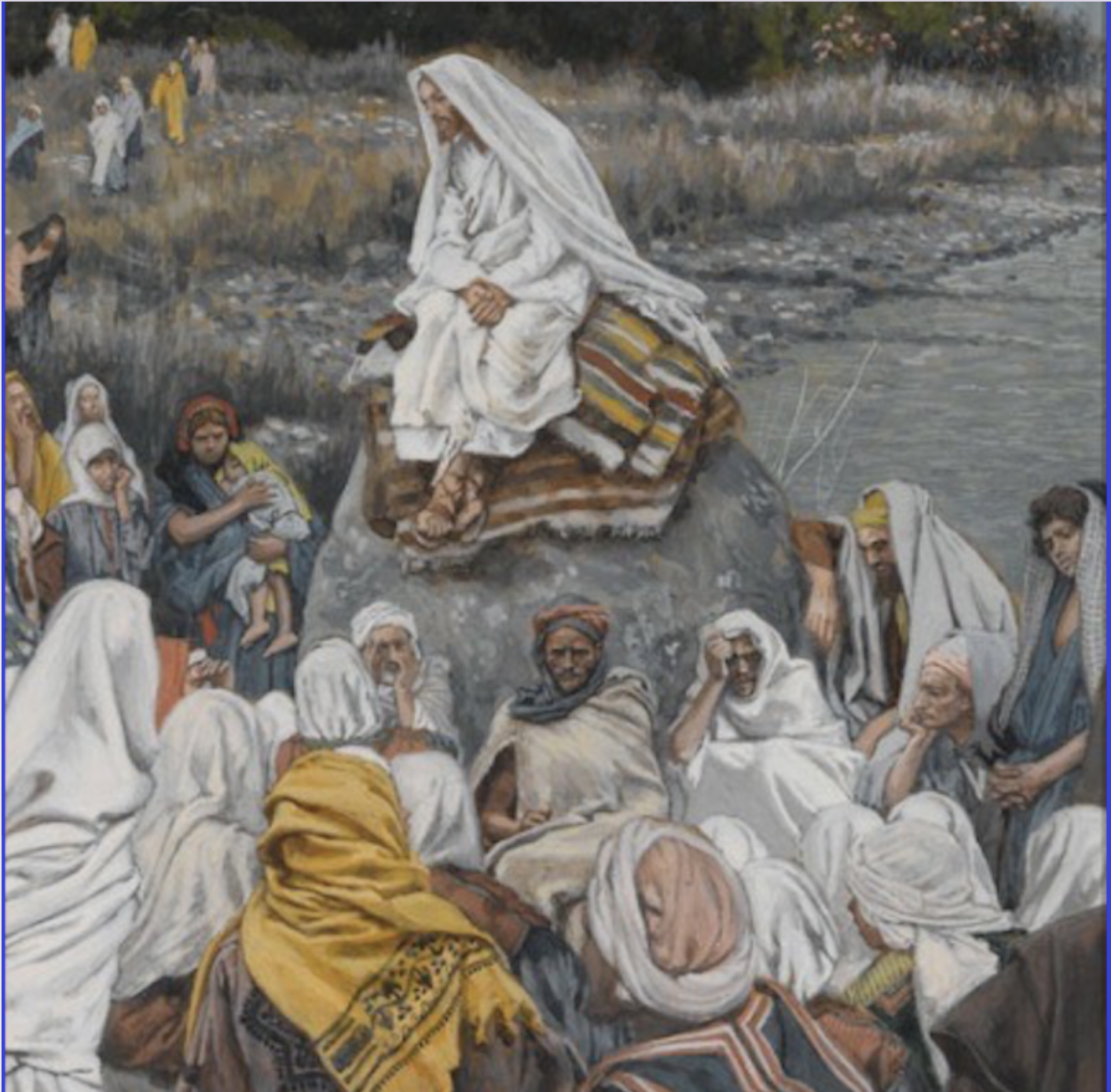
We’re reading the Gospel of Matthew in our lectionary these days. Jesus calls his followers to a mountain in Galilee as a teacher and a healer. They are blessed who follow his way, he says in his Sermon on the Mount. Not only will they be blessed, but the world will be blessed. (Monday, Week 10)
“You are the salt of the earth. You are the light of the world.” The world is better when we act his way; it’s filled with light and life. (Tuesday, Week 10) “Let your light shine before others that they may see your good deeds and glorify your heavenly Father.”
What does today’s world think of that teaching of Jesus? The moral system most popular in our society doesn’t respond very well to the Sermon on the Mount, I think. For many today moral thinking is built on personal choice. What’s good for me, what do I want, how can I get it, no matter what. Personal choice is the moral compass of many today.
We’re influenced by this thinking more than we think. That’s why the psalm after today’s reading is important: “Lord, let your face shine on me…The revelation of your words sheds light, gives understanding to the simple…Steady my footsteps according to your promise.”(Psalm 119)
Yes, God helps those who help themselves. Yes, God gives us a mind to figure things out. Yes, we need to choose the way we see. But like the sun that rises each day, God is there as our Teacher and Guide. We need to ask God to “steady my footsteps according to your promise.”
For the next 6 months we’re living in “Ordinary Time”, the time of the Holy Spirit. We’re not orphans. We’re living in the time of the church and also the time of our world. The Holy Spirit came to renew the face of the earth.
The universal call to holiness is one of the most important teachings of the Second Vatican Council. It was one of Pope Francis’ favorite topics which, in his letter on Christian holiness, “Gaudete et Exultate,” he explores in homey concrete style.
Don’t miss “the saints next door,” he says. “These witnesses may include our own mothers, grandmothers or other loved ones (cf. 2 Tim 1:5). Their lives may not always have been perfect, yet even amid their faults and failings they kept moving forward and proved pleasing to the Lord.”
“I like to contemplate the holiness present in the patience of God’s people: in those parents who raise their children with immense love, in those men and women who work hard to support their families, in the sick, in elderly religious who never lose their smile. In their daily perseverance I see the holiness of the Church militant. Very often it’s a holiness found in our next-door neighbors, those who, living in our midst, reflect God’s presence. We might call them “the middle class of holiness”. (7]
“Each in his or her own way,” we’re called to holiness, the Vatican Council says. Each of us has to discern God’s call, to find our own path, to discover the gifts God gives. We don’t have to follow someone else’s path or have someone else’s gifts. To be holy means to grow with the gifts we have from God.
Saints? Are saints only Catholic then ? If we believe the Holy Spirit renews the face of the earth, then holiness must be there in those who are not Catholic or Christian, but still holy people. Yes, the world is like that field of weeds and wheat, but the Spirit still sows good seed everywhere.
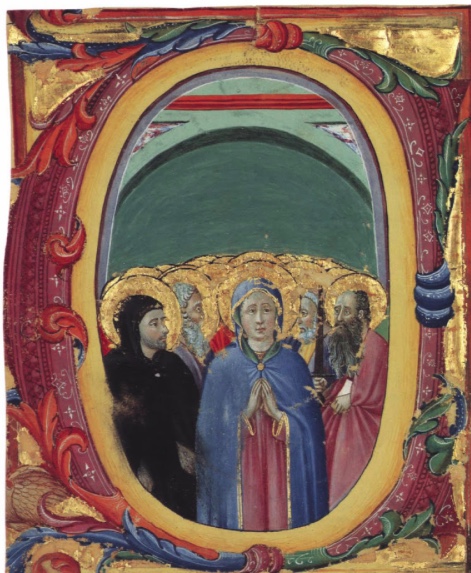
Ordinary time begins on Monday with a feast of Mary, Mother of the Church, mother of saints. Faithful hearer of the Spirit, she knows the meaning of daily patience. To use a term from Pope Francis, she’s Mary “next door.” She’s with us day by day. She’s at home with the day by day saints. She’s Mother of the Church. She is also Mother of all.
Prayer
O God, Father of mercies, your Only Begotten Son, as he hung upon the Cross, chose the Blessed Virgin Mary, his Mother, to be our Mother also. Grant, we pray, that with her loving help your Church may be more fruitful day by day and by the holiness of her children, draw to her embrace all the families of the earth.. Through our Lord Jesus Christ, your Son, who lives and reigns with you in the unity of the Holy Spirit, one God, for ever and ever.
The lectionary, calendar and other revisions of the church’s prayer after the Second Vatican Council in the 1960s are the work of biblical, liturgical and catechical scholars, mostly from Europe, who were taked with providing a fuller experience of the liturgy for Catholics throughout the world. It was a monumental work and we’re still absorbing it.
The lectionary offers readings, psalms and prayers for Sundays and every day of the year. For Sundays this year we’re reading from the Gospel of Luke..
For weekdays we will be reading from Matthew’s Gospel till the 22nd Week, then we’ll read from Luke’s Gospel. Ending the church year, we’ll read from the accounts of the last time from all the gospels. The lectionary follows this same cycle of gospel readings every year, and so following the lectionary yearly helps us become familiar with the gospels.
The first readings weekdays for ordinary time in our lectionary are arranged in a two year cycle that includes readings from the Old Testament and writings from the New Testament, especially the letters of St. Paul. For the next two weeks we will be reading from Paul’s Second Letter to the Corinthians.
For myself I find following the lectionary a good way to pray. It’s a day by day way of praying. It’s a way of learning the faith seasonally instead of systematically. Year by year, day by day, it reveals the mysteries of God. It’s a school that’s open every day, not confined to a classroom or a catechism or a theology book. It’s for slow learners who forget and have to be reminded year by year. That’s most of us.
I find too that this approach also seems to offer an answer to what’s happening in daily life, in my personal life and in the big world that’s changing so fast today. Not a perfect answer, but enough to see God’s hand in it all.
You can find the readings from the lectionary online at the website of the US Catholic bishops. www.usccb.org I usually link to the readings in this blog, which follows the lectionary.
The Holy Spirit descends on Jesus at his baptism in the form of a dove, the gospels say. Scholars like Luke Timothy Johnson in his commentary on St. Luke’s gospel seem puzzled by the description. What’s the explanation? “Such is the nature of symbols–all are possible,” Johnson writes.
May I hazard an explanation? Doves are regular visitors at my window and at our bird-feeder outside. I notice how confident and unafraid they seem to be, so different from the nervous sparrows flitting from place to place. As far as I can see, the doves are without the usual signs of power, sharp talons and strong wings. What’s their secret?
St. Gregory of Nyssa seems to point to a fearless love in his Commentary on the Song of Songs:
“When love has entirely cast out fear, and fear has been transformed into love, then the unity brought by our Savior will be realized, for all will be united with one another through their union with the supreme Good. They will possess the perfection ascribed to the dove, according to our interpretation of the text “one alone is my dove, my perfect one.”
A fearless, humble love, unafraid of chaos, brings peace. Is that why Noah chose the dove to go into the world engulfed by the flood and not a lion or an eagle? Such is the nature of symbols–all explanations are possible. We could use that kind of fearlessness today, couldn’t we?
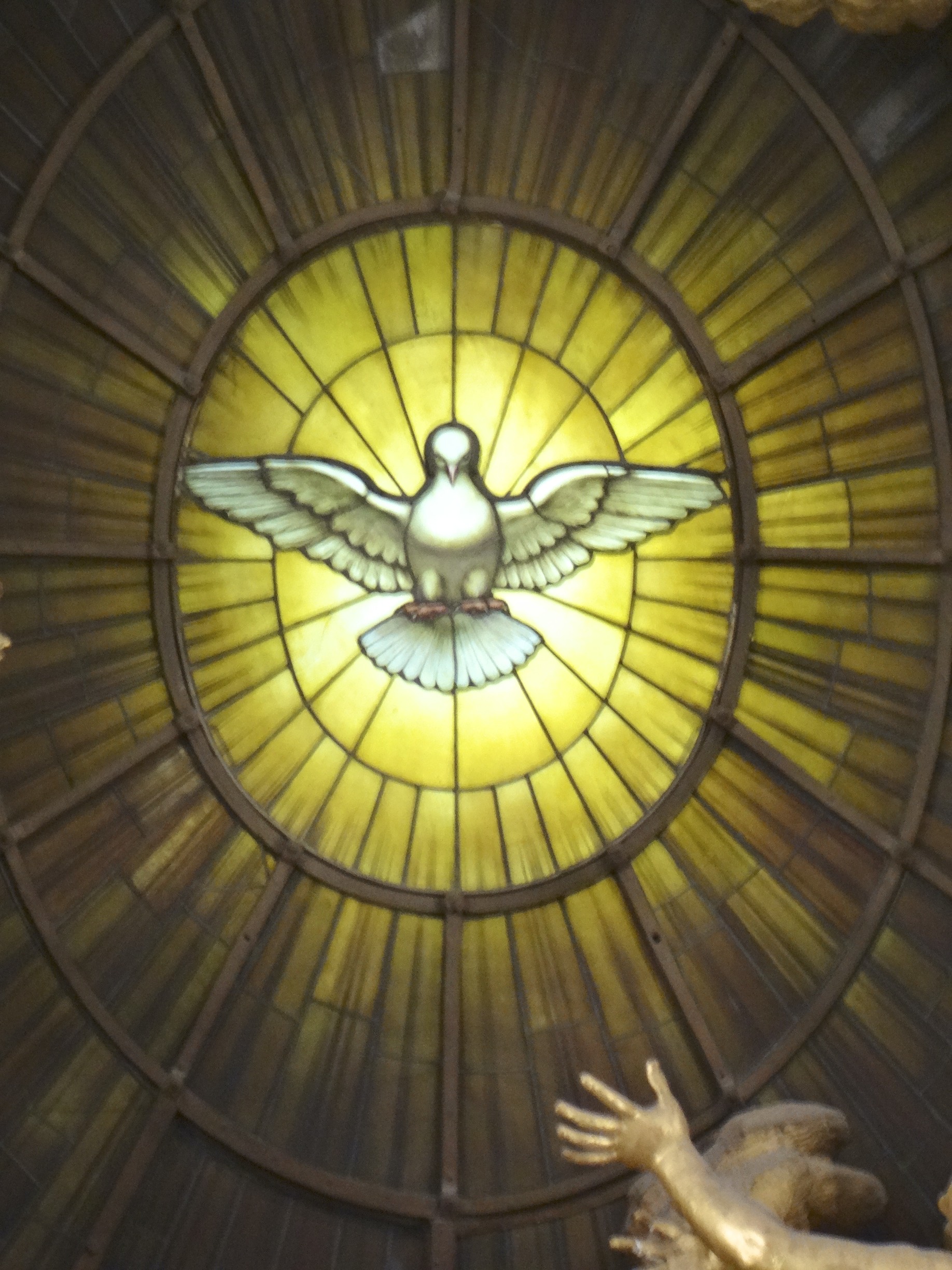
Behind the Chair of St. Peter in the Vatican Basilica in Rome, the artist Bernini created a beautiful alabaster window where a steady light pours into the dark church through the image of the Holy Spirit, in the hovering form of a dove. Light is also a favorite sign of the Holy Spirit.
Day by day, the light comes quietly through the window. Day by day, the Holy Spirit dispenses light for the moment, graces for the world that is now. As Jesus promised, the Holy Spirit dwells with us, his final gift.
For this week’s homily please watch the video below.
Today’s the Feast of Pentecost, when the Holy Spirit came upon the disciples of Jesus. If you notice our readings today describe two different times the Spirit comes. Our first reading, from the Acts of the Apostles, describes the Holy Spirit coming at Pentecost, a Jewish feast 50 days after the Passover, when great numbers of pilgrims came to Jerusalem from all parts of the world to celebrate the feast. They receive the Holy Spirit and become messengers of the Spirit to the world they came from.
Our gospel describes Holy Spirit coming, not at Pentecost, but Easter Sunday when Jesus’ disciples were locked in the upper room in Jerusalem in fear.
Jesus, risen from the dead, comes to them and breathes on them: “Receive the Holy Spirit,” The Spirit brings them forgiveness and peace. They can leave that room and go out into the world they’re fearful of. The Spirit is with them.
Where are we today if we could see the Spirit coming to us? I think a lot of us today are like those disciples in the upper room– afraid of the world we live in. We may think our world is unmanageable. We’re closing our doors and shutting the windows. We’re afraid. In our country that fear is making us distance ourselves from the rest of the world.
Today, the Feast of Pentecost, we celebrate the coming of the Holy Spirit, whom Jesus promised, not only to his disciples but to us and to the whole world. The Spirit comes not just to help us as individuals, the Spirit’s sent to our world. “Come, Holy Spirit, and renew the face the earth.”
The way we know the Holy Spirit is different than the way we know Jesus. Jesus is God come to us in human flesh; he’s like us. He’s born a child, lives as a human being, he reacts to events and people around him, he speaks in human words, he suffers and dies and rises. However distant his time from ours is, we see and hear him human like ourselves.
But it’s more difficult to describe the Holy Spirit. The scriptures use symbolic ways to describe the Third Person of the Trinity. Our gospel today describes the Spirit as the breath of Jesus Christ. Jesus breathed on his disciples and gave them the Spirit. He promises that the Holy Spirit will remain with us to “complete his work on earth and bring us the fullness of grace.”
Our first reading todays says the Spirit is a driving wind, tongues of fire empowering those to whom he comes to speak with wisdom, with new words, and to reach out to the whole world and act bravely, not fearfully.
The Holy Spirit is described in other ways in the New Testament and in our prayers. The Spirit’s a dove who rests on Jesus when he’s baptized in the Jordan by John. I find myself particular attracted that this image of the Holy Spirit.
There’s a bird feeder outside where I live that’s attracts a lot of house sparrows, but doves are regular visitors too. I notice when a cat comes or a hawk flies over, the sparrows scatter immediately; the doves are the last to go and first back at the feeder. Now, are they simple? You could say also they’re fearless. They’re not afraid of their enemies.
Think about the story of Noah in the ark. Noah wonders if the flood waters are gone, so what does he do ? He sends out a dove, who returns with a twig from an olive plant. There’s life there, you can get out of the ark. The dove is not afraid of floodwaters and dangerous places.
The dove, the Holy Spirit, leads Jesus into the desert, the realm of Satan, after his baptism. The Spirit is not afraid of chaos or evil, but recreates the world. The Holy Spirit is with us today. We don’t have to be afraid..
St. Cyril of Jerusalem has a beautiful description of the Holy Spirit in one of his sermons.How describe the Holy Spirit? He uses two things we know well: water and light.
“The water I shall give will become a fountain of living water, welling up into eternal life. This is a new kind of water, a living, leaping water, welling up for those who are worthy.
But why did Christ call the Spirit water? Because all things depend on water; plants and animals originate in water. Water comes down from heaven as rain, and always the same, it produces many different effects, one in the palm tree, another in the vine, and so on through all of creation. It does not come down, now as one thing, now as another, but remaining essentially the same, it adapts itself to the needs of every creature that receives it.
In the same way the Holy Spirit, whose nature is always the same, simple and indivisible, gives grace to each one as he wills. Like a dry tree whose roots search for water, we search for the water of the Spirit. Although the Spirit never changes, its effects are many and marvellous.
The Spirit makes one teach and another a listener. He gives one the power to cast our devils and another the patience to bear with evil. The Spirit strengthens one’s self-control, shows another how to help the poor. The Spirit’s action is different in different people, but the Spirit is always the same. The Spirit reveals his presence in a particular way for the common good.
The Spirit comes gently, known by his fragrance, not a burden, but light, very light. Rays of light and knowledge mark his approach. With the tenderness of a true friend, the Spirit comes, a protector who saves, heals, teaches, counsels, strengthens, and consoles. The Spirit comes first to enlighten the mind of one who receives him, and then, through him, the minds of others as well.”




 The Victor's Place