Category Archives: Religion

2nd Week of Advent: Readings and Feasts

Graces will be given you; shepherds will guide you. That’s the message we hear this 2nd week of Advent from Second Isaiah. (Isaiah 40 ff)

The way to God’s holy mountain is not by sea, the easiest way to Jerusalem from Babylon, Second Isaiah tells Jewish exiles in Babylon this week. God will bring you over mountains and through a wilderness, but the valleys will be filled, the mountains made low, the crooked ways straight.

The writer is called Second Isaiah. Why? Because chapters 40-55 of Isaiah are generally attributed to an anonymous poet who prophesied toward the end of the Babylonian exile, possibly 50 years after Jerusalem fell to the Assyrians. Adopting the name and style of the earlier prophet, Second Isaiah urges Jewish exiles to come back to the land where they belong.

Yet, not everyone listened. Many gave up on that land far away and God who calls them there. They’re fitting in. Babylon is their home now. This week’s readings describe how changed the exiles were. No longer singing songs of Zion, they’re singing Babylon’s songs.  

This week’s Advent readings, mostly from Second Isaiah, recognize how hard the wilderness journey was for them and now for us. It’s hard for a prophet to win over exiles comfortable in a foreign land. But the desert will bloom and a highway will be there, a holy way. (Monday) God speaks tender, comforting words to his people on the way. (Tuesday)  Those who hope in him will renew their strength, soaring on eagle’s wings. (Wednesday) Though we’re as insignificant as a worm, God grasps our hand and says: “Fear not; I am with you.” (Thursday) God, our teacher, shows us the way to go. (Friday) Great prophets like Elijah also accompany us. (Saturday)

Jesus is with exiles like us, the Gospel readings say. We are like the paralyzed man lowered through the roof in Capernaum.. (Monday)  Like stray sheep, the Good Shepherd finds us. (Tuesday)  “Come to me all who are weary…” he says. (Wednesday) He sends prophets and guides like John the Baptist and Elijah.   (Thursday) Rejected like John the Baptist, Jesus still teaches. (Friday) He will save us, unrecognized like John and Elijah. (Saturday)

John the Baptist takes up the cry of Second Isaiah this week. His is the strong voice featured in the gospel readings in the following days of Advent.

Mary, the mother of Jesus, is remembered December 8, the Feast of her Immaculate Conception, and on December 12, feast of Our Lady of Guadalupe. It was not an easy way Mary was given. She had to go the way of the exiles: over mountains and deserts and wilderness. She gives us an example. Follow her.

2nd Sunday of Advent a: Come Home

For this week’s homily, please watch the video below.

Stories of St.Nicholas: December 6

Today’s the feast of St. Nicholas, the model for Santa Claus. He’s also patron of Russia and one of the most important saints of the eastern churches. 

Nicholas lived in the 5th century in Myria, a seaport in Asia Minor. When Moslems overran that region in the 11th century, sailors from Bari, Italy, took his relics from his shrine in Myria and installed them on May 9,1087 in a shrine in Bari, along the Adriatic coast.  

Since then, the Basilica of St. Nicolas has been a pilgrimage destination for eastern and western Christians.  Russian pilgrims are especially prominent, but pilgrims from other eastern churches also come.  Pope John Paul wanted Nicholas’ shrine to be place for dialogue with the Russian Orthodox Church. In 1966, an Orthodox chapel was built in the basilica for celebrating the Orthodox liturgy. In 2018 Pope Francis met with religious leaders from the Middle East to pray for peace in Syria, Nicholas’ birthplace.

In 2007, Vladimir Putin himself came to Bari as a pilgrim and knelt before St. Nicholas’ tomb. In 2017, Pope Francis lent relics of Nicholas to Patriarch Kirill of Moscow as a gesture to improve relations. Mr. Putin kissed the glass cased relic at its arrival. 

I would guess there are pilgrims in Bari today from Russia and its allies and Ukraine and its allies mixing uneasily around the saint’s grave. We pray today leaders of those troubled lands quietly and quickly find the gift of peace.

Some years ago Pope Francis joked that “The communists stole some of our Christian values. Some others, they made a disaster out of them.“ Has St. Nicholas been an inspiration for communism?                                                                                            

A story of Nicholas that stands out is the story of his rescue of three girls who were to be sold off into slavery because they have no money for a dowry. Dropping gold through the window of their house at night, Nicholas disappears. His gift gave the girls the promise of a better life.

Help the poor, the story says, they deserve a better life.

The girls’ father tracked Nicholas down and asked why he did what he did and wants no thanks or recognition. It’s better only God knows, Nicholas answers. He want’s no power over others or credit. He’s an example of “quiet giving,” a high form of love.

We see that kind of love in Jesus Christ; he taught it to his disciples.

We can still learn from Nicholas; he’s still a great teacher children should know. Here’s some videos of his life from a previous blog: https://vhoagland.com/2023/11/22/santas-story/

Bernard on the Three Comings of Jesus Christ

396px-Stained_glass_St_Bernard_MNMA_Cl3273

St. Bernard says there are three comings of Jesus Christ, who is our rock, our support, our comfort.

“We know that the coming of the Lord is threefold: the third coming is between the other two and it is not visible in the way they are. At his first coming the Lord was seen on earth and lived among men, who saw him and hated him. At his last coming All flesh shall see the salvation of our God, and They shall look on him whom they have pierced. In the middle, the hidden coming, only the chosen see him, and they see him within themselves; and so their souls are saved. The first coming was in flesh and weakness, the middle coming is in spirit and power, and the final coming will be in glory and majesty.

“This middle coming is like a road that leads from the first coming to the last. At the first, Christ was our redemption; at the last, he will become manifest as our life; but in this middle way he is our rest and our consolation.

“If you think that I am inventing what I am saying about the middle coming, listen to the Lord himself: If anyone loves me, he will keep my words, and the Father will love him, and we shall come to him. Elsewhere I have read: Whoever fears the Lord does good things. – but I think that what was said about whoever loves him was more important: that whoever loves him will keep his words. Where are these words to be kept? In the heart certainly, as the Prophet says I have hidden your sayings in my heart so that I do not sin against you. Keep the word of God in that way: Blessed are those who keep it. Let it penetrate deep into the core of your soul and then flow out again in your feelings and the way you behave; because if you feed your soul well it will grow and rejoice.

Friday: 1st Week of Advent

Two blind men were given sight by Jesus, Matthew’s gospel read on the Friday of the 1st Week of Advent says. They’re healed together. (Matthew 9: 27-31) Do they represent the blind whom the Prophet Isaiah says in our first reading will see when the Messiah comes. “And out of gloom and darkness, the eyes of the blind shall see.” (Isaiah 29: 17-34)

Notice there are two blind men, not one. Are they just physically blind, or could the two together represent those blinded by certain issues and common prejudices?

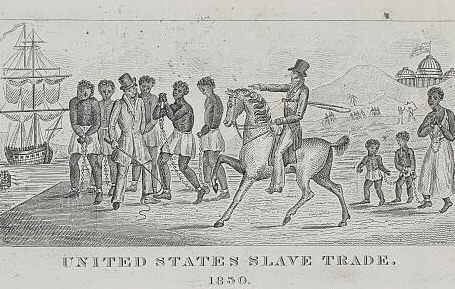
When John Newton, captain of an 18th century African slave ship, wrote the famous hymn “Amazing grace,” he said he “was blind, but now I see.” It wasn’t physical blindness he described. The tough seaman was converted after reading Thomas a Kempis’ “The Imitation of Christ” on a voyage. Gradually he came to see the horrific evil of slavery and other vices he had fallen into.

In 1788 after years of debate over the issue in England, Prime Minister William Pitt called a committee to investigate the slave trade. Until then, slavery was accepted by England and other countries  as necessary for the country’s economic welfare.

England, like other nations, was blind to the evil. A star witnesses during the investigation was John Newton, whose detailed descriptions of the slave trade made people see what a horrendous practice it was.

This advent may Jesus help our world, our nation, our church and us to see. There are always things we don’t see. The blindness the prophets describe isn’t a thing of the past.

Pope Francis spoke of our society’s blind acceptance of the “tyranny of the financial markets.” We pay attention to a 2% drop in the stock market and ignore the death of a homeless man who dies in the cold. We’re a throw-away society, we waste so much. Not only do we discard things, we discard people. We exploit immigrants and then throw them away. We’re blind to the plight of the economically unproductive, who have lost their jobs or don’t have the skills for work today.

Lord, help us to see.

I’m following an online Advent resource of paintings and commentary from the Victoria Albert Museum in London, England. Some paintings everyday. Here’s where you can get it. vcs@kcl.ac.uk

St. John Damascene and Images (December 4)

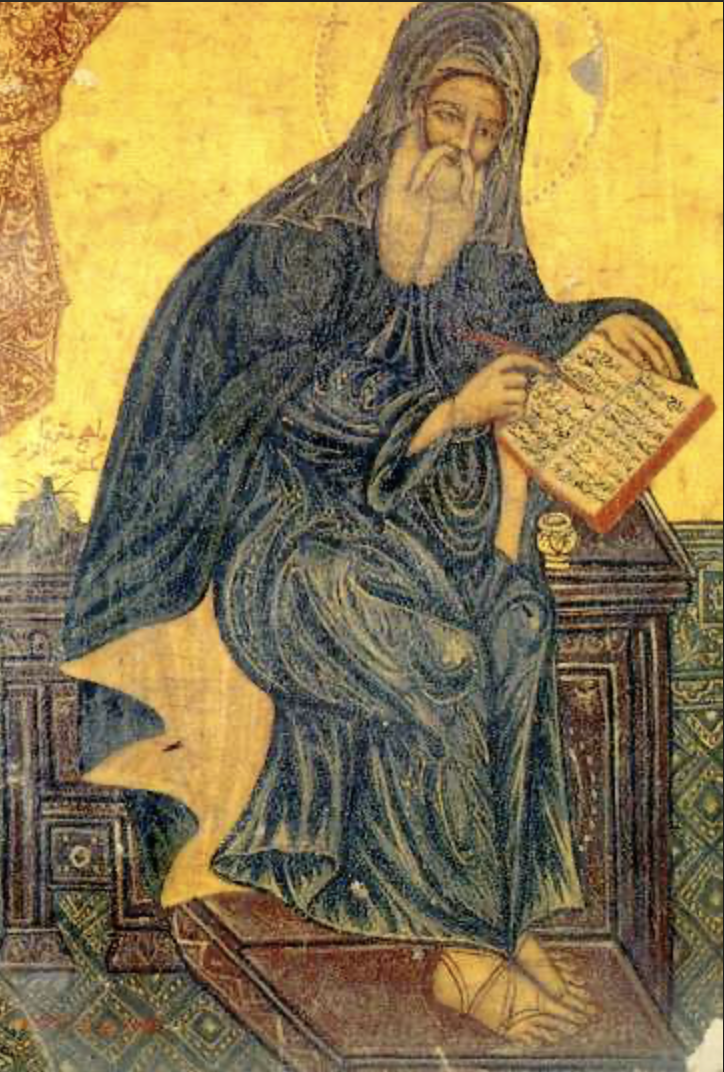
St. John Damascene was born in Damascus, Syria, in the middle of the 7th century. Declared a doctor of the Roman Catholic Church in 1890 by Pope Leo XIII, he was brilliant teacher who explained the faith in simple understandable terms. Maybe that’s why he defended the use of icons against those who saw them as unworthy of God. John Damascene believed God can be known through images. Jesus Christ is “the image of the invisible God”.

So John Damascene not only stood up for icons, but he also stood up for the statues, stain glass windows and art of all kind. He validated the work of Michelangelo and Bach and generations of Christian artists. How could we celebrate Christmas without images?

Now, perhaps, we need to defend against their loss, as our world becomes more secularized. Our Christmas carols are drowned out by “Jingle Bell Rock” and a thousand other noisy songs. Our Christmas tree, our Christmas cribs are lost under a lot of junk; Santa Claus is turned into a salesman in Macys, the small humble light of our advent wreath is swallowed up by bigger, brighter decorations.

Anyway, listen to some words from John Damascene:

O Lord, You brought me naked into the light of day, and by the blessing of the Holy Spirit, you created me, not by human will or desire, but by your ineffable grace. 

The birth you prepared for me surpassed the laws of our nature. You sent me forth into the light as your adopted son and you enrolled me among the children of your holy and spotless Church.

You nursed me with the spiritual milk of your words. You kept me alive with the solid food of the body of Jesus Christ, your only-begotten Son and our God, and you let me drink his life-giving blood, poured out to save the whole world.

  You loved us, O Lord, and gave up your only-begotten Son for our redemption. And he came willingly, not shrinking from the task. Although he was God, he became man, and in his human will, became obedient to you, God his Father, unto death, even death on a cross.

 You humbled yourself, Christ my God, so that you might carry me, your stray sheep, on your shoulders. You let me graze in green pastures, refreshing me with the waters of orthodox teaching at the hands of your shepherds. You pastured these shepherds, and now they in turn tend your chosen and special flock. 

Now you have called me, Lord, by the hand of your bishop to minister to your people. I do not know why you have done so;  you alone know. Lord, lighten the heavy burden of my sins. Purify my mind and heart. Like a shining lamp, lead me along the straight path. When I open my mouth, tell me what I should say. By the fiery tongue of your Spirit make my own tongue ready. Stay with me always and keep me in your sight.

  Lead me to pastures, Lord, and graze there with me. Do not let my heart lean either to the right or to the left, but let your good Spirit guide me along the straight path. Whatever I do, let it be in accordance with your will, now until the end.

  And you, Church of God, most excellent assembly,  summit of perfect purity, whose assistance comes from God. You in whom God lives, receive from us a teaching of faith that is free from error, to strengthen the Church, just as our Fathers handed it down to us.

Thursday: 1st Week of Advent

OLYMPUS DIGITAL CAMERA

Readings:

Isaiah 26:1-6:  On the day of the Lord those who depend on God will enter God’s city.

Matthew 7: 21-24-27:  Build your house on rock.

Ancient peoples built their cities on rocky heights because they promised safety. With water, food and strong defenses they were less likely to be invaded. That’s why the Jews chose Jerusalem. Built high on a rocky mountain, it was safe.

There’s a city on God’s holy mountain, Isaiah says in today’s reading, where all peoples will dwell. Yet even now, our cities and places where we live are meant to be an image of the Holy City. Don’t depend on natural resources or human skills or human planning alone to build your earthly cities, the prophets warn. Don’t rely on them; they can’t save you. The strongest city becomes “a city of chaos” without God.

God builds the strong city, the prophet says; he is our Rock, our strong city: he admits through its gates “ a nation that is just; one that keeps faith.”

Build your lives on rock, Jesus says in the gospel. Don’t rely on a token faith (Lord, Lord) or be like fools who build on sand .

“Everyone who listens to these words of mine and acts on them will be like a wise person who built a house on rock.”

That’s true for our homes and the cities and places where we live.

A secular society like ours often sees religion as a destructive force or a brake on progress or something to be dispensed of. It turns to  “human reason” alone.

So how do we see our cities and countries today? Should be turn away from them and wait for the City on the Mountain? Time to wait for the right politician or a better economy, and take care of yourself?

I don’t think that’s the answer we get in this Season of Advent which proclaims the coming of Jesus Christ in the flesh to an earthly city.

“It is better to take refuge in the LORD, than to trust in man.                                                          It is better to take refuge in the LORD than to trust in princes.” 
(Psalm 118)

Saint Francis Xavier (1506-1552)

“All nations will come to climb the mountain of the Lord,” the Prophet Isaiah says in our Advent readings. Joining Portuguese merchants, Saint Francis Xavier went to far-off Asia, not for its exotic spices and goods, but to call all nations to follow Jesus Christ.

For 10 years, Francis Xavier labored in India, Japan and southeast Asia to bring the gospel to the native peoples of these lands. In a letter to St. Ignatius Loyola, the founder of the Jesuits, he explains that he’s so busy teaching and baptizing he has hardly a minute to himself. “Send help,” he says.

“Many, many people hereabouts are not becoming Christians for one reason only: there is nobody to make them Christians. Again and again I have thought of going round the universities of Europe, especially Paris, and everywhere crying out like a madman, riveting the attention of those with more learning than charity: ‘What a tragedy: how many souls are being shut out of heaven and falling into hell, thanks to you!’”

He’s driven by missionary zeal. Today, unfortunately, we’re becoming more like those university people in Paris– concerned about ourselves and ready to let the rest of the world go by.

The statue of Saint Francis Xavier above is  in the beautiful church of the Sacred Heart in Springfield, MA, where Father Theodore Foley went as a boy. Was it put there after a Novena of Grace preached by some Jesuit missionaries, I wonder? How many  people, like Theodore Foley, heard the story of the fiery missionary and saw themselves called to be missionaries ?

The Prophet Isaiah’s call to the nations is not confined to his time. God’s mission to the nations is for our time too.

https://vhoagland.wordpress.com/2014/02/08/father-theodore-foley-cp/

Advent: Wednesday, 1st Week

There’s a beautiful continuity in our Advent readings between the Prophet Isaiah and the Gospel of Matthew. We see it today – Wednesday in Advent’s first week .

On his holy mountain, Isaiah promises God will provide a feast of rich food and choice wines, wiping away tears from all faces. (Isaiah 25: 6-10)

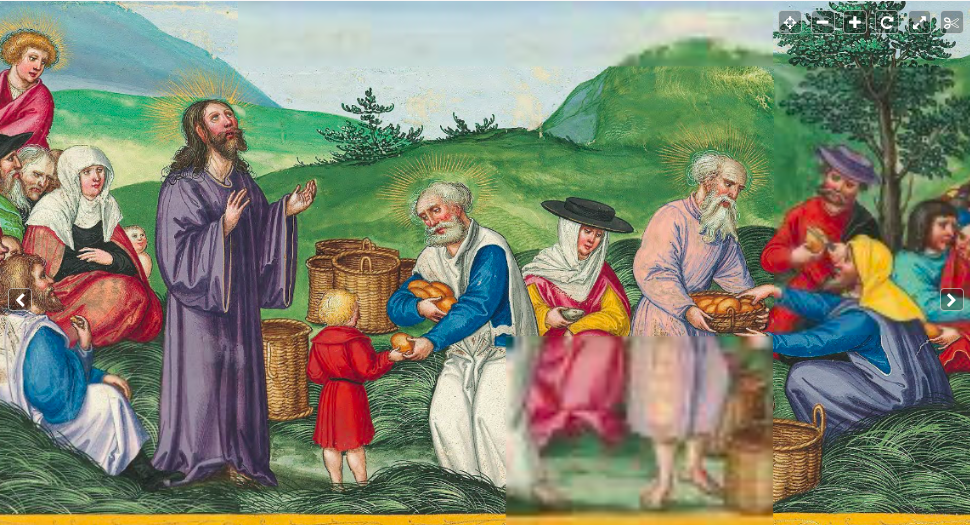
On a mountain Jesus teaches, then “wipes away the tears from all faces,” Matthew’s Gospel says. “Great crowds came to him, having with them the lame, the blind, the deformed, the mute, and many others. They placed them at his feet, and he cured them.” Then he feeds them all from 7 loaves of bread and a few fish.

It’s not a ration to keep them till they get home. It’s a banquet providing more than enough – there are leftovers. ( Matthew 15: 32-38 )

For Isaiah and Matthew the mountain is a symbolic place. All nations will stream toward it, Isaiah announces. “Great crowds” come to it, Matthew says. The  mountain is a place for a feast. 

Is it a future feast, a future kingdom we should wait for, or is it something to strive for now? “Thy kingdom come, thy will be done, on earth as it is in heaven,” we say in the Lord’s Prayer. Even now, on earth, God’s wills his kingdom come. We need to strive for God’s kingdom to come, even now.  

What should we do? How can we beat swords into plowshares and spears into pruning hooks today? Can we work to destroy weapons of mass destruction and seek ways to disarm? Realists, like Ahaz, King of Judea, questioned Isaiah’s promises and said it couldn’t be done.

In a world where wealthy nations discriminate against poorer nations is it possible for all nations be fed? How can we bring all to share the fruits of the earth? And how can we care that the earth itself be respected for the common good?

Words from the past point to the present and the future. We’re called to bring about God’s kingdom now, on earth as it is in heaven.  

Advent: Tuesday, 1st Week


Edward Hicks, Peaceable Kingdom

“The calf and the young lion shall browse together, with a little child to guide them. A shoot shall sprout from the stump of Jesse, and from his roots a bud shall blossom.” (Isaiah 11,1)

A child stands atop Isaiah’s peaceable kingdom in Tuesday’s first reading at Mass. Edward Hicks, the Quaker painter, made over 100 copies of this scene from Isaiah, carefully indicating in the far left the peace treaty between William Penn and the native peoples of Pennsylvania in colonial America.

It takes a child to believe the astounding promises Isaiah makes. Adults, hardened by the experience of life, struggle with the prophet’s words. That’s why Advent invites us to become children, not physically, of course, but spiritually.

Become like little children. That’s what Jesus told his followers,  and he praised the childlike:

“I give you praise, Father, Lord of heaven and earth, for although you have hidden these things from the wise and the learned, you have revealed them to the childlike.” Luke 10

Only the childlike believe in great promises.

What does being “childlike” mean? Here’s what St. Leo the Great said about Jesus’s teaching on spiritual childhood: To be a child means to be “free from crippling anxiety, to be forgetful of injuries, to be sociable and to keep wondering at all things.”

A little child in its mother’s arms has no worries. It’s a good place to be, free from anxieties and a mother’s voice promising all will be well. Advent brings that grace back  to us; a grace we can lose so easily.

Jesus experienced that grace in Mary’s arms. Herod’s soldiers, like Isaiah’s Assyrian armies, were on their way. It’s a poor place where he’s born, no room in the inn, but the Child in his mother’s arms has no fear. All will be well.

Injuries come. The world can turn hostile. The promises may seem far away, but from infancy to his death, Jesus knew he was a child of God, his Father, in God’s caring hands and destined for God’s kingdom.

Help us, Lord to become like children