October 11 Mon Weekday [Saint John XXIII, Pope Rom 1:1-7/Lk 11:29-32
12 Tue Weekday Rom 1:16-25/Lk 11:37-41
13 Wed Weekday Rom 2:1-11/Lk 11:42-46
14 Thu Weekday [Saint Callistus I, Pope and Martyr] Rom 3:21-30/Lk 11:47-54
15 Fri Saint Teresa of Jesus, Doctor of the Church Memorial Rom 4:1-8/Lk 12:1-7
16 Sat Weekday
[Saint Hedwig, Religious; Saint Margaret Mary Alacoque, Virgin;] Rom 4:13, 16-18/Lk 12:8-12
17 SUN TWENTY-NINTH SUNDAY IN ORDINARY TIME
Is 53:10-11/Heb 4:14-16/Mk 10:35-45 or 10:42-45
For the next 4 weeks our first weekday reading will be from Paul’s Letter to the Romans, considered the most important statement of his teaching. Appropriately, the responsorial psalm for Monday proclaims: “The Lord has made known his salvation. All the ends of the earth have seen the salvation by our God.”
In Luke’s gospel, also on Monday, Jesus recalls the mission of Jonah and the conversion of Nineveh, a reminder of God’s saving plan for the world, which Paul the Apostle will forcefully proclaim.
Saint John XXIII, whom I was privileged to meet one memorable day in Rome, is remembered this Monday. Callistus, a slave who became an early pope is Thursday’s saint. St. Theresa of Avila, and women saints like Hedwig and Margaret Mary Alacoque are remembered later this week.
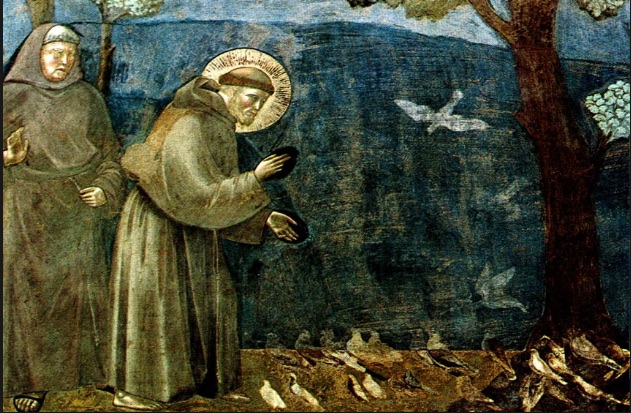
St. Francis is one of those super saints to keep in mind, even after his feast day. I mentioned in a previous blog the statue of Francis facing St. John Lateran and Pope Innocent’s dream of a young man who, like Francis, held up the church’s walls ready to fall. Francis helped renew the church.
In his encyclical Laudato Si, Pope Francis paints a verbal picture of Francis, holding his arms out to the created world, caring for our endangered planet:
“I believe that Saint Francis is the example par excellence of care for the vulnerable and of an integral ecology lived out joyfully and authentically. He is the patron saint of all who study and work in the area of ecology, and he is also much loved by non-Christians. He was particularly concerned for God’s creation and for the poor and outcast. He loved, and was deeply loved for his joy, his generous self-giving, his openheartedness. He was a mystic and a pilgrim who lived in simplicity and in wonderful harmony with God, with others, with nature and with himself. He shows us just how inseparable the bond is between concern for nature, justice for the poor, commitment to society, and interior peace.
“Francis helps us to see that an integral ecology calls for openness to categories which transcend the language of mathematics and biology, and take us to the heart of what it is to be human. Just as happens when we fall in love with someone, whenever he would gaze at the sun, the moon or the smallest of animals, he burst into song, drawing all other creatures into his praise. He communed with all creation, even preaching to the flowers, inviting them “to praise the Lord, just as if they were endowed with reason”.
“His response to the world around him was so much more than intellectual appreciation or economic calculus, for to him each and every creature was a sister united to him by bonds of affection. That is why he felt called to care for all that exists. His disciple Saint Bonaventure tells us that, “from a reflection on the primary source of all things, filled with even more abundant piety, he would call creatures, no matter how small, by the name of ‘brother’ or ‘sister’”. Such a conviction cannot be written off as naive romanticism, for it affects the choices which determine our behaviour.
“If we approach nature and the environment without this openness to awe and wonder, if we no longer speak the language of fraternity and beauty in our relationship with the world, our attitude will be that of masters, consumers, ruthless exploiters, unable to set limits on their immediate needs. By contrast, if we feel intimately united with all that exists, then sobriety and care will well up spontaneously. The poverty and austerity of Saint Francis were no mere veneer of asceticism, but something much more radical: a refusal to turn reality into an object simply to be used and controlled.
What is more, Saint Francis, faithful to Scripture, invites us to see nature as a magnificent book in which God speaks to us and grants us a glimpse of his infinite beauty and goodness. “Through the greatness and the beauty of creatures one comes to know by analogy their maker” (Wis 13:5); indeed, “his eternal power and divinity have been made known through his works since the creation of the world” (Rom 1:20). For this reason, Francis asked that part of the friary garden always be left untouched, so that wild flowers and herbs could grow there, and those who saw them could raise their minds to God, the Creator of such beauty. Rather than a problem to be solved, the world is a joyful mystery to be contemplated with gladness and praise.”
I like the pope’s words: “Rather than a problem to be solved, the world is a joyful mystery to be contemplated with gladness and praise.”
6 Wed Weekday [Saint Bruno, Priest; USA: Blessed Marie Rose Durocher, Virgin]
Jon 4:1-11/Lk 11:1-4
7 Thu Our Lady of the Rosary Memorial Mal 3:13-20b/Lk 11:5-13
8 Fri Weekday Jl 1:13-15; 2:1-2/Lk 11:15-26
9 Sat Weekday [Saint Denis, Bishop, and Companions, Martyrs; Saint John Leonardi, Priest;
Jl 4:12-21/Lk 11:27-28
10 SUN TWENTY-EIGHTH SUNDAY IN ORDINARY TIME
Wis 7:7-11/Heb 4:12-13/Mk 10:17-30 or 10:17-27
Readings from Jonah, Malachi and Joel are from post exilic times, the commentators say, when the Jews returned from exile may see Judaism as exclusive and turn inward. God sends Jonah to Nineveh, representative of the outside world, and converts that great city. God’s plans are greater than ours.
Our lectionary readings from the Old Testament last week and this week are about the Restoration Period in Jewish history, the time when the Jews returned to Jerusalem and Judea from exile around 520 B.C. Our readings are from the Prophets Zechariah and Baruch and from the Book of Nehemiah this week.
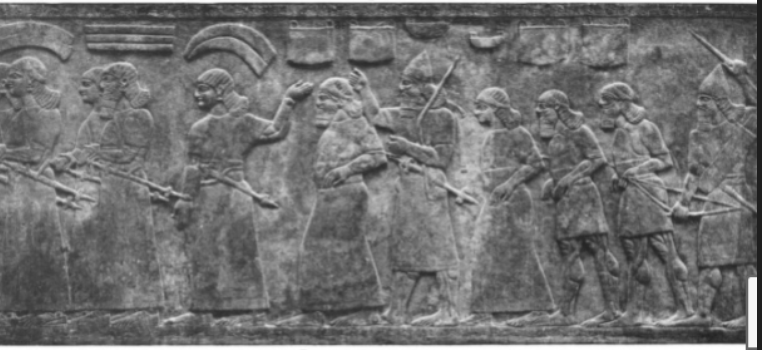
In the restoration period not all the Jews returned from exile in Babylon. Some waited to see how it worked out; others decided to stay in Babylon for good.
Those who did return found it hard building a temple and restoring Judaism. Jerusalem and Judea were now under Persian control. The Jewish monarchy was gone. Foreigners had moved into the city and were resisting attempts at restoration. Some Jews who stayed on were not interested in restoration either. Facing this, the returnees had to wonder about the promises made by prophets like Jeremiah and Isaiah.
In our reading today, the Prophet Zechariah reaffirms God’s promise – all nations will come to Jerusalem and its temple:
“Thus says the LORD of hosts: There shall yet come peoples, the inhabitants of many cities; and the inhabitants of one city shall approach those of another, and say, ‘Come! let us go to implore the favor of the LORD’;and, ‘I too will go to seek the LORD.’
Many peoples and strong nations shall come to seek the Lord of hosts in Jerusalem and to implore the favor of the LORD. Thus says the LORD of hosts: In those days ten men of every nationality, speaking different tongues, shall take hold, yes, take hold of every Jew by the edge of his garment and say,“Let us go with you, for we have heard that God is with you.” (Zech 8:20-23)
God’s plans are greater than you think, Zechariah says, but he gives no indication when this will happen, and so the Jews certainly wondered if this were true.
The Prophet Baruch whom we read on Friday and Saturday this week compares the Jews in exile questioning the prophets to the Jews in the desert questioning Moses. But exile, like the desert, is a time of God’s mercy, Baruch says. Wisdom comes in time of exile. Exile, like the desert, is a place where God helps you grow.
“ In the land of their exile they shall have a change of heart; they shall know that I, the LORD, am their God. I will give them a heart and ears that listen and they shall praise me in the land of their exile, and shall remember my name. Then they shall turn back from their stiff-necked stubbornness… And I will bring them back to the land I promised on oath to their ancestors, to Abraham, Isaac, and Jacob; and they shall rule it. I will make them increase; they shall not be few.” (Baruch 2:30-35)
Last week the Passionists concluded a symposium in Rome on “The Wisdom of the Cross”, part of the 300th anniversary celebration of their community’s foundation. Some speakers at that symposium suggested the wisdom of the cross is a wisdom for today, when our world and our church wonder whether there’s a future at all.
“In times past, God spoke in partial and various ways to our ancestors through the prophets; in these last days, he spoke to us through a son, whom he made heir of all things and through whom he created the universe, who is the refulgence of his glory, the very imprint of his being, and who sustains all things by his mighty word.When he had accomplished purification from sins, he took his seat at the right hand of the Majesty on high, as far superior to the angels as the name he has inherited is more excellent than theirs.” (Hebrews 1: 1-4)
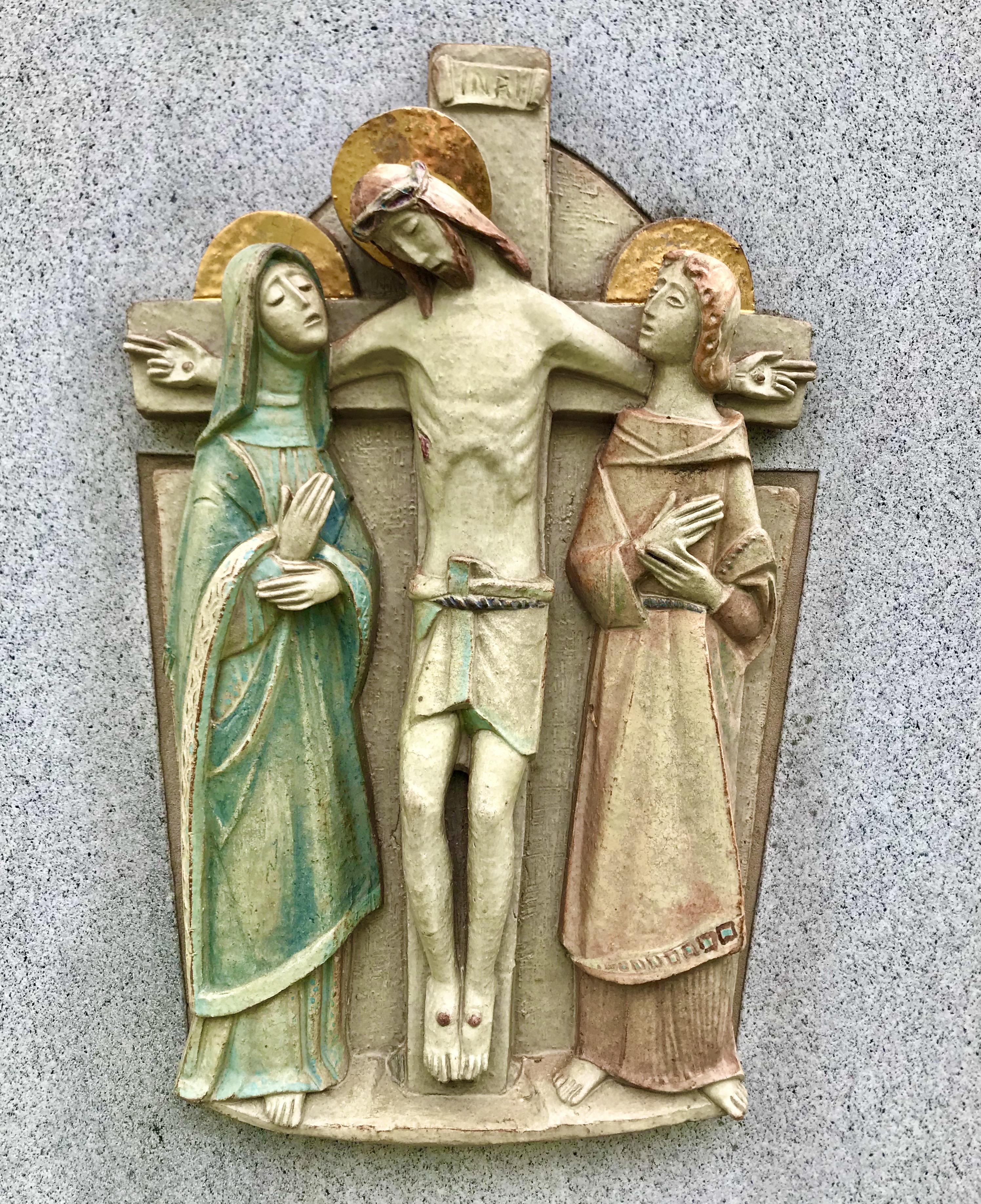
The mystery of the Cross is a revelation in Jesus Christ that keeps us aware of God’s plan for our world and for us. It’s our desert and exile when we keep it in mind. It’s where God changes our heart, gives us ears to listen and draws us to hope for the promised land. It’s a mystery we should share.
SEPTEMBER 27 Mon Saint Vincent de Paul, Priest Memorial Zec 8:1-8/Lk 9:46-50
28 Tue Weekday [Saint Wenceslaus, Martyr; Saint Lawrence Ruiz and Companions, Martyrs]
Zec 8:20-23/Lk 9:51-56
29 Wed Saints Michael, Gabriel and Raphael, Archangels Feast
Dn 7:9-10, 13-14 or Rv 12:7-12a/Jn 1:47-51
30 Thu Saint Jerome, Priest, Doctor of the Church Memorial Neh 8:1-4a, 5-6, 7b-12/Lk 10:1-12
OCTOBER 1 Fri Saint Thérèse of the Child Jesus, Virgin, Doctor of the Church Memorial
Bar 1:15-22/Lk 10:13-16
2 Sat The Holy Guardian Angels Memorial Bar 4:5-12, 27-29 /Mt 18:1-5, 10
3 SUN TWENTY-SEVENTH SUNDAY IN ORDINARY TIME
Gn 2:18-24/Heb 2:9-11/Mk 10:2-16 or 10:2-12
We hear this week from Zechariah, like Haggai, a prophetic voice in the Restoration Period. He (scholars say there are two writing under the name) urges the temple be rebuilt and promises Jerusalem will regain its place, in fact all nations will come to make it a greater kingdom, but it will not be soon. Joining Zechariah are Nehemiah and Baruch, also prophets who spoke during the Restoration Period.
Important saints this week: Vincent de Paul, Jerome, Therese of the Child. Jesus. Saint Lawrence Ruiz, an important saint for the Philippines, was among 15 others martyred in Japan September 28, 1637.
Archangels Michael, Gabriel and Raphael are celebrated September 29 and Guardian Angels October 2.
The gospel readings Monday, Tuesday and Wednesday are from Luke 9-10. As usual, on feasts like those for the angels, the readings from the gospels that reference them are read.
SEPTEMBER 20 Mon Saints Andrew Kim Tae-gŏn, Priest, and Paul Chŏng Ha-sang, and Companions, Martyrs Memorial
Ezr 1:1-6/Lk 8:16-18
21 Tue Saint Matthew, Apostle, Feast Eph 4:1-7, 11-13/Mt 9:9-13
22 Wed Weekday Ezr 9:5-9/Lk 9:1-6
23 Thu Saint Pius of Pietrelcina, Priest Memorial Hg 1:1-8/Lk 9:7-9
24 Fri Weekday Hg 2:1-9/Lk 9:18-22
25 Sat Weekday Zec 2:5-9, 14-15a/Lk 9:43b-45
26 SUN TWENTY-SIXTH SUNDAY IN ORDINARY TIME
Nm 11:25-29/Jas 5:1-6/Mk 9:38-43, 45, 47-48
We read from the Book of Ezra and the Prophet Haggai this week, two important sources describing the period of the Restoration, when a small Jewish community returns to Judea around 520 after exile in Babylon, thanks to the Persian king Cyrus.
Jewish history, like Christian history afterwards, is not unrelated to our own experience as a church today. The restoration of the temple and its liturgy is a key task Ezra and Nehemiah undertakes. It was a key task undertaken by the Second Vatican Council.
This week’s readings from Luke’s gospel are from chapters 8-9, part of Jesus’ Galilean mystery, which prepare his disciples for his great journey to Jerusalem.
The popular 20th century saint, Padre Pio, is remembered September 23, as well as St. Matthew, apostle and evangelist, September 21.
The unusual beginnings of the church in Korea are celebrated September 20. They’re unusual because the church in Korea was founded, not by missionaries from the west, but by Korean laypeople.




 The Victor's Place