Category Archives: Religion

 The Touch of Love: Mark 8:22-26

In this Wednesday’s Gospel (Mk 8: 22-26), Jesus heals a blind man at the town of Bethsaida. This healing does not happen right away:

        ” People brought to Him a blind man and begged Jesus to touch him. He took the blind man by the hand and led him outside the village. Putting spittle on his eyes He laid His hands  on the man and asked, ‘ Do you see anything?’ Looking up the man replied, ‘ I see people looking like trees and walking.’ Then He laid hands on the man’s eyes a second time and he saw clearly; his sight was restored and he could see everything distinctly.”

    This passage has been interpreted as an example of how the healing that comes from God happens gradually, in steps. We must be trusting and patient.

     In line with this, I see in this Gospel the invitation of Love toward my conversion. I was blind to the marvelous reality of a loving God in my life. By example and prayer, good people ( like my son Frank) brought me to Him. He took me by the hand and led me outside of my sphere (my village) to the intimate place where only He and I interact. He touched me. He questioned me (“Do you believe?”). He enabled me to see, at least a little bit, as if in a “mirror dimly” ( 1 Cor 13:6). He touches me again and again so that I can see Him and ” see everything distinctly”. In a sense I am no longer blind. I can begin to, in the words of Walter Burghardt, take “a long loving look at the real”.

    And so this passage also reminds me of His wonderful gift of prayer. He takes me by the hand to the isolated place “the private room” , and many times I cannot see Him in this darkness. Then He works His miracle and opens the eyes of my soul to His presence.

    Like Mary Magdalene, I cry within the dark, stony, tomb of my distress, my guilt, my doubt, loneliness and despair. Suddenly He calls to me: ” Woman, why are you weeping? For whom are you looking?”. I look out into the blinding light. I can barely see the hazy human silhouette standing there outside. I cannot recognize Him. Then He calls me by name. I realize this is the Friend who has by now healed me, accompanied me, taught and loved me for so long. In some strange, deep, indescribable way I can see Him! He is my Lord and my God!

   Thank You, Jesus, my Beloved.

       Orlando Hernandez


February 14-20: Readings and Feasts

14 Mon Saints Cyril, Monk, and Methodius, Bishop Memorial Jas 1:1-11/Mk 8:11-13 

15 Tue Weekday Jas 1:12-18/Mk 8:14-21

16 Wed Weekday Jas 1:19-27/Mk 8:22-26 

17 Thu Weekday [The Seven Holy Founders of the Servite Order] Jas 2:1-9/Mk 8:27-33 

18 Fri Weekday Jas 2:14-24, 26/Mk 8:34—9:1

19 Sat Weekday Jas 3:1-10/Mk 9:2-13 

20 SUN 7th SUNDAY IN ORDINARY TIME

1 Sm 26:2, 7-9, 12-13, 22-23/1 Cor 15:45-49/Lk 6:27-38 

We read on weekdays the next two weeks from the Letter of James, a letter addressed to the “twelve tribes of the dispersion.” Jewish-Christian exiles likely. They’re urged to bear up patiently in the hard circumstances they find themselves. It’s always hard to keep ideals when things are not going well.

In readings from the 8th and 9th chapters of Mark this week we hear of the growing opposition to Jesus from the pharisees who ask for a sign and questions from his own disciples. The readings mark the time when Jesus will head toward Jerusalem with his disciples.

We will be on our Lenten journey in two weeks. We hear the same caution Jesus gave his disciples then: “ Don’t listen to those who oppose me.” 

Saints Cyril and Methodius are remembered this Monday. Their work can throw some light on our current church debates about the language we should use in our liturgy and also the current situation in the Ukraine.

6th Sunday c: Use Your Gifts for Others

For this week’s homily, please watch the video below.

February 8-13: Readings and Feasts

FEBRUARY 7 Mon Weekday 1 Kgs 8:1-7, 9-13/Mk 6:53-56 

8 Tue Weekday [Saint Jerome Emiliani; Saint Josephine Bakhita, Virgin]

1 Kgs 8:22-23, 27-30/Mk 7:1-13 

9 Wed Weekday 1 Kgs 10:1-10/Mk 7:14-23 

10 Thu Saint Scholastica, Memorial 1 Kgs 11:4-13/Mk 7:24-30 

11 Fri Weekday [Our Lady of Lourdes] 1 Kgs 11:29-32; 12:19/Mk 7:31-37 

12 Sat Weekday 1 Kgs 12:26-32; 13:33-34/Mk 8:1-10 

13 SUN 6th SUNDAY IN ORDINARY TIME  Jer 17:5-8/1 Cor 15:12, 16-20/Lk 6:17, 20-26

Readings from the 1st Book of Kings this week continue the history of Israel begun in the Books of Samuel.  David’s son, Solomon, dedicates the temple in Jerusalem (Monday-Tuesday ), which initiates a “golden age”, (Wednesday) Then,  there’s a rebellion of the northern Kingdom under Jeroboam which leads to its destruction. (Friday, Saturday) The northern kingdom (Israel) will be destroyed by the Assyrians in 722 B.C. In 586 B.C., the southern kingdom (Judah) will fall to Nebuchadnezzar and the Babylonians. The temple will be burned to the ground, Jerusalem destroyed, and Judah’s high-ranking citizens, including its king, deported to Babylon. 

Readings from Mark’s Gospel this week bring Jesus into gentile territory. Jesus’ parable dismissing the prohibition against unclean food and other strictures (Tuesday)  prepares for his journey into gentile territory and his missionary outreach there. (Wednesday-Thursday)

St. Josephine Bakhita (Tuesday), like St. Agnes and St Agatha, offers an heroic story of an abused woman sustained by God’s grace. St. Scholastica is a woman who brought about a storm. (Thursday)

Friday we remember Our Lady of Lourdes, a day of prayer for the sick.

The feast of the martyrs of Japan (February 6) occurs on Sunday. Remember the church in Japan.

For readings and scriptural commentary cf.  www.usccb.org

For reading 1 Kings;   https://bibleresources.americanbible.org/resource/1-kings

5th Sunday of the Year: Trust in God

For this week’s homily please watch the video below.

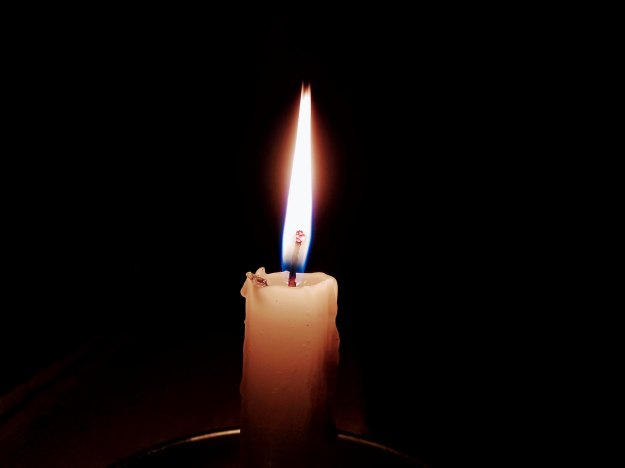
Candlemas Day

I learned something lovely this week–
that the Feast of the Presentation
of Jesus, as written in Luke’s Gospel,
is also called Candlemas Day,
when candles are blessed for the year.

Mary and Joseph brought Jesus to the
Temple in Jerusalem to be consecrated
to the Lord according to the law, by the
parents of a first-born male child.
Their sacrificial offering was a pair of
turtle doves, as the law required.

Inspired by the Spirit, a man named Simeon
came to the temple to pray at the same time.
The Prophetess Anna, who worshiped God
day and night in fasting and prayer was
also there.

Simeon and Anna recognized Jesus as
God’s Anointed One and praised God
that their years of waiting were over,
and their prayers had been answered.

Candlelight reminds us that Jesus is the
Light of the world.

Gloria Ziemienski
January 2019

WAITING
We wait and pray
for a child to be born

We wait and pray
as a loved one slips
away from us
into God’s arms.

We wait and pray
(if we’re wise)
standing in line or
stuck in traffic.

We wait and pray
that the job interview
ends in employment.

We wait and pray
for school graduations,
expecting each one
to lead us further
into the grown-up world.

We wait and pray for recovery
from illness and its burdens,
our own or of someone dear to us.

We wait and pray for
the safe return of a loved one-
from a journey,
from the hospital,
from war.

We wait and pray
for so many things
and so many people
so many times in our lives.
Waiting is the hardest prayer.
Gloria Ziemienski June 2005

A Woman Touched His Garments

The ancient fresco in the catacombs of Saints Peter and Marcellinus in Rome shows the woman who is healed by touching Jesus’ cloak.  Her story in Mark’s gospel is placed in the middle of the story of Jesus raising the daughter of Jairus the synagogue official from the dead.. We read the stories of the woman and the dead girl today at Mass. (Mark 5,21-43)

You wonder why the woman’s story interrupts the very dramatic story of the dead girl? Could the fresco in the catacombs where Roman Christians were buried offer a clue? Did they see her pointing to a way they could know Jesus and the mystery of death?

She doesn’t approach Jesus and speak to him face to face as the little girl’s father does.  She just touches his cloak and power goes out from him and cures her. In a sense, the woman is like every believer after her who knows the Risen Jesus, not face to face, but through signs.

Those buried in the catacombs were like her. They were baptized with water and received the body and blood of Christ in signs of bread and wine. Like the woman, they touched his garments in the sacraments, and he welcomed them in sacraments. He sees their faith and gives them new life.

When the Catechism of the Catholic Church was issued after the Second Vatican Council, the publishers of the book were instructed to put the picture of the woman touching the cloak of Jesus at the beginning of its section on the sacraments. She’s our guide to  sacramental faith.

She tells us to believe and touch the signs that Jesus gives us. We know him through signs and sacraments. They give us his life.

FEBRUARY 1-6: Readings and Feasts

1 Tue Weekday

2 Sm 18:9-10, 14b, 24-25a, 30—19:3/Mk 5:21-43 

 2 Wed  Presentation of the Lord Feast

Mal 3:1-4/Heb 2:14-18/Lk 2:22-40 or 2:22-32 

3 Thu Weekday [St Blaise, Bishop and Martyr; St Ansgar, Bishop]

1 Kgs 2:1-4, 10-12/Mk 6:7-13 

4 Fri Weekday Sir 47:2

-11/Mk 6:14-29

5 Sat St Agatha, Virgin Martyr Memorial 1 Kgs 3:4-13/Mk 6:30-34 

6 SUN FIFTH SUNDAY IN ORDINARY TIME

Is 6:1-2a, 3-8/1 Cor 15:1-11 or 15:3-8, 11/Lk 5:1-11 

The 4th week of ordinary time this year begins with a memorial of St. John Bosco, founder of the Salesians, one of the largest religious communities in the Catholic Church. 

Mark’s Gospel returns to accounts of the marvelous cures Jesus works on both sides of the Lake of Galilee, the gentile side and the Jewish side. (Monday and Tuesday) It continues with Jesus sending out his disciples.(Wednesday and Friday) and the account of John the Baptist’s death, (Thursday) which reminds us that Jesus also was destined to experience the mystery of the Cross.

The Old Testament readings from 2 Samuel recall David’s loss of his son Absalom, his death and Solomon assuming his throne.

The Feast of the Presentation of Jesus in the Temple is an important feast inspired by the infancy narrative of St. Luke. The Temple is a symbol of God’s presence in the world, in the church and in ourselves in St. Luke’s Gospel and the Acts of the Apostles.

St. Agatha, February 5, is one of the principal women martyrs of the Roman world. Her story is similar to that of St. Agnes, another early Christian woman martyr.

Readings for the week here.  

4th Sunday of the Year c: Nazareth

For this week’s homily please watch the video below.

January 24-31: Readings and Feasts

JANUARY 24 Mon St Francis de Sales, Memorial 2 Sm 5:1-7, 10/Mk 3:22-30 

25 Tue Conversion of St Paul Feast  Acts 22:3-16 or Acts 9:1-22/Mk 16:15-18

 26 Wed Ss Timothy and Titus, Bishops Memorial 2 Tm 1:1-8 or Ti 1:1-5/Mk 4:1-20

27 Thu Weekday [St Angela Merici, Virgin] 2 Sm 7:18-19, 24-29/Mk 4:21-25 

28 Fri St Thomas Aquinas, Priest, Doctor  2 Sm 11:1-4a, 5-10a, 13-17/Mk 4:26-34 

29 Sat Weekday 2 Sm 12:1-7a, 10-17/Mk 4:35-41 

30 SUN 4th SUNDAY IN ORDINARY TIME

Jer 1:4-5, 17-19/1 Cor 12:31—13:13 or 13:4-13/Lk 4:21-30 

31 Mon St John Bosco, Priest Memorial 2 Sm 15:13-14, 30; 16:5-13/Mk 5:1-20 

We’re ending January reading weekdays from Mark 3- 5. Facing opposition, Jesus teaches in parables and then goes to the other side of the Sea of Galilee where he casts out demons. 

The readings from 2 Samuel are stories of David. 

Important saints celebrated this week: Francis de Sales, Thomas Aquinas, Timothy and Titus, John Bosco, Angela Merici.