Category Archives: ecumenism

The Mary Garden

OLYMPUS DIGITAL CAMERA

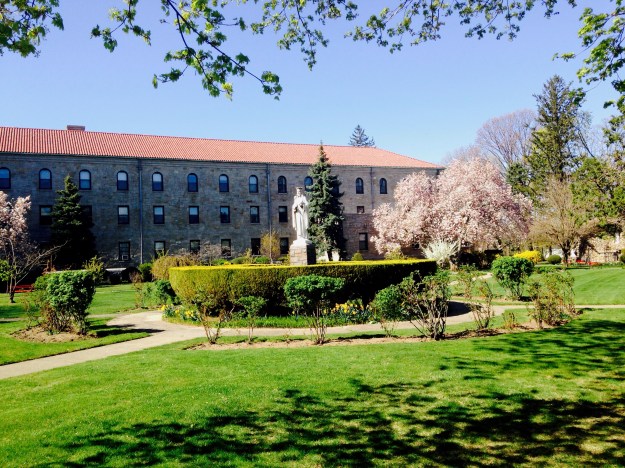
On the Feast of the Visitation of Mary to Elizabeth, May 31, we began our Mary Garden at Immaculate Conception Monastery in Jamaica, New York.

Mary Gardens, dedicated to Mary, the Mother of Jesus, appeared in 14th century Europe following the Black Death, a pandemic that caused millions to die in that part of the world. The gardens, usually found in monasteries and religious shrines, brought hope to people who feared the earth was bringing them death.

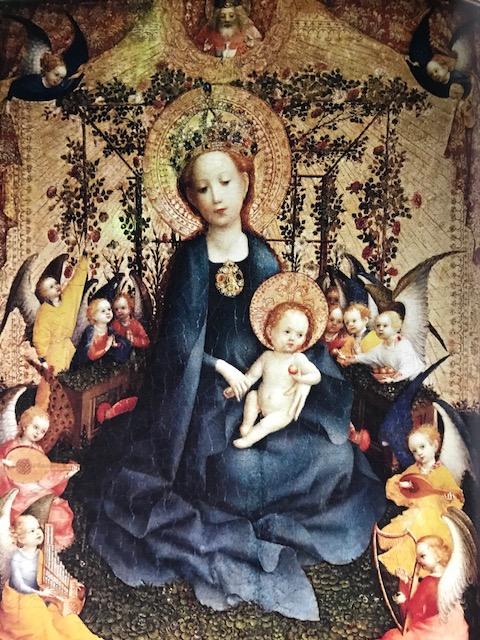
God gave Adam and Eve a garden, the Book of Genesis says. (Genesis 2, 8-28) Rising from the dead, Jesus proclaimed eternal life in a garden. (John 20,11-18) For early and medieval Christians, Mary, the Mother of Jesus, was like a garden enclosed, flowers, plants and trees surrounded her, “our life, our sweetness and our hope.” As the “Mother of the living” she brought the promise of life to our world, Jesus, her Son.

Can a Mary Garden bring hope today to our world that faces climate change and environmental degradation? Mary reminds us creation is a gift of God’s love. A Mary Garden teaches reverence for creation, for the soil, for plants that feed and bring us healing, for flowers that nourish our sense of beauty.

Yes, science and technology play their part in an environmental crisis, but faith has a part to play. We’re planting a Mary Garden!

A Reading from the Book of Genesis
This is the story of the heavens and the earth at their creation. When the LORD God made the earth and the heavens there were no plants on the earth, no grass on the fields, for the LORD God had sent no rain and there were no human beings to till the ground, but a stream was welling up out of the earth and watering all the surface of the ground and the LORD God formed a human being out of the dust of the ground and blew into his nostrils the breath of life, and he came to life.
The LORD God planted a garden in Eden, in the east,* and placed there the one whom he had formed… to cultivate and care for it. (Gen 2, 4-15)

Let us Pray

Praise the Lord who is good,
Sing to our God who is loving,
To the Lord our praise is due.

Who covers the heavens with clouds
and prepares the rain for the earth.
And makes mountains sprout with grain
and plants to serve our needs

You know the number of the stars
and call each one by name.
Bless the earth we break open today
O Lord,
to be a garden in praise of your name,
where we honor Mary, the mother of your Son.

We remember your blessings here
which you never cease to send
through Jesus Christ our Lord.

Sprinkle Them With Water

water sprinkled

At the Masses I celebrated on Easter Sunday following the homily I cast holy water on the congregation after we renewed our baptismal promises. We renounced Satan and said we believe in God, the Father Almighty, creator of heaven and earth, and in Jesus Christ, his son, and in the Holy Spirit, the giver of life. Yes, we believe in God’s church, the communion of saints, the forgiveness of sins, the resurrection of the body and life everlasting.

Then, I went through the congregation sprinkling them with water, the sign of life, the sign poured out on us at our baptism. I tried not to leave anyone out.

Of course the church was more full on Easter. Some I knew smiled when I sprinkled them generously with the water. Many I didn’t recognize, and I wondered what they thought of it all. The kids squinted when the water hit their faces. Some devoutly made the sign of the cross, some seemed a little uncomfortable.

Easter’s more than hearing something; it’s believing what we hear. Does the water fall on rock and hard ground as well as on good soil I wondered? God promises to “pour out water” on his people, the scriptures say. It’s a generous gesture God makes. Water, too, makes its way we know. It’s everywhere in God’s creation. We hardly realize how present it is in us; it’s there in every tissue of our bodies. God is there in us all, seen and unseen.

So the rite of the church says: Sprinkle them all with water, and this I did.

Holy Saturday


https://player.vimeo.com/video/213254130

Wednesday: 5th Week of Lent

Readings here

https://player.vimeo.com/video/211583405


IMG_0210

For Stations of the Cross see: www.passionofchrist.us

6th Sunday b: Healing the Leper

For this week’s homily, please play the video below:

4th Sunday b: Deliver Us From Evil

For this weeks homily please play the video below:

Ecumenism

I attended a beautiful Methodist funeral this week at a funeral home in Ocean Grove, New Jersey. I prayed and sang with the members of the family and their friends. Some years ago, before the Second Vatican Council, I would have been told “In no way is it permitted for the faithful to take part in any way in non-Catholic services.” (Canon 1258)

We have come a long way in our relations with other Christian churches and other religions. In the days of St. Francis de Sales in the 16th century, Christian churches were fighting each other over religion. Francis de Sales as the bishop of Geneva, Switzerland, chose to approach religious differences through dialogue and not arms. His approach anticipated the Vatican Council decrees on Ecumenism (Unitatis Redintegratia) and Non-Christian Religions (Nostra Aetate) which told Catholics to respect the religious beliefs of others and dialogue with them.

Dialogue means listening to the other and offering what you know in return. It’s an on-going process that ultimately, I think, has its roots in the created world we live in, which we know little by little. The word “respect”is a beautiful word, meaning “looking again,” Francis de Sales based his spirituality on respect for the variety of creation. We’re “living plants” in the garden of the world. We need to keep “looking again.”

And while we respect others, we need to “look again” at our own tradition to appreciate it and see it “ever ancient, ever new.”

We’re ending the Church Unity Octave on the Feast of the Conversion of St. Paul, the Apostle, January 25th. St Francis de Sales, St. Paul the Apostle, St. Paul of the Cross, pray for us.

Mary Gardens

Andrea Oliva Florenda, a professor at St. John’s University in Queens, New York, offered a day of reflection on Mary Gardens, December 1 at Bishop Molloy Retreat Center, Jamaica, New York. Professor Florenda teaches in the department of theology and religious studies at St. John’s, specializing in Marian theology. She’s also the designer and curator of the Marian Garden at the university.

Mary Gardens, dedicated to Mary, the Mother of Jesus, appeared in Europe following the Black Death, a pandemic that caused millions of deaths in that part of the world in the 14th century. The gardens, usually found in monasteries and religious shrines, brought hope to people walking “in the shadow of death.”

God placed Adam and Eve in a garden, Christian tradition says. (Genesis 2, 8-28) Rising from the dead, Jesus proclaimed eternal life in a garden. (John 20,11-18) For early and medieval Christians, Mary appeared as a garden enclosed, flowers, plants and trees surrounded her, “our life, our sweetness and our hope.” The Mary Garden, which became a favorite inspiration for medieval and renaissance artists, brought the promise of life to the “poor banished children of Eve.”

Does the Mary Garden have a role today in a world facing climate change and environmental degradation? Professor Florenda thinks it does. Besides the mysteries of faith, it teaches reverence for creation, for the soil, for plants that feed us and bring healing, for flowers that nourish our sense of beauty.

Certainly science and technology have a large part to play in the current environmental movement, but Professor Florenda notes the number of young people, from various religious tradition drawn to her Mary Garden at St. John’s, where the mysteries of seed and soil unfold, where pharmacy students study medicinal herbs and seasonal vegetables feed the poor.

The day of reflection on Mary Gardens ended at the grotto honoring Mary in the garden of Immaculate Conception Monastery in Jamaica. There, Professor Florenda spoke about the meaning of the grotto, its structure and the plants and trees surrounding it.

“There is a language in each flower,
that opens to the eye,
A voiceless but a magic power.
A prayer in earth’s blossoms lie.” Anonymous

The Disciple

By Orlando Hernandez

In this Wednesday’s Gospel (Lk 10: 1-9) it says:

The Lord Jesus appointed seventy-two disciples whom He sent ahead of Him in pairs to every town and place He intended to visit. He said to them, “ The harvest is abundant but the laborers are few; so ask the master of the harvest to send out laborers for his harvest. Go on your way; behold, I am sending you like lambs among wolves. Carry no money bag, no sack, no sandals; and greet no one along the way. Into whatever house you enter, first say, ‘ Peace to this household.’ If a peaceful person lives there, your peace will rest on him; but if not, it will return to you. Stay in the same house and eat and drink what is offered to you, for the laborer deserves payment. Do not move about from one house to another. Whatever town you enter and they welcome you, eat what is set before you, cure the sick in it and say to them, ‘ The Kingdom of God is at hand for you.’”

A friend of ours has been a member of our prayer group at the Passionist Monastery in Jamaica, Queens for the past two years. Through a series of unfortunate events, a few months ago, he lost the apartment that he had inherited from his parents. His Social Security check is not enough for him to get a place, and he has no family left, so he lives in a homeless shelter in Brooklyn. He is trying to get affordable housing through the social workers there. It has been a slow process.

Like the apostles that Jesus sent out he’s practically penniless and homeless, and lives out there like a “lamb among wolves.” He takes a series of trains so the he can come from Bedford-Stuyvesant to the Jamaica Monastery for Mass during the week, and to celebrate the Eucharist and praise the Lord with our prayer group on Sundays. We have raised a decent sum of money for him, but he prefers that we hold it until he can get a place of his own. One of the members of our group is dealing with the social workers to work something out so that he can rent an apartment in her house. We are waiting to see what happens.

He is lonely. He loves the company of our prayer group. He comes with an affable disposition and a positive attitude. He enters our chapel where he is indeed welcomed, and can “eat and drink” the best food in the world. He loves to praise and dance with our group, but sometimes he just sits there quietly and looks quite sad. People come and pray over him, and ask him how they can help him. He’s embarrassed and says he’s okey.

Sometimes he tells me that he thinks that God has put him in the doghouse and he doesn’t know why, but he keeps on coming, and praying, and participating. The other day I realized that he was like those 72 homeless disciples, coming to our House of God to bring his peace and brotherhood to all of us, to share his dignity, his patience and his faith —to represent our Lord. My spiritual director, Fr. John Powers,CP, says that being in need is one of the greatest ministries. It can inspire us to empathy, compassion, respect, and sacrifice for our hurting brothers and sisters. Jesus is there in so many ways. Our beautiful, humble, persevering friend is indeed coming to announce Jesus, to tell us by his very presence “The Kingdom of Heaven is at hand for you.”

Orlando Hernandez

Crimes Against the Natural World


“Patriarch Bartholomew has spoken in particular of the need for each of us to repent of the ways we have harmed the planet, for “inasmuch as we all generate small ecological damage”, we are called to acknowledge “our contribution, smaller or greater, to the disfigurement and destruction of creation” He has repeatedly stated this firmly and persuasively, challenging us to acknowledge our sins against creation:

“’For human beings… to destroy the biological diversity of God’s creation; for human beings to degrade the integrity of the earth by causing changes in its climate, by stripping the earth of its natural forests or destroying its wetlands; for human beings to contaminate the earth’s waters, its land, its air, and its life – these are sins” For “to commit a crime against the natural world is a sin against ourselves and a sin against God.’

“At the same time, Bartholomew has drawn attention to the ethical and spiritual roots of environmental problems, which require that we look for solutions not only in technology but in a change of humanity; otherwise we would be dealing merely with symptoms. He asks us to replace consumption with sacrifice, greed with generosity, wastefulness with a spirit of sharing, an asceticism which “entails learning to give, and not simply to give up. It is a way of loving, of moving gradually away from what I want to what God’s world needs. It is liberation from fear, greed and compulsion” As Christians, we are also called “to accept the world as a sacrament of communion, as a way of sharing with God and our neighbours on a global scale. It is our humble conviction that the divine and the human meet in the slightest detail in the seamless garment of God’s creation, in the last speck of dust of our planet”.

Pope Francis ,Laudato SI, 8-9