Category Archives: politics

St. Cyril of Alexandria (d.444)

To be a saint doesn’t mean you’re perfect, Pope Francis says in his exhortation “Gaudete et exsultate“, on holiness in today’s world. That’s good to remember when we consider St.Cyril of Alexandria, the 4th century bishop of Alexandria and doctor of the church, whose feast is today, June 26th.

If you read his online biography in Wikipedia–where many today look for information about saints – you’ll find that he was deeply involved in the messy partisan politics of his time, when Christians, Jews and pagans fought and schemed to control over Alexandria, the city then probably the most important city in the Roman empire. Some called him a “proud Pharaoh;” “ a monster” out to destroy the church, an impulsive, scheming bishop in a riotous city. The Wikipedia biography mainly sees him that way.

He was a saint, other biographies say. Why a saint? Well, Cyril was absorbed in understanding and defending the Incarnation of the Word of God. How did the Word of God come among us? Who was Jesus Christ? Pursuing that mystery defined Cyril during life. It was at the heart of things for him, and the voluminous collection of sermons, letters, commentaries and controversial essays he left bears out that interest.

He thought and wrote extensively about this mystery. The way he came to express it was used at the Council of Ephesus (431) and became the way we also express it in our prayers. Mary was the Mother of God. The One born of her was not simply another human being. Her Son was true God, who would be truly human and eventually die on the Cross. God “so loved the world” that he came among us as Mary’s Son.

What we see as “the totality” of Cyril’s life, his “life’s jouney”, the “overall meaning of his person”, to use the pope’s words, is not his involvement in the violent politics of his day. Yes, that was there. But his abiding quest was to know Jesus Christ.

“‘The Word was made flesh’ [John 1:14], can mean nothing else but that he became flesh and blood like ours; he made our body his own and came forth man from a woman, not casting off his existence as God, or his generation of God the Father, but in taking to himself flesh remaining what he was. 

“This is the correct faith proclaimed everywhere. The holy teachers taught this and so they called the holy Virgin, the Mother of God, not as if the nature of the Word or his divinity began from the holy Virgin, but because that holy body with a rational soul, to which the Word, personally united, was born of her according to the flesh.”

— St. Cyril of Alexandria, First Letter to Nestorius

“When poisonous pride swells up in you, turn to the Eucharist; and that Bread, which is your God humbling and disguising himself, will teach you humility. When the fever of selfish greed rages in you, feed on this Bread; and you will learn generosity. When you feel the itch of intemperance, nourish yourself with the Flesh and Blood of Christ, who practiced heroic self-control during His earthly life, and you will become temperate. When you are lazy and sluggish about spiritual things, strengthen yourself with this heavenly Food; and you will grow fervent. Lastly, when you feel scorched by the fever of impurity, go to the banquet of the Angels; and the spotless Flesh of Christ will make you pure and chaste.”

2nd Corinthians: Suffering with Christ

gohistoric_14912_m

For the next two weeks we’re reading at Mass St. Paul’s Second Letter to the Corinthians, a Christian community in the city of Corinth around the year 50, not many years after the time of Jesus.

During the easter season we read about the spread of the Christian church from Jerusalem to Rome from the Acts of the Apostles. Now, in ordinary time we look more closely at a church Paul founded– in Corinth. What was it like? Paul’s two letters to the Corinthians tell us about an early Christian church, but they also tell us about our church today.

The Christian community at Corinth was drawn from different peoples flocking to the great Mediterranean port. It was diverse. It attracted a variety of preachers and teachers, which caused some division, noticeably as they came together to “break bread.” There’s some sexual immorality in this church on a sea port open to the world. Some were wondering about the resurrection of Jesus.

Most of its members were not Jewish Christians, though some there may have wished for the stability a Jewish synagogue might provide. There’s no bishop administering this church as yet. Paul was a minister to the world. There was no one person in charge in Corinth.

It was church  “in the works,” not complete, with glaring weaknesses, struggling to grow in faith, with plenty of loose ends, looking for answers. It was church experiencing great change, a church suffering, not from outward persecution, but from turmoil within.

Maybe a church like ours?

Addressing the Corinthians, Paul sees their suffering as “Christ’s suffering”. He feels that mystery in himself, as he says in the opening chapters of his letter and he returns to that theme over and over.

Yes, problems must be faced, corrections made, restructuring needs to take place, but Paul keeps reminding the Corinthians they’re experiencing the sufferings of Christ and with Christ’s suffering comes his encouragement.

Paul himself knew both the sufferings of Christ and his encouragement. “We were utterly weighed down beyond our strength, so that we despaired of life,” he writes from the province of Asia, but with suffering came an overflowing encouragement, which always accompanies the sufferings of Christ. “We do not trust in ourselves but in God who raises from the dead.” ( 2 Corinthians 1, 5-11)

Paul’s way is the right way, isnt’ it? We’re tempted to judge, analyze, condemn, throw up our hands and lose hope in the world around us. The first way to see it is through the sufferings of Christ, a mystery affecting us all, and the “encouragement” that always accompanies this mystery.

Listen to Paul speaking to the struggling Corinthians:

“Our hope for you is firm, for we know that as you share in the sufferings, you also share in the encouragement,”

Good letter for us to read these days.

St. Justin, Philosopher and Martyr (c.100-165 AD)

Justin-Martyr
Justin Martyr

We need Christians today like St. Justin, the 2nd century philosopher we remember June 1. “We need to make our teaching known,” he said. Still true today.

In Justin’s time, philosophers were the mentors, teachers, influencers of Roman society and were welcomed in the forum and private homes of the Roman world. St. Paul addressed them in Athens with limited success. Justin was an Christian philosopher in Rome.

Born in Nablus in Palestine of Greek parents, Justin studied all the philosophers of his time in Alexandria, Athens and Ephesus. It may have been in Ephesus around the year 130 that he encountered Christianity when, walking along the seashore, he met an old man who told him the human heart could never be satisfied by Plato for “the prophets alone announced the truth.”

“After telling me these and other things…he went away and I never saw him again, but a flame kindled in my soul, filling me with love for the prophets and the friends of Christ. I thought about his words and became a philosopher..” (Dialogue 8)

Justin was influenced, not only by Christian teaching, but also by the example of Christians he met:

“I liked Plato’s teaching at first and enjoyed hearing evil spoken about Christians, but then I saw they had no fear of death or other things that horrify, and I realized they were not vicious or pleasure-loving at all.” (Apology 2,12)

Forum q
Ruins of the Roman Forum

Justin championed the cause of Christians who were increasingly attacked by society. Donning a philosopher’s cloak he taught and wrote in Rome about the year 150 AD. He was a new kind of Christian, a Christian philosopher engaging Roman society on its own terms. He gave Christianity a Roman face and voice.

Justin defended Christians against the charge they were atheists and enemies of the Roman state. Christians were good citizens, he wrote, who pray for Rome, though they don’t worship in temples, who had no statues of gods or who did not participate in the religious rites of the state.  Justin’s writings give us a unique picture of 2nd century Christianity and early Christian worship.

In his “Dialogue with Trypho, the Jew” Justin offered the traditional Christian defense of Christianity to a Jewish antagonist. The Jewish prophets predicted the coming, the death and resurrection of Jesus, Justin argues.

In the documents of Vatican ii, Justin is recognized as an early example of Christian ecumenism. (Evangelium Nuntiandi 53) Through the Word of God all things came to be, he said.  The Word became flesh in Jesus Christ, but Justin linked the biblical Word to the Logos of the philosophers. “Seeds of the Word” were scattered throughout the world, Justin claimed. Every human being possesses in his mind a seed of the Word, and so besides the prophets of the Old Testament, pagan philosophers like Heraclitus, Socrates and Musonius lead us to Jesus Christ, Justin said. (Apology 1,46)

A prolific writer and teacher, Justin was an early Christian intellectual using his talents to promote his faith, Unfortunately only three of his writings come down to us. Other Christian intellectuals followed him, using the tools of philosophy to dialogue with the Greco-Roman world.

Finally, rivals in Rome pressed charges against Justin as an enemy of the state and he was  brought before a Roman judge along with six companions. Sentenced to death, they were beheaded probably in the year 165 AD. The official court record of their trial  still survives.

Feasts for Tired Believers

Central Italy, 1800s

The Passionists celebrate two feasts immediately before Ash Wednesday. The Solemn Commemoration of the Passion of Jesus Christ on the Friday before Ash Wednesday. The Prayer of Jesus in the Garden on Tuesday before that day.

Both feasts are inspired by our missionary founder, St. Paul of the Cross, (1694-1775). He spent many years announcing the graces of lent in the villages and towns of the Tuscan Maremma in Italy..

It was a challenging task. The Tuscan Maremma was then a place where graces seemed gone. It was the poorest, most troubled part of Italy in Paul’s day, an area in Central Italy facing the Mediterranean Sea, almost 2,000 square miles– roughly the size of Long Island and New York City together. Only gradually, towards the end of the 1700s, after his death, did it begin inching towards recovery.

St.PaulCross.017

Now Tuscanny is a popular tourist destination. Then it was an unhealthily mix of hills and swamplands. Malaria was widespread, roads often impassible, dangerous because of bandits. Farmlands were abandoned; beggars everywhere. The people in isolated villages and hill towns suspected outsiders.

Paul and his companions preached there for many years. Every year it was the same; it never seemed to change. You need other eyes and another kind of heart to work in a world like that and not get tired.

And so as they packed their bags for their lenten journey into the Tuscan Maremma they had to remind themselves what was there before them: the mystery of the Passion of Christ. They needed to pray so they wouldn’t forget. That’s what Jesus did before the mystery of his Passion.

It’s still so today, isn’t it? These two feasts are for all kinds of tired believers, who face the world where things don’t seem to change. We need another way of seeing things and another kind of heart to journey on..

If you want to pray these feasts with the Passionists, go here.

Noah and the Ark: Genesis 6-7

Where did the story come from?

A few years ago Nova on PBS featured a program called“The Secrets of Noah’s Ark.” In early times, floods were common in the “Fertile Crescent,” the area in Mesopotamia {modern Iraq} where the Tigris and Euphrates Rivers and the ancient city of Babylon were located. Floods, sometimes great floods, occurred, so the people had to be ready. You had to keep your boats handy, and a big boat also– you never knew..

But people then, as now, had short memories. “As it was in the days of Noah, so it will be at the coming of the Son of Man. In those days before the flood, they were eating and drinking, marrying and giving in marriage, up to the day that Noah entered the ark. They did not know until the flood came and carried them all away.” (Matthew 24, 37-38)

I suspect some Babylonian priests then– meteorologists and story tellers of the age– came up with a flood story thousands of years before the Noah story in Genesis, to keep people on their toes – and maybe challenge some early climate change deniers too. It reinforced important advice: “ Keep your boats in shape and make sure a big boat’s around for ‘the big one.’”

Jewish priests and scribes in 6th century Babylon saw the story a perfect fit for the story of human origins they were telling their people. For them the take-away from the story was not to keep a big boat handy, but to be faithful to God like Noah and Abraham and their families. If they were faithful, God would save them from the flood and bring them  to the Promised Land.

The Nova program showed evidence from today of those big boats there “just in case.”

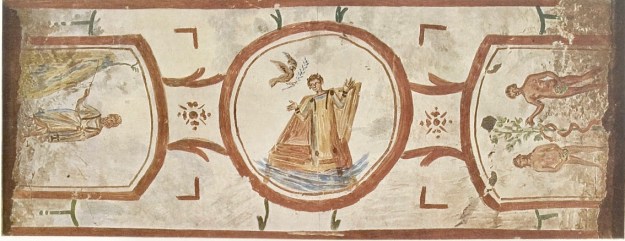
The story gave hope to the Jews driven from Jerusalem to exile in Babylon where, “By the rivers of Bablyon, we sat ad wept, remembering Zion.” (Psalm 137)  Christians– the pictures in the catacombs remind us (above)– saw Noah as a sign that the waters of baptism saved them from death and brought them the promise of paradise lost by Adam and Eve.

So the story of Noah and the ark is more than a myth.

“A Vision Thing”


Here’s a favorite picture of mine from the Staten Island Ferry. You say it’s a picture of the New York skyline? I say it’s a picture of water that gave birth to the city. True, isn’t it? The water was here first. The city came to be because water brought the world here, making the city a capitol of world trade and drawing millions of human beings to this place

Now look at it. The man who built the new World Trade Center claims it’s the tallest building in the country, challenging the heavens–like Babel.

Be careful, though, about challenging the heavens and forgetting about the earth. Be careful about the waters that brought you where you are. No fish or oysters here to eat now. Little space for the waters to go when they rise. And they will.

Don’t forget– the water was here first. It’s a “vision thing.” That’s what Pope Francis says in “Laudato si”.

This week’s readings from Genesis are good readings for improving our vision. In the weeks before we read from the Letter to the Hebrews, so you might say that from the heavens we’re now reflecting on the earth.  

It’s good to reflect on creation, Genesis reminds us. God looks on what has been made and finds it good. Our account from Genesis today describes the creation of man (“man” here is a term for man and woman). Man is not immediately placed on the bare earth. No, he is placed in a garden where “various trees grow that were delightful to look at and good for food, with the tree of life in the middle of the garden and the tree of the knowledge of good and evil. “

Human beings, created by God, are called like God to find creation good. iThe Genesis account singles our the various trees that are delightful to look at and good for food, but all creation, from the sun and the stars to the simplest organisms, is to be looked at with delight.  

We’ll read for two weeks in our lectionary from the Book of Genesis and then we’ll be reading from the Book of Sirach which continues the Genesis message. Learn the Lord’s wisdom from the sands on the seashore, from heaven’s heights and earth’s depths, Sirach teaches.  Like the Book of Genesis, it tells us to learn from the world we live in. 

The scriptures in our lectionary are not assigned arbitrarily. The compilers of our lectionary after Vatican II carefully planned the way our lectionary unfolds.

Sustainable Development Goals:2023


In September 2015 world leaders at the United Nations agreed to work for 17 Sustainable Development Goals by 2030. The goals aim to “eliminate poverty, fight inequality and tackle climate change, while ensuring no one is left behind. They recognize that ending poverty must go hand-in-hand with strategies that build economic growth and address a range of social needs including education, health, social protection, and job opportunities, while also tackling climate change and environmental protection.” https://www.un.org/sustainabledevelopment/development-agenda/

The United Nations will convene a summit on the Sustainable Development GoalsDG 18-19 September 2023 at its Headquarters in New York, during the General Assembly high-level week. The goals at this point “are in deep peril. For the first time in decades, development progress is reversing under the combined impacts of climate disasters, conflict, economic downturn and lingering COVID-19 effects. The SDG Summit serves as a rallying cry to recharge momentum, for world leaders to come together, to reflect on where we stand and resolve to do more. It is a moment to recommit to a vision of the future that ensures no one is left behind. Fundamental shifts in commitment, solidarity, financing and action must put us back on track to end poverty, realize just societies and reset a balanced relationship with the natural world.” (UN report)

Cities are still an important focus for Sustainable Development, because today more than half the world’s population lives in cities and that number is expected to reach two-thirds by the year 2060. In cities “the battle for sustainability will be won or lost,” one UN expert remarked. https://www.un.org/sustainabledevelopment/blog/2018/07/un-forum-spotlights-cities-struggle-sustainability-will-won-lost/

The 11th goal of Sustainable Development is “making cities safe, inclusive, resilient and sustainable by 2030. Sustainability differs from city to city, but quality of life means among other things, adequate housing, work and employment, clean water and air, access to public transportation.

Today many countries are at war, building walls and wondering only about themselves. Why not think big? What can we do? The USA ranks 39th in fulfilling the goals. Our church, at least here in the US doesn’t seem active enough. Maybe better said: we’re not active enough. Yesterday’s blog was on the Israelites grumbling in the desert. Could be us.

Here’s the current report on the goals: https://sdgs.un.org/gsdr/gsdr2023

Water:Genesis 2

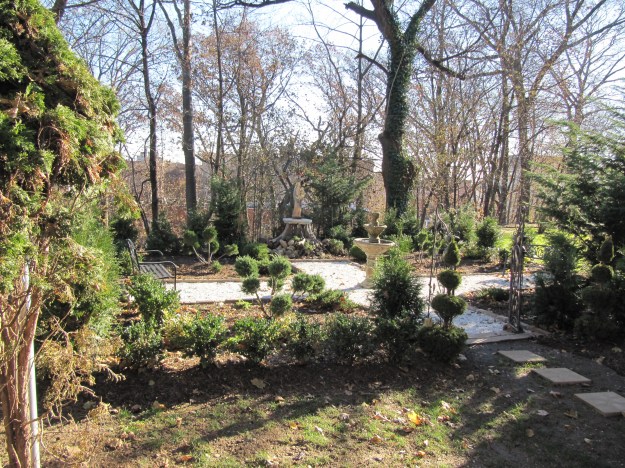
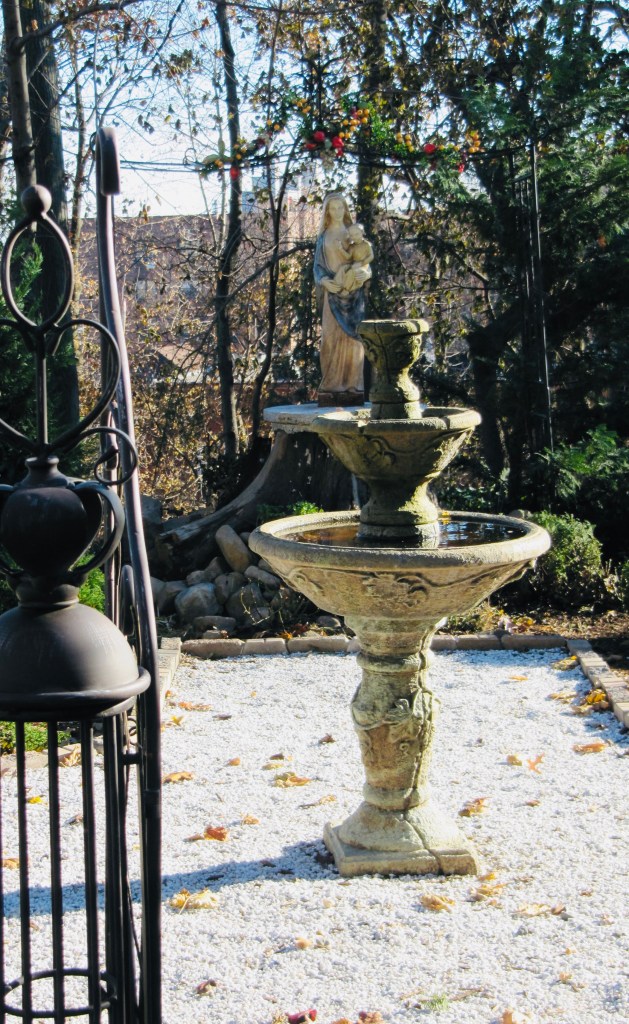
Mary Garden, Passionist Monastery, Jamaica, New York

Today’s reading from Genesis begins the second creation account (Genesis 2,4..) which pays particular attention to the creation of human beings. But it begins with water, welling up from the earth bringing life to the earth and finally the human family.

IMG_2381

Water is at the heart of the garden God provides for Adam and Eve. We have a fountain in the center of our Mary Garden signifying water’s vital role in the garden that was Eden and in the world we live in today.

Pope Francis speaks repeatedly of the role of water in our common home of creation and our need to care for it. Here are some of his reflections from his 2018 World Day of Prayer for the Care of Creation. Notice his strong objection to attempts to privatize water by commercial groups.

“On this World Day of Prayer for the Care of Creation, which the Catholic Church for several years now has celebrated in union with our Orthodox brothers and sisters and with participation of other Churches and Christian communities, I would like to draw attention to the question of water. It is a very simple and precious element, yet access to it is, sadly, for many people difficult if not impossible. Nonetheless, “access to safe drinkable water is a basic and universal human right, since it is essential to human survival and, as such, is a condition for the exercise of other human rights. Our world owes a great social debt towards the poor who lack access to drinking water, because they are denied the right to a life consistent with their inalienable dignity” (ibid., 30).
Water invites us to reflect on our origins. The human body is mostly composed of water, and many civilizations throughout history arose near great rivers that marked their identity. In an evocative image, the beginning of the book of Genesis states that, in the beginning, the spirit of the Creator “swept over the face of the waters (1:2)”.
In considering the fundamental role of water in creation and in human development, I feel the need to give thanks to God for “Sister Water”, simple and useful for life like nothing else on our planet.  Precisely for this reason, care for water sources and water basins is an urgent imperative. Today, more than ever, we need to look beyond immediate concerns (cf. Laudato Si’, 36) and beyond a purely utilitarian view of reality, “in which efficiency and productivity are entirely geared to our individual benefit” (ibid., 159). We urgently need shared projects and concrete gestures that recognize that every privatization of the natural good of water, at the expense of the human right to have access to this good, is unacceptable.
For us Christians, water represents an essential element of purification and of life.  We think immediately of baptism, the sacrament of our rebirth. Water made holy by the Spirit is the matter by which God has given us life and renewed us; it is the blessed source of undying life. For Christians of different confessions, baptism also represents the real and irreplaceable point of departure for experiencing an ever more authentic fraternity on the way to full unity. Jesus, in the course of his mission, promised a water capable of quenching human thirst for ever (cf. Jn 4:14).  He prophesied, “If any one thirst, let him come to me and drink (Jn 7:37). To drink from Jesus means to encounter him personally as the Lord, drawing from his words the meaning of life. May the words he spoke from the cross – “I thirst” (Jn 19:28) – echo constantly in our hearts. The Lord continues to ask that his thirst be quenched; he thirsts for love.  He asks us to give him to drink in all those who thirst in our own day, and to say to them, “I was thirsty and you gave me to drink” (Mt 25:35). To give to drink, in the global village, does not only entail personal gestures of charity, but also concrete choices and a constant commitment to ensure to all the primary good of water.”

https://www.vaticannews.va/en/taglist.cultura-e-societa.Diritti-umani.html

The Season of Creation, September 1st -October 5th

1 September 2022, Pope Francis writes:

Dear brothers and sisters!

“Listen to the voice of creation” is the theme and invitation of this year’s Season of Creation.  The ecumenical phase begins on 1 September with the World Day of Prayer for the Care of Creation, and concludes on 4 October with the feast of Saint Francis.  It is a special time for all Christians to pray and work together to care for our common home.  Originally inspired by the Ecumenical Patriarchate of Constantinople, this Season is an opportunity to cultivate our “ecological conversion”, a conversion encouraged by Saint John Paul II as a response to the “ecological catastrophe” predicted by Saint Paul VI back in 1970. 

If we learn how to listen, we can hear in the voice of creation a kind of dissonance.  On the one hand, we can hear a sweet song in praise of our beloved Creator; on the other, an anguished plea, lamenting our mistreatment of this our common home.

The sweet song of creation invites us to practise an “ecological spirituality” (Laudato Si’, 216), attentive to God’s presence in the natural world.  It is a summons to base our spirituality on the “loving awareness that we are not disconnected from the rest of creatures, but joined in a splendid universal communion” (ibid., 220).  For the followers of Christ in particular, this luminous experience reinforces our awareness that “all things came into being through him, and without him not one thing came into being” (Jn 1:3).  In this Season of Creation, we pray once more in the great cathedral of creation, and revel in the “grandiose cosmic choir” made up of countless creatures, all singing the praises of God.  Let us join Saint Francis of Assisi in singing: “Praise be to you, my Lord, for all your creatures” (cf. Canticle of Brother Sun).  Let us join the psalmist in singing, “Let everything that breathes praise the Lord!” (Ps 150:6).

Tragically, that sweet song is accompanied by a cry of anguish.  Or even better: a chorus of cries of anguish.  In the first place, it is our sister, mother earth, who cries out.  Prey to our consumerist excesses, she weeps and implores us to put an end to our abuses and to her destruction.  Then too, there are all those different creatures who cry out.  At the mercy of a “tyrannical anthropocentrism” (Laudato Si’, 68), completely at odds with Christ’s centrality in the work of creation, countless species are dying out and their hymns of praise silenced.  There are also the poorest among us who are crying out.  Exposed to the climate crisis, the poor feel even more gravely the impact of the drought, flooding, hurricanes and heat waves that are becoming ever more intense and frequent.  Likewise, our brothers and sisters of the native peoples are crying out.  As a result of predatory economic interests, their ancestral lands are being invaded and devastated on all sides, “provoking a cry that rises up to heaven” (Querida Amazonia, 9).  Finally, there is the plea of our children.  Feeling menaced by shortsighted and selfish actions, today’s young people are crying out, anxiously asking us adults to do everything possible to prevent, or at least limit, the collapse of our planet’s ecosystems.

Listening to these anguished cries, we must repent and modify our lifestyles and destructive systems.  From its very first pages, the Gospel calls us to “repent, because the kingdom of heaven has come near” (Mt 3:2); it summons us to a new relationship with God, and also entails a different relationship with others and with creation.  The present state of decay of our common home merits the same attention as other global challenges such as grave health crises and wars.  “Living our vocation to be protectors of God’s handiwork is essential to a life of virtue; it is not an optional or a secondary aspect of our Christian experience” (Laudato Si’, 217).

As persons of faith, we feel ourselves even more responsible for acting each day in accordance with the summons to conversion.  Nor is that summons simply individual: “the ecological conversion needed to bring about lasting change is also a community conversion” (ibid., 219).  In this regard, commitment and action, in a spirit of maximum cooperation, is likewise demanded of the community of nations, especially in the meetings of the United Nations devoted to the environmental question.  

The COP27 conference on climate change, to be held in Egypt in November 2022 represents the next opportunity for all to join in promoting the effective implementation of the Paris Agreement.  For this reason too, I recently authorized the Holy See, in the name of and on behalf of the Vatican City State, to accede to the UN Framework Convention on Climate Change and the Paris Agreement, in the hope that the humanity of the 21st century “will be remembered for having generously shouldered its grave responsibilities” (ibid., 65).  The effort to achieve the Paris goal of limiting temperature increase to 1.5°C is quite demanding; it calls for responsible cooperation between all nations in presenting climate plans or more ambitious nationally determined contributions in order to reduce to zero, as quickly as possible, net greenhouse gas emissions.  This means “converting” models of consumption and production, as well as lifestyles, in a way more respectful of creation and the integral human development of all peoples, present and future, a development grounded in responsibility, prudence/precaution, solidarity, concern for the poor and for future generations.  Underlying all this, there is need for a covenant between human beings and the environment, which, for us believers, is a mirror reflecting “the creative love of God, from whom we come and towards whom we are journeying”.  The transition brought about by this conversion cannot neglect the demands of justice, especially for those workers who are most affected by the impact of climate change.

For its part, the COP15 summit on biodiversity, to be held in Canada in December, will offer to the goodwill of governments a significant opportunity to adopt a new multilateral agreement to halt the destruction of ecosystems and the extinction of species.  According to the ancient wisdom of the Jubilee, we need to “remember, return, rest and restore”.  In order to halt the further collapse of biodiversity, our God-given “network of life”, let us pray and urge nations to reach agreement on four key principles: 1. to construct a clear ethical basis for the changes needed to save biodiversity; 2. to combat the loss of biodiversity, to support conservation and cooperation, and to satisfy people’s needs in a sustainable way; 3. to promote global solidarity in light of the fact that biodiversity is a global common good demanding a shared commitment; and 4. to give priority to people in situations of vulnerability, including those most affected by the loss of biodiversity, such as indigenous peoples, the elderly and the young.

Let me repeat: “In the name of God, I ask the great extractive industries – mining, oil, forestry, real estate, agribusiness – to stop destroying forests, wetlands, and mountains, to stop polluting rivers and seas, to stop poisoning food and people”.

How can we fail to acknowledge the existence of an “ecological debt” (Laudato Si’, 51) incurred by the economically richer countries, who have polluted most in the last two centuries; this demands that they take more ambitious steps at COP27 and at COP15.  In addition to determined action within their borders, this means keeping their promises of financial and technical support for the economically poorer nations, which are already experiencing most of the burden of the climate crisis.  It would also be fitting to give urgent consideration to further financial support for the conservation of biodiversity.  Even the economically less wealthy countries have significant albeit “diversified” responsibilities (cf. ibid., 52) in this regard; delay on the part of others can never justify our own failure to act.  It is necessary for all of us to act decisively.  For we are reaching “a breaking point” (cf. ibid., 61).

During this Season of Creation, let us pray that COP27 and COP15 can serve to unite the human family (cf. ibid., 13) in effectively confronting the double crisis of climate change and the reduction of biodiversity.  Mindful of the exhortation of Saint Paul to rejoice with those who rejoice and to weep with those who weep (cf. Rom 12:15), let us weep with the anguished plea of creation.  Let us hear that plea and respond to it with deeds, so that we and future generations can continue to rejoice in creation’s sweet song of life and hope.

Rome, Saint John Lateran, 16 July 2022,  Memorial of Our Lady of Mount Carmel

Feast of the Epiphany

For this week’s homily, please play the video below: