Category Archives: ordinary time

The Prayer of Abel: Genesis 4: 1-15

Cain and Abel. James Tissot. Brooklyn Museum

God was pleased with the sacrifice of Abel, rather than that of Cain. St. Ambrose explains why:

“Jesus told us to pray urgently and often, so that our prayers should not be long and tedious but short, earnest and frequent. Long elaborate prayers overflow with pointless phrases, and long gaps between prayers eventually stretch out into complete neglect.

Next he advises that when you ask forgiveness for yourself then you must take special care to grant it also to others. In that way your action can add its voice to yours as you pray. The apostle also teaches that when you pray you must be free from anger and from disagreement with anyone, so that your prayer is not disturbed or broken into.

The apostle teaches us to pray anywhere, and the Saviour says ‘Go into your room’ – but you must understand that this “room” is not the room with four walls that confines your body when you are in it, but the secret space within you in which your thoughts are enclosed and where your sensations arrive. That is your prayer-room, always with you wherever you are, always secret wherever you are, with your only witness being God.

Above all, you must pray for the whole people: that is, for the whole body, for every part of your mother the Church, whose distinguishing feature is mutual love. If you ask for something for yourself then you will be praying for yourself only – and you must remember that more grace comes to one who prays for others than to any ordinary sinner. If each person prays for all people, then all people are effectively praying for each.

In conclusion, if you ask for something for yourself alone, you will be the only one asking for it; but if you ask for benefits for all, all in their turn will be asking for them for you. For you are in fact one of the “all.” Thus it is a great reward, as each person’s prayers acquire the weight of the prayers of everyone. There is nothing presumptuous about thinking like this: on the contrary, it is a sign of greater humility and more abundant fruitfulness.”

Stewardship as a Way of Life

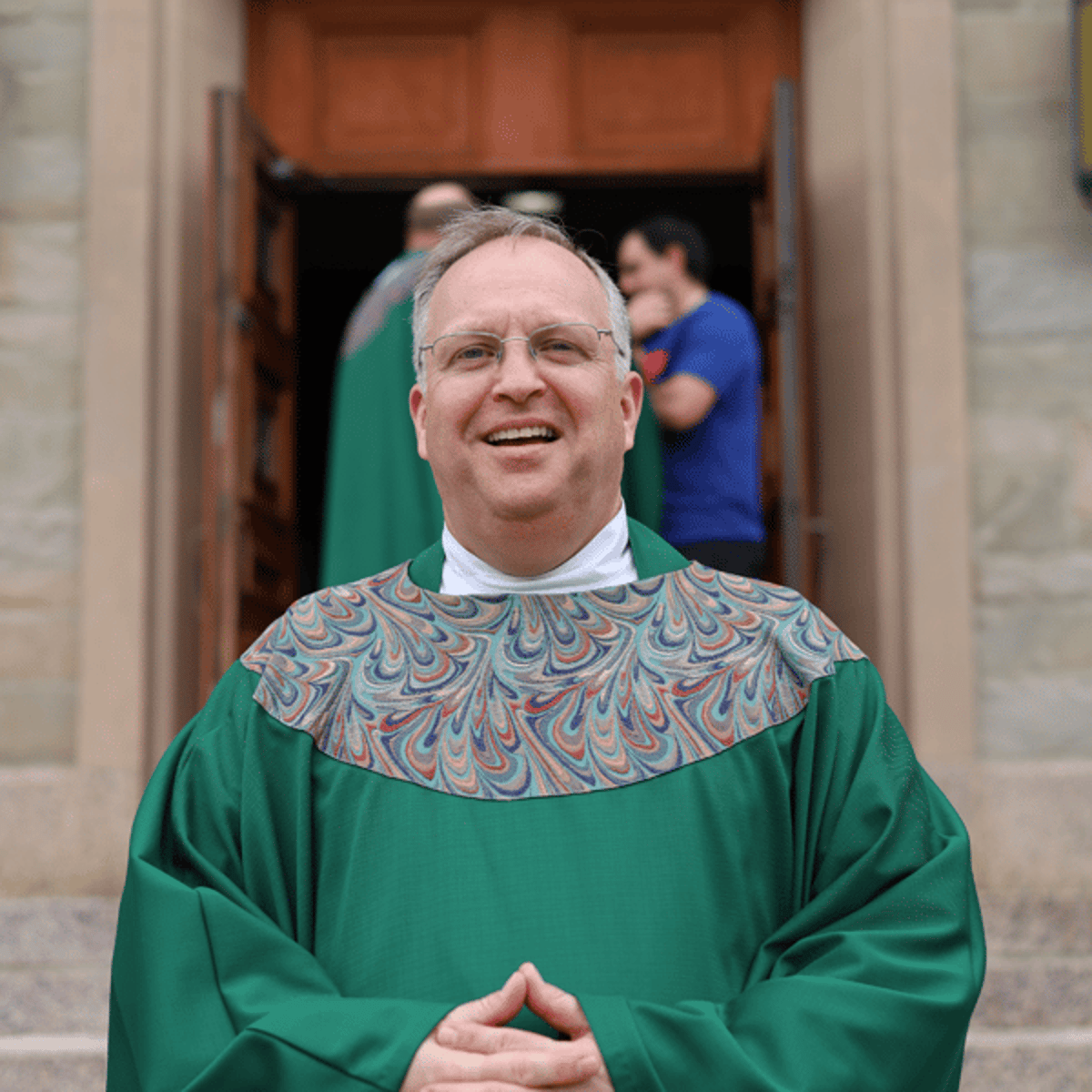
By Fr. James Price, C.P.

Thirty-Second Sunday in Ordinary Time (Year B)

“Amen, I say to you, this poor widow put in more than all the other contributors to the treasury. For they have all contributed from their surplus wealth, but she, from her poverty, has contributed all she had, her whole livelihood.” Today’s gospel image of the generous widow emphasizes the attitude of biblical stewardship that is not based on surplus but on sacrifice. Most of us live this kind of stewardship. We call our offertory collection a “sacrificial offering.” Biblical stewardship goes far beyond the material because something behind that spirit of giving comes from having values, namely the values of sharing, support, and trust. Sharing is not a programmatic gift. It comes from seeing our parents and grandparents sharing a home, their love, shelter, food, and themselves with us so we could grow into generous human beings. Jesus is not advocating financial irresponsibility; he is asking for the freedom to give out of love, not out of calculation.

The early Church put a great emphasis on the care of widows and orphans. It wasn’t a safety net that gave the widow in today’s gospel the strength to give, it was the church that she knew as a family that cared with compassion for those who were in the greatest need. 

I remember when I was in Jamaica, West Indies, we had a group from a parish in Pennsylvania visiting. We went to see a woman in a very rural area. She told us that some of her crops from her small plot of vegetables were stolen. We spent an hour with her and as we were leaving, she handed us a bag of beans from her garden. The visiting pastor was speechless and immediately protested knowing her garden was depleted because of a theft. But she smiled, “Father, you cannot come to my home and not receive a gift to take back to your home.” He took the beans and was shocked but said, “I just met the widow from the gospel.” He witnessed the living gospel. 

May our eyes be open to those generous hearts who renew our hope in the way God provides and never tires of giving himself to us in his Son whose sacrifice is the ultimate act of generosity.


Fr. James Price currently serves as pastor of Immaculate Conception Church in Jamaica, NY.  

The Little Lost Sheep

Luke 15:1-7

An Excerpt From Pope Francis, General Audience, Saint Peter’s Square
Wednesday, 4 May 2016 

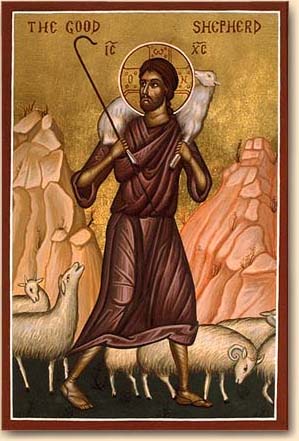
We are all familiar with the image of the Good Shepherd with the little lost lamb on his shoulders. This icon has always been an expression of Jesus’ care for sinners and of the mercy of God who never resigns himself to the loss of anyone. The parable is told by Jesus to make us understand that his closeness to sinners should not scandalize us, but on the contrary it should call us all to serious reflection on how we live our faith. The narrative sees, on the one hand, the sinners who approach Jesus in order to listen to him and, on the other, the suspicious doctors of the law and scribes who move away from him because of his behavior. They move away because Jesus approaches the sinners. These men were proud, arrogant, believed themselves to be just.

The lesson that Jesus wants us to learn is… that not a single one of us can be lost. God’s action is that of one who goes out seeking his lost children and then rejoices and celebrates with everyone at their recovery.

We are all warned: mercy to sinners is the style with which God acts and to this mercy he is absolutely faithful: nothing and no one can distract him from his saving will. God does not share our current throw-away culture… God throws no one away; God loves everyone, looks for everyone: one by one! He doesn’t know what “throwing people away” means, because he is entirely love, entirely mercy.

While he is looking for the lost sheep, he challenges the ninety-nine to participate in the reunification of the flock. Then, not only the lamb on his shoulders, but the whole flock will follow the shepherd to his home to celebrate with “friends and neighbors.”

We should reflect on this parable often, for in the Christian community there is always someone who is missing and if that person is gone, a place is left empty. Sometimes this is daunting and leads us to believe that a loss is inevitable, like an incurable disease. 

In Jesus’ vision there are no sheep that are definitively lost, but only sheep that must be found again. We need to understand this well: to God no one is definitively lost. Never! To the last moment, God is searching for us. Think of the good thief; only in the eyes of Jesus no one is definitively lost. For his perspective is entirely dynamic, open, challenging and creative. It urges us to go forth in search of a path to brotherhood. No distance can keep the shepherd away; and no flock can renounce a brother. To find the one who is lost is the joy of the shepherd and of God, but it is also the joy of the flock as a whole! We are all sheep who have been retrieved and brought back by the mercy of the Lord, and we are called to gather the whole flock to the Lord!

Click here to read the full address by Pope Francis.

God’s Word, the Tree of Life

“God’s Word, the Tree of Life”
A reflection on Proverbs 30:5-9 and Luke 9:1-6
Wednesday of the Twenty-Fifth Week in Ordinary Time (Year II)
©️2024 Gloria M. Chang

Putting God First

Every word of God is tested;
he is a shield to those who take refuge in him.
Add nothing to his words,
lest he reprove you, and you will be exposed as a deceiver.

Two things I ask of you,
deny them not to me before I die:
Put falsehood and lying far from me,
give me neither poverty nor riches;
provide me only with the food I need;
Lest, being full, I deny you,
saying, “Who is the LORD?”
Or, being in want, I steal,
and profane the name of my God.

Proverbs 30:5-9

“Every word of God is pure (tested, refined),” like fruit from a tree of life. “He is a shield to those who take refuge in him.” Comparing divine wisdom to a tree of life (Proverbs 3:18), the Book of Proverbs guides us toward healing our broken relationship with God that occurred in the Garden of Eden. God created us for abundant life, which we reap by hearing and heeding his word. 

Ordering life around God, the sage asks for a truthful heart and for “neither poverty nor riches.” Luxury may tempt him to deny the Lord, while penury may incite him to steal and dishonor the name of God. Our heavenly Father, who knows what we need, will give us our “daily bread.” When making choices, the sage seeks the honor and glory of God above all.

Neither poverty nor riches, seek I,
But to honor God and him glorify.

God Provides


Jesus summoned the Twelve and gave them power and authority over all demons and to cure diseases, and he sent them to proclaim the kingdom of God and to heal the sick. He said to them, “Take nothing for the journey, neither walking stick, nor sack, nor food, nor money, and let no one take a second tunic. Whatever house you enter, stay there and leave from there. And as for those who do not welcome you, when you leave that town, shake the dust from your feet in testimony against them.” Then they set out and went from village to village proclaiming the good news and curing diseases everywhere.

Luke 9:1-6

Jesus sends his twelve apostles to proclaim the kingdom of God, the fulfillment of his word. The word of the Lord (dabar YHWH), which led the Israelites from Sinai to Jerusalem, has become flesh with divine authority to heal and cast out demons. Jesus, whose Father provides for his children, enjoins the Twelve to “take nothing for the journey.” 

The apostle, like the sage of the Book of Proverbs, lives on and through the Word of God, who is a “shield” and refining fire. Christ, the Word of God and Tree of Life, feeds us with himself in the sanctifying Eucharist.

Your word, O Lord, is a lamp for my feet.

Psalm 119:105 (Responsory)

God’s Word protects and purifies
Apostles who evangelize.


This content by Gloria M. Chang was originally published online at Shalom Snail: Journey to Wholeness