Category Archives: Inspiration

20th Sunday C: Speaking Truth

To listen to today’s homily, please select the audio file below:

Our first reading this Sunday is from the prophet Jeremiah, a lonely prophet–some might say a dreary prophet. He had the misfortune of living  at a time when people were unquestioning about the prevailing wisdom of their day.

The ruling king in Judea was smart and popular; his advisors unanimously backed him, his army was loyal and public opinion was on his side– almost 99%.  Except for Jeremiah, who spoke against his policies, questioned his advisors, scolded his soldiers and predicted the destruction ofJerusalem.

What do you do with someone like that? They decided to bury Jeremiah in a deep cistern where no one could hear him and eventually he would die. He was only saved because someone said he shouldn’t die, his voice should be heard.

Well, shortly afterwards, in 586 BC, the Babylonians came into Judea, leveled Jerusalem to the ground and carried away most of its population as slaves to Babylon– as Jeremiah had predicted.

Jeremiah wasn’t fanatical, a fanatic doesn’t question himself. He was a realist, a man who believed in God and saw things as they are.  In the book that bears his name, he repeatedly questions himself and worries about what people were saying. He wants to be accepted – like us all. He complains to God about being a prophet but realizes a prophet has to speak, even if he’s out-of-step with the prevailing wisdom of his day.

Listen to Jesus in the gospel today. You can hear the prophet Jeremiah. Jesus brings fire to the earth. Fire can bring light and warmth, but fire can also drive away. Faith can bring people together, but it can also bring separation, even dividing families. It can bring loneliness and unacceptance, especially when it challenges the prevailing wisdom of the day.   

How does faith clash with our prevailing wisdom today? For one thing, it can clash with our prevailing concept of happiness. Our prevailing wisdom says we have a right to perfect human happiness, here and now, you, me, everybody.  We have a right to perfect health, a perfect body, a perfect mind, a perfect life.

Utopia is right around the corner, in the laboratory waiting to be discovered, in political platforms waiting to implemented. Never mind a heaven above, we want a heaven on earth. A world where there’s no sickness, no sorrow, or death. Heaven on earth.

So we tell the drug companies and our medical establishment – “Give us bodies that will dance every day and minds that will never fail. Take loneliness away from us, help us live on a high. Give us eternal youth, give us life-long sexual pleasure, give us perfect health and a lot of wealth. 

So we tell our leaders and politicians to promise us everything under the sun and then get it done right away.

But does happiness, complete happiness come right away? Yes, we pray that God’s kingdom come on earth as it is in heaven. But it will come on God’s time, not ours. It will be God’s kingdom, not ours. To trust in ourselves or in human promises and progress brings disappointment and even hopelessness.

We need to listen to prophets like Jeremiah and the warnings of Jesus. We have to recognize the incompleteness of the world we live in and to trust in the fire that never goes out.

That’s the wisdom we hear in an old song, which you don’t hear sung too much any more.

“I’m just a poor, warfarin stranger, traveling through this world of woe. There’s no sickness, no toil or sorrow, in that dear land to which I go.”

Jeremiah could have sung that song.
Friday Thoughts: A Silent Film

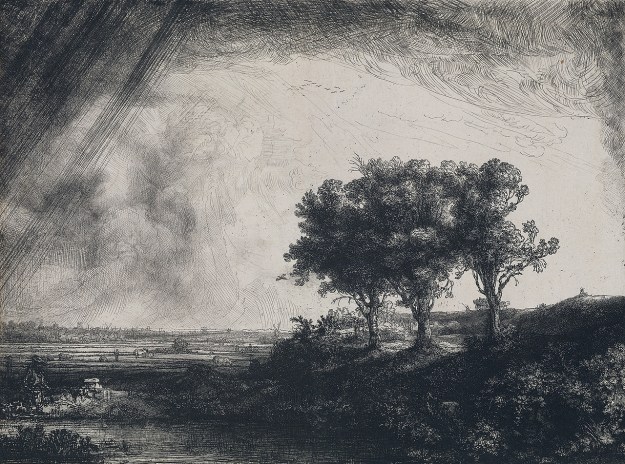
rembrandt the-three-trees-1643

Rembrandt, “The Three Trees”, 1643 


.

“But when he saw the crowds, he was moved with compassion…

—Matthew 9:36


.

What we can never do

What we can never say

What we can never express:

Love

Pure Love

Melted into a single drop of His blood…


.

“And Jesus uttered a loud cry, and breathed His last.”

—Mark 15:37


Rembrandt_The_Three_Crosses_1653

Rembrandt, “The Three Crosses”, 1653

….

—Howard Hain

.

Beauty from Scraps of Things

FullSizeRender 2

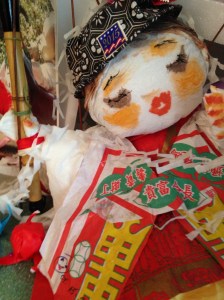
Yesterday, I visited my friend, Duk Soon Fhwang, a Korean born artist whom you see peeking out at you from her New Jersey kitchen through her wonderland of hand-crafted art. As a child  in hard times under the Japanese and then during the Korean War, her mother told her that even if you’re poor,  you can bring beauty into the world through scraps of things, pieces of paper or cardboard you find almost everywhere. 

IMG_1924

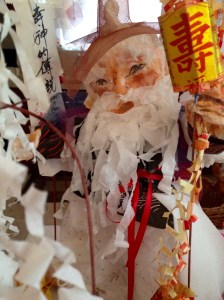
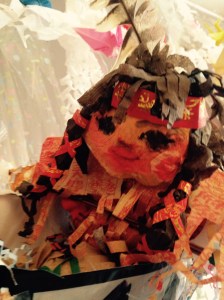
From scraps of things Duk Soon creates colorful streams, birds, flying creatures of all kind, an old man fishing. She’s blessed with a creative imagination. She sees beauty waiting in stuff others throw away.

Isn’t that a gift we all could use?

FullSizeRender 3

FullSizeRender

Morning Thoughts: God Waiting On Us

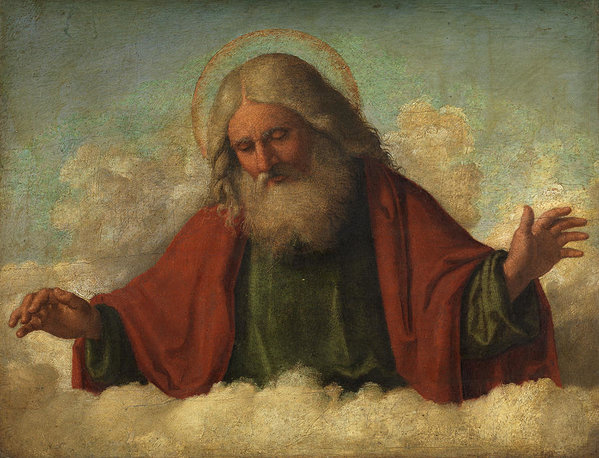
God the Father Cima da Conegliano c 1515

Cima da Conegliano, “God the Father”, c.1515


How sweet to my taste is your promise!

—Psalm 119:103a


.

We all know well that we often need to be patient. In fact, we always need to practice patience.

We pray, we ask, and most times we need to wait. Waiting in faith on God.

We continually need to be reminded that God always hears us and always answers, always—just not always according to what we think best.

God answers in a perfect manner: He answers with what will best nourish our growth into salvation at that current moment in our particular journey toward Eternity.

Sometimes though the waiting is on the other side. Sometimes God is waiting on us. For God showers us with so many blessings, with so much grace—and at the same time He gifts our nature with free will—the freedom to accept or reject: to say “yes”, “no”, or “maybe so”.

These “circumstances” quite often result in a “backlog” of grace. Not that God ever runs dry or is stingy in dishing it out. No, of course not, the “backlog” is caused by us, when we do not properly use our free will to accept what God offers. And God, being pure kindness, in His perfect love honors our choice. He is patient with us. He waits.

We need to receive what He has already offered, previously sent, and is still pouring out upon us, before additional grace and blessings could possibly do us good.

God of course could make us instantly receive and utilize all the gifts that He offers. God can do anything. But He loves us so much that He wants us to participate and cooperate with Him, to co-labor, and doesn’t that make sense?

For when you love someone you want him or her to receive the maximum blessing, the maximum peace, the maximum joy that he or she can possibly receive. And God by not forcing Himself or His gifts upon us, is giving us just that opportunity—the opportunity to be part of His victory.

Put is this way, is it more fun to go to a victory celebration for someone you watched win from afar, or is more joyous to be part of the victory itself, to have actually contributed to the very victory that is being celebrated?

Participation always enhances.

God allows us to participate. It is one of the greatest signs of His love. For God so loved the world that he gave his only Son, so that everyone who believes in him might not perish but might have eternal life. (John 3:16) And God allows us to share in that very sacrifice, that very victory over death itself.

But of course with participation comes some sweat, some effort, some trials, some moments of stepping into uncomfortable spaces—sometimes some extremely uncomfortable and painful circumstances. But be not afraid:

For those who are led by the Spirit of God are children of God.

For you did not receive a spirit of slavery to fall back into fear, but you received a spirit of adoption, through which we cry, “Abba, Father!”

The Spirit itself bears witness with our spirit that we are children of God,

and if children, then heirs, heirs of God and joint heirs with Christ, if only we suffer with him so that we may also be glorified with him. (Romans 8:14-17)

———

So the next time we are about to ask something of God, perhaps each one of us should consider this: Maybe we should first ask for the grace to fully receive the blessings, the love, the mercy, the grace that He has already sent our way but that we have not yet fully accepted or received.

For when we fully receive, we always end up surprised—supernaturally surprised at just how much God has already done!

He is not only a step ahead of us, He is eternally with us.

God is great.

He pours down blessings.

The Blood of Christ is powerful beyond our capacity to understand.

His promises are so real that they are currently being fulfilled—for they are always being spoken—and what God speaks He does.

Ask. Ask God, then. Ask the Holy Spirit to teach us how to receive—how to graciously receive—and we’ll find that we also learn how to generously give.

———

Lord, may I receive the grace to receive your blessings: The grace to receive your grace.

May I be in a pure state of receptivity.

May I be purely passive within Your perfect presence—knowing that only then can I be effectively active—knowing that You are in complete control and have everything, every detail, perfectly worked out.

Help my unbelief!

Increase my love!

Deepen my trust in You, Triune God.

Thank You, Lord, for what You have already sent my way: The promise of eternal life, of permanent peace and joy, of love. Pure Love. Pure Perpetual Love.

Thank You for the gift of faith. The gift of prayer. The gift of Hope—Hope not only in eternal life but in the promise that You will always provide the help and assistance I need to reach eternal life and to do Your will while I travel through this world—a world in which I am a stranger—a pilgrim stretching forward, ever heading home.

May I practice profound gratitude by simply saying, “Yes”,

by simply saying, “Amen”,

by simply saying, “So be it.”

I do receive. I do accept.

And I do say, “Thank You, God.”

You are great.

I love You too.


.

—Howard Hain

.

.

19th Sunday C: Prayer and Violence

To listen to today’s homily, please select the audio file below:

When tragedies occur like the recent violent attacks in Nice and Orlando or the murder of the priest in France, they’re usually followed by demonstrations of concern. People place flowers or notes or lighted candles near where the attacks occurred. A Mass was celebrated for the priest. Muslims as well as Christians came.

We need to pay attention to things like this. As Christians we say we need to pray.

I notice recently, though, that some question the response of prayer. They want action instead of prayer. “Don’t say you’re going to pray, do something,” they say, as if prayer were a waste of time and did nothing.

Now, let’s admit sometimes that accusation is true. Sometimes we promise to pray and it’s just a gesture meaning nothing at all. Prayer, though, is more than a gesture. It’s a way of getting through life and knowing what to do.

Our second reading today from the Letter to the Hebrews describes the faith of Abraham, but it also describes his prayer, because prayer along with works are expressions of faith. We can learn about prayer from the great Jewish patriarch. Abraham’s prayer is a constant prayer, a faithful prayer, a daily prayer.

God called Abraham to “ go out to a place that he was to receive as an inheritance; and he went out, not knowing where he was to go. “ Not knowing where he’s going from day to day, he lives in tents. Abraham prays as he goes; he prays each day, because God must show him the way, day by day.

We’re like him, aren’t we? On our way each day, and each day’s different. We need God to show us the way. We’re people who live in tents. “Give us this day our daily bread.”

Abraham also has to deal with things he doesn’t understand, the Letter to the Hebrews says. God originally promises him and Sarah his wife a child as they begin their journey, but they don’t have a child until their old age when having a child seems impossible. Listen to the way it’s described:

By faith Abraham received power to generate, even though he was past the normal age—and Sarah herself was sterile—for he thought that the one who had made the promise was trustworthy.  So it was that there came forth from one man,himself as good as dead,descendants as numerous as the stars in the sky and as countless as the sands on the seashore.

There are a lot of things we don’t understand, especially the promises of God. They come in God’s time and not ours. We question the trustworthiness of God. Prayer is a way of accepting God’s time. “Your will be done.”

Finally, God commands Abraham to take his son Isaac up upon a mountain and sacrifice him. What a disturbing example of violence, like the violence we saw at Nice and Orlando and the murder of the priest as he ended Mass.

Why did God permit it, we ask? Things like that make life itself seem absurd and meaningless. They make us lose hope in the world in which we live.

And so we look at the mountain where God sacrificed his Son. Why did God do it, we ask? “He rose again on the third day and will come to judge the living and dead.” We need to pray before the Cross of Jesus, who tells us suffering and death are not the final word. God’s final word for us and our world is life.

“ Abraham reasoned that God was able to raise even from the dead,and he received Isaac back as a symbol.”


Friday Thoughts: A Major Mary

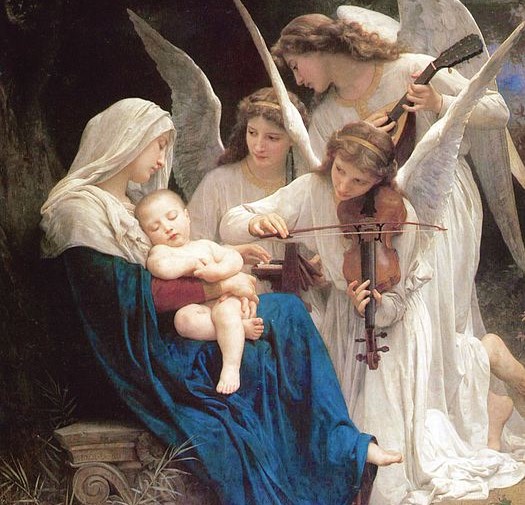
William-Adolphe Bouguereau Song of the Angels 1881

William-Adolphe Bouguereau, “Song of the Angels”, 1881 (detail)


…like newborn infants, long for pure spiritual milk

so that through it you may grow into salvation…

—1 Peter 2:2


.

A woman’s worth is measured by the love she bears for the Child Jesus residing within the person nearest to her.

She is priceless who beholds Jesus in each and every child—who sees all humanity as a child.

For the Mother of God holds each and every human being as if each and every one of us is the Son of God.

May we all see that woman in our life.

And may we all encourage every woman we encounter to nurture this divine gift—a gift held within the immaculate core of each and every instance of Mary’s Immaculate Heart:

The dignity of being God’s beloved daughter.

———

Just yesterday morning, I saw such a woman in the bakery. She told me of her own mother’s recent death. She spoke so lovingly, so faithfully. Her face was aglow. I felt such joy, such happiness, such hope in the promise of eternal life.

She handed me a prayer card from the funeral parlor. And there atop the rear side of the card—on the corresponding back chamber of the image of Jesus’ Most Sacred Heart gracing the front—I saw the face of a small delicate woman. A ninety-two-year-old beautiful little girl.

A recent photograph, I was told. And yet, it was ageless:

Holy Simplicity.

The Wisdom of God.

The “uneducated” schooled in the school of the divine.

———

She told me how blessed she was to be able to see her mother before she passed away. She traveled from New Jersey out to California to be with her. She said there was so much love, the presence of family, so much peace. The grace of a peaceful death. But then my friend showed a moment of remorse. She was not there at the exact moment of her mother’s death. She was already on a plane heading back to New Jersey when her dear mother departed for our one shared eternal home.

I thought of the Cross. The shape written in the sky. The plane speeding across a blue sea of crisp unpolluted air, leaving in its wake a white horizontal beam—while her mother’s soul ascends up toward heaven, slicing through her daughter’s path and adding to the celestial landscape—the vertical post of Christ’s Sacred Sign.

Life and death. Birth and rebirth. Time and eternity. The crisscrossing of two worlds, one temporary and fleeting, the other permanent and eternal.

The Kingdom is at hand, it begins right here, it resides within you and me—and if we have any doubt, all we need to do is stare a little more at Jesus stretched out upon the Cross—where we also find His beautiful, faithful mother standing by His blessed feet.

Faith and hope. Love and more love.

My friend’s remorse was short and fleeting. Together we raised our eyes back up toward Christ.

We let the Christ in each of us seek once more the face of the Father.

More peace and joy than even before. It seemed as if we’d both begin to sing. We hugged instead. A full chorus in heaven accompanied us.


.

…I have stilled my soul…

Like a weaned child on its mother’s lap, so is my soul within me.

—Psalm 131:2


.

—Howard Hain

.

Peaceful Thoughts: A Quiet Nap


.

A violent squall came up and waves were breaking over the boat, so that it was already filling up. Jesus was in the stern, asleep on a cushion. They woke him and said to him, “Teacher, do you not care that we are perishing?” He woke up, rebuked the wind, and said to the sea, “Quiet! Be still!” The wind ceased and there was great calm. Then he asked them, “Why are you terrified? Do you not yet have faith?”

—Mark 4:37-40
.


.

Lord,

Teach me to be kind

Show me how to be gentle

May I always bring peace to each and every situation

May I never do harm

Let me always be merciful

Let me never judge and never condemn

I need you to teach me, to show me, to encourage me to be more like You

With Your help it is possible.

———

I believe in You, Father

I trust in You, Jesus

You, Holy Spirit, I know are always loving me

Please let there be peace

Please let all the world be still

Please let all children hope and dream and know that You are God

The God of Kindness, of Gentleness, of Peace, of Mercy, of Forgiveness…

The God of Absolute and Perfect Love

The God who will never forsake us, whose promises are certain and real…

God, You are Love.

———

Let Your presence calm the waters

For the waves rock and the boat fills

And Noah has already come ashore

You, Lord Jesus, pray upon the mountain, You walk on water, You rest within the storm…

You still all

You question our faith

You tell us to simply ask

You promise that we shall receive more.


.

And the apostles said to the Lord, “Increase our faith!”

—Luke 17:5


.

—Howard Hain

.

18th Sunday C: You Can’t Take It With You

To listen to today’s homily, please select the audio file:

For the last four Sundays our gospels have been from St. Luke’s journey narrative. From chapter 9 to Chapter 18 Luke’s gospel describes the journey Jesus takes from Galilee to Jerusalem where he will suffer and die and rise again. This is not an ordinary journey. He gathers disciples on his way. He’s not making this journey alone. On his way to Jerusalem Jesus calls people to follow him and he teaches them how to follow him, so that they may be taken up into the mystery of his death and resurrection.

We learn as we listen how Jesus called people then and what following him means. We learn how he calls people now.

For one thing, we see that some of those Jesus met then didn’t seem eager to follow him at all. For example, two weeks ago our Sunday gospel was about the teacher of the law who asks Jesus “What must I do to inherit eternal life?” Jesus tells him to love God and love his neighbor. But Luke says the teacher of the law, “wishing to justify himself” says “Who is my neighbor?” You get the impression that this fellow is a self-assured teacher who knows everything. He’s one of the scribes, the Jewish teachers whom the gospels say were hostile to Jesus. He’s there not to learn or to follow but maybe to compete, to show off what he knows or to discredit Jesus as a teacher.

Jesus tells the parable of the Good Samaritan, which seems to silence the teacher of the law. You wonder if the meeting challenged him and eventually changed him. We don’t know. What we do know is that Jesus met people on the journey to Jerusalem who didn’t respond immediately to his call, like the teacher of the law.

Matthew’s gospel has a similar story, about a rich young man who approaches Jesus on the journey and asks him “ What must I do to gain eternal life?” Jesus tells him to love God and his neighbor and adds the challenge to “Go sell what you have and give to the poor and come follow me. But the young man “went away sad, for he had many possessions. ( Matthew 19, 16 ff.)

Again, we wonder if the young man ever reconsidered later? We like to think so. But the story doesn’t say. It only says that he resisted the call of Jesus. In the case of the rich young man, it looks like his life style got in the way.

Today’s gospel is about another person who doesn’t seem to answer Jesus’ invitation to follow him. “Someone in the crowd said to Jesus “Teacher, tell my brother to share the inheritance with me.” You can see what’s mainly on his mind– money and maybe getting back at his brother. Not an unusual story, by the way. A lot of family fights are about money.

Jesus tells the man “I’m not here as your lawyer or financial mediator.” In fact, he cautions him about greed. “Life does not consist of possessions.” Then he tells the story of a rich farmer feverishly building barns for storing his wealth and thinking, “This will do it! I can rest, eat, drink and be merry for the rest of my life.”

“You fool,” God says. “You and your wealth can be gone in a night.”

It’s another story of Jesus’ call on his journey from Galilee to Jerusalem going unanswered.

As we listen to these stories, it’s evident that some then didn’t answer the call of Jesus to follow him and we see some of the reasons why. In the teacher of the law, it seems to be pride. He knows everything. In the rich young man, it was his life style, the good life. In the man in today’s gospel, it was money and greed and maybe anger with his family. The things make them deaf to the call that can bring them so much; they can’t hear.

It’s the same today. The journey of Jesus goes on in our time and in our lives. He calls us now and we may resist him, for many of the same reasons we’ve mentioned. We can be just as deaf as some were then.

But there’s something else we should remember as we read the gospel narrative of Luke about the journey of Jesus to Jerusalem. The journey is a favorite theme in Luke’s gospel. It occurs over and over. A key to its meaning is found in the journey reported in the last chapters of Luke’s gospel when Jesus, risen from the dead, journeys from Jerusalem to Emmaus with two of his disciples. They don’t recognize him, but he keeps walking with them unrecognized, patiently continuing to challenge their unbelief and reluctance, waiting for the moment when their hearts burn and they recognize him. He stays with them, the gospel says. The journey is a journey of mercy and patience. He will not leave them.

That’s what we should remember as we hear these stories from the past and see them also in stories of the present. Certainly we should learn to avoid what we see in these stories. But what about the teacher of the law, the rich young man, the man fighting over money? Did they only get one chance and that was it, or did Jesus keep walking with them and challenging them.

Luke’s Gospel teaches that conversion is a lifelong gift. All through our lives Jesus calls, even though we resist him, even though we fail. At the end of St. Luke’s story of the passion, Jesus’ last words are to a thief who failed. He calls him again, “Today, you will be with me in Paradise.”

Friday Thoughts: A Room Full of Toys

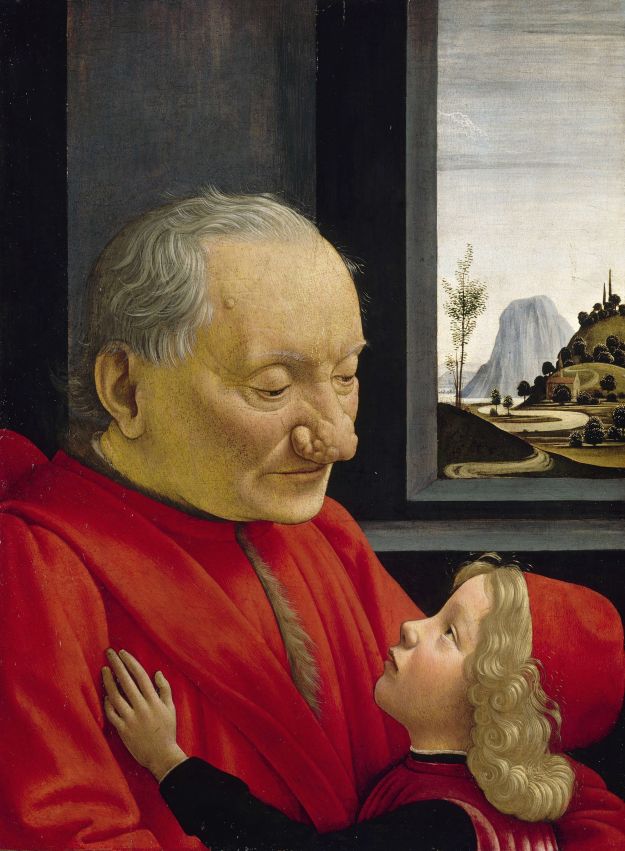
An Old Man and his Grandson ca 1490 by Domenico Ghirlandaio

Domenico Ghirlandaio, “An Old Man and his Grandson”, ca. 1490


.

Do not let your hearts be troubled. You have faith in God; have faith also in me.

—John 14:1


.

awoken by the night

the good father makes his rounds

peeking into rooms to make sure all is where it should be

a silent prayer

a midnight blessing

a distant siren

a room full of toys

a smile

a memory

giving life to his own father’s watchfulness many years before

the needy cat cries

he better attend to her needs

before she awakes the rest of the house

but before returning to bed

he’ll lovingly recall

once more

a great promise

a great hope

a room full of toys

.


.

In my Father’s house there are many dwelling places. If there were not, would I have told you that I am going to prepare a place for you?

—John 14:2


.

—Howard Hain

.

Friday Thoughts: Pray the Mass

Paul Cézanne Bathers (Les Grandes Baigneuses) 1895-1905

Paul Cezanne, “Bathers” (Les Grandes Baigneuses), 1895-1905 

.

“Rejoice always. Pray without ceasing. In all circumstances give thanks, for this is the will of God for you in Christ Jesus.”

—1 Thessalonians 5:17


.
Come with me. I love to go. I so love to go. The Mass in its abundant overflow.
 .
“For God so loved the world, that he gave his only begotten Son…” (John 3:16)
.

Come with me. It doesn’t matter what language you speak, nor what color skin your flesh happens to wear. Come. Be one with the Lord.

Pray the great prayer of the Church. Pray with sinners like me. Pray with all God’s Angels and Saints.

Pray the Mass. O, how God loves for us to share, to participate in Christ’s salvation of the world!

Living sacrifices. Gifts of bread and wine.

Come. Come. He is so very real. So much love. His Liturgy kisses each individual brow.

Begin your day by adjusting your ear…

If today you hear his voice, harden not your hearts.” (Psalm 95)

Pray the Mass. Live it at home. Hour by hour. Minute by minute. Work through the Mass as you work through your day—knowing that the Holy Sacrifice of the Mass is being celebrated at every moment throughout the entire world.

———
 .
“The Lord be with you. And with your spirit.”
.

Antiphon to Antiphon. Introductory to Concluding Rites. Let the Mass order your day.

The Sign of the Cross upon opening your eyes.

“Kyrie, eleison…”, as you rise from bed.

A morning shower beneath God’s infinite reign of mercy: “Wash me, O Lord, from my iniquity and cleanse me from my sin.”

Read. Confess. Sing. Proclaim.

Wash the dishes. Run to the store.

Always praise. Yes, always praise: “Glory to God in the highest, and on earth peace to people of good will.”

Head to work. Attend a meeting. Go for a run.

“Alleluia, alleluia”:  The Gospel Acclamation.

It’s almost high noon. Enjoy the Sun. The light of God’s face. Hear the Holy Spirit’s instruction and inspiration for the day. Hold up your wounds, pray in union with God’s Crucified Child…

Offer the Universal Prayer while waiting for the bus…

Intercede for the entire world: the salvation of souls, the conversion of sinners, a unified church, the remembered and forgotten souls in purgatorial fire…

…for the sick, the persecuted, the poor, the imprisoned, the hungry, the thirsty…for every single soul for whom God wills us to pray…

For all the intentions of Jesus’ Most Sacred Heart.

———

“I believe in one God…”

Time for lunch.

Prepare the table. Acknowledge God’s goodness. Accept His gifts:

“By the mystery of this water and wine may we come to share in the divinity of Christ…”

Live. Breathe. Be free and at ease.

Let the Eucharistic Prayer flow into the core of your being:

“Lift up your hearts. We lift them up to the Lord…”

“…Holy, Holy, Holy Lord God of hosts…”

Watch as angels ascend and descend…your gifts borne “by the hands of God’s holy Angel to His altar on high…”

A priest at this very moment lifts the hands of Christ:

“Through him, and with him, and in him…”

———

Afternoon arrives:

“Behold the Lamb of God.”

Ask Jesus to come into your soul. Properly position yourself at the foot of the table:

“Lord, I am not worthy…but only say the word and my soul shall be healed.”

Jesus thirsts to enter. Learn to open wide. Beg God on bended knee. Beg Him for the grace to generously give and graciously receive:

“The Body of Christ.

The Blood of Christ.”

“Amen.

Amen.”

———

Sitting in traffic. Waiting on a call. Wanting to get home.

“Period of silence or song of praise.”

Rest beneath the external chaos, enter the internal peace of the Kingdom that resides deep within. Remember that Jesus—Body, Blood, Soul, Divinity—continues to transform your entire being.

Stop and go. Almost home. Evening approaches.

The prayers the priest says quietly at the altar—pray them too—ceaselessly in the silence of your consecrated heart.

“Lord Jesus Christ…free me by this, your most holy Body and Blood…

…keep me always faithful…never let me be parted from you.”

Park the car. Say hello to a man who’s homeless. Briefly visit a confused elderly neighbor. Prepare to sit peacefully around your kitchen table. Practice patience. Hug and kiss the kids. Allow the joy of Christ to radiate outward from the eternal spring within.

At the close of supper, give great thanks, and call to mind an after-communion prayer:

“What has passed our lips as food, O Lord, may we possess in purity of heart, that what has been given to us in time may be our healing for eternity.”

———

Now circle around and approach the end of this blessed day much like the way you began—for somewhere out there—Mass is just about to begin:

“The Lord be with you. And with your spirit.”

Brush your teeth. Prepare to sleep the sleep of a most blessed mystical death. Ask Mother Mary to help you dress for the flight.

“May almighty God bless you, the Father, and the Son, and the Holy Spirit. Amen.”

———

Kiss your wife goodnight.

Turn off the lamp.

Close your eyes in God’s perfect peace. The Mass at your right hand. Its liturgical rhythm steadily beating within your sacred heart.

Darkness descends.

“Go forth, the Mass is ended.”

The best is yet to come.

Faith. Hope. Love.

Eternal Life.

And as always: “Thanks be to God.”


.

“For God so loved the world, that he gave his only begotten Son…”

—John 3:16


—Howard Hain
.
.
(Note: All italicized quotations are from The Order of Mass, unless otherwise indicated.)
.