Monthly Archives: May 2025

7th Sunday of Easter c. Jesus Prays for Us

For this week’s homily please watch the video below.

The Visitation of the Blessed Virgin Mary: May 31


Faith gives you life and calls you to a mission. That’s what it did for Mary, the mother of Jesus. Mary believed in the message of an angel at Nazareth. She welcomed the Son of God to be born of her, and he brought life to her and to the world.

He gave her a mission, Luke’s gospel says today.  Mary set out “in haste” for the hill country of Judea to visit Elizabeth, the wife of Zechariah, who also was with child. Mary has a mission.                                                                                                                        

When Elizabeth heard Mary’s greeting, the infant leaped in her womb.” The infant who would be John the Baptist, leaped for joy, the gospel says.

Both of these women had exceptional faith. Mary, the younger woman, accepted what the angel asks, even as she questions how it will take place and the meaning of it all.                                                                                                                                 

Elizabeth, the older woman, conceives with her husband, Zechariah. But she’s an old woman, pregnant with a child. However miraculous her pregnancy was, she must have felt fear and uncertainty for having a child in her old age. Like Mary, she must have asked, “How can this be?” “What does this all mean?”

Mary’s visit took those fears away from her. The child in Elizbeth’s womb leaped for joy. Elizabeth’s fears were turned into joy. Faith gives you life and sends you on a mission. Exceptional faith, in the case of Mary and Elizabeth led to exceptional missions. 

In spite of what some people think, faith is not a burden that cripples you. Faith is a gift that empowers you. It takes you beyond your dreams and what you hope for. 

“Blessed are you who believed,” Elizabeth says to Mary.

“You too, my people, are blessed,” comments St. Ambrose, “ you who have heard and who believe. Every soul that believes — that soul both conceives and gives birth to the Word of God and recognizes his works.

“Let the soul of Mary be in each one of you, to proclaim the greatness of the Lord. Let the spirit of Mary be in each one of you, to rejoice in God. According to the flesh only one woman can be the mother of Christ, but in the world of faith Christ is the fruit of all of us.”

As with Mary so with us, faith gives life and sends us on a mission..

The Song of Birds

Noah
Before 7 :
AM  I sit for a few minutes on the porch as the weather gets warmer, watching the birds. There are almost 40 different birds in our garden, just up from the E train.   The sparrows and the doves are usual visitors,  singing away, but the other day they couldn’t be seen or heard.  I soon saw why: a big hawk flew by overhead.

After awhile the birds were back,  chirping and moaning  as usual. Someone told me our ears are wired to hear the song of birds. Why? They tell us no dangerous enemies nearby, all is well.

Birds singing tell us the world’s in good hands. Is that why Noah sent a dove from the ark? The dove not only brought back olive branches signifying all was well, but sang the good news to those in the closed boat.

The Holy Spirit descends in the form of a dove. The ancients saw birds as mysterious visitors from heaven. I notice something fearless in the doves at our feeder. The sparrows scatter quickly at the least sign of danger; the doves stay and hold their ground. Like the dove, the Holy Spirit is a giver of life to our land and won’t abandon us.

By baptism we’re wired to hear God’s voice. We listen for God’s good news, despite the dangers. We listen for a world redeemed, a higher plan at play. Good reason to begin the day, listening to birds singing..

The Path of the Second Vatican Council

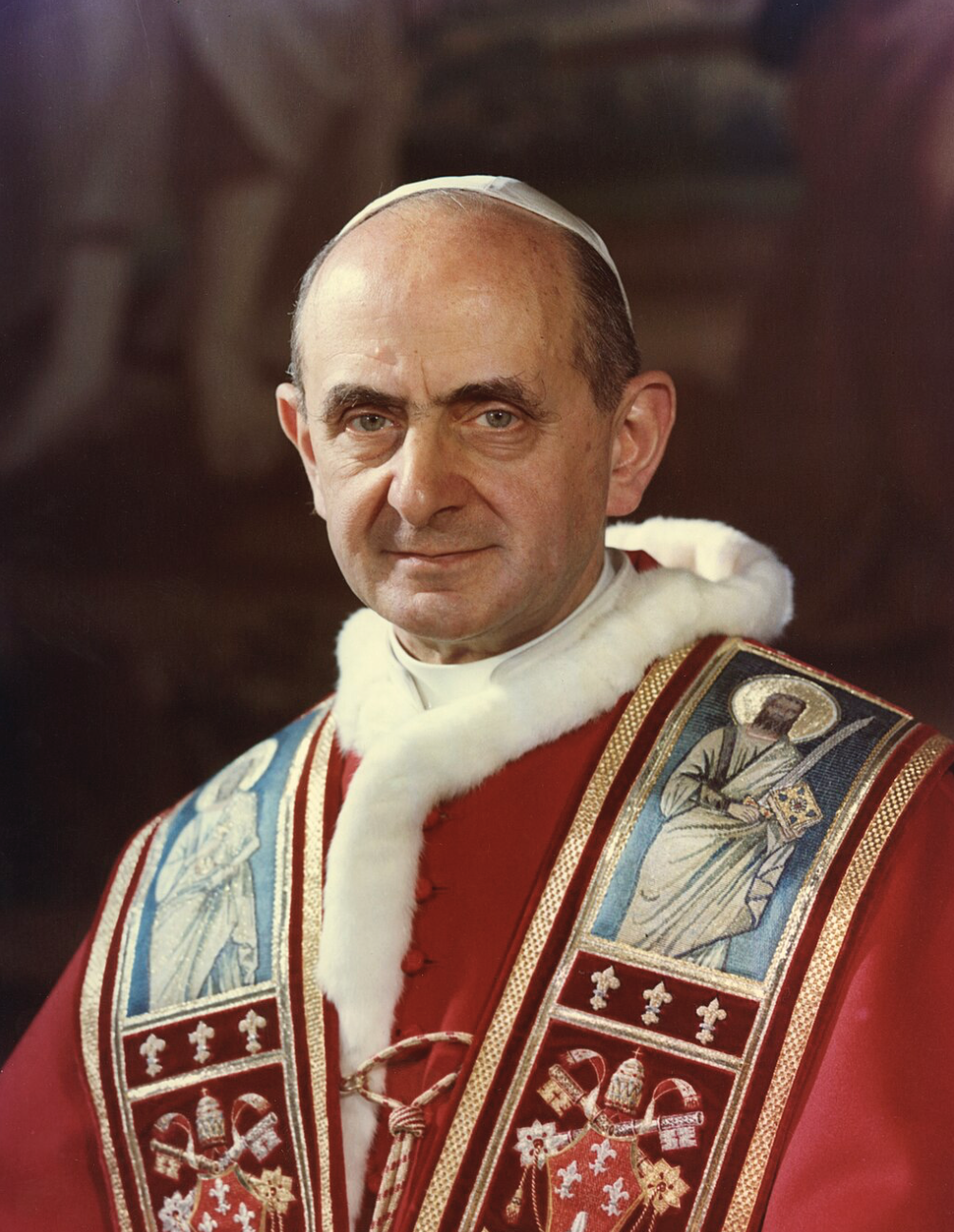
Pope St. Paul VI

Three popes involved in the Second Vatican Council have been canonized: Pope John XXIII, Pope John Paul II, and Pope Paul VI, whom we remember in our liturgy today. They were declared saints, not just because they were popes, but because of their holiness and their involvement and promotion of the council. 

All of them recognized the Second Vatican Council as the work of the Holy Spirit and each, in his own way, implemented the council. Pope Francis and now Pope Leo continue the work of the popes before them. 

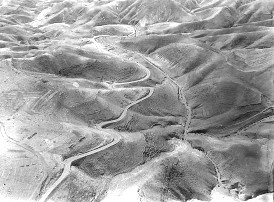
The popes often describe the council as the path the church must take into the future. Some years ago at a synod of bishops,  Pope Francis described that path as the road Jesus took from Jericho to Jerusalem to enter the  mystery of his death and resurrection. It’s a winding road, not easy to travel. According to Mark’s gospel his journey began with a delay. Jesus stopped to engage Bartimaeus, the blind beggar. 

Pope Francis reminded the bishops that the path of the council has unexpected turns and delays.  It can’t be scheduled by a calendar or the best of church planning. It’s the work of the Holy Spirit who is beyond  human planning.

Paul VI was involved especially in the liturgical changes of the council. The shape of our liturgy today is largely due to him. He was a brilliant man, but also very cautious , with a mind for details. As liturgical changes were being discussed at the council and implemented afterwards, a strong minority in the church urged him to go slowly and not to change too much.  Despite their great pressure he trusted and supported  the theologians, catechists and pastors who produced our present liturgy.

Take a look at an early picture of the road from Jericho to Jerusalem, taken from the air. That’s the path of Vatican II.

Road from Jericho to Jerusalem: from the air.

The Ascension of Jesus into Heaven

Homily

The firstborn of the new creation

Here’s St. Gregory of Nyssa, commenting on our feast today:

The reign of life has begun, the tyranny of death is ended. A new birth has taken place, a new life has come, a new order of existence has appeared, our very nature has been transformed! This birth is not brought about by human generation, by the will of man, or by the desire of the flesh, but by God. 

  If you wonder how, I will explain in clear language. Faith is the womb that conceives this new life, baptism the rebirth by which it is brought forth into the light of day. The Church is its nurse; her teachings are its milk, the bread from heaven is its food. It is brought to maturity by the practice of virtue; it is wedded to wisdom; it gives birth to hope. Its home is the kingdom; its rich inheritance the joys of paradise; its end, not death, but the blessed and everlasting life prepared for those who are worthy. 

  This is the day the Lord has made – a day far different from those made when the world was first created and which are measured by the passage of time. This is the beginning of a new creation. On this day, as the prophet says, God makes a new heaven and a new earth. What is this new heaven? you may ask. It is the firmament of our faith in Christ. What is the new earth? A good heart, a heart like the earth, which drinks up the rain that falls on it and yields a rich harvest. 

  In this new creation, purity of life is the sun, the virtues are the stars, transparent goodness is the air, and the depths of the riches of wisdom and knowledge, the sea. Sound doctrine, the divine teachings are the grass and plants that feed God’s flock, the people whom he shepherds; the keeping of the commandments is the fruit borne by the trees. 

  On this day is created the true man, the man made in the image and likeness of God. For this day the Lord has made is the beginning of this new world. Of this day the prophet says that it is not like other days, nor is this night like other nights. But still we have not spoken of the greatest gift it has brought us. This day destroyed the pangs of death and brought to birth the firstborn of the dead. 

I ascend to my Father and to your Father, to my God and to your God. O what wonderful good news! He who for our sake became like us in order to make us his brothers, now presents to his true Father his own humanity in order to draw all his kindred up after him. Gregory of Nyssa

7th Week of Easter: Last Instructions

To listen to today’s homily, please select the audio file below:

The Ascension of Jesus into heaven is recalled briefly in Mark’s gospel (Mark 16,19) and described in more detail in Luke’s gospel (Luke 24, 44-53} and in the Acts of the Apostles. (Acts 1, 1-14) As he leaves his disciples, Jesus promises to send them his Spirit.

What are his final instructions to them before he ascends into heaven? They are to be witnesses to him. They will have power from the Holy Spirit to witness, but there’s no promise of security, safety, or immunity from fear or suffering. Just the opposite, Jesus sends them on a mission that’s insecure, unsafe and hard.

Here’s what Jesus says in Mark’s gospel, “Go into the whole world and proclaim the gospel to every creature.” “The whole world?” we might say. “To every creature?” It’s a dangerous world out there, and there are creatures in it I don’t particularly like. Yet, that’s the mission Jesus entrusts to his disciples–and us.

“These signs will accompany those who believe,” Jesus continues. “In my name they will drive out demons, they will speak new languages, they will pick up serpents and if they drink any deadly thing, it will not harm them. They will lay hands on the sick, and they will recover.”

That seems to mean if you really believe in Jesus you confront the evil in this world, you learn new things all your life, you deal with snakes–they’re out there too, you can recover from the deadliest experiences, and you can bring healing to those who need healing.

In Luke’s Ascension account in the Acts of the Apostles the disciples wonder if this is the time when God’s kingdom will come now, her and now. Heaven on earth. “Lord, are you at this time going to restore the kingdom to Israel?”

We have hopes like that too, don’t we? That God’s kingdom come here and now, and everything will be perfect. Jesus tells his disciples they wont know the day or the hour. Perfection doesn’t happen here on earth.

As the disciples stand looking at the Lord ascending, Luke writes, angels ask them “Why are you standing here looking up into the sky?” Jesus will return. Go back into the city and live as he asks you to live. You will receive what he promised there. No standing looking up into the sky. Stay where you are; that’s where the promises will be kept.

Luke goes on to describe the disciples making their way back to Jerusalem and praying there with Mary, the mother of Jesus. Prayer prepares them for the Spirit who comes. Prayer prepares us too.

Learning from Plants, Trees and Flowers

I discovered on Google books an old study of plants and trees by Richard Folkard, an English botanist. (Plant Lore, Legends and Lyrics, London 1884)  It’s a treasure of information.

Folkard says that from earliest times people saw religious meaning in plants, flowers and trees. He writes especially about how they were seen in medieval times.

“In the dark ages the Catholic monks , who cultivated with assiduity all sorts of herbs and flowers in their monastic gardens , came in time to associate them with traditions of the Church , and to look upon them as emblems of particular saints . Aware , also , of the innate love of humanity for flowers , they selected the most popular as symbols of the Church festivals , and in time every flower became connected with some saint of the Calendar , either from flowering at the time of the saint’s day , or from being connected with the saint in some old legend…

But it was more especially upon the Virgin Mary that the early Church bestowed their floral symbolism … The poetry no less than the piety of Europe has inscribed to her the whole bloom and colouring of the fields and hedges.  The choicest flowers were wrested from the classic Juno , Venus , and Diana , and from the Scandinavian Bertha and Freyja , and bestowed upon the Madonna , whilst floral offerings of every sort were laid upon her shrines . 

Her husband , Joseph , has allotted to him a white Campanula , which in Bologna is known as the little Staff of St. Joseph . In Tuscany the name of St. Joseph’s staff is given to the Oleander. A  legend recounts that the good Joseph possessed originally only an ordinary staff , but that when the angel announced to him that he was destined to be the husband of the Virgin Mary , he became so radiant with joy , that his very staff flowered in his hand…

A Catholic writer complained that at the Reformation the very names of plants were changed in order to divert men’s minds from the least recollection of ancient Christian piety A  Protestant writer of the last century , bewailing the ruthless action of the Puritans in giving to the ” Queen of Beauty ” flowers named after the ” Queen of Heaven , ” says :’Botany , which in ancient times was full of the Blessed Virgin Mary , is now as full of the heathen Venus .’ ” 

Folkard reminds us that the monks were good catechists. That work of theirs is largely ignored today. If you consult Wikipedia’s listings of trees and plants, there’s  hardly a trace of that Catholic tradition. I wonder if we shouldn’t mine that tradition again as we try to enhance our care of the earth. Clover .spearmint, foxglove, lupine,  campanula, marigolds, cowslip, Lady’s mantel, Lady’s bedstraw are more than a genus and species. They once spoke of the mysteries of God. 

Can we learn from them again?

Mary, the Mother of God

In the Acts of the Apostles, which we read through the Easter season, Luke describes the development of the church mainly through the missionary efforts of Peter and Paul. In the later chapters of Acts it’s mostly Paul. 

But it’s important to recognize they’re not the only ones who make the church grow. After Jesus ascended into heaven, forty days after his resurrection, a group of his followers go back to the upper room in Jerusalem, Luke reports.  One of them is Mary, the mother of Jesus. 

All are eyewitnesses to what Jesus said and did before he ascended into heaven. They have a key role in the development of his church. Not only have they seen and heard what Jesus said and did, they have prophetic gifts for preaching and teaching and guiding other believers. Inspired by the Holy Spirit they tell others what that mystery means. They told others then; they tell us now, they will tell those who come after us. They’re permanent eyewitnesses.

Here’s Luke’s description of them: “Then they returned to Jerusalem from the mount called Olivet, which is near Jerusalem, a sabbath day’s journey away. When they entered the city they went to the upper room where they were staying, Peter and John and James and Andrew, Philip and Thomas, Bartholomew and Matthew, James son of Alphaeus, Simon the Zealot, and Judas son of James. All these devoted themselves with one accord to prayer, together with some women, and Mary the mother of Jesus, and his brothers.” (Acts 1, 12-14)

Though Luke singles out Peter and Paul, this larger foundational group is at the heart of the church’s growth. He wouldn’t want us to forget these  “eyewitnesses” in that growing church. Luke especially wouldn’t want us to forget Mary, the mother of Jesus.

Mary is the key eyewitness. She witnessed the birth and origin of Jesus Christ and she also was a witness to his death and resurrection. 

Early pilgrims to the Holy Land often brought home relics and icons to recall their visit, like the icon pictured above. It represents Mary’s role as eyewitness. She knew he was God’s Son, not the “son of a carpenter.

She also knew he was crucified under Pontius Pilate and rose again on the third day.

She is his most important witness. We remember her this month, May. 


St. Philip Neri, (1515-1595)

St.-Philip-2

Philip Neri, whose feast is May 26th, helped rejuvenate the Catholic church in the city of Rome following the Protestant reformation in the 16th century. He’s an important example of the way reform takes place in the church.

Philip came to Rome as a young man, became a priest, and fell in love with the city’s history, its churches and holy places. He roamed the catacombs of St. Sebastian where early Christians were buried and was a regular guide for pilgrims searching for their roots. He promoted pilgrimages to the great churches of St.Peter’s, St.Paul outside the Walls, St. Lawrence, St. Sebastian, Holy Cross, St. John Lateran and St. Mary Major, which are still the major pilgrim churches of the city.

Philip was also a familiar figure on the Roman streets where he engaged ordinary people, especially the young, with cheerfulness and simple conversation. People listened to him and he listened to them. He made people aware of the beauty and joy of an ancient faith.

Philip inspired saints like Ignatius Loyola, Charles Borromeo and Pius V.

In his day Protestants were turning to history to back up their claims against the Catholic Church. At the same time Philip encouraged Catholic scholars and historians like Caesar Baronius to look into the history of their church with fairness and accuracy.  Baronius said of him: “I love the man especially because he wants the truth and doesn’t permit falsehood of any kind.” He supported Galileo: “The bible teaches the way to go to heaven, not the way the heavens go.”

In promoting an honest study of church history and archeology Philip was influential in helping the Catholic Church examine its traditions and roots. At a time when fierce controversy between Protestants and Catholics was the norm, Philip brought gentleness, cheerfulness and friendship and a search for truth to Christian reform. He believed reform would best come about by showing the beauty of faith in art, music and tradition.  He was an unassuming man. A biographer said “ his aim was to do much without appearing to do anything.”

He died in Rome on May 26, 1595, at eighty years of age.

The great Christian scholar John Henry Newman, attracted to Philip Neri,  entered the religious society he founded, the Oratorians.

Here’s one of his prayers I like: ” Let me get through today, and I won’t worry about tomorrow.”

God our Father, you are continually raising to the glory of holiness  those who serve you faithfully.In your love, hear our prayer:  let the Holy Spirit inflame us with that fire with which, in so admirable a way,  he took possession of Saint Philip’s heart.Through our Lord Jesus Christ, your Son,  who lives and reigns with you in the unity of the Holy Spirit,  one God, for ever and ever.Amen.

6th Week of Easter: Readings and Feasts

We’re reading about the journeys of St. Paul from the Acts of the Apostles this week of the Easter season. Luke notes the places Paul and his companions set up churches as they go from Jerusalem to Rome. Their journeys are often called travel journeys; bibles have maps following Paul from place to place. The gospel has to be preached everywhere in the world, Jesus said. 

But Paul’s journeys are more than travel journeys for Luke: the gospel is being proclaimed to the world in many dimensions as we see in this week’s accounts. On Monday Paul speaks to women at their place of prayer along the water in Thessaloniki and he invites Lydia–or rather she invites herself–-to join him in his mission. Just as in his gospel, Luke sees women hearing the Good News and bringing its message to others.

On Tuesday Paul and Silas are thrown into prison at Philippi. (Acts 17:22-34) Not only are the jailor and his household converted to the gospel, but Luke notes the prisoners were listening as they prayed and sang in the night. And so, as Luke does in his gospel he points out the poor must hear the gospel. Most of these prisoners will never get to one of Paul’s house churches, but they hear the gospel all the same.  

On Wednesday, Paul speaks to the intellectuals in Athens.The results of his preaching are not promising, only a handful seem to respond. But the gospel has to be brought to places like Athens. The gospel has to be brought into the world of learning and science. It has to be proclaimed to those searching for the truth.

On Thursday and Friday the readings tell us that Paul after his rejection at Athens, gets a better reception in Corinth, the tough seaport not far from Athens, but worlds away from that proud city. “Do not be afraid. Go on speaking, and do not be silent, for I am with you.” Jesus says in a vision. 

On Saturday, Luke reminds us that Paul had great people with him like Priscilla and Aquila, the wife and husband, who instruct Apollos, a good speaker but weak in his theology.  “When Priscilla and Aquila heard him, they took him aside and explained to him the Way of God more accurately.” Some time ago I told a cousin of mine who wasn’t sure about a sermon she heard in church. “You may be right and he’s wrong.”

The missionary journeys are more than Paul’s journeys from place to place, setting up churches. They meant to bring the gospel to the world in its many dimensions.