Tag Archives: wisdom of the cross

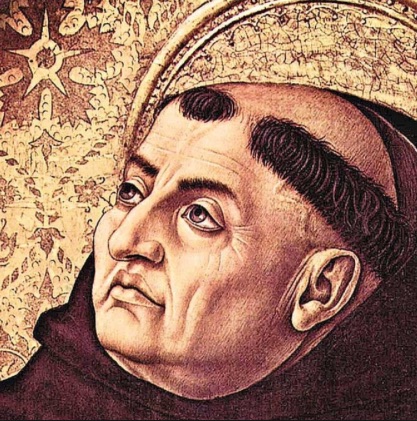
The Wisdom of Thomas Aquinas

Thomas Acquinas

The feast of St. Thomas Aquinas, January 28th, in my student days was a day for presentations honoring the saint. The presentations were not about the saint’s life but his wisdom. Thomas Aquinas was a great theologian dedicated to the search for truth.

He was a man of faith, searching for understanding. That’s the definition of theology–faith seeking understanding, an understanding that draws us closer to God and helps us know God, the source of all truth.

He was a man of questions, who approached great mysteries through questions. That’s the way St. Thomas begins a sermon he once preached, found today in the Office of Readings for his feast:

 “Why did the Son of God have to suffer for us?” he asks as he looks at the Cross of Jesus. The passion of Jesus was necessary, the saint says, for two reasons. First, as a remedy for sin, and secondly, as an example of how to act.

Interestingly, the saint doesn’t spend much time asking why it’s a remedy for sin. He’s more interested in the passion of Jesus as an example for us. To live as we should, we need to look at Jesus on the cross, an example of every virtue:

“Do you want an example of love? ‘Greater love than this no one has, than to lay down one’s life for one’s friends.’ That’s what Jesus did on the cross. If he gave his life for us, then it should not be difficult to bear whatever hardships arise for his sake.

“If you want patience, you will find no better example than the cross. Great patience occurs in two ways: either when one patiently suffers much, or when one suffers things which one is able to avoid and yet does not avoid.

“Christ endured much on the cross, and did so patiently, because when he suffered he did not threaten; he was led like a sheep to the slaughter and he did not open his mouth. Therefore Christ’s patience on the cross was great. In patience let us run for the prize set before us, looking upon Jesus, the author and perfecter of our faith who, for the joy set before him, bore his cross and despised the shame.

“If you want an example of humility, look upon the crucified one, for God wished to be judged by Pontius Pilate and to die.

“If you want an example of obedience, follow him who became obedient to the Father even unto death. For just as by the disobedience of one man, namely, Adam, many were made sinners, so by the obedience of one man, many were made righteous.

“If you want an example of despising earthly things, follow him who is the King of kings and the Lord of lords, in whom are hidden all the treasures of wisdom and knowledge. Upon the cross he was stripped, mocked, spat upon, struck, crowned with thorns, and given only vinegar and gall to drink.

“Do not be attached, therefore, to clothing and riches, because they divided my garments among themselves. Nor to honours, for he experienced harsh words and scourgings. Nor to greatness of rank, for weaving a crown of thorns they placed it on my head. Nor to anything delightful, for in my thirst they gave me vinegar to drink.”

St. Thomas’ great theological work, the Summa Theologica can be found here.

My Thoughts are not Your Thoughts

Last Sunday religion played a part in the tenth anniversary of 9/11, though some wanted to be silent about it. At the anniversary ceremonies, we heard words of belief among the questions and the tears.

Religion always has a role when something tragic like 9/11 happens. That’s because a tragedy like that– and it was tragic on a grand scale– is something we can’t measure or understand, and so we look for meaning and support in a power and a wisdom beyond our own.

People from many religious traditions died in that tragedy, and many turned to their own religious traditions for support. Of course, some had nothing to turn to.

As Christians we believe that God’s not silent in tragedy. God speaks to us through Jesus Christ, his Son. Yet, even so,  God’s wisdom is not so easy to understand.

“For my thoughts are not your thoughts,

nor are your ways my ways, says the LORD.

As high as the heavens are above the earth,

so high are my ways above your ways

and my thoughts above your thoughts.”  Isaiah 55, 8-9

In situations as simple as that described in today’s gospel, the parable of the workers in the vineyard, God’s ways are not our ways.  They’re higher and deeper.

At the heart of the tragedy of 9/11 is the mystery of death,  a reality common to all that lives.  Nature in our part of the world is now  experiencing a kind of dying as leaves turn and fall. We human beings die too, but death for us is different than it is for the rest of the natural world. We have a strong unique desire for life within us, for our lives to continue, and that makes us different.

Death happens to us in many ways. Some of us will die from natural causes, like sickness or old age. Some may die in accidents, earthquakes, floods. And then, some die because other human beings cause their death. That’s what happened at 9/11. That’s what makes that event so tragic; an evil injustice caused them to die.

Over the ages, there’s been a lot of reflection about death. Of course, today we don’t like to talk much about it. It’s become a taboo in our society.

But for Christians, death is important. The heart of our faith is about death and resurrection, which we see in the death and resurrection of Jesus Christ. We hear about  it over and over in our liturgy. And we reflect on it.

Some theologians, reflecting on sources like  St. Paul’s Letter to the Romans (Chapters 4-5), speculate that in the beginning God planned death of another kind for the human race, before sin intervened. If human sin had not entered the world, they suggest , maybe human beings like us would reach a climactic moment in the normal course of our lives when God would invite us to another higher life. It would be an invitation we’d welcome, we’d freely choose it, sure that a new and better existence waits for us with our Creator.

But it was human sin that darkened that moment in the beginning and made it the death we know now. So, instead of an experience of joy and adventure and new beginnings,  death became for the human family a moment of fear and suffering.

We believe Jesus came as our Savior and Redeemer to enter that dark, fearful moment and change it to a moment of salvation. “Dying, you destroyed our death; Rising, you restored our life,” we say in our liturgy.

To save and redeem us, Jesus truly experienced death in all its ferocity. The gospels clearly say he did.  Jesus faced a death,  not from old age or from sickness, not from some act of nature, but from sinners. He was put to death by evil injustice. It was death at its worst that he faced.  But when he died, he conquered death and evil and gave us hope by rising again. He “destroyed our death” we say.

He gives us now the power to face death, to go through the moment of death, even at its worst, and to know resurrection. He’s there at the moment of our death; he’s there with all who die; he’s there as our Savior and Redeemer. None of us dies alone.

After the tragedy of 9/11 you may remember they found a cross of twisted steel from the   wreckage of the World Trade Center and placed in the ruins. I think that cross hangs now outside St.Peter’s Church a few blocks away. For religious reasons, of course, it probably will remain there.

But the wisdom of that Cross, hard as it is for us to understand, speaks to that tragic place. His ways are not our ways, his thoughts not our thoughts, but God is not silent, God speaks  in the death and resurrection of his Son.