https://player.vimeo.com/video/206298023

For more about the Passion narratives from the gospels, see commentary by Fr. Donald Senior at http://www.passionofchrist.us
https://player.vimeo.com/video/206298023
For more about the Passion narratives from the gospels, see commentary by Fr. Donald Senior at http://www.passionofchrist.us

“In America, there is education for success but no education for suffering.” Ross Douthat wrote in the New York Times today. There’s no education to bear the suffering we have or deal with the suffering of others.
We’re told we can achieve anything we set our minds to and surmount any hardship that comes our way. We filter out the misery around us, Douhat says, with the filters of political party, race, social status.
Douthat confessed that while reading a book by one of his political adversaries, a book in which the man described his experience of sickness and other hardships, he realized he never saw that dimension in him. He was only someone to argue with.
Tragic moments like the shootings in Las Vegas and the storms in Puerto Rico are temporary reminders of suffering, but we quickly forget and turn to something else.
St. Paul of the Cross saw the Passion of Jesus as a book to learn about life and how to live. It seems the Passionists have a mission today, as a recent letter of Father Joachim Rego reminded us, to offer a remedy to society today with “no education for suffering.”
The Confraternity of the Passion met yesterday at 1:00 PM at Immaculate Conception Monastery in Jamaica, NY, for Mass and to reflect on the Passion of Jesus. The Confraternity began in 18th century Italy when a group of laypeople approached St. Paul of the Cross, founder of the Passionists, for help in participating in the liturgy and reaching out to the needy. They admired the spirituality of St. Paul and his community and wanted to share in it as people living in the world.
Confraternities have been part of the structure of the Catholic church for centuries; some center on growing in prayer, some have the goal of caring for the sick or the dying or teaching the young catechism. They may function in a parish but usually they function beyond parish structures. That characteristic makes the confraternity an interesting pastoral structure today when some don’t find their spiritual needs fully met in their own parishes and look for something more.
Our meeting yesterday began with Mass; I preached a homily on the gospel, an extended version of the homily you can find in our last blog. After Mass we spent time reflecting on the gospel and the Sunday readings together. The reflections from the group were filled with wisdom and insight. You can see what Jesus meant when he said, “Where two or three are gathered in my name, there am I in the midst of you.”
The scriptures read in our liturgy day by day, week by week, and the feasts we celebrate are a sure way to hear God’s word. They nourish faith and provide food for our journey. I offer by email a monthly calendar of the readings for our group and others. If you’re interested, send me your email I’ll put you on our list. confraternitycp@gmail.com
I’m becoming more aware of the centrality of the accounts of the Passion and Resurrection of Jesus as we read the scriptures. They’re at the heart of the gospels, the first and the longest part; what we know of these mysteries casts light on the rest of the gospels and, in fact, all sacred history. They are a key to “the wisdom and power of God.”
And so we have the Confraternity of the Passion.

A saint’s work is never done because, like Jesus Christ, the saints reach beyond their time and place. They’re agents of God’s plan. Their work is not finished at their death– our belief in the communion of saints reminds us–and even in old age they saw something yet to do.
They never say “The work is done,” and neither should we.
I’m reminded of a poem called “What then?” by W.B. Yeats; which he wrote as an old man at the end of a successful career filled with literary honors, financial rewards and a host of friends. You would think he’d sit down and enjoy it all, but listen to him as he hears the challenge of more to do:
‘The work is done,’ grown old he thought,
‘According to my boyish plan;
Let the fools rage, I swerved in naught,
Something to perfection brought’;
But louder sang that ghost,’What then?’
I’m sure St. Paul of the Cross, the founder of my community, the Passionists, is saying something like that from his place in heaven where he guides us still.
May the priest Saint Paul, whose only love was the Cross,
obtain for us your grace, O Lord,
so that, urged on more strongly by his example,
we may each embrace our own cross with courage.
Through our Lord Jesus Christ, your Son,
who lives and reigns with you in the unity of the Holy Spirit,
one God, for ever and ever. Amen.

John 20,1-9
The gospels and other New Testament writings say that many of his followers saw the Risen Jesus after he came from the tomb. He appeared to many at once and to individuals like Mary Magdalene early Easter morning. Mary Magdalene is a key witness to the resurrection of Jesus. Her story is told in John’s gospel which speaks of their meeting in the garden where Jesus was buried. For the rest of her years Mary would remember those moments by the tomb.
In the morning darkness she came weeping for the one she thought lost forever. Then, she heard him call her name, “Mary”. She turned to see him alive and the garden became paradise.
She was sent by Jesus like a new Eve to bring news of life to all the living. She was his apostle to the apostles. The belief of Christians in the resurrection of Jesus rests in part on this woman’s word. Today in its liturgy the church questions her:
“Tell us, Mary, what did you see on the way?
’I saw the tomb of the now living Christ.
I saw the glory of Christ, now risen.
I saw angels who gave witness;
the cloths, too, which once covered head and limbs.
Christ my hope had indeed arisen.
He will go before his own into Galilee.'”
The Easter mystery has brightened the vision of Christians ever since. Here Paul of the Cross reflects on its wonder:
“O True God, what will our hearts be like when we swim in that infinite sea of sweetness! What will it be like when we are all transformed by love in God, and we will be happy with that infinite goodness with which our God is happy! We will sing in eternity the divine mercies, the triumphs of the Immaculate Lamb and of Mary, our most holy Mother! What will it be when we sing “Holy, Holy, Holy,” and when with all the saints we sing Alleluia! When we are united to God more than iron is united to fire, for without ceasing to be iron, it seems all fire, so we are transformed into God that the soul will be completely divinized. Oh, when will that day come! When, when will death come to break the wall of this prison!”
(Letter 162)
Give thanks to the Lord for he is good,
for his mercy endures forever
The stone that the builders rejected
has become the cornerstone.
By the Lord has this been done,
it is wonderful in our eyes. Ps 118

Domingo de Pascua Florida
Juan 20, 1-9
Igualmente que Pedro, María Magdalena es testigo clave de la Resurrección de Jesús. Su historia es relatada en el Evangelio de Juan que habla de su encuentro en el jardín. Por el resto de su vida María recordaría esos momentos al lado de la tumba. En la obscuridad del amanecer ella vino sollozando por El que creía perdido para siempre. Ella lo oyó llamando su nombre, “María.” Se volteó y al verlo vivo el jardín se convirtió en paraíso.
Como una nueva Eva ella fué enviada por Jesús para traer noticias de Vida a todos los que viven. Ella fué su apóstol a los apóstoles. La creencia de los cristianos en la Resurrección de Jesús se basa parcialmente en la palabra de esta mujer. Hoy nuestra iglesia le pregunta:
” ¿ Dinos, María, qué vistes en el camino?
‘ Yo ví la tumba del Cristo vivo.
Yo ví la gloria del Cristo levantado.
Ví ángeles que dieron testimonio;
los lienzos, también, que cubrieron su cara y su cuerpo.
Cristo mi esperanza en verdad resucitó.’
Él va ir frente a los suyos en Galilea.’ ”
El misterio del día de Pascua ha iluminado las almas cristianas desde entonces. Aquí, Pablo de la Cruz reflexiona sobre esta maravilla:
” O Verdadero Dios, cómo serán nuestros corazones cuando nademos en ese mar infinito de dulzura! Cómo será cuando todos somos transformados por el amor en Dios, y seremos felices con esa infinita bondad con la que nuestro Dios es feliz! Cantaremos en la eternidad las mercedes divinas, los triunfos del Cordero Inmaculado y de María nuestra más Santa Madre! Cómo será cuando cantamos ‘ Santo, Santo, Santo,’ y cuando con todos los santos cantamos Aleluya! Cuando estamos unidos a Dios más que lo que el hierro se puede unir con el fuego, que todo parece fuego, y así somos transformados en Dios y el alma será completamente divinizada. O, cuándo llegue ese día! Cuándo, cuándo, vendrá la muerte a romper las paredes de esta prisión! ”
Den gracias al Señor, porque él es bueno,
porque su merced es eterna.
La piedra que los constructores despreciaron
se ha convertido en la piedra principal.
Esto lo ha hecho el Señor
y estamos maravillados (Salmo 118).
Amén.

A letter St. Paul of the Cross wrote about “mystical death” may help us celebrate Ash Wednesday.
“You can live as a true servant and friend of God by dying each day: ‘We die daily; for you are dead and your life is hidden with Christ in God.’ It’s a mystical death I want you to undergo. I’m confident that you will be reborn to new life in the sacred mysteries of Jesus Christ, if you die mystically in Christ more and more each day, in the depths of the Divinity. Let your life be hidden with Christ in God…
“Think about a mystical death. Dying mystically means thinking only of living a divine life, desiring only God, accepting everything God sends without worrying about it. It means ignoring everything else so that God can work in your soul, in the sanctuary of your soul, where no creature, angelic or human, can go and where you can experience God working and being born, as you mystically die.
“But I’m in a hurry, and this note is getting too mystical, so listen to it with a grain of salt, because we don’t get it.” (Letter, Dec 28, 1758)
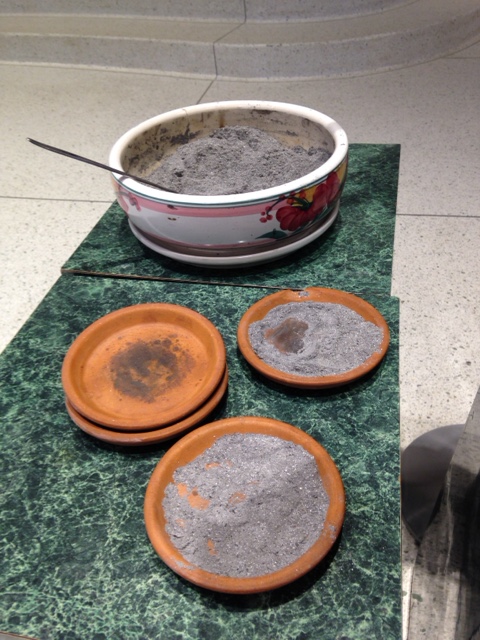
Ash Wednesday’s a good time to try to “get” what the saint is saying. Ashes are placed on our foreheads in the form of a cross and a few simple words are said: “Remember you are dust and to dust you shall return.”
A reminder we will die. Yet, this brief symbolic act says much more. A daily mystical death is now taking place within us. Our physical life will end, the ashes tell us; the day and hour unknown. But ashes in the form of a cross say Jesus Christ changes death. “Dying, you destroyed our death. Rising, you restored our life.” Jesus Christ has made his risen life ours. His gift is hidden from us; what he promises we will experience when we enter his glory.
Meanwhile, the mystery of his death and resurrection is at work in us now. Enter this mystery mystically, St. Paul of the Cross says. Daily, deliberately, attentively accept God working within you. A new life is being born in you, though you do not see it. Desire it, accept what God sends, without worry. God is working within you through the mystery of the Lord’s cross.
Yet, the saint says in his letter that he has to hurry off, like the rest of us, to something else. He’s going somewhere, he has something to do, someone to see, and he tells his correspondent that you can’t think about deep things too long. No, we can’t.
And so, we only glimpse the mystery of the ashes that placed on us. Still, let’s hear the Lord’s voice in today’s readings and the signs of the liturgy. Ash Wednesday is an ambassador God sends to remind us he is at work in us; he’ll send graces through the days of Lent and Easter. Yes, all the days of our life.
Embrace his cross each day and die mystically and be born anew.
En Espanol
Una carta que San Pablo de la Cruz escribió sobre “la muerte mística” nos podría ayudar a celebrar el Miércoles de Cenizas.
“Tú puedes vivir como un verdadero ciervo y amigo de Dios si murieras cada día: ‘ Morimos diariamente; porque tú estas muerto y tú vida está oculta adentro de Cristo en Dios.’ Es una muerte mística a la que yo quiero que tú te sometas. Tengo confianza de que tú renacerás a una nueva vida dentro de los sagrados misterios de Jesús Cristo, si tú mueres misticamente en Cristo más y más cada día, en las profundidades de la Divinidad. Deja que tu vida se pierda dentro de Cristo en Dios…
“Piensa sobe la muerte mística. Morir misticamente significa pensar solamente en vivir una vida Divina, deseando solamente a Dios, aceptando todo lo que Dios manda sin preocuparse sobre ello. Significa ignorar todo lo demás para que Dios pueda obrar en tu alma, en el santuario de tu alma, donde ninguna criatura, angélica o humana, puede ir, y donde tú puedas sentir a Dios trabajando y naciendo, mientras tú mueres misticamente.
“Pero, estoy apresurado, y esta nota se está poniendo muy mística, así que escúchala pero no te obsesiones, porque esto nosotros no lo podemos captar.”( Carta, 28 de diciembre,1758)
El Miércoles de Cenizas es una buena ocasión para poder captar lo que el santo está diciendo. Cenizas son untadas sobre nuestras frentes en la forma de una cruz y unas sencillas palabras son dichas: ” Recuerda que tú eres polvo y al polvo retornarás .”
Un recuerdo de que vamos a morir. Sin embargo, este breve acto simbólico dice tanto más. Una muerte mística diaria en este momento está tomando lugar dentro de nosotros. Nuestra vida física va a terminar, nos dicen las cenizas; el día y la hora, desconocidos. Pero cenizas en la forma de una cruz nos dicen que Jesús transforma la muerte. ” Al morir Tú destruistes nuestra muerte. Resucitando, restaurastes nuestra vida.” Jesús Cristo ha convertido su vida resucitada en nuestra vida. Este regalo de Él está escondido de nuestros ojos; lo que Él promete lo experimentaremos cuando entremos en su Gloria.
Mientras tanto, el misterio de su muerte y resurreción está operando adentro de nosotros. Entra adentro de este misterio misticamente, nos dice San Pablo de la Cruz. Diariamente, deliberadamente, atentamente acepta a Dios obrando dentro de tí. Una nueva vida está naciendo en tí, aunque no lo veas. Deséalo, acepta lo que Dios te manda sin preocupación. Dios está obrando adentro de tí a través del misterio de la cruz del Señor.
Sin embargo, el santo dice en su carta que está apurado y tiene que irse, como el resto de nosotros hacia otra cosa. Va para algún lugar, tiene algo que hacer, alguien que ver, y le dice a su corresponsal , que no se puede estar pensando sobre cosas profundas por mucho tiempo. No, no podemos.
Y así, nosotros solamete vislumbramos por un segundo el misterio de las cenizas que untan sobre nosotros. De todas maneras, escuchemos la voz del Señor en las lecturas de hoy y en los signos de la liturgia. El Miércoles de Cenizas es un embajador que Dios nos manda para recordarnos que Él está operando dentro de nosotros; Él nos mandará Su gracia a través de los días de Cuaresma y de Pascua. Sí, y todos los días de nuestra vida.
Abraza su Cruz cada día y muere misticamente para poder renacer.
Jumatano Ya Majivu
Padre Evans FwambaCp
Mt. Paulo Wa Msalaba aliandika, “Kifo ni fumbo” na kinaweza kutusaidia kusherehekea vyema Jumatano ya Majivu. Maisha kwa watumishi wa kweli ni kuwa marafiki wa mungu, kwamba tunakufa kila siku; kifo chetu na kuishi vimefichika kwa kristo na kwa mungu. Hiki ni kifo ambacho ni fumbo ambalo, nina hakika kwamba tutazaliwa katika maisha mapya kupitia mafumbo matakatifu ya Yesu Kristo, kadiri tunavyo kufa zaidi na zaidi kila siku katika fumbo la kifo cha Kristo na katika undani wa mungu. Tunatambua maisha yetu yote yamefichika ndani ya kristo na mungu.
Fikiria juu ya kifo cha fumbo. Kifo cha fumbo kinamaanisha kufikiri maisha ya kimungu, kumtamani mungu peke yake. Kupokea mapenzi ya mungu bila wasiwasi wowote. Hii inamaanisha kudharau kila kitu ili mungu afanye kazi ndani ya mioyo yetu, ambapo hakuna kiumbe chochote kinaweza kuingia wala malaika au mwanadam. Hapo tunaweza kuona kazi ya mungu ndani yetu katika kufa kwetu ambayo ni fumbo.
“Ila nina haraka, na maandishi haya yanakuwa fumbo, basi yasikilize na punje ya chumvi kwani hatuwezi kuelewa.” (Barua, Dec 28,1758)
Tunapopakwa majivu, ishara ndogo ya msalaba hafanywa kwenye paji la uso na maneno yafuatayo husemwa, “Kumbuka wewe u mavumbi na mavumbini utarudi.” Hiyo alama ya msalaba inamaana kubwa sana. Inatukumbusha kwamba tuliumbwa kutoka udongoni na humo udongoni tutarudi. Kwamba maisha ya mwanadam ni msalaba na kifo ni fumbo kwetu.
Tunakumbushwa kwamba maisha yetu ya kimwili yataisha na kwa ishara ya msalaba, kifo chake Kristo kitabadili maisha yetu kwa ufufuko wake na kuturejeshea uhai.Majivu yanatukumbusha kwamba sisi hatujui mda wala siku tutakapokufa. Mt. Paulo anasema kwamba tafakari kila siku na kupokea kwa makini kazi ya mungu inayofanyika katika maisha yako. Maisha mapya yanazaliwa ndani yako, ingawa huwezi kutambua au kuona.
Mungu anafanya kazi ndani yako kupitia fumbo la msalaba wa Yesu.
Tunapopakwa majivu tunatafakari juu ya msalaba na maisha yetu. Leo tusikilize masomo na ishara za liturijia. Jumatano ya majivu ni kama balozi aliyetumwa na mungu kwetu kutukumbusha kwamba mungu anafanya kazi maishani mwetu. Katika mfungo huu mtakatifu wa kwaresima, mungu anatutumia neema katika kipindi kizima cha kwaresima na pasaka, ndio, na katika maisha yetu yote.
Tupokee msalaba wa Kristu kila siku na tuwa tayari kufa na Kristu katika fumbo la mateso na kifo chake ili tuweze kuzaliwa upya.
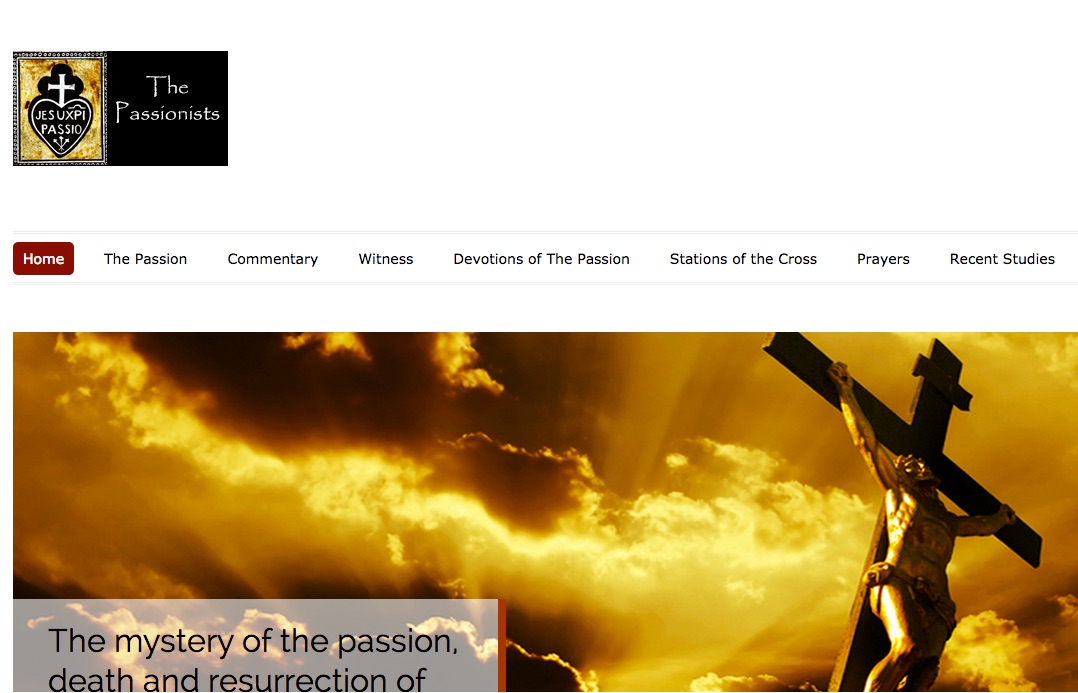
Monday on the Feast of St. Paul of the Cross we launched a new website on the Passion of Christ.
The website has a commentary on the Passion Narratives by Fr. Don Senior, CP, and information on Passion sites, devotions, prayers, spirituality and recent studies.
In recent studies, for example, there’s a review by Fr. Paul Zilonka, CP. of Bill O’ Reilly’s recent book “Killing Jesus.”
It’s a work in progress. A lot more material will be added in days to come, so drop in every once in awhile. The Passion of Jesus is at the heart of the mission of the Passionists, the community I belong to. It’s a mystery that can feed your soul. I would be grateful for any suggestions you may have.
The site will play on any computer, iPad or smart phone. We hope eventually to develop the website into a multi-lingual site that will literally reach the whole world.
I’m very grateful to the person who did such a beautiful job in formatting the site. A work of art in itself. A special grace brought this site about.
We solemnly celebrate the death and Resurrection of our Lord on Holy Thursday, Good Friday, and Holy Saturday, using the simplest of signs.
On Holy Thursday Jesus knelt before his disciples and washed their feet. At table he gave them in bread and wine his own body and blood as signs of his love for them and for all humanity.
On Good Friday we take another symbol, the cross, a powerful sign of death, which first struck fear into the hearts of Jesus’ disciples, but then as they recalled the Lord’s journey from the garden to Calvary, as they saw the empty tomb, as they were taught by the Risen Jesus himself, they began to see that God can conquer even death itself.
On this day, we read the memories of John, the Lord’s disciple, who followed him from the Sea of Galilee, to Jerusalem, its temple and its feasts, to Calvary where he stood with the women and watched the Lord die. Like the others, he recoiled before it all, but then saw signs of victory even in the garden, in the judgment hall, before Pilate, and finally in the cross itself.
On this darkest of days, Christ’s victory is proclaimed in John’s Gospel.
“ Go into my opened side,
Opened by the spear,
Go within and there abide
For my love is here” (St. Paul of the Cross, Letter, September 5, 1740).
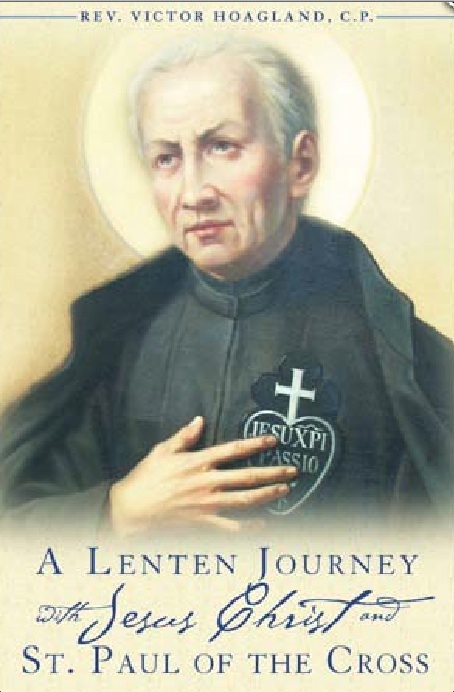
Last year I wrote “A Lenten Journey with Jesus Christ and St. Paul of the Cross” for Christus Publishing. It was a little late for last Lent but Lent is almost upon us and it’s available now on Amazon and Crossplace.com.
The book attempts to link St. Paul of the Cross with the Lenten season, an obvious connection for someone who loved the mystery of the cross. His spirituality responds well to the gospels we read during Lent. Saints feed on the Word of God and he not only fed on it but preached it too. This book takes a look at his life and spirituality and offers a daily reflection for each day of Lent based on the gospel of the day.
I hope to follow St. Paul of the Cross as he follows Jesus Christ in this season of grace and to use some excerpts from the book on this blog.
Lent is a journey that’s blessed. The church and the whole communion of saints take part in it. Let’s make it together.

 The Victor's Place