Tag Archives: prayer

Learning to Pray

Last night at the mission I spoke about learning to pray. First of all, we have a gift for prayer. It’s a unique gift, like the face we wear. You can find some of the material I covered at http://www.cptryon.org/prayer/index.html

It’s a good summary of this important part of our lives. Take a look at it, if you have time. There’s a lot there.

Last night, I also spoke about Matthew’s gospel, which presents us with Jesus the Teacher. We’re neglecting the teaching role of Jesus today, I think, as we look on religion as outmoded, outdated, having nothing to say to us. Then too, the church has had its scandals, and they turn people away.

Matthew presented Jesus as a Teacher to counter the pharisees who, at the time he wrote (about 90 AD) were increasingly assuming the leadership of Judaism and claiming teaching aurthority. Matthew says to the church of his time, and to ours too, Jesus is the wise teacher who will always lead us to the mountain as his disciples and sit down with us and teach us.

I spoke of some of Jesus’ teachings in his Sermon on the Mount, especially his words against anger and forgiveness. As our times get worse, we get mad. Anger can be a good response, but it also can kill.

In the same way, we can become unforgiving. We need to have respect. Looking again is God’s way. We have to look again.
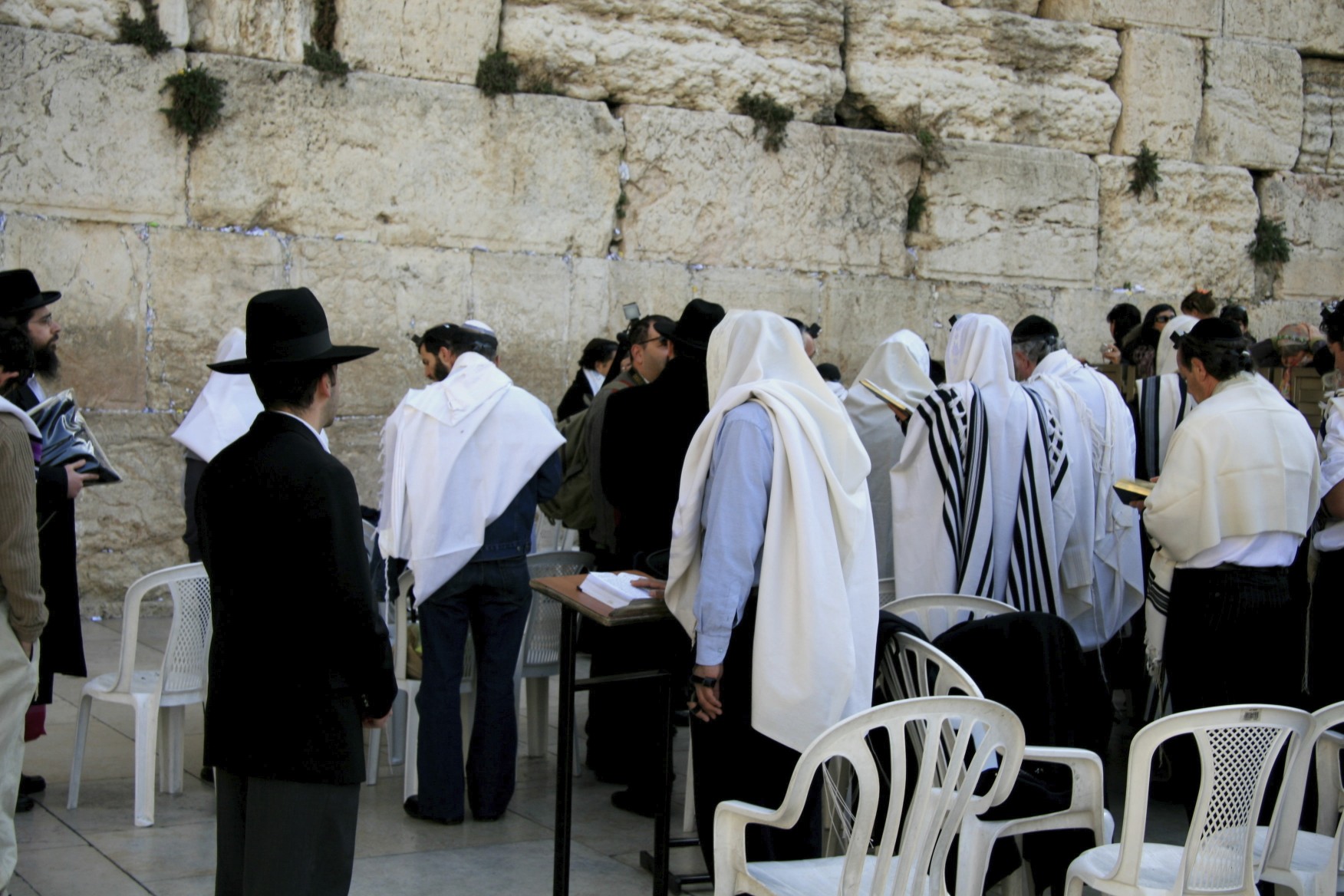
Prayers teach us to pray

If prayers teach us to pray, the one for this Thursday after Ash Wednesday is a good one to think about.

Lord,

may everything we do

begin with your inspiration,

continue with your help

and reach perfection under your guidance.

We ask this through Jesus Christ, your Son, who lives and reigns with you and the Holy Spirit, One God, forever and ever.

How better to recognize where we stand before God? Empty-handed, we look for God to begin something within us, to inspire us. We ourselves start with nothing.

Then, we ask for help with what we are about now. We can’t continue without God.

Finally, God must guide us to complete what we are about in our lives. It’s not about what we want or plan,  but “your will be done.”

We ask this through Jesus Christ, who has shown us a God who loves us, who promises to make our prayer his own, who is our advocate, our Savior, our reward.

What am I going to do for Lent?

Someone was asking that question at our supper table the other night. Lent begins  Ash Wednesday. The supper table is a good place to ask the question, because Lent is about renewing ourselves as we are and where we live. The supper table stands for life here and now.

The supper table is the place where we face those closest to us. Doing something for Lent has to mean doing something for them, first of all, the people across the table–or maybe those who have left our table. One of our scripture readings early on in Lent says: “Don’t turn your back on your own.”   Renewing our relationship with those closest  to us is one of the most important steps to renewing ourselves.

Besides the supper table, I guess we should also ask that question “What am I going to do for Lent?” in the place where I work, or where I go to school. Don’t turn your back on them either.

Lent is for renewing ourselves as we are, in real life and real time. It isn’t about changing us into different people or changing the world we live in or leaving for Mars.

The scriptures read on Ash Wednesday tell us to pray, to fast and give alms. What am I going to do for Lent? How about praying everyday? How about fasting from my own hard opinions of others? How about thinking about others and not just myself?

What am I going to do for Lent? I hope I can get closer to God, and that means for me to get closer to Jesus Christ. He says in this Sunday’s gospel that it’s possible to think we know him, but don’t know him. Where should I begin? Let me look in the scriptures, especially the scriptures we read during Lent.

Pope Benedict’s “Jesus of Nazareth” part 2 where he looks long and hard at the story of the Passion of Jesus is due out this week. I’m going to read it. Maybe that will help.

One thing we shouldn’t forget when we ask that question “What am I going to do for Lent?” is  another question: “What is God going to do for us during Lent?” It’s a time of God’s grace, more than we can hope for, beyond what we could possibly earn. The great sign of God’s limitless giving is the Passion of his Son, a wondrous gift.


Praying is like breathing

Last Sunday morning a Jewish man sitting next to me on the plane from Tel Aviv to Newark asked me, “Do you mind if I pray?” I replied, “Certainly not, I would be be happy if your prayed.”

He stood up and got something out of the overhead compartment and readied himself for prayer. I’m not quite sure all he did, but I noticed he put leather straps around his arms. Then he sat down and read from a small prayerbook he had for about 15 minutes. The drone of the engine blocked out any words he might have said that I could understand.

Praying is like breathing. We all need to do it. I used to bring out my small prayerbook on flights like that, but it got so cumbersome that I use a small rosary I keep in my pocket to pray.

Years ago, I remember on a flight from St. Louis to New York City a young Afro-American girl sat next to me. I opened my prayerbook to say my prayers, and I heard a  soft southern voice saying to me, “Sir, could I read a psalm?”

“Sure,” I replied, “Why don’t we read a psalm together.” I turned to Psalm 22 “The Lord is my Shepherd” and we read it aloud as we took off.

Afterwards, she told me that was her favorite psalm. She looked like a young teen-ager, but she told me she was married and on her way to Germany to return to her husband who was in the military. She had just lost a baby and had gone home to her mother to look for some comfort.

“I’m looking at these beautiful clouds in the sky,” she said, “and I remember one day after I lost my baby I had a dream and I saw the Lord like a Shepherd in clouds like these, holding my little baby.”

When we landed in Kennedy, I noticed she was struggling to pull out a big package from the overhead compartment and tried to  help her. ”It’s very heavy,” I said.

“It’s a computer, “ she answered, “I’m going to learn how to use it.” And she went off to the International departures.

Praying is like breathing; if we do it, we live.

Prayer is a Rock

Letter 3, St. Paul of the Cross

“When the sea is swept by storms, the wind raises the waters and they swell in huge billows. The waves hit the rocks and beat on them as if they would break them up and smash them to pieces. But not so! They beat on the rocks, yes, but the rocks don’t break nor are they smashed to pieces, although a small chip may be knocked off here and there. No matter how great the waves may be, the rocks are so hard that there’s no danger they will be shattered.

Similarly, the soul at prayer is a rock that God holds fast in his infinite love. It may even be called a rock of strength because the Sovereign Good imparts  strength to it.”

Thinking About Yourself

Letter 160, St. Paul of the Cross

As you  look at what you’re going through, don’t philosophize and reflect  so much about yourself. Stop thinking about yourself and just do what’s right. Love God’s Will and stay beneath the Holy Cross without getting involved in useless subtleties. By thinking too much about yourself, you lose sight of the Sovereign Good.

With regard to prayer, if you can’t put in much time, it’s not important. You always pray by doing what is right.”

Work around the house, do what you have to do there, and be attentive to God by frequently plunging your spirit into the immense sea of divine love, but don’t check up minutely whether this plunge was done well. I repeat, go about doing good simply as children do…

Take care of your health, eat what’s necessary, and get the sleep you need. In that way you build up your strength, if that is God’s wish and for your good.


The Presence of God

I’m reading the Letters of St. Paul of the Cross and for the next few weeks I leave some excerpts:

“You may not be able to give much time to prayer and other spiritual practices now, but I will give you–with confidence Jesus Christ would agree–a rule about praying always. One prays always who does what is right. For this, I ask you to stay faithfully in the Presence of God in all that you do.

God will help you acquire this practice little by little. You may spend hours preoccupied and not remembering God’s Presence. That doesn’t matter, because your original intention empowers all you do.

But keep your heart and spirit aware of your beloved good God, yet do this gently, not straining your heart and  mind. Say, for example, “I don’t want to forget you, O God.” “My God, you are with me, in me, I live entirely in you and because of you.” God lives in you. You breathe in God, you walk with God, you work in God, who is joy, love, fire.

Get accustomed to making acts like that.. When God enters your heart as you are making those acts of love, stop, and like a bee take in the honey.

Letter 39

A Mission in Maryland

From March 20th to the 24th I was in Bowie, Maryland, at Ascension Parish preaching a parish mission. The parish has its roots in colonial Catholicism, a “priestless, popeless, sisterless” church, according to historian James O’Toole, in his book “The Faithful: A History of the American Catholic Church.

Some who attended the mission were descendants of those early Catholics who settled in Maryland, and I expressed my admiration for the fidelity of their ancestors who kept the faith alive in their homes when few priests and hardly any sisters were there to minister to them. Anti-Catholic laws in the colony also penalized Catholics. Through much of that time, the popes were tied by European politics and could pay little attention to the New World.

Those early Catholic Marylanders were faithful to prayer and to the basic truths handed down to them through their catechisms.

I’m interested in that early church because it may be a model of our church in the future, with fewer priests and sisters and a growing secularism that will reduce the number of churchgoers in our country and the western world.

Seems to me, Catholics need to strengthen their prayer lives and learn their catechisms to survive in the future. Nearby Ascension Parish is the old church of the Sacred Heart from 1741 (picture above) and there were catechism classes going on there when I visited on Tuesday afternoon. Keep it up.

I based my mission on the United States Catholic Catechism for Adults, which is a nice blend of doctrine and biographies of people of faith who have influenced the growth of the church in America and I spoke about St. Elizabeth Seton, Peter, Mary the Mother of Jesus, and St. Paul of the Cross during the mission. The catechism is a good one and I wish it were used more in our church.

After the mission, I went to Baltimore to visit the beautiful little house on Paca Street where Mother Seton lived and made her first religious vows after her arrival from New York City.

So important to know our ancestors in the faith as we go into the future.

Praying Like The Tax Collector

Lk 18:9-14

Jesus addressed this parable

to those who were convinced of their own righteousness

and despised everyone else.

“Two people went up to the temple area to pray;

one was a Pharisee and the other was a tax collector.

The Pharisee took up his position and spoke this prayer to himself,

‘O God, I thank you that I am not like the rest of humanity

greedy, dishonest, adulterous  or even like this tax collector.

I fast twice a week,

and I pay tithes on my whole income.’

But the tax collector stood off at a distance

and would not even raise his eyes to heaven

but beat his breast and prayed,

‘O God, be merciful to me a sinner.’

I tell you, the latter went home justified, not the former;

for everyone who exalts himself will be humbled,

and the one who humbles himself shall be exalted.

Saturday, 3rd week of lent

In Luke’s gospel Jesus often takes the side of tax collectors, widows, and sinners like the prodigal son who are so beaten down by their own situation that they can hardly dream of anything better. He is criticized frequently for associating with people like that, so he must have done it often enough.

In the parable, the tax collector who goes into the temple area to pray is one of them. Early in his gospel, Luke recalls that Jesus sat down at table with a number of tax collectors who were Matthew’s friends. Is he typical of them?

Staying at a distance, eyes down, the tax collector only utters a couple of words:

“O God, be merciful to me a sinner.”

The Pharisee’s prayer is so different, so full of himself; he seems to ask for applause. The tax collector asks only for mercy.

His prayer was heard, Jesus says, so should we not make it our own? Tax-collectors,  widows and sinners are heard because their situation is closest to where all humanity stands. God hears their prayers and calls them into his Kingdom. We all stand in need of God’s mercy.

“O God come to my assistance. O Lord make haste to help me.”

Ask And You Will Receive

Does God answer prayers? A question asked often down through the centuries. For some, God–if there is one–doesn’t pay attention to us at all. We’re on our own. No one’s listening and no one cares.

Certainly, Jesus believed in asking for things in prayer from a Father who cared, and he taught his disciples to pray as he did. For example, he asked over and over in the Garden of Gethsemani that his life be spared, “Father, let this cup pass from me.” He trusted a Father who loved him more than any human father could. No distant, uninvolved God for him.

As he knocked the door opened, the answer came, yet not as he willed, but as God willed. And to accept that answer “an angel came to strengthen him.” So also with us: we may not get what we ask for, but a strengthening grace is always given, and the promise of life always remains. God has something better in mind.

As the gospels make clear, Jesus prayed constantly during this life; he taught his disciples words of prayer and finally, in his darkest hours he gave them an example of prayers they would never forget. “Father, into your hands I commend my spirit” ; “I thirst”; “My God, my God why have you forsaken me!” Heartfelt, trusting, real prayers.

We pray with our own voice when we pray; that’s true. But we pray best by following the way of praying that Jesus gave us. “Let us pray as God our Master taught us, asking the Father in the words the Son has given us, letting him hear the prayer of Christ ringing in his ears…Let the Father recognize the words of his Son; let the Son who lives in our hearts be also on our lips…” (St. Cyprian, On the Lord’s Prayer)

For more on the prayer of Jesus, http://www.cptryon.org/prayer/jesupray.html