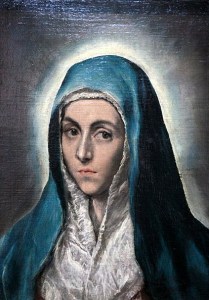
Today we celebrate the oldest feast in the Roman calendar honoring Mary, the mother of God. We celebrate it in the Christmas season because she is the unique witness who guarantees the mysteries of Jesus, born of Mary..
Who else but Mary could tell us about the early life of Jesus? It had to be her. “Mary kept all these things in her heart,” Luke says in his gospel.
Mary and Joseph are our key witnesses to the early life of Jesus. People after the resurrection of Jesus must have asked Mary about those early years: How was he born, what was he like growing up? They must have questioned her.
She must have told them of God’s invitation to bear his Son, of his birth in Bethlehem, the shepherds, the strangers from the east, Herod’s attempt to kill her child, the old people in the temple who recognized him, their flight into Egypt.
She would have told them he grew up like other children, She and Jospeh were mother and father to him. They held him in their arms, fed him, clothed him, taught him his first words, helped him take his first steps, brought him to the synagogue, instructed him in their tradition, taught him to pray, listened to his questions. Angels didn’t bring him up. They did.
The words we hear in Luke’s story of their journey to Jerusalem to celebrate Passover are surely hers: “Son, why have you done this to us? Your father and I have been looking for you.”
Yet, he was a Child beyond others. Her witness to that was so important. All looked to Mary for her word. He was God’s Son. She was God’s humble servant, She was the Mother of God.
This ancient feast celebrates Mary’s witness to the humanity and divinity of Jesus Christ. Churches of the Byzantine and Syrian rites celebrate this feast on December 26. The Coptic rite celebrates it on January 16.
From earliest days to later councils, the church turned to Mary when it asks “Who is Jesus?” We call on her this Christmas season to tell us who he is.
“Lord, holy Father, almighty and eternal God, we praise, bless, and glorify your nameon the Solemnity of the Motherhood of the Blessed ever-Virgin Mary. For by the overshadowing of the Holy Spirit she conceived your Only Begotten Son, and without losing the glory of virginity, she brought forth into the world the eternal Light, Jesus Christ our Lord. “ (Preface for the feast)
The papal Mass for her feast in Rome begins with this chant:
Hail Mary, most beautiful of our human race,                                                                          Virgin worthier than all others,                                                                                            enthroned in the heavens above.

Hail Mary, Virgin bearing the Child                                                                                           who sits at the Father’s right hand,                                                                                      ruling heaven and earth and all things,                                                                                            once hidden in your womb.

Hail Mary, the Uncreated God created you,                                                                                 the Only-Begotten Son loved you deeply,                                                                                      the Holy Spirit made you pregnant in a wholly divine way.

God wonderfully made and called you,                                                                                     his hand-maid, to be the mother of his Son.                                                                                        No other was made like you.

Be our mother, our comfort, our joy,                                                                                          and after this our exile,                                                                                                                    may we be with you in heaven forever.
Today we remember Pope St. John Paul II. We expect all the popes to be holy and saintly, but they’re not, statistics say. There have been 266 popes, but only 95 are remembered as saints, blessed or servants of God. Furthermore, 52 of the popes who are saints are from the first 5 centuries of the church, most of them were martyrs.
Only 2 popes have been canonized since the 16th century until the recent canonizations of Popes John XXIII, John Paul II and Paul VI. Why were these popes canonized? Each was a holy man who played a major role in the Second Vatican Council, a major event in the Catholic Church, which took place from 1962-65 and still inspires its life today.
What was Pope St. John Paul II’s role in that council? The first reading and responsorial psalm for his feast tell us:
Pope John Paul was a missionary who brought the message of Vatican II to the world: “How beautiful upon the mountains are the feet of him who brings glad tidings…” He had a prophet’s role, the first reading from Isaiah says. He fulfilled what Psalm 96 called for: “Proclaim God’s marvelous deeds to all the nations.”
John Paul II was a global pope. Inspired by the Second Vatican Council’s call for a church engaged in the world, he made 104 apostolic journeys to all parts of the globe. It was a world increasingly interconnected, with nations and religions in daily contact with one another. He visited mosques and synagogues and Buddhist temples, as well as his own faithful. He reached out to Protestants and separated Christian churches of the east. As the voice of the Catholic Church, he engaged the world, in the spirit of Vatican II.
John Paul II was a charismatic bishop who became pope as new communications were creating a world wide audience and new political movements, like that in his native Poland, caught the attention of people everywhere.
Within his own church, Pope John Paul canonized more saints, from different countries and backgrounds, than any pope before him had done. The Second Vatican Council taught that holiness could be found everywhere.
The three popes, John XXIII, Paul VI and John Paul II had different gifts, but all saw the Second Vatican Council as the path the church should follow. That’s the way they described the way ahead – a path, a way often unmarked, a winding road where the end is not clearly seen. Still, a path is God’s way, who leads the blind on their journey and strengthens the weak till they reach their home.
Three popes involved in the Second Vatican Council have been canonized: Pope John XXIII, Pope Paul VI and Pope John Paul II.. They were declared saints, not just because they were popes, but because of their holiness and their involvement and promotion of the council.
Three months after his election as pope in 1958, Pope John XXIII, whom we remember today, called for a general council. It was to an “aggiornomento” , an updating of the church for bringing its message to the people of our time and the world of today. His official biography, which can be found here ends, “Since his death on June 3, 1963, much has been written and spoken about the warmth and holiness of the beloved Pope John. Perhaps the testimony of the world was best expressed by a newspaper drawing of the earth shrouded in mourning with the simple caption, “A Death in the Family.”
I was fortunate to meet Pope John personally in 1962 when Father Theodore Foley and I accompanied Bishop Quentin Olwell, bishop of Cotabato, in the Philippines, on his “ad Limina” visit to Rome. The pope told me to “be like St. Gabriel.” That year Pope John was named Time Magazine’s Man of the Year.
The popes often describe the council as the path the church must take into the future. Some years ago at a synod of bishops, Pope Francis described that path as the road Jesus took from Jericho to Jerusalem to enter the mystery of his death and resurrection. It’s a winding road, not easy to travel. Here’s a picture of it from the air in the 1930s.
Pooe Leo began an important conference in Rome October1 on the environment with that question posed by Pope Francis ten years ago in his letter Laudao si’.Looks like many of the countries of the world, especially the USA, are turning away from that question. We are absorbed in our wars and political fights.
“ Our Sister Earth cries out, pleading that we take another course. Never have we so hurt and mistreated our common home as we have in the last two hundred years. Yet we are called to be instruments of God our Father, so that our planet might be what he desired when he created it and correspond with his plan for peace, beauty and fullness.
The problem is that we still lack the culture needed to confront this crisis. We lack leadership capable of striking out on new paths and meeting the needs of the present with concern for all and without prejudice towards coming generations. The establishment of a legal framework which can set clear boundaries and ensure the protection of ecosystems has become indispensable; otherwise, the new power structures based on the techno-economic paradigm may overwhelm not only our politics but also freedom and justice.
It is remarkable how weak international political responses have been. The failure of global summits on the environment make it plain that our politics are subject to technology and finance. There are too many special interests, and economic interests easily end up trumping the common good and manipulating information so that their own plans will not be affected. Any genuine attempt by groups within society to introduce change is viewed as a nuisance based on romantic illusions or an obstacle to be circumvented.”
Pope Francis, Laudato SI 54-55
Today at the Vatican Gardens outside Rome evironmental leaders of the world gathered to answer that question: Are we caring for our common home?
One thing to notice about this conference, which involved artists,scientists, politicians, business people, ordinary people. Pope Leo sat among them, not before them, as if to signify their equal task in the care of the environment. They bring an equal wisdom to the challenge of caring for the earth. It’s not just the task of religious people, or a pope. It’s a common task for a common good.
Today the Passionists celebrate the feast of St. Vincent Strambi, CP (1745-1824). In his early years as a Passionist priest Strambi was a well known preacher, writer and spiritual director. He was a close associate of St. Paul of the Cross and wrote his biography after his death.
He was chosen to be bishop of Marcerata during tumultuous years in Italian history when Napoleon moved to take over Italy, the papacy and the Catholic Church. Strambi was an heroic supporter of the pope and fought for the freedom of the church.
To understand most saints you have to understand the times in which they lived. They’re antidotes for the poison of their time. Unfortunately historians pay little notice to the challenging times Vincent Strambi lived in.
In 1789, following the French Revolution, a Reign of Terror struck the church in France, religious orders were suppressed, priests and religious were imprisoned, exiled, put to death. Word of the terror quickly reached Italy and Rome; the defenseless Italian peninsula would be the next target for France’s fierce revolution.
Pope Pius VI asked for prayers that Rome be spared, and he called on Vincent Strambi, then one of the church’s best preachers, to prepare the people for a blow sure to come. In packed churches and piazzas in Rome Strambi promised that God would not abandon his people. The Roman people gained strength from his words.
In 1796 Napoleon Bonaparte turned to Italy, demanding heavy tribute from the Pope and the Papal States. The murder of the French General Duhot in Rome gave him the pretext for invading the city, deposing and imprisoning the pope and declaring the Papal States a Republic.
Religious houses were suppressed, their goods systematically confiscated. Strambi, a well-known opposition figure, fled to Monte Argentario, a Passionist sanctuary on the Mediterranean Sea.
In 1799 Pius VI died in exile and was succeeded by Pius VII who, in 1801, appointed Strambi bishop of Macerata and Tolentino, two important cities in the Papal States along Italy’s Adriatic coast, poverty-stricken from years of political and military turmoil.
The bishops of the Papal States were largely responsible for temporal as well as spiritual affairs and Bishop Strambi became a champion of the poor in his diocese. He lived sparingly himself, without signs of wealth or position. The poor were constantly on his mind. “Don’t you hear the cries of the poor?” he said one day to the treasurer of his seminary, looking out his window.
The education of poor children interested him especially and he urged his priests to care for them. In sermons he constantly looked to the Passion of Jesus for wisdom in the struggles of the time. His devotion to the Precious Blood of Jesus was influenced, at least in part, from reflection on the bloodshed the Napoleonic Wars brought to millions in Europe. Almost 4 million died as warfare rose to a level never seen before. Their blood was precious to God.
On May 5, 1809, after occupying Rome and most of the Papal States. Napoleon declared the region under French control and the temporal power of the pope abrogated. On June 6, 1809 Pius VII placed notices on church doors throughout Rome excommunicating anyone cooperating with the French. July 6, the French general Radet arrested the pope and brought him north to Savona.
Napoleon then demanded bishops sign an oath of loyalty to his new government. Refusal meant exile and imprisonment, signing was an act of disloyalty to the pope.
“I am ready for prison and for death. I am with the pope,” Strambi declared. On September 28,1808 he left his diocese under guard for northern Italy where he remained for 5 years under house arrest.
After Napoleon’s defeat in 1814 the church’s exiled leaders returned. Bishop Strambi returned to his diocese in May, 1814; immediately the pope asked him to come to Rome to preach a nine day “retreat of reconciliation” in late July and early August. Not all met the French invasion heroically.
In 1816 a typhoid epidemic followed invading armies. Food shortages and inflation spread through the bishop’s diocese. He opened hospitals for the dying and sought supplies for his suffering flock.
Physically frail from birth, Bishop Strambi became increasingly ill and found it harder to manage his diocese. By 1814, the world too had changed. The Papal States had no bishops in the long chaotic period of the Napoleonic invasion and new forces demanding change came to power. Strambi recognized it was too much for him.
In 1823 he asked the new pope, Leo XII, to allow him to retire. The pope accepted his resignation on one condition, that he come and live with him as an advisor in the Quirinal Palace, then the pope’s residence in Rome. A local commentator said of the departing bishop: “ He was a man who lived a holy life, giving alms to all and content with only the necessary for himself. We are sorry to see him go, for we lose a good pastor. The cries of the poor are especially loud, for they lose one who cared for and sustained them.”
Vincent died in Rome on January 1, 1824, having offered his life to the Lord in place of that of the pope who was seriously ill.
Pope Leo ordered the process for his canonization 8 days after his death. He was declared a Saint in 1950 and his relics now rest in Macerata, the city where he was a zealous pastor for twenty-two years.
St. Vincent Strambi’s room, Saints John and Paul Monastery, Rome
With the help of the Holy Spiirt, I on my part will do all I can that the living image of Jesus crucified be imprinted in the hearts of each of you. I do this gladly, not counting the cost. I consider myself fortunate to give my lifeblood so that Christ might be formed in you. I can say, like the apostle, that because of my love for you, I want to share with you “not only God’s message, but our very lives, so dear have you have become to us.”
I urge you, then, to look attentively on the Image of the Crucified, the bishop of your souls, on his throne of grace. In that way I shall fulfill my obligation to announce to you the death of the Lord, an obligation arising from my profession in the Congregation of the Holy Cross and Passion of our Lord Jesus Christ. I shall do all I can to urge you all to fulfill your duty to love him who first loved us, who offered himself on the altar of the cross for us, who shed his blood for us.
( Letter to the people of Marcerata on becoming their bishop)
Today the church celebrates two early saints and martyrs, Cornelius, a pope who died in 253, and Cyprian, a bishop who was martyred in Roman Africa shortly after in 258.
At the time barbarian tribes in the west and the Persians in the east were invading Roman territory; the Roman emperors Decius and Valerian called for absolute loyalty from their people. The empire was imperiled.
To prove their loyalty, Roman citizens lined to offer sacrifice in honor of the emperor. Christians refused, and so at first church leaders were executed or imprisoned, wealthy, influential Christians lost their property, their positions and possibly their lives. Finally, all Christians could expect punishment for not performing the rites of sacrifice.
Not every Christian remained loyal to the faith at the time. Many offered sacrifice, betraying their faith, then afterwards sought to return to the church. Hard liners called for them to be banned for life for their lack of loyalty. Let God judge them when they die, they said. Others, like Cornelius and Cyprian, called to reconcile them after a time of penance, since God is all merciful.
Mercy and justice are always hard to reconcile. The gospels come down on the side of mercy. So should we.
In the persecution, Cornelius, bishop of Rome, was executed first, Cyprian, bishop of Carthage in Africa, was executed a few years later. The two men were from different social backgrounds and not always on good terms, historians say, but they found support in their common faith, as this letter of Cyprian to Cornelius, written shortly before Cornelius’ death, reveals:
“Cyprian to my brother Cornelius,
Dearest brother, bright and shining is the faith which the blessed Apostle praised in your community. He foresaw in spirit the praise your courage deserves and the strength that can not be broken; he was heralding the future when he testified to your achievements; his praise of the fathers was a challenge to the sons.
Your unity, your strength have become shining examples of these virtues to the rest of us. Divine providence has now prepared us. God’s merciful design has warned us that the day of our own struggle, our own contest, is at hand. By that shared love which binds us close together, we are doing all we can to exhort our congregation, to give ourselves unceasingly to fastings, vigils and prayers in common. These are the heavenly weapons which give us the strength to stand firm and endure; they are the spiritual defences, the God-given armaments that protect us.
Let us then remember one another, united in mind and heart. Let us pray without ceasing, you for us, we for you; by the love we share we shall thus relieve the strain of these great trials.”
When I typed in “Sacred Heart” with “Pope Francis” on the Vatican website yesterday, I got 1826 results. In his 13 years as pope, Francis referenced the Sacred Heart of Jesus that many times in his public statements. . He did it in talks to religious communities dedicated to the Sacred Heart who came to Rome for a general chapter, to representatives of hospitals, universities and places associated with this devotion. There is even a reference to the Sacred Heart in a talk the pope gave on artificial intelligence.
His Encyclical Dilexit Nos, written last October, is a long work that surely reflects years of thought on this mystery. Francis believed a world increasingly heartless needed to be reminded of God’s love.
It’s a work well worth reading. I took away a number of things from Dilexit Nos on the symbolism of the heart. For one thing, Pope Francis cautions against being fixed on one artistic representation of this mystery. The meaning of the Sacred Heart can be expressed in many ways, not just the symbolic heart or the image of Christ showing us his heart that usually recalls this mystery.
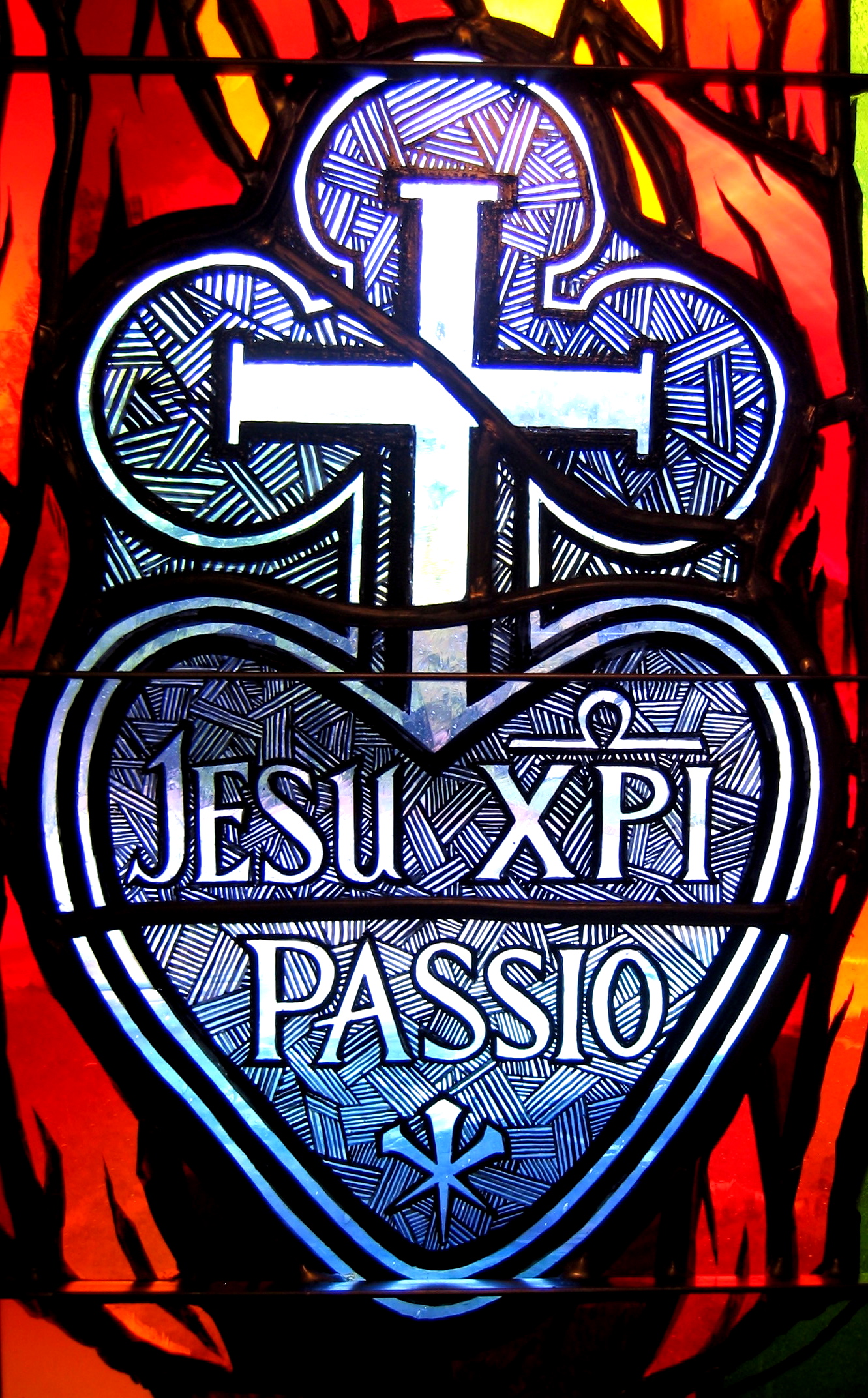
The gospel at Mass today of the Shepherd searching for the lost sheep is an image of the love of God for us. The sign my community the Passionists wears is a symbol of God’s infinite love. The pope is his letter sees a sign of that love in a mother who takes her little child into her arms after the child has done wrong as an example. No matter what her child has done, the mother still loves. The love of God takes many forms; the heart symbolizes them all.
I also like the pope’s observation that devotions change over time. The devotion of First Friday Mass and Communion originally was a response to Jansenism that saw humanity unworthy to approach Jesus present in the Eucharist.
Today, as so many ignore the Eucharist, the pope sees the devotion calling us to remember this Sacrament of God’’s Love.
Our reading at Mass from the Acts of the Apostles (Acts 15, 7-21) brings us to a critical moment in the life of the early church– the Council of Jerusalem, which decided whether and on what terms gentiles would be accepted into the new Christian movement. Its decision to admit the gentiles led to a rapid expansion of the church as non-Jews from all parts of the Roman world embraced the faith.
Luke Timothy Johnson has a fine commentary on this crucial event. (Acts of the Apostles: Sacra Pagina, Liturgical Press 1992)
Did a meeting really take place? Johnson writes “we can state with considerable confidence that in the first decades of the Christian movement an important meeting was held concerning the legitimacy and basis of the Gentile mission; that participants included Paul and Peter and James and Barnabas; that certain agreements were reached which, in one way or another, secured the basic freedom of the Gentile initiative. The most striking agreement between the sources comes, in fact, at the religious level. With only very slight variation, both Luke and Paul agree that the basis of the mission to the Gentiles was a matter of God’s gift, (Acts15,11. Gal 2,9) and that God was equally at work in the Apostle Paul as he was in the Apostle Peter. (Acts 15,7-8.12; Gal 2,8)”
Notice the hesitancy of the original Jewish followers of Jesus to accept gentiles into their ranks. That’s evident in Peter’s strong reluctance to meet the Roman centurion Cornelius as he visits believers of his own kind around Joppa. Not only are the disciples slow to recognize their Risen Lord, they’re slow to accept his plans for expanding their ranks. Peter must see signs of God at work in Cornelius before baptizing him and his household. Paul, James and Barnabas also must see God’s gifts in the outsiders they meet before they recognize that God is calling them to believe.
God sows seeds of faith, but we’re as slow to recognize the action of God in others as the first disciples were. We have trouble seeing God’s action in the stranger and in the unexpected. We need enlightenment.
Johnson notes that the Church’s journey through time is marked by conflict and debate. We must accept those conditions today too. Those who follow Jesus will not always agree with each other; there are strong opinions and differences among believers.
One thing I would add. Besides conflict and debate, our reading today speaks of the “silence” that comes as they debate. We’re in the presence of our transcendent God, whose ways and thoughts are above ours. We need silence to discern God’s will. Too much talk can get in the way.
It’ s a long way from the creation of the world to sitting on the porch in the morning. How many years before did God, the Creator of all things, bring light and water paving the way for a host of new things, non-living and living. Then, we humans enter the picture. A complex, changing world I belong to, sitting on the porch in the morning, looking eastward at the world before me.
.
Jessica Powers, a Carmelite nun and poet, wrote about our experience of that world– “Song At Daybreak”
This morning on the way,
that yawns with light across the eastern sky
and lifts its bright arms high –
It may bring hours disconsolate or gay,
I do not know, but this much I can say:
It will be unlike any other day.
God lives in his surprise and variation.
No leaf is matched, no star is shaped to star.
No soul is like my soul in all creation
though I may search afar.
There is something -anquish or elation-
that is peculiar to this day alone.
I rise from sleep and say: Hail to the morning!
Come down to me, my beautiful unknown.
“My Beautiful unknown”. Our world is beautiful, but unknown, surprising, with variations that bring “anguish or elation.” People of faith know this, since they believe in God who lives “in his surprise and variation”, but unfortunately we can make God too small. We “think like humans do.”
The Genesis account, which we just finished reading recently and the rest of the Bible, deserve a search for their wisdom. I know there’s a new story that science tells, but the scriptures were there first. We should listen to their special wisdom..
Tower of Babel. Pieter Bruegel the Elder. 16th century
After the deluge, God renews a covenant with creation, and the descendants of Noah begin to fulfill God’s command “to increase and multiply and fill the earth.”
But then something else happens: human beings want to be together, so they build a city. A common origin and language draws them together, not just as families or clans, but in a larger society. They look for human flourishing in a city. (Genesis 11,1-9)
Unfortunately, they overreach. They want to get their heads into the heavens and so they plan a tower into the sky. Like Adam and Eve reaching for the Tree of the Knowledge of Good and Evil, they want to be like gods, “presuming to do whatever they want,” Their tower becomes a Tower of Babel. It collapses and they’re scattered over the world, leaving their city unfinished.
It’s important to recognize that the Genesis story does not claim God’s against human beings building a city. The bible, in fact, often sees the city as a place favoring human flourishing. In the Book of Jonah, God values the great city of Nineveh. Jesus sees Jerusalem, the Holy City, cherished by the Lord, the place where he dwells. The Spirit descends on his church in the city. The Genesis story sees the city as good, but it can be destroyed by sin and human pride..
The picture at the beginning of this blog is a painting of the Tower of Babel by the 16th century Dutch artist, Pieter Bruegel the Elder. It’s situates Babel in Antwerp, one of the key seaports of the time. Its shaky structure suggests it’s too ambitiously built. Still incomplete, it may not last. So the painter offers a warning against ambition and not caring for people, especially the needy.
It’s interesting to note that Pope Francis encourages mayors from cities to plan well. Commentators say the pope, conscious of a rising isolationism that’s affecting nations and international bodies today, sees cities to be agents for unifying peoples. They’re important places for humans to flourish. The United Nations also sees cities as key resources in the challenge that comes with climate change.
The picture at the end? You don’t have to be told. A great city. Still, its greatness will be judged, not by its big buildings or businesses, but how it encourages human flourishing.




 The Victor's Place