Tag Archives: Pierre Toussaint

Callistus: Slave Becomes Pope

3.St
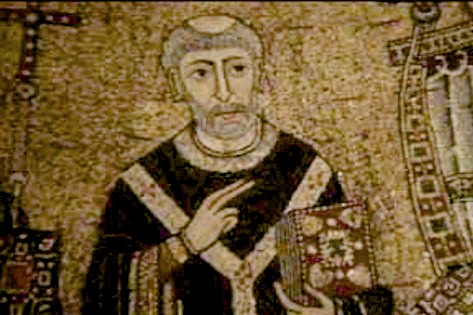
St. Callistus, Church of Santa Maria in Trastevere

Callistus, the saint in our calendar today, was a slave who became pope in 217 AD. Slaves not only did lowly demeaning work in the Roman Empire, they were bank managers and school teachers and fulfilled other professional duties as well. Tradition says Callistus was a Christian slave who was a financial manager for one of Rome’s royal families. He was accused of mismanagement but then found innocent.

 When Zephyrinus became bishop of Rome, he called on Callistus to serve as deacon in charge of a large Christian cemetery along the Via Appia, which today bears his name. Not only did Callistus bury the dead, he also cared for and supported the families they left behind.

Zephyrinus died in 217 A.D and Callistus succeeded him as pope by popular choice. Roman Christians saw him, not a slave, but a man of faith who could guide and lead them. The church grew under his leadership.

1.Sant
5.oil fount:st

Tradition says Callistus built a place of prayer where healing oil welled up, at or near a hospice for old or sick soldiers in Trastevere. Today the beautiful Church of Santa Maria in Trastevere stands on the spot. Inscriptions from the cemetery of Callistus are embedded in its structure.The place where the healing oil was found is marked in the church and Callistus’ remains are buried under its main altar. He’s pictured in the great mosaic in the church’s apse. (above)

As pope, Callistus advanced certain causes. He favored free women being able to marry slaves. He favored ordination for men who had been married two or three times. He also maintained that the church could forgive all sins, even the sin of denying one’s faith.

Some opposed Callistus because his views clashed with their own rigorous views, but Callistus shared St. Paul’s conviction: There is “neither Jew nor Greek, slave nor free person, neither male nor female.” (Galatians 3,28) Mercy is God’s gift to be experienced by all..

Callistus’ remains were found by archeologists in 1960. He is counted as a Christian martyr, but the circumstances of his death remain uncertain. The historian Eamon Duffy says he was murdered by a mob angered by Christian expansion in the already crowded district of Trastevere. (Saints and Sinners: A History of the Popes, p 14) As Christians grew in number the church became a substantial property owner, caring for 1,500 widows and other in need by 251 AD.

On August 2, 258, Pope Sixtus II and four deacons were martyred while celebrating the Eucharist in the catacombs of Callistus in Rome. Four days later, Lawrence the deacon was executed. Rome’s emperors, like Decius and Valerian, annoyed by Christian expansion and seeking their assets, began a series of persecutions that led to the church’s further growth.

Santa Maria in Trastevere, interior

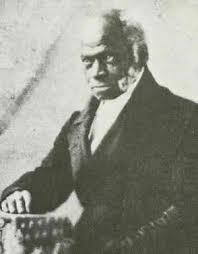
Pierre Toussaint

Toussaint
Pierre Toussaint

“Slaves, be obedient to your human masters with fear and trembling, in sincerity of heart, as to Christ, not only when being watched, as currying favor, but as slaves of Christ, doing the will of God from the heart.” (Ephesians 6:1-9)

St. Paul wrote those words as a prisoner in Rome. He wasn’t justifying slavery nor was he justifying his own unjust imprisonment. Slave or free, male or female, whatever our condition, whether it’s from an unjust structure of society like slavery or imprisonment, or from some natural cause, we are children of God.

I think that’s how Pierre Toussaint lived, a Haitian slave brought to New York City late in 18th century. He died in 1853. Toussaint had a profound love of Jesus Christ. When he  died, a New York newspaper recognized him as “ a man of the warmest and most active benevolence.” His goodness was legendary.

Toussaint came to New York City with his French owners, the Berard family, shortly before the Haitian revolution in 1789. He lived in the city almost 66 years. A successful hair-dresser, confidante to some of New York’s most prestigious Protestant families, extraordinarily generous and faithful to the poor, a devout parishioner of St. Peter’s Catholic church on Barley Street, at Mass each morning at 6 AM. He was acclaimed one of New York’s finest citizens at his death.

St. Peter's Church
St. Peter’s Church

His first biographer was Hannah Farnham Sawyer Lee, a Protestant who wrote about him shortly after his death. It’s a lovely biography, based on memories she and others had of him. She admired his character, his good deeds, his genuine love for people, black or white:

“He never felt degraded by being a black man, or even a slave…he was to serve God and his fellow men, and so fulfill the duties of the situation in which he was placed…. He was deeply impressed with the character of Christ; he heard a sermon from Dr. Channing, which he often quoted. “My friends,” said Channing, “Jesus can give you nothing so precious as himself, as his own mind. May this mind be in you.”

Those last words come from Paul’s Letter to the Philippians: “Have this mind in you which was in Christ Jesus, Who, though he was in the form of God, did not regard equality with God something to be grasped. Rather, he emptied himself, taking the form of a slave, coming in human likeness; and found human in appearance, he humbled himself, becoming obedient to death, even death on a cross.…Philippians 2, 6-9

Toussaint made the mind of Jesus his own. His body now lies in the crypt under the main altar of New York’s St. Patrick’s Cathedral and his cause for canonization has begun.

Some question why Toussaint wasn’t more aggressive in the struggle against slavery. He could have easily won his own freedom well before 1807, when Madame Berard  emancipated him before her death. Why didn’t he? Why wasn’t he active in the abolitionist movement against slavery then?

IMG_1851
African American Museum

For one thing, Toussaint feared violence would erupt in the United States, like the violence destroying Haiti then.

But he was influenced most of all by the teachings of the gospel and the example of Jesus Christ who insisted on loving God and your neighbor.  Loving and serving others is his great commandment, more important than the color of your skin, or your status in life or even fighting for a cause.

images

‘What will we do if the whites continue to discriminate and mistreat us?’ someone once asked Doctor Martin Luther King ‘We will continue to love them to the point that they can’t do anything else but love in return, ’’ he said.

Toussaint understood that. Doctor Martin Luther King did too. 

A fellow Passionist, Bishop Norbert Dorsey, CP who died in 2013, wrote his doctoral thesis at the Gregorian University in Rome on Pierre Toussaint. It’s available in digital form, thanks principally to Lynn Ballas, who so competently and generously edited and formatted the bishop’s work. It’s available at 

33rd Sunday C: Visiting Churches

Audio homily here: 

Whenever I can, I invite visitors to our monastery in Jamaica, Long Island, to take the subway to downtown Manhattan for a ride on the Staten Island Ferry and then visit Battery Park, the Museum of the American Indian, and some of the old churches and shrines among the city’s famous skyline. I try to tell the story of our country and the Catholic church in America by walking through those places. It’s a good opportunity to talk about the care we need to give creation as we look at the waters of the harbor, the question of immigration as we visit Castle Clinton in the Battery, and the church as we visit the area’s churches. Looking at the past helps you to understand the present.

Our walk usually ends at St. Peter’s church, the oldest Catholic church in New York City, on the corner of Church and Barclay Streets, a block away from the World Trade Center. The church was dedicated November 4, 1786, three years after British troops evacuated the city at the end of the Revolutionary War and it’s been there as an active parish every since.

Previously, New York City was under Dutch and British rule for almost 150 years. During that time the city was strongly anti-Catholic, with laws calling for any Catholic priest who came there to be jailed. Catholic worship was forbidden; there were no Catholic churches.

Even after the Revolutionary War, despite their support for the American cause, Catholics were looked down upon in New York City. There were only a few hundred in a population of almost 20,000. Being a Catholic didn’t get you far in New York in those days.

So how did that church get built? Well, there were some foreign diplomats from France and Spain and Portugal in the city then. New York was the nation’s capital at that time. (1785-1790)

There were a couple of well-to-do Catholic businessmen, but most of the Catholics that formed St. Peter’s were poor Irish and German immigrants and French refugees and slaves from the recent revolution in Haiti.

Not a good mix of people to form a parish, you might think. This new congregation, besides facing the anti-Catholic attitude of New Yorkers, was poor and getting poorer as new Catholic immigrants poured into New York from Europe. Its priests weren’t the best either. They seemed to be always squabbling among themselves. There were some scandals among them. The laypeople were also divided among themselves. There were factions that wanted to run the parish their way or no way. There wasn’t a bishop in the country at the time to straighten things out.

So what kept it going? The other day we celebrated the Feast for the Dedication of the Church of St. John Lateran in Rome. The liturgy for that feast offers some wonderful insights into what a church and a parish should be. “My house is a house of prayer,” Jesus says. This church is not a social hall; it’s a place where we meet God and God meets us. It’s a place where we are welcomed on our way through life by a living water that restores us and helps us grow. ( Ezekiel 47.1-12) It’s is a place where we remember our mission in this world: we’re builders of the City of God, living stones that together form the temple of God. ( 1 Corinthians 3, 9-17) It’s is a place of communion, where we commune with God and God with us.

The readings for the feast say a church is a place of welcome. It’s where the lost sheep find their way home. It’s where people like Zacchaeus, the tax collector mentioned in St. Luke’s gospel, find new hope for their lives. It’s is a place of sacraments, where infants are blessed, where marriages begin, where we put our dead in the hands of God who promises eternal life.

What keeps a church and a parish going is its spiritual life, its life of prayer, its life of ministry.

Whenever I go to St. Peter’s Church on Barley Street I point out two markers at its entrance. One says that St. Elizabeth Seton, the first native born American saint, was received into the Catholic Church here in 1806. She had been a member of a prominent Anglican church just down the street, Trinity Church, but came to St. Peter’s drawn by her faith in the Mass and the Blessed Sacrament. Socially, it was step down for her. Spiritually, she found a home here in this struggling, messy parish of poor immigrants.

The other marker recalls Pierre Toussaint, a Haitian slave who was also a member of this church in colonial times. He became a famous New York hair-dresser and was welcomed into the homes of elite members of New York society for over 50 years. For 50 years he came to Mass every morning at St. Peter’s. He’s buried in the crypt at St. Patrick’s Cathedral and in being proposed for canonization today.

The church is not a place of brick and stone. It’s a place for people, holy people, to meet God and one another.  They make the church.