Tag Archives: Passionists

Peter and Paul

Today, the Feast of Saints Peter and Paul, the Vatican began a new website on the internet that combines a number of their websites under one portal: www.news.va

Good idea, nice and simple. Begun on the Feast of the two apostles who are considered the founders of the church of Rome it’s a website addressed to the world. And on its opening page there’s the pope playing with what’s surely an iPad. May others do likewise. I’m not quite sure about Peter, but I’m sure Paul would have loved one of those things.

One story on the new site is about a new discovery archeologists made of a 6th century portrait of St. Paul, the Apostle, from a catacomb near Naples. Paul, is described in the story as looking like a Roman philosopher. He peers out from the side of an arcosolium, a burial place, at the mourners who come to honor their dead. He who saw the Risen Christ carries news of new life.

His portrait looks like other early portraits of him, just a Peter’s portrait is pretty much established early on. Peter looks like a rough and ready fisherman–which I’m sure he was. I think he would be uncomfortable to hear himself described as “the prince of the apostles.”

Not that he was a shrinking violet. In today’s readings, St. Augustine claims that the three affirmations of love Jesus called him to make, according to the Gospel of John, were to conquer Peter’s “self-assurance.”

“Quite rightly, too, did the Lord after his resurrection entrust his sheep to Peter to be fed. It is not, you see, that he alone among the disciples was fit to feed the Lord’s sheep; but when Christ speaks to one, unity is being commended to us. And he first speaks to Peter, because Peter is the first among the apostles.

“Do not be sad, Apostle. Answer once, answer again, answer a third time. Let confession conquer three times with love, because self-assurance was conquered three times by fear. What you had bound three times must be loosed three times. Loose through love what you had bound through fear. And for all that, the Lord once, and again, and a third time, entrusted his sheep to Peter.”

“There is one day for the passion of two apostles. But these two also were as one; although they suffered on different days, they were as one. Peter went first, Paul followed. We are celebrating a feast day, consecrated for us by the blood of the apostles. Let us love their faith, their lives, their labours, their sufferings, their confession of faith, their preaching.”

We are His Flock


Last Saturday I celebrated Mass in a parish whose pastor was retiring and a new one was coming in to take over. It was the Feast of Corpus Christi, a vivid reminder of the presence of Jesus Christ among us. He is our shepherd and we are his flock.

We’re very conscious today of human leaders, whether they are politicians, business leaders, bishops or pastors. We want them to keep things going, to solve problems and to lead us into the future. When things go wrong, they’re the first we blame. Often they are all we see.

But there is another who leads us. “We are his people, the flock of the Lord.” St. Augustine comments on this verse from the psalms:

”  In this song we have declared that we are his flock, the people of his pasture, and the sheep of his hands… You are my sheep, he says. Even in the midst of this life of tears and tribulations, what happiness, what great joy it is to realise that we are God’s flock! To him were spoken the words: You are the shepherd of Israel. Of him it was said: The guardian of Israel will not slumber, nor will he sleep. He keeps watch over us when we are awake; he keeps watch over us when we sleep.

A flock belonging to a man feels secure in the care of its human shepherd; how much safer should we feel when our shepherd is God. Not only does he lead us to pasture, but he even created us.”The words we have sung contain our declaration that we are God’s flock: For he is the Lord our God who made us. He is our God, and we are the people of his pasture and the sheep of his hands.

Human shepherds did not make the sheep they own; they did not create the sheep they pasture. Our Lord God, however, because he is God and Creator, made for himself the sheep which he has and pastures. No one else created the sheep he pastures, nor does anyone else pasture the sheep he created.

“The Lord is my shepherd,” we say. And he shepherds the world as well.

Seeing God

St. Gregory of Nyssa has a beautiful reflection in today’s readings on the beatitude, “Blessed are the pure of heart, for they shall see God.”

He begins by saying that “It does not say that it is blessed to know something about the Lord God, but that it is blessed to have God within oneself. Blessed are the pure in heart, for they shall see God.

“I do not think that this is simply intended to promise a direct vision of God if one purifies one’s soul. On the other hand, perhaps the magnificence of this saying is hinting at the same thing that is said more clearly elsewhere: The kingdom of God is within you. That is, we are to understand that by purging our souls of every illusion and every disordered affection, we will see our own beauty as an image of the divine nature.

“Our own beauty as an image of the divine nature,”

We are sharers in the divine nature. We’re not God, who is transcendent, inaccessible, beyond our minds and knowing, but we can “see” God in ourselves, our own image, as we are purified from our illusions, our sins, our disordered love. Like many early eastern theologians, Gregory appreciates the basic goodness of human nature restored by the grace of the Redeeming Christ. No demeaning of humanity here.

The saints goes on:

“And those pure in heart are blessed because, seeing their own purity, they see the archetype reflected in the image. If you see the sun in a mirror then you are not looking directly at the sky, but still you are seeing the sun just as much as someone who looks directly at it. In the same way, the Lord is saying, although you do not have the strength to withstand the direct sight of the great and inaccessible light of God, if you look within yourselves once you have returned to the grace of the image that was placed in you from the beginning, you will find in yourselves all that you seek… the sight of God.”

Going a step further, can the saint’s words apply also to creation itself? If our created world as well as our human world mirrors God, aren’t we meant to see God there too? If it is marred and disfigured by human greed and loses its place as a sacrament of God’s presence, does the beatitude about purifying the human heart also extend to renewing and purifying creation?

What’s a Retreat?

I’m preaching a retreat for priests next week and I’m wondering what to say. As usual,  I ask myself –what is a retreat anyway?

A car tune-up comes to mind.  I usually delay getting it done because I wonder if I really need it; after all, the car still runs. Why go on retreat we say; we’re still going along spiritually? But the car needs to be tuned up; the oil needs to be changed; the tires need to be balanced and any unusual noises need to be checked out.

The concept of balance stands out. A retreat is a time to regain spiritual balance. That’s suggested by a commentary on the Our Father by St. Cyprian I read recently.

God is “our” Father; we pray for “our” daily bread; we ask that “our” sins be forgiven, the saint stresses. Early commentators like Cyprian emphasized  a common approach to God as they reflected on the prayer taught by Jesus.

It’s not just me and God.  We go to God together, not alone, the saint says. My voice joins with others. I have to ask for others as well as myself. I have to pray that “Our bread–that is, Christ,” the cosmic Christ who embraces us all, be given to us all.

“ We must fear and pray lest anyone should be kept at a distance from salvation who, being withheld from communion, remains separate from Christ’s body. For he has given us this warning: Unless you eat the flesh of the Son of man and drink his blood, you will have no life in you. And therefore we ask that our bread – that is, Christ – may be given to us daily, so that we who live in Christ may not depart from his sanctification and his body.”

We live in an age of  “expressive individualism,’ as Charles Taylor describes it, and we need to rebalance ourselves by entering into communion with other realities besides ourselves.  We’re imbalanced towards individualism, and  imbalance is dangerous.

What realities? Certainly we need to open ourselves to other human beings. We belong together and we need each other. We tend today to become preoccupied with ourselves, which leads to isolation and loneliness. We  might need rebalancing.

“As generous distributors of God’s grace, put your gifts at the service of one another.” ( 1Peter 4,9) It’s not enough for me to have gifts; it’s wrong to hoard gifts;  I have to use them for the service of others. That will cover a multitude of sins, St. Peter writes, our personal sins.

In an age of expressive individualism, it’s easy to fall into a selfishness that causes us to look out for ourselves and turn away from others.

It’s not just the human world we must commune with. What about the natural world? The fragile world of nature so endangered today? Some say we have become imbalanced because we have lost our connection with the universe. We come from the dust of the earth;  besides giving ourselves to our human family, we need to put our gifts as the service of our natural world as well.

Finally, we must remember our union with God, our creator, the One who sustains us; the one who calls to intimacy and lasting communion. “God is my refuge and our strength,” we say in the psalms. “Without me you can do nothing, “ Jesus says.

In the recent issue of the Jesuit magazine American (June 6-13,2011) Fr. Richard Hauser SJ reviews a book by Louis Savary call The New Spiritual Excercises: In the Spirit of Teilhard de Chardin, (Paulist Press)  It’s an attempt to re-envision Ignatian retreats in the light of de Chardin’s evolutionary and cosmic perspectives. Good idea, the reviewer says.

Is a retreat a time of rebalancing, renewing our communion with God, our human family and our world? Is a retreat a time to become aware of where we fit in the evolution of things, in the cosmic picture? I think so.

We Go to God Through Questions

I’ve been talking to a number of people lately who have questions about their faith. I emailed this to one of them today:

Here are some sources you might find interesting as you look again at the faith you learned long ago.

Just a few months ago a new Catholic bible was published called the New American Bible Recent Edition. NABRE. The last printing was 20 years ago, but since so much new archeological material and textual discoveries have become available since then, they thought a new edition was due. Part of what we are experiencing today is an explosion of new knowledge in these fields and in other fields of human knowledge. I’m going to pick up that new bible soon myself. It has wonderful notes and introductions to the books and it’s also the translation we read in church.

I was in a Barnes and Noble store yesterday and looked at the section of bibles, but I could hardly locate the New American Bible among the other editions. With the decline of Catholic book stores it’s hard to get the books we might be looking for. The media don’t help either with some of their sensational productions on religion.

The pope’s two new books, “Jesus of Nazareth”. are also good to read. I’ve been reading his last one about the Passion and Resurrection of Jesus, and I find it stimulating. He’s using much of the latest scholarly materials and offering some wonderful insights. and he’s not afraid to take on tough questions.  We are all doing the same thing: learning and learning again.

I like a recent catechism published by the American bishops: The United States Catholic Catechism for Adults. You can get it at Amazon.com. It approaches the different aspects of faith simply and offers a person, whether a canonized saint or not, who exemplifies that aspect and tells their story. Faith is better seen when it’s lived by people.

Since you were impressed by your recent visit to the Holy Land you may be interested in some entries I did for our pilgrimage from St. Mary’s from October 16 to November 20, 2010. You can find them on Victor’s Place, my blog, at https://vhoagland.wordpress.com/

I think I told you what one of my theology teachers told me long ago. “We go to God through questions. You find one answer and ten more questions are there waiting to be answered.”

Questions are part of our search for God.

Good St. Anthony, come around

“Good St. Anthony come around, something’s lost and can’t be found.”

The famous 13th Franciscan saint  was born in Portugal and died in Padua, Italy.  He was canonized almost immediately after he died in 1231. A brilliant preacher and teacher of scripture he was declared a doctor of the church in 1946.

Anthony’s skill at finding things seems to come from a personal experience–he lost his psalter, the book of scripture that contains the psalms. In his day the psalter was the prayer-book of religious, who carried it around with them always. Gradually printing made it possible to put all the scriptures and prayers  in one book, but in Anthony’s day the psalter was it, most likely the only book a poor friar could call his own.

What makes the story more interesting is that some say a disgruntled student of Anthony’s stole the book. I wouldn’t be surprised if all of Anthony’s class notes–he was a teacher–and all of his sermon notes–he was a preacher in demand– were in that psalter too. So. imagine losing your computer with all your files and personal information on it?

Horrors!

You can see why Anthony prayed to get that book back, and why he has sympathy for those who  experience losing important things.

The story also reminds us that Anthony not only taught, he prayed as he taught. The way he lived matched the words he spoke. That was the secret of his effective preaching.

Here’s some words of Anthony from one of his sermons:

“The one who is filled with the Holy Spirit speaks in different languages. These different languages are different ways of witnessing to Christ– humility, poverty, patience and obedience. We speak these languages when we reveal these virtues to others. Actions speak louder than words; let your words teach and your actions speak… Gregory says: ‘A law is laid upon the preacher to practice what he preaches.’”

St. Gabriels, Toronto

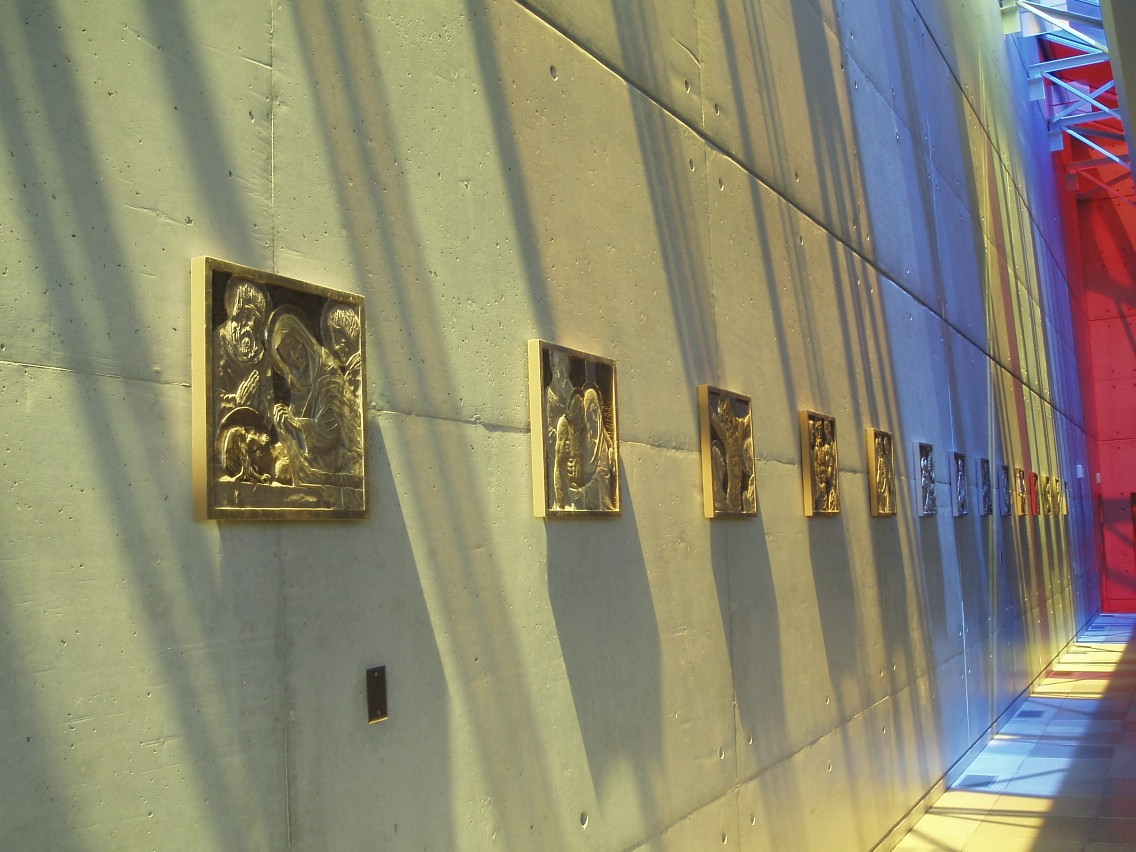
I’m spending a few days in Toronto with our Canadian Passionists, who minister at St. Gabriel Church, a new church built in 2006 which reflects the eco-theology of Fr. Thomas Berry, a Passionist who died a few years ago. He believed we need to foster a life enhancing relationship with the earth and the whole cosmos.

The church is located in a booming area along Sheppard Avenue in North York where high-rise condos and a new subway line are recent additions to this growing prosperous Canadian city. It’s a showplace for human technology and building skills. What better place for a  reminder of things beyond the human?

The church and its surroundings are almost swallowed up by the great buildings around it; a modest sign along busy Sheppard Avenus beckons you into St. Gabriels.

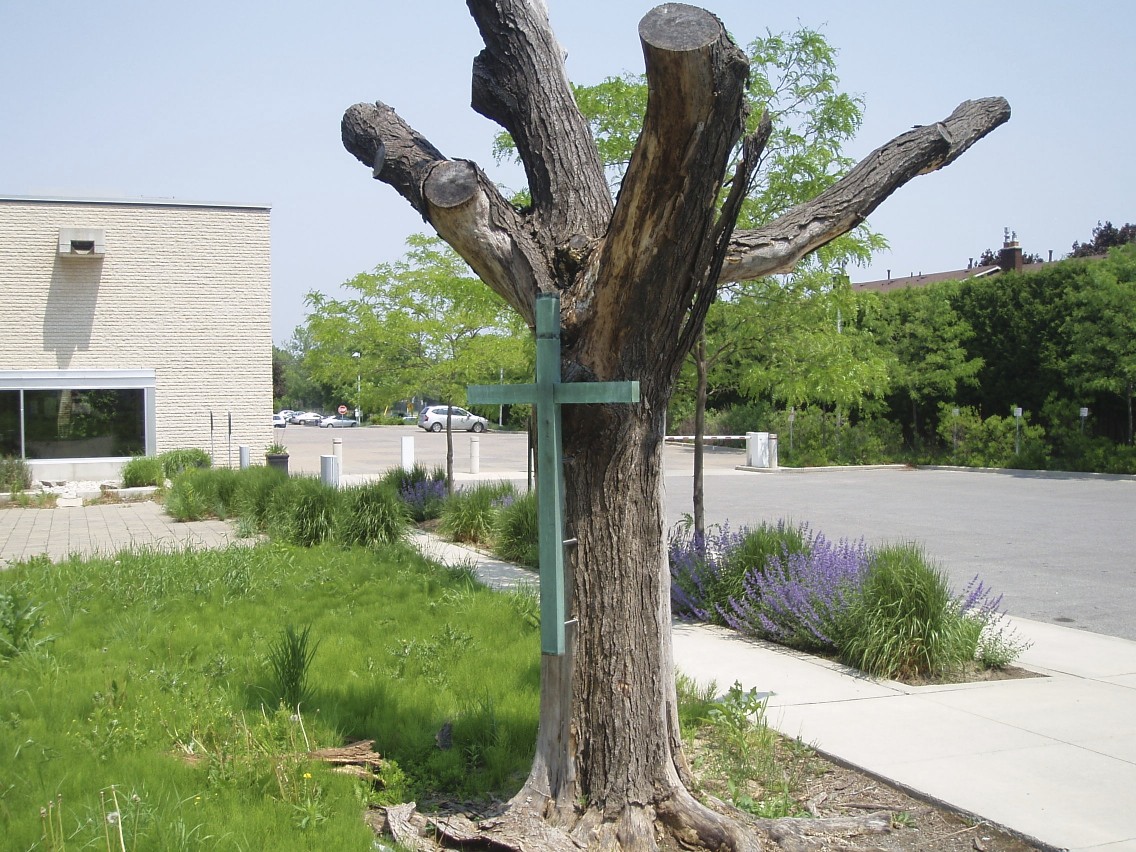
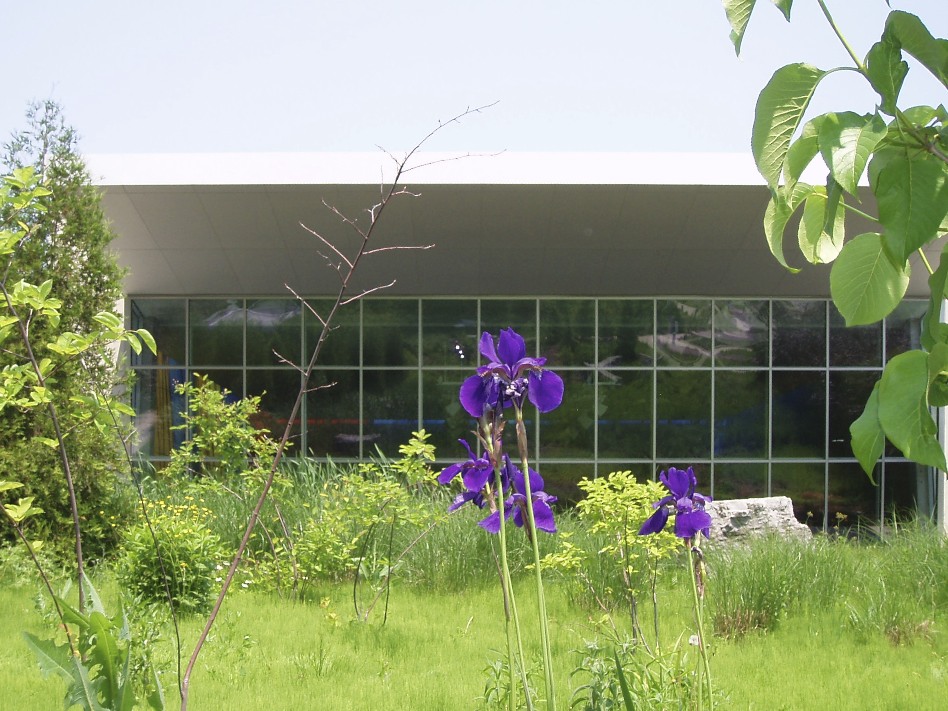
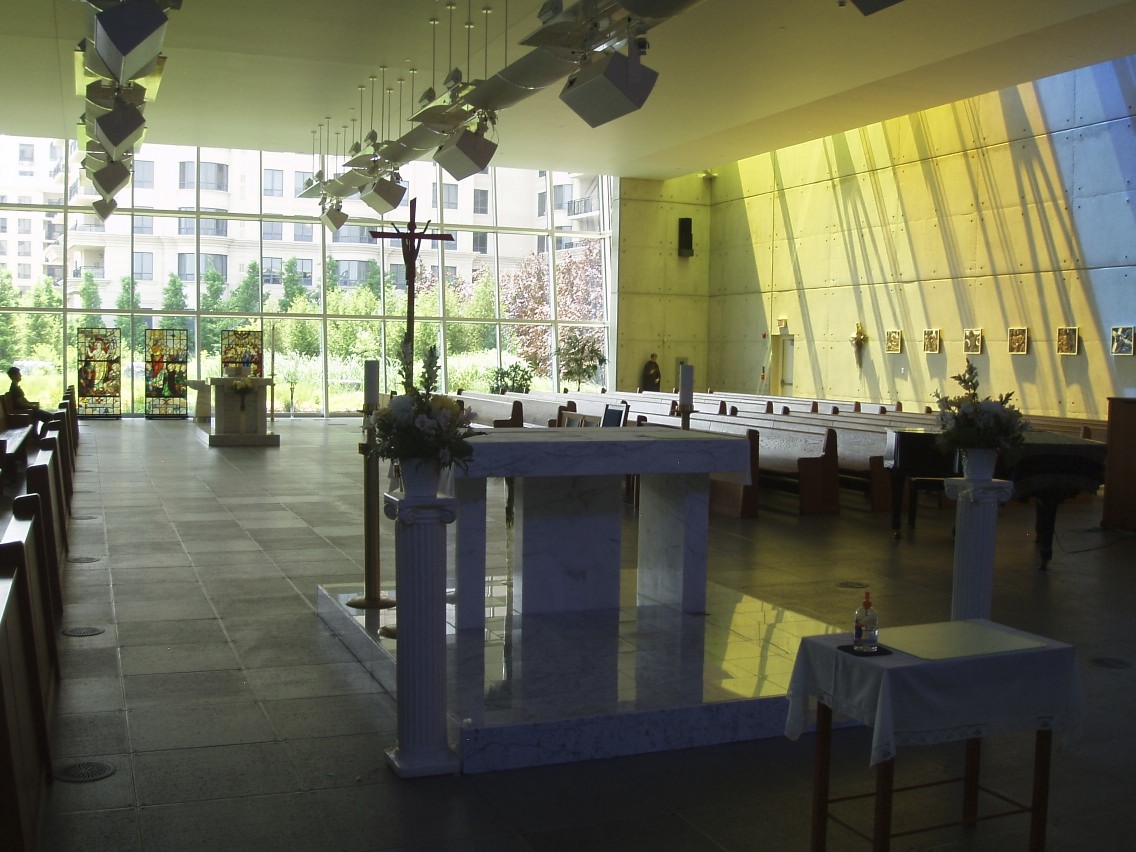
It’s not a church you would expect. No steeple skyward, no shrines of saints outside. A solitary statue of Christ stands on the roadway toward it. The entire south facade of the church is clear glass welcoming sunlight into the worship space within and a garden where the story of creation is retold from its beginning. Rocks, flowers, trees and grasses face the glass wall that dominates the new building,  A large tree trunk cut from a land development nearby stands at the edge of the outdoor garden, signed with a green cross. It signifies the Passion of the Earth, which the human community, recklessly exploiting the earth’s resources, has inflicted on the natural world.

Looming beyond the garden are the tall buildings of our modern human world.

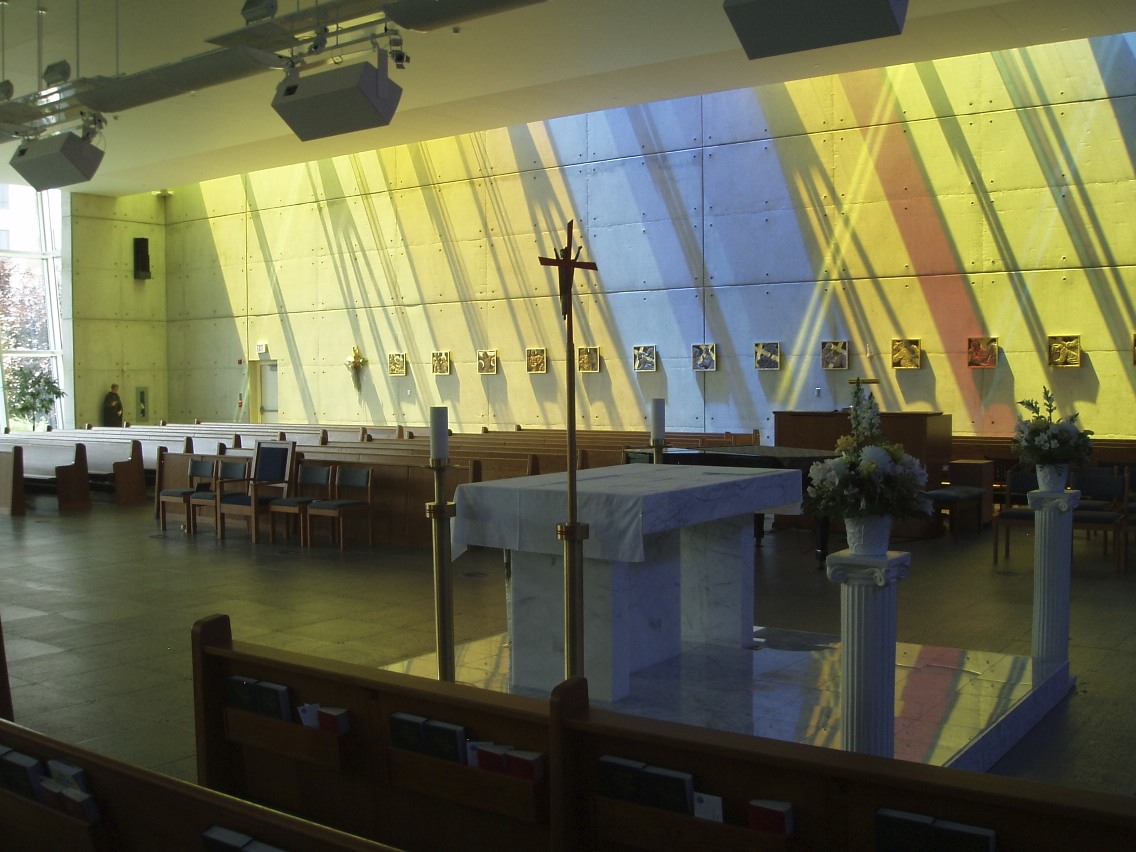
Sunlight through its expansive southern window and upper windows plays through the interior space of the church by day and over the seasons. This is not a church cut off from the world outside but in harmony with it.

The church pews, salvaged from an earlier church, are arranged antiphonally facing the baptismal fount near the southern glass wall, the ambo where the gospel is proclaimed, and the altar where the Eucharist is celebrated. A chapel where the Blessed Sacrament is reserved is situated in the northern part of the worship space. The Word who made the universe; the Savior sent to redeem us is present here in this church.

The baptismal fount, also from the earlier church, has water flowing from it; a rainspout on the outside southern wall delivers rainwater to a simple river bed below. The two remind us of our dependence on water as well as light.

The church seats 750 people; the present parish membership comes from all the continents and many nations. A parallel narthex provides a meeting place for these “living stones” who form the church today.

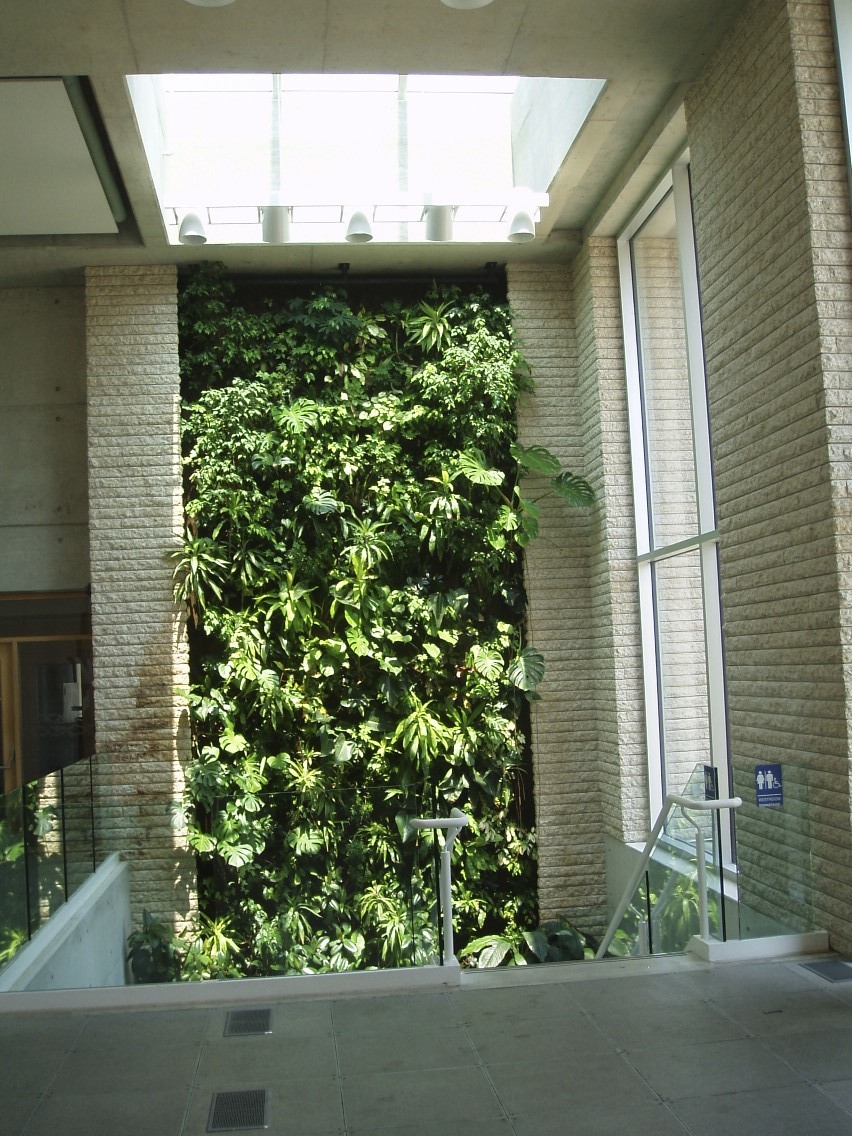
The church was built to be energy efficient. Most of its parking area is located beneath the church. Parishioners ascending from the underground parking face a large bank of plants, which serve to purify the air as well as remind them of the importance of the rain forests for the earth.

”Imaginative and creative,” Aloysius Cardinal Ambrozic, Archbishop of Toronto, Canada, called the new Passionist church of St. Gabriel, when he dedicated it on Sunday, November 19, 2006. The Jesuit magazine AMERICA featured the church in a recent issue on church architecture.

The parish website is http://stgabrielsparish.ca/

A Youtube video is here: http://www.youtube.com/watch?v=GasOYiK1l68

Walkin’ all over God’s Heaven

Jesus did not just come out of the tomb; he ascended to heaven. He rose from the dead and disappeared from our sight to return to his Father and our Father, his God and our God. The mystery of his ascension completes the Paschal Mystery. In his victory of death we have his promise of a life beyond this one.

When I was a boy, I remember my father buying a record player. It was the early 1940’s and times were hard; I’m sure he broke the family bank to pay for it. For a good while he only had a couple of those old vinyl records he would play over and over.

One of them was a haunting black spiritual sung by Marian Anderson called “Heaven.”

“I got shoes, and you got shoes, all God’s children got shoes.

When I getta heaven gonna put on my shoes

and gonna walk all over God’s heaven, heaven.

Everybody’s talking bout Heaven ain’t goin’ there.

heaven, heaven.  Gonna walk all over God’s heaven.”

I still feel the hope in that great singer’s voice as she sang that song. She was singing the song of barefooted slaves who were looking for something more. It wasn’t just a pair of shoes that would wear out after awhile. These were shoes God gave you in heaven, a place of completed dreams. Once you put on those shoes you could walk freely and walk everywhere.

Our readings for the Feast of the Ascension describe heaven as our final home, where all our dreams are realized, where tears are wiped away, where sadness is no more, where wrongs are righted, where reunion with those we love takes place, where we enjoy the presence of God and all the saints.

For now, we only have hints of heaven. We only have assurances of faith. However, it’s not enough to just talk about it, we must walk in the steps of Jesus. Walking in his steps brings us, not to a grave, but to the place where he is. That’s heaven.

Feast of Charles Lwanga and Companions


The martyrdom of St. Charles Lwanga and his twenty one companions in Uganda, Africa in 1885-86 was a decisive factor in the remarkable spread of Christianity in that continent that began in that century. The White Fathers reached that remote part of the world in 1879 and the Catholic missionaries succeeded in converting a number of native Africans, some of whom were servants of King Mwanga, a local Ugandan ruler. In 1885 King Mwanga began to persecute Christians.

Charles Lwanga was in charge of the pages in the king’s court. The king wanted some of the pages as sexual partners. When the Christian pages  refused he threatened them with torture and death.

Led by Charles, they rejected the king’s advances, and so the king summoned them to appear before him and asked if they were going to persist as Christians and deny what he asked. “Till death!” they answered.  “Then put them to death!” the king shouted.

On the road to their execution at Namugonga  three pages died. Many of the bystanders were amazed at the courage and calm of Charles and his companions.  On Ascension Day, 1886, they were wrapped up in mats of reeds and set afire for their faith. The following year an extraordinary number of Ugandans became Christian. The prayer for their feast  praises God for his graces to them:

Father, you have made the blood of martyrs the seed of Christians.

In today’s Office of  Readings, Pope Paul VI says their sacrifice opened a new page in the history of holiness in Africa. They join the 4th century Martyrs of Scilli (whose relics are now in the Passionist church of Saints John and Paul),  Cyprian, Felicity and Perpetua and other Christian martyrs and confessors from the past.  And he adds:

“Nor must we forget those members of the Anglican Church who also died for the name of Christ.” A recognition that holiness is found in other Christian churches too.

“These African martyrs herald the dawn of a new age. If only our minds might be directed not toward persecutions and religious conflicts but toward a rebirth of Christianity and civilisation!”


There’s Gonna Be a Great Day

6th Sunday of Easter

Last weekend in the New York area we were waiting for the end of the world. That’s what the signs in the buses and on billboards predicted. It was a message from Harold Camping, president of Family Radio, who calculated from clues he deciphered in the Bible that  May 21st was the day of judgment and later in October the world would finally come to an end.

Of course, it didn’t happen.

I must confess to being a long time viewer of Harold on his television program Open Forum, which comes on after the Evening News. Monday after the fateful day, I watched him respond to reporters asking for an explanation. The poor reporters didn’t have a chance. Harold has been dealing with questioners like them for years. They didn’t rattle him at all.

A spiritual earthquake occurred, Harold said. He hasn’t given up. The world’s going to end in October, just as he said.  He’s sure of it. I’m not.

I think my interest in Harold comes from his interest in the future when, according to traditional Christian belief,  Jesus “will come to judge the living and the dead.”

For Harold the last judgment is going to be like a scene from The Terminator and other grim science fiction movies that hold the popular imagination today.  The last days are dark days when God gets even with the human race for its sinfulness and unbelief. The world falls apart in scenes of horrible cosmic death and destruction. Not many will be saved.

We are living in tough times and some people think our world isn’t going to make it. That’s why they listen to people like Harold.

What we need to do is listen to the Easter message of Jesus. It’s so different. Listen to him speaking in the gospel today to his disciples who fear they will be abandoned and  wonder about their future. Their world was shaken too.

“I will not leave you orphans; I will come to you.”  “He will lead us to God,” St. Peter says. ( I Peter 3,18)  He gives us the Spirit of truth who will guide us from within. Jesus Christ is our Savior, a saving God.

Our first reading today describes a church experiencing a mysterious, unpredictable growth. From Jerusalem the gospel takes root in neighboring Samaria, an unlikely place to welcome it. From there it reaches to the ends of the Roman world. We believe that the mystery of the Resurrection of Jesus set in motion a great surge of grace.  God reaches out to creation, not to destroy it, but to bring it the blessing of life.

When we say Jesus will come to judge the living and the dead,  we’re not predicting death and rejection. God blesses all time with love. We don’t have to worry about the day or the hour for this to happen. God offers us signs that he is still with us and will stay with us all days. The Eucharist is one of them.

God is with us “now and ever shall be, world without end. Amen.”