Tag Archives: Passionists

Prayers teach us to pray

Prayers teach us how to pray. The collect for  this Thursday after Ash Wednesday is a simple prayer that says so much.  Listen to it:

Lord,

may everything we do

begin with your inspiration,

continue with your help

and reach perfection under your guidance.

We ask this through Jesus Christ, your Son, who lives and reigns with you and the Holy Spirit, One God, forever and ever.

Let’s recognize where we stand before God– empty-handed. And so we look for God to put something into our hand, to give the bread we need, inspire us. We start with nothing.

Then, we ask for help with what we are about now. We can’t continue without God.

Finally, God must guide us to complete what we are about in our lives. It’s not about what we want or plan,  but “your will be done.”

Yet, we pray with a sublime hope:

We ask this through Jesus Christ, who has shown us a God who loves us, who promises to make our prayer his own, who is our advocate, our Savior, our reward.

Reflecting on the Gospels


People came up yesterday after I gave my homily on the paralyzed man in church and said they liked to hear the scriptures, especially the gospels, explained in the light of archeology and the other historical sciences. I think this approach is a way of doing what older meditation methods called the “composition of place,” using one’s imagination and senses to enter the gospels and the scriptures.

Formerly, we would set a gospel scene as best we could, sometimes using the descriptions of mystics or artists who imagined the time and place as they would, often using the topography, the dress, the world they saw around them. Their depictions are still helpful, not so much because they accurately described things, but from the lessons they drew from their meditations.

The picture above from the 1500s or so of the beheading of John the Baptist is an example. Nothing like 1st century Palestine, but the little light in the distant sky tells us what the gospels say: God sees it all and will vindicate his prophet in the end.

Two engineers were listening to my talk yesterday. One said “There were two miracles in that story. Those fellows and the paralyzed man on the roof should have fallen through. No roof I know could have sustained that weight!”

And someone who knows insurance told me: “Peter wouldn’t have any worries if he had a good policy!”

I think we are on to something.

A Lenten Journey

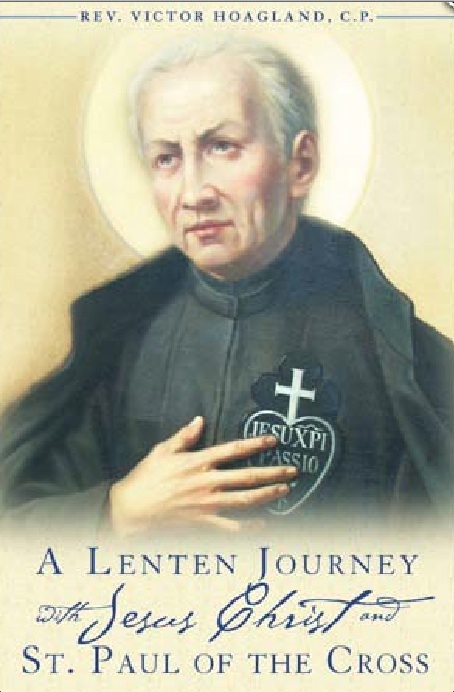
Last year I wrote “A Lenten Journey with Jesus Christ and St. Paul of the Cross” for Christus Publishing. It was a little late for last Lent but Lent is almost upon us and it’s available now on Amazon and Crossplace.com.

The book attempts to link St. Paul of the Cross with the Lenten season, an obvious connection for someone who loved the mystery of the cross. His spirituality responds well to the gospels we read during Lent.  Saints feed on the Word of God and he not only fed on it but preached it too. This book takes a look at his life and  spirituality and offers a daily reflection for each day of Lent based on the gospel of the day.

I hope to follow St. Paul of the Cross as he follows Jesus Christ in this season of grace and to use some excerpts from the book on this blog.

Lent is a journey that’s blessed. The church and the whole communion of saints take part in it.  Let’s make it together.

Lord, open my lips

We begin to pray with words like this. St. Ambrose explains what they mean in one of his explanations of the psalms. We are not asking just for help to pray:

“We must always meditate on God’s wisdom, keeping it in our hearts and on our lips. Your tongue must speak justice, the law of God must be in your heart. Hence Scripture tells you: You shall speak of these commandments when you sit in your house, and when you walk along the way, and when you lie down, and when you get up. Let us then speak of the Lord Jesus, for he is wisdom, he is the word, the Word indeed of God.
  It is also written: Open your lips, and let God’s word be heard. God’s word is uttered by those who repeat Christ’s teaching and meditate on his sayings. Let us always speak this word. When we speak about wisdom, we are speaking of Christ. When we speak about virtue, we are speaking of Christ. When we speak about justice, we are speaking of Christ. When we speak about peace, we are speaking of Christ. When we speak about truth and life and redemption, we are speaking of Christ.
  Open your lips, says Scripture, and let God’s word be heard. It is for you to open, it is for him to be heard. So David said: I shall hear what the Lord says in me. The very Son of God says: Open your lips, and I will fill them. Not all can attain to the perfection of wisdom as Solomon or Daniel did, but the spirit of wisdom is poured out on all according to their capacity, that is, on all the faithful. If you believe, you have the spirit of wisdom.”

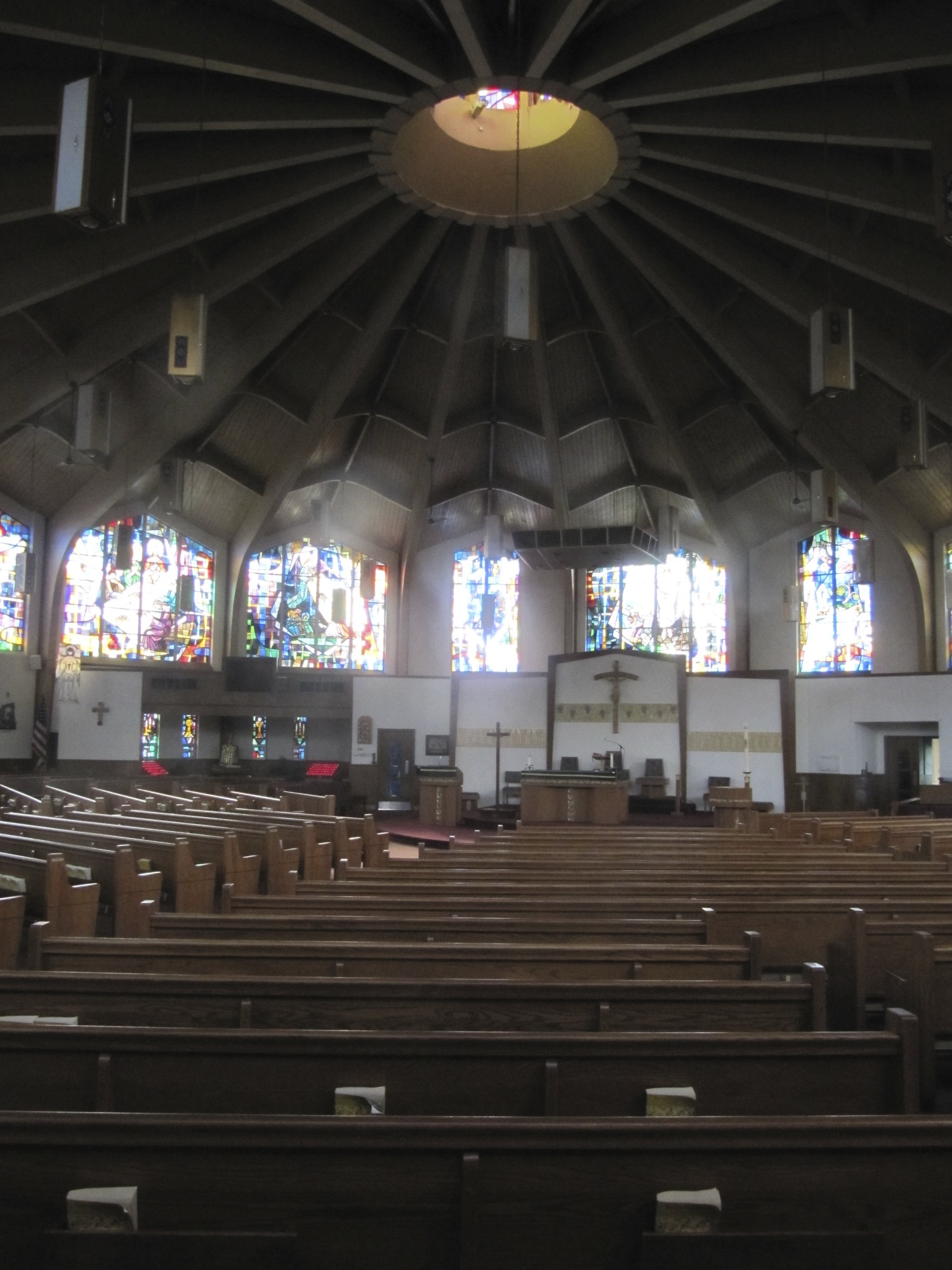
Holy Family Church, Nassau, Bahamas

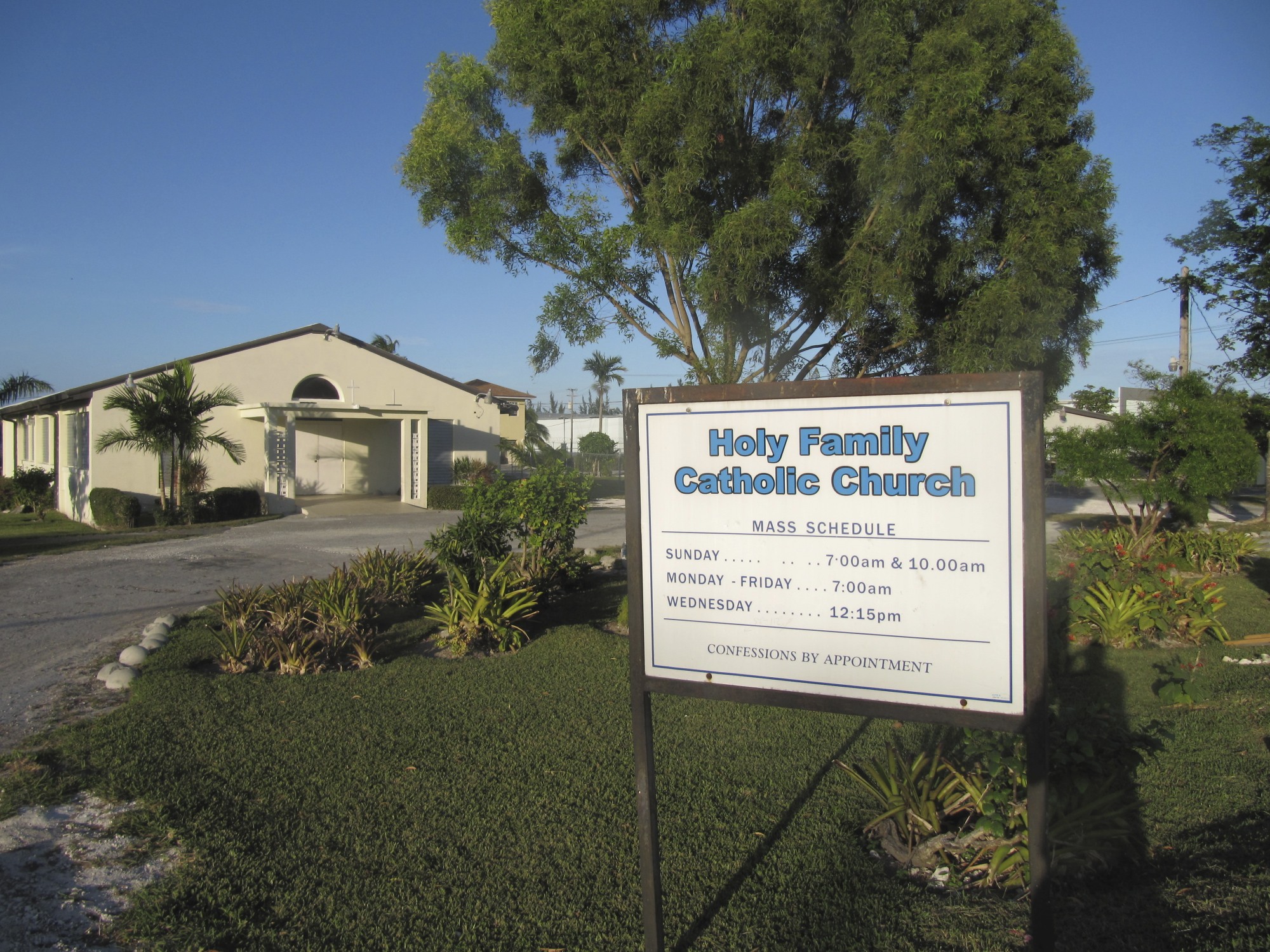
Today I began a Parish Mission at Holy Family Church in Nassau, Bahamas, on Robinson Road, a few miles in from the tourist area and beaches along Bay Street.

The two lively Masses this morning were filled and the singing was especially lively to my northern ears. It’s a growing area and Archbishop Pinder is planning a large new church here. Fr. Tom Brislin, CP, an American Passionist from my province is in charge of the building.

Holy Family Church


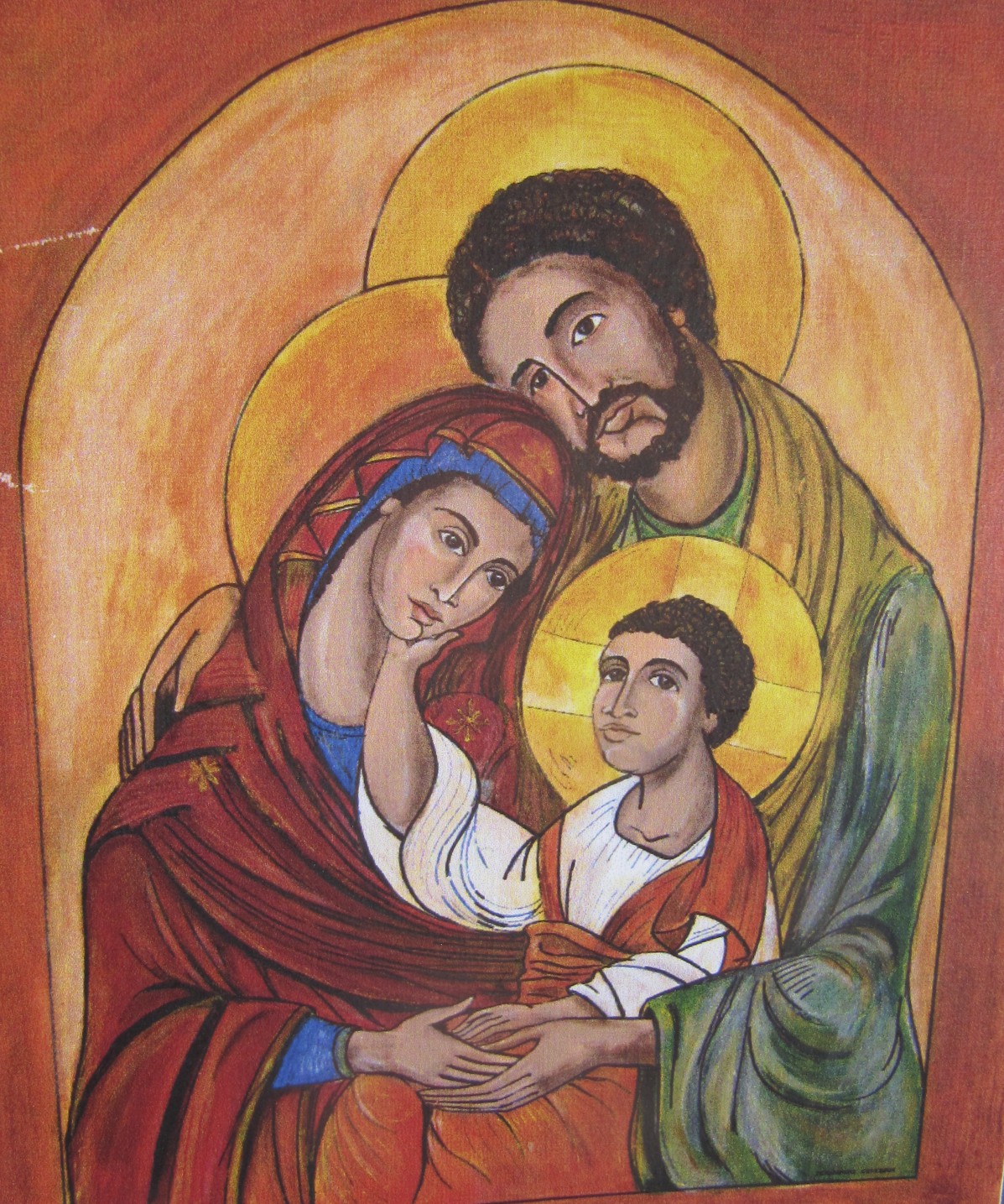
Here are some pictures of Holy Family. I include a beautiful painting given to Fr. Tom from an Argentinian painter who is working in the area.


I recommended this morning to the people at Mass that they  check out this blog because I’m going to preach on the great messengers of Advent: Isaiah, John the Baptist, and Mary of Nazareth.


The Benedictines from Collegeville, MN and the Sisters of Charity from New York were among the Catholic communities who worked in the Bahamas. I’ll put up some pictures of the churches and schools they built. The Catholic school system has been an important factor in the growth of these islands.

Fighting in Church

Today’s Office of Readings has the letter to the Corinthians by Pope St. Clement 1, written about 95 AD,  just after the last of the New Testament writings were written.

Fighting erupted among the members of the church in Corinth, once cared for by Paul the Apostle, who scolded them for the same thing. There’s slander and backbiting and complaining going on; people like to hear themselves talk, Clement remarks, quoting scripture: If you talk a lot you only hear yourself. A big talker thinks he’s always right.

The Corinthians were a scrappy bunch, it seems.

Clement tells them that their fighting makes the church look bad among their unbelieving neighbors. Who wants to belong to a community like that? Paul wrote to the Romans; I guess Clement thought he should write to the Corinthians.

Stop fighting among yourselves and do some good, the pope says. Obey your leaders, but above all, obey God. Bow down in respect before God and be silent before his holy will, as the Prophet Isaiah bowed silently  before the overwhelming presence of God in the temple.

“Our boasting and our confidence must rest on him. Let us be subject to his will. Look carefully at the whole host of his angels; they stand ready and serve his will. Scripture says: Ten thousand times ten thousand stood before him, and a thousand thousand served him, and cried out: Holy, holy, holy is the Lord of hosts; the whole creation is full of his glory.”

“Holy, Holy, Holy, Lord God of hosts…” We say at Mass. We bow down before God; our thoughts, our judgments, our plans are nothing before God’s thoughts, judgments and plans. We know so little. Be humble before your God, Clement says, then you’ll get along with your neighbor.

Good advice for all of us.

Clement’s letter also gives the earliest testimony to the deaths of Peter and Paul at Rome.

Following Jesus Christ: Oct 4, 2011

Tonight we look at the resurrection story from the Gospel of Matthew, a mystery at the center of our faith. As St.Paul said, “If Christ is not risen, your faith is in vain.”

The gospels not only proclaim the resurrection of Jesus from the dead but see this central mystery of our faith shaping the way we live and think. Each gospel also presents this mystery to the church of its time. If we look carefully, we can see its relevance for the church of our time too. That’s true particularly of the Gospel of Matthew.

What was the Jewish-Christian church in Palestine or Syria like about 80 AD  when Matthew wrote? The followers of Jesus, mostly Jewish-Christians,  were facing hard times. They were being confronted by a resurgent Judaism led by the Pharisees. At the same time, gentiles were accepting the message of Jesus and seeking baptism.  As it faced a large influx of  strangers and attacks from its own people, this predominantly Jewish- Christian church was to be radically changed.

Recall that the temple and the city of Jerusalem had been completely destroyed by the Romans in 70 AD, which caused many Jews led by the Pharisees to flee into Galilee and Syria and there begin to build up Judaism again. They saw the followers of Jesus, numerous in those regions, as a fringe group standing in the way of Jewish restoration, so a confrontation began. Jewish-Christians were being driven out of the synagogues in Galilee and a campaign was begun to discredit the Christian movement. Signs of that confrontation are evident in the chapters of Matthew’s Gospel.

This gospel responds to the situation by reminding Christians then that God’s plan is present even when things are uncertain. The Passion of Jesus is their guidebook. Did not Jesus live faithfully through the awful confusion of his arrest, his brutal treatment and his unfair death?  So, like him, should they face uncertainty and hardship. God brought him to new life; God would bring them to new life too.

The story of the Jewish guards at the tomb, unique to Matthew’s gospel, is an example of the Christian response to a story circulating at that time denying that Jesus rose from the dead, but claiming instead that his body was stolen by his followers.

You can see Matthew’s gospel, and all the gospels for that matter, insisting  that Jesus really died;  he experienced death in all its harsh reality. “My God, my God, why have you forsaken me?” he cries out after a long silence on Calvary. He was buried, then he rose again. Pilate and his soldiers become important, credible witnesses to his death and burial.

Jesus also really rose from the dead, Matthew’s gospel insists. Even as he died, the earth quakes, rocks are split and tombs we are opened.  An angel clothed like light sits triumphantly on the stone rolled away from an empty tomb. Death has been conquered.

What’s particularly interesting about Matthew’s resurrection account, however, is that  Jesus appears to his disciples, not in Jerusalem or at the tomb outside the city, but on a mountain in Galilee.  From there, he sends his disciples into the whole world to preach the gospel, baptizing in the name of the Father and of the Son and of the Holy Spirit.

It’s true that, as the women run from the tomb to tell the disciples,  Jesus briefly appears and they “took hold of his feet and worshipped him.” (Matthew 28,9) But they’re off quickly to tell his disciples to go to Galilee “and there they will see me.”

A neutral observer on the scene in Galilee and Syria in those days might reasonably judge the followers of Jesus of Nazareth to be in bad straits. They were losing in their confrontation with their Jewish opponents and were being pushed out of their synagogues and their homeland.   In the following centuries, Christianity hardly survives in Galilee, where Jesus began his ministry. After the fall of Jerusalem it becomes a Jewish stronghold.
But that’s not the story Matthew tells. The Risen Jesus appears on a mountain in Galilee urging his followers to a new global mission.  A new step is to be taken to bring about the kingdom of God.

The eleven* disciples went to Galilee, to the mountain to which Jesus had ordered them.

When they saw him, they worshiped, but they doubted.

Then Jesus approached and said to them, “All power in heaven and on earth has been given to me.

Go, therefore,* and make disciples of all nations, baptizing them in the name of the Father, and of the Son, and of the holy Spirit,

teaching them to observe all that I have commanded you. And behold, I am with you always, until the end of the age.” (Matthew 28,16-20)

Matthew doesn’t forget that the Risen Christ emerged from the tomb in Jerusalem, but he sees him bringing new life and direction to his struggling church and his struggling followers in Galilee. The Risen Lord is where his followers are, leading them on. He leads them into the future, uncertain as it is. He commands them to leave Galilee which now, instead of a place where his church seems to be dying, is a place of hope and new beginnings. From a mountain he points to a beautiful unknown.

Jesus is not a simply a figure of the past; the Risen Jesus constantly calls his followers onward and accompanies them to a wider mission. His call is by no means obvious, though. Matthew alludes to the chronic uncertainty of Jesus’ disciples: “When they saw him they worshipped, but they doubted.”

Matthew’s Gospel could have been written for our church today. The Risen Jesus makes our church– to most observers a church in crisis and severe decline–  a place of hope and new beginnings. He gives us “resurrection thinking” – the ability to look into the ruins and see beyond them.

Just as his disciples learned to see not death but resurrection in what happened during Jesus’ last hours , so we need to immerse ourselves in these mysteries to gain eyes that really see.

Mission: St. Clement’s Parish, Matawan-Aberdeen, NJ

We know from the gospels that Jesus used examples from his time to speak to the people of his day. Today’s readings tell us that.  Since Jesus lived most of his life in Galilee in northern Palestine, and most of the people he preached to were farmers who made their living on the land or fishermen fishing the sea, Jesus talked to people about fishing and their farms and vineyards and planting seeds.

So how would he speak to us now?  Would he Google the place?

I’m here for your parish mission for the next three days. Tonight, tomorrow night and Tuesday night at 7:30 PM.  I googled “Matawan” for information about your town, or borough, to use the right word, and Wikipedia said there are about 9,000 people here in Matawan. in a space of 2.3 square miles. The median age about 36.

In a New York Times article last year entitled 2 Lakes, the Shore and a Train to the City  the writer said that Matawan was a good place to live, to bring up kids,  close to the train, close to the shore, close to the water. The statistics say you’re more prosperous here than other parts of the country, but the 2000 census did say that 5.5 of your population were below the poverty line. I’d guess that might be greater these days.

Now, I don’t think that Jesus, if he came here to talk to you, would go on a lot about statistics. The gospels say he urged people to be grateful to God for what they had.  Don’t forget God who gave you everything; God should be at the center of your life.

Be like your Father in heaven, aim high. Live a grateful life and love the way God loves.

The gospel also says that Jesus was not someone who was always calling people out. He saw the heartbreak, the sorrow, the sickness, the pain that’s present in everyone, no matter where they live. He saw sinners. Sinners are those who get life wrong. He spent a lot of time with them. He’s God’s face for us to see.

For the next few evenings I’ll be using the Gospel of Matthew to follow Jesus Christ through the last days of his life and his appearances as Risen from the dead. These are the most important parts of the gospel.  We’ll  follow him as disciples, which means we’ll learn from him, our teacher and Lord, how to live today from the way he lived yesterday.  I’ll go slowly through the scriptures step by step, so if you come to these evening sessions might be good to bring a bible along.

I hope this mission helps us to appreciate Jesus Christ and give us a greater appreciation for the scriptures that speak of him. In our church today, the scriptures have become our catechism and our prayerbook.

But you know as well as I that many don’t read the scriptures much or understand them too.

An article in a recent issue of the Jesuit magazine, America, (http://www.americamagazine.org/content/current-issue.cfm?issueid=786) discussed the way American Catholics read the scriptures. Actually, they don’t read them much or know much about the writings we call the Word of God, the author, Brian B. Pinter, says. Also, Catholics who do read the scriptures, may read them literally, like fundamentalists. But the Pontifical Bible Commission in 1993, Pinter points out, warned that  “Fundamentalism actually invites people to a kind of intellectual suicide.”

Last summer the pope urged Catholics to take up and read the scriptures. It wasn’t a pious wish, he was dead serious. The scriptures are the Word of God that nourish our faith and help us know God’s will.

A couple of weeks ago was catechetical Sunday, when parishes began their religious education programs for the year. Most of these programs are for our young people.  But you know religious education involves more than young people. All of us are called to grow in our faith and live what we believe.

Unfortunately, adults may think that faith is something you learn as a child in school or in a religious education program and you never have to learn about it again.

The Catholic writer Frank Sheed once said the problem with adult Catholics is that they don’t keep engaged in the faith they learned as children. He used the example of our eyes. We have two eyes. Let’s say one of them is the eye of faith; the other is the eye of experience.

As children, in religious education we may  see the world with two eyes; but as adults we may see the world only with the eye of experience. And so we lose the focus that faith gives, another dimension. We won’t see right. Faith helps us to see.

“You are all learners,” Jesus said. It’s not just children who learn, all of us learn. We are lifelong learners. Lifelong believers, engaged believers, struggling believers, even till the end.

So, I invite you to our mission this week as lifelong learners. Some of you may not be able to make it, but let me make a deal with you. How about doing a little online learning? I have a blog on the web called “Victor’s Place.” I’ll put up some material from our mission every day, starting with this homily. If you can’t get here yourself, or have a neighbor who wont darken the church door, or have a daughter in California who’s not going to church, take a look at “Victor’s Place.”

You saw me bring up a cross at the beginning of Mass and put it next to the pulpit. That was to remind me and to remind you that Someone Else is here speaking during these days of mission. The Lord is with us. He wants to speak to us here in this place where 9,000 people live, a place of  “2 Lakes, near the Shore and a trainride to the City.”

The mission services, a short catechesis, a longer reflection on the scriptures, hymns, prayers and Benediction of the Blessed Sacrament will be about 1 hour. Sunday, Monday and Tuesday Nights at 7:30.

I’ll be celebrating the morning Masses on Monday and Tuesday at 8 AM  and preaching a short homily. Afterwards I’ll be available for confessions.

Fr. Victor Hoagland, CP

vhoagland@mac.com

mission poster 2

.

Is the Church Dying?

Pope Benedict’s talk to German Lay Catholics at the end of his visit to that country this September addressed the decline in church membership and structures. Providence is at work the pope said. God is cleansing the church from worldliness for the next step in its mission.

“ One could almost say that history comes to the aid of the Church here through the various periods of secularization, which have contributed significantly to her purification and inner reform.

“Secularizing trends – whether by expropriation of Church goods, or elimination of privileges or the like – have always meant a profound liberation of the Church from forms of worldliness, for in the process she has set aside her worldly wealth and has once again completely embraced her worldly poverty. In this the Church has shared the destiny of the tribe of Levi, which according to the Old Testament account was the only tribe in Israel with no ancestral land of its own, taking as its portion only God himself, his word and his signs. At those moments in history, the Church shared with that tribe the demands of a poverty that was open to the world, in order to be released from her material ties: and in this way her missionary activity regained credibility.

“History has shown that, when the Church becomes less worldly, her missionary witness shines more brightly. Once liberated from her material and political burdens, the Church can reach out more effectively and in a truly Christian way to the whole world, she can be truly open to the world. She can live more freely her vocation to the ministry of divine worship and service of neighbour.

“The missionary task, which is linked to Christian worship and should determine its structure, becomes more clearly visible. The Church opens herself to the world not in order to win men for an institution with its own claims to power, but in order to lead them to themselves by leading them to him of whom each person can say with Saint Augustine: he is closer to me than I am to myself (cf. Confessions, III, 6, 11).”

We need wisdom like this to face decline in the Church and its institutions today.

What Do The Scriptures Mean?

An article in a recent issue of the Jesuit magazine, America,  discussed the way American Catholics read the scriptures. Actually, they don’t read them very much or know much about the writings we call the Word of God, the author, Brian B. Pinter, says. Also, many Catholics who do read the scriptures, read them  literally, like fundamentalists. But the Pontifical Bible Commission in 1993, Pinter points out, said  “Fundamentalism actually invites people to a kind of intellectual suicide.”

Last summer the pope urged Catholics to take up and read the scriptures. It wasn’t a pious wish, he was dead serious. As the Word of God the scriptures nourish our faith and help us know God’s will. The scriptures are our new catechism and our new prayerbook.

I like Pope Benedict’s books “Jesus of Nazareth” because he takes seriously what the scriptures and biblical studies today say about Jesus. Those books–and others like them– are worth reading if you want to learn how to read the Word of God. There’s also some good advice about reading the bible on the website of the American Catholic Bishops.

But don’t forget to begin with the scriptures themselves. Get to know them, their stories, their words and images. A good way to start leaning the scriptures is to let them be your teacher, let one part teach you about another part.

For example, this Sunday’s reading from the Gospel of Matthew is about the two sons going out into the vineyard. One says right off to his father, “I won’t go” , but eventually he goes. The other says “Sure I’ll go”, but he doesn’t. That story begins with the note that Jesus said this to the chief priests and elders of the people who weren’t responding to the invitation to believe in him.

We may shake our heads and say, “It’s too bad they failed to answer the call of Jesus.”

But a further question is, “And what about me? Do I just shake my head at them?” That story’s meant for me too.

There are other sons mentioned in scripture who may help me out.  The prodigal son and his brother come to mind. The two thieves on the cross, brothers in crime, also come to mind.

Jesus didn’t recall the story of the two sons to the Jewish leaders to condemn them, but to wake them up. His words are for me too. God calls me everyday to go out my door into my world and do his will. It’s an everyday call. Do I say “yes!” More importantly, do I mean it!