Tag Archives: Passionists

Timothy and Titus: January 26

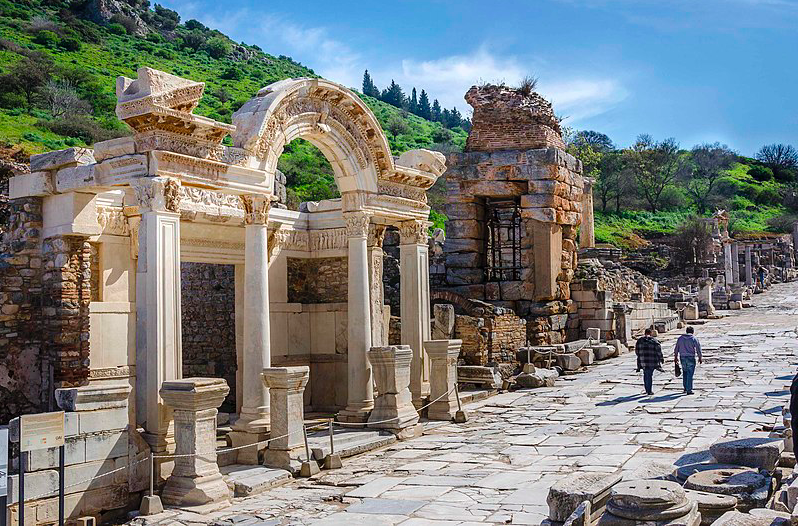
Ephesus, Main Street, Wikipedia Commons

Timothy and Titus were companions of St.Paul on his missionary journeys and continued his mission. Timothy led the church at Ephesus; Titus assumed leadership of the church in Crete. Paul wrote letters of advice to them: one letter to Titus and two letters to Timothy, most likely written from house arrest in Rome.

Like Jesus, Paul never saw himself handing on a church that was completely developed. He ministered to a church evolving from a “way”, a movement, to a church settled in places like Ephesus and Crete. He had men and women companions at his side.

Timothy and Titus were important companions who represent another stage in Paul’s ministry.  While Paul and other apostles went out to the nations, the church had to be firmly established in every place they visited. The roles of bishops, priests and other ministries evolved to fulfill that task. A local church needed to be organized. The church is missionary, global, sent by Jesus to the nations, but it’s also local, part of a town. city, neighborhood.

The feasts of the Conversion of Paul and Timothy and Titus represent those two aspects of the church.

Paul’s  advice to Timothy is especially interesting. “Stir into flame the gift of God that you have through the imposition of my hands. For God did not give us a spirit of cowardice, but rather of power and love and self-control. So do not be ashamed of your testimony to our Lord, nor of me, a prisoner for his sake; but bear your share of hardship for the Gospel with the strength that comes from God.”

Is Paul trying to bolster Timothy’s confidence as he loses a powerful mentor. Timothy needs the gift of God to make the church in Ephesus a flourishing local church. 

Timothy and Titus were given “apostolic virtues” by God to continue the work of Paul and the other apostles, the opening prayer of their feast says. And “May we merit to reach our heavenly homeland” by “living justly and devoutly in this present age.” Like them “we” also are given a task –to work for the church’s growth and development in this present age.

Let’s remember them as our mentors, mindful that God “ does not give a spirit of cowardice, but rather of power and love and self control.” Like the two followers of Paul, we have to hold on to what we’re given and continue their work: “Go into all the world, and proclaim the gospel. I am with you always, says the Lord.”

I see in the notes in the American Bible that the deacons Paul refers to in I Timothy 3, 8-13 may include women as well as men. “This (deacons) seems to refer to women deacons, but may possibly mean the wives of deacons. The former is preferred because the word is used absolutely…”

Why not today? We need women in roles of leadership. I have some in mind who would fit the role very well. I wonder if Timothy’s mother Eunice and grandmother Lois found a home and were involved there. I wonder what my mother would say.
Paul in Sin City

We’re reading Paul’s First Letter to the Corinthian for the next few weeks at Sunday Mass. Paul wrote a number of letters to the Christian community he founded after reaching Corinth about the year 50. It was the most exasperating community Paul dealt with, but the Corinthians made him think about faith, so we can thank them for keeping Paul on his toes.

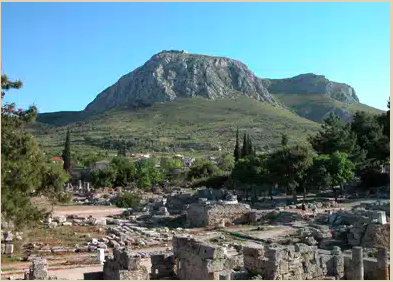
Corinth was a rich, sprawling seaport, being rebuilt as Paul arrived, a frontier city attracting ambitious people from all over the Roman world. They were people who wanted to get ahead. Corinth was a city of “self-made” people; only the tough survived there. It was also a center for prostitution and sexual commerce. We could call it a “sin” city.

Maybe that was a reason why Paul wanted to establish a church there. He was God’s apostle to the Gentiles. Where could be better meet Gentiles than a seaport connected to the whole world. If Christianity could take root there, it could take root anywhere.

When Paul arrived there around the year 50 AD, he did what anybody has to do when they go to a new place– find a place to stay and get a job. He stayed in the house of Prisca and Aquila, a Jewish Christian couple who owned a small shop in Corinth. He worked as a tentmaker in their shop. He met people, and Paul spoke to them of Jesus Christ, and they believed.

Then on the Sabbath in the synagogue he made contacts too, but I think Paul probably did most of his preaching while working. A lot of things can happen when you are working.

To form new believers, Paul asked some of his friends with large houses to hold meetings there. A lot of things happen in homes that don’t happen in church.

Paul generally founded a church and moved on. But when he moved on, troubles often started in many of those communities, so sometimes he wrote letters, and sometimes he had to come back himself to try to straighten things out. There were some grave problems in the church at Corinth. The church was split into factions, based on wealth, status and friendship. It also was confused about sexual morality.

Paul reminded the Corinthians where they came from and who they were. Not many of you were wise or well-born, he told them. God chooses the weak things.

God still does.

Saint Francis de Sales, January 24

Francis de Sales, Bishop of Geneva in the 16th century, had a wonderful approach to holiness. He believed in the uniqueness of every person and recognized the variety of ways God works in people’s lives. That led him to believe in respect and dialogue, especially with someone who doesn’t think like you or is from another religious tradition.

Some years ago, I visited a church in Geneva, Switzerland, center of Calvinism in the 16th century, where Francis was the Catholic bishop. A statue in that church (above) pictures him holding a book and a pen in his hand – not a sword.

Geneva was a city of swords then, real and verbal;  religious differences led to conflict and even bloodshed. Francis believed instead in peaceable dialogue.

Dialogue did not mean for him abandoning your own beliefs or being silent about them. It meant examining and measuring your own beliefs more deeply while listening carefully and respectfully to the beliefs of others to find the truth.

Francis de Sales prepared the Catholic Church for the approach to ecumenism it would take in the 20th century at the Second Vatican Council. He would certainly support the ecumenical movement today.  

 The spiritual writings of Saint Francis de Sales have become classics. Here’s something from  “An Introduction to a Devout Life” that reveals the way he thought and taught. God works in quiet ways, as we see in creation itself.

DSC00154

“When God the Creator made all things, he commanded the plants to bring forth fruit each according to its own kind; he has likewise commanded Christians, who are the living plants of his Church, to bring forth the fruits of devotion, each one in accord with his character, his station and his calling.

“I say that devotion must be practised in different ways by the nobleman and by the working man, by the servant and by the prince, by the widow, by the unmarried girl and by the married woman. But even this distinction is not sufficient; for the practice of devotion must be adapted to the strength, to the occupation and to the duties of each one in particular.

“Tell me, please, my Philothea, whether it is proper for a bishop to want to lead a solitary life like a Carthusian; or for married people to be no more concerned than a Capuchin about increasing their income; or for a working man to spend his whole day in church like a religious; or on the other hand for a religious to be constantly exposed like a bishop to all the events and circumstances that bear on the needs of our neighbour. Is not this sort of devotion ridiculous, unorganised and intolerable? Yet this absurd error occurs very frequently, but in no way does true devotion, my Philothea, destroy anything at all. On the contrary, it perfects and fulfils all things. In fact if it ever works against, or is inimical to, anyone’s legitimate station and calling, then it is very definitely false devotion.

“The bee collects honey from flowers in such a way as to do the least damage or destruction to them, and he leaves them whole, undamaged and fresh, just as he found them. True devotion does still better. Not only does it not injure any sort of calling or occupation, it even embellishes and enhances it.”

You can find this spiritual classic online here.

The opening prayer in today’s liturgy asks God to give us too  Francis’ gentle approach to life: 

O God, who for the salvation of  souls willed that the bishop St. Francis de Sales become all things to all, graciously grant that, following his example we may always display the gentleness of your charity in the service of our neighbor. Through Christ our Lord. Amen.

A good prayer and a good saint for our contentious times. 

St. Agnes, January 21st.

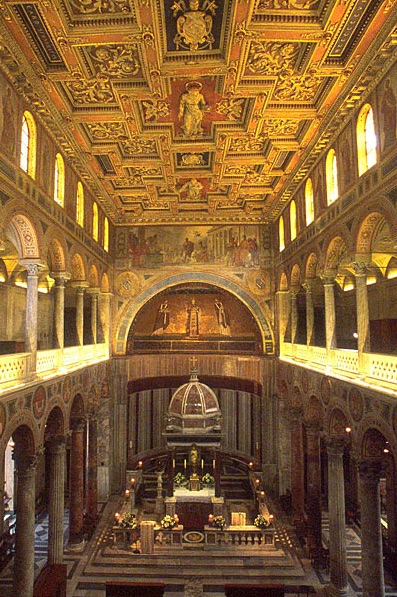
Church of St. Agnes, Rome

Church of St. Agnes, Via Nomentana. Rome

Agnes, a popular Roman woman martyr of the 3rd century, ranks high among the seven women mentioned in the First Eucharistic Prayer. “Agnes, Cecilia, Anastasia…”

That prayer goes back to St. Gregory the Great in the 6th century. Some say his mother and aunt may have promoted the women, all strong women who died for their belief. They come from all parts of the church of their time. Felicity and Perpetual are from North Africa, Agatha and Lucy from Sicily, Agnes and Cecilia from Rome, Anastasia originally from Greece.

Details of the story of Agnes, from 5th century sources, may be questioned, but the essential facts about her are true.

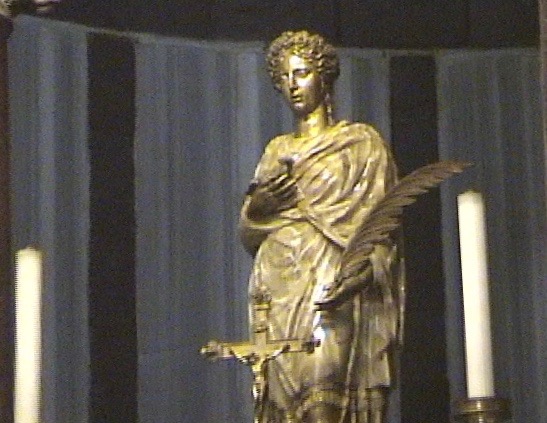
St. Agnes, Via Nomentana

A young Roman girl of 13 or so,  Agnes was put to death because she rejected the offer of a highly placed Roman man to become his bride. Incensed, he tried to force Agnes to change her mind; eventually she died for continuing to refuse him.

Women were expected to marry young in those days, to marry men chosen for them, and to have two or three children. They were to produce children for Rome, especially soldiers needed for the empire’s many wars.

Agnes’ refusal then to marry one of Rome’s elite was a dangerous decision. With no support from family or friends, alone in a male-dominated society, at a time suspicious of Christians and their beliefs, the little girl sought strength in Jesus Christ. She was a martyr put to death for her faith.

The Golden Legend, a favorite saint book  from the Middle Ages, says that Agnes was true to her name. She was a lamb (Agnus) who followed the Good Shepherd. Though young, she followed truth, never turning away from it. God gave her strength beyond what’s expected for her years.

The story says they put Agnes among the prostitutes found near the racecourse then on the Piazza Navona in Rome. God warded off those who tried to rape her. A church in her honor stands today in the busy piazza; another church over her grave is on the Via Nomentana in Rome. (above)

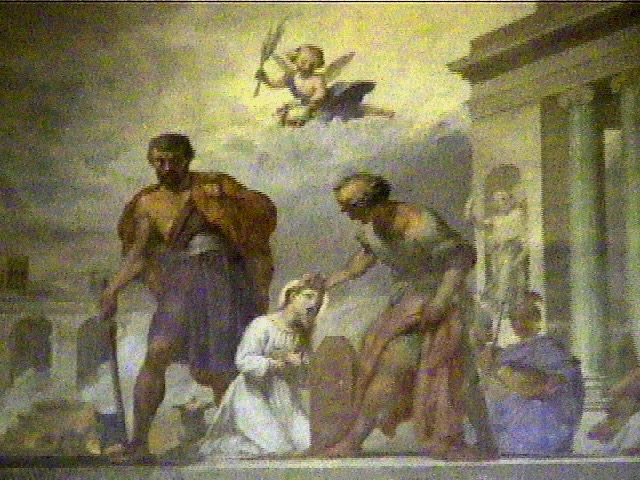
They finally killed her with a knife to her throat. Heavenly signs surrounded Agnes even then, her story says, assuring her that her faith was not in vain. The One she loved was with her as she struggled.


Agnes, the prayer for her feast says, is an example of how God chooses “what is weak in this world to confound the strong.” The young girl was stronger than her powerful killers.  “May we follow her constancy in the faith, through our Lord Jesus Christ, who lives and reigns with you, in the unity of the Holy Spirit, one God, forever and ever. Amen.”

Martyrdom of Agnes

Praying for Christian Unity

We celebrate a Week of Prayer for Christian Unity every year from the 18th to the 25th of January.

Pope Francis, speaking about ecumenism, said that like the Magi, whom tradition represents as representatives of diverse cultures and peoples, Christians today are “challenged to take our brothers and sisters by the hand… and move forward together.”

Some of the journey together is easier than others, the pope noted, like works of charity together, for example. which draw us closer not only to the poor but to one another.

On the other hand, the journey toward full unity is sometimes more difficult, which “can lead to a certain weariness and temptation to discouragement.

Pope Leo has taken up the same cause dear to Pope Francis. He has called all the Christian churches to celebrate the anniversary of the foundation of Christianity in Jerusalem in the year 2033.

The restoration of unity among all Christians is one of the principal concerns of the Second Vatican Council.” (Decree on Ecumenism n.1). Ecumenism affects the mission of the church, because the division of Christians prevents the preaching of the gospel and deprives many people of access to the faith” (Ad Gentes, n. 6). Divisions among Christians cause a confusion that hinders people from accepting the gospel today.

Passionist Father Ignatius Spencer, an early pioneer in ecumenical activity, strongly urged more prayer together. Might be a good idea to consider . How can we do it? How can we prepare for the year 2033?

Believing for Others: Mark 2:1-12

Readings for the Day https://www.vaticannews.va/en/word-of-the-day.html

The healing of the paralytic told in today’s gospel from Mark is a great story.(Mark 2: 1–12) Four friends bring him to the door of Peter’s house in Capernaum but the crowds are so dense that they can’t get in to see Jesus so they climb up on the roof, cut a hole in it and lower him down before Jesus. Was the paralyzed man conscious, or half conscious? We don’t know.

What ingenuity! What nerve! What determination on the part of his friends! Think of the logistics involved in it all.

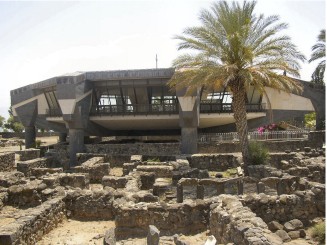
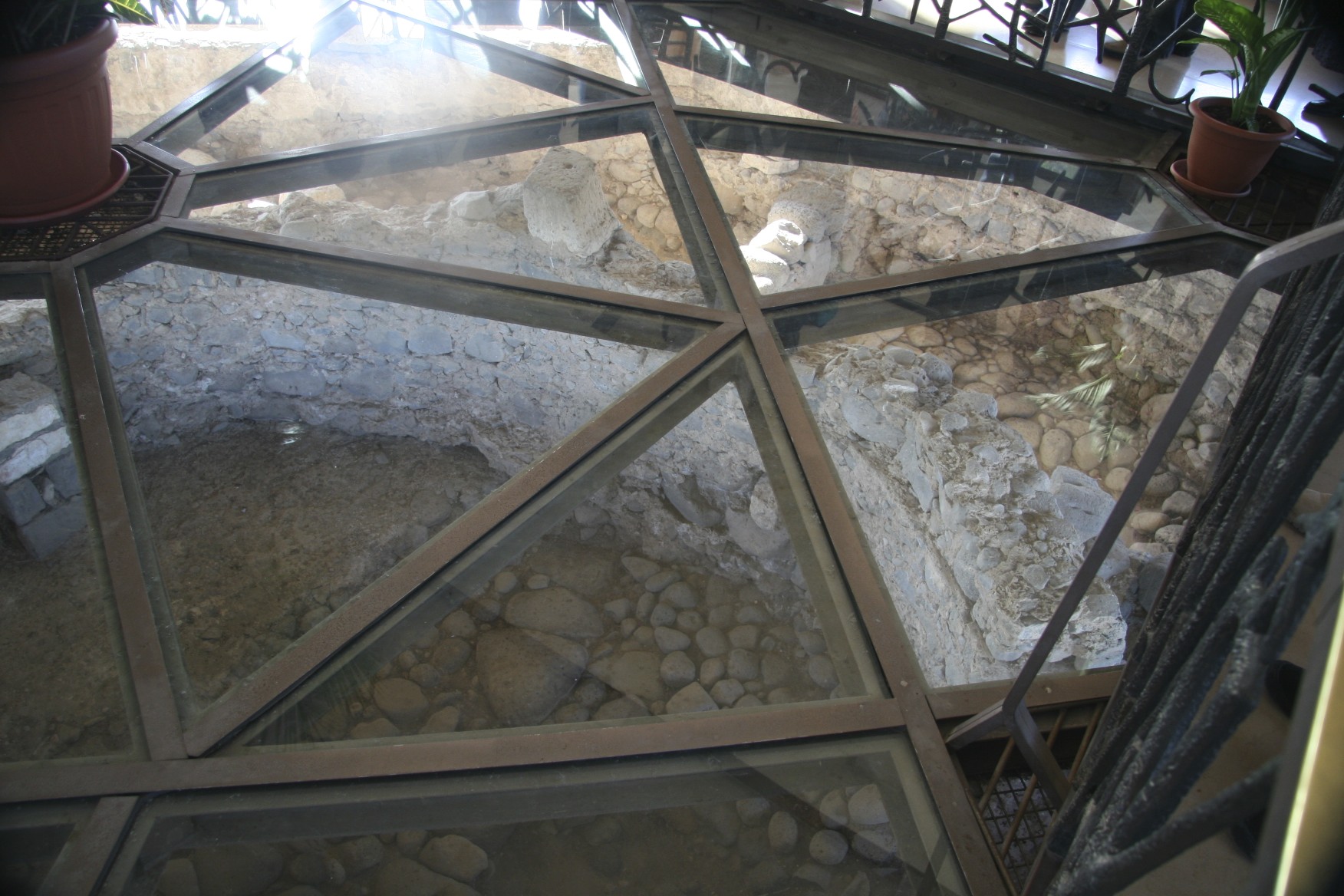
The picture above show the ruins of Peter’s house in Capernaum, now enclosed in a shrine. From a chapel above you can look down into Peter’s house below –possibly just where the man was lowered down. The picture at the beginning of our blog is also from that chapel.

We know Jesus forgave the man’s sins and then healed him completely, so he left the house carrying the mat that once bore him. The gospel story tells us that Jesus the healer is Jesus who forgives sins. Some who heard his words of forgiveness that day were shocked by this action which they rightly judged was divine.

But I’m led back to the four friends who had a part in this miracle. Let’s not forget them. They believe and their belief makes them go to extraordinary lengths to help someone .  Faith reaches out; it doesn’t remain within. We believe for others as well as for ourselves.  Believing prompts us to do daring things for others.

Back to Peter’s house. Did Peter look up that day and say, “Who’s going to pay for that hole in the roof?” The story of the paralyzed man is a wonderful story. But it also has an ominous part to it. Scribes, sitting in judgment, call Jesus a blasphemer for pronouncing sins are forgiven. Opposition to Jesus begins to build and it leads to his death.

The Land Where Jesus Lived

photo
Bethany, outside Jerusalem

“To what shall we compare the Kingdom of God,
or what parable can we use for it?”  ( Mark 4, 30)  Jesus turned to the land where he lived and the life around him to answer that question.

So what was the land where he lived like? It was a land of olive trees near Bethany outside Jerusalem, but if you went eastward to Jericho and the Dead Sea, it was mostly a barren desert. Then, from Jericho to Galilee the land turns from desert to lush farmland. A changing land.

IMG_0467
Jordan Valley

Jesus experienced a changing land from Nazareth to the Jordan River and then the Sea of Galilee. Like us, he was influenced by the place and life around him.

In a book written in the 1930s Gustaf Dalman, an expert on the geography and environment of Palestine, observed that when Jesus went from the  highlands of Nazareth, 1,100 feet above sea level to the fishing towns along the Sea of Galilee, 680 feet below sea level, he entered a different world.

For one thing, he ate better – more fish and nuts and fruits were available than in the hill town where he grew up. He looked out at the Sea of Galilee from the towns he visited. Instead of the hills and valleys around the mountain village of Nazareth, he saw a great variety of birds, like the white pelicans and black cormorants challenging the fishermen on the lake. He saw trees and plants and flowers that grew abundantly around the lake, but not around Nazareth.

Instead of the chalky limestone of Nazareth, Jesus walked on hard black basalt, which provided building material for houses and synagogues in the lake region. They were sturdy structures, but they were dark and drab inside. They needed light. Light on a lampstand became one of his parables. (Mark 4,21)

Basalt also made for a rich soil where everything could grow. “… here plants shoot up more exuberantly than in the limestone district. Where there are fields, they yield a produce greater than anyone has any notion of in the highlands.” (Dalman, p123)

DSC00027
Farmland in Galilee

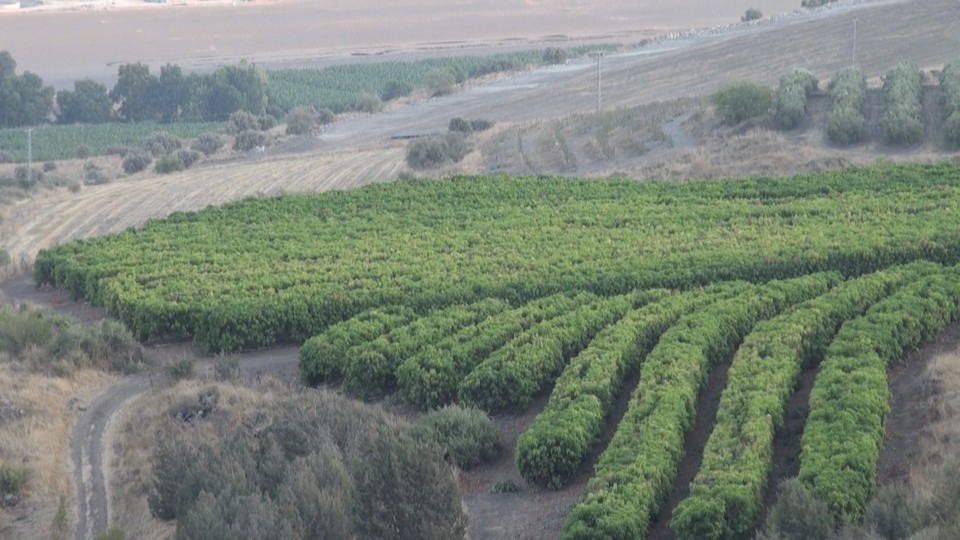
The volcanic soil on the land around the lake produced a rich harvest. The Jewish historian, Josephus, praised that part of Galilee for its fruitfulness, its palm trees, fruit trees, walnut trees, vines, wheat. But thistles, wild mustard, wild fennel grew quickly too and could choke anything else that was sown. The land around the Sea of Galilee was fertile then; even today it has some of the best farmland in Palestine.

fields
Soil near the Sea of Galilee

The weather in the Lake District was not the same as in the mountains, warmer in winter, much hotter and humid in summer, which begins in May. “It is difficult for anyone used to living in the mountains to work by day and sleep by night…Out of doors one misses the refreshing breeze, which the mountains along the lake cut off…one is tempted to think that Jesus, who had settled there, must often have made occasion to escape from this pitiless climate to his beloved mountains.” (Dalman, p. 124)

You won’t find these observations  in the gospels, of course, but they help us appreciate the world in which Jesus lived and the parables he drew from it.  He was influenced by where he lived, as we are.

And what about us? What wisdom do we draw from the world we live in? What do we see day by day? What’s life like around us? We’re experiencing climate change now, aren’t we? It’s going to influence our spirituality, how we see, how we live, how we react to life.

May we gain wisdom from our time and place.

Calling Disciples:Mark 1:14-20

DSC00036
James Tissot, Calling Disciples

Mark’s account of Jesus’ ministry in Galilee is succinct. John has been arrested and Herod, who rules in Galilee, is ready to behead him. Not a good time, in human thinking, to begin a ministry. Better wait, we say.

But this is God’s time, different from ours. The Good News is God’s message, not ours. God will act according to his plan, not ours. (Mark 1:14-20)

The call of the four fisherman, Peter, Andrew, James and John occurs by the Sea of Galilee in Mark’s gospel. For the Jews the sea, like the wilderness, was a dangerous place; storms unsettled it; unpredictable winds made it fearful. Even an inland body of water twelve miles long and six miles wide was something to be wary of. They made a living on it, but still the sea was a dangerous place.

Mark’s gospel wants us to understand the call of disciples takes place by the sea.

Jesus says simply, “Come after me and I will make you fishers of men.” Mark’s Gospel sees the four fishermen with a lot to learn to be fishers of men. They slowly understand his call. Later on, twelve would be called, (Mark 3,13-19), still later their ministry would be explained. (Mark 6,7-13)

They keep learning, not something you learn in a book, or by yourself. “I will make you fishers of men,” Jesus said. “Come away by yourselves and rest awhile,” he said to his disciples who returned to him with reports of all they had done. (Mark 6,30ff) Every disciple has to learn what the call means for him and for her, and a great deal of it we learn with others. And a great t deal of that learning comes from prayer

photo

Remembering the Baptism of Jesus

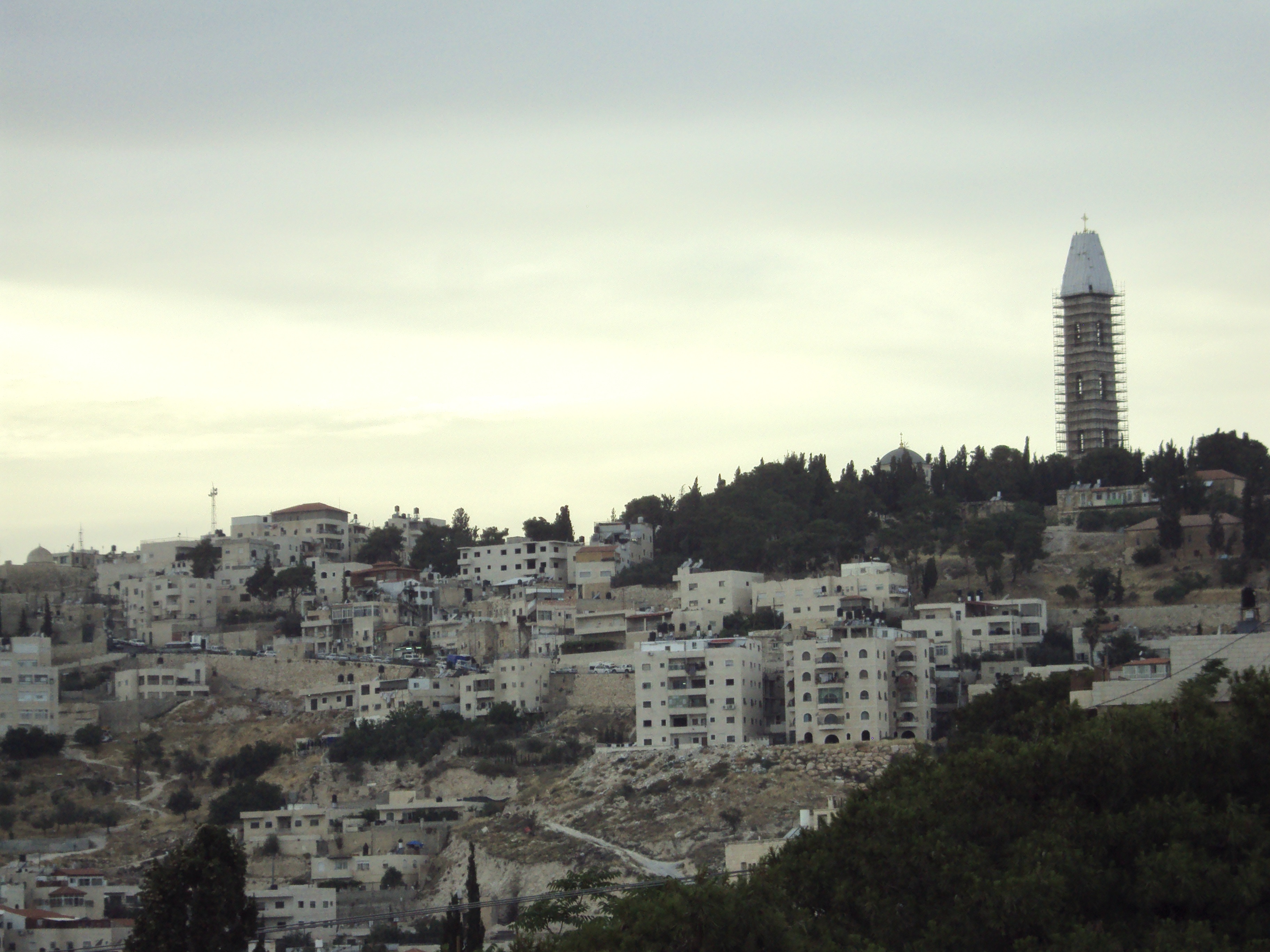
On the Mount of Olives in Jerusalem the Russian government in the last century built a high tower  (above) so that Christian pilgrims could see key places associated with the life, death and resurrection of Jesus.

Looking westward is the Church of the Holy Sepulcher where he was crucified and rose from the dead. Just down below is the garden of Gethsemane where Jesus prayed and was arrested. In the distance to the southeast is Bethlehem where he was born. On the eastern side of the Mount of Olives where this picture above was taken is the village of Bethany where Jesus stayed when he came to Jerusalem and where he raised Lazarus from the dead. Further east, about 20 miles down the Jordan Valley is where he was baptized in the Jordan River by John the Baptist.

The tower was built, I understand, because some pilgrims could not get to one of these destinations, a 20 mile trip to the Jordan River.

The tower attests the importance of  pilgrimage to the Jordan River where Jesus was baptized. The Baptism of Jesus is a mystery that includes all the mysteries of Jesus we celebrate as Christians. That’s why we celebrate it as we conclude the mysteries of the Christmas season. In our baptism we are brought to share in his baptism and in his life.

In the Jordan River,  God the Father, “a voice from heaven,” proclaimed him “my beloved Son, with you I am well pleased.” (Mark 1,11) We believe that when we are baptized we become children of God with him..

As we take Holy Water into our hands and bless ourselves, we remember the great gift we have in Jesus Christ. “In the name of the Father, and of the Son and of the Holy Spirit. Amen.”

We celebrate the Feast of the Baptism of Jesus today. This week we begin readings Mark’s Gospel at Mass till Ash Wednesday. Mark is a good follow-up for this feast since it begins with the baptism of Jesus and relies heavily on the symbolism of baptism and water in his narrative.

Mary, Mother of Jesus, Mother of God


Mary is an important figure in the events of Advent and Christmas Time. The angel visits her at Nazareth, she visits  her cousin Elizabeth, the birth of Jesus in Bethlehem, the coming of the Magi, the flight into Egypt, the presentation of the Child Jesus in the temple, the finding of the Child Jesus in the temple after his loss for three days. All events in Luke and Matthew’s gospels where Mary has a role.

We remember her especially on her feast during Christmas time:  the Feast of Mary, the Mother of God. (January 1st)

Because they focus on Jesus, the gospel writers touch lightly on Mary, but she is an important witness to his humanity and divinity just the same. “For us and our salvation he came down from heaven, and by the Holy Spirit was incarnate of the Virgin Mary and became man.” (Creed)

Through her, the Christmas liturgy reminds us, Jesus took “a body truly like our own.” (Collect, Monday of Christmas Time) Jesus “accepted from Mary the frailty of our flesh.” (Collect, Monday of Christmas Time) She’s the way the Word became flesh.  The First Letter of John, read in Christmas Time, calls this a fundamental truth of faith.

By taking a body “truly like our own” and accepting “from Mary the frailty of our flesh,” Jesus humbled himself, assuming the limitations that come from being human. Mary is his way, giving him birth, nursing him as a infant and raising him as a child.

“Can anything good come from Nazareth?” For 30 years Jesus led a silent hidden life in that small town in Galilee, and Mary was his mother. “I confess I did not recognize him,” John the Baptist says twice when Jesus comes to the Jordan to be baptized. (John 1,29-34) His own in Nazareth did not recognize him either.

He went unrecognized, and so did Mary, who shared his hidden life. She performed no miracles, did not publically teach; no angel came again after the first announcement to her.

We can pass over the Hidden Life that Jesus embraced so quickly, even though the Christmas mystery invites us to keep it in mind. We forget that to be transformed into glory means accepting “the frailty of our flesh,” which Jesus did.

“…though invisible in his divine nature, he has appeared visibly in ours;
and begotten before all ages, he has begun to exist in time;
so that, raising up in himself all that was cast down,
he might restore unity to all creation
and call straying humanity back to the heavenly kingdom.”
(Preface II of the Nativity)

St. Mary Major is the main church in Rome dedicated to Mary, the Mother of God. You can visit it in the video above. It was built in the 5th century to honor Mary’s role as witness to his divine and human natures. The church is also called “Bethlehem in Rome” because many of the Christmas mysteries were first celebrated there; relics from Bethlehem were brought there after the Moslem invasion in the 8th century.

SuperStock_1788-1275[1]

The great mosaic of Mary in heaven crowned by Jesus, her Son, stands over the altar in the church as its focal point. Companion in his hidden life, she was raised up by her Son, who was human and divine,  through the mystery of his resurrection.