“To what shall we compare the Kingdom of God, or what parable can we use for it?” ( Mark 4, 30) Jesus turned to the land where he lived and the life around him to answer that question.
So what was the land where he lived like? It was a land of olive trees near Bethany outside Jerusalem, but if you went eastward to Jericho and the Dead Sea, it was mostly a barren desert. Then, from Jericho to Galilee the land turns from desert to lush farmland. A changing land.
Jordan Valley
Jesus experienced a changing land from Nazareth to the Jordan River and then the Sea of Galilee. Like us, he was influenced by the place and life around him.
In a book written in the 1930s Gustaf Dalman, an expert on the geography and environment of Palestine, observed that when Jesus went from the highlands of Nazareth, 1,100 feet above sea level to the fishing towns along the Sea of Galilee, 680 feet below sea level, he entered a different world.
For one thing, he ate better – more fish and nuts and fruits were available than in the hill town where he grew up. He looked out at the Sea of Galilee from the towns he visited. Instead of the hills and valleys around the mountain village of Nazareth, he saw a great variety of birds, like the white pelicans and black cormorants challenging the fishermen on the lake. He saw trees and plants and flowers that grew abundantly around the lake, but not around Nazareth.
Instead of the chalky limestone of Nazareth, Jesus walked on hard black basalt, which provided building material for houses and synagogues in the lake region. They were sturdy structures, but they were dark and drab inside. They needed light. Light on a lampstand became one of his parables. (Mark 4,21)
Basalt also made for a rich soil where everything could grow. “… here plants shoot up more exuberantly than in the limestone district. Where there are fields, they yield a produce greater than anyone has any notion of in the highlands.” (Dalman, p123)
Farmland in Galilee
The volcanic soil on the land around the lake produced a rich harvest. The Jewish historian, Josephus, praised that part of Galilee for its fruitfulness, its palm trees, fruit trees, walnut trees, vines, wheat. But thistles, wild mustard, wild fennel grew quickly too and could choke anything else that was sown. The land around the Sea of Galilee was fertile then; even today it has some of the best farmland in Palestine.
Soil near the Sea of Galilee
The weather in the Lake District was not the same as in the mountains, warmer in winter, much hotter and humid in summer, which begins in May. “It is difficult for anyone used to living in the mountains to work by day and sleep by night…Out of doors one misses the refreshing breeze, which the mountains along the lake cut off…one is tempted to think that Jesus, who had settled there, must often have made occasion to escape from this pitiless climate to his beloved mountains.” (Dalman, p. 124)
You won’t find these observations in the gospels, of course, but they help us appreciate the world in which Jesus lived and the parables he drew from it. He was influenced by where he lived, as we are.
And what about us? What wisdom do we draw from the world we live in? What do we see day by day? What’s life like around us? We’re experiencing climate change now, aren’t we? It’s going to influence our spirituality, how we see, how we live, how we react to life.
Mark’s account of Jesus’ ministry in Galilee is succinct. John has been arrested and Herod, who rules in Galilee, is ready to behead him. Not a good time, in human thinking, to begin a ministry. Better wait, we say.
But this is God’s time, different from ours. The Good News is God’s message, not ours. God will act according to his plan, not ours. (Mark 1:14-20)
The call of the four fisherman, Peter, Andrew, James and John occurs by the Sea of Galilee in Mark’s gospel. For the Jews the sea, like the wilderness, was a dangerous place; storms unsettled it; unpredictable winds made it fearful. Even an inland body of water twelve miles long and six miles wide was something to be wary of. They made a living on it, but still the sea was a dangerous place.
Mark’s gospel wants us to understand the call of disciples takes place by the sea.
Jesus says simply, “Come after me and I will make you fishers of men.” Mark’s Gospel sees the four fishermen with a lot to learn to be fishers of men. They slowly understand his call. Later on, twelve would be called, (Mark 3,13-19), still later their ministry would be explained. (Mark 6,7-13)
They keep learning, not something you learn in a book, or by yourself. “I will make you fishers of men,” Jesus said. “Come away by yourselves and rest awhile,” he said to his disciples who returned to him with reports of all they had done. (Mark 6,30ff) Every disciple has to learn what the call means for him and for her, and a great deal of it we learn with others. And a great t deal of that learning comes from prayer
On the Mount of Olives in Jerusalem the Russian government in the last century built a high tower (above) so that Christian pilgrims could see key places associated with the life, death and resurrection of Jesus.
Looking westward is the Church of the Holy Sepulcher where he was crucified and rose from the dead. Just down below is the garden of Gethsemane where Jesus prayed and was arrested. In the distance to the southeast is Bethlehem where he was born. On the eastern side of the Mount of Olives where this picture above was taken is the village of Bethany where Jesus stayed when he came to Jerusalem and where he raised Lazarus from the dead. Further east, about 20 miles down the Jordan Valley is where he was baptized in the Jordan River by John the Baptist.
The tower was built, I understand, because some pilgrims could not get to one of these destinations, a 20 mile trip to the Jordan River.
The tower attests the importance of pilgrimage to the Jordan River where Jesus was baptized. The Baptism of Jesus is a mystery that includes all the mysteries of Jesus we celebrate as Christians. That’s why we celebrate it as we conclude the mysteries of the Christmas season. In our baptism we are brought to share in his baptism and in his life.
In the Jordan River, God the Father, “a voice from heaven,” proclaimed him “my beloved Son, with you I am well pleased.” (Mark 1,11) We believe that when we are baptized we become children of God with him..
As we take Holy Water into our hands and bless ourselves, we remember the great gift we have in Jesus Christ. “In the name of the Father, and of the Son and of the Holy Spirit. Amen.”
We celebrate the Feast of the Baptism of Jesus today. This week we begin readings Mark’s Gospel at Mass till Ash Wednesday. Mark is a good follow-up for this feast since it begins with the baptism of Jesus and relies heavily on the symbolism of baptism and water in his narrative.
Mary is an important figure in the events of Advent and Christmas Time. The angel visits her at Nazareth, she visits her cousin Elizabeth, the birth of Jesus in Bethlehem, the coming of the Magi, the flight into Egypt, the presentation of the Child Jesus in the temple, the finding of the Child Jesus in the temple after his loss for three days. All events in Luke and Matthew’s gospels where Mary has a role.
We remember her especially on her feast during Christmas time: the Feast of Mary, the Mother of God. (January 1st)
Because they focus on Jesus, the gospel writers touch lightly on Mary, but she is an important witness to his humanity and divinity just the same. “For us and our salvation he came down from heaven, and by the Holy Spirit was incarnate of the Virgin Mary and became man.” (Creed)
Through her, the Christmas liturgy reminds us, Jesus took “a body truly like our own.” (Collect, Monday of Christmas Time) Jesus “accepted from Mary the frailty of our flesh.” (Collect, Monday of Christmas Time) She’s the way the Word became flesh. The First Letter of John, read in Christmas Time, calls this a fundamental truth of faith.
By taking a body “truly like our own” and accepting “from Mary the frailty of our flesh,” Jesus humbled himself, assuming the limitations that come from being human. Mary is his way, giving him birth, nursing him as a infant and raising him as a child.
“Can anything good come from Nazareth?” For 30 years Jesus led a silent hidden life in that small town in Galilee, and Mary was his mother. “I confess I did not recognize him,” John the Baptist says twice when Jesus comes to the Jordan to be baptized. (John 1,29-34) His own in Nazareth did not recognize him either.
He went unrecognized, and so did Mary, who shared his hidden life. She performed no miracles, did not publically teach; no angel came again after the first announcement to her.
We can pass over the Hidden Life that Jesus embraced so quickly, even though the Christmas mystery invites us to keep it in mind. We forget that to be transformed into glory means accepting “the frailty of our flesh,” which Jesus did.
“…though invisible in his divine nature, he has appeared visibly in ours; and begotten before all ages, he has begun to exist in time; so that, raising up in himself all that was cast down, he might restore unity to all creation and call straying humanity back to the heavenly kingdom.” (Preface II of the Nativity)
St. Mary Major is the main church in Rome dedicated to Mary, the Mother of God. You can visit it in the video above. It was built in the 5th century to honor Mary’s role as witness to his divine and human natures. The church is also called “Bethlehem in Rome” because many of the Christmas mysteries were first celebrated there; relics from Bethlehem were brought there after the Moslem invasion in the 8th century.
The great mosaic of Mary in heaven crowned by Jesus, her Son, stands over the altar in the church as its focal point. Companion in his hidden life, she was raised up by her Son, who was human and divine, through the mystery of his resurrection.
Christ has come, yet his glory has not yet been revealed. “For we are the children of God, and what we shall become has not yet appeared. We know that, when he appears, we shall be like him, for we shall see him as he is.” St. John says in his letter.
What shall we do till he comes? Study him as he appears to us now, as a servant. Follow him in his humanity, St. Augustine says. See him one with the leper, the poor, those cast aside. Until he comes:
“Until this comes to pass, until he gives us the sight of what will completely satisfy us, until we drink our fill of him, the fountain of life — while we wander about, apart from him but strong in faith, while we hunger and thirst for justice, longing with a desire too deep for words for the beautiful vision of God, let us fervently and devotedly celebrate the anniversary of his birth in the form of a servant.
We cannot yet contemplate the fact that he was begotten by the Father before the dawn, so let us hold on to the fact that he was born of the Virgin in the night. We do not yet understand how his name endures before the sun, so let us acknowledge his tabernacle placed in the sun.
Since we do not, as yet, gaze upon the Only Son inseparably united with His Father, let us remember the Bridegroom coming out of his bride-chamber. Since we are not yet ready for the banquet of our Father, let us acknowledge the manger of our Lord Jesus Christ.”
The gospel readings at Mass after the Feast of the Epiphany are connected to that great feast.
The Magi represent the nations, the Gentiles, seeking Jesus as their Savior. In our reading for Monday Jesus after his baptism by John goes into Galilee. Matthew’s gospel calls it “The Galilee of the Gentiles.” Jesus brings light “to a people who sit in darkness.” (Matthew 4,12-17,24-25) In Galilee Jesus fulfills the promise made to the Magi.
He repeats the words John used to define his ministry: “Repent, for the kingdom of God is at hand.” Yet, while John speaks to the Jewish world, (Saturday, John 3,22-3); Jesus calls a Gentile world as well to turn to God, for the kingdom of God at hand.
Humanly speaking, it wasn’t a good time for such a mission. It’s “after John was arrested,” a dangerous time. Galilee, when Jesus began his mission, was ruled by Herod Antipas, who imprisoned John and then beheaded him. (Matthew 4, 12-25)
It probably wasn’t a good time either for the Magi to come to Bethlehem, in the days of Herod the Great. But God’s time is not our time; God’s ways are not our ways. We can miss the opportunities of grace when we think of time in too human a way.
Accounts of the miracle of the loaves and the crossing of the Sea of Galilee from Mark’s gospel are read on Tuesday and Wednesday of this week. Commentators note that in Mark’s gospel the Sea of Galilee is a stormy path Jesus takes to reach the Gentile world of his day. The other side of the lake, the western side, was predominantly a Gentile area. They are given the same Bread he provides for the children of Israel.
It’s to “all of Galilee” that Jesus goes and consequently “his reputation traveled the length of Syria. They carried to him all those afflicted with various diseases and racked with pain: the possessed, the lunatics, the paralyzed. He cured them all.” (Matthew 4, 23-25)
Jesus brings good news to both Jew and Gentiles in Galilee, the”Galilee of the Gentiles.”
Visiting Elizabeth Seton’s New York? Start with a ride on the Staten Island Ferry. It’s free and offers a view of New York City that takes you back to the city’s beginning.
Early European explorers sailed into this harbor. In 1524 Giovanni Verranzano reached New York harbor and thought it was a lake. The Verranzano Bridge stands at the entrance to the harbor today. He thought the Hudson River might be a passage to the Pacific, but never went further than the harbor.
In 1609 Henry Hudson, exploring for the Dutch, sailed up the river that bears his name as far as Albany. The Dutch realized how valuable the place was and started a trading post on Manhattan Island. They called it New Amsterdam and traded with Indian tribes here and along the Hudson River.
Before the Europeans came, the harbor was a favorite place where the native tribes fished, hunted and traded.
The English had their eyes on the place too and in 1642 took it over. New Amsterdam became New York, and remained under English control till the American Revolution in 1776.
Millions of immigrants have come through New York harbor since then. The harbor was their gateway to the new world. The Statue of Liberty stands on the harbor’s western side along with Ellis Island, a major center for processing immigrants.
New York harbor became the place where early New York City traded with the rest of the world. Elizabeth Seton and her family were closely connected to the harbor. Her husband, William Seton, invested in the ships that made the city one of the richest ports in the world. But ships were a risky investment; they brought handsome profits yet could also bring bankruptcy if they didn’t come in. The Setons experienced both the riches and the risk.
I suppose you could call William Seton one of Wall Street’s first venture capitalists. In 1801 the Seton’s went bankrupt after the loss of a ship at sea and the family moved to the rented house on State Street, our first stop off the ferry.
Elizabeth Seton’s father, Doctor Richard Bayley, was the first Health Officer for the Port of New York (1796), caring for many of the first immigrants and travellers arriving here.
His job was to keep New York City safe from disease and keep travellers who were dangerous health threats isolated. So, quarantine stations were set up in the harbor for immigrants with yellow fever, cholera and small pox.
Within the harbor are some of the city’s early quarantine stations. Bedloe’s Island (1758-1796), Governor’s Island (1796-1799), Thomkinsville in Staten Island (1799-1858), just south of the St. George ferry station.
In the summer of 1801, Elizabeth was staying with her father at the Thomkinsville quarantine station when a boatload of sick Irish immigrants were brought in. She describes the dreadful conditions in a letter:
“I cannot sleep–the dying and the dead possess my mind. Babies perishing at the empty breast of the expiring mother…Father says such was never known before: twelve children must die for want of sustenance…parents deprived of it as they have lain for many days ill in a ship without food or air or changing…There are tents pitched over the yard of the convalescent house and a large one at the death house.” (Letter July 28, 1801)
That same year, Richard Bayley himself died from yellow fever contacted from the Irish immigrants off Thomkinsville. He’s buried in the family plot next to the Episcopal Church of St. Andrew in Richmond, Staten Island.
Seton Shrine, State Street, South Ferry
Arriving back in the city you can see the Seton house and a shrine near the ferry terminal at the end of Manhattan Island where Elizabeth Seton and her family lived for a short time. Stop in for a visit; many mementoes of her are found there. Most of Elizabeth Seton’s New York years were lived in this early section of the city.
From Mother Seton’s shrine and house on State Street walk up Broadway to Trinity Church and then St. Paul’s Chapel, the Anglican parish she belonged to until her conversion to Catholicism in 1805. She lived her early years as a happily married woman with five children on Wall Street and Stone Street, close by these colonial churches.
St. Paul’s Chapel
As a devout Anglican, Elizabeth devoted herself to her family and to the poor. In 1797 she and other public-spirited church women began an aid society for destitute women and their children. “The poor increase fast: immigrants from all quarters come to us. And when they come to us they must not be allowed to die.” (Description of the Society for the Relief of Poor Widows and Small Children.)
Looking eastward down Wall Street from Trinity Church on Broadway , you can see many of the institutions the fueled America’s economy: the docks and slave market (newly marked) on the East River, the New York Stock Exchange and the Federal building, a short walk from Broadway, and finally Trinity Church and King’s College on the western side of Manhattan. King’s College built on lands belonging to Trinity Church became Columbia University after the Revolutionary War, and later relocated in northern Manhattan.
St. Peter’s Catholic Church
Our final stop visiting Elizabeth Seton’s New York is St. Peter’s Catholic Church on Barclay Street, near to World Trade Center. Here she was received into the Catholic Church. Notice the beautiful painting of the crucifixion above the altar. Elizabeth Seton mentioned how moved she was as she prayed before that painting after becoming a Catholic.
In June 1808, she left New York City with her family for Baltimore, where she founded a school on Paca Street, the beginning of the Catholic parochial schools system in the United States. Shortly after, Mother Seton moved to Emmitsburg, Maryland, where other women gathered around her and took vows as the Sisters of Charity. Her religious followers continued her work through schools, orphanages and hospitals found throughout the United States.
Mother Seton died at the age of 46 in 1821. She was canonized on September 14,1975. There’s a good biography of Mother Seton written by Catherine O’Donnell, Elizabeth Seton: American Saint, Blackstone, 2018
January 5 is the feast of the Passionist Father Charles Houben of Mount Argus in Ireland, known as a miracle-worker for the many miraculous cures attributed to him. He died in 1893. In 1892, one year earlier, Sherlock Holmes died, as fans of the master detective may tell you.
I mention Sherlock Holmes because he represents the English Enlightenment that believed everything can be explained by reason. On the case of Father Charles and his many miraculous cures, I’m sure Holmes would say to his colleague Dr. Watson “No such things as a miraculous cure. There’s a reason for it somewhere, and I’ll find it.”
Father Charles was born in Munstergeleen, Holland in 1821. During his time of compulsory military service he first heard about the Passionists. After completing military service and studies he was received into the community by Blessed Dominic Barberi. He made his novitiate in Belgium, ordained a priest and then sent to England. In 1856 he went to the newly established monastery of Mount Argus in Dublin, Ireland, where he ministered for most of his life till his death in 1893.
Charles was shy and timid, not learned or scholarly or a good preacher. He never spoke English well. At Mount Argus, he heard confessions and blessed people with a relic of the Passionist saints. Yet, people saw him as someone close to God and his blessing brought about cures. Increasing numbers of people came to him at Mount Argus seeking to be cured and he was called to homes and hospitals in Dublin to bless the sick.
His reputation grew. His funeral was attended by people from all of Ireland. A newspaper of the time said: “Never before has the memory of any man sparked an explosion of religious sentiment and profound veneration as that which we observed in the presence of the mortal remains of Father Charles,” the Superior of the monastery wrote to his family, “The people have already declared him a saint.”
In his lifetime, though, Charles met with criticism and humiliation, even from members of his own community. In 1866 because questions were raised about his curing ministry, particularly by the medical establishment, Charles was transferred to England, where he remained for a number of years before returning to Mount Argus.
Charles was canonized June 2, 2007 by Pope Benedict XVI in St. Peters Basilica, Rome. He’s still performing cures. If you want to make a pilgrimage to Fr. Charles’ tomb start here.
In our enlightened age, we distrust cures. Whether we’re aware of it or not, like Holmes the famous detective, we put our trust in science and reason to solve sickness and suffering. Someone will figure it out. Meantime take some pills.
For this reason I introduce you to Doctor Vincent Rizzuto, a doctor and scientist, and also a dedicated friend of St. Charles. Listen to his story:
“The more I study science, the more I believe in God.” — Albert Einstein
“Coincidence is God’s way of remaining anonymous.” —Albert Einstein.
“There are two ways to live your life. One is as though nothing is a miracle. The other is as though everything is a miracle.” —Albert Einstein
Prologue
I recently completed work on an extensive (30 plus pages) narrative entitled “The Saint and I.” It is an inspirational story (written from a point of view where science and religion intersect) concerning medicine, miracles and probabilities. In brief, this relates to my experience with St. Charles (of Mt. Argus, Dublin, Ireland) during (about) 18 months after He cured my depression. I am especially proud of the fact that St. Charles (like me, as a doctor) is/has been totally non-denominational in His dealing with patients. He has helped people of all faiths as well as those who profess no faith at all.
On 1-5-2021, St. Charles’ feast day, Father Victor Hoagland posted my entire work on his website (that is, “Victor’s Place”) at the Passionist Priests’ Monastery, Jamaica, NY, and he prefaced it with a short history of St. Charles.
The website will permit anyone to read my story at his leisure and without cost or obligation. My goal is simply to introduce people to this powerful Saint who is ready to provide His formidable assistance to those who request it.
Below, you will find a link to that site. This link will take you to a photo of me, then scroll down to my manuscript where you can read and/or download the latest version.
Saint Charles was a Catholic Saint who performed miracles during His lifetime.
In fact, His miracles were so numerous that in 1866 the medical doctors in Dublin, Ireland, near the Passionist Monastery at Mount Argus, where He lived, joined forces to have Him transferred out of the country to England because they were losing money!
He is buried and honored today at the Passionist Monastery at Mount Argus, Dublin, Ireland. In the United States He is honored at the Passionist Monastery at 86-45 Edgerton Boulevard, Jamaica, NY 11432. He still works miracles and cures.
Table of Contents
Quotes Prologue Saint Charles Table of Contents A Mere Coincidence?
Who I Am Introduction
Events Conclusion Afterwords
A Mere Coincidence?
Following the sudden death of my younger sister, I developed severe clinical depression on or about June 13, 2013. I was afraid I might take my own life if I were left unattended, so I voluntarily consented to several successive admissions to a major psychiatric/medical center in New York City. The diagnosis was endogenous depression and Parkinson’s disease.
I received the finest, most comprehensive, up to date psychiatric and medical therapy available today. However, my depression was so deep that eventually I exhausted most of the customary medications. The only remaining treatment was shock therapy, but this was discontinued because of serious adverse effects. For all practical purposes, as far as I was concerned, modern medicine had come to a standstill.
Finally, after a deeply distressing two year period, I was discharged in “stable” condition for outpatient follow-up.
The next phase of my life was punctuated by a series of plunges -deeper and deeper into depression. The solitary clear recollection I have of this period was that I experienced an overwhelming, almost constant nausea which was refractory to all treatment.
At this point, a doctor friend introduced me to a 92 year old, brilliant Catholic priest, Father Joseph Guzinski CP.
As I gazed at the old man in the wheelchair, my nausea intensified. Two thoughts struck me:
1. “I must be crazy to have come here. How could this man possibly help me?”
2. “If I don’t leave soon, I’m going to vomit on the floor!” Father Joe was quick to grasp how sick I was, so he immediately got
down to business. He instructed me in the use of the holy oil of Saint Charles, and he provided directions for its administration. He suggested that Vanessa (my home health aide) apply Saint Charles’ oil on my forehead in the form of a cross each morning while we recited a prayer to Saint Charles.
One day, my severe depression simply vanished as quickly and dramatically as it started. This event took place about 7-10 days after we began the prayers to Saint Charles with the application of the holy oil. I can pinpoint the day/time precisely. It was 11:00 Easter Sunday morning!
Subsequently I was examined by a professor of neurology at New York- Presbyterian /Weill Cornell Medical Center. He concluded that I did not have Parkinson’s disease, and he advised me to stop taking the very powerful anti-Parkinsonism drugs.
Miracles are rare, but when they do occur, they often happen very quickly (just like answers to our prayers at times). If you are not observant, you are liable to miss them.
In the words of C. S. Lewis, “Miracles are a retelling in small letters of the very same story which is written across the whole world in letters too large for some of us to see.”
Who I Am
I will now provide a brief summary of my pertinent background information.
By the end of my junior year in college, I was fortunate to be accepted at several medical schools. I decided to go on with my education without a college degree. After graduating from Georgetown University Medical School with honors, St. John’s University, Jamaica, NY granted me a summa cum laude degree (based on my previous college record) without going back to complete my college courses.
I finished my internship and medical residency training during the height of the Vietnam War. I spent two years in the U.S. Army Medical Corps as an internist (specialist in internal medicine).
I then worked as a medical consultant in an industrial medicine program sponsored by Citibank, NA at both their Park Avenue and Wall Street offices. We managed the health care of bank employees and executives, and we took pride in helping almost anyone who required immediate medical attention (and then referred them to their own doctors for further care).
Following this, I became an attending physician at the Catholic Medical Center of Brooklyn and Queens, NYC. Here I had the pleasure and privilege to teach medical interns and residents on a regular basis in addition to conducting a private medical practice.
I did quality assurance work for the Catholic Medical Center for several years prior to my retirement. This involved reviewing the work of other doctors and making appropriate suggestions to improve quality of care.
My association with St. Charles usually works as follows. I don’t look for problems or situations. But if a significant one comes my way, I will ask St. Charles’ assistance (to help others, not myself). He often responds in some manner within 24-48 hours, and He occasionally adds a sign (a “coincidence”) to emphasize that this is not something random, but rather, His doing.
Jane Wagner, an American writer, director and producer, once said, “When we talk to God, we’re praying. When God talks to us, we’re schizophrenic.”
I can assure you that I am indeed “of sound mind,” but I must admit that a doctor who works with a Saint at his side is a bit unusual.
Think of the implications…
I have accumulated a small series of events in which St. Charles helped people. Even more noteworthy is the fact that in just a very few (perhaps 3 or 4 out of approximately 25 events) He provided support which cannot be ascribed to modern medicine. Believe me, as a doctor with many years of experience-including taking care of soldiers during the Vietnam war -I know what members of our profession can and cannot do.
I never tell the Saint what to do. I usually don’t ask for miracles as such. I know that miracles are very rare. I only ask Him to bless the individuals in question.
I know that He will help. I have no idea what form that help will take. That’s God’s business and the Saint’s business, not my business. I am always grateful for whatever He does. And I thank Him in advance!
Please remember this because it is very important. God (or St. Charles) helps those who help themselves. He only provides additional help after we have exhausted all the means He has already given us. For example, someone who lives in a big city usually has many good doctors/hospitals available to him. But he may want the Saint to assist him with the result of a biopsy report: “benign or cancer?”
Moreover, as you read through my relatively brief “events” you will note that St. Charles does not limit his attention to medical problems. I was guided by my patients in this respect. I requested St. Charles’ assistance for whatever their problems might be. Also, I am documenting this information primarily for the general public (not for my fellow physicians). But I know that some doctors will read this. I tried, as much as possible, to use medical terminology only when necessary to convey substance and, if so, to explain it in “plain English.”
In summary, I am a retired medical doctor who currently functions more, in a sense, like a priest. Although I continue to use terms such as patient, history, diagnosis, etc. (you cannot take the “doctor” out of “doctor”!), I do not examine patients, order diagnostic studies or laboratory tests, write prescriptions, etc. I don’t have a telephone answering service. I just pray to St. Charles for those who require my prayers after they provide me with a diagnosis.
Introduction
In retrospect, my association with St. Charles can be viewed as a drama in two acts.
Act One consisted of my two year struggle with major depression which culminated in an instantaneous, miraculous cure by St. Charles.
Act Two refers to something which was even more remarkable. Over a relatively short period of time, in step-by-step, trial and error fashion, I developed a working relationship with this Saint. (I might hasten to add that this also involved a lot of prayer and meditation on my part).
Over the past 18 months or so, I rarely requested His assistance on behalf of seriously ill medical patients who were beyond the reach of modern medicine. Much more commonly, I asked Him to help some people with lesser illnesses, or even non-medical problems, if and when the circumstances merited it.
I would like to make certain that there is no misunderstanding between my readers and me with reference to a few important issues.
My only motivation in the work I do with St. Charles is to help people. My ambition is “To Be Worthy To Serve the Suffering,” the motto of Georgetown University School of Medicine. My only satisfaction is in the knowledge of a good and noble deed well done and the help people receive.
I repeatedly tell everyone (especially my patients and the priests at the Passionist Monastery) that there is absolutely no charge for this service. And, although I don’t usually ask for miracles, it is vital-perhaps even life- saving for a particular patient- to leave that avenue open! In fact, money and miracles “don’t mix!” If I received even a penny, the mere possibility of a miracle would immediately vanish!
Those who know me are aware of just how much I detest publicity and value my privacy. At my age I certainly am not suddenly looking to become famous. I regularly remind patients, their families, and some priests that I would prefer if they did not discuss my role in their being cured by St. Charles with anyone unless it was absolutely necessary (as if someone required my help).
Winston Churchill once remarked, “A lie can travel half-way around the world before the truth gets a chance to put its pants on.”
It wouldn’t take long for someone to misinterpret what I do, and people would begin to confuse me with the Saint whom I represent. He is the only one here with miraculous powers. I pray that He may exercise such powers on occasion.
But, if the public thinks that I can heal them of my own accord, I would have to go into hiding somewhere. My life would become a nightmare! Despite these concerns, I must seek some sort of publication so that
people may know that I am available to help them. My ultimate goal is to foster dedication and devotion to St. Charles, one of the most powerful Saints of all time. He is ready and willing to assist those who request His help. No middleman is absolutely necessary.
I couldn’t possibly be imagining (or fabricating) my recent experiences because this would necessitate the cooperation of my patients (and many others), a widespread, preposterous conspiracy! And for what purpose? Who could possibly benefit from this?
My doctors (and fellow professionals), including psychiatrists, can all attest to my good character and my current excellent mental health.
Now let us get back in focus with St. Charles. Father Victor, the Passionist priest who has been invaluable as my mentor, has a fascinating theory concerning my relationship with this Saint. St. Charles was a tragic-stricken hero. The doctors in the area surrounding the Passionist Monastery at Mt. Argus, Dublin, Ireland hated this powerful Saint. His abundant miracles reduced their patient population and their income! His fellow priests despised Him. They were jealous of His popularity.They provided Him with a bedroom which was upstairs at the back of the Monastery. And they gave Him the responsibility to answer the front doorbell which rang at all times, both day and night. They told Him that these people were looking for Him, so why should anyone else be disturbed!
“When you regained your health”, said Fr. Victor, “He, in effect, ‘recruited’ you to assist Him in continuing His earthly mission of serving the sick and suffering!”
Father Victor goes on further to postulate that this may even be part of a much larger plan.
“Look around you,” he continued, “What do you see? You notice, for example, that the Catholic Church is struggling to maintain its Christ-given position and reputation in the world against a backdrop of deplorable sexual scandals.
Concomitantly, there is a bold frontal attack on YouTube in debates with the militant atheists (who would have us believe that science has replaced religion)!”
“When St. Charles selected you to work with Him”, Father Victor said, “He chose a medical doctor who also professed faith. You know that there is no inherent contradiction between science and religion. The two disciplines actually compliment one another.”
“And He selected you precisely because you serve to illustrate this point!”
When Jesus Christ made lame people walk and blind people see, He didn’t do it merely to help those who were sick. He did it primarily to call attention to His power as God, one who has authority to found a Church and establish rules and regulations for living. He used the miracles as “steps” in support of His doctrines and promise of heaven.
I am quite certain that St. Charles has the same motivation. And, under the circumstances, it may even be true that He has selected others (besides me) throughout the world to help Him with His plans.
However, to pursue this line of thought any further at this point is no more than idle speculation. Let’s move on, instead, to a review of a few events.
Please bear the following significant information in mind as we proceed with this missive.
I asked St Charles to help about 25 people in the past 18 months. Only a few of these events were serious health issues, and, in turn, only a few of those are concerned with possible miracles. As I mentioned previously, I generally followed the needs of my subjects. So many of my events are merely typical examples of why we should keep St. Charles in mind for assistance with “everyday problems.” (The Saint is there for the healthy and living as well as for the sick and/or dying!)
St. Charles is ready and willing to assist you with any difficulty, but it is up to you to initiate that request!
Finally, before I present my series of events to you, there is another matter which requires clarification.
A news reporter posed the following question to Pope Francis during a flight, “Who are you?” The Pope said, “I am a sinner, just like everyone else!” In like manner, I wish to make it perfectly clear that I am certainly not a saint, even though St. Charles has been kind enough to permit me to associate with Him from time to time.
In fact, if anyone develops a “holier than thou” attitude, I would urge him to read a beautiful poem entitled, “Fool’s Prayer” by Edward Roland Sill. Here a court jester teaches the king (who represents all mankind) a well deserved lesson in virtue/humility.
Events
A good friend contacted me because his wife “was not feeling like herself lately.” He was unable to supply any further details except that she had no significant past medical history. Under the circumstances, my only suggestion was that she see a capable internist for a complete evaluation. Since he seemed very concerned, I added that I would ask St. Charles to watch over her.
About two weeks later, he said that she developed chest pain one evening and was taken to a local hospital emergency room by ambulance. They found “something wrong with her heart” which necessitated immediate transfer to another facility.
The eventual diagnosis was “aortic dissection” for which she underwent major cardiovascular surgery.
Aortic dissection is a serious condition in which there is a tear in the wall of the main artery carrying blood out of the heart (aorta). As the tear extends along the wall of the aorta, blood can flow in between the layers of the blood vessel wall (dissection). This can progress to aortic rupture or decreased blood flow to various organs.
Aortic dissection is life threatening. The condition can be managed with surgery if it is performed prior to aortic rupture. Less than 50% of patients with a ruptured aorta survive.
Of all people with aortic dissection, 40% die immediately. 1% of the remainder die every hour. Even after the diagnosis, 5-20 % die during, or right after, surgery.
This patient survived and is doing reasonably well. In the absence of any very sophisticated clinico-pathologic studies, one can only surmise what role St. Charles played in her welfare.
This is an 80 year old, slightly intellectually disabled gentleman who lives alone. While crossing a street, he was hit by a bus and suffered severe damage to one of his legs. Unfortunately, the leg could not be salvaged, and his doctors were forced to amputate the extremity.
Two of his relatives discovered that there were no good rehabilitation facilities available to which he could be transferred at this time. The best places had no vacancies and the waiting list was a long one.
They asked me to obtain St. Charles’ support. I did so. A few hours later they called to tell me that he had just been accepted at a rehabilitation center rumored to be good. I checked with a friend who possesses a doctorate degree in physical therapy. She said that this was a relatively newer facility (compared to some of the others) with a “solid” reputation and some nice surroundings. She was confident that he would receive good care here.
This is a middle-aged gentleman, owner of an antique business in NYC. His landlord informed him of a rent increase which he could not possibly afford. He searched in vain to find appropriate facilities. The places were terrible; the price was still enormous. He was about to lose a lifetime venture.
The situation was hopeless when I asked Saint Charles to assist him. As usual in such cases, I also asked him to make note of the date/time.
Two days later, the landlord visited him again and told him that he decided to move him to a slightly smaller (but still more than adequate) area in the same building where he was now located. The landlord added that the rent he expected for the new quarters was, in fact, less than he was currently paying.
In addition to being an advocate of St. Charles, I have also been a promoter of Our Lady of the Miraculous Medal.
There was one recent event where I asked both of them to assist someone with a serious health problem. However, following a successful outcome, I was curious as to which of the two (or both together) were responsible.
Although it was only of academic importance, I asked St. Charles for an answer to this question.
I then proceeded to email a priest friend about an altogether different subject. I hadn’t been in touch with him for a long time. The last time we spoke he was teaching at a local university in NYC. After he had finished helping me with this other matter for which I had contacted him, I decided to ask him the question of how I could determine who (St. Charles or the Blessed Mother) was my benefactor?
He said, “I honestly have no idea, but I could ask my next door neighbor for you. He happens to be the priest who is the current Director of the National Shrine of Our Lady of the Miraculous Medal here in Germantown, Pennsylvania where I now reside!”
A middle-aged lady was seen, on separate occasions, by two physicians (both are faculty members at world class medical schools in NYC) for severe right facial pain. No specific diagnosis was made, and no form of therapy was successful. Similar results were obtained with visits to an oral surgeon and a gum specialist. The intermittent pain, often very severe, persisted unabated, unrelieved.
In simple English (as opposed to medical terminology), the patient’s pain was very real, but it was emanating from (originating in) her mind. This type of patient is sometimes treated by a psychiatrist who specializes in pain management.
I asked St. Charles to help. I explained how this Saint occasionally provides “coincidences” to indicate that He is working with me. I gave her one (of several possible examples) which He used in the past. This particular one involved a “Miraculous Medal” which I wear around my neck.
The lady is not a Catholic. Yet, while I told her the story, she removed something from around her neck. She said, “Someone gave me this two weeks ago and told me that it would help me soon.” And she handed me a Miraculous Medal!
I showed her mine. She began crying when she saw that they matched. She knew that she would be helped (and so did I).
One day later she called and said that her pain had decreased by 50%. I told her and her husband to read jokes out loud to one another as much as possible over the next day or two. The pain decreased even more. They just returned from a boat ride vacation up and down the Mississippi. She’s doing very well.
Reports from Mt. Argus, Dublin, Ireland (former residence of St. Charles) indicate that hundreds of people visit St. Charles’ Shrine there regularly looking for help, and occasional miracles still happen. And I think that St. Charles is also quite active right here at home! PS A coincidence, by definition, signifies two events occurring at the same time, perceived as meaningfully connected, but not related as cause and effect. So St. Charles’ “coincidences” are not truly coincidences at all since He is the cause and we witness the effect.
Also, for the sake of completeness, I should add that some patients with complex psychological pain problems may require multidisciplinary treatment (which may involve dentists, medical doctors, and/or psychiatrists, etc).
A middle-aged woman was concerned about the welfare of two family members.
Her sister, who had financial difficulties, had a damaged (injury-related) knee and was worried about the outcome of a compensation hearing in the next few days. This was purely a financial problem.
Her sister-in-law, on the other-hand, had serious, long-standing depression. She had done well with prozac maintenance therapy, but she was forced to discontinue this drug because of an allergic reaction to it.
She had seen neurologists and behavior analysts. She was under psychiatric care, but she had failed to respond to many other medications. She refused to undergo electroshock therapy, and had just begun a new drug with little or no hope. Her family life was chaotic.
She couldn’t accept responsibility or take part in social contact outside the house with others. She was, in fact, afraid to leave her home. Her father (flew in from Florida) and her sister-in-law (from New York) took care of her 5 year old son.
I asked St. Charles to assist and watch over these two people. One week after I requested St. Charles’ assistance, the lady (who originally saw me
about her family members) telephoned me at 6AM. She was very excited and eager to report that “there had been a miracle!”
First, her sister received the maximum amount possible at her compensation hearing.
Second, a day or two after I had asked St. Charles for His help, her sister-in-law awakened one morning feeling “better than she ever did before” in her lifetime!
Her psychiatrist said that she was apparently cured of her depression. He withdrew her medication slowly as a precaution. She immediately resumed her normal family and social life as a responsible, well-adjusted wife and mother. She had lunch at a restaurant with a friend. She even took her son to see a movie-something which she had not done for years!
A retired internist, who is a close friend of mine, applied St. Charles’ holy oil daily for a few months due to carpal tunnel syndrome.
One evening, he also experienced a great deal of discomfort in the upper back and shoulders. So he asked his wife to use the holy oil to massage the muscles of his neck and back too.
The following day, while accompanying his wife for a visit to an orthopedic physician, he suddenly became short of breath, collapsed, and was immediately defibrillated (for cardiac arrest) by qualified personnel at the physician’s office. (The cardiology department just happened to be right next door to the orthopedic department!)
Then he was rushed to the cardiac catheterization laboratory of a nearby hospital where it was noted that a large clot was just forming, and ready to obstruct the left main coronary artery. If this had occurred, the patient would have suffered massive damage to the anterior (front) wall of the heart, a devastating incident!
However, due to the expert timely intervention, this catastrophic event was avoided. In essence, nitroglycerin dilated (opened) the vessel, and a stent (bypass) was inserted, so that normal blood flow could continue unimpeded by the big clot (which, due to anticoagulant medication, was now noted to be dissolving slowly).
Therefore, an apparent series of “coincidences” paved the way towards a remarkable recovery. But we must remember that true coincidence, by definition, is not cause and effect. And, moreover, it is precisely the cause and effect type of “coincidence” which has become almost a trademark, in my experience, of St. Charles (as I have pointed out many times previously) when He is actively engaged in the healing process.
The patient was discharged from the hospital a few days later. He is currently home, doing well, and exhibits no apparent permanent sequelae. I have doctor friends at almost all the major medical (schools) centers in New York City. But neither I, nor my colleagues, knew anyone at the hospital where the above- described cardiac catheterization was performed until one or two days immediately prior to this doctor’s cardiac arrest. On that day, a prominent physician (who was a stranger to me), associated with this very same hospital, contacted me, introduced himself and asked me to pray to St. Charles for a member of his family, a lady with biopsy- confirmed cancer. So now I was able to call this doctor who, in turn, provided me with all of my friend’s medical details as they happened to make sure that I was satisfied with the cardiac team’s management!
The second patient I will discuss briefly with you is the lady to whom I just referred. She developed a stroke following surgical removal of a portion of a large malignant brain tumor. Therefore her life expectancy was about eighteen (18) months if it were not for the stroke, a new immediate threat to her life.
But the doctor who called me was impressed with the fact that the patient’s stroke started to resolve almost immediately after we began the prayers to St. Charles.
A few days later, he was even more surprised when she walked into his office to pick up the St. Charles’ holy oil which I had sent to him for her to use!
My tour of duty in the U.S. Army began as a specialist in internal medicine at the height of the Vietnam conflict. The newest doctor often “inherited” some of the most difficult cases like my first patient. He was a young Army officer with a febrile illness, a loud heart murmur, and evidence of impending cardiac failure. The previous physicians had done a good job ruling out practically all possible causes of his illness, but, unfortunately, they were not able to make a specific diagnosis. And this patient’s time was gradually running out. Without a diagnosis he would soon die of congestive heart failure.
He was scheduled to be transferred to Walter Reed Army Medical Center in Washington, DC as soon as appropriate arrangements could be made. I did not want this man to die during my care. So I resolved to do everything possible to diagnose/cure him!
I did not go home at night. I stayed at the hospital and practically lived in the hospital library. I repeatedly questioned the patient very carefully. I had to know every single place where he went, what he ate, what he drank, what he did and with whom, etc. And I had maps on the wall of the library where I associated that information with whatever diseases were prevalent in those areas. In short, I needed to match the patient’s presence and actions with a place which harbored the disease which produced his condition. (After a while, I began to get very discouraged, but I kept at it because it was his only chance). Finally, I discovered a good candidate for the diagnosis. He admitted that he drank a glass of milk in Bangkok, Thailand. This corresponded to one of my red flag areas on the maps in the library. Raw (unpasteurized) milk was occasionally served here. I knew from my medical school training that this was one of the ways that humans could acquire infection with Brucella abortus, a bacteria responsible for abortions in cattle. This organism can also cause bacterial endocarditis in humans. The bacteria seed the bloodstream and attach and destroy heart valves! This would certainly explain the clinical picture in this patient.
Unfortunately, repeated blood and urine cultures were negative. But I remembered that this organism was notoriously fastidious; that is, it can escape detection if the laboratory conditions are not exactly as they should be to grow it.
And time for this patient was running out. So I was forced to make a decision. If I did nothing, he would die. This was clearly not a viable option.
The only alternative here was to treat the patient with massive doses of the correct antibiotics to combat this disease. A “therapeutic trial” with the appropriate antibiotic agents was this patient’s only chance for survival. So I ordered it!
The next day, the patient’s temperature began returning towards normal. The day after that, the heart murmur was less audible, and the enlarged (congested with blood) abdominal organs were reduced in size. The patient was “alive and well!” Eventually, he returned to duty!
With the cooperation of the military police, we were able to close down the establishment where raw milk was served in Thailand .
I told you the above story because, in my humble opinion, it is a wonderful example of “Divine Providence” when coupled with the information below.
We often hear the expression, “God works in mysterious ways.” That may be so. However, God sometimes works in perfectly straight forward ways, and recognizing them may serve as a source of inspiration to all of us.
St. Charles (who was responsible for curing my illness) was a Passionist priest before he became a Saint.
Another Passionist priest, Father Theodore Foley, will soon share in that distinction. Father Foley has all the necessary requisites for sainthood except a death certificate. One cannot become a saint without a death certificate and an explanation of the precise cause of death.
After traveling extensively abroad, Fr. Foley developed a febrile illness which was initially addressed by physicians here in the United States. Later, he was hospitalized in Rome, Italy where he died of a similar febrile illness in 1974. But no death certificate was available for him at the Vatican.
So the Passionist priests at the Immaculate Conception Monastery in New York asked me to provide any possible information about Fr. Foley’s cause of death.
There were no hospital records anymore. I was given a few scraps of paper with mostly illegible writing on them. Apparently, this was (?) a brief travel history of the patient, and some doctors’ notes about his last hospitalization. However, despite the lack of more clinical material, I was able to determine the cause of Fr. Foley’s demise with a high degree of probability.
Scattered reports that the doctors involved in this case were unable to arrive at a diagnosis were simply not true. Fr. Foley’s doctors actually did make a diagnosis of bacterial endocarditis, but they could not identify the responsible organism. So they didn’t know what antibiotics to use. And, unfortunately, he died from this disease.
Furthermore, some of the places to which Fr. Foley had traveled prior to his illness were “red flagged” areas on the maps (areas where raw milk was still occasionally available for human consumption at that time).
Fr. Foley probably died from bacterial endocarditis secondary to (caused by) the disease known as brucellosis. The offending organism was most likely Brucella abortus. (This is the same disease for which I treated my patient while I was in the US Army).
Since heaven is timeless ( eternal, without time) it would be a simple matter for St. Charles to orchestrate a “coincidence” spanning many years so that I, who had first hand clinical experience with this relatively rare disease, would (after He cured my depression) be able to help His fellow Passionist priest become a Saint like Him! Or was it all just an amazing, but totally random, meaningless coincidence? What do you think?
A close friend came to see me about 6 months ago because a British lady, her husband’s cousin, was newly diagnosed with cancer of the ovary. Unfortunately, the cancer was already at the “advanced stage”, so the prognosis was grave indeed. This condition is usually treated with various measures including, primarily, chemotherapy.
The current cure rate for this disease is only 15-20 %.
Her condition gradually “improved” after St. Charles’ support began. Also, her doctors recently performed a “surgical procedure” in an effort to “totally eradicate the malignancy” (something which they never expected to do in the past).
In fact, she is doing so well that her physicians plan to stop the chemotherapy after the next dose. She could possibly go back to work next week! PS I would have liked much more information concerning this patient. However, this was all that I could obtain from her relative who lives here in the United States.
Addendum: Today her cousin told me that he had received a telephone call from the patient. She said that her doctors just announced that she was “free of cancer!” They were unable to find any evidence of residual cancer at all at this time!
I try to maintain my policy of requesting St. Charles’ assistance for others, not myself. However, on one occasion I was concerned about a groin infection which was not responding adequately to antimicrobial therapy. If this situation persisted, it would probably require surgical intervention. So, one evening, before bedtime, I told St. Charles that if he saw fit to provide me with some personal assistance, I certainly would not refuse it. When I awakened the following morning, the infection was apparently gone, but I finished the prescribed medical treatment anyway.
I will deviate from the topic here for a few moments to mention that St. Charles, like me, is totally “non-denominational” with respect to caring for patients. He has helped those of all faiths and those of no faith. I have often reassured patients that their personal religious beliefs have absolutely nothing to do with my intervention or St. Charles’ cures. A Catholic priest once told me that Jesus Christ Himself admonished his disciples when they hesitated to bring Him people of “other faiths” who sought His aid for physical maladies.
The expression “faith cure” does not apply to any of my events. One of the most seriously ill patients in my series was an atheist! The family volunteered that information because they thought it might make a difference. (I told them that it did not.) I had no actual, direct contact with many of my subjects (one of whom, for example, lived in California and another, in England), and quite a few of them didn’t even know that I was praying for their welfare. It was often (but not always) a patient’s relative who engaged my support with St. Charles. Furthermore, as a doctor, I never question anyone about his or her religious faith or personal life. It doesn’t concern me (or St. Charles). My sentiments are similar to those of dictionary compiler, Samuel Johnson, who when asked what he thought about someone responded, “God Himself, sir, does not propose to judge a man until his life is over. Why should you and I?”
A middle-aged lady consulted me for two reasons.
I told her to see a gastroenterologist to evaluate/treat her gastroesophageal reflux symptoms.
She was also concerned about a newborn child who was scheduled for cardiac surgery. I asked St. Charles to help this child as much as possible. A few days later, I heard from a mutual friend that the cardiologists decided to reevaluate the youngster and discovered that the patient no longer required the contemplated surgical procedure!
(Occasionally, as in this case, I would like more information, but I cannot pursue this course if it might cause concern for the patient).
A close personal friend of mine had a similar problem. His granddaughter required surgery for a congenital heart disorder; more specifically, an atrial septal defect.This is an abnormal hole or opening between the two atria (upper heart chambers).
On the evening prior to surgery, he anointed the youngster with the holy oil of St. Charles, and he (and I) asked for Charles’ blessing for this patient. The surgeons were able to perform a minimally invasive procedure. They did not have to open the chest cavity (a more formidable operation). Instead they repaired the defect through a peripheral vascular channel. The child did very well and the prognosis is excellent.
A woman, who had experienced significant relief from facial pain by St Charles, returned to see me. She was concerned because her original disorder had been triggered by a dental extraction. Now she was scheduled for another extraction, and she was afraid the same thing would recur. I told her that St. Charles still watches over you even after he has provided previous assistance for a disease.
A week later she said that all had gone well with her “extraction.” In fact, there was no extraction. The original dentist had been replaced by a new dentist who re-evaluated the patient and decided that there was no longer any indication to pull that tooth!
My cousin, my only close surviving relative, suffered from a serious inflammatory disorder which affects joints and soft tissue. The severe pain due to this disease could only be controlled by the administration of adrenal steroids. Unfortunately, she developed a bad side effect from this therapy.
Multiple surgical procedures were necessary to correct the problem. Then she spent time in a rehabilitation center. Despite many attempts at physical therapy, she could not get out of a wheelchair when she was discharged. A wheelchair ramp was attached to the front of her house.
Subsequently, she experienced recurrence of pain related to the inflammatory disorder. Her rheumatologist sympathized with her. He sometimes saw “great big football players” who were crying because of pain from this illness. But since he could not use steroids anymore in her case, he was left with only one option. This particular drug would probably stop the pain, but it had one possible dreaded side effect; namely, bone cancer!
So, for the very first time, I explicitly asked St Charles for a miracle. I was careful not to use the word, “must,” because I remembered a case of His during His time at Mt. Argus. A doctor brought Him someone and said, “This child must be cured.” The Saint responded, “There are no ‘musts‘ when it comes to God.” (But I got the impression that this child was eventually cured). I provided St. Charles with all my reasons why He should do this, and I could think of no reason why He shouldn’t do it.
The day after my “discussion” with St. Charles, my cousin called to tell me that her pain had stopped completely. Also, until now she had been practically “glued” to her wheelchair for two months. But today she got out of her wheelchair and walked slowly around the entire house (with her home health aide beside her “to assure safety”). One week later, the wheelchair ramp was removed from the front of her house. A few days after that, she was unable to find a suitable dancing partner at a small senior citizens’ party because no one could keep up with her!
I would like to tell you a little about my home health aide, Vanessa. Originally, she was employed as a high school teacher in Poland. That position is, more or less, the equivalent of a college professor in the USA. She was recommended by a fellow physician who said, “What an interesting coincidence (there’s that word again). You asked me about a home health aide. And I happen to know one who is ‘between patients.’ A few days from now, I’m sure that she will be working for someone else. You are in luck. This lady is both extremely competent and equally trustworthy!” I hired her immediately, and she provided me with six years of outstanding service.
However, she was now at an age when she wanted to return (retire) to Poland to spend time with her grandchildren. And, despite an intensive effort, she told me that she could not find anyone whom she could trust with caring for me. I told her that we would ask St. Charles for assistance. She was familiar with the proper procedure. She made careful note of the date and time. At this point, we had absolutely no hope of finding anyone. Anything which happened from this point on, we would attribute to the Saint’s intercession. I am very particular in that I always want the Saint to receive full credit for what He does.
St. Charles understands that I am merely a human doctor, and, as such, I must live within what has been referred to as the “constraints of space and time.” Therefore, He often (but not invariably) responds to a request within 24-48 hours if only just to let me know that He is aware of the problem.
About 18 months ago, two of my friends asked me to request St. Charles’ help for their granddaughter, a middle aged resident of California, who had a very severe case of bipolar depression, was on multiple medications, cared for by various psychiatrists, was going from “bad to worse”, etc. I did as they suggested.
Later they informed me that, on the day following my request to St. Charles, this patient’s depression vanished completely (and, since then, she has received no more psychiatric treatment or medications of any kind).
On the day after I asked St. Charles to help us find a new home health aide, Vanessa received a call from the granddaughter’s father (?coincidence) with a suggestion for a possible replacement. She pursued this tip and discovered that the new lady, Grace, was indeed a consummate professional, a very good home health aide, a good driver (she drove her previous employer around Manhattan regularly), a good cook, and she even possessed nurse credentials–(since I am a doctor, is this another “coincidence?”).
Unfortunately, Grace’s previous employer had died recently. In fact, he had been so impressed with her as a caregiver that he made some provisions for her in his will. And she was currently looking for a new job!
An older priest sought St. Charles’ assistance because of recurrent episodes of cardiac extra-systoles (“skipped heartbeats”). There was no history of cardiac decompensation (congestive heart failure). I explained to him that God and St. Charles, in my experience, do not provide additional support (including miracles, which are rare) when they have already given one the necessary therapeutic options. More specifically, as it applies in this case, many cardiologists have reported successful results using, for example, ablation procedures (a minimally invasive surgical approach which involves electrostatic “burning” of a tiny area in the heart where the abnormal heartbeats originate) to correct arrhythmias (abnormal heart rhythms) when medication therapy fails. At any rate, the patient did experience some decrease in symptoms— intermittently–over the course of the next year. Then he decided to go the more definitive route. He came to NYC where a cardiologist friend of mine did the ablation procedure. The priest’s heart reverted immediately to normal sinus rhythm. He has been very satisfied with the results.
An elderly lady consulted me because she was becoming depressed due to a multiplicity of health issues involving her and her family. Both she and her middle-aged son had recently been diagnosed with cancer of the neck. Moreover, the son had a history of chronic renal disease which dated back to his birth. He had been treated with peritoneal dialysis followed by hemodialysis (artificial kidney). Three years ago, his wife donated a kidney to him. Now the son had developed a rejection reaction to the transplanted kidney. He refused offers of kidney donations from all four of his own children.
As she related her story, I made a mental note of about 6-8 items which she had mentioned “in passing.” I told her to write down these items, and I advised her to write those same items down each morning. They would serve as a reminder to her that the “glass” of her life was not merely half empty; it was, in fact, half full.
In other words, she, no doubt, had significant problems, but she also had some wonderful “blessings” for which to be grateful. I told her that there are people in the world who would sacrifice almost anything just to obtain any two or three of those advantages. And she now realized that! She seemed to “brighten” immediately.
I informed her that I would ask St. Charles to watch over her carefully so that no further harm occurs to her or any family member.
About a week later, one of her close friends contacted me and said that the lady in question had been hospitalized for a very brief stay.
When my patient returned home with her shopping one day (just prior to her hospitalization), the elevator operator in her building noticed that she was limping (even though she, herself, was unaware of this). He sat her down while he brought her purchases up to her apartment. Then he went back downstairs and called an ambulance. Diagnostic studies at the hospital confirmed that she was in the “early stage of a stroke.”
They administered intravenous anticoagulant medication and succeeded in blocking the stroke from occurring! She was discharged a few days later with no residual difficulties.
This morning I sent a monetary contribution to the Passionist Missionaries in response to a request which I received in the mail. About one-two hours later I received a telephone call from a doctor friend with a remarkable story.
This doctor’s relative, an older gentleman with cardio-pulmonary (heart-lung) symptoms, was recently investigated and found to have significant bi-valvular heart disease. In simple terms, he had extensive calcium deposits in both left sided heart valves; namely, the aortic and mitral valves. He was scheduled for cardiac surgery.
On the night immediately prior to the surgery, the doctor (his relative) anointed the patient with St. Charles’ holy oil and they both asked for St. Charles’ blessing.
On the following morning the attending cardiac surgeon canceled the surgical procedure because there was no need for it! The calcium deposits had vanished; the valves now appeared to be normal!
Many years ago, an elderly couple moved into a house in my neighborhood. Two or three days later, his wife (who had become friends with my sister) asked me to see him because “he wasn’t feeling well.” He only complained of a slight vague back pain, but he had the look which doctors usually associate with an acutely ill person. The patient had no prior history of a heart murmur. However, careful examination of the chest with a
stethoscope revealed a very faint, barely audible (difficult to hear), but quite definite heart murmur.
My world famous professor of cardiology at Georgetown University Medical School, W. Proctor Harvey, had spent a lot of time teaching us how to listen for, and appreciate the significance of, this cardiac murmur. He said, “Only one or two of you may encounter this murmur, but I don’t want you to miss it! I am preparing you to be ‘doctors of doctors’!”
Heart attacks are unfortunately common. However, it is rare (occurs in less than 1% of all cases) for a heart attack to be so severe that the patient develops a vsd (ventricular septal defect), a small hole between the lower two chambers of the heart. And most of these patients die immediately.
I accompanied the patient to the hospital (in case he had cardiac arrest along the way). I also wanted to make certain that he was admitted (since I knew that EKG changes in this rare disorder are sometimes slow to evolve). The emergency room physician was unable to hear the murmur, and the initial EKG was unremarkable. So I was careful to explain what I thought was wrong with my patient and why.
Fortunately (?coincidentally), the admitting doctor approved the admission (but I had been ready to discuss the matter with the Director of Medicine and/or the Hospital Administrator if the necessity arose). Soon afterwards, the cardiac enzyme studies were elevated (which confirmed the diagnosis of heart attack). The EKG showed classical changes (heart attack-acute myocardial infarction) on the morning after his admission. And later the cardiac angiogram displayed the ventricular septal defect.
When the patient’s condition was stable, I had him transferred to the care of the director of cardiac surgery at one of the major medical centers in New York City. At that time, this was the only cardiac surgeon that I knew who used an “artificial” substance to patch the defect. This made the procedure more difficult for the surgeon, but it was durable. Once the procedure was done, the patch lasted! The “natural” patch was easier for the surgeon to work with. However, sometimes it broke down and the patient died after surgery.
Sometime later, the same patient complained of an acute onset of severe low back pain. He had a past history of lumbar spine surgery for discogenic (“slipped disc”) disease. He was seen by a specialist in rehabilitation medicine. MRI of the back revealed evidence of a herniated disc. He was treated with local application of heat, a course of oral steroids, and maximal narcotic analgesic (pain killing) drugs without much relief. Nerve conduction studies were done. Physical therapy did not help to decrease the pain.
His wife gave me some aloe solution. (She said that she purchased two bottles, but she only needed one). This reminded me (?coincidence) that some dermatologists now recommend using topical aloe in certain conditions (like eczema, for example). When a disease becomes “steroid resistant,” preliminary treatment of the skin with aloe often brings back the “magic” therapeutic efficacy when steroids are later resumed. So I asked the wife/patient to do the same for her husband’s back before the next step, an intrathecal (spinal) steroid injection, was given. (If this injection does not relieve the pain, spinal surgery is pending).
I also asked St. Charles to bless this patient. I asked Him to provide enough pain relief to avoid at least immediate surgical intervention. After all, how long can anyone endure almost constant, moderately severe pain? And how would this affect his underlying heart disease?
About an hour or two after I finished writing the above (?coincidentally), I received a phone call from the patient’s wife. She was aware of the fact that most of the effect of the spinal steroid injection (which was administered earlier today) takes longer to appear. But the pain had already subsided a great deal. (And it continued to decrease further the next day).
So, in summary, what transpired here? I think that St. Charles was responsible for making this man, with the heart murmur, a neighbor of mine. He supported my efforts to assist in providing appropriate care for him. And He acted directly to alleviate his pain (for which I had prayed).
We have here either a simple, yet elegant tapestry of serendipity, woven, as it were, by St. Charles, or a meaningless series of isolated, random coincidences. What do you think?
Perhaps some of you may recall the event in which St. Charles “protected” my internist friend from the threat (possibility) of a massive heart attack. I would like to direct your attention to the doctor who provided me with information on that case
( the same doctor whose relative St. Charles helped with her stroke). I was recently informed that this physician was “very sick with Covid-19 virus
infection and not expected to recover!” Naturally, I immediately requested St. Charles’ assistance for him. I received a message from an “eye witness” that the doctor was elated to hear that the Saint was on his side. Sometime after that, he was well enough to return to his office—not to practice medicine yet—but to get acquainted with his patients again.
A very bright young boy (who had been adopted) presented with what at first was presumably aplastic anemia (deficiency of red blood cell production). The disorder then progressed into pancytopenia (deficiency of red blood cells, white blood cells and blood platelets). This is a serious disease with many possible etiologies (causes), but about 50% of cases are idiopathic (no specific cause can be determined). This boy, however, had spent some time during his early childhood in close proximity to the North Korean border. So the possibility of exposure to radiation had to at least be considered in the differential diagnosis (distinguishing among the various possible causes).
The family member who provided the medical information to me was very astute; she even had notes with some of the medical terminology. From her description I was confident that this child was under the care of a very experienced, very capable pediatric hematology/oncology (blood/cancer) team of physicians associated with a world class
medical school in NYC. For example, their diagnostic studies were very comprehensive (even genetic tests were done to help rule in/out possible radiation damage to the blood forming organs). They knew precisely when to treat, and when not to treat, this condition and what drugs/transfusion therapy to use (all in accord with the latest recommendations).
I asked St. Charles to bless this child and to provide the best possible outcome for him. I know that St. Charles does not need assistance in what He does, but I also wanted special prayers and Masses from the Passionist Monastery for this patient. I prayed to Our Lady of the Miraculous Medal. And I asked a priest who works in the Vatican to request a prayer by Pope Francis. (It doesn’t hurt to have some additional support, especially when a child’s life/welfare may be involved!)
The last report I received from the family was some time ago, and that’s very good because he was then in remission (the disease had stopped progressing)! PS I have no idea who or what was responsible for the remission in this case. I just hope and pray that it persists. And I know that St. Charles is watching over this boy!
About 3 weeks ago, I experienced an acute (sudden) episode of severe dyspnea (shortness of breath). I found myself actually gasping for air, but without any other associated cardio-pulmonary (heart/lung) symptoms. There was no chest pressure or chest pain, no cough, no wheezing, etc. I immediately contacted my own personal physician, and we briefly discussed various possible causes.
I instituted treatment for the most common (most likely) ones, but nothing worked. An hour later, I was still intermittently gasping for breath.
At this point, I said a quick prayer to St. Charles. I suggested someone He might wish to replace me, at least until He could find a permanent “associate.” At that moment, my respiration became normal again!
Subsequently, I was completely symptom free. However, I had too many unanswered questions about my recent ordeal. So I made an appointment to see a doctor friend, one of the best cardiologists at a world class medical center in NYC.
When he had completed his investigation of my condition, he provided me with an analysis of what had occurred. In brief (easy to understand) terms, my lungs had temporarily partially filled with fluid, and then the situation had resolved itself— instantly, completely, spontaneously. And this happened without any residual symptoms, physical findings or abnormalities in the electrocardiogram. “Therefore,” he said, “You can thank St. Charles for this!”
I told him briefly about my work with St. Charles and how the Saint sometimes uses “coincidences” for various reasons. And I mentioned that St. Charles’ feast day was January 5th. To that he replied, “I’m going to start praying to St. Charles myself since my birthday is January 5th!” He then scheduled me for an echocardiogram to be done in a few days and a follow up appointment to see him in three months.
A well trained operating room nurse, who also assists a plastic surgeon with office procedures, presented with acute onset of low back pain. Symptomatic measures provided relief from low back pain. MRI revealed a synovial cyst of the lumbar spine. [In the interest of brevity, and to avoid technical medical terms, I will present the sequence of events/issues which followed in a very telescoped (shortened) fashion].
However, soon afterwards, symptoms returned “with a vengeance.” She experienced a marked degree of pain in association with pronounced disability. She was barely capable of walking. All the usual therapeutic modalities accorded little, if any, benefit. Followup MRI revealed a herniated nucleus pulposus. Therefore, a “slipped disc” was now an additional cause of pain (besides the previously noted cyst). Despite the potential risk involved, the attending neurosurgeon (and his team of experts) could offer no alternative but spinal surgery (laminectomy with spinal fusion).
At this point, a doctor friend of mine, advised the patient (the nurse), his niece, to pray to St. Charles for assistance. And he mailed her a vial of St. Charles’ holy oil. They both asked for St. Charles’ blessings.
The patient’s symptoms (severe pain & inability to walk properly) diminished with St. Charles’ intervention. On or about the day of the proposed surgery, the neurosurgeon canceled the scheduled procedure. The nurse was totally asymptomatic. She was free of pain and able to walk even in her high heel shoes!
The second visit to see my cardiologist was gratifying in that he concluded that I was doing well and could now wait to see him in six months (instead of three months). He also said that the results of my echocardiogram were very interesting. In plain English, easy to understand terms, the following is a summary of his statement.
Our hearts pump (systole) and relax (diastole). My heart was strong during systole (has a good “ejection fraction”), but there was a weakness evident in diastole.
We have numerous cardiac medications to augment (better) the heart’s performance during systole, but we have no medications to treat abnormal cardiac events which occur during diastole. My previously described acute episode of shortness of breath (associated with fluid accumulation in the lungs) was a cardiac diastolic event.
The echocardiogram served to add substantiation (medical documentation, evidence, as it were) as to the nature of this event. But modern medical science cannot explain why or how this episode suddenly vanished completely without leaving any so- called “footprints” (clinical traces of cardiac disability). In other words, a potentially life threatening disorder disappeared in a fraction of a second. And it did so without human intervention and without leaving any indication of where it came from (no symptoms or abnormal findings on physical examination).
I will report the following patient’s story in a slightly different fashion from the rest. This will serve to illustrate the “step-wise” method which I generally employ to assist people through my prayers. Please remember, however, that, in my opinion, it is not who prays or how he prays that gets results. The thoughts behind the prayer, the sincerity of he who prays, is the significant factor. Prayers must be generated in the mind, but they should originate (come from) the heart! I received the following email message (edited slightly to maintain patient confidentiality): “One of my office staff is about 50 years old and the fervently Catholic mother of six children. On Sunday evening, she suffered a stroke and needed to be rushed to the hospital. Early on we were told by the family that she was left partially paralyzed. Today I received word she is being sent home.
At this time, I do not know the full extent of the medical implications of having this stroke. But with six children and a household to care for with her husband, I don’t imagine this is going to be an easy time for them.
I ask you to bring her situation before Father Charles when, and in a way, suitable to this type of concern.”
The following is, in essence, my response: “Thank you for contacting me. I’m sorry to hear about this lady. However, you did the right thing in requesting my help. Although I emphasize to the public that “no middleman” is necessary ( St. Charles will help anyone who wants His assistance), He seems to have been especially generous with me. So I never refuse to add my prayers for His intervention to that of the person (you, for example) who would like me to do so.
Since I have no clinical information about her condition (don’t worry; the Saint already has it!) I must assume (from my standpoint) that she is “seriously ill.” Therefore, I added her to my “top level” list for maximum support (as He sees fit). And, from time to time, I remind the Saint (the reminders are for me, not for Him). Please let me know if there is any significant change (for better or worse) in her condition. It will help me to be more specific in my prayers. This is a dynamic, not a static, process. And it can get very complicated, but I’m sure that you understand the general idea. And please remember that Father Charles has done some of His finest work when “nothing seems to happen!”
In his next message, he thanked me for the successful outcome with St. Charles’ support. This is important. Saints should be given credit for what they do for us. Their help should not be taken for granted.
And he provided me with a clinical update on the patient. “ Here’s the update:
Her stroke affected her left arm and leg. She came home late Monday night. (8 days after hospitalization) She is napping frequently and feeling better. Her vision is slowly improving.
A Physical Therapist is coming this afternoon (Wednesday). It is probably an automatic protocol. She is walking and has use of her left arm. She actually has use of both arms and legs now. “
This lady who had been paralyzed and blinded by her stroke eventually recuperated to the point where she was re-issued her driver’s license!
An elderly lady (the wife of one of my closest doctor friends) was being followed by an eminently capable cardiologist for atherosclerotic cardiovascular disease with valvular involvement (which had required surgical intervention) and elements of both right and left sided congestive heart failure. She had even been seen by a specialist in right sided heart failure (about which we know very little today).
Subsequently she developed malaise (felt sick), generalized muscular aches and pains, anorexia (loss of appetite) and a migratory polyarthritis (treated with local administration of steroids by an orthopedic physician). During this time she lost about 35 pounds in body weight.
Full investigation by a gastroenterologist revealed no pathology (no ulcers or cancer, etc) but only some slight functional (motility) intestinal problems of no clinical significance.
Progressive debilitation (weakness) and sudden onset of anemia precipitated hospitalization. Despite the anemia, there was no evidence of blood loss via the intestinal tract. Moreover, extensive studies (including upper and lower gastrointestinal endoscopy, cat scans, MRI, etc) revealed no evidence of ulceration or cancer anywhere (both inside and outside the intestinal tract).
Seven polyps were found in the colon, only two of which revealed early premalignant changes. The gastroenterologist did not feel that these changes posed a threat to this patient in this clinical setting.
Bone marrow examination by the hematologist failed to reveal any indication of either primary (malignant blood diseases like, for example, leukemia) or secondary (metastasis from cancer cells elsewhere) involvement. The findings were “non-specific.”
Despite the absence of fever or leukocytosis (white blood cell count elevation), serial blood cultures demonstrated the presence of Streptococcus bovis. This organism has a strong association with colorectal cancer. The cancer can occur concomitantly with the bacterial infection or, as in some cases, even many years later. Therefore, these patients must be followed carefully with respect to this possible outcome.
Clinically this old lady was doing poorly. The prognosis was bleak; she might not survive this hospital stay.
At this point, I asked St. Charles for a favor. The details are personal, but I requested “a little more comfortable time outside the hospital” for her. I gave Him several reasons why He should do this, and I could think of no reason why He should not.
The next day I received a call from my doctor friend, this patient’s husband. He wanted to thank St. Charles for His support. He also wanted me to thank Fr. Victor, Brother Angelo (and any other priests from the Passionist Monastery) who said Masses and/or prayed for his wife.
He said that early yesterday his wife’s condition suddenly changed for the better. She regained her appetite, started eating, was more responsive and related well to those around her. In fact, she was doing so well that her doctors decided to discharge her with intravenous antibiotics (for her bloodstream infection) to be administered by a nurse who will visit the patient at home daily! And he, of course, as a doctor, could monitor her carefully and inform the attending physician of any significant changes!
The question remains, however, what about the colon cancer which is often intimately associated with this bacterial organism, Streptococcus bovis? Where is it? Is it “hidden” for the moment, only to appear in the near future? Or perhaps it may never occur? I cannot answer this question, but St. Charles can!
Toward the end of her course of treatment with intravenous antibiotics, this patient developed an exacerbation of her cardio-pulmonary symptoms (such as, for example, shortness of breath). This was no doubt, at least in part, related to the profound stress of her previous illness superimposed on an already compromised (weakened) cardiovascular system.
She was examined by her cardiologist, and appropriate testing revealed that her left sided heart (the mitral and aortic) valves were, in simple terms, smaller in diameter than they had been following heart surgery a few years ago. Repeat heart surgery was contemplated at this point.
About a week or two later, several doctors (including the patient’s husband, her cardiologist and the right heart failure specialist) held a meeting to discuss the further plan of care. The patient could not possibly tolerate an open chest procedure. But it was also decided that she couldn’t even tolerate heart surgery done through a peripheral blood vessel. So now a surgical remedy for her narrowed heart valves was out of the question.
I had more or less anticipated this outcome.Therefore, while these doctors were conducting their deliberations and repeating the cardiac studies, I was busy praying to St. Charles for some of His extraordinary support for this lady, the wife of my best friend.
On or about 9/19/22, my birthday, I received a full one hour telephone report from my internist friend with all the results of his wife’s latest cardiovascular tests and consultation reports.
I will not bore you with the details. We were both very pleased with the fact that her latest heart valve information indicated that the valves were now almost as good as they had been after her previous heart surgery, even though she had no new surgery! And this was accompanied by a distinct improvement in her clinical condition (less shortness of breath)! (I said a quiet prayer to thank St. Charles for the best birthday gift which I ever received!)
Another very fine doctor friend of mine (two of whose stories I have already included in this missive) somehow finds time to serve both as a Eucharistic minister and a devoted follower of St. Charles. He also provided me with the details of the following noteworthy recent events in his life.
In February, 2022, one of his daughters (together with her husband and the family dog) were traveling by car on the George Washington bridge, as they went from their home in New York to their place in Florida. Suddenly, they were sideswiped by an oil truck. This accident left them with a big gash extending the length of the car and a destroyed driver’s rear view mirror. Fortunately, no other damage occurred at this time. However, afterwards, while continuing on the left lane of a three lane highway (on 95 South, the Washington bypass), they hit a patch of black ice, lost control of the car, swerved over two lanes to the right side, and the SUV dropped down into a ditch and was totally demolished.
The police arrived and promptly made the necessary arrangements to have the family and their dog (all of whom were miraculously unharmed) extracted from the wreckage.
This was followed by a second amazing (? coincidence) stroke of luck. A good samaritan, in the form of a kindly gentleman who operated a livery vehicle, stopped by to offer his assistance. He said that he would do two things for them. First, he would drive them to the nearest airport where they could catch a plane to take them to their Florida home. And secondly, he would take all their household materials (which also managed to escape destruction) to a place where they could be cleaned, re-packed and sent to their Florida address!
On the same day as the above occurrence, this doctor’s other daughter was driving her car near her residence in New York (with her own daughter in the passenger seat) on a single lane two-way road. She skidded on an area of black ice, and was forced to veer to the side in order to avoid smashing into a vehicle which had stopped for a red light directly in front of her. She crashed into a guard rail but was lucky that there was no bodily damage to either one of the car’s occupants!
With reference to both these incidents, one on the way to Florida and one at home, it is apparent that several “coincidences” appear to be involved here. However, the presence of multiple “coincidences” which occur at (more or less) the same point in time usually indicates a causal, not a coincidental or fortuitous relationship. The underlying key, of course, which serves to “decipher” (so to speak) the events in this story is the key of faith. This key resides in the heart of the good doctor who related these two stories to me. He is truly a member of the Apostolate of St. Charles of Mt. Argus. And St. Charles, through the grace of God, is vigilant in watching over him and his family!
I received a phone call from a doctor who said that a former friend of mine was in the process of being evaluated for possible surgery for pancreatic cancer. Naturally, I was sorry to hear about his misfortune. But I did say some prayers to St. Charles on his
behalf. I also made it very clear to the Saint that I wanted Him to provide this man with His best support. Even though this gentleman was no longer a friend of mine (for my own justifiable personal reasons), I was requesting a miraculous cure if possible for him (just as I would for anyone else).
About one or two weeks later, I received a second call from the same doctor who told me that the tests had revealed a small pancreatic cancer which was amenable to surgical removal. The operation was done, the entire tumor was removed, and the prognosis here is a favorable one (unlike the usual 5-10% 5 year survival rate for pancreatic cancer)!
I like to think that part of this result stems from the “power of forgiveness.” Perhaps because I forgave my friend his faults, St. Charles rewarded both of us with a favorable outcome for a dreaded disease!
In the series of events which I have presented to you, St. Charles answered the vast majority of my prayers to my (and I hope your) satisfaction in a very short space of time. So you, the reader, must decide whether these are just random incidents or, more likely, cause and effect.
Furthermore, now I must, in all honesty, tell you about my only “failures” with St. Charles.
Two ladies with ovarian carcinoma (cancer of the ovaries), treated with chemotherapy, did well for a while, and then, unfortunately suffered a progressive downhill course, and eventually died from this disease which is frequently associated with a poor prognosis.
A nineteen year old young lady was born (the disease was in her genes) with a terrible form of cancer which, fortunately, is very rare (only very few cases per year are reported in the United States). She was kept alive for many years by an excellent group of oncologists (cancer specialists) with various treatments, primarily chemotherapy. When I was asked for St. Charles’ help, the cancer no longer responded to treatments and had already spread to her bones, lungs, surrounding the heart, etc. She had no more resistance to infection. She was about to die from pneumonia. The pneumonia cleared quickly following St. Charles’ intercession. She was given narcotics to self-administer for pain. She lived one whole year with very little pain. And, despite all odds, she received top scores on all her college examinations and made the coveted Dean’s List. One night she died peacefully in her sleep.
I do not consider this patient’s demise a true “failure” with respect to my association with St. Charles. I certainly would have liked her to live what we mortals consider a “full” life. However, since God created her with a genetically determined fatal disease, there was little or no chance that this would happen. God, unlike man, does not “change His mind.”
In the interest of patient/family confidentiality I cannot disclose some of the details of her personal life. But, from what little I know, it was obvious that (to borrow a title from former President John F. Kennedy’s Pulitzer Prize winning book) she was indeed a “Profile in Courage!” This young lady was not simply courageous; she was, in fact, courage personifide!
Someone (I could not find the author) once said, “Not many people can hold up the world. Those who can, do!” This young lady radiated beneficence. She was constantly helping all those around her (including people and her dog, for example). And she did this despite a painful, fatal (and sometimes disfiguring) disease and chemotherapy (with all its potential side effects) from the day she was born! How is it that a few people can do great things with nothing while others cannot do anything with everything? This girl, not only held up her little corner of the world, she also occasionally held up a few other corners as well!
She was described (by her associates) as “One who is everything good in the world and just doesn’t know it. She is beautiful inside and out. She cares deeply for her family and friends and always puts them ahead of herself. And she pursued her goals with sheer determination. She was indestructible (as if she were composed of metal) in mind and spirit!”
Perhaps God took her away from us so soon because she was too beautiful to remain here any longer? He may have let her live just long enough to set the “standard” or “example” for what we should be like. If so, how many of us will even come close?
Conclusion “Nullum magnum ingenume sine mixture dementia fait.”
“There is no great wisdom without an element of madness.”
I would like to say a few words about miracles, but a detailed analysis regarding the nature of miracles (that is, how miracles work) is completely beyond the scope of my writing.
A miracle for our purposes can be defined as an event that appears inexplicable by the laws of nature and so is held to be supernatural in origin or an act of God.
Most theologians believe that God is the only one who can perform miracles. Since a miracle often involves some “tampering with” or “adjustment of” one or more of the natural laws that govern the universe, only the Creator has the knowledge/capability to execute a miracle while all the laws remain in perfect synchrony with one another.
Only a few saints were commonly associated with miracles during the course of their lifetimes. Prominent among these were St. Charles of Mt. Argus, Padre Pio and St. Philip. Padre Pio was speaking quite accurately when He reminded people that He did not cause miracles or cure people of their illnesses. He said that He just blessed them (and God was responsible for the rest).
Well documented miracles are rare and fortunately not necessary to resolve everyday problems (for example, passing examinations, getting a good job, finding the right mate, etc).
Saints were primarily created so that they could help us with anything! There is probably more power in the mind/capabilities of a single saint than there is in the entire physical universe. And it only requires a few brief thoughts (we call them prayers) to contact a superb intelligence.
In my case, first St. Charles cured me (through God’s miracle). Then God permitted me to share, in a very, very limited way, His phenomenal ability to heal the sick. He merely tells a disease to go away, and the disease has absolutely no choice but to obey! Do you know of any human doctor who can do this?
As much as I dislike reiteration, I feel that it is mandatory here. St. Charles (as well as other saints) are ready and willing to help you, but only you can start that process. Don’t hesitate. Ask early. Ask often. Ask now. And ask for other people and your loved ones as well, especially those who cannot or will not pray for themselves! (God or the saints will reward you for this. And He may even decide to indicate it to you by way of a “coincidence” or two.)
Afterwords
On Sunday, December 29, 2019 at 2:15PM, Father Victor Hoagland offered the monthly healing Mass (dedicated to St. Charles) at the Passionist Monastery in Jamaica, NY.
In view of my work with this Saint, I had been asked to say a few words. Since St. Charles’ feast day was only one week away (January 5, 2020), I decided to focus on His most outstanding miracle, the one that “put Him over the top”, so to speak, the one which won the Vatican’s endorsement for sainthood.
I did not rely on that which I already knew about this miracle. I performed an exhaustive search for any/all information available on this subject. And I discovered something rather remarkable which- I verified to the best of my ability- was apparently unnoticed until now. I will present the facts, almost word for word, to you. You can decide for yourselves as to the ultimate significance of this material.
In 1999 a 72 year old man was found, barely conscious, and was taken to a hospital emergency room in a small town in the Netherlands (St. Charles’ birth place). The patient was found to have acute appendicitis, which had ruptured two days previously, resulting in peritonitis. The intestines were porous. The toxicity was profound. Infection was rampant. The odor was terrible. The doctors left the wound open for treatment, but they informed the family that there was no hope. The old man went into a brief period of semi-coma, but he reawakened suddenly, and, a week later he was totally cured. The doctors were amazed. His intestinal tract had healed spontaneously (naturally). There was no sign of infection of any kind at this point in time!
The doctors kept the wound open for treatment for another seven months.
I realize that a doctor’s job is not an easy one, and, as such, I try very hard to refrain from criticizing other physicians (especially if they are not available to defend themselves). But doctors are human. Their work is often complicated. We all make mistakes. I (and some other physicians like me) did medical quality assurance (QA) work. A big part of my job was to find and correct doctors/nurses’ errors and improve quality of care.
My problem with the case in question is simply this. Leaving wounds open to treat infection is common good general practice. Leaving a wound open a little longer, to be on the safe side, is also understandable. But I have asked the opinions of other doctors (especially surgeons) and it is very difficult to justify why anyone would leave a perfectly clean wound (with absolutely no sign of infection) open for seven months.
The skin is a major barrier against infection. The most amazing feature in the story of this man’s miraculous recovery is not the initial recovery itself (although the Vatican was right on target when they called this a miracle). I’m surprised that this patient had no recurrence of infection, or (to be more nearly precise) no new episodes of peritonitis because of the surgical wound which was left open for such a long period of time (with no apparent rationale).
In fact, under the circumstances, I would like to offer a proposition. I think that the only good reason why this patient survived in the long run was that St. Charles protected him, not only from the peritonitis, but also from the doctors’ “inappropriate care”! And I propose further that St. Charles’ second miracle was, in a sense, even greater than the first!
Today is January 5, 2020, the coincidental day on which we celebrate the Epiphany and St. Charles’ of Mt Argus Feast Day.
About 4:00 AM I awakened with extremely severe pain in my left groin . The pain was associated with an inability to move my left leg (even the slightest amount) without increasing the pain. I struggled with this condition for an hour. Finally, I was able to reach a telephone and call for assistance. It was only then that I realized that this was St. Charles’ Feast Day. Without further thought I shouted, “Are you crazy? Why did you send me this on your special day? Is that nice?” The pain and relative immobility stopped immediately and never recurred!
Later in the morning, I met an older woman, a good friend of mine who has severe arthritis. As she told me the following story, I recalled that I had recently asked St. Charles to look after her.
She just returned from visiting her sister in Connecticut. One day she was in the passenger seat of a car which her sister was driving on a major highway. Suddenly her sister lost consciousness and collapsed against the steering wheel. The airbags deployed. She then became aware that they were now riding in the wrong lane of the highway;that is, they were riding against the traffic! For a moment, she was certain that she and her sister were going to die!
The next thing she remembered was that she was being dragged out of a smoking car by a “good samaritan,” who also brought her sister to safety, and then abruptly left the scene.
It’s easy to “connect the dots” in a story once you see the entire picture. In retrospect, I was now able to appreciate the significance of what occurred to me earlier today. St. Charles had sent me a brief, but painful, “wake up call” at 4 AM. He said, “Keep your eyes and ears open for what happens next. This was not a random act. I was responsible for this.” Later I met the lady who related her amazing escape from a deadly car collision experience. And this was the same lady whom I had previously asked St Charles to “watch over/protect.” He wanted me to know that He was doing exactly what I requested!
In the early evening I received confirmation that my cousin, who is currently hospitalized with pneumonia and pleural effusion (fluid around the lung), had stage four (very advanced) lung cancer. Since she and I have had one miracle each (through St. Charles’ intercession), I don’t think that it would be appropriate to ask for another. She did not suffer very much. She had relatively mild symptoms despite the nature of the diagnosis. She was free of pain and died peacefully in her sleep at home a short time later.
One final thought. Don’t look for God or one of His saints (like St. Charles, for example) in the heavens above. You will find yourself staring forever, as it were, into infinity. The heavens are a sign of His power.
Focus instead on the “commonplace” everyday people, places and things immediately around you. This is where God and His saints reside. The distance factor here is infinitesimal ( extremely tiny, practically non-existent). The Lord and His saints want to stay as close to you as possible. That’s a sign of their love!
And please remember, as I mentioned in my “Introduction”, St. Charles is ready and willing to respond to your requests just as He did with mine. In fact, He looks forward to hearing from you. I repeat (because it is vital that you bear this in mind), “no middleman is necessary!” My entire purpose was to “introduce” you to Him. I believe that I have fulfilled that purpose. The only difference was that I asked Him to help people like you. Now you know Whom (St. Charles) and how (simple prayers) to ask for yourselves.
For recommended reading, I’m only going to suggest one book and one small booklet.
The book is the official biography of St. Charles in which I started my journey through St. Charles’ lifetime. It is entitled “To Heal the Broken Hearted, the Life of Saint Charles of Mount Argus.” The author is Paul Francis Spencer CP. This distinguished writer truly mastered his subject; he almost becomes one with the Saint as he describes the major events in His life. My work “grew” out of Fr. Spencer’s depiction; he inspired me! The publisher is Ovada Books in Glasgow.
The booklet is “Companion in Illness”, edited by Fr.Victor Hoagland CP, and put out by Catholic Book Publishing Corp. New Jersey. It combines the wisdom of Scripture with some beautiful images in an effort to provide strength to those who must endure illness. Fr. Victor presents this material with his own God given “magic,” a feature of his personality which attracts so many people to his healing Masses at the Passionist Monastery, Jamaica, NY. For example, when Fr. Victor relates a gospel story, he tells it with a degree of enthusiasm as if he just heard that story from the Lord Himself a few minutes ago! (And, in my opinion, that degree of enthusiasm, especially in an older individual, is the mark of a top professional in his or her field!)
Adoration of the Shepherds, Giorgone , National Gallery
We end the year reading from the 1st chapter of St. John’s Gospel: “In the beginning was the Word and the Word was with God and the Word was God.” The Word of God begins all things and in the Word all find their completion.
The responsorial psalm for today calls the heavens to sing and the earth to rejoice.
Let the heavens be glad and the earth rejoice! Let the heavens be glad and the earth rejoice; let the sea and what fills it resound; let the plains be joyful and all that is in them! Then shall all the trees of the forest exult before the LORD.
Creation today needs the blessing of the Word, doesn’t it?
St. Bridget of Sweden influenced 15th century artists, like the one above, with her vision of the Nativity. Instead of in the stable, Mary places her Child on the earth outside so that the earth –all creation– might receive his blessing along with Joseph and the shepherds.
The Word, who made all things, became flesh to bring blessings to all that came to be.
Listen to Maximus, the Confessor, speak of the marvelous adaptability of the Word made flesh:
“The Word of God, born once in the flesh (such is his kindness and his goodness), is always willing to be born spiritually in those who desire him. In them he is born as an infant as he fashions himself in them by means of their virtues. He reveals himself to the extent that he knows someone is capable of receiving him. He diminishes the revelation of his glory not out of selfishness but because he recognizes the capacity and resources of those who desire to see him. Yet, in the transcendence of mystery, he always remains invisible to all.
For this reason the apostle Paul, reflecting on the power of the mystery, said: Jesus Christ, yesterday and today: he remains the same for ever. For he understood the mystery as ever new, never growing old through our understanding of it.”
God’s love is an adaptable, respectful love. That’s the way God loves us, that’s the way he loves all creation; that’s the way we should love.
Two elderly Jews, Simeon and Anna, meet the Child, when Mary and Joseph take him to the temple, “to present him to the Lord.” Simeon joyfully takes the Child in his arms. “Now you can dismiss your servant in peace, Lord, because my eyes have seen your salvation.” No temple priests, no officials, no angels recognize the Child, according to Luke’s gospel, , just two old people. (Luke 2:36-40)
Anna, an 84 year temple regular and a widow after being married for only seven years doesn’t say anything when she sees the Child. In our picture above he stands behind Simeon gazing at the Child. “Coming forward at the very time,” Luke says, “she gave thanks to God and spoke about the child to all who were awaiting the salvation of Jerusalem.” She doesn’t keep word of him to herself. She speaks of him to all.
The Lord comes to the 84 year old woman, to Simeon, to Mary and Joseph, Elizabeth and Zechariah, the shepherds in the hills, the wise men from afar. He comes to all. John’s letter, which we read today at Mass, says that too. ( 1 John 2:11-17)
Anna gives thanks at the sight of the Child and goes out to speak about him to everyone she meets. “Let the heaven be glad and the earth rejoice. Go tell all the nations the Lord is King.” Our responsorial psalm says.


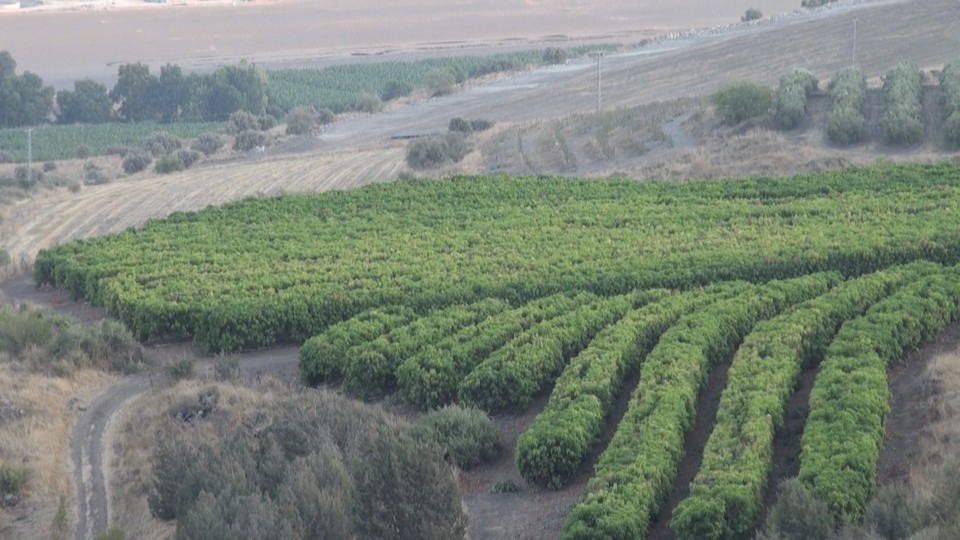



![SuperStock_1788-1275[1]](https://vhoagland.com/wp-content/uploads/2014/01/superstock_1788-127511.jpg)


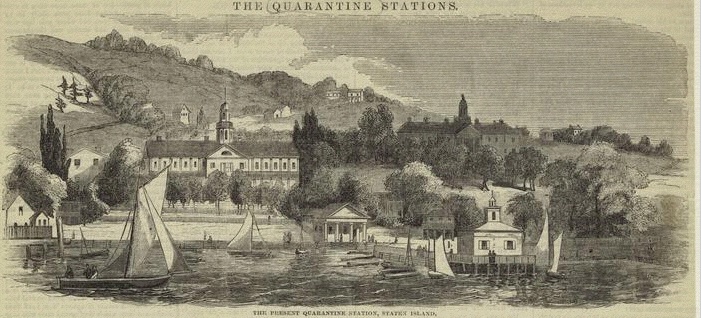
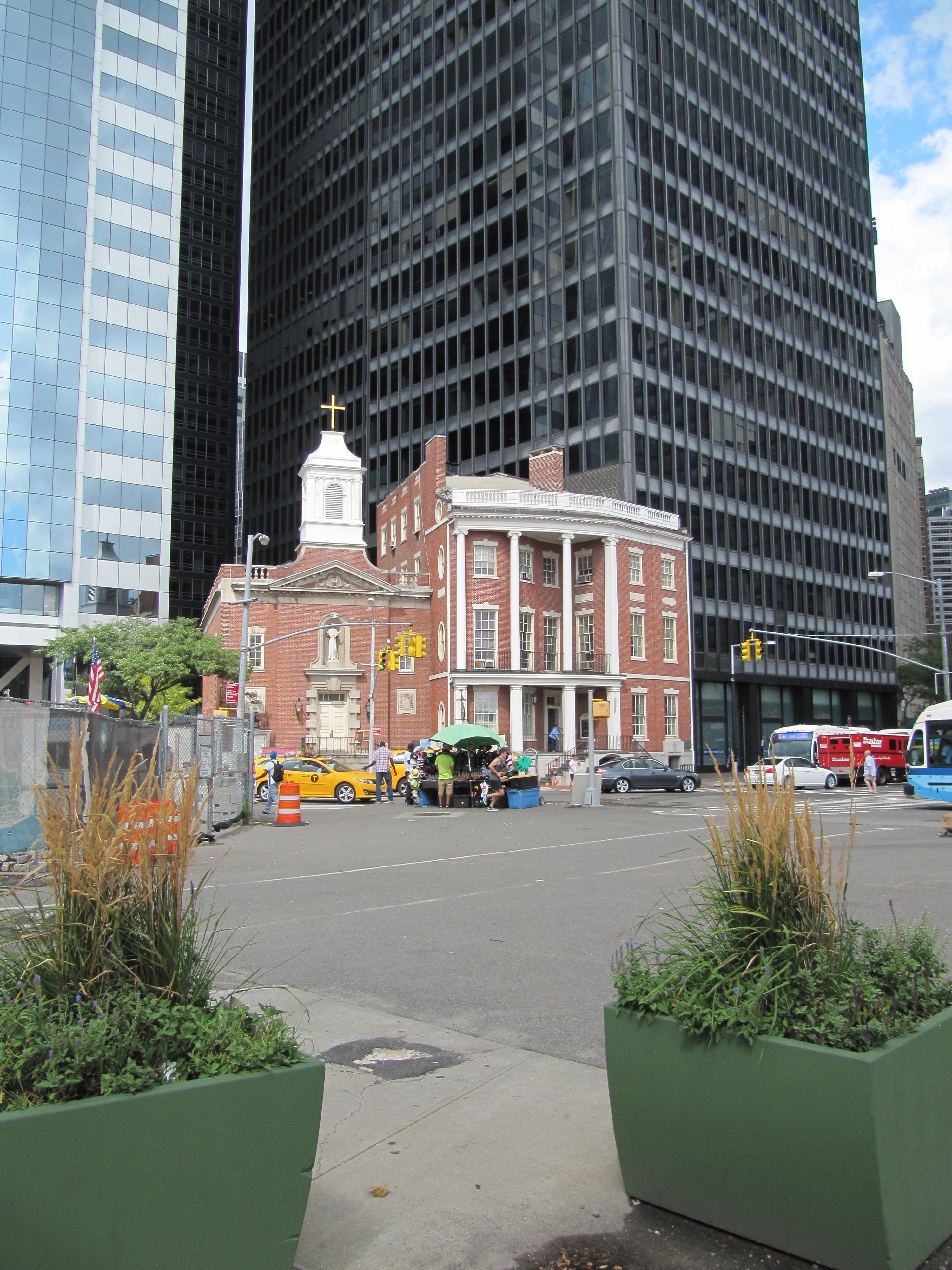


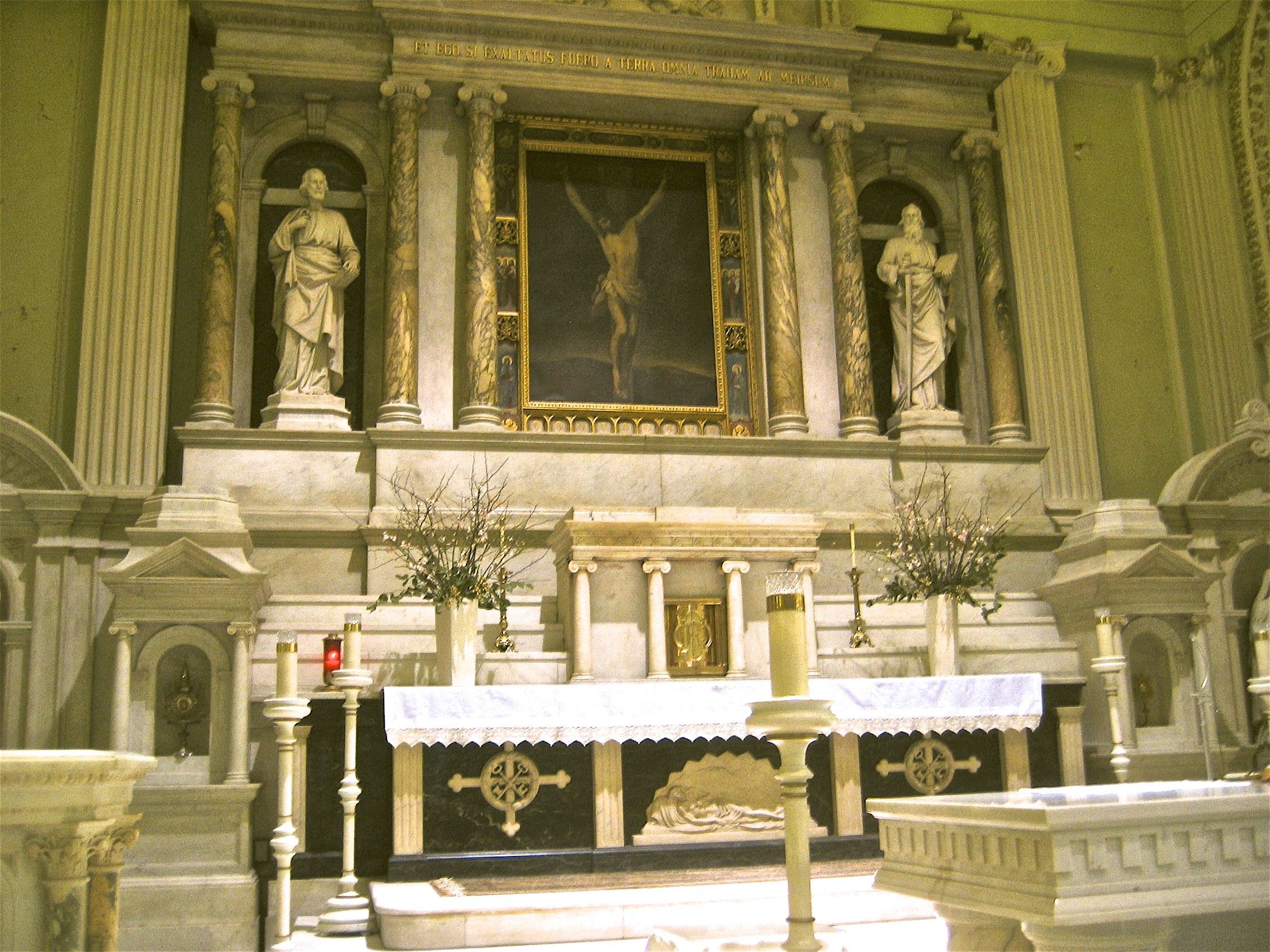

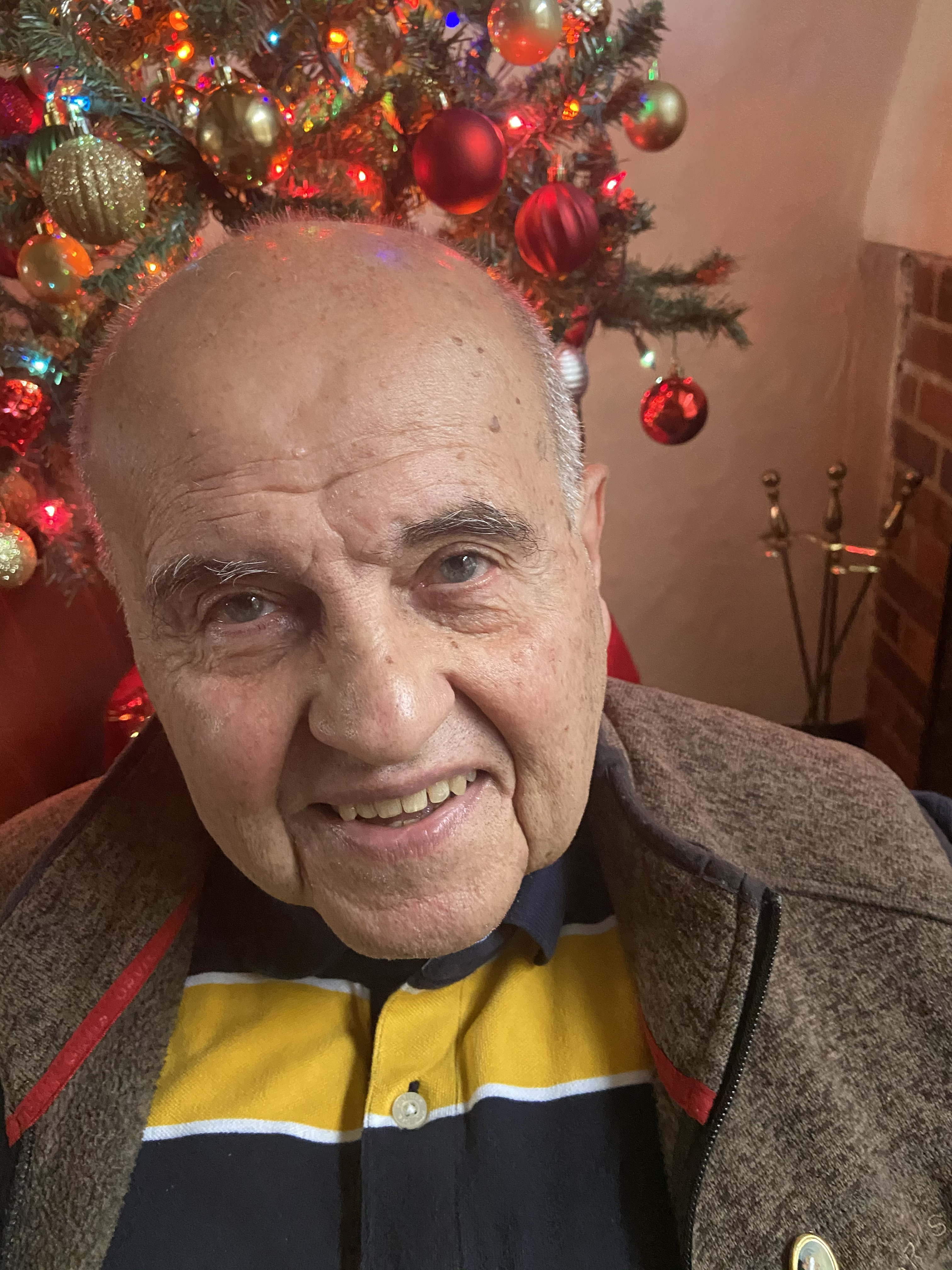


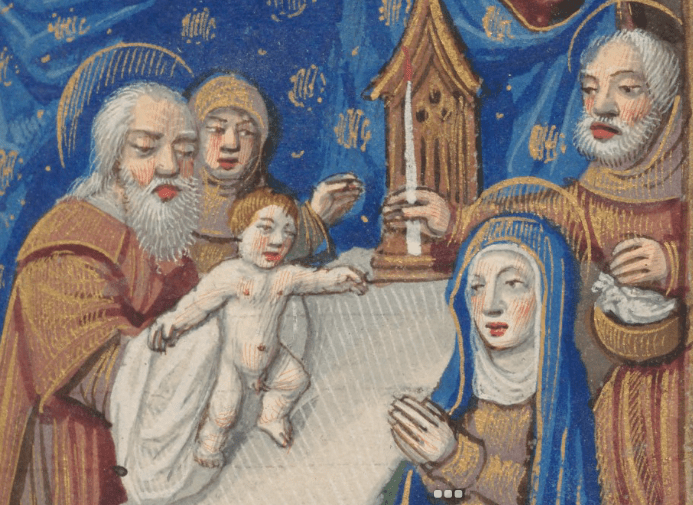
 The Victor's Place