Tag Archives: Passionists

Newtown, CT, A Tragedy of Biblical Proportions

The tragedy at Newtown, CT, is a tragedy of biblical proportions. Near Christmas, one thinks of the slaughter of the innocents by Herod after Jesus was born, a story in Matthew’s gospel. Then there’s the family dimension: in the first book of the bible, Genesis, Cain kills his brother Abel.

I’d like to offer a few reflections on the violence of that tragedy and also some suggestions about what to do, besides praying for the recent victims and their families.

A development has gone on in our church over the centuries about violence in every form, from physical violence like murder, the death penalty, torture, rape, abortion, child abuse, war, to verbal violence like lying, bullying, verbal abuse.

The Old Testament is filled with violence. Some early Christians like Marcion (c AD144 ) actually wanted to suppress the Old Testament because God seemed be an angry God who condoned violence and acted violently. The ancient world was indeed a violent world. Yet we believe that God, who always works with what’s there– sought to bring that world gradually to peace and non-violence.

In the New Testament Jesus, the Word of God, revealed that purpose in a unique way. Jesus refused to use violence or force to achieve his kingdom. He rejected the concept of a warrior Messiah.  He taught us to love our enemies. “Peace, I leave you, my peace I give you.” In his passion and death on a cross he took on the violence of the world and responded to it with a non-violent love.

Our society, it seems safe to say, is becoming a coarser, more violent place. Violence has become acceptable. Let’s begin with life as the media sees it.

I know you can blame the media too much, but let me give you an example of what I mean. The website of the American Catholic Bishops offers an evaluation of current movies. I was looking at it the other day and if my recollections are right, 8 out of 10 current movies evaluated were considered overly violent.

On television there are programs that critics characterize as “Dark Television.”  They’re called that because the characters in these programs are not really “good” people in the real sense of the word. They don’t have much of a sense of morality, or loyalty or justice. They’ve adjusted to the dark world they inhabit every day. They’re not interested in striving for something better. They’re coolly cynical.

I don’t know too much about video games, but from what I hear I wonder if some of them encourage violence as the quickest and acceptable way to win and to get things done.

I don’t think it’s being intrusive, if you’re parents, or grandparents or anyone watching over kids, to know what they watch and tell them if it’s wrong and not healthy.

Our gospel for this 3rd Sunday of Advent is an interesting account of the teaching of John the Baptist. He gives simple directions to soldiers and tax-collectors. To soldiers, “Don’t bully people.” To tax-collectors, “Don’t cheat people.” According to John we grow by giving. “If you have two cloaks give one to someone who has none. If you have food, do the same.”

The other day on National Public Radio there was a piece on kids and empathy. The speakers seemed to say that we’re wired from the womb with the ability to give of ourselves and to empathize with others. Some people have it; some will never have it. I didn’t hear anything said about religion or a moral code or teaching young people how to live. Those things didn’t seem to figure at all.

I don’t buy that. I don’t believe that young man who went into that school was wired from birth to be like that. He may have been severely damaged socially, but did a violent culture also suggest the path he took? Something was missing in his life; someone was missing.  We can’t let that happen. The consequences are too horrible.

The Birth of Jesus Christ

mary 10

On the final evening of our mission last night at Dover Air Force Base in Delaware we reflected on the basic prayers of the season during a short catechesis and  the Infancy narrative from Luke in a longer sermon.

Advent and Christmas are rich with aids to prayer. Let’s reclaim the symbols of the season so they can lead us to reflection and prayer. These days we put lights in the dark, a religious symbol; Jesus said he was the light of the world. The Christmas tree is a symbol of the tree of paradise. Let’s pray in the places where we see them that God bless those places and the people in them.  The carols are little catechisms, let’s listen to their message.

So many of our basic prayers from this season are taken from the bible. Let’s link them to the bible narratives they came from. The Our Father is an obvious example. That’s the prayer Jesus not only taught but lived.

The Angelus and the Hail Mary are prayers linked to the great follower of Jesus, Mary his mother. They are drawn from the Annunciation and the Visitation and mystery of the birth of Jesus. The angel not only spoke to Mary but to us as well. Doesn’t the Word made flesh also dwells with us? We have a model for daily prayer in the prayers associated with Mary. Let those prayers teach us how to pray.

The infancy narrative from Luke is our primary reading for Christmas. Keep in mind that Luke sees Jesus as the world’s Savior  whose message goes out to the whole world. Luke introduces his narrative with Caesar Augustus, ruler of the Roman world, who unified the world and brought it peace. A providential figure, he facilitated the spread of the good news brought by the Child in the manger. Later in the Acts of the Apostles, Luke relates the growth of the church as it reaches the whole world, even Rome itself.

Luke’s gospel is an optimistic gospel that points  to continual growth for the church. Beginning with the poor shepherds on the hillside, Jesus will draw all peoples, all nations,  to himself.

Of course, today we wonder about the spread of Christianity as we in the western world experience a decline.  A recent survey in England noted that only 59% of the English identified themselves as Christian today. Ten years ago it was 79%.  I don’t think our situation in the US is  too different.

One British commentator says that we are moving now to time when religion will be embraced by decision and commitment instead of by cultural acceptance.

A survey last year from the Pew Research Center gave some interesting statistics about religion throughout the world. There are approximately 6.9 billion people in the world in 2010.  2.18 billion are Christians, about a third of the world’s population.While Christianity is declining in the western world it’s growing rapidly in Africa and Asian.

The report notes that since 1910 a great shift has taken place among world religions. Instead of being concentrated in Europe, Christianity has grown enormously in sub-Saharan Africa and the Asia-Pacific region, where there were relatively few Christians at the beginning of the 20th century.  “Christianity has become a global religion. Christians are also geographically widespread – so far-flung, in fact, that no single continent or region can indisputably claim to be the center of global Christianity.”

A third of the world’s population call themselves Christian. Half of them are Roman Catholic.

Over two thousand years ago, Jesus Christ was born in Bethlehem, of poor unknown parents. He grew up unrecognized in a small discounted Galilean town called Nazareth. For a few years he taught, he healed people of illnesses, he raised the dead to life, he gathered disciples who followed him. They abandoned him when he was put to death on a cross. Then he rose from the dead.

You would might expect that history would forget him as it does so many others, like Caesar Augustus.  But Jesus Christ hasn’t been forgotten.   Over two billion people in our world today remember him and follow him.

“Christianity has become a global religion.” Luke’s portrayal of the church is on target.

Spiritual Childhood

peaceable kingdom copy

This evening at the Catholic Chapel at Dover Air Force Base I spoke on spiritual childhood, an important part of the spirituality of Advent and Christmas. “Unless you become like a little child, you cannot enter the kingdom of heaven,” Jesus said. Isaiah saw a child at the center of the Peaceable Kingdom.

In the short catechesis as our service began, I recommended the bible as a way to know Jesus Christ as a teacher of faith and prayer. I like the New American Bible, Revised Edition (NABRE) because it’s the version we use in our liturgy and it’s got great notes. Its recent revision takes into account newly discovered biblical manuscripts, the latest archeological finds and historical and biblical scholarship.

The New Jerusalem Bible and the RSVP translations are also good.

Many still use the King James version of the bible, one of the great literary treasures of the English language, but it has drawbacks. It hasn’t benefited from the advances in biblical scholarship that have taken place since its creation in the 16th century.

According to a recent survey of Catholics in England, most English Catholics still don’t read the bible much; usually they only know it from Mass on Sundays. That’s also true here in the United States, I think.

It’s important that we take our direction from the 2nd Vatican Council which sees the bible at the heart of our spirituality and a bridge to better relationships with other Christian churches.

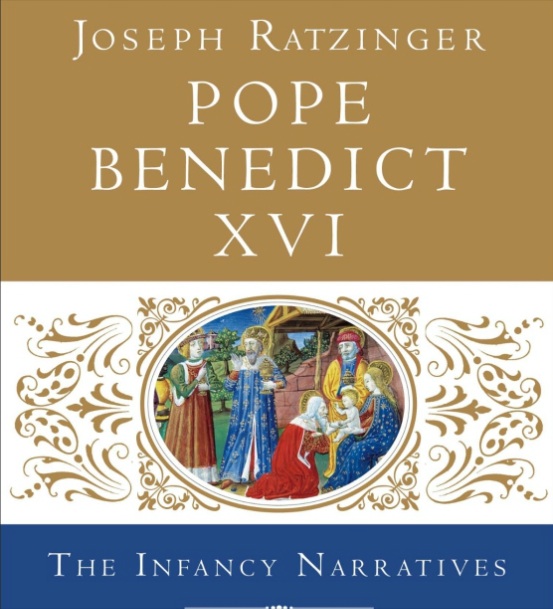
Pope Benedict offers a fine example of how to use the bible in his three volumes entitled Jesus of Nazareth. His last volume, on the infancy narratives, was just published before Christmas.

I spoke in my main presentation about the spirituality of childhood, reflecting on a description given by St. Leo the Great. To be a child means to be free from crippling anxieties, forgetful of injuries, sociable and wondering before all things.

2nd Sunday of Advent

We’re reading from the Gospel of Luke today. He plays a major role in the season of Advent. All this year, in fact, we’ll be reading from Luke’s Gospel on Sundays.

When you read Luke, notice especially his thrust towards the world beyond Judaism. Though he repeats most of the stories about Jesus found in the gospels of Mark and Matthew, Luke emphasizes the universal message of Jesus. His gospel is meant for everybody.

In Luke’s gospel, for example, old Simeon in the temple predicts the Child will be a “light of revelation to the gentiles.” ( Luke 2, 32) “All flesh shall see the salvation of our God,” John the Baptist says to today’s gospel. (Luke 3,6) Outsiders like Namaan the Syrian and the widow of Zareptha will accept his gospel rather than his neighbors, Jesus says in the synagogue at Nazareth. (Luke 4,17 ff) After his resurrection Jesus tells his disciples “A message of repentance and forgiveness would be preached to all nations.” (Luke 24,47)

Luke further emphasizes that the Christian message is good for this world. It brings life. The Acts of the Apostles, Luke’s sequel to his gospel, tells of the beneficial spread of the gospel from Jerusalem to Rome, “the ends of the earth.”

In today’s gospel for the 2nd Sunday of Advent you can see the evangelist’s universal thrust. He introduces John the Baptist by a list of impressive world leaders:  Tiberius Caesar, Pontius Pilate, Herod Antipas and Philip, the sons of Herod the Great, and the Jewish priests Anna and Caiaphas– all significant figures, and most strong opponents of Jesus.

They represent the power structure of the day, but Luke is not interested in their stories. He would have us recognize the real power in this world: Jesus and John.

How insignificant John the Baptist seems compared to an emperor and Roman governor, other powerful rulers and priests. Unkempt in appearance and in ragged clothes, John looks like a nobody as he preaches to travelers near the Jordan River, on the road to Jerusalem. What power does he have? Luke answers simply, “The word of God came to John the son of Zechariah in the desert.” The word of God empowered him.

The gospels invite us to see ourselves and our world in the stories they tell. What can we see in this gospel?

Does Luke remind us that Jesus is more important than anyone else in this world, even ourselves? Keep before your eyes the One who is far more important, far more wise, far better than any celebrity or anyone famous. Look for the One who in the manger and on a cross. God is present and powerful there.

We are meant to bring our gifts to this world. Our time and place wait for the goodness of the gospel, and who will bring it but us?  I mentioned earlier that Luke’s gospel says Jesus’ message is meant for everybody. Do we really believe that, or are we losing our belief that Jesus Christ belongs in everyone’s life?

John the Baptist in the desert seems to have nothing. But he has the word of God, a word he preached and lived.  Isn’t that enough?

The Testament of Mary

Mary sorrows copy

A new book called The Testament of Mary by the Irish writer Colm Toibin presents a very unorthodox picture of Mary, the Mother of Jesus. She’s an old woman  living in Ephesus telling two of Jesus’ disciples about the life and death of her son. One reviewer said of the book, “This is not the Mary your mother knew.”

That’s because Toibin pictures Mary as an embittered, vengeful woman who’s still grieving and angry over her son’s death. She can’t accept it and sees nothing good about it. Her son had been taken away from her.

Some reviewers in the secular press praise the book because they say it’s so human. That’s the way a mother would deal with a son’s unjust death, they say. But is it human to live angry and embittered? Are we human when we end our lives disappointed and with no hope? Is that what God means human to be? Was that really the way Mary was?

Not according to the gospels. The Mary they present certainly bears her cross. Christian devotion calls her the Mother of Sorrows and says that seven great sorrows pierced her heart. She stood by the cross of her Son. But she saw something beyond the sorrows and apparent failure. God was there in it all and a larger plan promised resurrection and life.  Mary was a believer and that made the difference.

It seems to me that Toibin’s gospel presents Mary as our secular culture sees all human beings, as if all life’s meaning comes from the here and now, and then there’s death. A cold dreary picture of being human.

But Mary represents humanity redeemed, as God means it to be. The mystery of her Immaculate Conception–which we celebrate December 8th– far from isolating her from the rest of us, prepared her to be the first fruits of a new humanity, as she followed  the path of her Son. She was human as God meant human to be.

It I were writing a book like Toibin’s I think I would begin it in Jerusalem where St. Luke describes the disciples waiting after Jesus ascended into heaven. Among them were“…certain women, including Mary the mother of Jesus.” (Acts 1.14) They were wondering when the days of God’s restoration of the kingdom were coming, even though Jesus had told them “It’s not for you to know the days.”

Still, there and then in Jerusalem, the disciples were sure the kingdom was coming soon, even though Jesus tells them to witness to him further “in Jerusalem, Judea and all Samaria, and to the ends of the earth.” (Acts 1, 6-9) Luke charts that journey of the church in the Acts of the Apostles.

Did Mary at that time temper the expectations of the disciples by sharing her own experience of patient waiting, of her closeness to her Son, of God’s mysterious ways. “How can this be?” she once said to the angel. She knew what it meant to wait for God’s will to be done after the angel left her. God’s will is beyond our will and expectations.

There with the disciples in Jerusalem, Mary would be a thoughtful woman, who found answers to the questions she kept pondering in her heart in the scriptures and the feasts they celebrated in the temple. We can hear Mary’s voice in Luke’s Gospel, not a voice of anger or bitterness, but a voice proclaiming God’s goodness for the good things done through her. She was truly “blessed among women.”

“Full of grace,” she was full of humanity too.

Come and See

There’s not much said about the apostles in the New Testament; they walk in the shadow of Jesus. Because of that, we have only a few details about Andrew, the brother of Peter, whose feast is today.

One detail is his name, Andrew, a Greek name, which may be due to the fact that the area around the Sea of Galilee was multi-cultural and Jewish families sometimes took gentile names.  His family was from Bethsaida where a lot of trade went on. Did Andrew speak some Greek?

Maybe he did, because later in John’s gospel he and Philip bring some Greek pilgrims to Jesus before his death. Jesus sees their coming as a sign of his approaching passion and glorification and he rejoices. (John 12, 20-28) We have to be careful of seeing Jesus’ apostles as poor uneducated fishermen, not likely to get along in a bigger world.

Andrew must have been religious. Early in John’s gospel, he’s described as a disciple of John the Baptist who points Jesus out to him. Jesus then invites Andrew and another disciple to stay for a day with him. “Come and see.” Afterwards, Andrew “found his brother Simon and said to him ‘We have found the Messiah.’” (John 1,35-41)

The Greek Church honors Andrew as its patron and considers him the first apostle because he was the first to see Jesus and follow him; then he called his brother. Tradition says Andrew was crucified on the beach at Patras in Greece and during his martyrdom extolled the mystery of the Cross of Jesus. He’s also the patron of Russia and Scotland.

A number of saints and feasts are celebrated during Advent. Certainly, saints like Andrew belong in our celebration of the Incarnation.  Jesus, the Incarnate Word, drew people to himself who, in turn, drew others. His grace can’t be contained.

“Come and see,” Andrew says.

Jesus of Nazareth, The Infancy Narratives

You wish they would read it instead of looking for a headline. I mean the pope’s new book “Jesus of Nazareth, the Infancy Narratives”  Image Books, 2012. From the headlines the last few days you would think all the pope said was that the ox and the donkey weren’t around the manger at Christ’s birth, and he’s joining others who question the historical reliability of this event.

The contrary is true. As in his previous books on Jesus of Nazareth, Pope Benedict engages what modern scriptural scholarship says about this section of the gospels. (True, he depends on German and French scholarship for the most part) But if anything, the pope sees a swing from not accepting a history behind the infancy narratives to a recognition of historical facts.

But he does more than affirm history. He sees meaning behind the facts. So the manger of Jesus to him is the Lord’s first throne, the humble temple where he comes to feed the poorest of the world.

“So the manger has in some sense become the Ark of the Covenant, in which God is mysteriously hidden among men, and before which the time has come for ‘ox and ass’–humanity made up of Jews and Gentiles–to acknowledge God.”

I downloaded the book yesterday. A good book to read in Advent. Here’s a theologian and mystic at work. I think his three volumes on Jesus of Nazareth will stand as his lasting contribution to the church.

It Ain’t Over Till It’s Over


I’m rereading a book by one of the leading theologians at Vatican II, Yves Congar, OP called “The Mystery of the Temple, Newman Press, Westminster, Maryland 1962.” As I noted in a previous blog, Congar wrote out of his experience of increasing secularization in France in the 1950s. People were abandoning God and the church.

I’m only realizing it now (I’m a slow learner) that his treatment in this book of the Presence of God in sacred history, beginning with the patriarchs and extending to the time of David and the prophets, was a way he was figuring out the Presence of God in this period of time. Where is God now?

These sentences struck me: “We are always tempted to confine ourselves to what we see and touch, to be satisfied with this and to think that a preliminary achievement fulfills God’s promise.”

Abraham thought God’s promise was fulfilled in Ismael, Joshua thought it was the conquest of Canaan. Solomon thought it was in his immediate descendants…”but these promises were capable of more complete fulfillment which would only materialize after long periods of waiting and urgently needed purification. Only the prophets–and this, in fact, is their task–draw attention to the process of development from seminal promises and to the progress of the latter towards their accomplishment through successive stages of fulfillment continuously transcending one another.”  (p 31-32)

We may look at the church or our world at this time and think it’s the end, but it isn’t.  It’s only a “preliminary achievement” in God’s plan. We need prophets to “draw attention to the process of development from seminal promises” by successive stages of fulfillment.

God is the Pillar of Cloud leading us on, Emmanuel, God with us. “It ain’t over till its over.”

Sandy 2012

Natural disasters like Sandy, the hurricane that struck the east coast of the United States, Haiti, Jamaica, Cuba and other nations of the Carribean provoke the question: Where is God in all of this? “It’s a wake-up call,” a woman ahead of me at the polling booth on election day said.

Jesus said the same thing when he spoke of a falling tower that killed 18 people in Siloam. (Luke 13,4-5)  Natural disasters are part of the “signs of the times” that call us to repent.

They keep us real about life. The storm surge from Hurricane Sandy came in from the ocean and hit my sister’s house in Lake Como, NJ, around 9:30 PM, Monday evening, October 29th, 2012. Power had gone off around 5PM. I heard what I thought was a clap of thunder, but actually it was part of the foundation of the house under the bedroom where I was sleeping falling down before the surge of water. Looking out the back window I could see waves of waters breaking against the house and I could hear driving winds shaking the trees.

In the front of the house facing the street I could see the surge of water breaking over my sister’s car parked in the driveway. The waters came up to the first step on the porch of her house and then stopped. In the dark I couldn’t see anything beyond what was lit by a small flashlight.

The next day the waters subsided and you could see fish from Lake Como jumping in the streams of water on the street. Outside my bedroom window I saw a heron diving for fish in the waters in our backyard.

Most of the people on 21st Street stayed through the storm; a number of them had generators. They were out on the streets the next day cleaning up and assessing the damage which along the Jersey Shore must be in the millions of dollars. They were thankful to be alive. My sister abandoned the house.

There was kindness that day. Dave from down the street came with two cups of coffee. Richie from across the street pushed my sister’s car from the watery driveway to a higher part of the street. Bill and Joe tried to get her car started but to no avail. Susan and Bob came to drive her to a friend’s house and me to the rectory.

There were offers of food, shelter, showers. Cell phones were charged, water was provided. So much was lost, but it also brought a sense of reality: “Naked I came into this world, and naked I shall return.”

Also, I could hear a favorite saying of my mother: “We got this far.”

Here’s a video of that storm:  

A Lump of Clay


A Lump of Clay


I feel like a lump of clay

lying shapeless on a board

waiting for the sculptor

to shape me into what

he sees in his mind’s eye


The sculptor is perfect

but the clay is not-

it can be stubborn

resistant, uncooperative,

free-willed


It does not always mold

into the sculptor’s vision

but prefers to take shapes

that his hands have not

intended

and so, many times

it has to be scooped up

and shaped into the lump

it once was


With infinite patience

and love

the sculptor starts again

and shapes over and over again


until the clay realizes

it is gradually, willingly,

becoming the sculptor’s vision


Gloria Ziemienski

September 29, 2012