Tag Archives: Passionists

The Seed and the Sower (15th Sunday A)

In today’s gospel from Matthew 13, 1-23, Jesus offers a parable that interprets the mounting opposition he faces from many sides early in his ministry.  For one thing, people in Chorazin, Bethsaida, Capernaum–cites and towns along the Sea of Galilee that received him warmly for his miracles and his teaching– begin to turn away from him. (Matthew 11,16-24)) The Pharisees and scribes, the Jewish religious leaders, accuse him of breaking Jewish laws and being possessed by the devil. (Matthew 12,22-34) Some of his own family from Nazareth come to take him home because they think he’d out of his mind. (Matthew 12, 46-50) Finally, his own disciples don’t seem to understand him.

What explains the desertion, opposition, lack of understanding towards him and his  ministry that began with great acclaim?

The parable of the seed and the sower is Jesus‘ answer to what he faced, but also what the Word of God faces continually from humanity.  God’s Word is received by the human heart like seed received in the ground.

The seed is life-giving,  but if it falls on rocky ground it’s eaten right away by the birds of the air. If it falls on thin soil it fails after awhile because it has no roots; if it falls among thorns and weeds they choke it. But if it falls on good ground the seed produces fruit beyond anything you expect.

The parable first applies to the world Jesus faced, but it’s also a picture of how  humanity in every age receives the Word of God.  Our hearts can be hard, fickle, vain, proud, unheeding, but we can also accomplish great deeds. The seed’s not at fault, it’s the ground it falls on.

Still, the sower never stops sowing seed. life-giving seed. That’s also important to remember. God never withholds his grace.

In a poem called “Putting in the Seed”  Robert Frost describes a farmer’s love affair with the earth. It’s spring and getting dark, yet the farmer keeps working his field. Someone from the house goes to fetch him home. Supper’s on the table, yet he’s a

  “ Slave to a springtime passion for the earth.

   How Love burns through the Putting in the Seed

   On through the watching for that early birth

   When, just as the soil tarnishes with weed,

 The sturdy seedling with arched body comes

 Shouldering its way and shedding the earth crumbs.”

Is Frost’s farmer zestfully casting seed on the waiting earth an image of God, the Sower, casting saving grace onto the world, in season and out, because he loves it so ?

Jesus’ parable of the seed and the sower seems to suggest it. The land surrounding the Sea of Galilee where Jesus ministered is still a fruitful land where crops grow in abundance, as they did in his time. It’s a blessed place. In a place like that, the sower scatters his seed confidently, not afraid where it goes: on rocky ground, or amid thorns, or on the soil that gives a good return. Because of his love and trust of the land,  the sower keeps sowing.

Can we say that God the Sower sows blessed seed, no matter how badly our human world appears, or how badly it receives? Like the seasons that bring snow and rain, grace is never withheld.  God, who loves it so, blesses the earth and all of us.

The sower still sows; the snow and rain still fall. That brings us hope.

An Abundant Harvest

Samaritan woman

As Jesus announces the coming of the kingdom of God, he often speaks of it as a harvest. It’s an “abundant” harvest, he says today in Matthew’s gospel– bigger than you think. That’s because it’s  God’s harvest. You need plenty of laborers to bring it in.

In one of his harvest parables, Jesus describes the owner of a vineyard calling workers into his vineyard. He’s obviously underestimated the size of the harvest. The first crew he sends  at 9 in the morning aren’t enough, so he calls more workers at noon, then 3 in the afternoon. At 5 in the afternoon he’s still adding to his workforce.

Though it’s not the main point of that parable, I think we can surmise that the vineyard owner didn’t grasp how big the harvest was. Neither do we grasp how “abundant” God’s harvest is, how great is the Kingdom that comes. We don’t see it.

Yet, the harvest is abundant, Jesus says as he goes through the towns and cities along the Sea of Galilee. Even as Pharisees and scribes oppose him, as he faces a lack of understanding from his disciples and his own family, as the towns where he ministers reject him, Jesus sees the coming of God’s kingdom.

He’s not looking at statistics; he doesn’t need a pollster or opinion polls to tell him the situation. He sees a harvest in the yearning for God, the desire for God, the workings of God in the people he meets.

According to John’s gospel, the woman he meets at Jacob’s well in the middle of the afternoon is enough for him to see God’s work. His disciples wonder why he’s talking to her,  a Samaritan woman. Jesus answers that he sees fields ripe for harvest in her.

Humility Makes You Strong (14th Sunday of the Year)


To listen to my audio recording of today’s post just select the audio file below:

We see Jesus entering Jerusalem on Palm Sunday in today’s Old Testament reading from the Prophet Zechariah. As Savior and Messiah he rides into Jerusalem on a donkey, and the crowd puts palm branches on his path. He’s  a humble king, not riding in a war chariot surrounded by soldiers. He comes as a poor man, riding a little donkey, bringing peace. (Zech  9)

Jesus came to Jerusalem as the prophet predicted, Matthew’s gospel says.  He’s not a Zealot, a member of a Jewish party that sought to change things by violence; Jesus came calling for peace, not violence. “I am meek and humble of heart,” he says. “Learn from me.”

Humility is a hard lesson for us to learn today; we’re an aggressive society that believes the louder you shout, the harder you push, the less you listen, the more you succeed. Strong words and strong actions, that’s what we like. Patience is weakness, we think. It’s weak to be meek and humble.

Let’s think about humility, however. Do you know where the word humility comes from? It comes from the Latin word “humus” which means dirt. When you’re humble you’re feet are on the ground. You’re “down to earth” You know who you are, where you came from, your weaknesses and strengths. You don’t put on airs. You’re anchored in reality.

And you know other people are like you. We all come from the same roots.  Other people are like you. If you think you are above others, you’re not.

Jesus was meek and humble, the gospels recall. Yes, he was powerful in words and deeds. But people were drawn to him mostly because they found him easy to approach and, yes, “down to earth.”

The greatest people are humble. Humility makes you strong.

After the Revolutionary War was over, George Washington met one day with a number of his troops who were disgruntled because the Continental Congress hadn’t paid them yet for their long years of hard service. The ex-soldiers were angry, on the brink of another revolution.

Washington took out a paper to address them, but he couldn’t read it. His eyesight was failing. So he put on a pair of spectacles. “Excuse me, gentlemen,” he said, “ but I have lost my sight in the service of my country. “

No one remembered what Washington went on to say after that, but the mood of the men changed. They remembered what he had gone through. The humility of the man won them over.

So we remember Jesus Christ, who lived simply in his years at Nazareth, who loved those who had little, who submitted to insults and injustice, who labored and bore burdens. “Help us learn from you,” we ask, “for you are meek and humble of heart.”


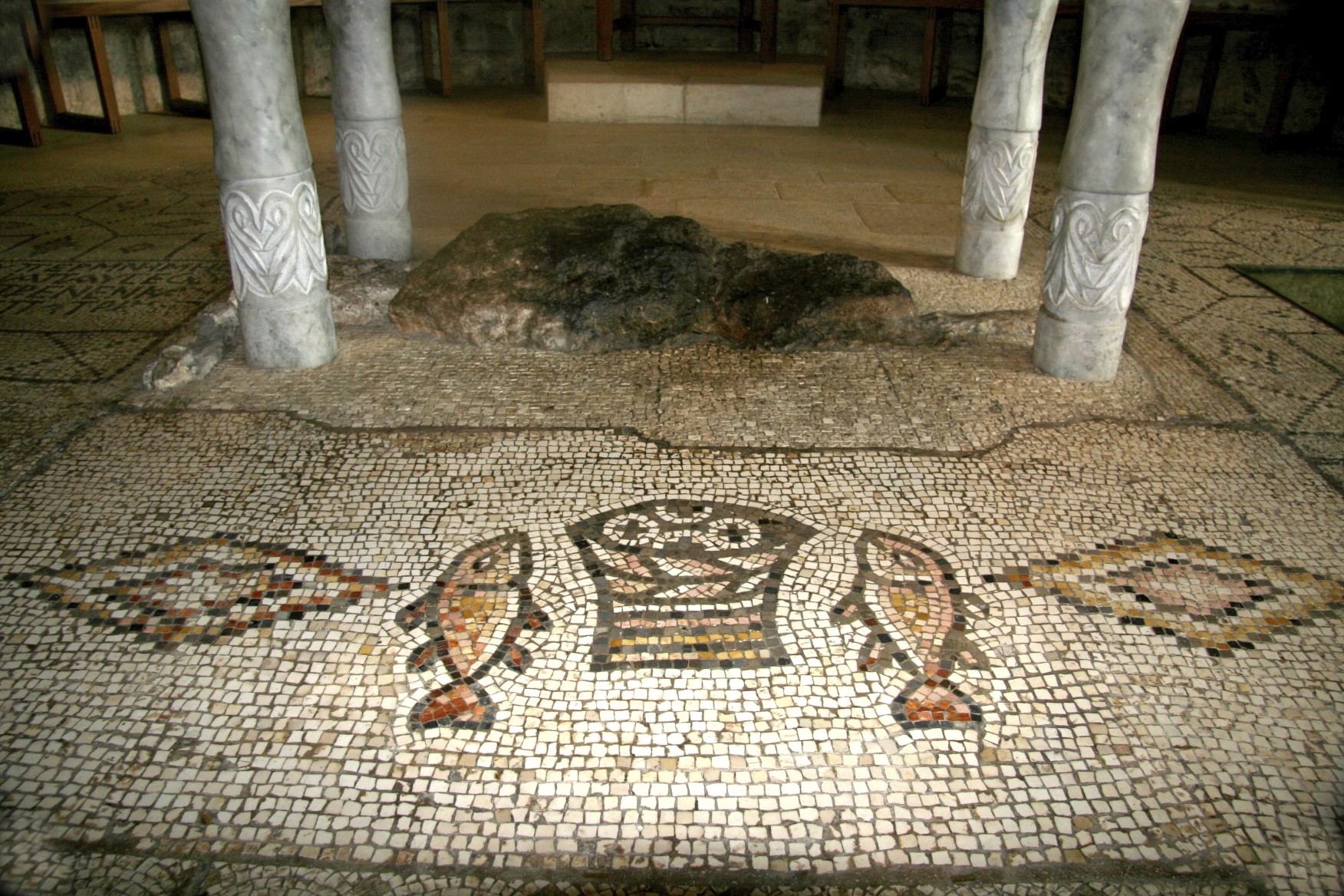
Corpus Christi

Tagbha carol roth 2


“I Love a Mystery” was a radio program I listened to as a young boy, long ago. It started, as all mysteries do, with something concealed. Someone, something was lost, someone was killed or was being hunted down and for the next half hour you would follow the various clues until the mystery was solved.

The Mass is a mystery too. A “mystery of faith,” we say, and it hides the treasures of our faith.

One of the earliest terms describing the Mass is “the Lord’s Supper,” referring of course to the supper that Jesus shared with his disciples the night before he died.  He spoke to them that night of his love and then gave himself to them under the signs of bread and wine. Then he said “Do this in memory of me.”

In every Catholic church we try to keep his command. Whether it’s St. Peter’s Basilica or a parish church or a small chapel off a busy city street, there’s an altar, a table, at the center of the place and the Lord’s Supper is celebrated here in memory of him.

Readings from the Old and New Testaments will be read here, because Jesus spoke from the scriptures to his disciples. Then the priest who represents Jesus takes bread and wine, gives thanks to God for the gifts of creation and life itself, then repeats the words of Jesus, “This is my body” “This is my Blood.” Then we all receive these gifts.

We gather around Jesus as his disciples did, not perfect disciples to be sure, but we’re among those “whom he loved till the end.” And he feeds us with his wisdom and life.

Our celebration of the Mass can be flawed by cold routine or lifeless participation. We who take part in the Mass–priest and people – may not bring the lively faith or spirit of thanksgiving that’s  “right and just” for this great act of worship. But still,  as a church we celebrate the Lord’s Supper. We have been celebrating it from the time of Jesus till now, and we will continue till its signs are replaced by the reality of the Kingdom they signify.

Ordinary time is when the Holy Spirit acts. It’s also the time when we know Jesus Christ through the signs he has left us, particularly through the Holy Eucharist.

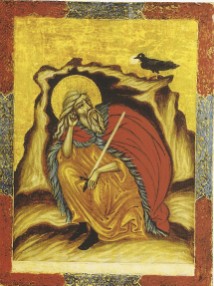
Elijah

Elijah
Jesus came into a Jewish world expecting a Messiah, but what kind of Messiah were they hoping for? Some Jews of the time expected a royal Messiah, the Son of King David. You see that expectation in the Gospel of Matthew which begins by tracing the human origins of Jesus back to David. “An account of the genealogy of Jesus the Messiah, the Son of David and Son of Abraham.”

Hope for a Messiah like the warrior King David who would free the land of Israel from its oppressors grew stronger among the Jews after the Roman occupation of Palestine by the Roman general Pompey in 63 BC. It can be seen in some of the Essene writings discovered from Qumran in recent times.

The Gospel of Matthew indicates that ordinary people too were hoping for a kingly messiah at the time of Jesus. “Can this be the son of David,” the crowd says after he cured a man who could not see or speak. (Mt 12,23) “Hosanna to the son of David,” the crowd says as he enters Jerusalem on Palm Sunday. (Mt 21,9) That causes the leaders in Jerusalem to become angry, because a claim like that could fire revolution and they feared what would happen because of it. (Mt 21.15)

Jesus never claims to be a political revolutionary, however. He refuses to fit neatly into that kind of messianic expectation. He will not lead an uprising against the Romans. He’s not John the Baptist come back from the dead. “Jesus is not confined to playing an already fixed role–that of Messiah– but he confers, on the notions of Messiah and salvation, a fullness which could not have been imagined in advance.” (Pontifical Biblical Commission)

If we ask what messianic expectation of his time Jesus comes closest to, we might find it in the hope for a prophetic messiah like Elijah, who is featured in our readings this week.

Like Elijah, he will speak the truth against the powerful, he will help the poor, he will suffer persecution; he will raise the dead.

Pentecost

DSC00804
The scriptures for the Feast of Pentecost describe the coming of the Holy Spirit in dramatic terms. Strong winds and tongues of fire come upon the disciples of Jesus in the Upper Room,  the Cenacle,  fifty days after the resurrection of Jesus. They’re filled with energy and joy. It seems like an unrepeatable experience.

Then, immediately, confidently, they preached the gospel to people from the ends of the earth who are amazed at their new knowledge and new words

Certainly the Holy Spirit gave them a burst of new enthusiasm that day.  We marvel–as their first listeners did– how these ordinary Galileans were transformed by the gifts they were given.   Peter eventually made it to Rome. John may have gotten to Ephesus in Asia Minor. Maybe Thomas got to India. Inspired by the Holy Spirit, “their message went out to all the earth.” Transformed, they began a universal church centered on Jesus Christ.

But, like the other mysteries of our faith, Pentecost is repeatable, on-going.  It’s not one burst of enthusiasm, a jump-start never to happen again. Without the strong wind or tongues of fire we experience the Holy Spirit too, usually in quieter ways.

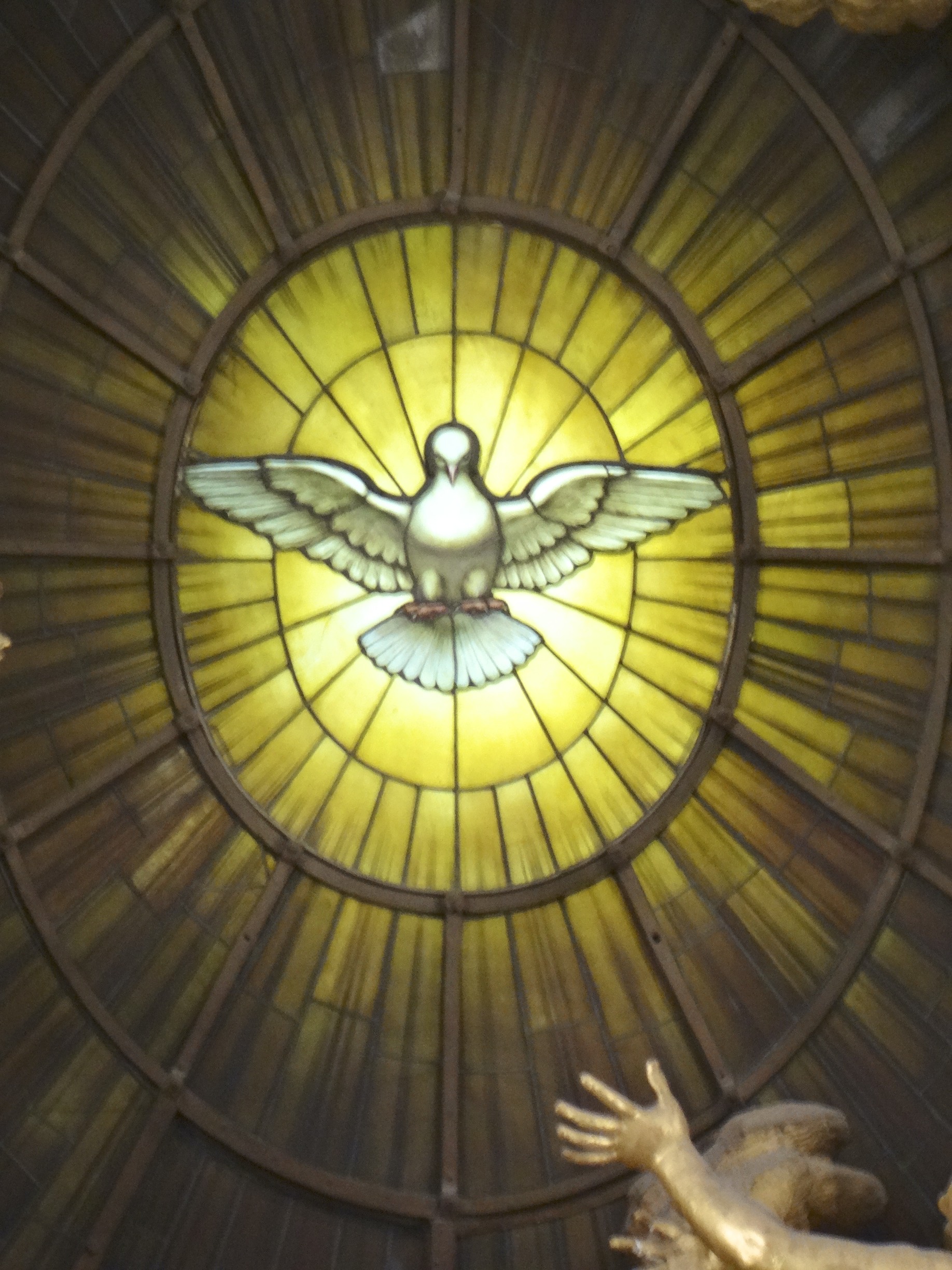
Behind the Chair of St. Peter in the Vatican Basilica, the artist Bernini, created a beautiful alabaster window where a steady light pours into the dark church through the image of the Holy Spirit,  in the hovering form of a dove.

Day by day, the light comes quietly through the window. Day by day, the Holy Spirit dispenses light for the moment, graces for the world that is now. As Jesus promised, the Holy Spirit dwells with us. The Spirit remains with us as Jesus’ final gift.

“Lord, send out your Spirit and renew the face of the earth…Come, Holy Spirit, and fill our hearts with the fire of your love.”


Exploring the Land Where Jesus Lived

Map 1st cent.A group of 8 Catholics and Protestants leave on Monday from JFK to explore the land where Jesus lived. We’re staying with the Passionists in Bethany for five days and then five days with the Franciscans at the Mount of the Beatitudes on the Sea of Galilee.

Bethany, on the lower eastern slopes of the Mount of Olives is considered part of East Jerusalem; the Mount of Beatitudes on the Sea of Galilee puts us within walking distance of Capernaum, so we’re close to two places with important links to Jesus.

Some of us have media experience and one of our goals is to produce some short videos (5 minutes or so) on the various holy places that may help Protestants and Catholics alike to deepen their knowledge of Jesus and his mission.

I’ll publish blogs of our trip for the next ten days, depending on internet access and what energy I can draw on. We’ll use Jerome Murphy-O’Connor’s fine guidebook, The Holy Land: An Oxford Archeological Guide…2008, along with the gospels to help us find our way.

Pilgrimage is always an adventure. So, here we go, pray for us.

The Good Shepherd

“I am the Good Shepherd.” This is one of the names Jesus often used to describe himself and his mission. The Old Testament before him used this same image to describe God. So, Psalm 21 begins “The Lord is my Shepherd.”

During the Easter season the church favors portraying Jesus in symbolic ways: “I am the vine,”  “I am the Bread of Life,” and the description of him in our gospel: “I am the Good Shepherd.” That is because we know the Risen Christ now, not by seeing him, but in signs and symbols.

The Good Shepherd is a many-faceted image. On one hand, Jesus says he is the shepherd who goes in search of his lost sheep, and when he finds it he cradles it tenderly in his arms and brings it back to the flock. However far we stray, he will search for us and lead us back to the safety and comfort of his presence.

But the shepherd also leads his sheep and guides them through “a dark valley” into experiences and ways they cannot know. So, during the Easter season we read the story of the journey of the early church. Now, as then, Jesus is the shepherd leading his church into paths unknown, until finally she comes into “green pastures.”

He will lead each of us on our journey. Like sheep we feed intently on the small plot of life our eyes fall on. But the Good Shepherd is never far from us. No, we do not see him; but he is always near. We can trust him, “the shepherd and guardian of our souls.”


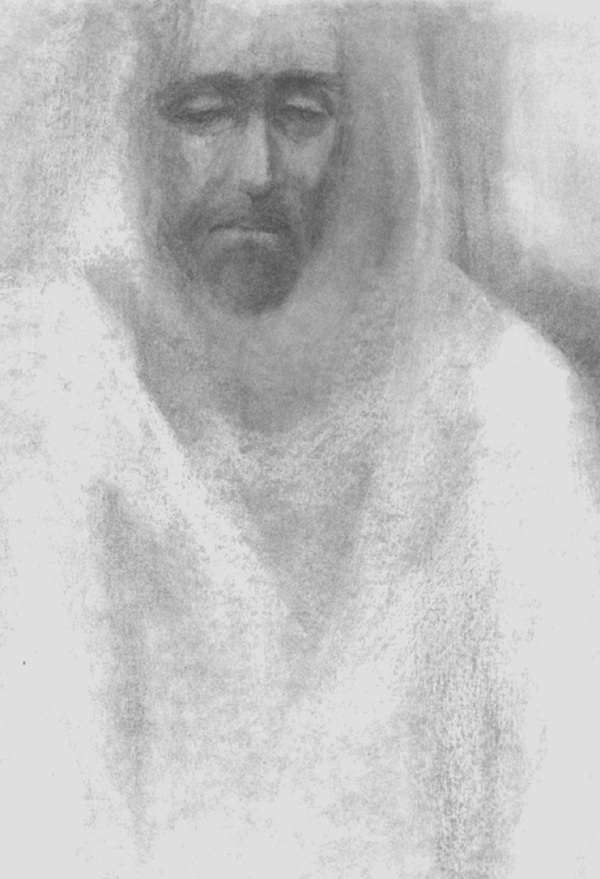
The Blind Believe

Jesus sorrowing

Rejected by your own,
By those who know so much
yet know so little.

This week in Jerusalem,
the city that knows so much
yet knows so little,
you walk its streets where a blind man begs
and give him sight that he never had before,
but they don’t believe
you’re God’s Son,
his only Son, equal to him.

“Who is he, sir, that I may believe in him?”
the blind man said with new sight.
“You have seen him,
the one speaking with you is he,”
you said to the man with new sight.

He worshiped you,
“I do believe, Lord.”

Give us his sight.

art: Duk Soon Fwang

3rd Sunday of Lent

Lent 1
readings (Please read further for Spanish and Swahili versions)

John’s gospel says that Jesus, setting out from Jerusalem for his native Galilee, “had” to pass through Samaria and meet the Samaritan woman at Jacob’s well. So it was not by chance that Jesus, the Savior, enter that land whose people were so bitterly opposed to their neighbors, the Jews of Judea and Galilee.

“It was about noon, and Jesus, tired after his journey, was sitting by the well.” A Samaritan woman came to the well for water. What a strong, unconventional woman she was! She came alone at noon, not the usual morning or evening time when women of the town came in groups with their water jars. Nor does she hesitate at the sight of a man sitting alone at the well.

How forceful and sarcastic her answer when Jesus asks for a drink! “What! You a Jew, ask for a drink from a Samaritan woman?” The ancient feud between Jews and Samaritans rises in her blood.
Yet the weary man persists, talking of human thirst and the living waters God provides. Gradually, as he talks of higher things, the woman recognizes he has more to give than water from the well; he fulfills all the memories associated with this ancient sacred place. He says something, however, she would rather not hear. “You have had five husbands, the man you are living with now is not your husband.”

She must have heard it less as an accusation than as the truth, for she doesn’t turn away. More than accusing her, she felt him refreshing her soul’s thirst. Eager and inspired, she put down her water jar and hurried to the town to tell her neighbors about the one she met. For two days Jesus stayed in that town. The tired gentle Jew, who sat by Jacob’s well, was welcomed as a Savior.

We must welcome him too; he comes to us and never tires of us. “Feed yourself on Jesus, drink his Precious Blood, quench your thirst from the chalice of Jesus. Yet, the more you drink, the more you will thirst.” (Letter 662)

O Jesus,
is the woman,
sure and strong,
our reflection:
sure but unsure,
strong but so weak,
seeking but afraid to find
our Savior so close by?

Spanish

Domingo, 3ra Semana de Cuaresma (Año A)
Juán 4. 5-42

El evangelio de Juán dice que Jesús, viajando de Jerusalén hacia su nativa Galilea, “tenía” que pasar por Samaria y encontrarse con la mujer samaritana en el pozo de Jacob. Así que no era por coincidencia que Jesús, el Salvador, entrara en esa tierra donde los ciudadanos estaban tan agriamente opuestos a sus vecinos, los judíos de Judea y Galilea.
“Era cerca del mediodía y Jesús, cansado del camino, se sentó junto al pozo.” Una mujer samaritana vino al pozo a buscar agua. Qué mujer tan fuerte y poco convencional! Ellla vino sola a la hora del mediodía, que no era el tiempo usual de la mañana o el atardecer cuando las mujeres del pueblo venían en grupos con sus jarras de agua. Tampoco ella vaciló al ver un hombre sentado solo al lado del pozo.
Qué potente y sarcástica su respuesta cuando Jesús le pide agua! “Qué, tú, un judío pidiendo un trago de agua de una mujer samaritana!” Se le subió en la sangre la riña antigua entre judíos y samaritanos.
Pero el hombre cansado persiste, hablando de la sed humana y del agua viva que Diós provee. Gradualmente el habla de cosas más sublimes y la mujer reconoce que él tiene más para dar que agua de un pozo; él realiza todas las memorias relacionadas con este antiguo lugar sagrado. Entonces él dice algo que ella hubiera preferido no oír. ” Tú haz tenido cinco maridos; el hombre con quien vives ahora no es tu marido.”
Ella tiene que haber oído esto menos como acusación y más como hecho, verdad, porque ella no le da la espalda. Más que acusándola , ella lo sintió refrescando la sed de su alma. Entusiasmada e inspirada, ella deja su cántaro y corre hacia el pueblo para decirle a sus vecinos sobre El que ha conocido. Por dos días Jesús se quedo´en ese pueblo. Ese judío, apacible y cansado, que se sentó junto al pozo de Jacob, fué bienvenido como Salvador.
Nosotros tenemos que darle la bienvenida también; él viene a nosotros y nunca se cansa de nosotros. San Pablo de la Cruz dice: “Alimentate de Jesús, toma su Preciosa sangre, sacia tu sed con el cáliz de Jesús. Pero, lo más que tomes, lo más que aumentará tu sed.” (carta 662)
¿O Jesús,
es la mujer
segura y fuerte,
nuestra reflexión:
segura pero insegura,
fuerte, pero tán débil,
buscando, pero con miedo de encontrar
nuestro Salvador tán cerca?

Lent

Jumapili ya tatu ya kwaresima
Padre Evans Fwamba

Swahilil
Injili ya Yohana inasema kwamba Yesu, alifunga safari kuelekea Yerusalem kwenye nchi yake alikozaliwa. Ilimpasa apitie kijiji cha Samaria ambapo alipofika kwenye kisima cha Yakobo alikutana na mwanamke Msamaria. Haikuwa eti ni bahati kuwa Yesu ambaye ni mkombozi kuingia katika nchi ambayo kuna upinzani mkubwa kati ya Wayahudi na Wagalilaya.
Ilikuwa saa ya mchana na Yesu amechoka kwa safari. Akaketi karibu na kisima. Mwana mke Msamaria akaja kwenye kisima kuchota maji. Mwanamke huyu alikuwa jasiri kwani alikuja pekee yake mchana wala sio asubuhi au jion ambapo ndio ilikuwa kawaida kwa akina mama kuja kuchota maji vikundi vikundi. Hata baada ya kumuona mwanamme aliyeketi pale huyu mama Msamaria hakusita.
Ukiangalia jibu lake, Yesu alipomuomba maji, “Nini!” Wewe ni Myahudi, halafu unaomba maji kutoka kwa Msamaria. Anakumbuka uhasama uliokuwako kati ya Wayahudi na Wasamaria na
kuamsha hisia za uadui.
Lakini Yesu aliyechoka anasisitiza kuongea juu ya kiu ya kibinadam na ya maji ya uzima yanayotolewa na Mungu. Taratibu anavyoendelea kuongea juu ya vitu vikubwa zaidi, mwanamke anatambua kuwa anazaidi cha kutoa zaidi ya maji kutoka kwenye kisima. Anakamilisha kumbukumbu zote zilizohusika na hii sehemu ya wazee iliyo takatifu. Yesu anamwambia kitu ambacho labda asingependa kusikia. Kwamba amekuwa na wanaume watano na hata yule aliye nae sio wake.
Mwanamke yule hakumuona Yesu kuwa anamulaumu bali anamwambie ukweli, kwani mama yule hakukimbia bali alibaki. Zaidi ya kuiona kwamba Yesu alikuwa anamlaum alijisikia kwamba alikuwa anatuliza kiu ya roho yake. Kwa hamu na kuvutiwa aliweka chini mtungi wa maji na kukukimbia mjini kuwaambia majirani juu ya yule mgeni aliyekutana nae. Yesu alibaki katika mji huo kwa siku mbili.
Yesu aliyekuwa amechoka na aliyekaa kwenye kisima cha Yakoba alipokelewa kama mkombozi.
Nasi pia tunapaswa tumkaribishe ndani yetu, anakuja kwetu na hachoki kamwe.
Paulo wa Msalaba anasema kuwa “Ujilishe kwa Yesu, unywe damu yake takatifu, kata/zima kiu yako kutoka kwenye kikombe cha divai ya Kristu. Ingawa vile unavyoendeleal kuinywa, ndivyo hivyo unaendelea kuwa na kiu zaidi.”
(Barua 662, August 9, 1749)