Tag Archives: mission

Mission: St. Thomas More Parish, Sarasota, FL

I preached at all the Masses on Sunday at this vibrant parish which is now expanding its church. Wonderful music ministry and a large congregation, some fleeing from the cold of the north.

During the mission from Monday to Wednesday, I’ll be preaching in the morning after the 8 AM Mass and at an evening service at 7 PM.

You can find a  summary of the morning homily on this blog and a video outlining the evening service.

Here’s  video for the evening service:

Epiphany Cathedral: Parish Mission, Monday-Thursday

From January 28-February 2, 2012 I’ll be preaching a mission at Epiphany Cathedral, Venice, Florida. The theme is FOLLOWING JESUS CHRIST THROUGH THE GOSPELS.  Each evening at 7 PM from Monday to Thursday, I’ll reflect on an extended passage from the gospels. My goal is to better appreciate the scriptures as a source of faith and knowing Jesus Christ.

I’ll be putting up material from the mission each day that might help  somebody who can’t get to the mission or who may have missed something.

Here’s a Youtube Video for Monday’s evening service.

Here’s the schedule for Monday evening:

1st Evening: Following Jesus Christ: Jericho to Bethany

Opening hymn:   I Want to Walk as a Child of the Light – CCH 297

Announcements and opening prayer

Catechesis  (10 minutes): How do you grow in faith today? Some aids to faith.

Reflective hymn: The Summons – CCH 375

Presentation (35 minutes): Reading from Luke 18,35-19.11, 29-38

Sermon: The Friends of Jesus

Benediction, hymns: Tantum Ergo – CCH  88

short reflective prayer,

closing hymn: Go Make of All Disciples – CCH 374

(15 minutes)

Thursday, 3rd week of Advent

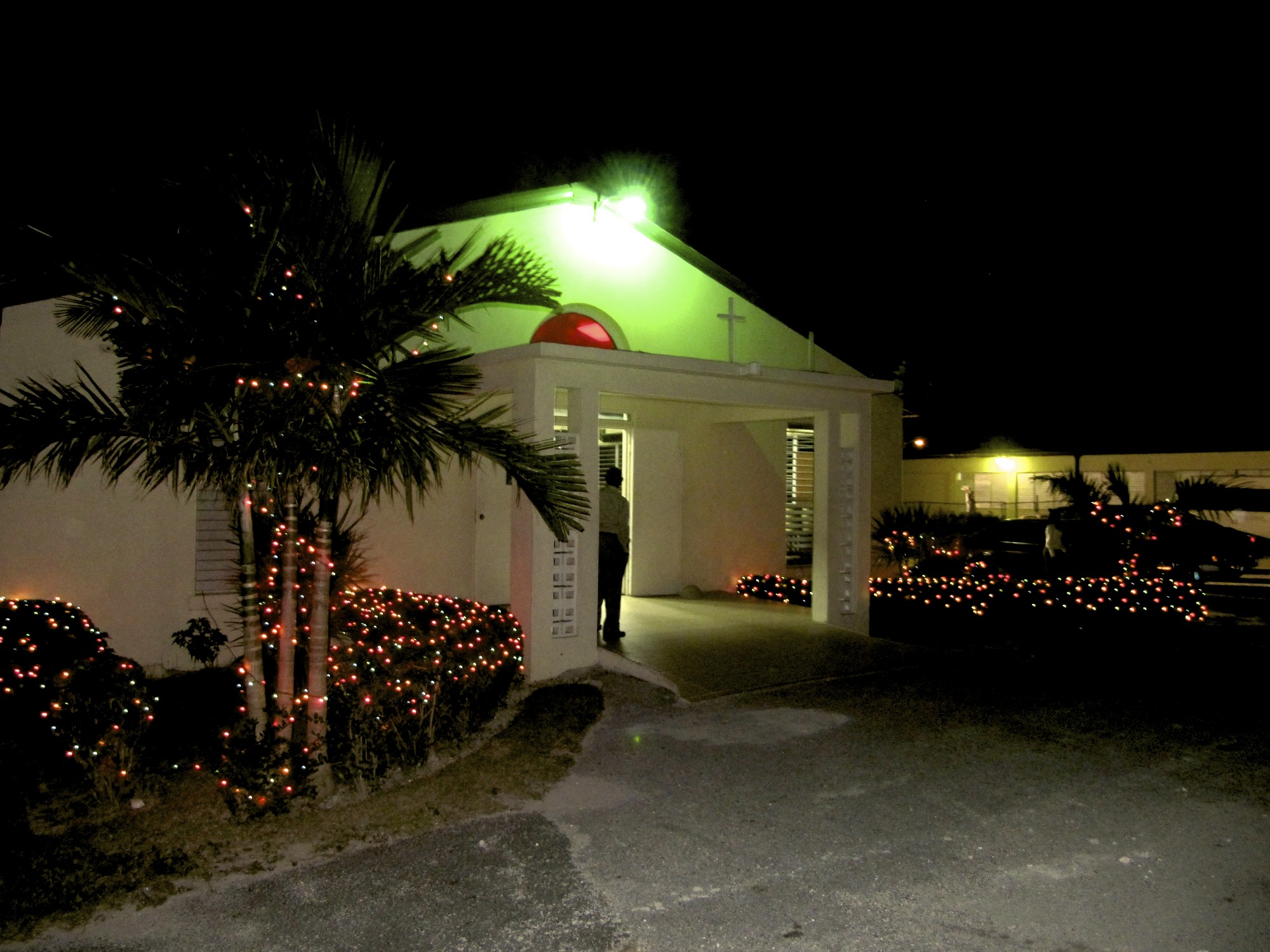
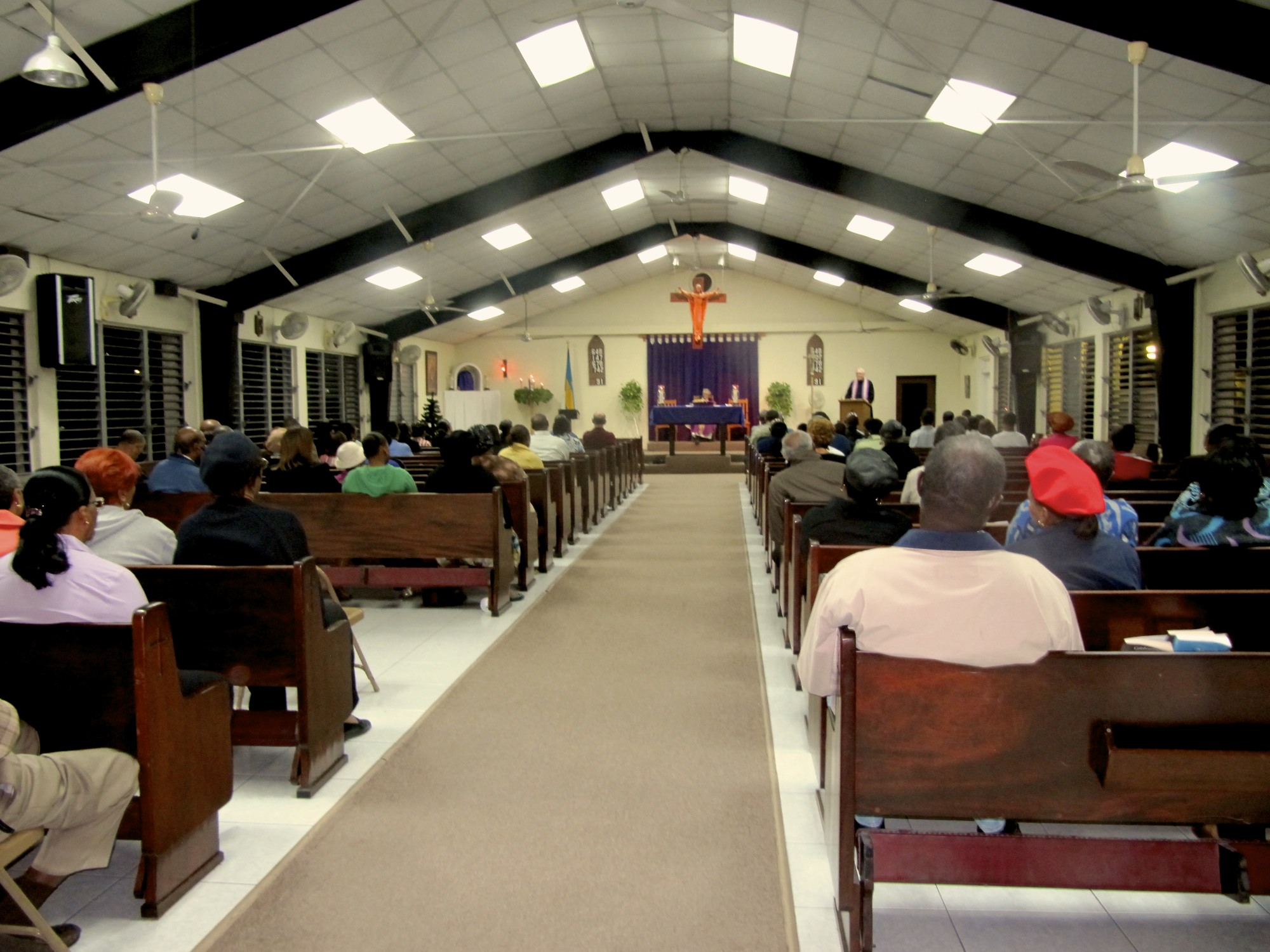
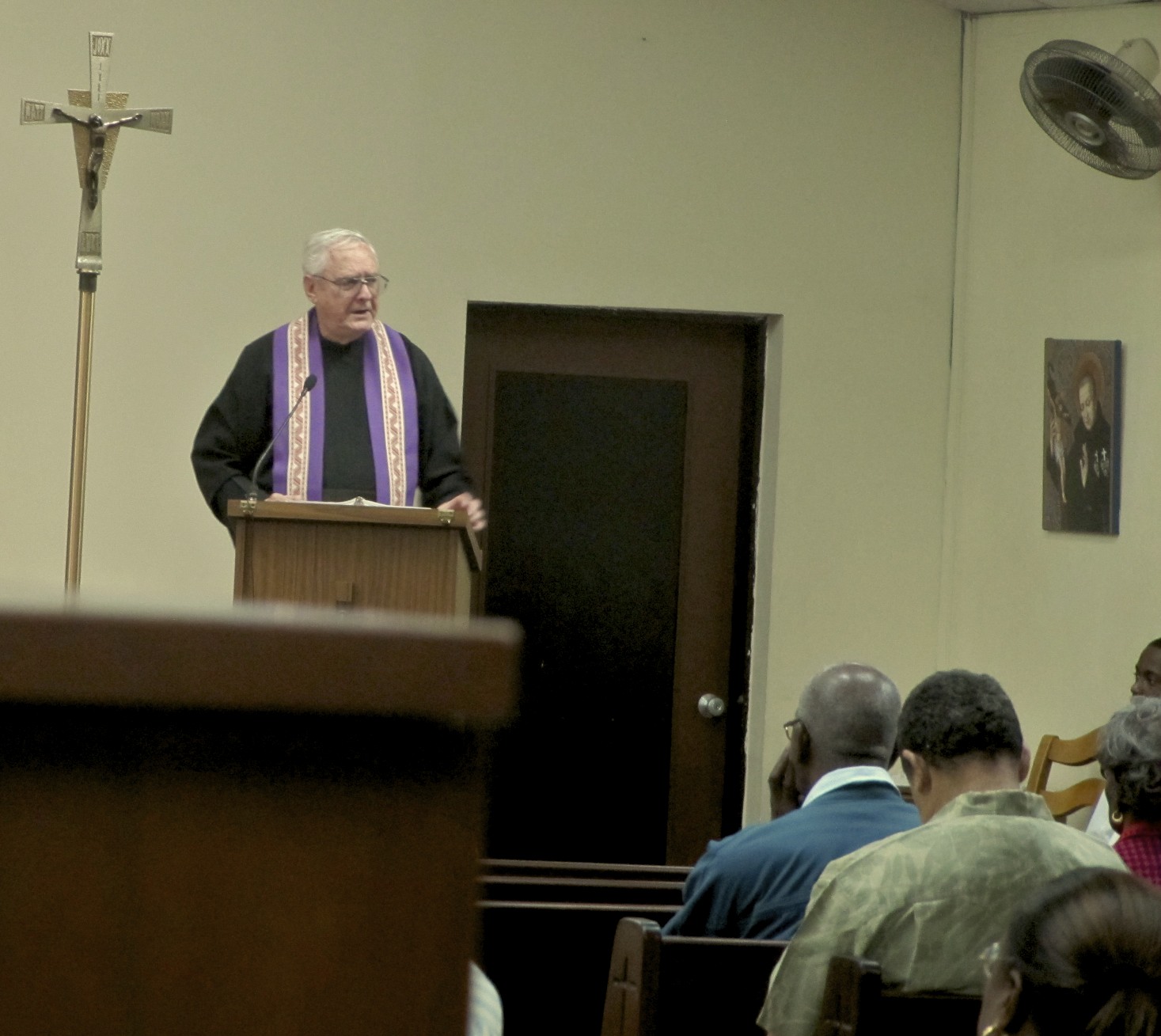
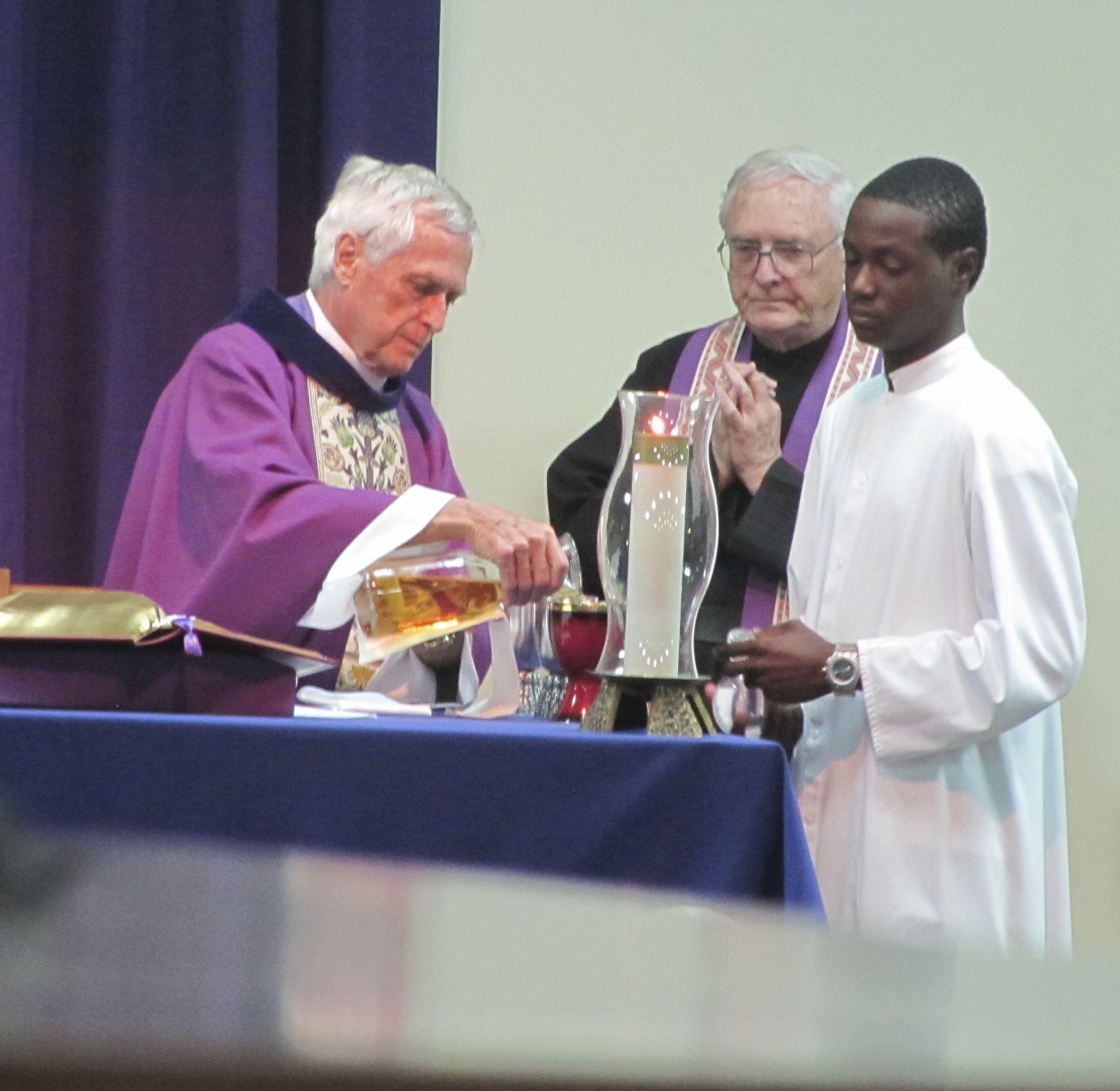
Tonight is the last evening of our mission at Holy Family in the Bahamas. During the week, I spoke about the three great witnesses of the Advent season: Isaiah, John the Baptist and Mary of Nazareth. They prepare us to receive Jesus Christ.

Let’s remember the Prophet Isaiah again, and those who followed him. He tells us to remember God’s promises. They seem far beyond what we think possible and greater than we can imagine, but God promises to fulfill them in the world and in us.

The prophet speaks to those most likely to distrust, yet God wants them most to hear:  the poor, the sick, the blind, the lame, those wearied from the journey. He speaks tender words of comfort. His words to the barren woman in today’s reading are among his most beautiful.

John the Baptist is the voice in the wilderness. We’re to be that voice too. It’s far easier to speak God’s word in a church or in a temple than there. That’s why Jesus praised John, and why he praises all who are his voice in the wilderness. You may not be able to say much, but if you speak what you can and remain faithful to God in the wilderness that’s yours, God will bless you as God blessed John.

Finally, we reflected last night on Mary, the mother of Jesus.  You have a wonderful custom here in this parish at the end of daily Mass, I notice, of praying the Angelus, which recalls the coming of the angel to Mary and her response. That’s a mystery we share with her, and so we recall it each day to make it our own. “Pray for us, O Holy Mother of God, that we may be made worthy of the promises of Christ.”

Each day is important because the promises of Christ come to us day by day. They are not always obvious, so we must become aware of them. Like Mary, we question what they mean. For that reason, we enter that mystery that happened once in small, unnoticed Nazareth. The angel still comes and goes., and with Mary, we say each day “Be it done to me, according to your word.”

Monday Night at the Mission


I spoke this evening at our mission at Holy Family Church. How can we know Jesus Christ? Through the Scriptures.

What version would I recommend? I like the New American Bible because it’s the version closest to what we use in our liturgy and it’s got great notes. It’s also been recently revised to benefit from new bible manuscripts come to light, new archeological discoveries, and new historical and biblical scholarship.

A drawback of a version like the King James is that it stands still and doesn’t benefit from these advances. Fundamentalists would say it’s the Word of God and doesn’t need updating. The Catholic Church, on the other hand, welcomes the advance in understanding  and new biblical knowledge as advancing our knowledge of Jesus Christ.

Biblical fundamentalism, by its nature, neglects the gifts of reason. It’s a step backward.

One thing I noticed in the hymns we sang tonight in Holy Family is their rich scriptural base. They’re words from the bible, which are a step towards a biblical spirituality.

I reflected on two sections of Isaiah, the great prophet of Advent. His promise of the kingdom coming on God’s holy mountain seems so unrealistic, given the circumstances Jerusalem, God’s holy mountain, faced in his day. But Isaiah spoke of  a promise that comes from God who is with us, who teaches us to pray and live in hope for what’s beyond human power to bring about.

I also spoke of the spirituality of childhood, which calls us to be free from crippling anxieties, forgetful of injuries, sociable, and wonder at all things. At the pinnacle of God’s holy mountain Isaiah, and Jesus after him, places a Child.

Following Jesus Christ: Oct 4, 2011

Tonight we look at the resurrection story from the Gospel of Matthew, a mystery at the center of our faith. As St.Paul said, “If Christ is not risen, your faith is in vain.”

The gospels not only proclaim the resurrection of Jesus from the dead but see this central mystery of our faith shaping the way we live and think. Each gospel also presents this mystery to the church of its time. If we look carefully, we can see its relevance for the church of our time too. That’s true particularly of the Gospel of Matthew.

What was the Jewish-Christian church in Palestine or Syria like about 80 AD  when Matthew wrote? The followers of Jesus, mostly Jewish-Christians,  were facing hard times. They were being confronted by a resurgent Judaism led by the Pharisees. At the same time, gentiles were accepting the message of Jesus and seeking baptism.  As it faced a large influx of  strangers and attacks from its own people, this predominantly Jewish- Christian church was to be radically changed.

Recall that the temple and the city of Jerusalem had been completely destroyed by the Romans in 70 AD, which caused many Jews led by the Pharisees to flee into Galilee and Syria and there begin to build up Judaism again. They saw the followers of Jesus, numerous in those regions, as a fringe group standing in the way of Jewish restoration, so a confrontation began. Jewish-Christians were being driven out of the synagogues in Galilee and a campaign was begun to discredit the Christian movement. Signs of that confrontation are evident in the chapters of Matthew’s Gospel.

This gospel responds to the situation by reminding Christians then that God’s plan is present even when things are uncertain. The Passion of Jesus is their guidebook. Did not Jesus live faithfully through the awful confusion of his arrest, his brutal treatment and his unfair death?  So, like him, should they face uncertainty and hardship. God brought him to new life; God would bring them to new life too.

The story of the Jewish guards at the tomb, unique to Matthew’s gospel, is an example of the Christian response to a story circulating at that time denying that Jesus rose from the dead, but claiming instead that his body was stolen by his followers.

You can see Matthew’s gospel, and all the gospels for that matter, insisting  that Jesus really died;  he experienced death in all its harsh reality. “My God, my God, why have you forsaken me?” he cries out after a long silence on Calvary. He was buried, then he rose again. Pilate and his soldiers become important, credible witnesses to his death and burial.

Jesus also really rose from the dead, Matthew’s gospel insists. Even as he died, the earth quakes, rocks are split and tombs we are opened.  An angel clothed like light sits triumphantly on the stone rolled away from an empty tomb. Death has been conquered.

What’s particularly interesting about Matthew’s resurrection account, however, is that  Jesus appears to his disciples, not in Jerusalem or at the tomb outside the city, but on a mountain in Galilee.  From there, he sends his disciples into the whole world to preach the gospel, baptizing in the name of the Father and of the Son and of the Holy Spirit.

It’s true that, as the women run from the tomb to tell the disciples,  Jesus briefly appears and they “took hold of his feet and worshipped him.” (Matthew 28,9) But they’re off quickly to tell his disciples to go to Galilee “and there they will see me.”

A neutral observer on the scene in Galilee and Syria in those days might reasonably judge the followers of Jesus of Nazareth to be in bad straits. They were losing in their confrontation with their Jewish opponents and were being pushed out of their synagogues and their homeland.   In the following centuries, Christianity hardly survives in Galilee, where Jesus began his ministry. After the fall of Jerusalem it becomes a Jewish stronghold.

But that’s not the story Matthew tells. The Risen Jesus appears on a mountain in Galilee urging his followers to a new global mission.  A new step is to be taken to bring about the kingdom of God.

The eleven* disciples went to Galilee, to the mountain to which Jesus had ordered them.

When they saw him, they worshiped, but they doubted.

Then Jesus approached and said to them, “All power in heaven and on earth has been given to me.

Go, therefore,* and make disciples of all nations, baptizing them in the name of the Father, and of the Son, and of the holy Spirit,

teaching them to observe all that I have commanded you. And behold, I am with you always, until the end of the age.” (Matthew 28,16-20)

Matthew doesn’t forget that the Risen Christ emerged from the tomb in Jerusalem, but he sees him bringing new life and direction to his struggling church and his struggling followers in Galilee. The Risen Lord is where his followers are, leading them on. He leads them into the future, uncertain as it is. He commands them to leave Galilee which now, instead of a place where his church seems to be dying, is a place of hope and new beginnings. From a mountain he points to a beautiful unknown.

Jesus is not a simply a figure of the past; the Risen Jesus constantly calls his followers onward and accompanies them to a wider mission. His call is by no means obvious, though. Matthew alludes to the chronic uncertainty of Jesus’ disciples: “When they saw him they worshipped, but they doubted.”

Matthew’s Gospel could have been written for our church today. The Risen Jesus makes our church– to most observers a church in crisis and severe decline–  a place of hope and new beginnings. He gives us “resurrection thinking” – the ability to look into the ruins and see beyond them.

Just as his disciples learned to see not death but resurrection in what happened during Jesus’ last hours , so we need to immerse ourselves in these mysteries to gain eyes that really see.

Following Jesus Christ: Monday Night– Oct 3

Following Jesus Christ in St. Matthew’s Gospel into the days of his death and  resurrection, we hope to learn from him. In a previous post,  we considered lessons Jesus taught as he began his last days.

He recognized that God was with him, even as he faced death.  “Thy will be done,” Jesus taught his disciples to pray in Galilee. “Thy will be done,” Jesus cried trembling as he faced death before his arrest that dark night in Jerusalem. God’s with you, he says to us, even in life’s darkest moments.

It’s a lesson we hope to learn. We welcome God’s will when life’s good, but find it hard to accept when times are bad. “My thoughts are above your thoughts, and my ways above your ways,” God says. God’s plans are often hidden, like seed in the ground or treasure in a field. We find God’s plan especially hard to understand in suffering and death.

And so, many today deny a plan of God exists in our world. If God exists–and some would say he really doesn’t– God is uninvolved in our world in any way. Some say there are no plans at work in our world at all; life is random, without rhyme or reason; everything just happens.

Or some say life is what I want it to be. I can make it happen, and there’s no point in looking for God’s will. I decide.

We believe God has a plan and his plan is for our good. God’s wills our good, even though it may sometimes be hard to see.

“Thy Kingdom come, thy will be done, on earth as it is in heaven.”

Jesus before Caiaphas

After his arrest in the Garden of Gethsemane Jesus is taken to “Caiaphas the high priest, where the scribes and elders were assembled,”  Matthew’s Gospel continues. What shall we learn here?

Caiaphas’ residence would be somewhere in Jerusalem’s Upper City where influential Jews lived. It was an area close by the Temple and Herod’s Palace, where Pontius Pilate, the Roman Governor also resided when he was in the city. Jesus would be taken to that well-to-do area of the city.

Recently, archeologists have excavated some of the homes of Jewish officials in the Upper City and they’ve found  Roman style villas with courtyards and elegant furnishings. They would be among the red-roofed buildings seen in the model below of Jerusalem at the Israel Museum.

Jesus would be judged and sentenced to death, scourged and crowned with thorns in the Upper City. His followers would be few there,  unlike Bethany where we said previously  he had strong support. 
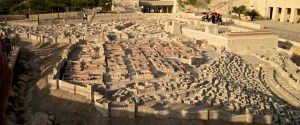
Matthew presents Jesus’ appearance before the Jesus leaders in dramatic form. Caiaphas probes his identity thoroughly in what is more of a cross examination than a court trial.  At the same time Jesus is being questioned, Peter the Apostles is also  questioned.  Earlier in Matthew’s Gospel, Peter strongly professed that Jesus was the Christ, the Son of the living God, now just as strongly he denies he ever knew him.
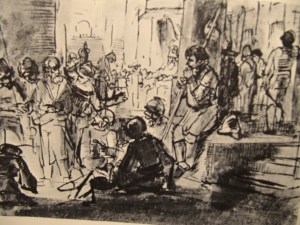
The gospel invites us into this story to ask what we say.  For Caiaphas Jesus is a trouble-maker or maybe a religious fanatic. He and his friends are worried that Jesus might start a revolution endangering all  they held dear.

Who do we say Jesus is? If he’s only a healer, a teacher, a social revolutionary with delusions of grandeur, then he’s only  another innocent person victimized by powerful enemies. Is he only another human being?

But if he’s God’s Son, the face of God to us, then he’s tremendously important to us and to our world.  “Who is he?” “Who is this who suffers and experiences such humbling?” “Why?”  are new questions before us.  God is here, and attention must be paid. Jesus, God in human form, not distant or untouched by human circumstances, suffers and dies and lives and loves as we do.

“Tell us under oath whether you are the Messiah, the Son of the living God.”   Caiaphas asks Jesus.

“You have said it,”  Jesus answers.

Jesus who prayed in fear in the garden, who feels abandoned and alone, whose sweat falls to ground as the dark engulfs him is the face of God before us. Jesus who gave himself to his disciples in bread and wine, who knelt before them in the Supper Room and washed their feet is the face of God. He comes humbly before us that we might meet him unafraid.

With Peter, we say “You are the Christ, the Son of the Living God.” With Thomas, we say, “My Lord and my God.”

Notice how Matthew’s gospel strongly asserts the reality of Jesus’ human experience  He really suffers, he really fears, he really knows our sorrows and pains, for he has borne them himself.   He does not “seem” to be human, he is human.

“Why did be come among us?” we ask. Because God who lives in light inaccessible, wishes to draw us into his light. Jesus who shares our human experience leads us into that light.

We remember the Passion of Jesus to grow in love of him. His Passion is a book to be read over and over,  always wise, always new, always true. It leads us to peace. From its pages we know a loving God wants to be near us.

St. Paul of the Cross, the founder of my community, called the Passion of Jesus the door into the presence of God. It invites us to approach God bravely, to enter God’s presence with confidence and then rest in the presence of the God who loves you.

Judas

As the Jewish leaders send Jesus off to Pontius Pilate, Matthew recalls the tragic end of Judas, who betrayed Jesus. “I have sinned in betraying  innocent blood,” the disciple says as he flings the 30 pieces of silver into the temple. What lesson can be draw from this event?

“His second tragedy,” Pope Benedict says of Judas,”is that he can no longer  believe in forgiveness. His remorse turns into despair. Now he see only himself and his darkness; he no longer sees the light of Jesus, which can illumine and overcome the darkness. He shows the wrong type of remorse; the type unable to hope, that see only its own darkness.” (Jesus of Nazareth, p 68)

Judas would not believe the story of the Prodigal Son. Such sadness hangs over the fate of Judas. We learn from the tragedy of Judas to believe in God’s forgiveness, even for the greatest sinner.

When you read Matthew’s  account of the Passion  notice the gradual silence of Jesus. As the hours go by, his words become fewer and fewer. He works no obvious wonders, no obvious cures. His own power seems to slip away leaving him more and more helpless, and his powerful enemies more in control.

In the garden, he prays a short troubled prayer, over and over: “Father, if it is possible, let this cup pass from me, yet not my will, but your will be done.”

He looks for the comfort of friends but finds none. They fall asleep and seem to not notice.  “Pray that you don’t enter temptation. The spirit is willing but the flesh is weak,” Jesus tells them.

His words are few before Caiaphas. Quick to answer false charges before, he says nothing to the false witnesses bringing charges against him.  Only when Caiaphas directly asks if he is the Messiah, the Son of God,  does Jesus answer: “ You have said so. I tell you from now on you will see the Son of Man seated at the right hand of the power and coming on the clouds of heaven.”

Similarly, Jesus is mostly silent before Pilate. “Are you the king of the Jews?” Pilate asks him. “You say so,” Jesus answers. Then, he says no more.

He’s silent when the crowd calls for Barrabas; he has no words but cries of pain when the soldiers scourge him. He makes no response to their mockery as they lead him away to be crucified.

The only words he says towards the end in Matthew’s gospel–Mark’s Gospel also reports these words–  are the final words from psalm 22, which the evangelists quote in Aramaic, as well as Greek:  “My God, my God why have you forsaken me.?”

“It is not ordinary cry of abandonment. Jesus is praying the great psalm of suffering Israel, and so he is taking upon himself all the tribulation, not just of Israel, but of all those in this world who suffer from God’s concealment. He brings the world’s anguished cry at God’s absence before the heart of God himself. He identifies himself with suffering Israel, with all who suffer under “God’s darkness”; he takes their cry, their anguish, all their helplessness on himself–and in so doing he transforms it.” (Jesus of Nazareth, )

In the Passion of Jesus we find God as a companion, as “one like us in all things but sin.”
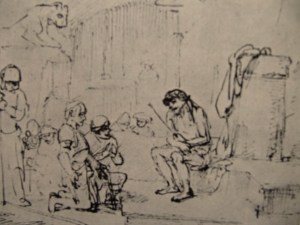
“My God, my God, why have you forsaken me?”

Is It All Worthwhile?

“Is it all worthwhile, we ask in worldly wise?” A question asked in an old novena prayer.

I woke up today asking that question about the mission at Plainville.

The number of people who came to the services wasn’t impressive. Maybe 200 for the two services in the morning and evening. It was good to see the young people preparing for confirmation there in the evening. The priests of the parish were there too.

What surprised me was the number of visits to this blog during the mission, over 500 for the 4 days. I invited the people on Sunday to visit the blog, to invite others to follow it as a way of making the mission, and they evidently responded. How can I expand that part of the mission I wonder now?

I’m convinced  missions should be more catechetical and scriptural in nature. People need to reflect on their faith and they can do this by reflecting on the scriptures that communicate faith. So much of this is done through the liturgy; yet as people stop going to church they miss out on this vital communication. This is especially true of young people.

I thought our services were beautiful this week. Simple, prayerful, with beautiful music .

I had an interesting talk after the mission with Jean, the catechist at Our Lady of Mercy. They use the Catechesis of the Good Shepherd for their very young children and an intergenerational approach for the rest of their program. They bring old and young together to learn. After a number of years, this program using the scriptures as its base seems to be gaining acceptance.

Jean thinks the lack of religion in the home has a lot to do with the drift of young people away from the church. You don’t talk about Jesus Christ, the gospels, the issues of life that faith raises, at home. Our people are confused by the times and by the scandals in the church.

Yet, as the readings from John remind us in these last weeks of Lent, Jesus Christ is the  source of life for us and for our world. We cannot ignore him.

During this mission I became more convinced that the traditional goal of the Passionists is still vital: to preach the Passion of Jesus Christ. He is there on the Cross of Confusion and the Cross of Uncertainty and the Cross of Diminishment we are experiencing in our world. Our dreams of success are bursting. We need to put ourselves into the hands of a mysterious God as Jesus did.

How shall we fulfill that goal today? I wish I knew. But it will come to us.

“Is it all worthwhile, we ask in worldly wise? Yes!”


The Passion of Jesus

Wednesday evening: Mission at Plainville, CT

The writers of the gospels are like painters, not photographers. They tell stories of Jesus with their own purposes in mind. They tell them with great artistry and beauty. Even though they spoke languages that we may not understand, and their world is so different, we are moved when we hear them today.

Last Sunday we heard the story of the blind man given the gift of sight by Jesus, a dramatic story that involved the blind man’s parents, his neighbors, the pharisees and Jesus and his disciples, all interacting with one another. The story is told in John’s gospel with great skill.

The greatest story in the gospels is the story of Jesus’ passion, death and resurrection. That story would never have been written if Jesus had not recalled it to his disciples after his resurrection. When he appeared to them on Easter Sunday, “he showed them his hands and his side.” It was a story they wanted to forget.

But he reminded them of what happened to him, even though they want to forget it. The story was not to be forgotten; it was to be remembered. It was the first story of the gospels to be written. It’s a book of many lessons. The rest of the stories of the gospel cluster around this one.

At this evening’s service we listen together to the Passion of our Lord according to St. Mark.

Then we pray that the Lord whose presence continues in Bread and in us will show us his hands and his side and, like the disciples, we will  rejoice.

The Paralyzed Man


Mission: Plainville, Ct  April 5, 2011

Compare the paralyzed man at the pool at Bethesda, whose story we tell in today’s gospel, with the official in our previous story from John’s gospel, who came from Capernaum to Cana in Galilee looking for a cure for his son. Obviously, the official was important. He knew how to get things done and came to get Jesus to do something for him. He’s a resourceful man.

The paralytic at Bethesda, on the other hand, seems utterly resourceless. For 38 years he’s come to a healing pool– archeologists identify its location near the present church of St. Anne in Jerusalem– and he can’t find a way into the water when it’s stirring. Paralyzed, too slow, he can’t even get anybody to help him. He doesn’t approach Jesus; Jesus approaches him, asking:  “Do you want to be well?”

Instead of lowering him into the water, Jesus cures the paralyzed man directly and tells him to take up the mat he was lying on and walk. The man has no idea who cured him until Jesus tells him later in the temple area. He’s slow in more ways than one.

“God chose what is weak in the world to shame the strong; God chose what is low and despised in this world, things that are not, to reduce to nothing things that are, so that no one might boast in the presence of God,” St. Paul tells the Corinthians.

Here’s one of the weak, the lowly, the nobodies God chooses, and he wont be the only one.

The mystics saw weakness differently that most do. It was a time for God to act, as St. Paul of the Cross once remarked


“Be of good heart, my good friend, for the time has come for you to be cured. Night will be as illumined as day. As his night, so is his day.”  A great difference takes place in the Presence of God; rejoice in this Divine Presence. Have nothing, my dear one; allow yourself to be deprived of all pleasure. Do not look your sufferings in the face, but accept them with resignation and satisfaction in the higher part of your soul as if they were jewels, and so they truly are. Ah! let your loving soul be freed from all that is created and pay no attention to suffering or to enjoyment, but give your attention to your beloved Good.  (Letter 41)


Lord Jesus,

like the paralytic I wait for you,

not knowing when or how you will come.

But I wait, O Lord,

however long you may be.


Mission: Plainville, Ct April 4

Learning from Jesus Christ

We know Jesus Christ through the scriptures, and one goal of the Second Vatican Council was to promote the reading of scripture in the liturgy and catechesis of the church.

Scholars and believers have brought new insights from the scriptures into our faith and our church.  Our task now is to let the scriptures nourish our prayer and our reflections on our faith.

That’s a goal of our mission this week.

In the morning Masses we are going to reflect on the daily readings for Lent.

In the evening services for Monday and Tuesday we are going to reflect on the part of the Gospel of Matthew called the Sermon on the Mount which is read in the first part of lent. Jesus, our Teacher, tells us how to live and how to pray.

On Wednesday, we will go to another mountain, Mount Calvary, to learn from Jesus how to love.

This morning, the story of the official who approaches Jesus asking that he heal his son who is dying draws our attention to the mystery of death. Why does it happen? What does Jesus teach us about death?

He came to conquer death. “Dying you destroyed our death, rising you restored our life, Lord Jesus come in glory.”

The two most important moments of our life are now and at the hour of our death.

Holy Mary, mother of God,

pray for us sinners, now and at the hour of our death.