Tag Archives: Mary and Joseph

Presentation in the Temple, February 2nd


DSC00129

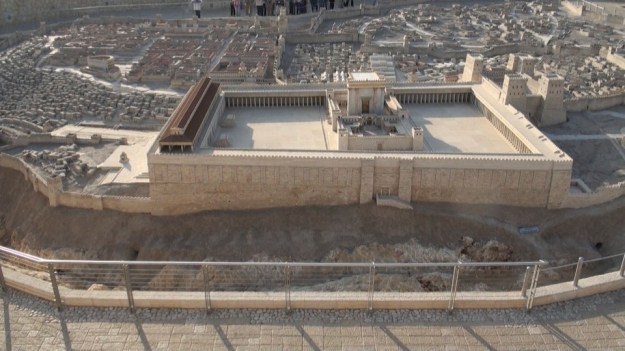
Temple of Jerusalem, 1st century, Israel Museum

The Presentation of Jesus in the temple, forty days after his birth, is a Christmas feast, even though our Christmas decorations are put away. It’s part of Luke’s Infancy Narrative.

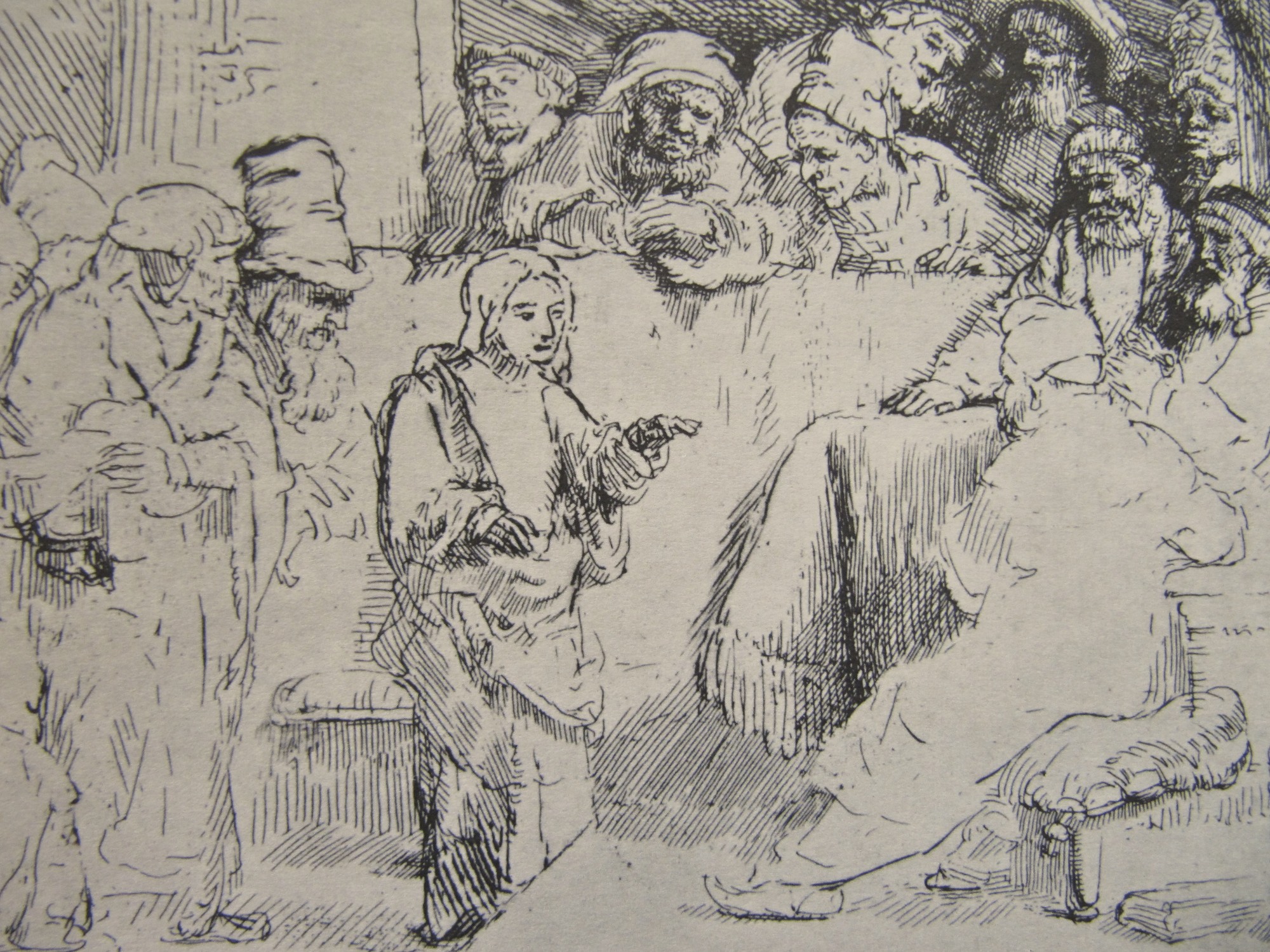
The temple of Jerusalem– a reproduction is pictured above– plays a big part in Luke’s Infancy Narrative,  even more important than the stable to which the shepherds came.  The angel announced John’s birth to Zachary in the temple, and there Jesus is presented after his birth. Later, he will come to the temple as a young boy and  impresses its teachers, as he listens to them and asks them questions.

Luke doesn’t dwell on the rituals or appearance of the temple– he may not know much about them–but the temple for him is where God is present, and so it’s the place where Jesus would be recognized. Forty days after his birth, two elderly Jews, Simeon and Anna, recognize him. They’re  faithful believers who  represent the generations waiting for the Messiah.

Old Simeon takes the child in his arms:

“Now, Master, you may let your servant go
in peace, according to your word,
for my eyes have seen your salvation,
which you prepared in the sight of all the peoples:
a light for revelation to the Gentiles,
and glory for your people Israel.”  (Luke  2,22-40)

Afterwards in his gospel Luke describes the rejection of Jesus by his neighbors in the synagogue at Nazareth– neighbors who saw him so frequently but don’t recognize him. Here in the temple two faithful Jews, Simeon and Anna, waiting for years, receive him. The long wai in the temple has not dulled their eyes. In fact, it has made them sharper. They see salvation in this little child, ” a light of revelation to the gentiles, and the glory of  your people Israel.”

Presentation

So true, isn’t it, waiting can dull our eyes? Year by year can diminish what we expect and hope for. Day after day, faith can get tired. Prayers can become rote, sacraments can become routine. A holy place can become just another place.

It wasn’t so for these two elderly Jews. Their steady presence in the temple made them sharper, quicker to recognize the light that came to that place. We bless candles today, to burn in our church this year, and we pray that our church may never be dark but a place where we see the light of Christ and recognize his will for us and for our world.

“Outwardly Jesus was fulfilling the law, but in reality he was coming to meet his believing people. Prompted by the Holy Spirit Simeon and Anna came to the temple. Enlightened by the same Spirit, they recognized the Lord, so let us also gathered by the Holy Spirit, enter the house of the Lord and encounter Christ and recognize him in the breaking of the bread until he comes again, revealed in glory.”  (Feast of the Presentation)
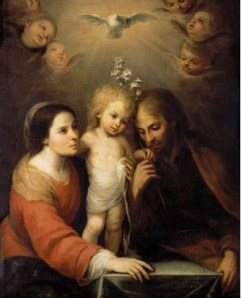


The Holy Family


Luke 2,41-52

For most people, Christmas is over– the music’s stopped; Santa Claus is gone from the malls. The decorations are down and put away. It’s over.

But in church Christmas isn’t over. We’re still singing  carols and continue to celebrate as we think  about what it means when we say “our God was made visible.”

Today’s the feast of the Holy Family. The Word was made flesh, and as the child of Mary and Joseph Jesus was part of a family in the small town of Nazareth in  hills of  Galilee.

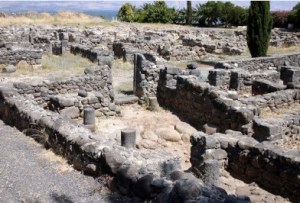
For one thing, families then were extended families or clans, living close together and working side by side. Archeological excavations in Nazareth and Capernaum (pictures below) make that clear. Families worked together in the fields or in  business, they ate together and moved together, as they still do in parts of the Middle East and elsewhere today.

holy familyCapernaumruinsDSC00062

It’s safe to say that nuclear families didn’t exist then. A nuclear family– mother, father and children– is a modern form of family life. Mary, Joseph and the Child Jesus were not all by themselves in a small house in Nazareth. Rather, Jesus was raised in an extended family where  grandfathers and grandmothers, uncles, aunts and cousins lived together and were involved in bringing him up.

That doesn’t take away the part Mary and Joseph played in his upbringing, of course. They weren’t props, standing by while angels brought him up. Some of the apocryphal gospels – early stories about Jesus which the church rejected  – seem to say that.  One  story describes the Child Jesus forming  the figure of a bird from clay, then breathing on it, and instantly it becomes a living bird and flies away. Stories like that presented him exercising  miraculous powers as a child.

The church rejected those stories because they gave a  false picture of Jesus growing up. He “was subject” to Mary and Joseph, the gospel of Luke says. He grew up in their care as an ordinary child would.

Like mothers and fathers everywhere, they saw to his needs, they held him in their arms,  fed him, clothed him,  stayed up at night when he was sick. They taught him his first words,  guided his first steps,  nudged him along this way and that.

They  brought him to church–the synagogue, the temple–as we see in today’s gospel from Luke. They instructed him in his tradition. They taught him to pray,  interpreted events for him,  listened to his questions,  encouraged him over and over. They had their misunderstandings, as today’s gospel  indicates. In fact, they  influenced his life.

Yes, angels were there, but at a distance.  Mary and Joseph and that larger family and village around him raised the Child.

Today’s  feast of the Holy Family takes in the years of Jesus’ childhood and early adult life called his “Hidden Life.” His  years in that nondescript town among those ordinary people were truly hidden, yet were they less important than his Public Life, the few years he taught and did great miracles,  suffered and died and rose from the dead? In those hidden years “he humbled himself.”  A hidden life is important; it’s what mostly characterizes life in a family.

We need to think about family life today, because it’s in trouble.  For one thing, the nuclear family– father, mother, children– is  in trouble. I read some disturbing statistics recently. In every state in our country, families where children have two parents have declined significantly in the last 10 years. One of three children live in a home without a father. Almost 5 million children live in a home without a mother. A single mother may have an income of $24,000. Two parents are likely to have an income significantly greater.

What can we do? How can we help? Feasts  like the Holy Family focus our attention on important things.  They remind us what’s important in God’s eyes. The feast of the Holy Family focuses on the family. It’s important, it says.  At the same time, it tells us God’s grace will be ours when we work to make families go and when we support them all we can.  God points to family life today. It’s vitally important in our world.

The Wonder of Christmas

To listen to today’s homily, please select the audio file below:

“I wonder as I wander out under the sky,

why Jesus, our Savior, was born for to die,

for poor, orn’ry people like you and like I

I wonder as I wander out under the sky.”

Wonder is a Christmas word;  we hear it in the carols we sing and in the words we hear and in the prayers we say.  Wonder is our reaction to something  beyond what we expect, beyond our experience and our understanding,  so big it leaves us lost for words.

We need wonder these days to lift up our minds and hearts.

Listen to the gospel story from St. Luke:

‘In those days a decree went out from Caesar Augustus that the whole world should be enrolled.” Caesar Augustus, the ruler of the world gives an order. “Quirinius was governor of Syria.” Quirinius , Caesar’s enforcer for Palestine, orders his jurisdiction to be counted. The mighty and the powerful of this world have spoken.

But the high and mighty, the politicians, the generals, the money people don’t impress Luke. Rather, his eyes are drawn to a couple in the multitude being enrolled,  a couple from an insignificant town in Galilee called Nazareth– Joseph and  his betrothed wife Mary, who was with child. They’re  on their way to Bethlehem.

“While they were there, the time came for her to have her child, and she gave birth to her firstborn son. She wrapped him in swaddling clothes and laid him in a manger,because there was no room for them in the inn.”

Luke goes on in his gospel to tell about this child born in Bethlehem, who grows up in Nazareth, who begins to preach and work marvels in Galilee, who gathers excited followers and then goes up to Jerusalem where he’s arrested, sentenced to death, crucified, then  raised from the dead. Luke goes on to describe the followers of Jesus who take his message to the ends of the earth and to us today.

That marvelous story begins in Bethlehem,  where a Child in swaddling clothes is laid in a manger, because there’s no room in the inn. That marvelous story goes on. It changes the way we look at ourselves and the world in which we live. God is quietly at work in our world, unnoticed, unacknowledges, God is with us.

There’s wonder in this story, a wondrous love’s behind it. This Child is God become like us, like “poor, orn’ry creatures like you and like I.” So unexpected, so beyond our experience and understanding, beyond words.

Today’s a day that calls us to wonder. Let’s not lose that gift that takes us beyond where we are. Begin with the world in which we live, the world around us as we “wander out under the sky.”  However difficult and dark this world can be, there’s a wonder to it. We’ve been gifted with the wonderful gift of life, which we carry in the flesh and blood that is ours, the gift of life we have in our families and our friends and all of those around us. Let’s not take them for granted.

Then, there’s the gift of God we remember today, a God not distant but close, a God not removed from our experience but sharing it, a God who loves us so much that he wishes to become one with us, a God who would die for us and bring us the promise of life that never ends. Let’s not take God for granted.

“I wonder as I wander out under the sky, why Jesus our Savior was born for to  die, for poor orn’ry people like you and like I. I wonder as I wander out under the sky.”

St. Joseph: March 19

“Each year Jesus’ parents went up to Jerusalem for the feast of the Passover, and when he was twelve years old they went up according to festival custom.” Luke 2,41

At twelve, Jesus enters a new stage in life – his “Bar Mitzvah.” He took on the responsibilities of the law, which later he said was: “Love the Lord, your God, with your whole heart…Love your neighbor as yourself.”

Growing up, Joseph and Mary led him to know God and his neighbor in nature, in the scriptures and in ordinary human life at Nazareth. Their hand is evident in his later teaching; they influenced him. Now he entered a new stage in his life; “each year” the attraction to the temple increased, until he “had” to go up to Jerusalem. His destiny was there.

The young Jesus was absorbed in the life of the temple, Luke indicates. Here he questioned the rabbis in its courts, but more importantly here he experienced in a unique way the Presence of God. “Why were you looking for me? Did you not know I must be in my Father’s house.”

What did Joseph and Mary make of this as they anxiously searched for the Son they raised as their own? Certainly it raised questions, but did they too grow in love of his Father’s house when they found him? Did he deepen their thirst for the living God who dwelt there?

Window on the World

The window in my room faces west to a slice of Union City that includes the old monastery church and parking space, some city athletic fields, a crowded  block of houses along 21st Street and a few big oak trees that somehow have survived the urban sprawl.  It’s a wonderful window for taking in the world.

Earlier this morning, Jose reached into the van carrying some neighborhood people to work to bless them, anticipating the morning sun that blesses everything now. A  few minutes ago, a flock of pigeons momentarily touched down on the wires along the street, thenflew away. I can’t figure out their unpredictable ways.

I leave the tiny figures of Mary and Joseph and the Child on the window sill all year because they seem to complete the picture.  Keep your eyes fixed on examples of faith, St. Ambrose said yesterday in his commentary on the Visitation.  Mary saw it in Elizabeth and Elizabeth saw it in Mary. Joseph certainly had eyes of faith too.  The Child is so small.  Only eyes of faith can see him–and everything else as well.