Tag Archives: Liturgy

December 23: Birth of John the Baptist

birth john


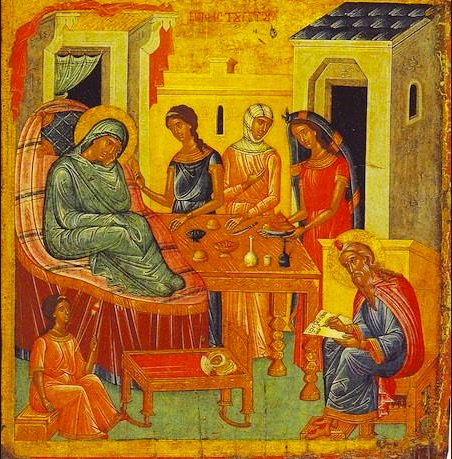
Luke’s gospel today recalls in detail the birth of John the Baptist . “The hand of the Lord was with him. The child grew and became strong in spirit, and he was in the desert until the day of his manifestation to Israel.” (Luke 1:80)

Just as Luke recognizes the role of Mary and Joseph in the birth and raising of Jesus, he recognizes the role of Elizabeth and Zechariah in the birth and raising of John. Each help John grow and become strong in spirit. However lonely and independent he appears later in the gospels, John was influenced by them and the extended family that surrounded him from his birth.

Luke’s gospel often see one person’s fidelity influencing another. “The hand of the Lord was with him,” Luke writes, but human hands were on him as well.

John had faith like his mother Elizabeth who recognized the Spirit’s presence in her pregnant relation Mary visiting from Nazareth. John later would point out the Lamb of God among all those who came to the Jordan River for baptism.

He had faith like his father Zechariah who devoutly celebrated the mysteries of God in the temple of Jerusalem as a priest. At his birth, Zechariah signs away the gift of his name– and probably his hope that his son would follow in his steps. John would have a different calling. At the Jordan River, John called pilgrims to prepare the way of the Lord as they made their way to the temple and the Holy City, Jerusalem.

Undoubtedly, John was a unique figure, a messenger from God, a voice in the desert preparing the Lord’s way. But there were faithful people behind him, as they are behind us.

Don’t forget his relative, Mary of Nazareth. At the end of his account of her visit with Elizabeth, Luke mentions “Mary stayed with her for three months, then returned to her home.” (Luke 1:56) That would mean she stayed on till the birth of John, wouldn’t it?

I don’t see Mary in the icon of John’s birth (above), but was she there? Were there other times too these families met? Artists portray the children playing together later. They could be right. We influence one another more than we think.

Thursday: 1st Week of Advent

OLYMPUS DIGITAL CAMERA

Readings:

Isaiah 26:1-6:  On the day of the Lord those who depend on God will enter God’s city.

Matthew 7: 21-24-27:  Build your house on rock.

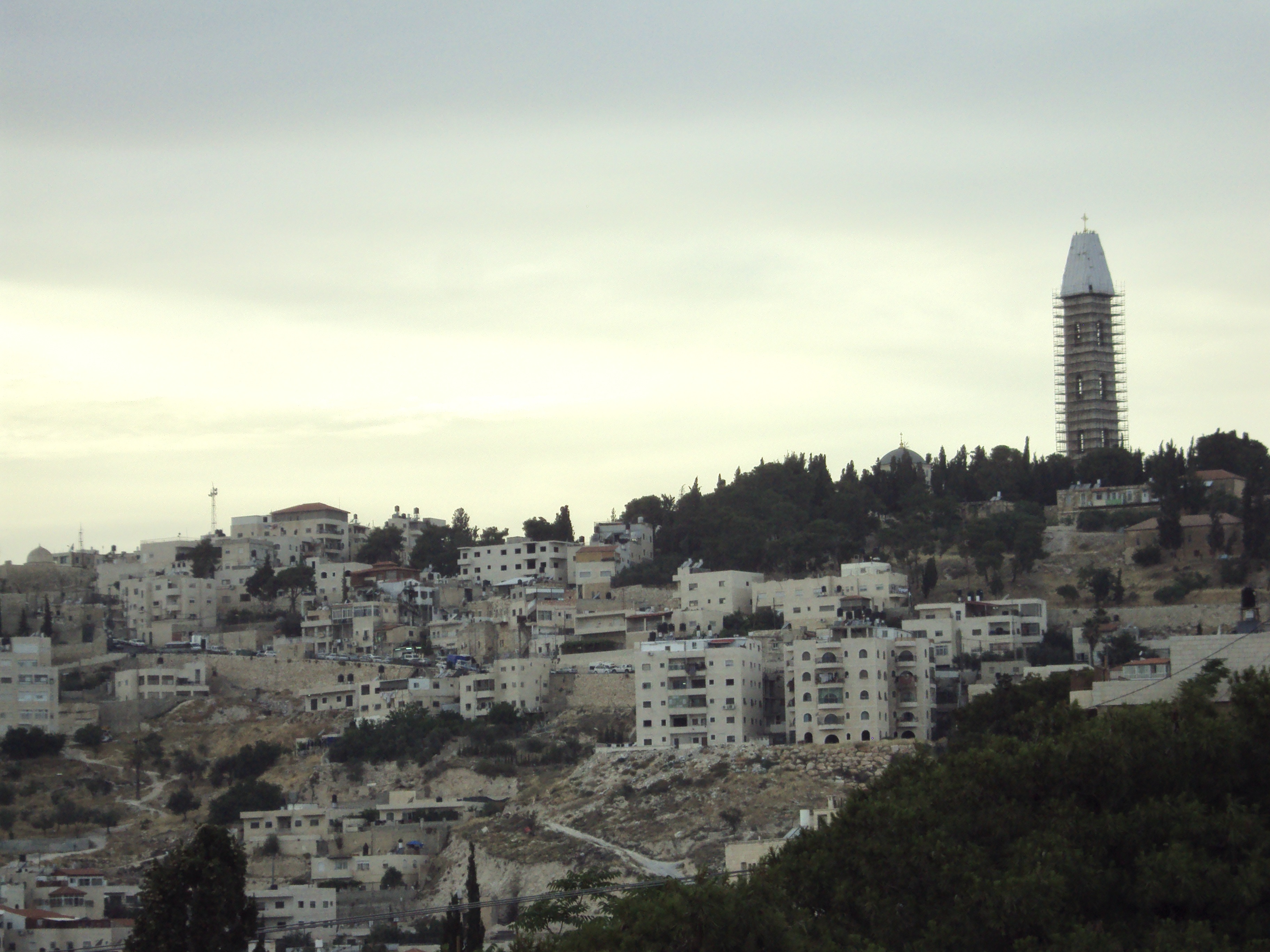
Ancient peoples built their cities on rocky heights because they promised safety. With water, food and strong defenses they were less likely to be invaded. That’s why the Jews chose Jerusalem. Built high on a rocky mountain, it was safe.

There’s a city on God’s holy mountain, Isaiah says in today’s reading, where all peoples will dwell. Yet even now, our cities and places where we live are meant to be an image of the Holy City. Don’t depend on natural resources or human skills or human planning alone to build your earthly cities, the prophets warn. Don’t rely on them; they can’t save you. The strongest city becomes “a city of chaos” without God.

God builds the strong city, the prophet says; he is our Rock, our strong city: he admits through its gates “ a nation that is just; one that keeps faith.”

Build your lives on rock, Jesus says in the gospel. Don’t rely on a token faith (Lord, Lord) or be like fools who build on sand .

“Everyone who listens to these words of mine and acts on them will be like a wise person who built a house on rock.”

That’s true for our homes and the cities and places where we live.

A secular society like ours often sees religion as a destructive force or a brake on progress or something to be dispensed of. It turns to  “human reason” alone.

So how do we see our cities and countries today? Should be turn away from them and wait for the City on the Mountain? Time to wait for the right politician or a better economy, and take care of yourself?

I don’t think that’s the answer we get in this Season of Advent which proclaims the coming of Jesus Christ in the flesh to an earthly city.

“It is better to take refuge in the LORD, than to trust in man.                                                          It is better to take refuge in the LORD than to trust in princes.” 
(Psalm 118)

Saving Advent and Christmas

Wikipedia’s article on Advent offers a description about how Christian denominations– Catholic, Anglican, Lutheran, Presbyterian, Methodist– approach the feast of Christmas, through devotional prayers and practices like the Advent wreath, the Christmas tree, musical performances like the Nine Lessons of Carols and Handel’s Messiah. Purple is the color of the season in most of these churches, blue in the Scandinavian countries.

The Wikipedia article features the devotions of Advent. Little is said ofGreek church’s Nativity Fast or the Roman Catholic liturgy of Advent. The Catholic liturgy of Advent “remained unchanged until the Second Vatican Council introduced minor changes,” it says.

That’s not accurate. The Roman Catholic Advent liturgy underwent a major change after the Second Vatican Council. A better schedule of readings and new Eucharistic prefaces were introduced to the liturgy; morning and evening prayers and other parts of its liturgy were enhanced. The Catholic Advent liturgy is a ringing affirmation of hope.

Advent hope is nourished by the first coming of Jesus Christ, but also by the promise of his second coming. It’s hope defying human calculation or human logic – an impossible hope. A hope spelled out in the devotions like the Advent wreath and the Christmas tree, but above all proclaimed in the Advent scriptures and liturgy.

Isaiah’s oracles from 8th century Judea are heard in the first few week of Advent, They proclaim that kind of hope.  Even as Assyrian armies capture and destroy his land, Isaiah sees a sign, the root of Jesse, set up before the nations. 

“His dwelling shall be glorious. The wolf shall be a guest of the lamb, and the leopard shall lie down with the kid; The calf and the young lion shall browse together, with a little child to guide them. The cow and the bear shall be neighbors, together their young shall rest; the lion shall eat hay like the ox. The baby shall play by the cobra’s den, and the child lay his hand on the adder’s lair. There shall be no harm or ruin on all my holy mountain; for the earth shall be filled with knowledge of the LORD, as water covers the sea.”

Wolves and lambs, leopards and kid goats, calves and lions lie down together on God’s holy mountain. The impossible becomes possible. That’s the  kind of hope we need today. 

Our Christian holidays and seasons are suffering more and more from secularization and commercialization. Like Santa Claus they need to be saved. They celebrate a greater hope than human imagination dares – hope in God and the promises God offers in Jesus Christ.

Let’s celebrate that hope in our liturgy.

Psalms Say It All

I like the way psalms say it all. “Rejoice in the Lord, you just!” one psalm says. No need to make a prayer up on your own or think hard about saying something to God. Let the psalms help you. “Rejoice in the Lord, you just!”

“Let the earth rejoice in God, our king.” Why not join the earth praying? The “many isles are glad.” Be glad with them. The psalms call you to creation. They’re good prayers for the Season of Creation.

The psalms still our souls and draw them into the quiet grace of God’s presence. We think everything depends on us. No, it doesn’t. God “melts the mountains like wax” and “guards the lives of his faithful ones.” We think we have to know everything. No, we don’t.  But God does.

The psalms draw us closer to God. They feed our minds and hearts, little by little. Their special grace is their simplicity as they tell us, for example,  “rest in God as a child in a mother’s arms.”

Most of the psalms in our liturgy are songs of praise. “Praise the Lord, for the Lord is good.” Other psalms cry for help. Cry to the Lord, they say. “I cry to the Lord that he may hear me.”

The psalms call to a simple, deep prayer. Keep your eye on them in the liturgy of the Mass, Use them in your daily prayer. They’re wonderful basic prayers for everyone.

“Although the whole of Scripture breathes God’s grace upon us, this is especially true of that delightful book, the book of the psalms.” (St. Ambrose)

Every day the church meets the morning praying the psalms; every evening we end the day with these great prayers. A good way to pray always, as Jesus asks us to do.

Our Lady of Sorrows: September 15

DSCN0299

The Memorial of Our Lady of Sorrows is celebrated the day after the Feast of the Exaltation of the Cross (September 14). Eight days after Mary’s birth (September 7) her sorrows are recalled, her lifelong sorrows. 

The old man Simeon spoke of her lifelong sorrows when he  told Mary a sword would pierce her heart when Jesus was born. Her greatest sorrow, of course, came when she stood beneath the Cross of her Son.

What, then, were her lifelong sorrows? The gospels indicate some of them, but perhaps more important was Mary’s experience of the sorrow every human being experiences. An infant cries as it enters this world. “Our life is over like a sigh. Our span is seventy years, or eighty for those who are strong. And most of these are emptiness and pain.” (Psalm 90) Everyone experiences the human sorrow the psalms describes. Mary experienced that human sorrow.

The sword of sorrow struck Mary most deeply at the death of her Son. Some of Jesus followers stood at a distance when he was crucified. But John’s gospel describes Mary as the first of those standing close by, beneath the cross itself. “Standing by the cross of Jesus were his mother and his mother’s sister, Mary the wife of Clopas, and Mary Magdalene.”

Mary stands by the Cross of Jesus, close by, not at a distance. She’s not absorbed in her own suffering, not afraid to see. Her closeness to the Cross is significant. She enters the mystery of her Son’s suffering through compassion. 

She stood by him. Compassion doesn’t experience another’s suffering exactly, and it may not take another’s suffering away. Compassion enters suffering to break the isolation suffering causes. It helps someone bear their burden.  The sword, the spear, the sorrow, pierces both hearts, in different ways.

Our prayer for today’s feast says that when her Son “was lifted high on the Cross” his mother stood by and shared his suffering. “Grant that your Church, participating with the Virgin Mary in the Passion of Christ, may merit a share in his Resurrection.

For a commentary on John’s Gospel see here.

For a study on Mary on Calvary see here.

For readings for the feast and the Stabat Mater see here.

Praying in Jesus Christ

Farewell Discourse of Jesus. Duccio

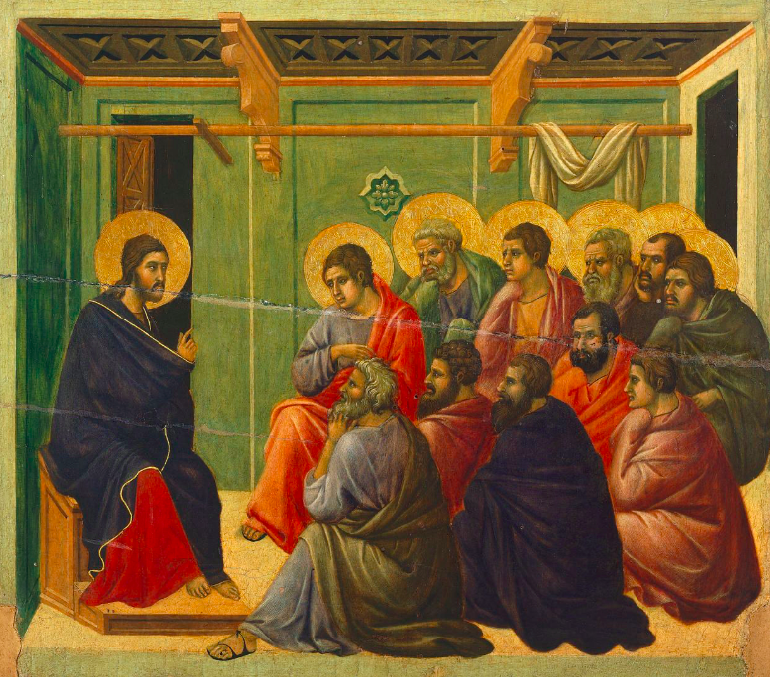
“I pray for them,” Jesus says in John’s gospel as he looks at his disciples in the supper room and also at us who are his own today. We’re so conscious how poorly we pray. We need to remember Jesus is praying for us and in us. 

Is it possible to speak to God, we ask ourselves? We’re so easily distracted, so weak in faith, so bound to life as it is. How can we approach God in prayer?

“Let the Son who lives in our hearts, be also on our lips,” St. Cyprian says in his commentary on the Our Father. Jesus joins our weak and stumbling prayers to his own. He prays in and for us and assures us we will be welcomed and heard.

“I pray for them,” Jesus said in the supper room. He prayed for his disciples there in the supper room. When they left they entered the Garden of Gethsemani where they fell asleep, forgetful of everything. A stone’s throw away, Jesus prayed. His prayer was not only for himself but for them as well.

“I pray for them,’ Jesus says in our liturgical prayers. We speak to God the Father “through Jesus Christ, your Son, who lives and reigns with you and the Holy Spirit, One God, forever and ever. Amen.”

Whenever we pray, whether with others in public prayer or praying alone, he enters our prayer. “Let us pray with confidence to the Father in the words our Savior gave us,” we say as we begin the Our Father at Mass.

Our confidence in prayer comes, not from our own wisdom, or holiness or faith, but from Jesus who says “I pray for them.”


The Passion of John the Baptist: Mark 6:14-29

IMG_1460

Mark’s gospel today tells the gruesome story of the death of John the Baptist, which prefigures the death of Jesus. King Herod ordered his death, prompted by Herodias. Human sinfulness is on display in this court banquet, which the artist (above) describes very well. The women smugly presenting John’s head. The man pointing his finger at Herod and Herod denying it all. John’ eyes are still open, his mouth still speaks.

Venerable Bede says that John’s death is like Jesus’ death because they both embraced the same values.  If John stayed silent about Herod’s conduct, he may have gained a few peaceful years of life, but he was more concerned with what God thought than what powerful people on earth thought.

“His persecutor had demanded not that he should deny Christ, but only that he should keep silent about the truth. Nevertheless, he died for Christ. Does Christ not say: I am the truth?

He preached the freedom of heavenly peace, yet was thrown into irons by ungodly men; he was locked away in the darkness of prison, though he came bearing witness to the Light of life.

“But heaven notices– not the span of our lives, but how we live them, speaking the truth.” (Bede, Homily)

Wonderful line: It doesn’t matter how many years we live, but how we live them, “speaking the truth.”

For John that meant dying for the truth. What does it mean for us? It may not mean getting our heads chopped off, but we should expect some scars from the daily battle for God’s truth. ” May we fight hard for the confession of what you teach.” (Opening prayer)

Putting in the Seed: Mark 4:1-20

J.Tissot, The Sower, Brooklyn Museum

In one of his poems, “Putting in the Seed,” Robert Frost describes a farmer’s love affair with the earth. It’s getting dark and someone from the house tries fetching him to come in. Supper’s on the table, yet he’s a

“Slave to a springtime passion for the earth.
How Love burns through the Putting in the Seed
On through the watching for that early birth
When, just as the soil tarnishes with weed,
The sturdy seedling with arched body comes
Shouldering its way and shedding the earth crumbs.”

Can’t you see that farmer zestfully casting seed on the waiting earth, eagerly watching it to grow? Jesus sees the Sower as an image of God, casting saving grace onto the world in season and out, because he loves it so much.

 If you have ever been to Galilee and seen the lake and the surrounding lands abundant with crops, you know this is a blessed place. It was in Jesus’ time too. Here, the sower scatters his seed with abandon, hardly caring where it goes: on rocky ground, or amid thorns, or on the soil that gives a good return.

God the Sower sows blessed seed, no matter how badly our human world appears, or how badly it receives. In his parables Jesus acknowledges rejection as well as acceptance, but the sower still sows. Grace is never withheld, and that makes us hope.

And is it just the  human world God loves? Doesn’t his love extend to all the earth God calls “good” in the Book of Genesis? We worry about our planet earth, and with reason.  How fragile it has become, what damage we careless humans do! We are concerned rightly for its future.

The nature parables we are reading in Mark’s gospel tell us to hope for our earth too. Though it is not immune from the threat of destruction and degradation, God loves it still. He’s a Sower at work. Blessed be the Lord God of all creation, may you sow your blessings on all.

The Wisdom of Thomas Aquinas

Thomas Acquinas

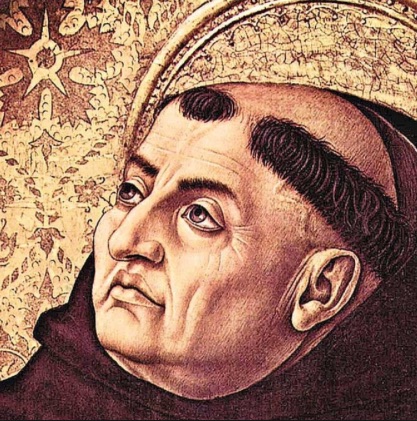
The feast of St. Thomas Aquinas, January 28th, in my student days was a day for presentations honoring the saint. The presentations were not about the saint’s life but his wisdom. Thomas Aquinas was a great theologian dedicated to the search for truth.

He was a man of faith, searching for understanding. That’s the definition of theology–faith seeking understanding, an understanding that draws us closer to God and helps us know God, the source of all truth.

He was a man of questions, who approached great mysteries through questions. That’s the way St. Thomas begins a sermon he once preached, found today in the Office of Readings for his feast:

 “Why did the Son of God have to suffer for us?” he asks as he looks at the Cross of Jesus. The passion of Jesus was necessary, the saint says, for two reasons. First, as a remedy for sin, and secondly, as an example of how to act.

Interestingly, the saint doesn’t spend much time asking why it’s a remedy for sin. He’s more interested in the passion of Jesus as an example for us. To live as we should, we need to look at Jesus on the cross, an example of every virtue:

“Do you want an example of love? ‘Greater love than this no one has, than to lay down one’s life for one’s friends.’ That’s what Jesus did on the cross. If he gave his life for us, then it should not be difficult to bear whatever hardships arise for his sake.

“If you want patience, you will find no better example than the cross. Great patience occurs in two ways: either when one patiently suffers much, or when one suffers things which one is able to avoid and yet does not avoid.

“Christ endured much on the cross, and did so patiently, because when he suffered he did not threaten; he was led like a sheep to the slaughter and he did not open his mouth. Therefore Christ’s patience on the cross was great. In patience let us run for the prize set before us, looking upon Jesus, the author and perfecter of our faith who, for the joy set before him, bore his cross and despised the shame.

“If you want an example of humility, look upon the crucified one, for God wished to be judged by Pontius Pilate and to die.

“If you want an example of obedience, follow him who became obedient to the Father even unto death. For just as by the disobedience of one man, namely, Adam, many were made sinners, so by the obedience of one man, many were made righteous.

“If you want an example of despising earthly things, follow him who is the King of kings and the Lord of lords, in whom are hidden all the treasures of wisdom and knowledge. Upon the cross he was stripped, mocked, spat upon, struck, crowned with thorns, and given only vinegar and gall to drink.

“Do not be attached, therefore, to clothing and riches, because they divided my garments among themselves. Nor to honours, for he experienced harsh words and scourgings. Nor to greatness of rank, for weaving a crown of thorns they placed it on my head. Nor to anything delightful, for in my thirst they gave me vinegar to drink.”

St. Thomas’ great theological work, the Summa Theologica can be found here.

Ordinary Time and Daily Prayer

The Christmas Season closes after the Baptism of Jesus, which we celebrate this Sunday. The Christmas celebrations are over. Ordinary time begins. Does that mean there’s nothing to do till Lent and the Easter season?

Sure there is. Ordinary Time is a time for daily prayer, and daily prayer is never over. The Second Vatican Council’s Constitution on the Liturgy says that daily prayer is at the heart of the Christian life and created a daily lectionary of scripture readings so “ the treasures of the bible be opened more lavishly for the faithful at the table of God’s word.” (SC 51)

The daily lectionary is a treasure for praying with the scriptures, but don’t take it for granted. Treasures, Jesus said, are usually hidden and you have to dig for them. That’s what we do in daily prayer. The liturgy is always a “work”, our daily work, an important work, a daily prayer. It’s the “summit” of the Christian life. We’re always at the beginning, not at the end.

We begin Monday to read the Letter to the Hebrews and the Gospel of Mark from our lectionary. There are feasts of the Lord and his saints to celebrate in the days ahead. It’s a lifelong learning we’re into, a school God provides,  and we learn day by day.