Tag Archives: Lent

Mission: St. Thomas More Parish, Sarasota, FL

I preached at all the Masses on Sunday at this vibrant parish which is now expanding its church. Wonderful music ministry and a large congregation, some fleeing from the cold of the north.

During the mission from Monday to Wednesday, I’ll be preaching in the morning after the 8 AM Mass and at an evening service at 7 PM.

You can find a  summary of the morning homily on this blog and a video outlining the evening service.

Here’s  video for the evening service:

Calling Us Together

In a recent article in the Wall Street Journal (February 18,2012) entitled “Religion for Everyone” the British atheist Alain De Botton expressed his hopes for a future world without God, but he suggests keeping some things religions have done well in the past. One of them is the ability to create vital communities.

“One of the losses that modern society feels most keenly is the loss of a sense of community.” De Botton writes. Religions once supplied a sense of neighborliness. Now it’s “been replaced by ruthless anonymity, by the pursuit of contact with one another primarily for individualistic ends: for financial gain, social advancement or romantic love.”

We’re set on making money, getting ahead and plenty of sex, he says. We’re building more restaurants, more bars, more gated communities, but there seem to be fewer places where all of us can get together. “The contemporary world is not lacking in places where we can dine well in company, but what’s significant is that there are almost no venues that can help us to transform strangers into friends.”

Of all things, De Botton points to the Catholic Church and its liturgy of the Mass as his prime example of religion’s ability to create community:

“Consider Catholicism, which starts to create a sense of community with a setting. It marks off a piece of the earth, puts walls up around it and declares that within their confines there will reign values utterly unlike the ones that hold sway in the world beyond. A church gives us rare permission to lean over and say hello to a stranger without any danger of being thought predatory or insane.”

No one asks what you do or how much you earn when you come for Mass.  The banker and the cleaner sit side by side. The Mass places you in a setting that focuses on human dignity and its blessings. It urges you to give up being judgmental of others and look on them with respect.

“Religion serves two central needs that secular society has not been able to meet with any particular skill: first, the need to live together in harmonious communities, despite our deeply-rooted selfish and violent impulses; second, the need to cope with the pain that arises from professional failure, troubled relationships, the death of loved ones and our own decay and demise.”

De Botton makes you think, doesn’t he? Modern society is losing a sense of community as we become more and more individualistic. An atheist, he recognizes in a religion like the Catholic church a powerful remedy to the ills of our times.

Why don’t we see these same blessings in our church? Though De Botton doesn’t see them so, they’re signs of God’s lively presence.

Cleansing the Temple

3rd Sunday of Lent

John 2,13-25

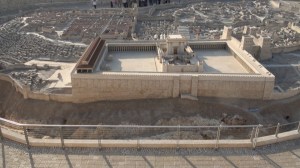
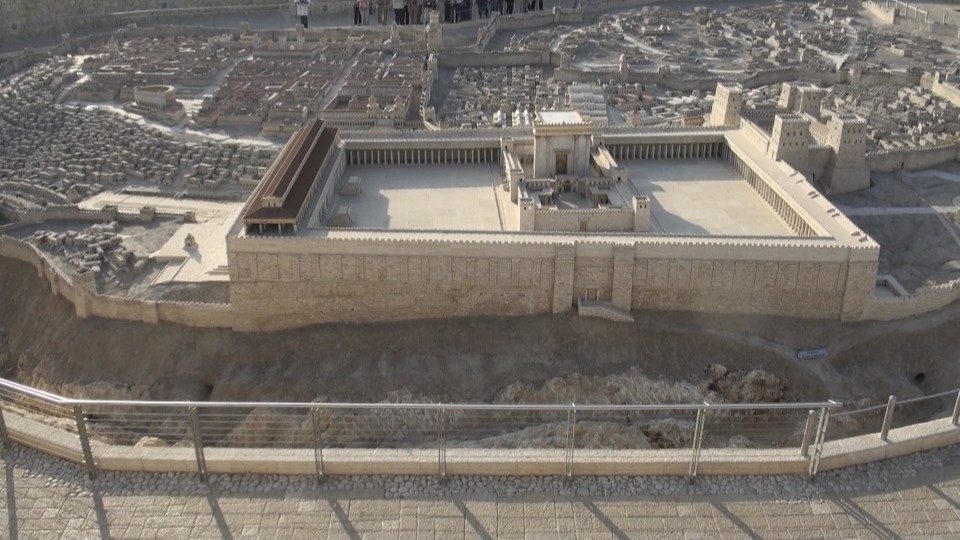
All four gospels report this key incident in the temple of Jerusalem when Jesus drives out those who buy and sell things there. Keep in mind how important the temple was to the Jews and their spirituality at that time.

It was the center of Judaism. You can see how important the temple was by reading psalms like Psalm 27, one of many psalms that spoke of it:

There is one thing I ask of the Lord,

This I seek:

To dwell in the house of the Lord

all my days.

To gaze on the loveliness of the Lord,

to inquire in his temple.”

Psalm 27,1-4

The loveliness of God was in the temple; God was present there. You inquired about God in the temple precincts where the learned Jewish teachers taught.

John’s gospel, our reading today, says that Jesus went into the temple and drove out those who were buying and selling there, and unlike the other gospels that say it happened just before Jesus was arrested and tried and crucified, John’s gospel places it early on in Jesus’ ministry, some years before his passion and death.

John’s gospel may be more historically correct and it certainly explains an opposition to Jesus at the highest levels that began early in his ministry. If he came into the temple, the center of Jewish worship, and overturned the tables of those buying and selling in the Court of the Gentiles, what would he do next? As he became more popular, could he destroy this great building? The alarms went off; Jerusalem’s leaders were going to keep an eye on this troublemaker from Galilee.

When Jesus was finally put on trial, remember, one of the key charges against him was he said he was going to destroy the temple.

The question comes up: why did Jesus overturn the tables of the money changers and drive out those selling sheep and doves and oxen? Was it because there was a lot of corruption there. Someone was stealing the bingo money. But that reason doesn’t seem adequate. The temple was a place of sacrifice, you needed sheep and doves and to exchange money, especially tainted Roman money.

A few scholars say that Jesus secretly belonged to the Zealot party. The Zealots wanted to overthrow the existing order by violence.  In other words, Jesus was a terrorist. But that picture doesn’t match the picture the gospels give. On Palm Sunday he enters Jerusalem, not as an armed warrior in a chariot, but riding in a  humble donkey, unarmed, unprotected.

The most likely reason behind this incident is a symbolic reason. As so many of the prophets did before him, Jesus used prophetic gestures in his ministry. Here in the temple he turned over the tables to say “there’s a change coming! A radical change!”He turned the tables over in the Court of the Gentiles, that large expanse in the Jewish temple where gentiles, outsiders, non-Jews were permitted to come, to say “the gentiles are coming.”

The prophet Isaiah and other prophets before him had said, “all the nations shall come to this holy mountain. God wants all his people together, to know him and to live in peace. Jesus says “This is the time. All the nations are coming. Get ready for this great change. I am the new temple of God.”

In his recent book, “Jesus of Nazareth,” Pope Benedict chooses this explanation for Jesus cleansing of the temple. A wonderful book on Jesus, by the way.

Drawing on that explanation, the pope urged recently that all of our churches have a Court of the Gentiles, where we welcome others, outsiders, to our church. We need that openness to others that Jesus had when he said “Come to me, all you who labor and are burdened, and I will refresh you.”

So if we are looking for a practical lesson from this gospel today, how about this:: Is the church we belong to open to everyone? Are strangers welcomed here? People who are different than we are, of a different race, a different culture, a different economic background?

The scriptures are challenging, aren’t they? Following Jesus Christ through Lent means being challenged by him again.

This week we’re beginning a Passionist Mission at St. Thomas More Parish, Sarasota, Florida.

.
The Poor at Our Door

The rich man in the parable from Luke that we read at Lenten Mass today is so absorbed in himself and his “good” life that he sees nothing else, not the poor man at his door nor his own inevitable death.

The scriptures often speak of that same kind of blindness: “In his riches, man lacks wisdom; he is like the beasts that are destroyed” (Psalm 49). The warning is not just for the rich, however. The same psalm calls for “people both high and low, rich and poor alike” to listen. A small store of talents and gifts can be just as absorbing and make us just as shortsighted as a great store of riches. Whether we have much or little, we can be blind to the poor at our gate.

We’re destined for a life beyond this one and what we do and how we live here will count there. A judgment is comingJesus’ parable offers another reminder. Even if someone returns from the dead, even if Jesus rises from the dead, some will not believe. In him, God offers a share in his risen life. A great gift has been given, but like the sign of Jonah, some will not believe.

One way to adjust our way of thinking is prayer. Our blindness comes because we only see what’s before our eyes. One proof we see is that we’re not blind to the poor before us.

Lord,

source of all good,

good beyond what we have or can see,

give me wisdom to know you and your gifts

to see as you see and love as you love.

Like the blind man, I want to see.

Amen.

Intergenerational catechesis

Last night, after the 5 PM Mass, I took part in an intergenerational catechesis program at St. Mary’s, Colts Neck.  About two hundred came, full house, and I hear more wanted to get in but it was sold out.

About the spaghetti supper, which all enjoyed, the kids went with their teachers, and the adults came with me to the auditorium where I gave a presentation on the Parable of the Sower that Jesus used to teach people about God and the mysteries of life. The kids had the same parable presented to them by their teachers.

God is a passionate sower of seed, Jesus pointed out, and he used the beautiful land and sea of Galilee to illustrate God’s blessings. I used a short dvd on Gallilee watch?v=fW0YAszmLes&feature=youtu.be– still a beautiful land– to help see how Jesus might have taught this parable. Besides what it teaches about God, the parable also has lessons for life, for example, the patience of  God, the patience we need as life unfolds, the evil that can inhibit the seed’s growth, the lack of acceptance to the good seed.

Jesus’ own life among us was like a seed the grew and died and rose again.

The questions we asked the adults to discuss were:

  1. So, what blessings do you find in your life? Don’t forget, they may look small.
  2. Waiting for the seed to be sown and for it to grow demands a lot of patience.  Where do you see patience running out, around you and in yourself?

The  kids showed us an imaginative banner they created and their reflection on the parable.

A parish has five approaches for learning today: 1) the parish or intergenerational approach 2) the peer or age-specific approach 3) the home/family approach 4) the individual approach 5) the wider community approach. Parishes usually prefer an age-specific approach to faith formation. (School, religious ed for children, lectures, retreats for adults, etc…) Whatever approach you use you shouldn’t neglect the others.

Transfiguration of Jesus

The Transfiguration of Jesus takes place at the midpoint of Matthew’s gospel, after Jesus says to his disciples that “he must go to Jerusalem and undergo great suffering at the hands of the elders and chief priests and scribes, and be killed, and on the third day be raised.” Take up your cross and follow me, he tells his disciples.

“God forbid, Lord,” says Peter who doesn’t understand this at all. We find it hard to understand too. Six days later, Jesus takes Peter, James, and John up a mountain where they experience him glorified, surrounded by Moses and Elijah. It seems to be a transitory experience, one they can’t prolong. After falling to the ground, they looked up and “saw no one except Jesus himself alone.”

But the experience strengthens them for the rest of the journey they make. “The main purpose of the transfiguration was to remove the scandal of the cross from the hearts of Christ’s disciples,” says Pope Leo the Great.

What mountain does Jesus take us to strengthen us on our journey carrying our cross? St. Paul of the Cross and other spiritual guides say it’s the mountain of prayer where we experience intimations of God’s glory, brief encounters, and transfigurations of a lesser kind.

Lord Jesus,

lead me to that mountain place of stronger light and sure sound

where I may see your glory.

Light and truth, bright as blinding snow,

whom Peter, James, and John saw,

“Bring me to your holy mountain,

to your dwelling place.” Amen.

Seeing Your Galilee

Most of our readings for this part of Lent in the liturgy are from the “Sermon on the Mount” from the gospel of Matthew, which begins “When Jesus saw the crowds he went up the mountain and after he sat down his disciples came to him and he began to speak, and taught them…” Mt. 5, 1-2

Jesus takes his disciples up a mountain, a place where they can see beyond what they may see in their everyday world. In his time a mountain in Galilee looked down on a land of great beauty,  blessed by God.

During lent we’re called to look at our life where beauty might be hidden, or perhaps we just don’t see it. In lent Jesus takes us up a mountain, the Mount of Beatitudes and the Mount of Calvary, and teaches us to see and understand life before us.

Awhile ago, I visited Galilee. Our guide Joseph had an extraordinary appreciation for that part of the Holy Land. In fact, he had a small farm near the Sea of Galilee and constantly remarked on all the things that grew in that blessed land around the sea.

Jesus had the same appreciation for that land, I’m sure. And he used images from the land and the sea to teach about God and his mysteries. I made a short video of Galilee with my friend Mauro and I’m going to use it on Saturday evening during a presentation of the parable of the Sower at St. Mary’s Parish in Colts Neck, NJ.

Here it is.

Here’s a homily for today too.

Jonah

God sent Jonah to the “enormously big city” of Nineveh. Three days to go through it. No wonder poor Jonah headed off in the opposite direction, seeking smallness, safe and sound. But God doesn’t call us to smallness. “You kingdom come” we pray; let’s work for it.

In this holy time,

a time of grace, Lord,

awaken kingdom dreams in us,

save us from dreaming too small.

You came to Jonah a second time,

Come

send us into Nineveh

as your presence there.

For a homily.

Our Father

Lent is a time of grace, and what grace do we need more than the gift of prayer? Today’s reading offers the familiar prayer Jesus taught, the Our Father. What better prayer can we pray? We know it by rote. What better grace than that Jesus teach us its inexhaustible secrets ?

“Lord, teach us to pray.”

You give us, your children, the words to say,

tell us what they mean;

make them lead to you.

Bring us as we pray into that Presence within,

where words end

and where we rest in you.

Seeing the Least


We know Jesus Christ in the Gospels, but today’s reading tells us to find him where it’s hardest to see him–in “the least.” They would be the hungry, the thirsty, the naked, the stranger, the sick, the prisoner. The least are hard to see. Mother Teresa called them “Christ in disguise.” Like the blind in the gospels, we ask that we may see.

Lord Jesus Christ,

may I see you in my neighbor,

especially in those in need, who seem so unlike you.

with little charm or response,

sometimes ungrateful for interest or care.

May I love you in my neighbor, the neighbor hard to love

and find you in the least of them.