Jesus’ initial ministry in Galilee, starting with his miracles in Capernaum, brought excited crowds to him looking for healing for themselves or those with them. Wherever he went, whether in Jewish or Gentile territory, crowds came to him.
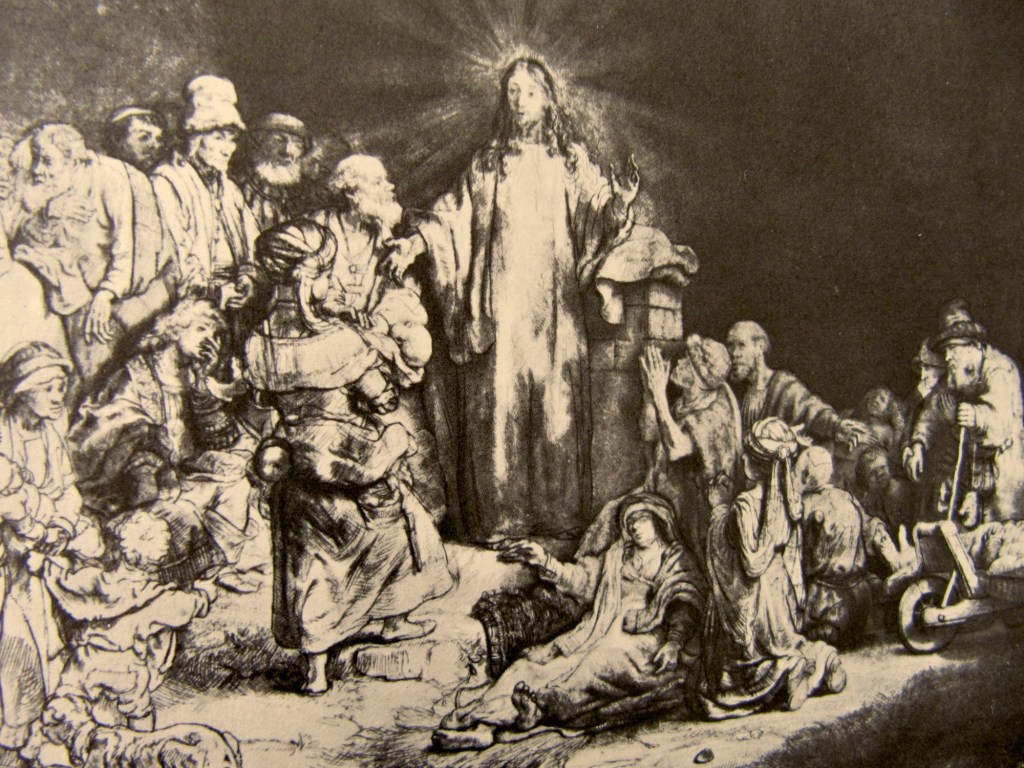
In today’s gospel, the deaf man brought to him isn’t identified as either Jew or gentile. He’s just deaf and can’t speak. He has no name. What’s significant about this miracle is the way Jesus heals him. “He took him off by himself away from the crowd.” (Mark 7,33)
Jesus takes the man aside privately, he meets him personally, face to face– and is deeply touched– “groans”–at the deaf man’s plight. He touches the man, putting his finger in his ears and his spittle on his tongue. When the deaf man speaks, Jesus says to him and his friends not to tell anyone. One reason may be that Jesus doesn’t want to be typed simply as a healer. But they went and proclaimed it anyway.
Still, why did he take him off “by himself away from the crowd?” A reminder that God does not look on us as a crowd, but knows each of us? We’re not statistics, part of a list. God meets each of us face to face.
And that’s a reminder to treat others that way too. Each has a face of their own and a story that’s unique. That’s hard to do. It’s easier to deal with people as statistics, numbers, people next in line.
For Jesus people were not statistics, one of a crowd, next in line. That’s not God’s way.
We’re reading at Mass today the story of the Syrophoenician woman who asks Jesus to cure her daughter. Mark 7, 24-30
My mother (God rest her) used to sneak food under the table regularly to her beloved cocker spaniel, Buffy. Once when I visited home after becoming a priest I said–in a losing attempt to keep Buffy’s weight down– “Mom, you shouldn’t feed that dog scraps from the table.”
She replied, “You don’t live her. He does. Besides, I’m not feeding him scraps from the table. He’s eating the same food we eat.”
I could never understand all the logic of her answer, but I gave us trying to stop her. I remember her every time this gospel is read. She put me in my place.
Maybe that’s what the Syrophoenician woman did to Jesus when she met him on his excursion north into gentile territory near Tyre.
Father John Donohue, SJ, offers an intriguing commentary on Jesus and this woman in Mark’s gospel. (The Gospel of Mark, John Donohue, SJ and Daniel Harrington, SJ (Sacra Pagina), Collegeville, Minnesota 2002. ) Their meeting takes place following the feeding of the 5,000 in Jewish territory (Mark 6, 30-44) and Jesus’ announcement to the Pharisees and the scribes from Jerusalem that “all food is clean.” As a sign that the gentiles too would receive the Bread of Life from his hands, Jesus journeys into gentile territory to feed another 4,000. (Mark 8,1-10)
Now, you would expect him to welcome any gentile he met near Tyre, but the woman who meets Jesus alone in a house is harshly rejected when she asks him to heal her daughter. “It is not right to take the food of the children and throw it to the dogs.”
The woman doesn’t take no for an answer. “Even the dogs under the table eat the children’s scraps, Lord.”
Matthew’s gospel, written after Mark, says the woman’s daughter was healed because of her faith. Not so, Father Donohue says. According to Mark, it was because she got the best of her argument with Jesus, the only one who does that in the gospels. “It’s not right to ignore us,” the woman says to him. Jesus heard the truth from her and accepted it.
Mark’s gospel today tells the gruesome story of the death of John the Baptist, which prefigures the death of Jesus. King Herod ordered his death, prompted by Herodias. Human sinfulness is on display in this court banquet, which the artist (above) describes very well. The women smugly presenting John’s head. The man pointing his finger at Herod and Herod denying it all. John’ eyes are still open, his mouth still speaks.
Venerable Bede says that John’s death is like Jesus’ death because they both embraced the same values. If John stayed silent about Herod’s conduct, he may have gained a few peaceful years of life, but he was more concerned with what God thought than what powerful people on earth thought.
“His persecutor had demanded not that he should deny Christ, but only that he should keep silent about the truth. Nevertheless, he died for Christ. Does Christ not say: I am the truth?
“He preached the freedom of heavenly peace, yet was thrown into irons by ungodly men; he was locked away in the darkness of prison, though he came bearing witness to the Light of life.
“But heaven notices– not the span of our lives, but how we live them, speaking the truth.” (Bede, Homily)
Wonderful line: It doesn’t matter how many years we live, but how we live them, “speaking the truth.”
For John that meant dying for the truth. What does it mean for us? It may not mean getting our heads chopped off, but we should expect some scars from the daily battle for God’s truth. ” May we fight hard for the confession of what you teach.” (Opening prayer)
In one of his poems, “Putting in the Seed,” Robert Frost describes a farmer’s love affair with the earth. It’s getting dark and someone from the house tries fetching him to come in. Supper’s on the table, yet he’s a
“Slave to a springtime passion for the earth. How Love burns through the Putting in the Seed On through the watching for that early birth When, just as the soil tarnishes with weed, The sturdy seedling with arched body comes Shouldering its way and shedding the earth crumbs.”
Can’t you see that farmer zestfully casting seed on the waiting earth, eagerly watching it to grow? Jesus sees the Sower as an image of God, casting saving grace onto the world in season and out, because he loves it so much.
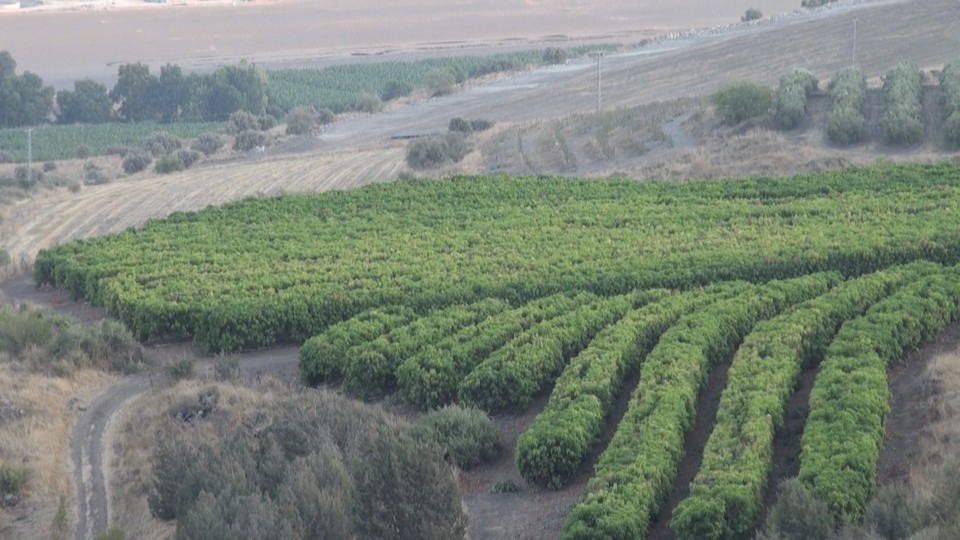
If you have ever been to Galilee and seen the lake and the surrounding lands abundant with crops, you know this is a blessed place. It was in Jesus’ time too. Here, the sower scatters his seed with abandon, hardly caring where it goes: on rocky ground, or amid thorns, or on the soil that gives a good return.
God the Sower sows blessed seed, no matter how badly our human world appears, or how badly it receives. In his parables Jesus acknowledges rejection as well as acceptance, but the sower still sows. Grace is never withheld, and that makes us hope.
And is it just the human world God loves? Doesn’t his love extend to all the earth God calls “good” in the Book of Genesis? We worry about our planet earth, and with reason. How fragile it has become, what damage we careless humans do! We are concerned rightly for its future.
The nature parables we are reading in Mark’s gospel tell us to hope for our earth too. Though it is not immune from the threat of destruction and degradation, God loves it still. He’s a Sower at work. Blessed be the Lord God of all creation, may you sow your blessings on all.
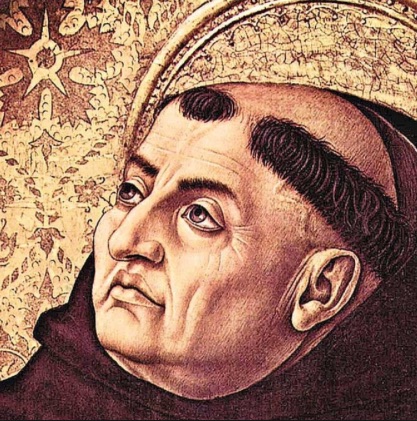
The feast of St. Thomas Aquinas, January 28th, in my student days was a day for presentations honoring the saint. The presentations were not about the saint’s life but his wisdom. Thomas Aquinas was a great theologian dedicated to the search for truth.
He was a man of faith, searching for understanding. That’s the definition of theology–faith seeking understanding, an understanding that draws us closer to God and helps us know God, the source of all truth.
He was a man of questions, who approached great mysteries through questions. That’s the way St. Thomas begins a sermon he once preached, found today in the Office of Readings for his feast:
“Why did the Son of God have to suffer for us?” he asks as he looks at the Cross of Jesus. The passion of Jesus was necessary, the saint says, for two reasons. First, as a remedy for sin, and secondly, as an example of how to act.
Interestingly, the saint doesn’t spend much time asking why it’s a remedy for sin. He’s more interested in the passion of Jesus as an example for us. To live as we should, we need to look at Jesus on the cross, an example of every virtue:
“Do you want an example of love? ‘Greater love than this no one has, than to lay down one’s life for one’s friends.’ That’s what Jesus did on the cross. If he gave his life for us, then it should not be difficult to bear whatever hardships arise for his sake.
“If you want patience, you will find no better example than the cross. Great patience occurs in two ways: either when one patiently suffers much, or when one suffers things which one is able to avoid and yet does not avoid.
“Christ endured much on the cross, and did so patiently, because when he suffered he did not threaten; he was led like a sheep to the slaughter and he did not open his mouth. Therefore Christ’s patience on the cross was great. In patience let us run for the prize set before us, looking upon Jesus, the author and perfecter of our faith who, for the joy set before him, bore his cross and despised the shame.
“If you want an example of humility, look upon the crucified one, for God wished to be judged by Pontius Pilate and to die.
“If you want an example of obedience, follow him who became obedient to the Father even unto death. For just as by the disobedience of one man, namely, Adam, many were made sinners, so by the obedience of one man, many were made righteous.
“If you want an example of despising earthly things, follow him who is the King of kings and the Lord of lords, in whom are hidden all the treasures of wisdom and knowledge. Upon the cross he was stripped, mocked, spat upon, struck, crowned with thorns, and given only vinegar and gall to drink.
“Do not be attached, therefore, to clothing and riches, because they divided my garments among themselves. Nor to honours, for he experienced harsh words and scourgings. Nor to greatness of rank, for weaving a crown of thorns they placed it on my head. Nor to anything delightful, for in my thirst they gave me vinegar to drink.”
St. Thomas’ great theological work, the Summa Theologica can be found here.
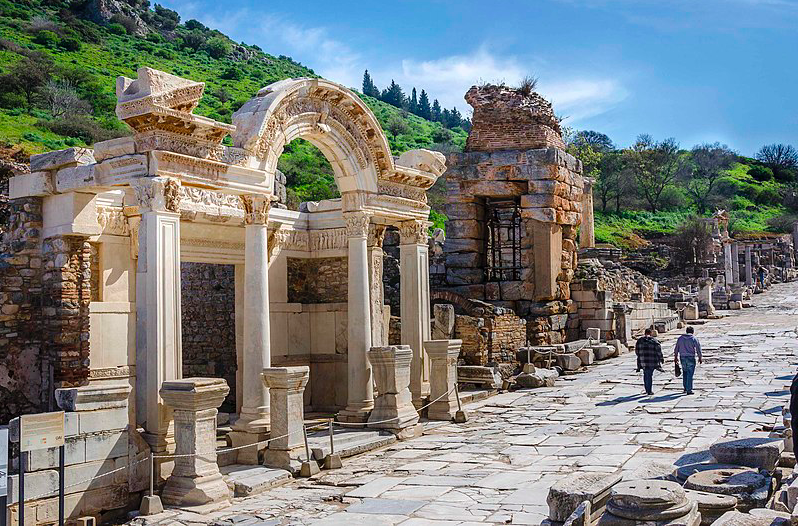
Timothy and Titus were companions of St.Paul on his missionary journeys and continued his mission. Timothy led the church at Ephesus; Titus assumed leadership of the church in Crete. Paul wrote letters of advice to them: one letter to Titus and two letters to Timothy, most likely written from house arrest in Rome.
Like Jesus, Paul never saw himself handing on a church that was completely developed. He ministered to a church evolving from a “way”, a movement, to a church settled in places like Ephesus and Crete. He had men and women companions at his side.
Timothy and Titus were important companions who represent another stage in Paul’s ministry. While Paul and other apostles went out to the nations, the church had to be firmly established in every place they visited. The roles of bishops, priests and other ministries evolved to fulfill that task. A local church needed to be organized. The church is missionary, global, sent by Jesus to the nations, but it’s also local, part of a town. city, neighborhood.
The feasts of the Conversion of Paul and Timothy and Titus represent those two aspects of the church.
Paul’s advice to Timothy is especially interesting. “Stir into flame the gift of God that you have through the imposition of my hands. For God did not give us a spirit of cowardice, but rather of power and love and self-control. So do not be ashamed of your testimony to our Lord, nor of me, a prisoner for his sake; but bear your share of hardship for the Gospel with the strength that comes from God.”
Is Paul trying to bolster Timothy’s confidence as he loses a powerful mentor. Timothy needs the gift of God to make the church in Ephesus a flourishing local church.
Timothy and Titus were given “apostolic virtues” by God to continue the work of Paul and the other apostles, the opening prayer of their feast says. And “May we merit to reach our heavenly homeland” by “living justly and devoutly in this present age.” Like them “we” also are given a task –to work for the church’s growth and development in this present age.
Let’s remember them as our mentors, mindful that God “ does not give a spirit of cowardice, but rather of power and love and self control.” Like the two followers of Paul, we have to hold on to what we’re given and continue their work: “Go into all the world, and proclaim the gospel. I am with you always, says the Lord.”
I see in the notes in the American Bible that the deacons Paul refers to in I Timothy 3, 8-13 may include women as well as men. “This (deacons) seems to refer to women deacons, but may possibly mean the wives of deacons. The former is preferred because the word is used absolutely…”
Why not today? We need women in roles of leadership. I have some in mind who would fit the role very well. I wonder if Timothy’s mother Eunice and grandmother Lois found a home and were involved there. I wonder what my mother would say.
“Speak, Lord, your servant is listening.” Those words of the Prophet Samuel remind us to listen. One way to pray is to listen to God in our prayers. Besides listening to the scriptures and the homilies we hear, we also need to listen to the prayers we say . This is especially true of the Eucharistic prayer and the prayers of our liturgy. We get used to prayers we say repeatedly; we need to listen to them.
I recorded an audio file of the 2nd Eucharistic Prayer for Various Needs and you can listen to it at the end of this blog, if you wish. Listen and reflect on the words. The Eucharistic prayers help us understand the mystery we celebrate.
Think about the words of the prayer and ask yourself what they mean. Take the dialogue that opens every Eucharistic prayer, for example:
“The Lord be with you.
And with your spirit.
Lift us your hearts.
We have lifted them up to the Lord.
Let us give thanks to the Lord, our God.
It is right and just.”
The Lord is with us as we pray and and lifts up our hearts to the divine presence. That presence expands our vision of life and broadens our awareness of who we are. We thank God.
What do we thank God for? Certainly for the blessings of our life, but we don’t stop there. In God’s presence we become aware of the blessings of creation and redemption given to us by God, our Father, through Jesus Christ.
The Eucharist calls us into a large world, infinitely larger than our own time and place. If fact, it brings us into the context of eternity. We’re in touch with the beginnings of our universe and reach out to the end of time, when God’s kingdom will come. We belong to this great world as children of God. We have been blessed with a promise far beyond our imagination.
We receive this promise through Jesus Christ whose love we recall in the gifts of bread and wine and the other signs of our prayer. He is present; remember him.
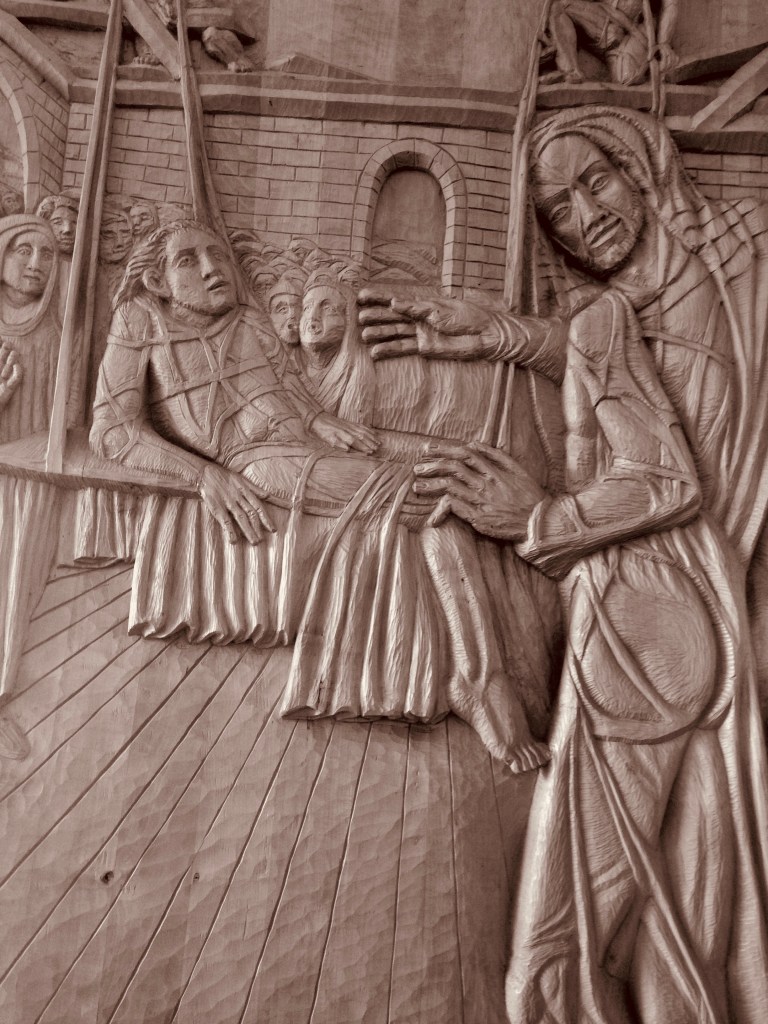
The healing of the paralytic told in today’s gospel from Mark is a great story.(Mark 2: 1–12) Four friends bring him to the door of Peter’s house in Capernaum but the crowds are so dense that they can’t get in to see Jesus so they climb up on the roof, cut a hole in it and lower him down before Jesus. Was the paralyzed man conscious, or half conscious? We don’t know.
What ingenuity! What nerve! What determination on the part of his friends! Think of the logistics involved in it all.
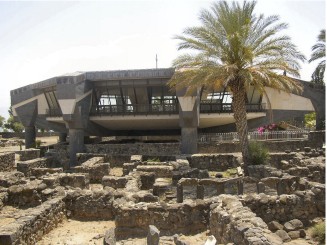
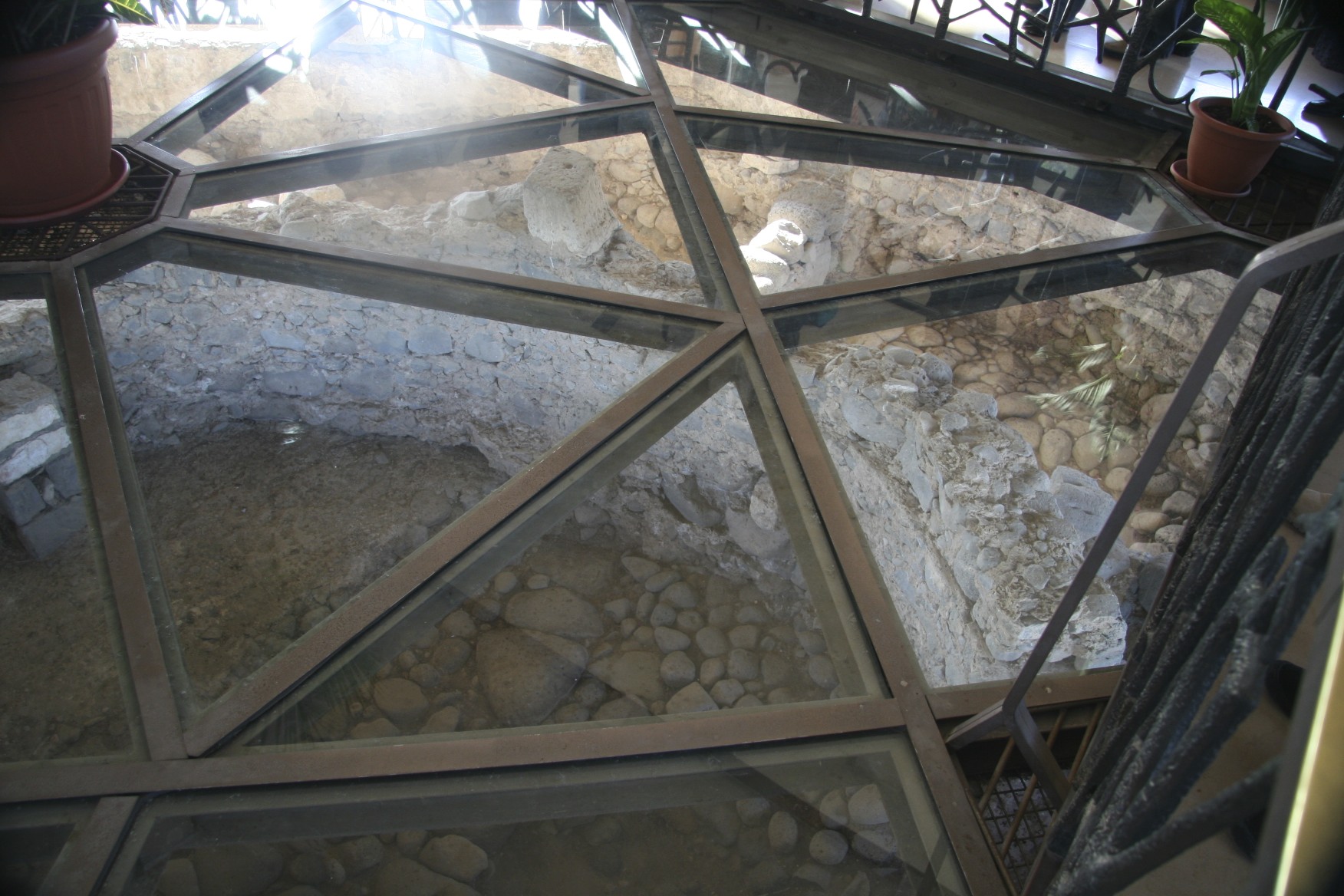
The picture above show the ruins of Peter’s house in Capernaum, now enclosed in a shrine. From a chapel above you can look down into Peter’s house below –possibly just where the man was lowered down. The picture at the beginning of our blog is also from that chapel.
We know Jesus forgave the man’s sins and then healed him completely, so he left the house carrying the mat that once bore him. The gospel story tells us that Jesus the healer is Jesus who forgives sins. Some who heard his words of forgiveness that day were shocked by this action which they rightly judged was divine.
But I’m led back to the four friends who had a part in this miracle. Let’s not forget them. They believe and their belief makes them go to extraordinary lengths to help someone . Faith reaches out; it doesn’t remain within. We believe for others as well as for ourselves. Believing prompts us to do daring things for others.
Back to Peter’s house. Did Peter look up that day and say, “Who’s going to pay for that hole in the roof?” The story of the paralyzed man is a wonderful story. But it also has an ominous part to it. Scribes, sitting in judgment, call Jesus a blasphemer for pronouncing sins are forgiven. Opposition to Jesus begins to build and it leads to his death.
“To what shall we compare the Kingdom of God, or what parable can we use for it?” ( Mark 4, 30) Jesus turned to the land where he lived and the life around him to answer that question.
So what was the land where he lived like? It was a land of olive trees near Bethany outside Jerusalem, but if you went eastward to Jericho and the Dead Sea, it was mostly a barren desert. Then, from Jericho to Galilee the land turns from desert to lush farmland. A changing land.
Jordan Valley
Jesus experienced a changing land from Nazareth to the Jordan River and then the Sea of Galilee. Like us, he was influenced by the place and life around him.
In a book written in the 1930s Gustaf Dalman, an expert on the geography and environment of Palestine, observed that when Jesus went from the highlands of Nazareth, 1,100 feet above sea level to the fishing towns along the Sea of Galilee, 680 feet below sea level, he entered a different world.
For one thing, he ate better – more fish and nuts and fruits were available than in the hill town where he grew up. He looked out at the Sea of Galilee from the towns he visited. Instead of the hills and valleys around the mountain village of Nazareth, he saw a great variety of birds, like the white pelicans and black cormorants challenging the fishermen on the lake. He saw trees and plants and flowers that grew abundantly around the lake, but not around Nazareth.
Instead of the chalky limestone of Nazareth, Jesus walked on hard black basalt, which provided building material for houses and synagogues in the lake region. They were sturdy structures, but they were dark and drab inside. They needed light. Light on a lampstand became one of his parables. (Mark 4,21)
Basalt also made for a rich soil where everything could grow. “… here plants shoot up more exuberantly than in the limestone district. Where there are fields, they yield a produce greater than anyone has any notion of in the highlands.” (Dalman, p123)
Farmland in Galilee
The volcanic soil on the land around the lake produced a rich harvest. The Jewish historian, Josephus, praised that part of Galilee for its fruitfulness, its palm trees, fruit trees, walnut trees, vines, wheat. But thistles, wild mustard, wild fennel grew quickly too and could choke anything else that was sown. The land around the Sea of Galilee was fertile then; even today it has some of the best farmland in Palestine.
Soil near the Sea of Galilee
The weather in the Lake District was not the same as in the mountains, warmer in winter, much hotter and humid in summer, which begins in May. “It is difficult for anyone used to living in the mountains to work by day and sleep by night…Out of doors one misses the refreshing breeze, which the mountains along the lake cut off…one is tempted to think that Jesus, who had settled there, must often have made occasion to escape from this pitiless climate to his beloved mountains.” (Dalman, p. 124)
You won’t find these observations in the gospels, of course, but they help us appreciate the world in which Jesus lived and the parables he drew from it. He was influenced by where he lived, as we are.
And what about us? What wisdom do we draw from the world we live in? What do we see day by day? What’s life like around us? We’re experiencing climate change now, aren’t we? It’s going to influence our spirituality, how we see, how we live, how we react to life.







 The Victor's Place