Tag Archives: Jesus Christ

Still Wondering


We don’t stop wondering at the Christmas crib. Christmas is over for most people today. The tree’s taken down, decorations put away. But the Christmas mystery is too big for a one day celebration; that’s why the church prepares for this celebration through the four weeks of Advent and continues through the days of the Christmas season till the Feast of the Epiphany. Christmas Day may be over, but our celebration and reflection on the Christmas mystery is not over.

This mystery raises questions and has consequences, which the feasts that follow Christmas Day explore. Since ancient times churches of the east and west have celebrated the feast of Stephen, one of the first disciples of Jesus and the first to die giving witness to him. (Acts 6,8 ff) on December 26.

When Jesus was born “all who heard it were amazed by what had been told them by the shepherds.” (Luke 2,18) But Stephen would be stoned to death when he told about the One who was sent. The message will not always be heard, yet still must be told. 

“The love that brought Christ from heaven to earth raised Stephen from earth to heaven,” St. Fulgentius says of the martyr Stephen.

December 28th is the feast of the Holy Innocents;  little children from Bethlehem put to death by Herod the Great so no rivals would challenge his power and throne. (Matthew 2, 13-18) When Jesus was born “all who heard it were amazed by what had been told them by the shepherds.” (Luke 2,18) Yet Herod the Great heard the message and tried to end it. The birth of Jesus does not bring an end to evil in the world. The Child is born “for to die for poor orn’ry creatures like you and like I.”  

December 27th is the feast of St. John, the apostle. This is another feast celebrated along with the Christmas feast by all the churches of the east and west from earliest times. It explores the great question: Who is this Child born of Mary? Writings identified with John the Apostle– the 4th Gospel and letters–  are read at Mass on Christmas Day and days that follow the feast. 

Jesus Christ, born of the Virgin Mary, is true God and true man, “the Word made flesh, the Word of God who made all things, dwells among us.”

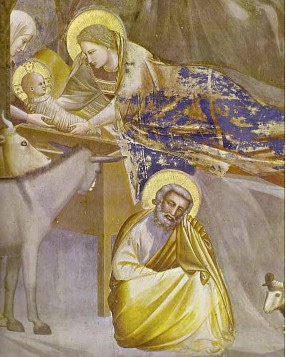
Like the shepherds who watched in the darkness we need to keep our eyes on this sign of light:  “the infant wrapped in swaddling clothes and lying in a manger.” Like Mary, we need to keep reflecting on this mystery in our heart to appreciate what it means for the world and for us. Like Joseph we don’t stop wondering.
 

mary 10


Assumption, Dormition

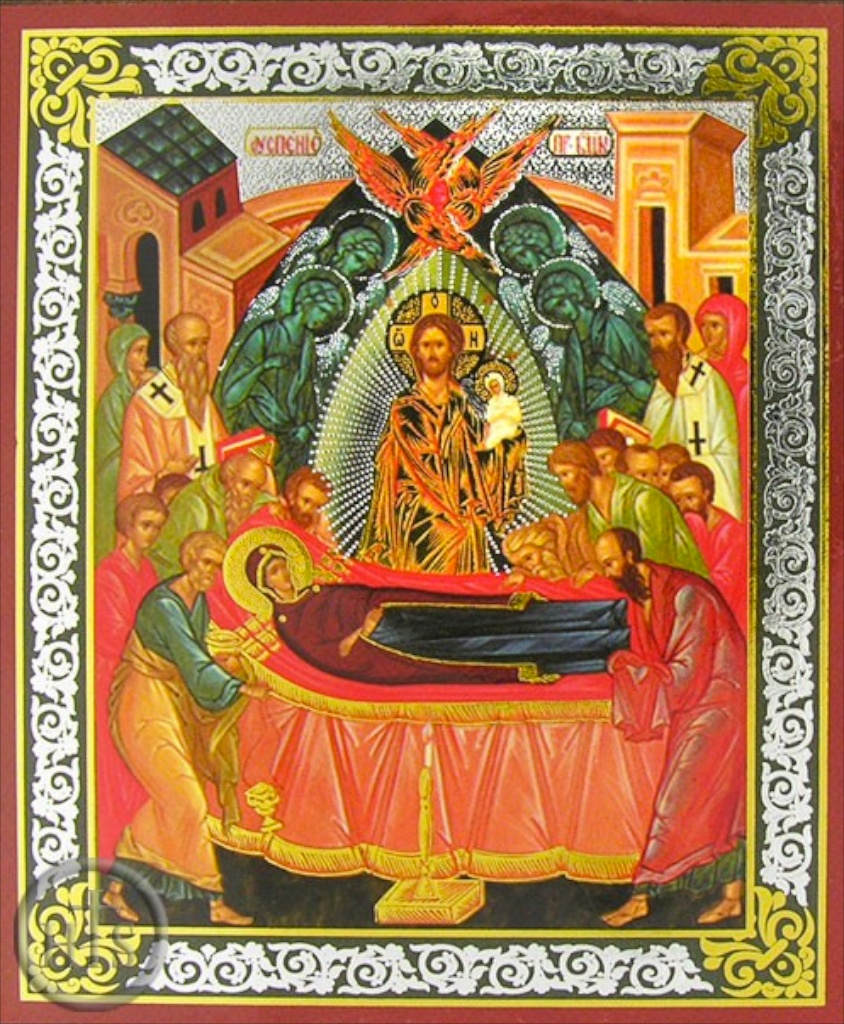
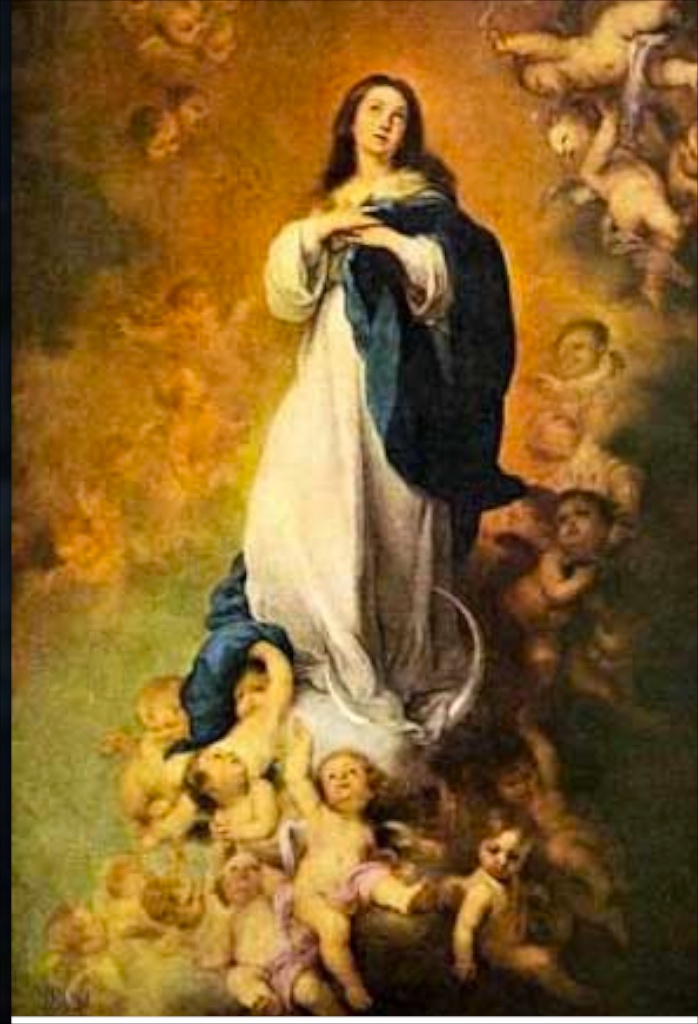
The Feast of the Assumption, August 15th in the Roman Church, and the Feast of the Dormition in the Eastern Church celebrate the belief that Mary, the Mother of Jesus, was taken body and soul into heaven by her welcoming Son.

The Eastern Church year begins with the Great Feast of the Birth of Mary, September 8 and ends with Great Feast of the Dormition. The mysteries of Jesus take place within these two feasts.

The two churches express the mystery differently in art. In the Western Church Mary, radiantly dressed, often surrounded by angels, turns her face to heaven,

The Eastern Church invariably has Jesus standing over his mother’s body, carrying her soul in his arms as a little child. How else would she be at death? Didn’t Jesus say we cannot enter the kingdom of heaven unless we become a little child. She became one.

Her Son brings her body and soul to heaven. She bore him in her womb through grace, now she enters heaven through grace. The apostles, surrounding her body, have been summoned from the ends of the earth to be witnesses to her death and resurrection. She is the “first fruits” of her Son’s redemption. Angels cry out for heaven’s gates to be opened.

“Open your gates and welcome the One who gave birth to the Creator of Heaven and earth; let us celebrate with hymns of glory her holy and venerable body which housed the Lord who is unseen by us. We also cry out: O worthy of all praise, lift up our heads and save our souls”. (Troparion, Feast of the Dormition)

“Today, the Virgin Mother of God

was assumed into heaven

as the beginning and image

of your church’s coming to perfection

and a sign of sure hope and comfort

to your pilgrim people.” (Preface of the Assumption)

God took Mary, the lowly one, and “raised her up to this grace, that your Only-Begotten Son was born to her according to the flesh and that she was crowned this day with surpassing glory. Grant through her prayers that, saved by the mysteries of your redemption, we may merit to be exalted by you on high.” (Collect, Feast of the Assumption)

Because Mary shares in her Son’s resurrection, she also shares his desire that “all be saved and come to the knowledge of the truth.” She joins her voice to his and intercedes for us.

“In falling asleep, you did not forsake the world, O Mother of God,

You were translated to life, O Mother of Life.

And by your prayers you deliver our souls from death.” (Troparion)

The End is Only a Beginning

.
We begin reading the Farewell Discourse from John’s gospel along with the Acts of the Apostles this 4th week of Easter. Facing their loss of Jesus the disciples seem helpless as he says farewell. “I have a lot to say to you, but you cannot bear it now,” he says. The Lord recognizes their paralysis.

In our reading from the Acts of the Apostles, on the other hand, Paul and his companions are not helpless at all. They’re boldly on their way to places that may not seem impressive to us now, but were impressive places then: Psidian Antioch, Philippi, Athens, Corinth. Three were important Roman colonies, strategic cities on the Roman grid, steps on the road to Rome itself. Athens, of course, was a key intellectual center of the empire, though maybe a little down-trodden when Paul got there.

Paul welcomed people into his growing ministry. Meeting Lydia, the trader in purple dyes at the river, he baptizes her and her household. How many did she bring to the gospel? Priscilla and Acquila, the two Jews that Claudius expelled from Rome during the Jewish riots of AD 42, became his trusted partners.

Maybe it’s good that we read these two scriptures together.

The Acts of the Apostles tell of a church confidently on its way to the ends of the earth to fulfill its mission.

The Farewell Discourse, on the other hand, says that sometimes a church can be paralyzed in its thinking and acting. But the Lord is the shepherd of both. What seems like the end can be only a beginning.

Stations of the Cross


See also Stations of the Cross by young people at: http://www.vatican.va/news_services/liturgy/2018/documents/ns_lit_doc_20180330_via-crucis-meditazioni_en.html

Wednesday, 3rd week of Advent


Sacred Heart Church


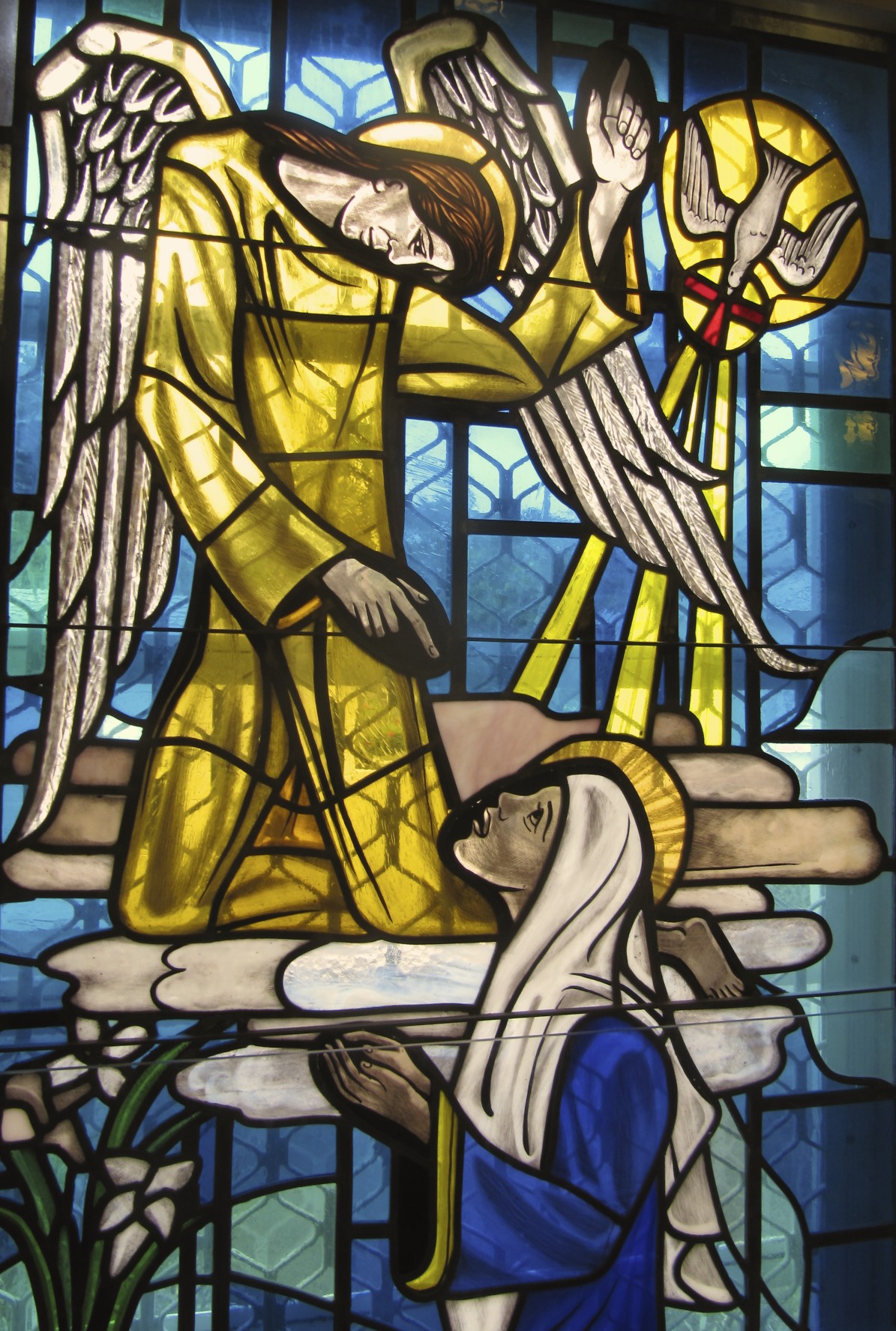
The angel came to Mary in Nazareth, the last place we might expect an angel’s message. In this little known place, Jesus became flesh. In this young unknown woman, he came to dwell among us.

It wasn’t in Jerusalem, in the temple where God’s Presence was proclaimed. It was in Nazareth, in the quiet hills of Galilee, on a routine day, that He came.

We celebrate the mystery of the Incarnation and pray, “Pray for us, O holy mother of God, that we may be made worthy of the promises of Christ.”

An Unpeaceable Kingdom

Jesus said to his disciples:
“I have come to set the earth on fire,
and how I wish it were already blazing!
There is a baptism with which I must be baptized,
and how great is my anguish until it is accomplished!
Do you think that I have come to establish peace on the earth?
No, I tell you, but rather division.
From now on a household of five will be divided,
three against two and two against three;
a father will be divided against his son
and a son against his father,
a mother against her daughter
and a daughter against her mother,
a mother-in-law against her daughter-in-law
and a daughter-in-law against her mother-in-law.” Luke 12,49-53

Most of us don’t want to live in the house our Lord describes in today’s gospel, where fathers fight with their sons, sons with their fathers; where mothers fight with their daughters, daughters with their mothers.”

Not a nice house to live in.

Same way with a world on fire. A little fire is all right, but a world on fire? Too much.

We’d rather live in a world Isaiah describes: a holy mountain where the lion and the lamb lie down together and a child can put his hand into a snake hole and not get bit. A peaceable kingdom.

But maybe the situation Jesus describes is a form of the cross he endured. Maybe it’s the cross he asks us to endure today: a world on fire with strife, confusion and misunderstanding. Can the cross take the form of confusion and misunderstanding? It’s hard to live in a world where things are not clear and hard to understand.

Maybe that’s the cross we have to carry today.

17th Sunday a: Finding Life’s Treasures

For today’s homily, please play the video below:

The Guide Back

This Wednesday’s Gospel ( Jn 16: 12-15 ) our Lord continues to tell His disciples about the Holy Spirit.

“ I have much more to tell you, but you cannot bear it now. But when He comes, the Spirit of truth, He will guide you to all truth,. He will not speak on His own, but He will speak what He hears, and will declare to you the things that are coming. He will glorify me, because He will take from what is mine and declare it to you. Everything that the Father has is mine; for this reason I told you that He will take from what is mine and declare it to you.”

Lately I am suffering from a slight disconnect with my intimate friend, Jesus. It’s as if I “ cannot bear “ what He has to tell me. So many outside problems seem to stand in the way of my prayer. Yet I know that Jesus is with me all the time, even when I find myself pushing Him aside. Thank heavens for the word of God. When I read today’s short Gospel as if Jesus is personally talking to me, I am filled with hope and consolation.
Jesus seems to tell me that even though lately our dialogue seems lacking, He is sending His Spirit to help out. First of all the Spirit guides us back to the Truth of God’s love for us. Never mind all the illusory lures and complications of this life, The Spirit enables us to see that God is the ultimate truth, the rock upon which we truly stand.
The Spirit of God will speak, perhaps in a whisper, the advice of a friend, or the song of a sparrow. He will make me hear what is important. He declares what is important to look out for. In His own time the Spirit will even once again let me feel the Glory that is God. He will take this Glory of Jesus, and therefore, of our loving Heavenly Father,and His own,  and show it to me. He will declare it.
All I have to do is find that moment of quiet and simply listen, because, Jesus, no matter what is troubling me, I trust in You. Because You trust in me. You do not give up on me that easily! Your Holy Spirit tells me so.

Orlando Hernández

Sunday: 4th Sunday of Lent

Watch this week’s homily by selecting the video below:

https://player.vimeo.com/video/209957636

The Holy Family


Luke 2,41-52

For most people, Christmas is over– the music’s stopped; Santa Claus is gone from the malls. The decorations are down and put away. It’s over.

But in church Christmas isn’t over. We’re still singing  carols and continue to celebrate as we think  about what it means when we say “our God was made visible.”

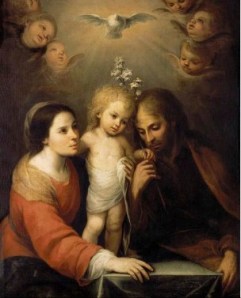
Today’s the feast of the Holy Family. The Word was made flesh, and as the child of Mary and Joseph Jesus was part of a family in the small town of Nazareth in  hills of  Galilee.

For one thing, families then were extended families or clans, living close together and working side by side. Archeological excavations in Nazareth and Capernaum (pictures below) make that clear. Families worked together in the fields or in  business, they ate together and moved together, as they still do in parts of the Middle East and elsewhere today.

holy familyCapernaumruinsDSC00062

It’s safe to say that nuclear families didn’t exist then. A nuclear family– mother, father and children– is a modern form of family life. Mary, Joseph and the Child Jesus were not all by themselves in a small house in Nazareth. Rather, Jesus was raised in an extended family where  grandfathers and grandmothers, uncles, aunts and cousins lived together and were involved in bringing him up.

That doesn’t take away the part Mary and Joseph played in his upbringing, of course. They weren’t props, standing by while angels brought him up. Some of the apocryphal gospels – early stories about Jesus which the church rejected  – seem to say that.  One  story describes the Child Jesus forming  the figure of a bird from clay, then breathing on it, and instantly it becomes a living bird and flies away. Stories like that presented him exercising  miraculous powers as a child.

The church rejected those stories because they gave a  false picture of Jesus growing up. He “was subject” to Mary and Joseph, the gospel of Luke says. He grew up in their care as an ordinary child would.

Like mothers and fathers everywhere, they saw to his needs, they held him in their arms,  fed him, clothed him,  stayed up at night when he was sick. They taught him his first words,  guided his first steps,  nudged him along this way and that.

They  brought him to church–the synagogue, the temple–as we see in today’s gospel from Luke. They instructed him in his tradition. They taught him to pray,  interpreted events for him,  listened to his questions,  encouraged him over and over. They had their misunderstandings, as today’s gospel  indicates. In fact, they  influenced his life.

Yes, angels were there, but at a distance.  Mary and Joseph and that larger family and village around him raised the Child.

Today’s  feast of the Holy Family takes in the years of Jesus’ childhood and early adult life called his “Hidden Life.” His  years in that nondescript town among those ordinary people were truly hidden, yet were they less important than his Public Life, the few years he taught and did great miracles,  suffered and died and rose from the dead? In those hidden years “he humbled himself.”  A hidden life is important; it’s what mostly characterizes life in a family.

We need to think about family life today, because it’s in trouble.  For one thing, the nuclear family– father, mother, children– is  in trouble. I read some disturbing statistics recently. In every state in our country, families where children have two parents have declined significantly in the last 10 years. One of three children live in a home without a father. Almost 5 million children live in a home without a mother. A single mother may have an income of $24,000. Two parents are likely to have an income significantly greater.

What can we do? How can we help? Feasts  like the Holy Family focus our attention on important things.  They remind us what’s important in God’s eyes. The feast of the Holy Family focuses on the family. It’s important, it says.  At the same time, it tells us God’s grace will be ours when we work to make families go and when we support them all we can.  God points to family life today. It’s vitally important in our world.