Tag Archives: Jerusalem

Bartholomew, the Apostle: August 24

IMG (160)
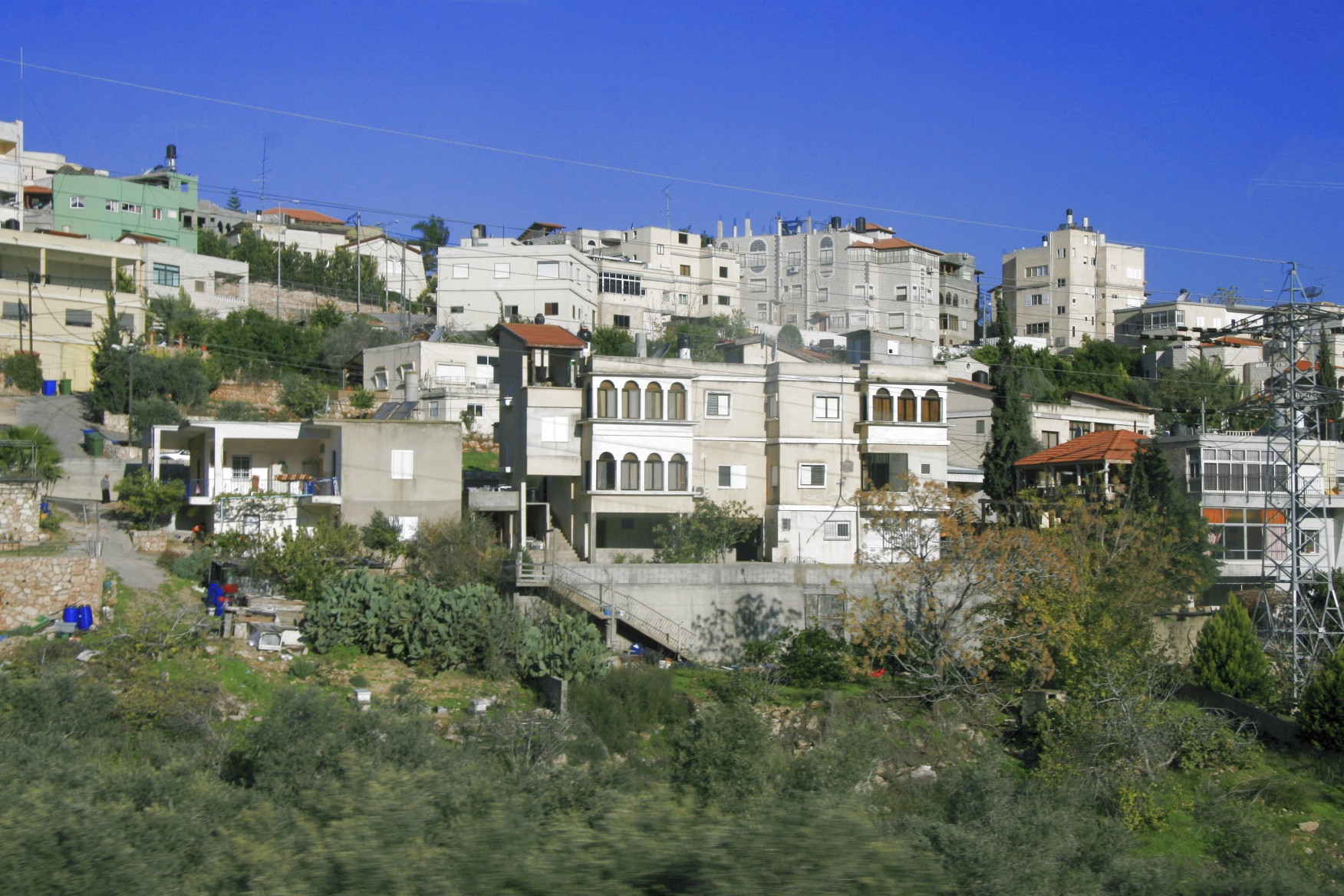
Cana today

August 24th is the feast of the apostle Bartholomew, also identified as Nathaniel,  from Cana in Galilee, only a few miles from Nazareth.  Like Nazareth, Cana attracted little interest in Jesus’ time, yet it played  a major role in Jesus’ early life and  mission.

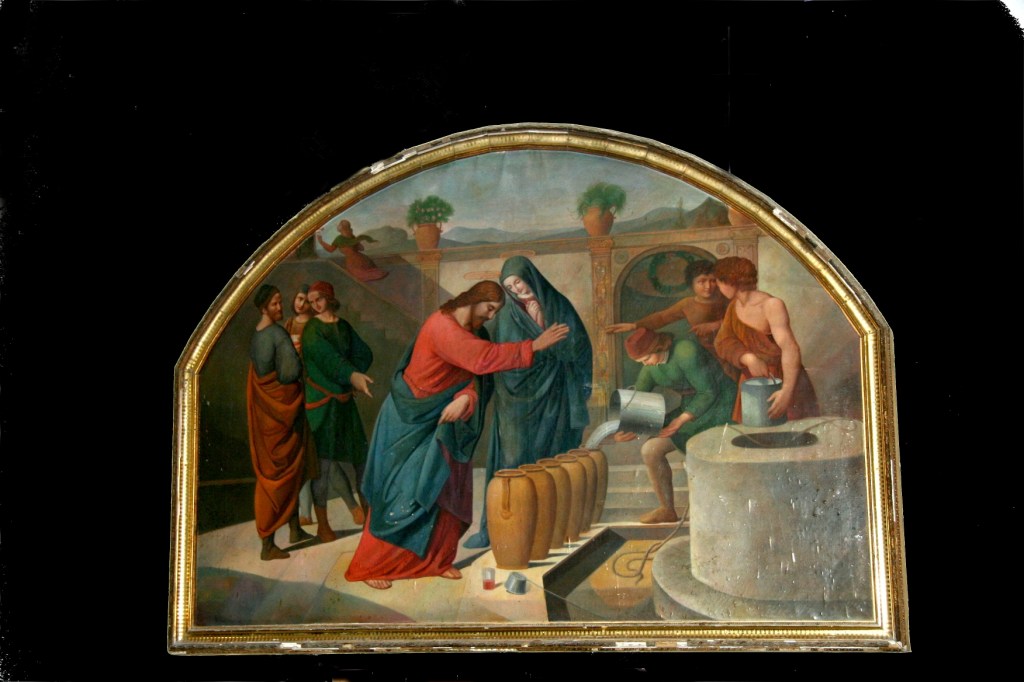
In John’s gospel,  Jesus turns water into wine at a wedding in Cana, his first “sign” that God’s kingdom would come. (Jn 2, 1-12) The family faced a wedding nightmare: the wine was running out and embarrassment was sure to come.

Catholic Church, Cana
cana carol rothstein 7

Was the family related to Jesus? Or Bartholomew?  At least they were close. Why else would Jesus, his mother and his disciples be at the celebration?

The miracle was special,. More than saving a family from embarrassment, it’s a sign in John’s gospel of God’s great love for ordinary people in ordinary towns everywhere. God delights in them, says the Prophet Isaiah, whose words often accompany the Cana miracle,  Cana signifies poor Israel, whom God loves with all the ardor of a “young man marrying a virgin,” God’s love, bountiful, restoring, overflowing with delight, goes out to this poor place, as well as poor places everywhere.

Jesus performed another miracle at Cana, John’s gospel says, another sign of the coming kingdom. Besides the miracle at the wedding, Jesus cured the dying son of a government official from Capernaum, whose ” father came to Cana because he heard that Jesus was there. (John 4.46-54) Jesus saved his son from death.

cana carol rothstein

Through the centuries Cana hasn’t prospered much. It’s not much to look at today.  In the late 19th century, a visiting English vicar described it this way:

“ (Kefr Kenna) lies on high ground, but not on a hill…A broad prickly pear led to the group of houses which perhaps represents the New Testament Cana. Loose stones were scattered around the slope. There may be, possibly, 150 inhabitants, but one cannot envy them their huts of mud and stone, with dunghills at every corner. Huge mud ovens, like great beehives, stood at the sides of some of the houses.

“ In one house a worthy Moslem was squatting on the ground with a number of children, all with slates on which verses of the Koran had been written, which they repeated together. It was the village school, perhaps like that at Nazareth eighteen hundred years ago.

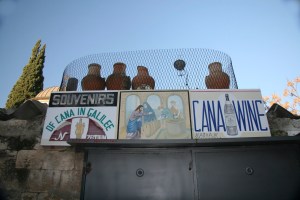
“ A small Franciscan church of white stone with a nice railed wall, with a beautiful garden at the side, had over its doorway these startling words in Latin: ‘Here Jesus Christ from water made wine.’ Some large water jars are shown inside as actually those used in the miracle, but such mock relics, however believed in by simple monks, do the faith of other people more harm than good.”

Cana’s still a poor town. Like other poor places in the world it’s waiting to be raised up to share in the splendor of the heavenly Jerusalem. God loves poor places like this, the Cana miracle says. Bartholomew came from here.

cana carol rothstein 11
Church of St. Bartholomew, Cana

The Letter of James

James,_the_Just1

We’re reading at Mass for the next few days from the Letter of James. Modern commentators aren’t sure who greets his hearers as “James, a servant of God and of the Lord Jesus Christ, to the twelve tribes in the dispersion.” He doesn’t seem to be James, the brother of John. Possibly he is a relative of Jesus and leader of the Jewish-Christians in Jerusalem as some say.

James was stoned to death in the mid 60s as the Jewish establishment turned against the followers of Jesus and forced many of them to flee. Jerusalem itself fell in 70 AD when Roman armies destroyed the city and crushed the Jewish revolt. Jewish-Christian exiles were exiled from their beloved city and would never return. Some commentators believe this letter contains an original letter of James sent to support the exiles and other material was later added to it.

The letter opens with words of support. It’s tough to be thrown into exile, but tough times test your faith, so be brave, your faith will become stronger. God will give you the wisdom to know what to do; keep asking for it. But be “doers of the word,” the author of the letter says. Be practically concerned for others.

What does it mean to be practically concerned? The letter couldn’t be clearer about it:

“If a brother or sister has nothing to wear and has no food for the day, and one of you says to them,’Go in peace, keep warm, and eat well,’ but you do not give them the necessities of the body, what good is it?

Though the letter speaks of “a brother or a sister” as the one in need, it isn’t just a family member or a friend you’re called to care for. Concern doesn’t end with your own; it’s impartial and extends to all in need, even our enemies.

The letter surely isn’t directed only to concern by individuals either. Don’t countries and communities have to look out for the needy? “Don’t worry, work hard, aim high and good luck.” Is that any answer to the poor among us?

The Letter of James says it isn’t.

Some consoling words are given to the exiles, but not many.  The letter is challenging;  no relaxing of standards, no permission for self-pity. Keep your standards high, the letter insists and as the old song says: “When you’re down and out, lift up your head and shout: There’s gonna be a great day.”

Ezekiel, Words for Hard Times

jewsinexile
Jewish captives led to Babylon, 6th century BC


We begin reading the Prophet Ezekiel weekdays at Mass. He was a priest brought captive to Babylon along with King Johoiachin and members of the Jewish elite after the Babylonians crushed the Jewish revolt  in 597 BC. He could be one of those pictured above, on their way to exile .

The Jewish elite taken to Babylon were convinced God would never permit Jerusalem to be destroyed. When it was destroyed, they were just as convinced it would be rebuilt quickly. You’re wrong in both cases, Ezekiel tells them. Jerusalem will be destroyed and it won’t be God’s fault– it’s yours. You are unfaithful leaders.

“Thus says the Lord GOD: Woe to the shepherds of Israel
who have been pasturing themselves!
Should not shepherds, rather, pasture sheep?
You have fed off their milk, worn their wool,
and slaughtered the fatlings,
but the sheep you have not pastured.
You did not strengthen the weak nor heal the sick
nor bind up the injured.”

Jerusalem won’t be restored by your power either, Ezekiel says. It will take time, and it will come in God’s time, not yours, by God’s power, not yours. In the meantime, ask God to take away your hearts of stone and give you natural hearts.

The Jewish leaders didn’t like Ezekiel’s message:

“Son of man, listen! The house of Israel is saying, ‘The vision he sees is a long time off; he prophesies for distant times!’ Say to them therefore: Thus says the Lord GOD: None of my words shall be delayed any longer. Whatever I say is final; it shall be done.”

Hard times lead to impatience, to blaming others, to thinking God is absent, but hard times are blessed times, Ezekiel says, when God is more present than ever. God will save his people.

“Thus says the Lord GOD,”

I swear I am coming… I will claim my sheep…I will save my sheep…
I myself will look after and tend my sheep.” (Ezekiel 34,1-11)

Good words for us today?

A Mother’s Plans for James and John

On today’s feast of St. James, the apostle,  Matthew’s gospel describes Salome, the mother of James and John, asking Jesus to give her sons privileged places in his kingdom. “Command that these two sons of mine sit, one at your right and the other at your left, in your kingdom.”

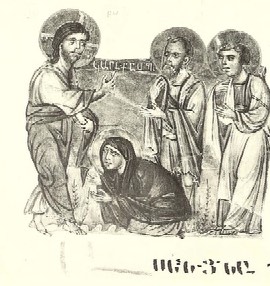
I’m not sure Salome would have fallen at Jesus’ feet as she’s pictured in the illustration above. They were related, after all, and she was a senior relative of his. She probably reminded Jesus that James and John were his cousins, and remember, I know your mother. Family ties always help people get ahead.

Jesus doesn’t dismiss her altogether, but he reminds her that his followers are to serve and not be served. It’s a service that will cost them, even their lives. Following him doesn’t mean that they and their family would gain. Like the Son of Man James and John will  have to give their lives “for many.”

They’re called by God to reach out, and reaching out can be hard, sometimes painful. It means going beyond those we call our own, our families and friends. It means reaching out to those we don’t know, even to those we don’t like. It means going beyond what we’re used to.

Later stories say that James and John went to places far beyond the Sea of Galilee where they fished with their father Zebedee and were cared for by a mother who had their interests at heart. Our church is a missionary church. It reaches out to the whole world. That’s what  Jesus last words in Matthew’s gospel says to do:  “Go out to the whole world, baptizing and teaching.”

That’s still his word today. Go out to the whole world, even if the world is changing and the future is uncertain. “I am with you all days,” Jesus says.

James, brother of John, is also known as  James the Greater, to distinguish him from James the Less, the other disciple mentioned in the New Testament. James was the first of the apostles to die for Christ; he was beheaded in Jerusalem by King Herod Agrippa in 42 AD.

Later Traditions About James

Some 4th century Christian writers say that one of the apostles went to Spain and a 6th century source identifies the apostle as James, who preached briefly in Spain and converted only a few before returning to Jerusalem and his death.

Modern scholars are divided about the truth of the tradition. Relics said to be of St. James were discovered in Compostela in Galicia in northwestern Spain in the 9th century, a major event in Spanish history. His shrine at Compostella became a major pilgrimage center for the people of Spain and Europe, rivaling even Rome and Jerusalem in its popularity.

From the 9th century onward, James was patron of the Spanish peoples and a rallying cry in their fight to free their land from the Moors. At four battles – Clavijo (9th c.), Simancas (10th c.), Coimbra (11th c.) and Las Navas de Tolosa (1212) – legends say he appeared as a warrior astride a great white horse with a sword in his hand. Throughout the Middle Ages, soldiers and knights  came as pilgrims to Compostela to seek the saint’s protection.

In 1492, when Spain was finally free of Moorish domination, King Ferdinand and Queen Isabella came to Compostela to give thanks to St.James in the name of the Spanish people.

How old are the relics of St.James? Pilgrims from Galicia were frequent visitors to the Holy Land as early as the 4th century and may have brought the relics back to their native land. Colorful legends from medieval times, however, brought the story back further to the time of the apostle himself, saying that disciples of James fled with his body after he was beheaded and, escaping by boat, drifted to the coast of Spain where, after many adventures they buried him. These legends about James appear frequently in medieval art and in numerous churches built in his honor in France, England, and later in the Spanish colonies of the New World. Cities such as Santiago, Chile, Santiago, Cuba,San Diego, California, are named after him. The feast of St.James is July 25.

Where did it happen?

We wonder where the gospel events took place, especially during Holy Week.. Where was Jesus judged by Pilate? What way did he go to Calvary?  Where was he crucified and where was he buried?

Reliable historians generally agree that the tomb of Jesus and the site of Calvary are  in the Church of the Holy Sepucher.  “Is this the place where Christ died and was buried?” Jerome Murphy-O’Connor asks in his solidly researched “The Holy Land: An Oxford Archaeological Guide” (New York, 2008). “Yes, very probably,” he answers. (p 49)

Holy sepul

Church of the Holy Sepulcher, Jerusalem

Jerusalem’s “Via Dolorosa”, the traditional way of the cross,  is less historically reliable. Beginning near St. Stephen’s Gate, where the Fortress Antonia once stood, it winds up at the Church of the Holy Sepulcher.  Murphy-O Connor says it is “defined by faith and not by history.” (pp 37-38) Early Christian pilgrims created it.

DSC00267

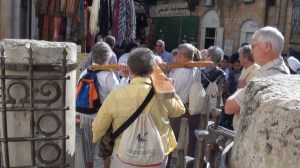
Pilgrims on the Vis Dolorosa

After the Christian church was established by Constantine in the 4th century, pilgrims from Mount of Olives, where many stayed, walked through St. Stephen’s Gate up to the Church of the Holy Sepulcher, stopping at certain places to recall incidents from the passion of Jesus. The present Via Dolorosa was formed from their devotions over the centuries.   (cf. Murphy-O’Connor, p 37) Pilgrims, not archeologists, have given us the present Via Dolorosa.

Jerusalem

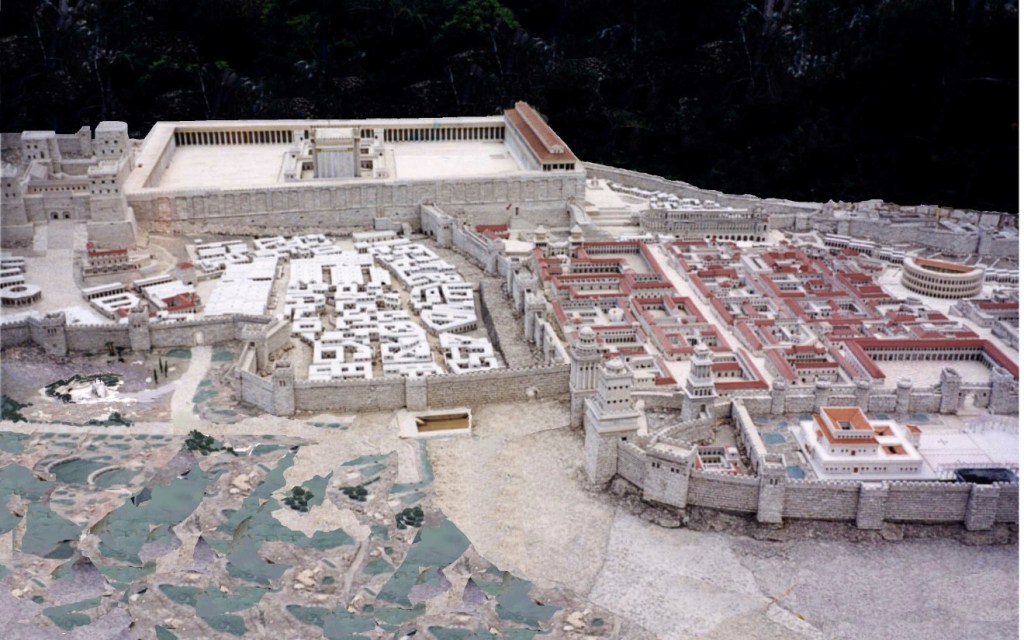
Jerusalem at the Time of Jesus

Is their a more reliable way?  A reconstruction of Jerusalem (above) from the time of Jesus at the Israel Museum–somewhat altered here– suggests another way that  Jesus was led to Calvary.  At the bottom right is the luxurious palace complex built by Herod the Great. (below) When Pontius Pilate came from Caesaria Maritima for Passover he probably stayed there and judged Jesus in the courtyard outside the palace.

DSC00291

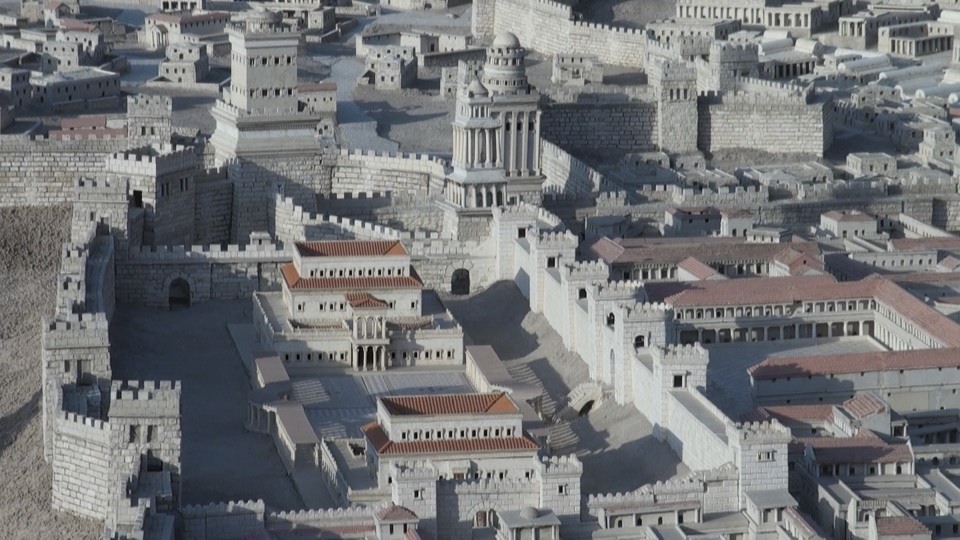
Herod’s Palace, the Citadel

After sentencing Jesus to death, Pilate handed him over to a detachment of soldiers quartered somewhere in the great towers to the left of the palace, who scourged him and crowned him with thorns.

They then led him away to Calvary, probably parading him through part of the upper city as a warning to others. In our map of Jerusalem above, the rock outcropping near to the city wall is the site of Calvary where Jesus was crucified. The gospels say  he was buried in a tomb only a stone’s throw away.
DSC00317

In Jerusalem today the Citadel stands on the ruins of Herod’s palace, still dominating the western part of the Old City.

You can walk on the southern ramparts of the city wall where Herod’s palace once stood and view some few remains of Herod’s building;  the towers have been rebuilt.

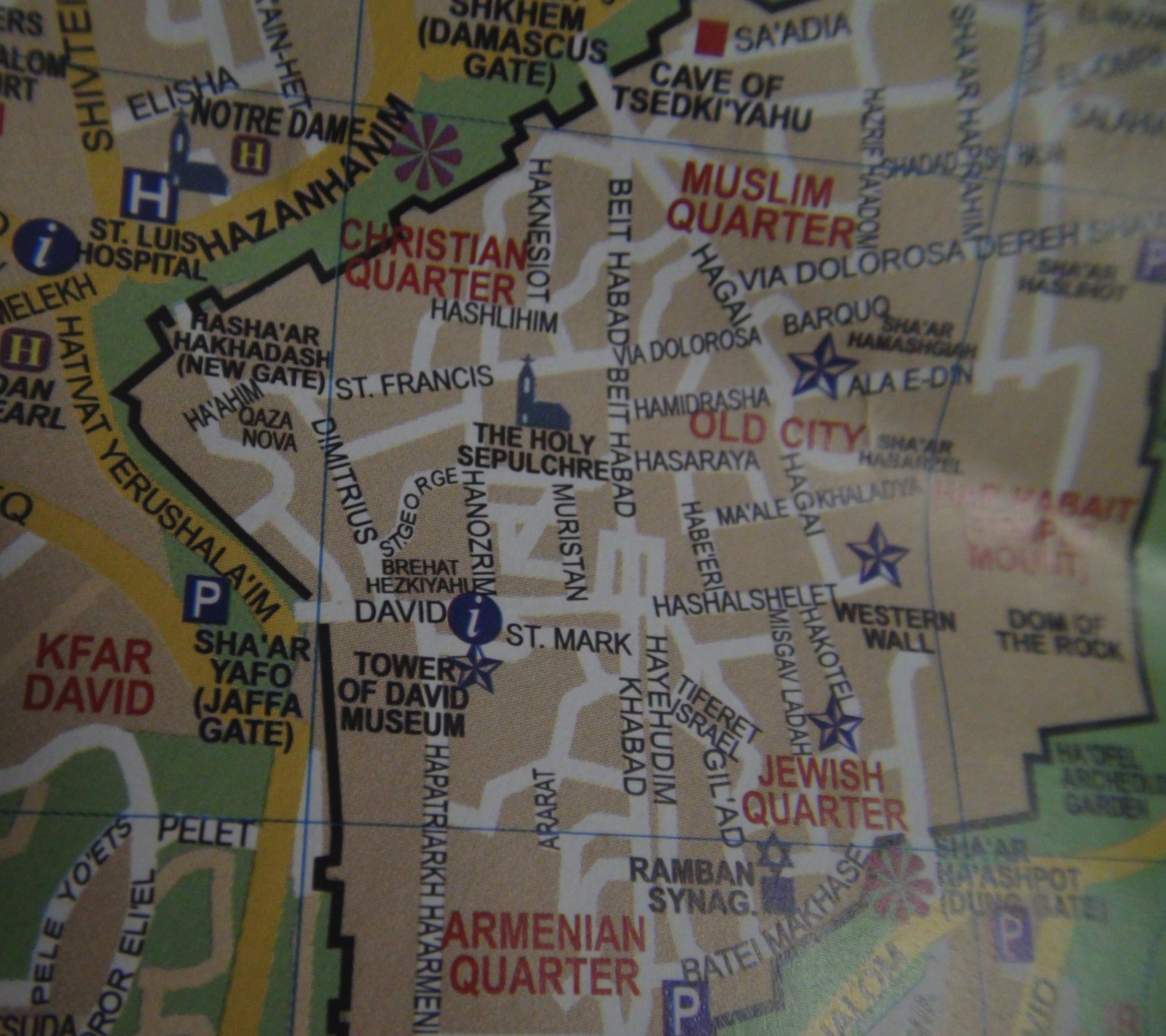
Murphy-O’Connor suggests a way  Jesus was taken to Calvary from here. “If, as seems likely, Jesus was brought into the city on his way to execution, the approximate route would have been east on David Street, north on the Triple Suk, and then west to Golgotha.” (p.38)

I walked that way some years ago, down David Street, to the Triple Suk and then west to Golgotha and the Church of the Holy Sepulcher.  My sense is Murphy-O’Connor is right, but I think we better not change the Via Dolorosa. For one thing,  good piety has given us the present Via Dolorosa and it has a truth and beauty all its own.  More importantly, it would start a war in Jerusalem, and the city has enough grief now.

DSC00289

For more information on the places of the Passion, see

Thursday: 4th Week of Lent

Today’s Readings

https://player.vimeo.com/video/210666784

IMG_0210

Learn about the Passion of Jesus: http://www.passionofchrist.us

2nd Sunday of Advent: Listen to John the Baptist

audio homily here:


DSC00164

John the Baptist may look and sound  forbidding, but don’t let appearances put you off. He spoke in the wilderness, where looks are not important and you can’t keep up appearances. The wilderness symbolizes the hard places we all must pass through.

So we shouldn’t deny they exist. Or think a simple sentence will take them away. I suppose that’s why I prefer John the Baptist to Joel Osteen.

John’s father was Zachariah, a priest in the temple, a much more secure place to be. He told John: “You, my child shall be called the prophet of the most high, for you will go before the Lord to prepare his way.” (Luke 1) God called John to the wilderness to show people the way to God from there.

The Judean wilderness where John the Baptist baptized lay about 15 miles east of Jerusalem in the Jordan Valley north of the Dead Sea. Pilgrims from the north took an ancient road along the River Jordan and followed it as it veered right near the town of Jericho to ascend steeply about 3,500 feet up to the Holy City, about an 9 hour walk. A tough road in itself to travel.

Near where the road begins to ascend, John baptized great crowds in the river’s refreshing waters. He baptized Jesus and his disciples in these waters and then pointed Jesus out as “the Lamb of God” and told his followers to follow him as their Shepherd and Way.

John was a voice pointing Jesus out in the wilderness. He still points him out in the wilderness today and tells us to follow him. “You’ll make it through the wilderness,” he says.

music on John the Baptist.

Palm Sunday: The Passion from Luke’s Gospel

Palm Sunday this year we read St. Luke’s passion narrative, which sees Jesus’ death and resurrection as the culmination of his earthly journey. From Galilee, Jesus makes his way to Jerusalem, to his death on Calvary, his resurrection and finally he ascends into heaven. It’s more than a journey to death, Jesus rises and is welcomed into heaven.

He does not journey alone. In Luke’s gospel, from Galilee to Jerusalem Jesus gathers disciples to accompany him. He does not face death alone–  disciples are with him, though he’s abandoned by twelve of them in the Garden of Gethsemane. Simon of Cyrene, coming in from the fields, takes up his cross and carries it behind him. Simon is a symbol of humanity, along with the ” large crowd of people” including “many women who mourned and lamented him,” Though unaware, disciples are with Jesus on the way.

Jesus says to all in Luke’s gospel, “ If anyone wishes to come after me, he must deny himself, take up his cross daily, and follow me. For whoever wishes to save his life will lose it, but whoever loses his life for my sake will save it.’”(Luke 9,23-24} Simon represents all the followers of Jesus who go with him on his journey. It’s not only the cross of Jesus Simon carries, it’s “his cross,” his daily cross, his own cross.

Jesus’ words in Luke’s gospel to the women “who mourned and lamented him” are puzzling. Some say he comforts them as he goes to his death. Others say his words are a prophetic announcement of the judgment that inevitably follows injustice. Jerusalem will be destroyed as a consequence. Every unjust act, every sin has consequences that cannot be waived away.

Two criminals accompany Jesus to Calvary, the place of execution just outside the city gates where many people passed. For the Romans it was the perfect place to display their fierce justice. Jesus would die at this hellish place of torture and death, not a place one wished to be or to see.

Yet Luke, like the other evangelists, sees light in this place of death. Instead of harsh justice, suffering and death, God’s mercy and new life are revealed here: “Father, forgive them, for they know not what they do.”

God’ mercy is revealed here to a criminal crucified with Jesus. Another criminal mocks him from his  cross. “Are you not the Messiah. Save yourself and us.” But his companion rebukes him and turns to Jesus with a plea to be remembered. “Jesus, remember me when you come into your kingdom.”

More than a remembrance, Jesus promises to take him with him on his journey to God. “Amen I say to you, today you will be with me in paradise.” As he does so often in Luke’s gospel,  Jesus reaches in tender mercy to one without hope.

Like Simon of Cyrene, the thief represents humanity. He’s been promised life and safe passage through the mystery of death. He dies with Jesus. The thief reminds us that eternal life is never denied to anyone.

The thief is a sign for us all. We die, but we die with the Lord. The best place for us to understand the mystery of death is on Calvary.

24th Sunday B: Taking Up Our Cross

To listen to this week’s homily, select the audio file below:


It’s good to pay attention to the places Jesus goes to in Mark’s Gospel, because places throw light on what Jesus says and does. In today’s reading from Mark’s Gospel, (Mark 8, 27-38) Jesus and his disciples leave the region around the Sea of Galilee– where most of his ministry took place – and travel to the villages of Caesarea Philippi about 25 miles to the north. They’re on their way to Jerusalem.

Caesarea Philippi and its surroundings were at the foot of Mount Hermon where the water sources for the Jordan River and the Sea of Galilee were located. Water was a key resource in Palestine then as now. Controlling the water meant controlling everything. At that time the Romans were in control. Names tell us that: Caesarea-Caesar, the Roman Emperor. Philippi-Philip, son of Herod the Great, who was Caesar’s ally in that part of Palestine.

This was Roman territory; rich shrines to Roman and Greek gods were everywhere reminding everybody.

As he does often in Mark’s gospel, Jesus uses what’s at hand to teach. Here in this place of Roman power he asks, “Who do people say that I am?”

John the Baptist, who stood up to King Herod: Elijah, the fearless prophet who stood up to King Ahab and his notorius wife, Jezebel, the disciples say
.
Peter, speaking for them all says: ““You are the Christ.” You are more powerful than the prophets, more powerful than those honored here at Caesarea Philippi. You are the Messiah come to lead Israel to its high place above the nations.

But then Jesus tells Peter he is a Messiah who will suffer, who will be rejected by the leaders of his own people, who will suffer death and rise again. He’s a Messiah who seems, not powerful, but powerless.

Peter doesn’t like that. “Peter took him aside and began to rebuke him. “ Turning around, and looking at his disciples, Jesus rebuked Peter and said, “Get behind me, Satan, you are someone who thinks like human beings and not like God.

Thinking like human beings, not like God. What does that mean? Jesus goes on to say says it’s thinking we’re powerful and we’re not, aiming for power that we can never hold on to. It means denying the cross in one’s life. It’s not only Peter Jesus accuses of thinking like human beings and not like God, it’s his disciples and all of us.
“Whoever wishes to come after me must deny himself,
take up his cross, and follow me,” Jesus says.

The cross, so difficult to understand and accept! Each of us has to take up our cross, if we wish to follow Jesus. Each of us has a cross to take up. We may not like it, but it’s the cross that’s personally mine. It could be sickness, disappointment, rejection, maybe it’s simply day after day getting nowhere. It could be the cross that comes from the times and circumstances we live in. We may not like that either. We would like to go back to another time, or go forward to a better time. But the cross is where we are.

When we take up our cross and follow Jesus, it becomes his cross too. He promises that. He helps us carry it. He bears the burden of it. With him at our side, we don’t die; he raises us up.

The journey that Jesus took with his disciples to Caesarea Philippi in Mark’s Gospel was a journey to prepare them for what awaited them further, in Jerusalem. Peter and the others didn’t understand him; neither do we. The journey we make with Jesus ends, not with a hold on human power, but holding on to the power of God, which is given to us through Jesus Christ, our Lord.

The Presentation of Jesus in the Temple

Presentation

The Feast of the Presentation of our Lord is the last of the feasts of Christmas, even though most Christmas decorations have disappeared awhile ago.

The Feast is based mainly on Luke’s Infancy narrative which begins in the temple with the announcement to the priest Zacharias of the birth of John the Baptist and ends with the presentation of Jesus in the temple by Mary and Joseph. The two elderly Jews, Simeon and Anna represent the faithful generations that have been waiting for the Messiah.

Previously, Luke tells of the poor shepherds, the outcasts waiting in the dark, who are greeted by the angels. In Matthew, the gentiles are invited in the coming of the magi. Now the long wait of the Jewish people is rewarded as old Simeon takes the child in his arms and utters a prophecy that he will bring light to his people.

We bless candles today to symbolize our acceptance of the light of Christ.

God was present in the Temple of Jerusalem, the Jews believed. They prayed there and offered sacrifices to the Lord. Luke would have us see that God’s Son is one with his Father as he is presented in the temple. He becomes the new temple, God present in our midst in a unique way.  He is our new High Priest who unites us to the Father by the sacrifice of himself.

Jesus later claims that role as he teaches in the temple and prays there.

From simple places, Bethlehem and Nazareth, Jesus was taken by his parents to the splendid temple of Jerusalem. From an everyday world where he’s hardly noticed, he’s carried to the glorious place where heaven and earth meet. From a town hidden on a mountain and a cave cut into a hill, he’s brought and placed as Light for the world.

The presentation of Jesus in the  temple is a highly symbolic feast. Here are the readings for Mass.  Here’s how St. Sophronius, an early bishop of Jerusalem, describes it:

“The light has come and has shone upon a world enveloped in shadows; the Dayspring from on high has visited us and given light to those who lived in darkness. This, then, is our feast, and we come in procession with lighted candles to reveal the light that has shone upon us and the glory that is yet to come to us through him. So let us hasten all together to meet our God.

Rejoicing with Simeon, let us sing a hymn of thanksgiving to God, the Father of the light, who sent the true light to dispel the darkness and to give us all a share in his splendor.

Through Simeon’s eyes we too have seen the salvation of God which he prepared for all the nations and revealed as the glory of the new Israel, which is ourselves…   By faith we too embraced Christ, the salvation of God the Father, as he came to us from Bethlehem.

Gentiles before, we have now become the people of God. Our eyes have seen God incarnate, and because we have seen him present among us and have mentally received him into our arms, we are called the new Israel.

Never shall we forget this presence; every year we keep a feast in his honor.”