Tag Archives: history

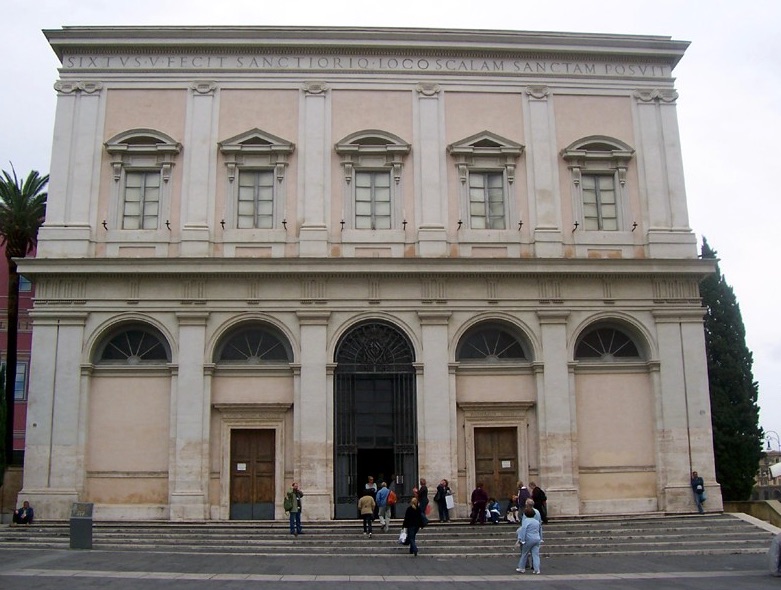
The Scala Sancta, The Holy Stairs

We’re celebrating the Dedication of the Lateran Basilica today. The Lateran Basilica was the parish church of Rome and the actual residence of the popes for many centuries. A magnificent baptistery was an essential part of Constantine’s church, dedicated in 325.  As the reading from Ezekiel for the feast of its dedication indicates the church was a place of baptism for Rome’s Christians. Waters from this church – and all other churches, in fact–  bless the world. 

The Lateran Basilica has been an important destination for pilgrims to the Holy City since the 4th century.  It was on the route early pilgrims took to pray at the shrines of martyrs buried on Rome’s outskirts, beginning with the place where Peter was buried, the Vatican Basilica. The pilgrim route ended in the church where the Apostle Paul was honored on the other side of Rome. 

Pilgrimage to Rome’s shrines began shortly after Constantine brought freedom to the Christian church in 315. We know some of them. The popular shrine church of St. Lawerence, north of the Lateran Basilica, was part of the pilgrim route.  Nearby Helena, the mother of Constantine, enshrined relics of the Cross from the hill of Calvary in the great hall of her residence. 

Pilgrims came to Rome in great numbers to celebrate their faith and visit the Roman martyrs’ shrines. In the late 4th century, Pope Damasus placed about 40 inscriptions in Rome’s shrines, guiding pilgrims on their journey. St. Jerome was among the early pilgrims. He found faith and was drawn to being baptized on his journey.

Early sources say that Constantine built a palace for the pope and a royal staircase leading to the papal quarters and his personal chapel at the Lateran site. The chapel was known as the Sancta Sanctorum, the Holy of Holies. An earthquake in the 1277 leveled the palace and chapel with its many relics.

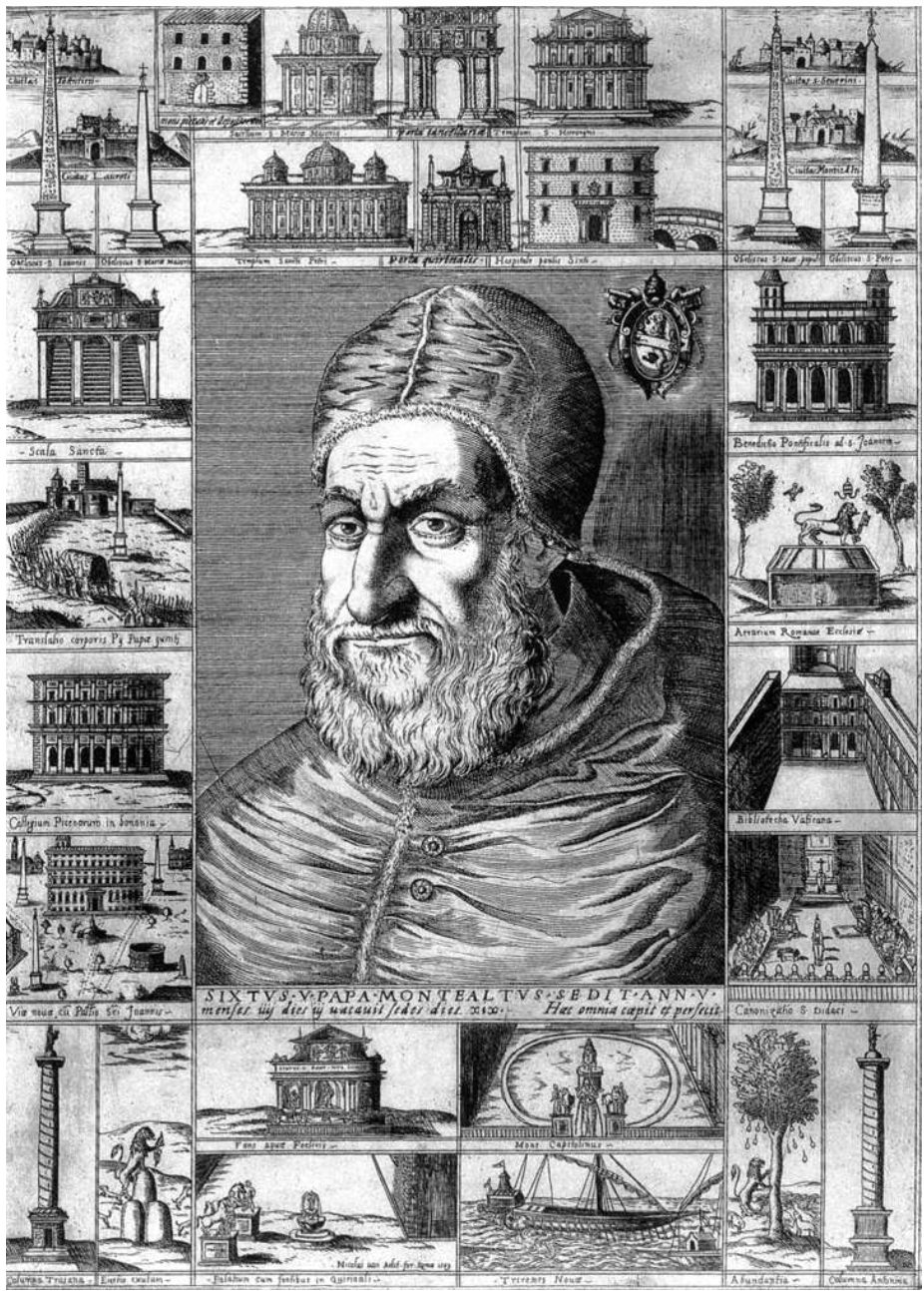
 The chapel was rebuilt in magnificent style by Pope Nicholas III in the 13th century. Pope Sixtus V demolished most of the papal buildings in the 16th century but left the chapel alone in a free standing building, reached by a staircase of 28 steps. He claimed the stairs were from Pilate’s palace in Jerusalem on which Jesus walked to be judged. Historians and archeologists today say the stairs may be the stairs from the pope’s residence built by Constantine.

The site, known today as the Scala Sancta, the Holy Stairs, was restored in 2019. It is a UNESCO site. Pilgrims traditionally ascend the stairs on their knees.  Pope Pius IX entrusted the shrine to the Passionists in 1853. 

Two friends of mine ascended the stairs recently. Here they are.

Learning from Plants, Trees and Flowers

I discovered on Google books an old study of plants and trees by Richard Folkard, an English botanist. (Plant Lore, Legends and Lyrics, London 1884)  It’s a treasure of information.

Folkard says that from earliest times people saw religious meaning in plants, flowers and trees. He writes especially about how they were seen in medieval times.

“In the dark ages the Catholic monks , who cultivated with assiduity all sorts of herbs and flowers in their monastic gardens , came in time to associate them with traditions of the Church , and to look upon them as emblems of particular saints . Aware , also , of the innate love of humanity for flowers , they selected the most popular as symbols of the Church festivals , and in time every flower became connected with some saint of the Calendar , either from flowering at the time of the saint’s day , or from being connected with the saint in some old legend…

But it was more especially upon the Virgin Mary that the early Church bestowed their floral symbolism … The poetry no less than the piety of Europe has inscribed to her the whole bloom and colouring of the fields and hedges.  The choicest flowers were wrested from the classic Juno , Venus , and Diana , and from the Scandinavian Bertha and Freyja , and bestowed upon the Madonna , whilst floral offerings of every sort were laid upon her shrines . 

Her husband , Joseph , has allotted to him a white Campanula , which in Bologna is known as the little Staff of St. Joseph . In Tuscany the name of St. Joseph’s staff is given to the Oleander. A  legend recounts that the good Joseph possessed originally only an ordinary staff , but that when the angel announced to him that he was destined to be the husband of the Virgin Mary , he became so radiant with joy , that his very staff flowered in his hand…

A Catholic writer complained that at the Reformation the very names of plants were changed in order to divert men’s minds from the least recollection of ancient Christian piety A  Protestant writer of the last century , bewailing the ruthless action of the Puritans in giving to the ” Queen of Beauty ” flowers named after the ” Queen of Heaven , ” says :’Botany , which in ancient times was full of the Blessed Virgin Mary , is now as full of the heathen Venus .’ ” 

Folkard reminds us that the monks were good catechists. That work of theirs is largely ignored today. If you consult Wikipedia’s listings of trees and plants, there’s  hardly a trace of that Catholic tradition. I wonder if we shouldn’t mine that tradition again as we try to enhance our care of the earth. Clover .spearmint, foxglove, lupine,  campanula, marigolds, cowslip, Lady’s mantel, Lady’s bedstraw are more than a genus and species. They once spoke of the mysteries of God. 

Can we learn from them again?

Learning from History

Learning from history

It’s always a temptation when you go to a place like Rome to get lost in its history.
Better when you take from it also a perspective on the present and the future.

I liked the coverage of the recent US election on PBS’s The News Hour so much better than the shouters on the cable networks. Especially I liked the input from presidential historians. History has something to say.

It’s important to look back for you to go ahead.

Human nature doesn’t radically change; it will always have its saints and its sinners.
Factors like climate change, earthquakes, natural disasters– “signs in the heavens” as the scriptures say– will always be with us in one form or another.

The church we see in those old monuments in Rome still lives today and by God’s grace will live tomorrow.

I was thinking of this because of the recent meeting at the Vatican between Christian and Moslem leaders to discuss vital issues like immigration, religious rights, violence, and so forth. Recently too there was a meeting of leading scientists there to discuss the relationship between science and religion–another hot topic.

There was also a recent synod on Holy Scripture in Rome, which will have consequences throughout the world on how we see our faith. Orthodox leaders met a year or so ago with Roman Catholic representatives to discuss the future role of the papacy–they’re calling it “the petrine ministry” now.

You can’t look at these issues without looking at the past. It actually frees you from being frozen in the present and enables you to think about change.