“This is how the birth of Jesus Christ came about,” Matthew’s gospel describes the birth of Jesus through the experience of Joseph, the husband of Mary. It’s summarized in the creed. “I believe in Jesus Christ, the only-begotten Son of God…who by the Holy Spirit was incarnate of the Virgin Mary.”
Is this true? Here’s Pope Benedict XVI:
“The answer is an unequivocal yes. Karl Barth pointed out that there are two moments in the story of Jesus when God intervenes directly in the material world: the virgin birth and the resurrection from the tomb, in which Jesus did not remain, nor see corruption.
“These two moments are a scandal to the modern spirit. God is “allowed” to act in ideas and thoughts, in the spiritual domain–but not in the material. That is shocking. He does not belong there. But that is precisely the point. God is God and he does not operate merely on the level of ideas. In that sense, what is at stake in both of these moments is God’s very godhead. The question that they raise is: does matter also belong to him?
“Naturally we may not ascribe to God anything nonsensical or irrational, or anything that contradicts his creation. But here we are not dealing with the irrational or contradictory, but precisely with God’s creative power, embracing the whole of being. In that sense, these two moments – the virgin birth and the real resurrection from the tomb–are the cornerstones of faith.
“If God does not have the power over matter then he is simply not God. But he does have this power, and through the conception and resurrection of Jesus Christ he has ushered in a new creation. So as the Creator he is also our Redeemer. Hence the conception and birth of Jesus Christ from the Virgin Mary is a fundamental element of our faith and a radiant sign of hope.”
(The Infancy Narratives: Jesus of Nazareth, Joseph Ratzinger, Pope Benedict XVI, pp 56-57 )
At that time the disciples approached Jesus and said, “Who is the greatest in the kingdom of heaven?” He called a child over, placed it in their midst, and said, “Amen, I say to you, unless you turn and become like children, you will not enter the kingdom of heaven. Whoever humbles himself like this child is the greatest in the kingdom of heaven. And whoever receives one child such as this in my name receives me.
See that you do not despise one of these little ones, for I say to you that their angels in heaven always look upon the face of my heavenly Father.”
Matthew 18:1-5, 10
Guardian Angels Guide Us to the Father
God, the Father Almighty, maker of heaven and earth, of all things visible and invisible, placed Christ at the center of the angelic world. Every child made in the image of the Incarnate Son of God receives a guardian angel at conception to guide them in their journey home to the Father. As “their angels in heaven always look upon the face of my heavenly Father,” they intercede and light the way through Christ in the Spirit to the heart of the Father.
From its beginning until death, human life is surrounded by their watchful care and intercession. “Beside each believer stands an angel as protector and shepherd leading him to life.” Already here on earth the Christian life shares by faith in the blessed company of angels and men united in God.
Catechism of the Catholic Church 336
Prayer to My Guardian Angel
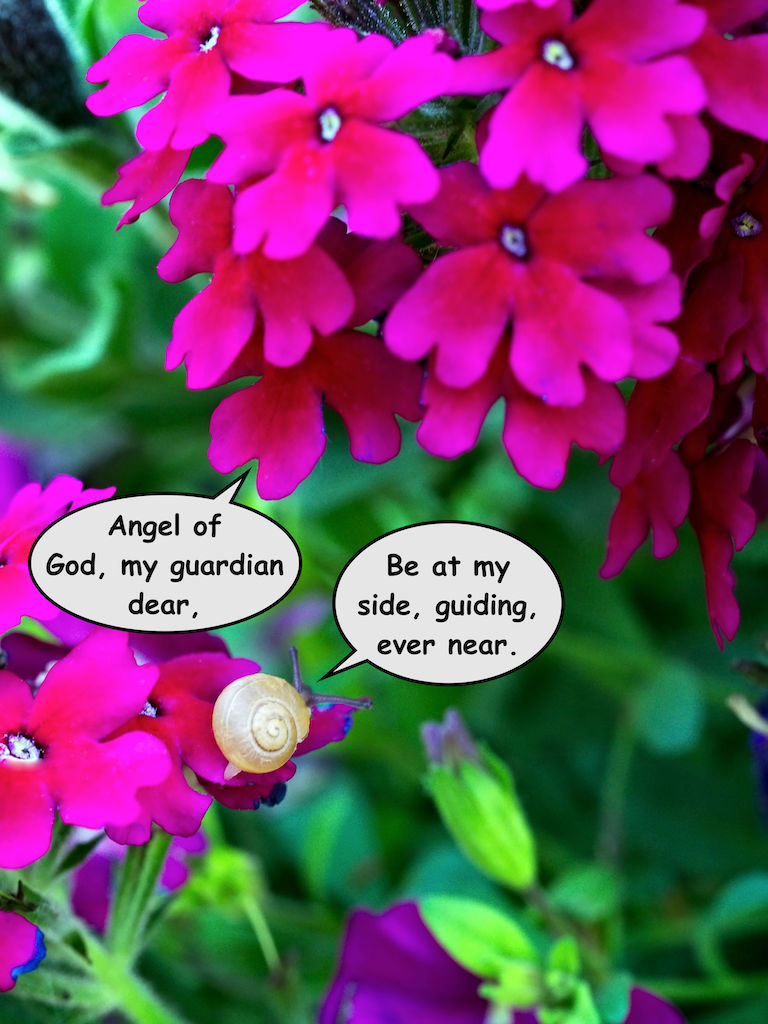
Angel of God, my guardian dear, to whom God’s love commits me here, ever this day be at my side, to light and guard, to rule and guide. Amen.
Angel of God, my guardian dear, Be at my side, guiding, ever near.
Like many Catholic religious communities in the western world my community, the Passionists, is shrinking in North American and Europe and growing elsewhere. I wonder why we’re not getting vocations.
Our readings this week at Mass – Paul’s First Letter to the Thessalonians and the Gospel of Matthew – make clear that Jesus and his followers were sharply opposed. Scholars say the gospel describe a time later on in Matthew’s community, after Jesus’ death and resurrection, but even so Jesus faced strong opposition in his day.
The letters to the Thessalonians describe the opposition Paul faced. Unfortunately, our lectionary readings, leaving out most references to that opposition, may cause us to lose sight of what Paul and his followers accomplished.
It’s true generally that when you don’t see the challenges and crosses people face, you don’t get to know them well. That’s true of individuals and groups– like the Passionists. Bumps on the road are part of your story.
Fr. Alessandro Ciciliani in a Passionist International Bulletin from Rome, The Congregation at the Time of the Canonization of St. Paul of the Cross 1867, describes some bumps on the road my community faced then. It’s a wonder we survived.
From our foundation in the 18th century by St. Paul of the Cross our survival was threatened. In Paul’s day, there was strong opposition to new religious communities in the church and in society. (The time was unfavorable to older religious communities too. In 1774, the Jesuits were suppressed) Humanly speaking, we shouldn’t have gotten started.
In our early days, the popes were strong allies, but shortly after the death of St. Paul of the Cross (1775) the papacy as an institution was severely weakened and almost disappeared. When Pope Pius VII died exiled by Napoleon in 1799, smart people predicted he was the last of the popes.
Threats to our survival continued in the 19th century. In his article Ciciliani describes the closure and seizure of most of our foundations in Italy shortly after St. Paul’s death. By 1850 we had three provinces and 27 houses in Italy. In the space of 20 years 21 of those houses were seized by the government, and the religious told to go home. Anticlerical laws issued by the Kingdom of Savoy and the Kingdom of Italy insisted that communities like ours weren’t needed; the new governments also saw properties and assets as sources of revenue for themselves.
“There was a lot of confusion among the religious and little hope for the future. Consequently there was a temptation to return to their families or look for accommodation with the diocesan clergy,” Ciciliani writes.
What’s surprising, though, were the creative thrusts emerging in the church and in our community in those dark days. In 1817, Pope Pius VII– the pope supposed to be the last – created the Propaganda Fidei, a papal arm that built up the church in South America and Asia, and in 1834 organized the church in North America.
In 1844 the Passionist, Blessed Dominic Barberi, began a vital mission in England. In 1861 4 Passionists arrived in Philadelphia and planted the community in North America. Other new missions were started and flourished. It was not the last gasp of survivors, but people dreamed new things. A dream was alive in them.
The scripture readings tell us the church grows in response to challenge and opposition. The history of my own community says the same. Father Ciciliani writes of the “terrible experience” my community faced in the 19th century, but ends by recalling that the mystery of the cross is terrible too, but it does not end in death; it brings life.
In Matthew’s gospel today, Jesus speaks of treasures in heaven. Usually the treasures we think of are gold, silver, works of art, gems, degrees from school, signs of achievement. They’re the “treasures of earth” Jesus speaks of in the gospel. Thieves can steal them away; they can be eaten by moths and forgotten. They don’t last. (Matthew 6,19-23)
Other treasures are for heaven. St. Paul sees some of them in his trials for the gospel that we read today in his 2nd Letter to the Corinthians. God won’t forget his sufferings: the beatings, imprisonments, brushes with death, the long journeys over seas, rivers, and wildernesses where robbers waited. Paul lists dangers he faced, both from enemies and his own people. God wont forget any of them, down to his sleepless nights and bouts with the cold.
He ends his list with what might be the biggest treasure of them all; “the daily pressure upon me of my anxiety for all the churches. Who is weak, and I am not weak? Who is led to sin, and I am not indignant?” He’s tried to be responsible everyday with the people around him, whether they’re the weak or the trying. That’s the lasting treasure God holds in heaven. (2 Corinthians 11,18 ff)
We might not be able to match Paul’s of missionary travails, but let’s keep Paul’s last important achievement in mind. If we do what we have to do each day as well as we can, if we are faithful to our daily duty, if we bear our daily cross, if we bear with the weak and the difficult, won’t that be our treasure?
God counts it so.
Before he was executed St. Thomas More. wrote to his daughter Meg:
“ I trust only in God’s merciful goodness. His grace has strengthened me till now and made me content to lose goods, land and life as well, rather than swear against my conscience. I will not mistrust him, Meg, though I shall feel myself weakening and being overcome with fear. I shall remember how St. Peter at a blast of wind began to sink because of his lack of faith, and I shall do as he did: call upon Christ and pray for his help. And then I trust he shall place his holy hand me and in the stormy seas hold me up from drowning. “
“Call no one on earth your father; you have but one Father in heaven. The greatest among you must be your servant. Whoever exalts himself will be humbled; but whoever humbles himself will be exalted.”
Last week’s lenten readings were centered on prayer, this week’s are about mercy. This week’s gospel readings from Matthew and Luke were written with a particular audience in mind. Both describe who Jesus is and what he taught, but each does it with an eye to his own time and place.
Matthew’s gospel, for example, was written for Jewish Christians who were still living rather uneasily among their fellow Jews, possibly in Syria or Palestine, after the destruction of Jerusalem in 70 AD.
The synagogues Matthew describes in today’s gospel are the synagogues of his time rather than the Galilean synagogues of Jesus’ day. They’re now in the hands of Jewish leaders trying to salvage Judaism after the Roman destruction of Jerusalem in 70 AD.
The current teachers “on the chair of Moses” are honored in Jewish society and on the streets, because they’re keeping Judaism alive in the synagogues. Jews are living together, praying and keeping their traditions under a new discipline, replacing the former discipline of the temple in Jerusalem.
The followers of Jesus aren’t welcome, Matthew’s gospel indicates, and so they need to remember that Jesus is their teacher, even if he is not recognized. Having power in a synagogue isn’t what’s important; being a servant is. Jesus had servant power.
But again, this week is about mercy. Matthew’s gospel tends to be hard on the Jewish society of his day, commentators note, so how does it contribute to that teaching ? I’ll bet our readings from Luke were introduced into this 2nd week of Lent for his wonderful perspective on mercy. Luke’s parable of the Prodigal Son, one of the greatest stories of mercy in the scriptures, closes this week.
Yesterday we heard Jesus’ strong teaching on mercy, also from Luke.“Be merciful, just as your Father is merciful.” “Stop judging and you will not be judged. Stop condemning and you will not be condemned. Forgive and you will be forgiven. Give and gifts will be given to you. “
Still, if mercy is the teaching this week, why read this gospel from Matthew today? Does it tell us mercy doesn’t happen in an instant; It takes time? People don’t change quickly, situations don’t change quickly. Mercy doesn’t come to us easily.
Mercy is something we ask for every day; we ask it for ourselves and for others. Lord, have mercy.
Lord,
lead me away from temptations of self-importance,
as if my ideas, my vision, my convenience matter most.
You came to serve and not to be served.
Show me how to wish for what’s best for others
and save me from being a know-it-all.
Show me my faults,
and then take them away.
Jews usually turned away as they passed the customs place where Matthew, the tax-collector, was sitting. But look at our gospel for today:
“As Jesus passed by, he saw a man named Matthew sitting at the customs post. He said to him, “Follow me.” And he got up and followed him.”
To celebrate their new friendship, Matthew invited Jesus to a banquet at his house with his friends – tax collectors like himself – and Jesus came with some of his disciples. They were criticized immediately for breaking one of Capernaum’s social codes. “Why does your teacher eat with tax collectors and sinners?”
Jesus’ answer was quick: “Those who are well do not need a physician, but the sick do. Go and learn the meaning of the words `I desire mercy, not sacrifice.’ I did not come to call the righteous, but sinners.”
Hardly anything is known of Matthew’s part in Jesus’ later ministry, yet surely the tradition must be correct that says he recorded much of what Jesus said and did. Tax collectors were good at keeping books. Was Matthew’s task to keep memories? Did he remember some things that were especially related to his world?
The gospels say that wherever Jesus went he was welcomed by tax collectors. When he entered Jericho, Zachaeus, the chief tax collector of the city, climbed a tree to see him pass, since the crowds were so great. Did Matthew point out the man in the tree to Jesus, a tax collector like himself, who brought them all to his house, where Jesus left his blessing of salvation? And did tax collectors in other towns come to Jesus because they recognized one of their own among his companions?
Probably so. Jesus always looked kindly on outsiders like Matthew who were targets of suspicion and resentment. True, they belonged to a compromised profession tainted by greed, dishonesty and bribery. Their dealings were not always according to the fine line of right or wrong.
But they were children of God and, like lost sheep, Jesus would not let them be lost.
Pope Francis said he got his vocation to be a priest on the Feast of St. Matthew, when he went to confession and heard God’s call, a call of mercy.
Matthew’s Gospel?
The gospels themselves recall little about Matthew, an apostle of Jesus. We have his name, his occupation and a brief story of a banquet that took place with Jesus and some of his friends after his call. ( Mt 9: 9-13; Mk 2:3-12; Lk5:18-26) As it is, the gospels concentrate on the ministry and teaching of Jesus.
In the early centuries, those who knew Jesus told his story and brought his message to the world. As they died, writings about him gradually appeared, but there are only scarce references to who wrote them. St. Justin Martyr in the early 2nd century speaks of the “memoirs of the apostles”, without indicating any author by name. Later in that century, St. Irenaeus, bishop of Lyons, writing against the Gnostics who claim a superior knowledge of Jesus Christ attributes the gospels to Matthew, Mark, Luke and John. They are eyewitnesses who really know Jesus firsthand; they have given us their “memoirs.”
Scholars today are less likely to credit Matthew’s Gospel to the tax-collector from Capernaum whom Jesus called. Some of his memoirs perhaps may be there– after all he came from a profession good at accounting for things. But too many indications point to other sources. Why would Matthew, if he is an eyewitness, depend on Mark’s Gospel as he does? Language, the structure of the gospel, the circumstances it addresses, point to a Jewish-Christian area beyond Palestine as its source, probably Antioch in Syria, probably written around the year 8o, after the Gospel of Mark.
Traditions says that Matthew preached in Ethiopia and Persia, but they have no historical basis.
He is remembered as a martyr who died for the faith, but again there is no historical basis.
Better to see Matthew as the gospel and the prayer at Mass sees him: one of the first outsiders whom Jesus called. And he would not be the last..
O God, who with untold mercy were pleased to choose as an Apostle Saint Matthew, the tax collector, grant that, sustained by his example and intercession, we may merit to hold firm in following you. Through our Lord Jesus Christ, your Son, who lives and reigns with you in the unity of the Holy Spirit, God, for ever and ever. Amen.
We’re reading Paul’s Second Letter to the Thessalonians and the Gospel of Matthew this week at Mass. Paul’s letter was written about the year 55 AD, 20 years or so after the death and resurrection of Jesus. The Gospel of Matthew was written about the year 85 AD, some 40 years later.
Paul’s letters illustrate his practice of going first into Jewish synagogues to preach the gospel. Before his conversion to Christianity, he went to the synagogues as a Pharisee to pursue and arrest Christians. Now members of the Pharisaic movement sharply confront him..
The Gospel of Matthew reflects this same confrontation. Matthew’s gospel was written at a highpoint of Jewish-Christian controversy, after the destruction of the temple in 70 AD. Passages from the 23rd chapter of Matthew’s gospel would lead you to think that the Pharisees were Jesus’ fiercest enemies.
In reality, a number of Pharisees, like Nicodemus and Paul himself, became his most important followers, The Pharisees were certainly antagonistic to Jesus in his lifetime; he was angry with them for their blindness to him and his message, but he didn’t see them as mortal, eternal enemies.
We have to read the scriptures with an eye on the time they were written; It helps us understand the hot rhetoric we hear in Matthew’s reading for today.
What lesson can we learn from learn from readings like these? Don’t demonize your enemies. God doesn’t do that and neither should we.
That’s an important lesson to remember today as we look at the Muslim world. Jesus didn’t demonize people; he turned to the thief on the cross, he told the story of a prodigal son, he received back the disciples who abandoned him.,
When we bring the bread and wine to the altar at Mass, we bring to God all of creation, not just a part of it. “Blessed are you, Lord God of all creation,” we say. All creation is God’s creation. He wishes to bless it and see it at peace and harmony. God wishes us to see things as he see them.
Too strict, not strict enough. That’s the judgment in public opinion Jesus and disciples faced in their day, today’s Advent reading from Matthews’ gospel seems to say. That’s often the way our church is looked on in the marketplace today.
Public opinion then– Jesus likens it to “children in the marketplace”– saw him and his disciples in two derogatory ways. For some, Jesus and his followers were not strict enough. Jesus ate too many meals with the wrong kind of people, among other things. Others saw this movement as too strict. Like John the Baptist, they were crazy eccentrics, out of step with the real world, the world of the marketplace.
Too strict, not strict enough. We would like to answer that criticism of our church with a better public relations campaign and all that goes with it –better catechesis, better homilies, better media, but those responses don’t seem to be on the horizon.
But listen to the promise our Old Testament readings offer:
“Those who follow you will have the light of life, O Lord.”
Thus says the LORD, your redeemer, the Holy One of Israel: I, the LORD, your God, teach you what is for your good, and lead you on the way you should go. If you would hearken to my commandments, your prosperity would be like a river, and your vindication like the waves of the sea. (Isaiah 48:17-19)
Reading the scriptures daily and on Sundays in the lectionary and the Liturgy of the Hours is one of the great reforms begun by the Catholic Church after the Second Vatican Council. It’s an effort to seek renewal through the Word of God, yet after 60 or so years we’re still getting used to it. Not too many individuals or parishes or other groups in the Catholic Church focus on it, in my view.
Early Christianity saw the scriptures as daily bread. Today we may think the scriptures old and and not up to offering wisdom to our age. More than ever, we have to trust if we search for “the face of God” in scripture we will find it there.
“If today you hear his voice, harden not your hearts.” The daily scriptures are daily bread, but they may not be easy to digest. We go from Matthew, preoccupied with the tensions of his church with Pharisaic Judaism, to Luke preoccupied with an outreach to the gentiles, to the other New Testament writings, each with its own purpose.
Then there are the various readings of the Old Testament. They can be hard to understand, but the church wisely keeps them side by side with the New Testament. They hold a treasure all their own. We need to understand them better.
We need help to appreciate this daily bread, this varied diet served up. We need people like those hosts on the cooking shows on television who not only tell you what to eat but make those strange dishes appetizing and appealing. We need good homilists and good catechists.
We need a “lamp, shining in a dark place.” So we ask: Come, Holy Spirit, fill our hearts with your light.”
I find myself turning away from the news on television these days. I don’t think I’m the only one. The pandemic only seems to be getting worse, and we’re getting worse with it.
So we turn to the Good News.
I’m finding the Gospel of Matthew, which we’re reading these weekdays and on Sundays, helpful. It was written for people struggling with bad times.
The bad times were around the year AD 90 when the followers of Jesus in Galilee were reeling from the attacks of a resurgent Judaism. Those attacks are described in Chapters 10-12 of Matthew’s gospel.
Instead of closing their eyes and hanging on tight, Jesus tells his disciples to open their eyes and their ears, because there’s something for them to learn. “Blessed are your eyes, because they see and your ears because they hear. Many prophets and righteous people longed to see what you see but did not see it and hear what you hear and did not hear it” (Matthew 13:16-17). He says that as he teaches them in parables.
Bad times can be the best times to learn. Some of the best things we know; some of the best insights we have; some of the most creative thoughts may come in bad times. God doesn’t stop speaking or teaching in bad times; God sows seeds and opens new avenues. New treasures, new pearls are there to be discovered in the ground we walk over and the jumble of things that seem to overwhelm us.
We will be reading soon the parables of the treasure hidden in the field and the pearl of great price and the net that pulls up a bewildering variety of things from the sea. It’s a message continued in the mystery of the Passion of Jesus. The disciples saw only death and failure there at first, but then they saw treasures in the wounds, the blood and water that flowed from his side, the words he said.
We don’t have to turn away from bad times. They’re times to keep your eyes and ears open, Jesus says. Like his first disciples, we should pray, not for blinders, but for “understanding hearts.”