In times like this we should listen to the voice of the mystics in our church. They speak in troubled times.
Among the mystics I count the writers of scripture, Luke and Paul, who speak in our readings at Mass these days and see things from a higher perspective than we do. Be careful of human wisdom, Paul says today to the Corinthians enmeshed in the politics and personalities of their church:
“So let no one boast about human beings, for everything belongs to you,
Paul or Apollos or Cephas,
or the world or life or death,
or the present or the future:
all belong to you, and you to Christ, and Christ to God.”
Luke’s gospel today (Luke 5, 1-11) describes the fishermen on the lake, Cephas among them, who have come from fishing all night and caught nothing. The One from Nazareth, no fisherman at all, tells them to cast their nets for a catch.
Wisely, they defer to him and their human wisdom is replaced by the power of God.
I think too of Bridget of Sweden and Catherine of Siena, mystics of their day, whose vivid perception of the powerful presence of God in their meditations and prayers reminded the leaders and people of their church to listen to their Lord.
Prayer and listening to God’s word are not small gestures today. We’re like the Corinthians and the fishermen by the lake. We need to listen to the Lord who speaks to us. We get so caught up in the wisdom of the day.
Want to know more about the Passion of Jesus, a mystery that tells us about the mysteries of our own lives? Follow the commentaries of Donald Senior, CP.
Want to know more about the Stations of the Cross? Look into the history of this devotion and some examples of it.
The 12th chapter of Luke, which is cited in this week’s masses, has so many harsh, challenging sayings of Jesus. I accept them humbly, but this week I’m so filled with His Holy Spirit that I must focus on all the blessings that He promises us. In this Tuesday’s Gospel our Lord says:
“ Gird your loins and light your lamps and be like the servants who await their master’s return from a wedding, ready to open immediately when he comes and knocks. Blessed are those servants whom the master finds vigilant on his arrival. Amen, I say to you, he will gird himself, have them recline at table, and proceed to wait on them.” (LK 12: 35-37)
In this Wednesday’s Gospel Jesus’s promise continues:
“ Who then is the faithful and prudent steward whom the master will put in charge of his servants to distribute the food allowance at the proper time? Blessed is that servant whom his master on arrival finds doing so.” (Lk 12: 42-43)
These words by our Lord illuminate my wonderful memory of so many of His servants that I met last weekend at the Life in the Spirit Seminar, lovingly presented by the Immaculate Conception Charismatic Prayer Group in Astoria, Queens, NY. These folks were a shining example of what ministry should be. About forty or more people were involved in the scheduling of activities, the hauling and setting up of tables, posters, audio visual equipment, musical instruments, prayer materials, and food, lots of delicious food. Then there were the many presentations leading up to the Baptism of the Spirit and the triumphant celebration of the Eucharist. It was a monumental job, but so rewarding!
Two weeks ago, just like the unemployed men standing around at the square in Jesus’s parable of the workers for the vineyard, I was just relaxing outside of the chapel at the Passionist Monastery, when Grace Bernardo, the tireless leader of the prayer group, invited me to participate in the Life in the Spirit event. I was to give a talk, and to be part of the prayer team during the Baptism of the Spirit, two jobs requiring a lot of commitment and preparation. I worked for weeks on my presentation, and prayed just as much. During that blessed weekend I did the best I could. I had not felt that I was good enough and had to put it in the hands of God. But I was not afraid as I was swept by such a powerful flow of goodness and love coming from everyone around me. Wow, how much can I learn from these holy people, humble and strong in their faith, blessing me merely by their presence and example!
The Master of the House was there from the beginning. He came with His Holy Spirit and lovingly waited on us in such a splendid way. His joy was in the music and in the smiles of His workers. He was there, feeding us with His grace and love, empowering us with so many of the gifts and fruits of His Spirit. I would find that in the very middle of an activity, a presentation, or a job, I would be suddenly flooded with sensations of peace, of understanding, of awe, strength, hope, generosity, the need to give, give, give, and so much joy! I saw this in everyone else. I saw the smiling Jesus in their faces of love. The Master was giving us a glimpse of His heavenly feast.
Serving the Lord like this is not easy. It can be exhausting, even scary, especially when you pray for the Spirit in all His power to come and fill the person before you. But boy, can He be the Life of the party, abundant Life! We celebrated in His Love all weekend. Healing, hope, and unity flowered all around us.
I am resting and recovering today (maybe I’m too old for this?) with a smile on my face as my aches and pains subside. Relaxing….. until the next job!
To listen to today’s homily, please select the audio file below:
“I wonder as I wander out under the sky,
why Jesus, our Savior, was born for to die,
for poor, orn’ry people like you and like I
I wonder as I wander out under the sky.”
Wonder is a Christmas word; we hear it in the carols we sing and in the words we hear and in the prayers we say. Wonder is our reaction to something beyond what we expect, beyond our experience and our understanding, so big it leaves us lost for words.
We need wonder these days to lift up our minds and hearts.
Listen to the gospel story from St. Luke:
‘In those days a decree went out from Caesar Augustus that the whole world should be enrolled.” Caesar Augustus, the ruler of the world gives an order. “Quirinius was governor of Syria.” Quirinius , Caesar’s enforcer for Palestine, orders his jurisdiction to be counted. The mighty and the powerful of this world have spoken.
But the high and mighty, the politicians, the generals, the money people don’t impress Luke. Rather, his eyes are drawn to a couple in the multitude being enrolled, a couple from an insignificant town in Galilee called Nazareth– Joseph and his betrothed wife Mary, who was with child. They’re on their way to Bethlehem.
“While they were there, the time came for her to have her child, and she gave birth to her firstborn son. She wrapped him in swaddling clothes and laid him in a manger,because there was no room for them in the inn.”
Luke goes on in his gospel to tell about this child born in Bethlehem, who grows up in Nazareth, who begins to preach and work marvels in Galilee, who gathers excited followers and then goes up to Jerusalem where he’s arrested, sentenced to death, crucified, then raised from the dead. Luke goes on to describe the followers of Jesus who take his message to the ends of the earth and to us today.
That marvelous story begins in Bethlehem, where a Child in swaddling clothes is laid in a manger, because there’s no room in the inn. That marvelous story goes on. It changes the way we look at ourselves and the world in which we live. God is quietly at work in our world, unnoticed, unacknowledges, God is with us.
There’s wonder in this story, a wondrous love’s behind it. This Child is God become like us, like “poor, orn’ry creatures like you and like I.” So unexpected, so beyond our experience and understanding, beyond words.
Today’s a day that calls us to wonder. Let’s not lose that gift that takes us beyond where we are. Begin with the world in which we live, the world around us as we “wander out under the sky.” However difficult and dark this world can be, there’s a wonder to it. We’ve been gifted with the wonderful gift of life, which we carry in the flesh and blood that is ours, the gift of life we have in our families and our friends and all of those around us. Let’s not take them for granted.
Then, there’s the gift of God we remember today, a God not distant but close, a God not removed from our experience but sharing it, a God who loves us so much that he wishes to become one with us, a God who would die for us and bring us the promise of life that never ends. Let’s not take God for granted.
“I wonder as I wander out under the sky, why Jesus our Savior was born for to die, for poor orn’ry people like you and like I. I wonder as I wander out under the sky.”
Thanksgiving Day’s coming Thursday in the USA and many will be with family and friends. We have just come through a brutally fought election and I wonder if some Thanksgiving gatherings this year will be as peaceful as in other years. Will fights continue over the table?
Our Mass readings these days are from the Book of Revelations and Luke’s gospel where Jesus speaks of the last times. They’re frightening, upsetting times. “Nation will rise against nation, and kingdom against kingdom. There will be powerful earthquakes, famines, and plagues from place to place; and awesome sights and mighty signs will come from the sky.” (Luke 21,11)
Notice, though, the promise of peace found continually through these readings announcing chaos and destruction. “Not a hair of your head will be destroyed,” Jesus says in the gospel today. (Luke 21,19) God’s with us in the chaos.
In our Reading from Revelations today people are singing songs of victory. No matter how chaotic the times, God’s there in them, working his purpose in the chaos. The battle’s won, not lost, through the abiding power of God.
“Great and wonderful are your works,
Lord God almighty.
Just and true are your ways,
O king of the nations.” (Revelations 15, 4)
We can sit down at Thanksgiving singing a victory song and remembering that not a hair of our head will be destroyed.
I see this year on Thanksgiving Day the church celebrates the feast of the Vietnamese martyrs killed in the 18th century. Saint Andrew Dung– Lac and 117 others were put to death in a cruel persecution of Christians. One of the characteristics of Christian martyrdom is the joy of the martyr in the midst of a frightful situation. Here’s a letter of Saint Paul Le-Bao-Tinh, one of the martyrs:
“I, Paul, in chains for the name of Christ, wish to relate to you the trials besetting me daily, in order that you may be inflamed with love for God and join with me in his praises. The prison here is a true image of everlasting hell: to cruel tortures of every kind – shackles, iron chains, manacles – are added hatred, vengeance, calumnies, obscene speech, quarrels, evil acts, swearing, curses, as well as anguish and grief. But the God who once freed the three children from the fiery furnace is with me always; he has delivered me from these tribulations and made them sweet, for his mercy is for ever.
“In the midst of torments, that usually terrify others, I am, by the grace of God, full of joy and gladness, because I am not alone – Christ is with me.”
“I am not alone–Christ is with me.”
I suppose we can say that no matter bad we see the times, we can sit down at Thanksgiving with joy.
Luke’s gospel for the Feast of Christ the King presents Jesus, not in a royal palace, but on a dark desolate hill. He’s not surrounded by cheering crowds, but by people cursing his name. He has no crown of gold, but a crown of thorns. His robe lies torn from him, heaped on the ground soaked in his blood. His throne is a cross, and over the cross is the inscription: THIS IS THE KING OF THE JEWS.
The temptation is to see this scene as a failure. But listen to the gospel. One of the criminals calls out to the wretched figure hanging next to him: “Jesus, remember me when you enter your kingdom.” And power goes out from him. “This day you will be with me in paradise.
The thief is an interesting figure in the gospel. He has no name, nothing is known of his life or his crime. There he is, desperate, thinking all is gone. Powerless, no one would take a chance on him. Who would bother with him or think him worthwhile? Who would come close to him? Only a God who in the person of Jesus Christ would come so low as to share a cross with him.
The thief has no name, but we believer that he bears everyone’s name. In the thief we see ourselves, our desperate, poor, powerless selves. Yes, that is how much Christ loves us. He is close to the sinners of this world, to us..
Often when I find myself thanking God for all he has given me in this life: reasonably good health, such wonderful people to love and be loved by, such graces, such joys, his very presence, the gifts of his Holy Spirit, I find myself asking like so many, “What can I do to repay you for your love? How can I serve you? What do you want me to do with these gifts?”.
Today’s Gospel reading at Mass from Luke prompts me to ask these questions once again.
“A nobleman went off to a distant country
to obtain the kingship for himself and then to return.
He called ten of his servants and gave them ten gold coins
and told them, ‘Engage in trade with these until I return.’
The golden coins given to me by the Master, priceless gifts, consecrated hosts from a paten that come into my hands, golden seeds of wheat to be planted in a field– how can I share them? How do I begin?
I guess I must begin in humility, in gratitude, swept by praise to his Glory.
Psalm 150 ends the Book of Psalms appropriately with a trumpet blast, accompanied by the joyful noise of lyre, harp, strings, pipe, cymbals, wild dance and loud, loud praises to the Lord. Perhaps that is the best way to invest those golden coins of his, telling the world of his boundless Love and the joy that it brings, joining with the hosts, the elders, winged creatures, and countless saints.
Day and night, with our eyes on the One who sits on the throne, let us not stop exclaiming:
To listen to today’s homily, please select the audio file below:
The last two Sunday’s our first reading has been from the Prophet Amos. Today’s reading from Amos is linked to the story that Jesus tells in Luke’s gospel. He speaks of a rich man living very comfortably, living luxuriously, who can’t see the poor beggar, Lazarus, outside his door. God judges him severely.
Having these two readings together, we can understand why some people in Jesus’ time thought he was a prophet. Jesus’ message about the poor was like that of the prophets. We can see also how important social justice is in the gospel. We can’t have religion without justice. Religion without justice is an affront to God who wishes all his children be justly cared for and loved.
Let’s take a look, first, at Amos, the prophet. Amos was ordinary sheepbreeder, he bred sheep in northern Israel about 700 years before Christ. In his time Israel was very prosperous and so were the countries around her, Syria, Phoenicia, Egypt, but their prosperity came at a price. They had everything they wanted–at least, the elite of those societies had everything they wanted. More often than not, though, their prosperity came at the expense of the poor.
In our readings these last two Sunday’s you hear Amos’ severe indictment, not only of the people of Israel, but of her neighbors as well. They’re trampling on the needy. He fiercely attacks those who are well off and don’t see the poor of the land.
“…lying upon beds of ivory, stretched comfortably on their couches,” eating the best food, drinking the best wines, not caring at all about those who are falling apart around them.
Amos was an ordinary sheep herder, but he knew what was going on, and he wasn’t afraid to say what he saw. He calls out everyone, kings, rulers, political people, priests, religious leaders, business people, anyone who’s cashing in on the needy and the poor of the land.
The Lord won’t forget what you have done, he tells them.
God won’t forget what you have done. Notice, the prophet doesn’t appeal to economics and say it’s not good economics to neglect the poor and have a society of “have’s and have nots.” No. The prophet doesn’t appeal to politics and say a fractured society isn’t good for a community; it’s going to lead to violence, riots, internal instability. No. The prophet doesn’t appeal to human good feeling and say that being good to the poor will help you feel better about yourself. No.
A prophet like Amos sees the world through God’s eyes and God’s values. That’s who the prophet is: one who sees the world through God’s eyes and God’s values. “Your kingdom come. Your will be done.” The goods of this world are not just for some people, for the few. This world is God’s world, and it’s meant for the good of all. That’s what the prophets say. That’s what the saints say, saints like Mother Theresa say the same thing. They see the world through God’s eyes and God’s values. That’s what social justice means, it’s justice for all.
That’s what Jesus says in his parable today. Notice, Jesus doesn’t say much about the rich man who’s dressed well and eats well. He doesn’t tell anything about the house he lived in, or his status in society or the way he got his money, or his wealthy friends, or where he spends his vacations. No. In fact, he doesn’t even tell us his name.
The only name Jesus offers in the parable is the poor man’s name, Lazarus, who has the same name as the man Jesus raised from the dead. How different too that is from our society, which knows the names of all the rich and famous and forgets the names of the poor.
We need to listen to prophets and saints. We need to listen to the teaching of Jesus in the gospel. We need to see things right. We need to see this world as God sees it.
And we need to act justly in our world, justly to all.
To listen to today’s homily please select the audio file below:
“Lord, will only a few people be saved?” someone asks Jesus on his journey from Galilee to Jerusalem, described in Luke’s gospel, our Mass reading today. He doesn’t answer the question, but instead tells his listeners to respond immediately to God’s call when they hear it.
Why was the question asked anyway, you wonder? Was it because the response wasn’t great when Jesus made his way to Jerusalem? In our first reading Isaiah predicts people from all nations will flock to Jerusalem when the Messiah comes. Were those who followed Jesus few in number then?
Will the response to Jesus sometimes be the same?
The journey of Jesus to Jerusalem never ends, we believe. It goes on through time as Christian missionaries go through other towns, places, even continents. It took place when European explorers, settlers and missionaries brought faith in Jesus Christ to peoples in North America who never knew him.
“Lord, will only a few people be saved?” Early Christian missionaries may have asked that as they reviewed their attempts to evangelize the native peoples of North America. Historians estimate about 50 million Indians lived in North America before the arrival of Europeans. A hundred years later, only 10 percent survived, mainly because of diseases brought by the newcomers. In a hundred or so years, as European settlers increased in number, most of the native tribes in eastern North America were forced westward or destroyed by war or small pox brought by the Europeans.
Coming to the new world, Catholic missionaries like the Jesuits and Franciscans hoped, not only to convert the native peoples to Christianity, but some thought they might create a fresh, vibrant Christian civilization, without the ancient antagonisms and rivalries of Europe. They looked for new Pentecost, but it did not seem to come.
Their harvest wasn’t great. The two civilizations were very different. The sense of superiority the Europeans brought, colonialism, and the diseases that decimated the native population made the native peoples question Christianity. It seemed to be a faith that brought death not life.
I hope to visit soon the National Museum of the American Indian, located in the old customs house across from Battery Park near the ferry in New York City, a good place to remember the native peoples in the story of America. They were the first the Europeans traded with; they were their guides into an unknown land. The native peoples provided new foods for growing populations in Africa, Europe and America. They had a greater respect for the land than those who came after them. Their story is now largely forgotten.
At the museum I’ll remember St. Kateri Tekakwitha, a native American who lived along the Mohawk River past Albany, New York. She offers an insight into the culture and social world of the native peoples. Smallpox brought by the Europeans disfigured and partially blinded her. Other diseases like tuberculosis, measles and malaria brought death to large numbers of native peoples, who were diminished further by wars and greed for Indian lands.
She came to believe in Jesus Christ.
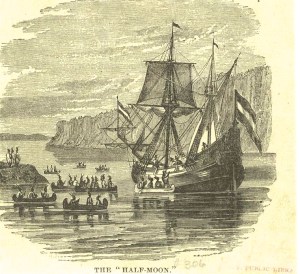
At the museum I’ll also remember Father Isaac Jogues, the fearless Jesuit missionary, who was eventually killed by the Mohawks at Ossernonon (Auriesville), past Albany on the Mohawk River. A strong faith in Christ brought him to the New World where he experienced the clash of cultures as Christianity entered a native American world. Fleeing from Indian captivity, he came here to New Amsterdam (New York) in 1643 and was put on a ship for France by a kindly Dutch minister. A few years later, he returned still eager to bring the Christian faith to the native peoples, but was killed in 1646.
He wanted them to know Jesus Christ.
What do these old examples say about our mission today as disciples of Jesus to make him known? “Go, therefore, and make disciples of all nations, baptizing them in the name of the Father, and of the Son, and of the holy Spirit, teaching them to observe all that I have commanded you. And behold, I am with you always, until the end of the age,” Jesus says. (Matthew 28,16-20) What does that mean today?
Some today tell us to think more positively of cultures like that of the American native peoples. Some say Christians should simply be present in these cultures and silently profess their faith and work for the common good. Some even say we should not evangelize at all.
Certainly, the Spirit of God has been active in humanity from the beginning and we have missed God’s gifts in cultures and religions not our own. The church today recognizes the good in other religions “The Catholic Church rejects nothing that is true and holy in these religions” (Nostra Aetate, 2) . Still, it regards them as a “preparation for the gospel.” (Lumen gentium 16)
“The church is missionary by her very nature.” (Ad gentes 2) She is called to both dialogue respectfully, work for the common good and proclaim her belief.
We’re not only speaking of other cultures and religions, of course. What about our own culture, which is becoming increasingly resistant to Christian belief? How do we dialogue respectfully and proclaim our belief to our own, our young people, those who are drifting away?


 The Victor's Place