Tag Archives: easter

Easter Saturday: We’re Slow, like the Apostles


Like the apostles we’re slow to understand the mystery of the death and resurrection of Jesus. The two disciples going to Emmaus are not the only ones slow to understand– we’re slow too.

Peter, who preaches to the crowds in Jerusalem at Pentecost, certainly was slow to understand. He speaks forcefully at Pentecost, forty days after the Passover when Jesus died and rose from the dead, but the days before he’s speechless. It took awhile for him and for the others who came up with Jesus from Galilee to learn and be enlightened about this great mystery..

Mark’s accounts of Jesus resurrection appearances, read on the  Saturday of Easter week, stresses the unbelief of his disciples. They were not easily persuaded.

For this reason, each year the Lord refreshes our faith in the resurrection, but it’s not done in a day. We need time to take it in, like the first followers of. Jesus, and for that we have an easter season of forty days. Just for starters.

The disciples are slow to understand the mission they’re to carry out because it’s God plan not theirs, a plan that outruns human understanding. A new age had come, the age of the Holy Spirit, and they didn’t understand it. The fiery winds of Pentecost had to move them to go beyond what they see, beyond Jerusalem and Galilee to the ends of the earth.

The Holy Spirit also moves us to a mission beyond our understanding. Luke says that in the Acts of the Apostles. “The mission is willed, initiated, impelled and guided by God through the Holy Spirit. God moves ahead of the other characters. At a human level, Luke shows how difficult it is for the church to keep up with God’s action, follow God’s initiative, understand the precedents being established.” (Luke Timothy Johnson, The Acts of the Apostles)

“You judge things as human beings do, not as God does,” Jesus says to Peter elsewhere in the gospel. We see things that way too.

Peter’s slowness to follow God’s plan remained even after Jesus is raised from the dead. He doesn’t see why he must go to Caesaria Maritima to baptize the gentile Cornelius and his household. (Acts 10,1-49) It’s completely unexpected. Only gradually does he embrace a mission to the gentiles and its implications. The other disciples are like him; God’s plan unfolds but they are hardly aware of it.

One thing they all learned quickly, though, as is evident in the Acts of the Apostles. Like Jesus, they experience the mystery of his cross, and in that experience they find wisdom.

Readings here

The Easter Tree

san clemente copy

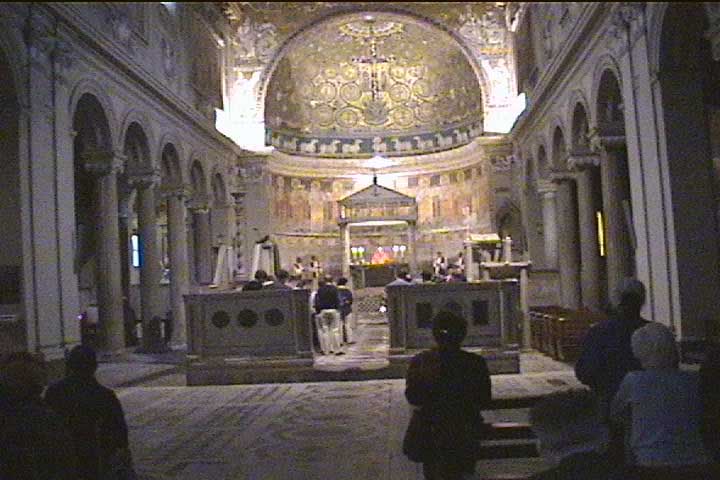
The Cross  flowers at Easter time. There’s a flowering cross brimming with life  in the great apse of the church of San Clemente in Rome. Its branches swirl with the gifts God gives. It brings life, not death. Humanity is there, signified in Mary and the disciple John. We are there in the doves resting on it. Creation itself is there, drawing new life from it. The hand of God makes it so.

The sacraments offered in this sacred place bring life-giving graces to us.

An early preacher Theodore the Studite  praises the mystery of the cross:.

“How precious the gift of the cross, how splendid to contemplate! In the cross there is no mingling of good and evil, as in the tree of paradise: it is wholly beautiful to behold and good to taste. The fruit of this tree is not death but life, not darkness but light. This tree does not cast us out of paradise, but opens the way for our return.

“This was the tree on which Christ, like a king on a chariot, destroyed the devil, the Lord of death, and freed the human race from his tyranny. This was the tree upon which the Lord, like a brave warrior wounded in his hands, feet and side, healed the wounds of sin that the evil serpent had inflicted on our nature. A tree once caused our death, but now a tree brings life. Once deceived by a tree, we have now repelled the cunning serpent by a tree.

“What an astonishing transformation! That death should become life, that decay should become immortality, that shame should become glory! Well might the holy Apostle exclaim: Far be it from me to glory except in the cross of our Lord Jesus Christ, by which the world has been crucified to me, and I to the world!”

San Clemente, Rome

See Children’s Prayers here for a children’s version of the Easter Tree.

The Easter Season:The Long Day

www.usccb.org   (Readings for the Easter Season)

Weekday Readings for Easter Week

APRIL 21 Mon Octave of Easter Acts 2:14, 22-33/Mt 28:8-15 

22 Tue  Octave of Easter Acts 2:36-41/Jn 20:11-18

23 Wed Octave of Easter Acts 3:1-10/Lk 24:13-35 

24 Thu  Octave of Easter Acts 3:11-26/Lk 24:35-48 

25Fri Octave of Easter Acts 4:1-12/Jn 21:1-14 

26 Sat  Octave of Easter Acts 4:13-21/Mk 16:9-15 

27  2nd SUNDAY OF EASTER  Acts 2:42-47/1 Pt 1:3-9/Jn 20:19-31

The gospel readings this week recall the Easter appearances of Jesus to his disciples, to , Mary Magdalene and the women at the tomb, to Peter and John, to the Emmaus disciples, to Thomas and the disciples from Galilee who came up with him to Jerusalem. We could call this week “a long day.” Every day this week is a solemnity, like Easter itself. Unfortunately, we limit feasts like Christmas and Easter to a day. We need to savor these feasts and let them sink in.

The Acts of the Apostles, which continues St. Luke’s Gospel and is an important reading in the Easter season, describes how the first witnesses, guided by the Holy Spirit, gave testimony and were received. Looking at the church then can help us understand the church now.

In our readings from Acts on Monday, the witnesses begin to speak. Peter is the first. Just as with Jesus in life, his words are accompanied by a sign from God. The crippled man, a temple regular whom everyone knows, is cured by Peter and John as they come to the temple to pray. He follows Peter and listens to him. He will be a sign that’s contradicted; the temple leaders refuse to credit him as a sign. (Acts, Wednesday to Friday)

From its beginnings in Jerusalem the church gradually spreads into the Roman world, incorporating gentiles, non-Jews, and eventually reaching Rome itself. Believers in the Risen Christ who give their testimony and signs that accompany their witness cause it to grow..  

Morning and Evening Prayers here. Week I, Sunday readings all week.

Children’s Prayers here.

On to Jerusalem: Mark 9: 14-29

It takes time to believe. The disciples of Jesus needed time to believe in him and understand the meaning of his life, death and resurrection. So did the man in today’s gospel from Mark who asks help in his unbelief. So do we.

As Jesus came down from the mountain with Peter, James, John
and approached the other disciples,
they saw a large crowd around them and scribes arguing with them.
Immediately on seeing him,
the whole crowd was utterly amazed.
They ran up to him and greeted him. 
He asked them, “What are you arguing about with them?”
Someone from the crowd answered him,
“Teacher, I have brought to you my son possessed by a mute spirit.
Wherever it seizes him, it throws him down;
he foams at the mouth, grinds his teeth, and becomes rigid.
I asked your disciples to drive it out, but they were unable to do so.”
He said to them in reply,
“O faithless generation, how long will I be with you?
How long will I endure you? Bring him to me.” 
They brought the boy to him.
And when he saw him,
the spirit immediately threw the boy into convulsions.
As he fell to the ground, he began to roll around   
and foam at the mouth. 
Then he questioned his father,
“How long has this been happening to him?” 
He replied, “Since childhood.
It has often thrown him into fire and into water to kill him.
But if you can do anything, have compassion on us and help us.”
Jesus said to him,
“‘If you can!’ Everything is possible to one who has faith.”
Then the boy’s father cried out, “I do believe, help my unbelief!”
Jesus, on seeing a crowd rapidly gathering,
rebuked the unclean spirit and said to it,
“Mute and deaf spirit, I command you:
come out of him and never enter him again!”
Shouting and throwing the boy into convulsions, it came out.
He became like a corpse, which caused many to say, “He is dead!”
But Jesus took him by the hand, raised him, and he stood up.
When he entered the house, his disciples asked him in private,
“Why could we not drive the spirit out?”
He said to them, “This kind can only come out through prayer.” Mark 9:14-29

Where are we now?

Since the Christmas season we have been reading from Mark’s Gospel, which end when Lent begins. Through lent we follow Jesus from Matthew’s Gospel mostly, as he journeys on to Jerusalem where he will die and rise again.  

Do his disciples fully understand him? Peter certainly doesn’t. (Mark 8, 27-33) Despite miracles and his inspired teaching,  his own family and hometown turn away from him. (Mark 3,1-5;  6, 1-6) Pharisees and scribes from Jerusalem come to Galilee to dismiss and condemn him.( Mark 7,1-15)

Yet, Jesus goes on to Jerusalem, with his disciples and with all of us. The lenten season’s readings and feasts will take us, like his disciples, from Galilee to Jerusalem. Lent will call us, as Jesus does in today’s gospel, to prayer.

Will this lent and Easter turn more people to join him?  Maybe. The world we live in is a lot like Galilee and Jerusalem. Still, like the disciples who first followed him there, we’re going up to Jerusalem. There will always be transfigured moments to lead us on.

In today’s gospel listen to a merciful God. “O faithless generation, how long will I be with you?” Jesus says. Yet then he says “Bring him to me.” And he cures the young boy possessed from childhood. He helps the half-believing father.

Is he unique? Isn’t faith itself always half-believing, always marked with the unbelief that comes from who we are, finite human beings who only see so far?


Mystagogic Catechesis: Learning from Signs

This week we’re coming to the end of the Easter season and the time devoted especially to Mystagogic Catechesis. Mystagogic Catechesis is an old term inspired by the time that Jesus after his resurrection began to wean his followers away from knowing him physically to knowing him through signs, like water, bread and wine, like gathering together to remember him in the scriptures, like seeing him in the poor and suffering who are wounded like him, also seeing his plan in the signs of the times they were living in. Mystagogic Catechesis is a catechesis for recognizing Jesus Christ in signs.

 Even though “they rejoiced at the sight of the Lord” the disciples of Jesus found this new way hard to understand. They saw Jesus physically less and less. We see their uneasiness, their questioning, in the gospel narratives read in the Easter season. He taught the patiently, but still they found it hard to see him in another way, through signs.

The Old Testament scriptures were important signs Jesus offered his disciples after rising from the dead. (Luke24L13-27) During the Easter season the scriptures are important signs offered to us. The resurrection appearances of Jesus from the four gospels, especially from the Gospel of John, are gospels we read in the early weeks of Easter. The meeting of Jesus with Nicodemus, the miracle of the loaves and fish, and the Last Supper Discourse of Jesus– all from John’s Gospel– are read on the following weeks. The Acts of the Apostles, describing the surprising growth of the church after the resurrection, is read all through the Easter season.

Those who follow Jesus share the experience of his disciples as they face the mystery of his death and resurrection.

In their catechetical sermons after easter, saints like Ambrose and Cyril of Jerusalem saw the unease in the newly baptized they taught.  “Is this it?” St. Ambrose begins one his catechetical sermons to newly baptized Christians.  “Is this it? You’re saying to yourself.” The Christian life is not Paradise, the saint reminds them.  The Christian life here on earth is not seeing completely or knowing everything clearly. The Christian life is a life of signs, signs that come with the sign of the cross.

Following the Second Vatican Council, the church gives Mystagogic Catechesis a more prominent place in her liturgy. In the past, Mystagogic Catechesis took place in the one week after Easter and was focused on the newly baptized.  In the church’s liturgy now Mystagogic Catechesis takes place, not for just one week, but for all the Easter season, and beyond the Easter season to every Sunday celebration. It is meant, not just for the newly baptized, but for the whole Christian community.

Mystagogic Catechesis is not limited to the seven sacraments, but is sacramental in the broad sense the early church understood the term. For example, it sees the church as a sacrament.  That’s why we read the Acts of the Apostles all through the Easter season, to understand the mystery of the  church. 

The church’s promotion of Mystagogic Catechesis also brings a shift in catechesis and preaching.  Mystagogic Catechesis is based on the scriptures, rites and prayers of the liturgy, not the catechism. It moves us into another way of teaching and praying. Not a new way, but a way found in the early church and in the church up to the Council of Trent. 

Mystagogic Catechesis puts an emphasis on the liturgy, its prayers, readings and signs, as the preeminent place where we learn and pray. “Christ is always present in His Church, especially in her liturgical celebrations…The liturgy is the summit toward which the activity of the Church is directed; at the same time it is the font from which all her power flows. (SC 7, 10)

Reinterpreting Life

IMG_0500

Reinterpreting life is at the heart of the Easter mystery. It calls us to see life differently. Like the artist who reinterpreted the Cross on Calvary and made it the glorious sign we see above, we’re called to reinterpret the Calvary of our world today. Listen to the 4th century Saint Ephrem the Syrian:

Glory be to you, Lord,
You raised your cross like a bridge to span the jaws of death, that we might go from the land of death to the land of the living.
Glory be to you, Lord,
You took on a human body that every human being might live.

You are alive. Those who killed you sowed your living body in the earth as farmers sow grain, and it sprang up and brought forth an abundant harvest of human beings from the dead.

Come, brothers and sisters, let’s offer our love. Pour out our treasury of hymns and prayers before him who offered himself on the cross to enrich us all.”

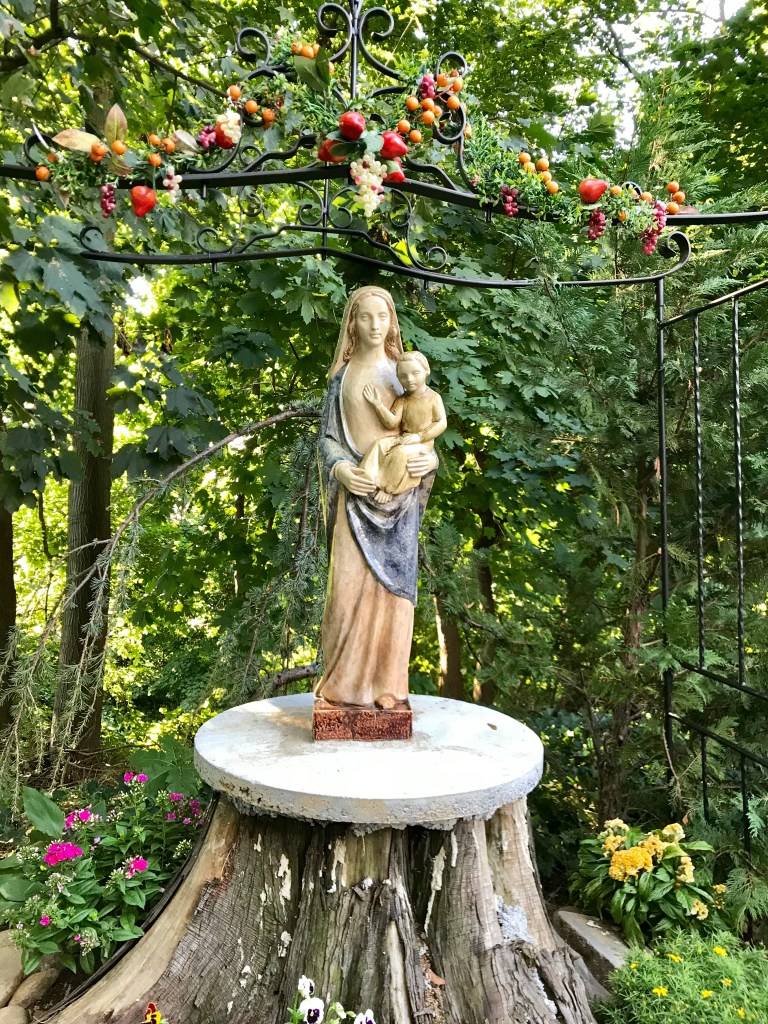
Reinterpreting life through the mystery of the Cross is at the heart of the charism of my community, the Passionists. In our Mary Garden here at the monastery, Mary stands with her Son on the stump of a cedar tree. A dead tree, yet brought to life by the presence of Jesus carried in Mary’s arms.

The Cross of Jesus helps us see life in our world, a “Faithful Cross” it’s called in an ancient hymn. And it is.

There is so much death in our world today. We need to reinterpret our time by the light of the mystery of the Cross of Jesus.

Light in Darkness

IMG_5910

The Easter readings tell us  Jesus Christ is the light of the world, who shines in our darkness. Mary comes to the tomb while it’s still dark. The dark of evening comes as the disciples hide in the Upper Room. The disciples fish all night, in the dark, and catch nothing. Then, Light comes.

Listen to Maximus of Turin’s reflections on Jesus Christ, “Light from Light.”

“Yes, we have the light of Christ, but it is a light that shines in darkness.  The light of Christ is an endless day that knows no night. Christ is this day, says the Apostle; such is the meaning of his words: Night is almost over; day is at hand. He tells us that night is almost over, not that it is about to fall… This is why John the evangelist says: The light shines in the darkness, and the darkness has never been able to overpower it.

And so, my brothers and sisters, each of us ought surely to rejoice on this holy day. Let no one, conscious of his sinfulness, withdraw from our common celebration, nor let anyone be kept away from our public prayer by the burden of his guilt. Sinner he may indeed be, but he must not despair of pardon on this day which is so highly privileged; for if a thief could receive the grace of paradise, how could a Christian be refused forgiveness?”

I like sitting on the porch this morning watching the light come in the morning. It always comes, sometimes muted, sometimes bright and clear, but it always comes.

Today, the feast of St. Athanasius, I was thinking of the Word proclaimed by the heavens and the earth.

“When I see your heavens, the work of your fingers,

…O LORD, our Lord,

how awesome is your name through all the earth!”

I l

It’s the Lord!

sinful man
John 21, 1-18

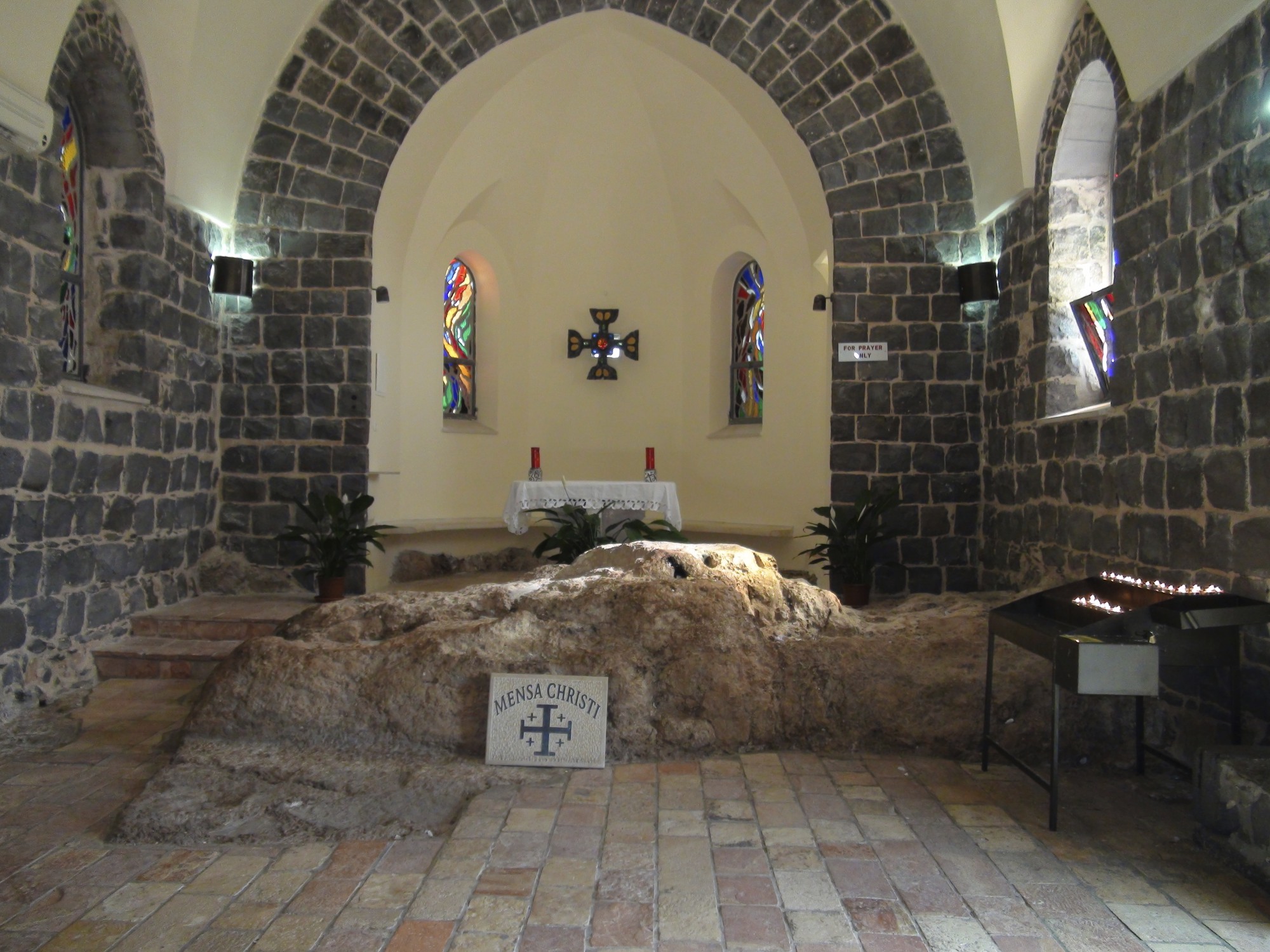
I think I know where this gospel took place– Tabgha, a quiet, wooded area on the Lake of Galilee just south of the ancient town of Capernaum. Easy walking distance from the town that was the center of Jesus’ ministry.

The name Tabgha comes from the seven springs of water flowing into the lake there. When I visited some years ago, flocks of birds were singing in the trees and drinking from the streams of water.

For centuries fishermen must have pulled for fresh water from the springs, and perhaps fry some fish over a fire on the beach. It’s a likely place where Jesus would come to pray. Tradition– two centuries-old churches are on the site–says he met his disciples here after his resurrection.

DSC00042

John’s gospel says that Peter and other disciples of Jesus came to Galilee after the Lord’s death and resurrection and went fishing. Through the night they caught nothing, but at dawn they heard a call from the shore to cast their nets out again.
“… Jesus was standing on the shore; but the disciples did not realize that it was Jesus.”

They caught of large catch of 153 fish. Jesus then called from the shore to come eat some fish at a fire he had started and he gave them bread and some fish to eat and revealed himself to them.

Peter has a leading role in this story. He jumped into the water to get to the shore. Then after they have eaten, Jesus takes him aside and three times asks the disciple who denied him three times, “Do you love me?” A beautiful statue  (above) marks that moment.

Three times the apostle who cursed and swore in the courtyard of the High Priest that he did not even know Jesus answers “Yes, I do. I love you.” And Jesus tells him “Feed my lambs. Feed my sheep.”

A great example of forgiveness . No scolding words or recriminations. No “I told you so.” No warning, “You do that again and …” No demotion, no putting on parole. Rather, Jesus gives Peter new responsibility. “Feed my lambs” as I do. A beautiful picture of God’s mercy.

Instead of punishing him, God calls Peter to new things. The mercy of God always calls us to something new, some new life.

Tabgha, along the Lake of Galilee where Jesus met his disciples, is a wonderful place to visit. I wonder if Jesus prayed here during his days in Capernaum and called his disciples to rest awhile. Here he communed with God his Father; here he prayed and forgave. His memory lingers at this lovely place besides the Sea of Galilee.

Prayer and forgiveness go together Jesus taught. “Forgive us our trespasses as we forgive those who trespass against us.” Today’s gospel tells us to pray and forgive. Maybe  someone  has hurt us, maybe there’s some situation we’re facing now. A job we don’t like, a home situation we’re angry about, something in society that upsets us.

Pray and forgive.

Death Destroyed

On this Friday in the Easter season the poetic St. Ephrem the Syrian has this beautiful description of Christ conquering death:

“Death trampled our Lord underfoot, but he in his turn treated death as a highroad for his own feet. He submitted to it, enduring it willingly, because by this means he would be able to destroy death in spite of itself. Death had its own way when our Lord went out from Jerusalem carrying his cross; but when by a loud cry from that cross he summoned the dead from the underworld, death was powerless to prevent it.
 ” Death slew him by means of the body which he had assumed, but that same body proved to be the weapon with which he conquered death. Concealed beneath the cloak of his manhood, his godhead engaged death in combat; but in slaying our Lord, death itself was slain. It was able to kill natural human life, but was itself killed by the life that is above the nature of man.
  “Death could not devour our Lord unless he possessed a body, neither could hell swallow him up unless he bore our flesh; and so he came in search of a chariot in which to ride to the underworld. This chariot was the body which he received from the Virgin; in it he invaded death’s fortress, broke open its strong-room and scattered all its treasure.

Ist Sunday of Easter: The Thomas in Us All

Audio of the homily below:

The yearly feast of Easter is a celebration, not of one day, but of fifty days, from Holy Saturday till the feast of Pentecost. We also celebrate Easter each Sunday of the year.

Why this extensive celebration? Because we’re so slow to realize what it means, and need reminding over and over.

Some things — like telling time or tying our shoes — we learn once, but the resurrection of Jesus is a mystery not learned at once. Never grasped completely, it unfolds as life unfolds, day by day.

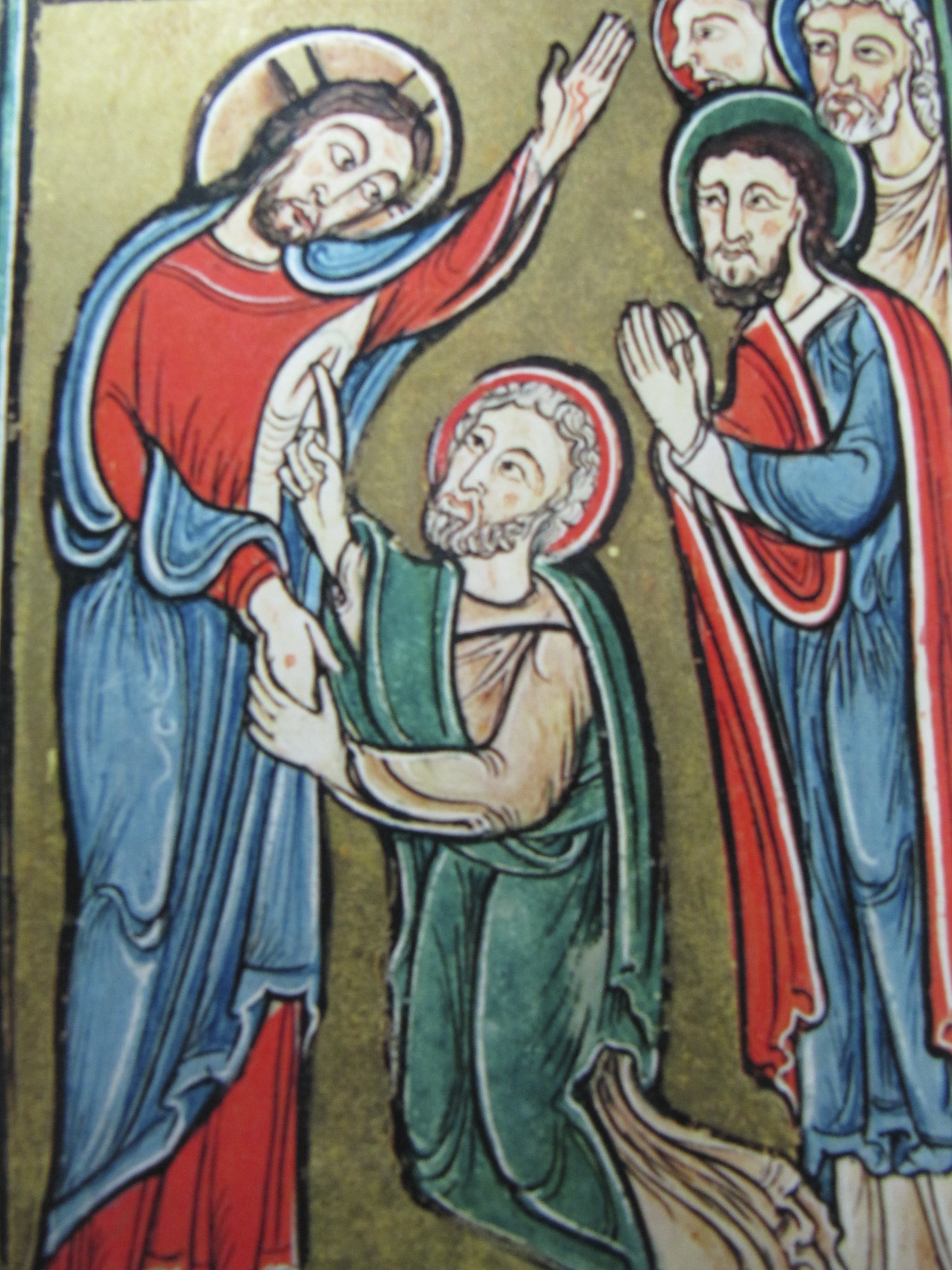
That’s why Thomas, the apostle, whom we remember on the 2nd Sunday of Easter, is such an important figure. Far from being a lonely skeptic, an isolated dissenter, he represents the slowness of heart and mind, the recurrent skepticism, that affects us all.

Yet, Thomas is still a sign of hope. He reminds us that the Risen Jesus offers, even to the most unconvinced, the power to believe.

Lord Jesus,
the Thomas in us all
needs the wounds in your hands and side,
to call us to believe
you are our Lord and God.

Risen, present everywhere,
bless those who have not seen,
blind with doubts
and weakened faith.

Bless us, Lord,
from your wounded hands and side,
give us faith
to believe in you.

Spanish
El Tomás Dentro de Todos Nosotros
Juán 20, 19-31, Segundo Domingo de Pascua

La fiesta anual de Pascua florida es una celebración, no de un día, sino de cincuenta días, desde el Sábado Santo hasta la fiesta de Pentecostés. También celebramos el Domingo de Pascua cada domingo del año.

¿Por qué esta extensa celebración? Porque somos tan lentos en realizar lo que significa, y también necesitamos ser recordados una y otra vez.

Algunas cosas – como leer el reloj o amarrarnos los zapatos – las aprendemos una sola vez, pero la resurrección de Jesús es un misterio que no se aprende de una vez. Nunca comprendido completamente, se revela gradualmente mientras la vida se despliega día por día.

Por eso es que Tomás, el apóstol a quien recordamos el Segundo Domingo de Pascua, es una figura tan importante. Lejos de ser un escéptico solitario, un disidente aislado, él representa la lentitud de corazón y mente, el esceptisismo recurrente, que nos afecta a todos.

Sin embargo, Tomás sigue siendo un signo de esperanza. Él nos recuerda que el Jesús Resucitado nos ofrece hasta el menos convencido de nosotros, el poder de creer.

Señor Jesús, el Tomás en todos nosotros
necesita las heridas de tu costado y manos,
llamándonos a creer que eres nuestro Señor y Dios.
Resucitado, presente en todas partes,
bendice a los que no han visto,
ciegos con dudas y fé debilitada.
Bendícenos Señor; a través de tus heridas manos y costado,
danos fé para creer en Tí.