Tag Archives: death

All Souls Day: November 2

All Saints. Fra Angelico

All Saints Day and All Souls Day belong together. On the Feast of All Saints we thank God for calling all to holiness as his children. All of us are called to be numbered among the saints of God.

On All Souls Day we remember that we are all weak and sinful and depend on the mercy of God.  We can lose hope in our call, and so on All Souls Day we ask God’s mercy for ourselves and those who have gone before us in death.

Listen to our prayer at Mass:

“Remember, also, our brothers and sisters, who have fallen asleep in the hope of the resurrection, and all who have died in your mercy. Welcome them into the light of your face. And have mercy on us all, we pray, that with the Blessed Virgin Mary, with the blessed Apostles and all the saints who have pleased you throughout the ages, we may be coheirs to eternal life and may praise and glory you, through your Son, Jesus Christ.( 2nd Eucharisitic Prayer)

We pray for all who hope in Christ’s resurrection, and also for “all who have died in your mercy.” All Souls is a day we pray for all who have died.

We begin our prayer on All Souls Day with St. Paul’s words to the Thessalonians and Corinthians, affirming God’s promise of eternal life to all humanity:

“Just as Jesus died and has risen again, so through Jesus God will bring with him those who have fallen asleep and as in Adam all die so also in Christ all will be brought to life.”

At the Communion of the Mass, we hear the words of Jesus:

“I am the resurrection and the life, says the Lord. Whoever believes in me even though he die will live and anyone who believes in me will never die.”

Yet death saddens us; it can weaken our faith. Praying for the dead strengthens our faith and benefits those who have gone before us. In our opening prayer we ask for stronger faith.

Listen kindly to our prayers, O Lord,
and, as our faith in your Son
raised from the dead is deepened,
so may our hope of resurrection for your departed servants
also find new strength.
Through our Lord Jesus Christ, your Son, who lives and reigns with you and the Holy Spirit, world without end. Amen.

“It’s a holy and wholesome thought to pray for the living and the dead.” Eternal rest grant to them, O Lord, and let perpetual light shine upon them.

Now and at the Hour of our Death

DSC00169

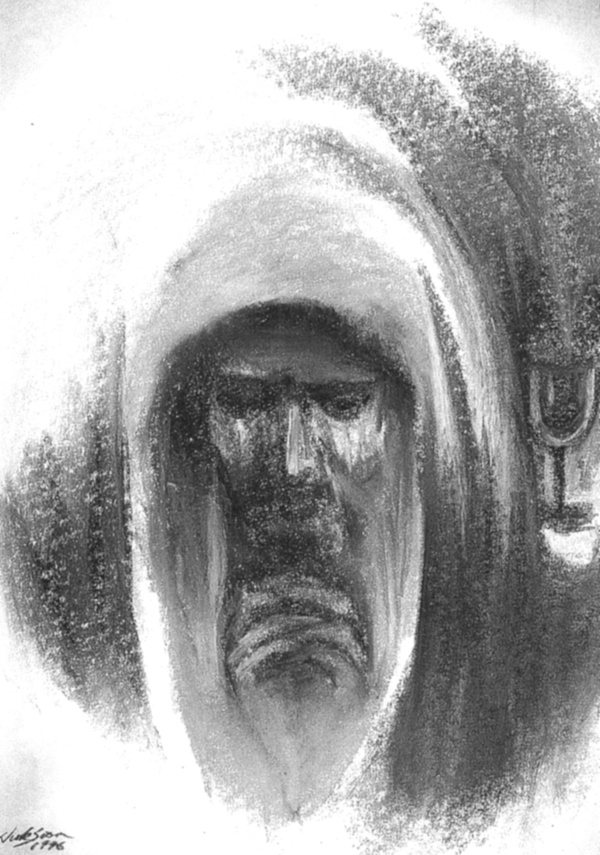
In the Hail Mary we ask Mary to pray for us sinners, “now and at the hour of our death.” These are the two most important moments in life. We have the past and the future, for sure, but they’re far less important than now and the hour of our death.

“Now” is the time we live in, the present moment. Whether it’s a time of joy or sorrow, a time of satisfaction or disappointment, a time of sickness or health, it’s the time we have to love, to give, to endure, to act, to live.

“The hour of death” is God’s time, when God brings us from this life to the next. It may be instantaneous or prolonged, but it’s the time when God who gave us life takes this life away.

Both of those moments benefit from faith. Mary, the Mother of Jesus, was a believer who trusted in the power and presence of God through these same moments of life. They’re challenging moments.

After the angel left Mary in Nazareth, no other angel came; she walked by faith from the Child’s birth to the death and resurrection of her Son. As we face the mysteries of life, we ask her in our weakness to be with us as a believer and a mother, who knows the goodness and power of God as it is revealed in Jesus Christ her Son.

“Pray for us sinners, now and at the hour of our death.”

32nd Sunday C: Thinking About Death

Audio Homily here:

How do we want to die? I think we’ll be hearing that question more frequently after our current elections are over. “End of life” decisions are going to be part of the political agenda in the future. In our society we’ll be facing a range of questions about death and dying.. 

Let’s think about the term “end of life” first. If we listen to our first reading from the Book of Maccabees, the seven brothers who are put to death for defying their Greek conquerors and keeping their Jewish faith don’t see death as an end of life. “You are depriving us of this present life,” one of the brothers says, “but the King of the world will raise us up to live again forever.”

The seven brothers see this life as given to them by God, who is master of life and death. Life doesn’t end. We are in God’s hands from the beginning. It’s for God to decide when we die, but God promises life beyond death. It’s for us to remain faithful as long as we live.

We hear in today’s gospel people denying that there’s life after death and trying to bait Jesus with what they think are absurd circumstances. Jesus tells the Sadducees  that life beyond this life is not the same as here on earth. A heavenly life is beyond what we can imagine.

So denying life beyond death isn’t new. Today we can hear the same denial of eternal life, the life that Jesus promises and shows us in his resurrection. One of the signs of that denial may be, I think, the increasing number of suicides, even among young people. We can see this life as our only life, and when circumstances become seemingly intolerable and seemingly hopeless, some unfortunately end their earthly lives. But we leave them to God’s mercy.

Today death often goes unmentioned. We don’t want to talk about it. We just want to think about life. But death is an important part of life.

There was a passage in a popular book some years ago by Carlos Castenada about an old Indian, Don Juan, and a young sophisticated scientist from the northeast, walking together in the desert in the southwest. The two are world’s apart in the way they think. 

As I recall it, the old Indian says to the young man, “Did you see the White Eagle circling over your shoulder?”

“ Yes, I see it,” the young man replies.

“That’s your death, keep an eye on it.”

“That’s a morbid thought,” the young man says, “We don’t think about that any more.”

“You should,” Don Juan says, “Keep an eye on your death. It will keep you from being small-minded.”

The young man’s describing the way a lot of people look at life today. We don’t want to think about death. We’re thinking more about extending life here on earth, through better diet, better heath care, better exercise;  we don’t like to think of a life ending in death.

But we should keep death in mind. Death is the door to another life. By ignoring it we can limit ourselves to a life too small, too self-centered, too brief. We need to see life as God sees it.   Life is not ended in death, it’s changed.

So death  is not something to be ignored; it is one of the two most important moments in life. That’s why we say in the Hail Mary. “Pray for us sinners, now and at the hour of our death. Amen.”

The Feast of the Assumption of Mary

There’s no account of Mary’s Assumption in scripture. An account of her burial and assumption into heaven appears in an apocryphal body of literature called the Transitus Mariae, from Christian churches of the east around the 5th century. This account may contain material from earlier sources  and witnesses to the belief in Mary’s bodily assumption in some significant parts of the early church.

The Roman Catholic church bases its belief  in Mary’s Assumption on scriptural sources like I Corinthians–the second reading for our feast on August 15th.

In his First Letter to the Corinthians, ( c 56) St. Paul writes to Christians who are wavering in their faith in the resurrection of Jesus. Their precise difficulty seems to be that they see only the soul surviving death and not the body, a common conception fostered by the Greek mind-set of his day. With that belief came a low appreciation of creation. The created world wasn’t worth much and was passing away. Let it go.

Paul counters this incomplete belief with the faith he has received. Interestingly, it’s a faith that preached, not written down; the gospels and other New Testament writings were not in written form yet:
“For I handed on to you as of first importance what I also received: that Christ died for our sins in accordance with the scriptures; that he was buried; that he was raised on the third day in accordance with the scriptures; that he appeared to Cephas, then to the Twelve. After that, he appeared to more than five hundred brothers at once, most of whom are still living, though some have fallen asleep.” ( 1 Corinthians 15, 3-6)

Jesus was raised bodily from the dead, Paul affirms, and we will rise bodily too. Jesus is “the first fruits of those who have fallen asleep.”

Mary’s Assumption follows the bodily resurrection of Jesus. Because of her unique role in the drama of redemption, Mary is among the“first fruits of those who have fallen asleep.” She follows Jesus who rose body and soul. Her Assumption, body and soul into heaven, is a resurrection story.

Bodily life is important, the bodily resurrection of Jesus says. The created world is important, the bodily resurrection of Jesus says, and so we must care for it according to God’s plan. We live in the body from birth to death; like the seed planted in the earth our bodily life will develop into a risen life we cannot imagine. ( John 12,21-26)

In her prayer, the Magnificat– the gospel for her feast– Mary accepts her mission from God to live in the created world of her day, accepting its limitations, its misunderstandings, its sufferings. She accepts fully the mission of her Son, the Word made flesh.

The realization of the mystery of the Assumption grew gradually in the church. Christians of the 3rd and 4th centuries confronted Gnosticism, which tempted them to depreciate creation and human existence itself.  Promising a better life beyond the limitations of this life,  the gnostics counseled escape from life as it is. Human life and creation itself didn’t matter.

The Roman Catholic church defined the dogma of the Assumption November 1, 1959, on the Feast of All Saints. Humanity and the planet itself seemed endangered in the 20th century. World War I ended in 1918 after four years of bloody conflict when millions perished. World War II ended in 1945 in which 35 million people were killed in Europe alone. Millions of lives perished in the Holocaust. Conventual war and nuclear weapons brought the real threat of mass destruction to the human race and the planet itself.

The 21st century offers new threats from climate change, widespread poverty, wars and terrorism.

The Assumption of Mary is a sign from God. Far from a pious legend, it tells us to look upon human life and creation itself as sacred. We believe in the resurrection of the body according to our ancient creed. Mary was the first of our humanity to share in the resurrection of Jesus Christ.

Death Destroyed

On this Friday in the Easter season the poetic St. Ephrem the Syrian has this beautiful description of Christ conquering death:

“Death trampled our Lord underfoot, but he in his turn treated death as a highroad for his own feet. He submitted to it, enduring it willingly, because by this means he would be able to destroy death in spite of itself. Death had its own way when our Lord went out from Jerusalem carrying his cross; but when by a loud cry from that cross he summoned the dead from the underworld, death was powerless to prevent it.
 ” Death slew him by means of the body which he had assumed, but that same body proved to be the weapon with which he conquered death. Concealed beneath the cloak of his manhood, his godhead engaged death in combat; but in slaying our Lord, death itself was slain. It was able to kill natural human life, but was itself killed by the life that is above the nature of man.
  “Death could not devour our Lord unless he possessed a body, neither could hell swallow him up unless he bore our flesh; and so he came in search of a chariot in which to ride to the underworld. This chariot was the body which he received from the Virgin; in it he invaded death’s fortress, broke open its strong-room and scattered all its treasure.

Come With Me

Jesus garden

You went into the garden and fell to the ground
and prayed
alone,
yet all humanity was there
holding the cup of death
and hearing itself in your words.
“Father, if it possible, let this cup pass from me.
The cup of death.
you drank
contained our fears and cries too,
our sweat of blood.
“Your will be done,” you said.
“Your will be done,”we say
and wait for an angel to strengthen us.

Rest in Peace

Two friends of mine have died and their funerals will take place in the next few days. “Eternal rest grant to them, O Lord, and let perpetual light shine upon them. May they rest in peace. Amen.”

What do we mean when we pray that those who die “rest in peace?”

The Book of Genesis says that God “rested” on the seventh day after completing the work of creation. God’s rest was a time of delight in what was done, and so we wish that those who die experience delight for the life they led on earth and the new life they share with God. The Letter to the Hebrews, read in the last weeks of January, also speaks of the rest of delight that those who go before us share with Jesus, our High Priest.

That doesn’t mean they will forget those they leave behind or the world they no longer live in. When Jesus rose from the dead he entered into his rest, but his work was not done on earth. God’s Kingdom must still come. As our High Priest, who shared our human life and its weakness and death, he continues to intercedes for us on earth. He is a compassionate and loving  High Priest.

Like Jesus, those whom God calls into his rest still love this world and those still journeying here. They don’t forget us. Resting in God, they’re restless  till God’s kingdom come. Given clearer sight as they commune with God, they accompany us on our way.  They’re in blessed communion with us, a communion of saints.

Memories of a Baptism

I was celebrant at the funeral Mass for Jack Olsen last Saturday morning in Sacred Heart Church in Bay Head, NJ.

My memories of Jack go way back to when the Olsens lived in the house on the corner of Lord Avenue and 3rd Street in Bayonne, NJ. My mother was a friend of Jack’s mother and when we were young she took my sister and me regularly to see the Olsens. We played with their 9 kids. Just down the street from their house was a football field where some of the best local teams played. During the 2nd World War Italian prisoners of war were held in barracks there and many Bayonne Italians went down to talk to them and pass them food. It put a human face to war.

Just beyond the Olsen’s house was the Kill Van Kull, the busy three mile waterway between Bayonne and Staten Island. Bill Olsen, Jack’s father, was a tugboat captain. As a kid, I couldn’t think of a better job in all the world than pushing and pulling big ships and barges around New York harbor.

My mother told me she met my father when she was washing the dishes after a baptism at the Olsens–maybe it was Jack’s baptism, or Fr. Tom’s, or Rita’s. My father was a friend of Jack’s uncle, Dinny, who probably invited him to the baptismal celebration that day.

“What’s your name?” my father said to her. “Rose O’Donnell,” she replied. “I’m Victor Hoagland,” he said. So my sister and I are here 80 or so years later. How connected our lives are by small things, like washing dishes or going to a baptism.

I mentioned at Jack’s funeral some of the small things that took place at his baptism 86 years ago. He was brought to church and signed with the sign of the Cross. That simple sign meant that he was blessed by the mystery of the death and resurrection of Jesus, who would bless him through the course of his life, even the hard months that marked his final sickness.

At his baptism, the priest poured water, the source of life, on his forehead and said (in Latin then) “John, I baptize you in the name of the Father, and of the Son, and of the Holy Spirit.” Life was God’s gift to him, a life that begins at conception and continues beyond the years here on earth.

Jack was a strong believer in God, the Creator, who gives life and Jesus, our Redeemer, who saw life so precious that he gave his life that we might live. He was a firm believer in the Right to Life.

Baptism is a sacrament of family life, which means, first of all, that we’re members of the family we belong to in this world. Jack, a bachelor, played a big part in his large family of brothers and sisters, nieces and nephews and all their wives and husbands, never missing celebrations, births, deaths and holidays. He was proud of his family and loyal to his own.

Baptism calls us into other families too– the family that’s our neighborhood, our city, our country. Jack was a good neighbor who loved the place where he lived and the people who lived there.

Baptism also calls us into the family of the church. Jack was a true believer; he loved the church. No doubt about his loyalty; the church was his home. He belonged to its societies, like the Holy Name and the Knights of Columbus. He made retreats with the Passionists. The Mass and the sacraments were not formalities, they were real for him. He loved his church in good times and bad.

At Jack’s funeral the other day, it seemed right to remember his baptism. The sacrament is at the heart of our funeral rites, when you think about it. We blessed him with water, the sign of life and made the sign of the cross over him again as his remains were carried into the church and then carried out. A white cloth, a reminder of the white garment he received long ago, was placed over him. The great words of faith were proclaimed: “The souls of the just are in the hands of God.” We heard the account of Jesus’ death and the message of the angel, “He is risen.” We celebrated the mystery of the Bread and Wine, which Jesus said are the food of eternal life.

“Life is changed, not ended,” our prayer said. Rest in peace.

All Souls Day

All Souls Day, says a homily I received in email this morning from the Congregation of the Clergy in Rome, recognizes our fears before the mystery of death. “From the perspective of Gospel wisdom, death teaches us an important lesson because it makes us see reality without filters.  It encourages us to recognise the falling away of all that appears great and strong in the eyes of the world.  Before death every motive of human pride and jealousy is lost and instead all that is truly worthwhile reappears.”

All Souls Day is a frank admission that we find it hard to face death in ourselves and in others. It’s an experience we cannot prepare for adequately, despite all the resources of faith and reason we have at hand.

Yes, the hope of resurrection encourages us. But as a holy bishop says in our readings for the Office of the Dead:

“As we are saying all these things some unknown feeling causes us to burst into tears; some hidden feeling discourages the mind which tries to trust and to hope. Such is the sad human condition; without Christ all of life is utter emptiness.

“O death! You separate those who are joined to each other in marriage. You harshly and cruelly divide those whom friendship unites. Yet your power is broken…We do not really belong to ourselves; we belong to the One who redeemed us.”   (Saint Braulio)

This is day that recognises our “sad human condition” as its struggles to believe.  And as our prayer for today says:

“Merciful Father, as we renew our faith in your Son who you raised from the dead, strengthen our hope that all our departed brothers and sisters will share in his resurrection, who lives and reigns with you and the Holy Spirit, One God, forever an ever. Amen.

Tuesday Night at the Mission

Last night at the mission we thought about death as Jesus faced it and accepted it in the Garden of Gethsemane. “Dying you destroyed our death; rising you restored our life,” we say at Mass. He accepted death and changed it forever. He will  be with us as our Savior at the moment of our death.

The two most important moments of our life are “now and at the hour of death.”

http://www.cptryon.org/prayer/season/agony.html

Tuesday evening our reflections will be on prayer. We need to pray, especially today. Is it possible to pray? How do we pray?

There are some reflections on prayer on Bread on the Waters, http://www.cptryon.org/prayer/index.html and some explanations of the common prayers we say as Christians.

You can learn to help your children pray at that site too.

The important days of Holy Week are coming up this week. Find out about them at this same site. It’s for adults and children.

Here’s a sample for introducing a child to Good Friday:

On Friday,

(We call it “Good”)

Jesus was nailed

to hard, hard wood.

Beneath his cross,

his mother stood

and cried for what they had done.

“Oh, if I could hold him,” she said,

“Hold my only Son!”

“Father, take me,” Jesus said,

“Take me in your hands.”

And God reached down

and took him,

and held his only Son.

“I am God who raises up,

your life has just begun.

I am God of the living,

no grave can hold my Son.”