Tag Archives: Catholic Church

Dominic Barberi, CP

In today’s reading at Mass from St. Paul’s First Letter to the Thessalonians the apostle tells them to remember those who brought them to faith. The gospel came to them, not in words alone, but through holy people.

Today, the Passionists remember one of their holy people, Blessed Dominic Barberi, born in Viterbo, Italy, in 1792. He was devoted to the cause of Christian unity and in 1842 went to England with a dream of bringing the English church and the Catholic church together as one.

He received John Henry Newman, the great Oxford scholar, into the Catholic church. Newman admired the zeal and humility of this holy man.

Though he never mastered the English language, Dominic preached tirelessly throughout England, especially to poor immigrants coming into the country to work in factories built during the Industrial Revolution.

Before coming to England, Dominic wrote to the scholars of Oxford about his dream of a united church:

“The time will surely come when we shall all with one voice glorify God, the Father of our Lord Jesus Christ. That time is not far distant. We shall see it with our own eyes. I feel this hope in the depths of my soul. In the meantime, let us do penance in sackcloth and ashes, as we await the blessed hope. Not only the French, but also the Italians, Spaniards, Germans and all other Catholics join you in this. With you they hope, with you they long for the day when it will be possible to embrace one another as brothers and sisters and to be gathered into one fold under one shepherd. Let there be one fold and one shepherd soon! Amen. Amen.”

Still a dream to believe in and work for.

Galileo Galilei


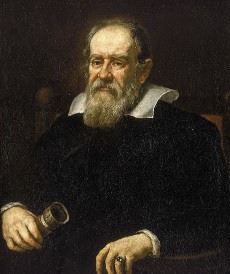
The brilliant Italian scientist Galileo Galilei was one of the great figures of the 17th century. Born in Pisa, in Tuscany, Galileo studied, taught and lectured in Pisa and Padua as well as in Florence, where he and his family made their home. The father of experimental science, his work in astronomy drew criticism from the church of his time and made him a symbol of the conflict between faith and science.


He was a deeply religious man; Catholic to the core. Two of his daughters entered the convent outside Florence and one of them, Sister Maria Celeste, carried on a long, tender correspondence with her brilliant father.

Galileo believed that nature was a teacher along with the bible, and he wanted the church to accept the evidence that science provides, otherwise it could be called an enemy of truth and human progress. Like others then and now, he believed that the bible taught you how to go to heaven and not how the heavens go.

His story is beautifully and carefully told today in a recent book I’m reading now:

Galileo’s Daughter: A Historical Memoir of Science, Faith and Love, Dava Sobel,  New York 1999

There’s a television version:  Galileo: Battle for the Heavens, that you can find on Nova’s site on the internet.

I admire the author’s even-handed description of the relations between the scientist and the churchmen who condemned him for what they saw as his heretical ideas. “A tragic mutual incomprehension has been interpreted as the reflection of a fundamental opposition between science and faith, “ Pope John Paul said regretfully  in 1992.

I’m going in October on a pilgrimage through some of the Tuscan cities and Venice,  where Galileo achieved so much.  He was a believer and a scientist. May others follow him and may our church welcome the knowledge they bring to the human family.

Go or Stay?

Bill Keller in an op-ed piece in New York Times on June 18th had some hard words for the Catholic Church which, as he sees it, is governed by a dysfunctional leadership and is falling apart.  His advice:

“Much as I wish I could encourage the discontented, the Catholics of open minds and open hearts, to stay put and fight the good fight, this is a lost cause. Donohue is right. Summon your fortitude, and just go.”

Keller finds himself agreeing with Bill Donohue, a strident Catholic voice on the right, who urges leaving the church but for another reason. He’s telling Catholics not in agreement with some of the Church’s positions: Get out.

A letter in today’s Times offered a fine answer to both Keller and Donohue:

“It seems to me that both Bill Keller and Bill Donohue, the president of the Catholic League, misunderstand the catholicity of the Catholic Church. Mr. Keller’s advice to disaffected Catholics, including priests, nuns and vowed religious, to “summon your fortitude” and leave allows no room for reconciliation, reformation and peace within conflict that is central to Christian social life.

“Christian community is not a social contract like those of liberal democracies; it is a covenant that seeks to give witness to God’s unconditional love for humanity through the bonds of community. Leaving, as Mr. Keller suggests, may serve our consumerist attitudes well, but it does little to improve community; it only weakens community.

“Mr. Donohue makes a similar misreading of Catholic catholicity by seemingly insisting on ideological purity. This is a dangerous desire that has plagued Christianity since the fourth and fifth centuries. There is no such thing as an ideologically pure church, and frequently such perceptions have led to serious abuses of power.


“Disaffection and ideological dispute among Catholics are a pastoral issue that should be approached within particular religious communities, parishes and lay groups with their pastoral and ministerial leadership. It is a chance for reconciliation and understanding.

MARC LAVALLEE
Arlington, Mass., June 18, 2012

The writer is a Ph.D. candidate in practical theology at Boston University.”

 The writer’s on target.

Someone said to me today: “If your father develops Alzheimer’s  do you abandon him? If your family breaks down, is split by misunderstandings, do you leave it? Is the church a political party? You don’t like the platform, join another one?”

The church is a community formed by God’s unconditional love for humanity. That same love is asked of us.

I liked another letter to the Times also:

“The behavior of the Roman Catholic hierarchy disappoints me on so many fronts that it would be difficult even to begin cataloging those disappointments. How many times have I contemplated joining the Episcopal Church? More times than I can count.

“Why do I stay? Because my own parish, with its engaged pastor, deacon and staff members, vibrant liturgy and forward-leaning membership, is a comfortable home that embraces each one of us in times of joy and sorrow and provides an atmosphere for real spiritual growth.

“I suspect that many Catholics, including a lot of the nuns who are being hounded at the moment, stay for the same reason I do, and I would suggest to those who are on the verge of leaving that they should shop around first. There are welcoming and joyful Catholic communities just waiting for you to join. I know. I belong to one.

MARION EAGEN
Clarks Green, Pa., June 18, 2012

Preaching, 2

Yesterday I offered some thoughts on preaching. Today a few more reflections. Who are those we preach to today? We should know them as they are and the church in which we preach as it is.

Let’s recognize we’re preaching to people and to a church experiencing a priest shortage, a declining number of women and men religious, and a weakened hierarchy.Statistics– surely we see it ourselves– tell us that people, especially the younger generation, aren’t going to church as they once did.  Our parishes are suffering from a decline in members and Catholic schools are closing.

It’s a church roiled by sexual scandals, controversy over the place of women, issues like gay marriage, abortion and government regulations. Certainly,  Jesus Christ will be with us always and the church will survive, but what can we do to strengthen it?

I think the closest historical parallel to our American church today may be the Catholic church in American colonial times, which one historian describes as a “priestless, popeless church.”  We might add  “sisterless” to describe our church, since religious woman had a major role in its growth until now.

The colonial church survived, according to historians, because it was kept alive in the home, by prayerbooks and catechisms. (cf. The Faithful: A History of Catholics in American, by James M. O’Toole, Harvard,  2008)

Historical parallels are never absolute, but that era may suggest a preaching aimed at building a home-based faith, that is strongly catechetical and that promotes a life of regular prayer in people.

What would the prayerbook and basic catechism for today’s church be? The bible, now providentially blessed with new tools to access the treasures of its spirituality. We need a preaching that directs people to this source and helps them mine it.

It’s important we recommend the best versions of the scripture available (The New American Bible, The Jerusalem Bible) and encourage people to use aids like The Magnificat and Give Us Our Daily Bread to follow the daily lectionary.

Who preaches?

I believe we need a new generation of preachers in our churches and wherever the gospel can be proclaimed: men and women, priests, religious and laypeople. I’m not looking for new Bishop Fulton Sheens, spell–binding orators to dazzle us with their eloquence.

I think I’d prefer preachers with more modest skills. Maybe preachers like the hosts on the cooking shows on television, who whip up good food and bow out modestly after they show you how it’s done. I think  laypeople will have an increasing role in the renewal of preaching.

What about canon law? “The times, they are a-changing.”

St. Michael’s, Union City

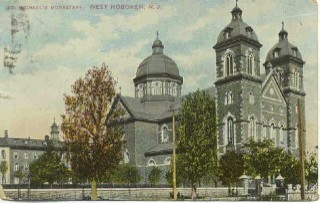
On June 1, 2012, the Passionists left Union City, NJ, after 151 years. The community came to Union City, then West Hoboken, following a mission preached by Passionist missionaries at old St. Mary’s church in 1860.

The next year they were invited to settle on the high palisades above the city of Hoboken on the Hudson River by James Roosevelt Bailey, bishop of the newly formed diocese of Newark, who hoped they would minister to the German and Irish immigrants pouring into the northern New Jersey river towns of Hoboken, Newark, Jersey City, Hackensack and Paterson as the era of mass immigration began in 1850 and New York City expanded.

Passionist priests and brothers played a large part in building the Catholic church in northern New Jersey. They helped create 16 Catholic parishes in the area {St. Joseph, West New York, St. Paul of the Cross, Jersey City, Holy Family, Union City, St. Joseph/St Michael, Union City, among them) and preached missions and retreats to the growing Catholic population taking root in the new world.

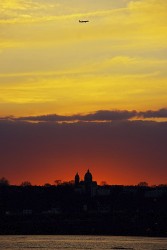
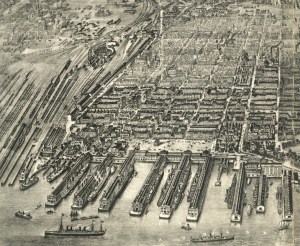
Their base was the great church and monastery of St. Michael  built on the high palisades above the Hudson River in 1875, a familiar landmark visible for miles around. The church and monastery appear on the horizon of a panoramic map of Hoboken from 1881.

Hoboken 1881
170a

Monastery 1881 copy

Monastery 1881

A missionary order, the Passionists chose their base in Union City, not just with northern New Jersey in mind, but because of its access to other places in the United States and the wider world. The first Passionists came to America from Italy in 1851. Before the advent of air travel, the busy Hoboken docks close by offered them access by sea to their headquarters in Rome and missionary fields in China (1922) and later the Philippines and Jamaica, West Indies.

Nearby too the newly-built railroads reached into the western, northern and southern parts of the United States. From Hoboken, Passionist preachers from St. Michael’s traveled to Catholic parishes and religious communities throughout the country to preach the gospel.
Hoboken railroads, docks 1881

The foundation in Union City was an ideal location for a community like the Passionists with global ambitions.

In 1921, the Passionists began publication of the Sign Magazine, which grew to become one of the most important Catholic publications in North America. The magazine was discontinued in 1982, but efforts in publishing, television and the social media continued until now.

The Passionists made Union City a center of devotion to the Passion of Jesus. One important expression was the production of Veronica’s Veil, a play produced by St. Joseph’s Parish in Union City. Catholics came to St. Michael’s in Union City to take part in its Monday devotions to the Passionist saints, St. Paul of the Cross, St. Gabriel and St. Gemma. It was a center for retreats, confessions and counseling.

The Passionists ministered to the poor in the county institutions at Snake Hill for the many years they were located there. They trained their seminarians at St. Michael’s,  and their provincial government and archives were located there.

The monastery church was a place of beauty, where the works of renown artists like Hildreth Meière, one of the great muralists of the 20th century were displayed. 

Death of St. Gabriel

Death of St. Gabriel, Hildreth Meiere

St. Gemma

St.Gemma, Hildreth Meiere

Other pictures of art from  St. Michael’s can be found on the Hildreth website.

From the dome of St. Michael’s you can see far out to New York City and the harbor to the sea eastward and to the railroads and highways westward. To me, the great church of St. Michael  expresses the Passionists: they have a message for the world.

I came from St. Mary’s Parish in Bayonne, NJ, one of the parishes the Passionists helped establish. I was ordained in St. Michael’s and much of my ministry was based here.

Places teach you how to live as well as people. Now we move on.

“The living, the living give you thanks

as I do today.

Fathers declare to their sons, O God,

your faithfulness.” Isaiah 38,20
Resurrection Thinking

I spoke today, the final day of  our mission at Immaculate Conception Church, Melbourne Beach, Florida, about the mystery of the Resurrection of Jesus, a crucial mystery of our faith. Each of the gospels presents it in its own way. Here’s a summary from a previous blog of mine.

A recent presentation on the Resurrection by Bishop Wright, the Anglican bishop of Durham, to the Catholic bishops of Italy, is particularly interesting. I put it on my blog last month.

I began my presentation talking about Harold Camping’s prediction from last spring that the world was going to end on May 21, 2011. It didn’t, of course. But Harold’s thinking probably reflects the widespread gloom in our western world, in particular, about where the world is heading.

Our belief in the Risen Christ affects the way we see our church, ourselves and our world. We learn from this mystery to trust in the Risen Christ who King of all creation, our Way, our Truth and our Life. We need Resurrection Thinking.

Here’s a visual meditation on the Passion of Jesus from Rembrandt:

Calling Us Together

In a recent article in the Wall Street Journal (February 18,2012) entitled “Religion for Everyone” the British atheist Alain De Botton expressed his hopes for a future world without God, but he suggests keeping some things religions have done well in the past. One of them is the ability to create vital communities.

“One of the losses that modern society feels most keenly is the loss of a sense of community.” De Botton writes. Religions once supplied a sense of neighborliness. Now it’s “been replaced by ruthless anonymity, by the pursuit of contact with one another primarily for individualistic ends: for financial gain, social advancement or romantic love.”

We’re set on making money, getting ahead and plenty of sex, he says. We’re building more restaurants, more bars, more gated communities, but there seem to be fewer places where all of us can get together. “The contemporary world is not lacking in places where we can dine well in company, but what’s significant is that there are almost no venues that can help us to transform strangers into friends.”

Of all things, De Botton points to the Catholic Church and its liturgy of the Mass as his prime example of religion’s ability to create community:

“Consider Catholicism, which starts to create a sense of community with a setting. It marks off a piece of the earth, puts walls up around it and declares that within their confines there will reign values utterly unlike the ones that hold sway in the world beyond. A church gives us rare permission to lean over and say hello to a stranger without any danger of being thought predatory or insane.”

No one asks what you do or how much you earn when you come for Mass.  The banker and the cleaner sit side by side. The Mass places you in a setting that focuses on human dignity and its blessings. It urges you to give up being judgmental of others and look on them with respect.

“Religion serves two central needs that secular society has not been able to meet with any particular skill: first, the need to live together in harmonious communities, despite our deeply-rooted selfish and violent impulses; second, the need to cope with the pain that arises from professional failure, troubled relationships, the death of loved ones and our own decay and demise.”

De Botton makes you think, doesn’t he? Modern society is losing a sense of community as we become more and more individualistic. An atheist, he recognizes in a religion like the Catholic church a powerful remedy to the ills of our times.

Why don’t we see these same blessings in our church? Though De Botton doesn’t see them so, they’re signs of God’s lively presence.

Successful and Unsuccessful Saints

In yesterday’s post I offered a summary of Bishop N.T. Wright’s talk to the Italian Catholic Bishops in which he stated that our understanding of the resurrection of Jesus is influenced today by the thinking of the Enlightenment, which placed God (if God exists) beyond our world. We are the lords of creation, according to that thinking. This life and all in it is in our hands to shape and control as we think best.

Yet, the Risen Christ is Lord of creation, still present in our world, fashioning it to become God’s new creation. He has not just come and now is gone, with us only at our death to take his own into heaven. Nor is he just lord of the perfect. Every knee bows before him.

I wonder if the thinking of the Enlightenment has also influenced our thinking about the saints. We like “successful saints” who seem to leave their mark in society by what they accomplish: building schools, hospitals, blazing new trails on the world scene. We like saints who do something big.

What about saints like Saint Gemma, Saint Pio–who seem to be sidelined most their lives without obvious human accomplishments­– aren’t they witnesses to the power of the Risen Christ to reach into humble life and be present there?

I heard recently that Saint Pio is probably the most popular saint in the church right now. Interesting. Books about St. Gemma are the most popular books we distribute at Passionist Press. Interesting.

Is holiness only for the perfect, the bright, the accomplished? Or does the Risen Christ reveal himself to the humble, sometimes giving them the treasures of his wounds? Maybe the voice of the faithful is telling us something.

Emmaus Centre

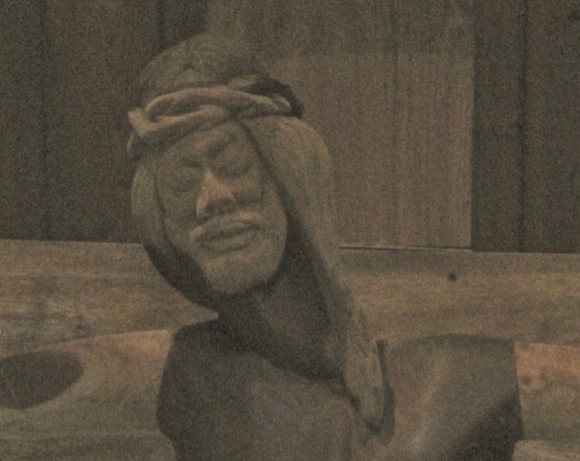
Crucifix, St.Anselm Church

Yesterday I gave a presentation on preaching to the priests, deacons and lay ministers from the Bahamas at Emmaus Retreat Center in Nassau. Like John the Baptist, by our “voice’ in preaching and catechesis we point out the Word.

Preaching and catechesis should be an expression of our “personal search for the face of the Lord,” to use Pope Benedict’s words. We should let the scripture readings, the liturgy, the seasons, as well as the life of the people give us the material for our preaching and catechesis.

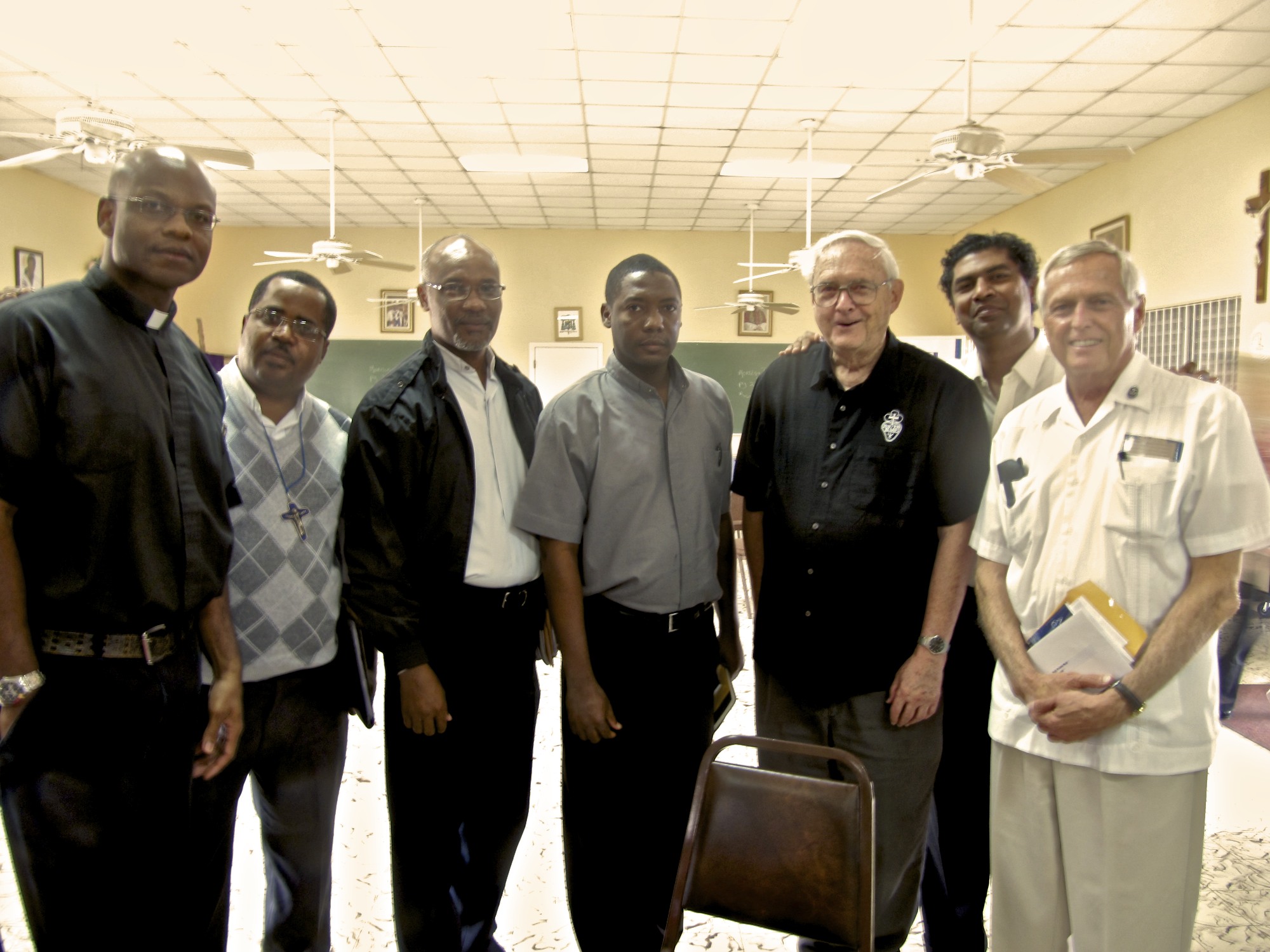
Those participating were from the Bahamas, Haiti, India and North America, reflecting the Catholic population here.

Afterwards, Fr. Tom and I visited St. Anselm’s church with its pastor, Msgr. Preston Moss. Only two years old, the church is in one of the earliest villages on the island and reflects its traditions and art.

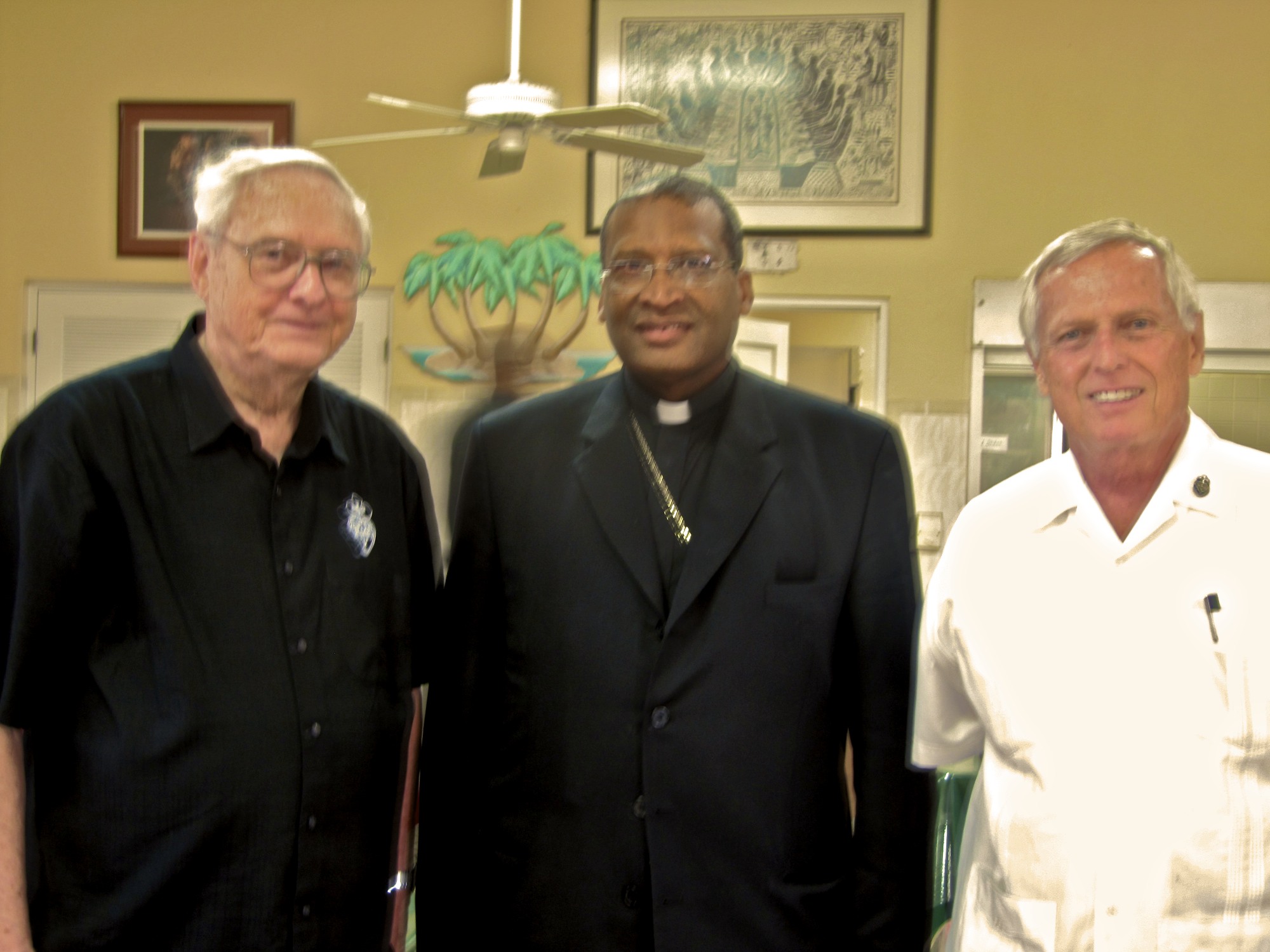
Archbishop Patrick Pinder and Passionists

St. Anselm Church

Vatican Radio

Vatican Radio  is one of my favorite Bookmarks. Not only do you find basic texts from Rome, like the pope’s talks at World Youth Day, but some great off-beat material too, like interviews with the delightful Carmelite Latinist for the Vatican, Fr. Reginald Foster. The turns and history of latin words can be fascinating and Fr. Reginald is never afraid to give you his own opinions. He’s a brilliant character.

Periodically, there are interesting short programs on music and the art of Rome too on Vatican Radio. One recent program about English hymns to the Sacred Heart made me aware of what that devotion is all about and how it has changed over the years. I’d also like to hear more from the Australian bishop who spoke recently about St. Paul the Apostle’s attitude towards women. You can download these short audio clips and listen to them again.

For this Sunday’s gospel, on the famous promise that Jesus makes to Peter at Caesaria Philippi you can’t do better than listen to Jill Bevilaqua’s 18 minute commentary. Wonderful blend of good history, music, good exegesis and fresh approach. Besides Bevilaqua, there are some other talented women you hear on Vatican Radio, like Philippa Hitchens and Elizabeth Lev.

Great site!