In his book ” Catholics in America, The Faithful,” ( Harvard University, 2010) James M. O’Toole, writes about Catholic history from Revolutionary times till the present. The church was largely a “priestless” church when our country began in the 18th century, O’Toole writes, “…early American Catholic lay people were very different from those who would come after them. The institutional presence of their church was always thin and uncertain. Priests and parishes were few in number and widely scattered. Catholics’ connection to their church was less than they might have thought ideal.”
That’ was the world of Elizabeth Seton and John Neumann– saints we’re celebrating in early January. So what kept a church going in “thin and uncertain” times ? O’Toole offers a lengthy analysis of the devotional and catechetical materials of the time and writes: “What scholars have come to call a ‘print culture,’ grounded in printing and distribution networks, supported the religious practice of Catholic lay people in the priestless age.” (p.33)
It looks like we are facing “thin and uncertain” times again as Catholic institutions, parishes, schools, religious groups decline, doesn’t it? What’s our version of a ‘print culture’ to be? What can we give to Catholics whose kids are not being baptized, not receiving religious formation, not going to church, whose neighbors are “spiritual but not religious,” who need an anchor themselves in these stormy times? I think we have to think hard about it.
We certainly need to look at social media, our new print culture. but let’s also not forget the old print culture – devotional prayerbooks without the “thees” and “thous”. In the past I noticed when I rode the New York subways how many people I’d see reading little prayerbooks. Now they’re glued to iPhones.
Besides our devotional tradition the liturgy of Vatican II is the treasure we need to look to . The lectionary, the feasts, the spirituality of the liturgy can give us what we need – if we can make it what it should be in the church of our day. How can we do it?
We will have what we need in our “thin and uncertain” times. God will provide, but we have to do something too.
Luke’s gospel today recalls in detail the birth of John the Baptist . “The hand of the Lord was with him. The child grew and became strong in spirit, and he was in the desert until the day of his manifestation to Israel.” (Luke 1:80)
Just as Luke recognizes the role of Mary and Joseph in the birth and raising of Jesus, he recognizes the role of Elizabeth and Zechariah in the birth and raising of John. Each help John grow and become strong in spirit. However lonely and independent he appears later in the gospels, John was influenced by them and the extended family that surrounded him from his birth.
Luke’s gospel often see one person’s fidelity influencing another. “The hand of the Lord was with him,” Luke writes, but human hands were on him as well.
John had faith like his mother Elizabeth who recognized the Spirit’s presence in her pregnant relation Mary visiting from Nazareth. John later would point out the Lamb of God among all those who came to the Jordan River for baptism.
He had faith like his father Zechariah who devoutly celebrated the mysteries of God in the temple of Jerusalem as a priest. At his birth, Zechariah signs away the gift of his name– and probably his hope that his son would follow in his steps. John would have a different calling. At the Jordan River, John called pilgrims to prepare the way of the Lord as they made their way to the temple and the Holy City, Jerusalem.
Undoubtedly, John was a unique figure, a messenger from God, a voice in the desert preparing the Lord’s way. But there were faithful people behind him, as they are behind us.
Don’t forget his relative, Mary of Nazareth. At the end of his account of her visit with Elizabeth, Luke mentions “Mary stayed with her for three months, then returned to her home.” (Luke 1:56) That would mean she stayed on till the birth of John, wouldn’t it?
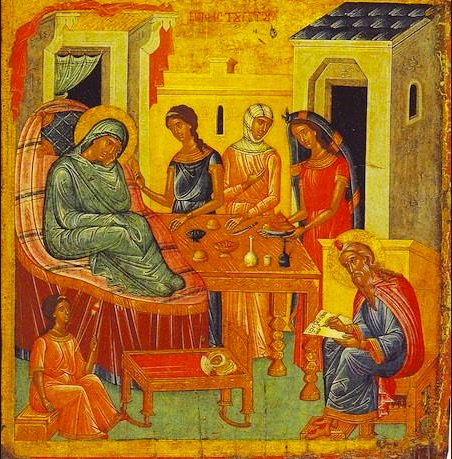
I don’t see Mary in the icon of John’s birth (above), but was she there? Were there other times too these families met? Artists portray the children playing together later. They could be right. We influence one another more than we think.
Saints are raised up by God to meet the needs of their time. What need did the 18th century world of St. Paul have ? The church of Paul’s day was weakened and humbled by politics, revolutions and new ways of thinking. The popes then were losing power and influence in Europe, the Jesuits were suppressed, revolutions like the French Revolution brought persecution, the suppression of church schools, religious houses, the confiscation of church assets. Some said the church was dying.
A humbled church needed to be reminded of the humble Christ, who took the form of a slave and died on a cross and was raised up by God’s power. That’s what St. Paul of the Cross did through his preaching and ministry. His message was a message the church of his time needed to hear. His message was of an abiding hope.
An “abiding hope.” That was the hope needed then. Most of Paul’s preaching and ministry took place in the Tuscan Maremma, a region north of Rome in Italy, the size of Long Island, NY. “Maremma” means swamplands. The Maremma was region of small towns and a few small cities suffering from chronic poverty and neglect. Only at the end of the 18th century did the region inch forward with some reforms. Ironically, Tuscany today is a tourist destination after Mussolini dealt with the swamplands in the 20th century. The world loves Tuscany now.
In Paul’s time, though, it was known for disease, poverty, beggars, the homeless, and bandits. Year after year things never got better. Year after year the future never got bright. Year after year Paul and his companions went from town to town, set up a cross in a church or town square and spoke of the “abiding hope” promised by Jesus Christ to the people who gathered to hear..
His preaching of the Passion of Jesus brought an abiding hope to them. God was with them, no matter how dark things were, or how long the darkness lasted.
Are we living in a church and a world like his today? I wonder, as we struggle with politics, pandemics, climate change, if we’re becoming like the Tuscan Maremma. Some say it will all be over when the political scene settles and wars are over and when science produces a new miracle that makes everything perfect. But I don’t know.
I think we are going to need an “abiding hope” to keep us going. I think the Passionists still have something to do.
May God send laborers into our vineyard. St.Paul of the Cross, pray for us.
In the United States October 20 is the feast of St. Paul of the Cross, founder of the Passionists. You can find more out about him and the Passionists here and here.
Today the Passionists celebrate the feast of St. Vincent Strambi, CP (1745-1824). In his early years as a Passionist priest Strambi was a well known preacher, writer and spiritual director. He was a close associate of St. Paul of the Cross and wrote his biography after his death.
He was chosen to be bishop of Marcerata during tumultuous years in Italian history when Napoleon moved to take over Italy, the papacy and the Catholic Church. Strambi was an heroic supporter of the pope and fought for the freedom of the church.
To understand most saints you have to understand the times in which they lived. They’re antidotes for the poison of their time. Unfortunately historians pay little notice to the challenging times Vincent Strambi lived in.
In 1789, following the French Revolution, a Reign of Terror struck the church in France, religious orders were suppressed, priests and religious were imprisoned, exiled, put to death. Word of the terror quickly reached Italy and Rome; the defenseless Italian peninsula would be the next target for France’s fierce revolution.
Pope Pius VI asked for prayers that Rome be spared, and he called on Vincent Strambi, then one of the church’s best preachers, to prepare the people for a blow sure to come. In packed churches and piazzas in Rome Strambi promised that God would not abandon his people. The Roman people gained strength from his words.
In 1796 Napoleon Bonaparte turned to Italy, demanding heavy tribute from the Pope and the Papal States. The murder of the French General Duhot in Rome gave him the pretext for invading the city, deposing and imprisoning the pope and declaring the Papal States a Republic.
Religious houses were suppressed, their goods systematically confiscated. Strambi, a well-known opposition figure, fled to Monte Argentario, a Passionist sanctuary on the Mediterranean Sea.
In 1799 Pius VI died in exile and was succeeded by Pius VII who, in 1801, appointed Strambi bishop of Macerata and Tolentino, two important cities in the Papal States along Italy’s Adriatic coast, poverty-stricken from years of political and military turmoil.
The bishops of the Papal States were largely responsible for temporal as well as spiritual affairs and Bishop Strambi became a champion of the poor in his diocese. He lived sparingly himself, without signs of wealth or position. The poor were constantly on his mind. “Don’t you hear the cries of the poor?” he said one day to the treasurer of his seminary, looking out his window.
The education of poor children interested him especially and he urged his priests to care for them. In sermons he constantly looked to the Passion of Jesus for wisdom in the struggles of the time. His devotion to the Precious Blood of Jesus was influenced, at least in part, from reflection on the bloodshed the Napoleonic Wars brought to millions in Europe. Almost 4 million died as warfare rose to a level never seen before. Their blood was precious to God.
On May 5, 1809, after occupying Rome and most of the Papal States. Napoleon declared the region under French control and the temporal power of the pope abrogated. On June 6, 1809 Pius VII placed notices on church doors throughout Rome excommunicating anyone cooperating with the French. July 6, the French general Radet arrested the pope and brought him north to Savona.
Napoleon then demanded bishops sign an oath of loyalty to his new government. Refusal meant exile and imprisonment, signing was an act of disloyalty to the pope.
“I am ready for prison and for death. I am with the pope,” Strambi declared. On September 28,1808 he left his diocese under guard for northern Italy where he remained for 5 years under house arrest.
After Napoleon’s defeat in 1814 the church’s exiled leaders returned. Bishop Strambi returned to his diocese in May, 1814; immediately the pope asked him to come to Rome to preach a nine day “retreat of reconciliation” in late July and early August. Not all met the French invasion heroically.
In 1816 a typhoid epidemic followed invading armies. Food shortages and inflation spread through the bishop’s diocese. He opened hospitals for the dying and sought supplies for his suffering flock.
Physically frail from birth, Bishop Strambi became increasingly ill and found it harder to manage his diocese. By 1814, the world too had changed. The Papal States had no bishops in the long chaotic period of the Napoleonic invasion and new forces demanding change came to power. Strambi recognized it was too much for him.
In 1823 he asked the new pope, Leo XII, to allow him to retire. The pope accepted his resignation on one condition, that he come and live with him as an advisor in the Quirinal Palace, then the pope’s residence in Rome. A local commentator said of the departing bishop: “ He was a man who lived a holy life, giving alms to all and content with only the necessary for himself. We are sorry to see him go, for we lose a good pastor. The cries of the poor are especially loud, for they lose one who cared for and sustained them.”
Vincent died in Rome on January 1, 1824, having offered his life to the Lord in place of that of the pope who was seriously ill.
Pope Leo ordered the process for his canonization 8 days after his death. He was declared a Saint in 1950 and his relics now rest in Macerata, the city where he was a zealous pastor for twenty-two years.
St. Vincent Strambi’s room, Saints John and Paul Monastery, Rome
With the help of the Holy Spiirt, I on my part will do all I can that the living image of Jesus crucified be imprinted in the hearts of each of you. I do this gladly, not counting the cost. I consider myself fortunate to give my lifeblood so that Christ might be formed in you. I can say, like the apostle, that because of my love for you, I want to share with you “not only God’s message, but our very lives, so dear have you have become to us.”
I urge you, then, to look attentively on the Image of the Crucified, the bishop of your souls, on his throne of grace. In that way I shall fulfill my obligation to announce to you the death of the Lord, an obligation arising from my profession in the Congregation of the Holy Cross and Passion of our Lord Jesus Christ. I shall do all I can to urge you all to fulfill your duty to love him who first loved us, who offered himself on the altar of the cross for us, who shed his blood for us.
( Letter to the people of Marcerata on becoming their bishop)
The founders of churches throughout the world have an important place in our church calendar, because they did what Jesus commanded: “Go out to the whole world and preach the gospel, baptizing them in the name of the Father and of the Son and of the Holy Spirit.” (Matthew 25 )
Church founders are apostles like Peter and Paul, founders of the church in Rome, (June 29), or monk-bishops like Boniface, founder of the church of the Germanic peoples, (June 5), Patrick, founder of the church in Ireland, (March 17) Ansgar, founder of the church in Scandanavia, (February 3), Cyril and Methodius, founders of the church in the Slavic nations (February14).
The church in Korea, whose founding we celebrate today, can be traced back to the 17th century. Its foundation is special, as Pope John Paul II noted at the canonization of the Korean Martyrs, May 6, 1984:
“The Korean Church is unique because it was founded entirely by laypeople. This fledgling Church, so young and yet so strong in faith, withstood wave after wave of fierce persecution. Thus, in less than a century, it could boast of 10,000 martyrs. The death of these many martyrs became the leaven of the Church and led to today’s splendid flowering of the Church in Korea. Even today their undying spirit sustains the Christians of the Church of Silence in the north of this tragically divided land.” – Pope John Paul II at the canonization of the Korean Martyrs, May 6, 1984.
A priest, Andrew Kim Taegon and a layman Paul Chong Hasang, head the list of 103 martyrs canonized in 1984, but the early Korean church was from the first a church of laypeople. Decades before those celebrated today, it was without priests or bishops. All lay people, they kept faith alive at great cost and offered it to others.
By its nature, the Catholic Church draws from its member churches the gifts God has given them. The church is the body of Christ. May our churches today, old and new, be blessed with lay people like those who founded the church in Korea.
The Second Vatican Council, 60 years or so ago, called for increasing the role of the laity in the Catholic Church. It seems to me that goal has still to be met, at least in my country.
“Once again, Jesus sends lay people into every town and place where he will come (cf.Luke 10:1) so that they may show that they are co-workers in the various forms and modes of the one apostolate of the Church, which must be constantly adapted to the new needs of our times. Ever productive as they should be in the work of the Lord, they know that their labor in him is not in vain (cf. 1 Cor.15:58).” (Decree on Laity, 33)
O God, who have been pleased to increase your adopted children in all the world, and who made the blood of the Martyrs Saint Andrew Kim Tae-gǒn and his companions a most fruitful seed of Christians, grant that we may be defended by their help and profit always from their example.Through our Lord Jesus Christ, your Son, who lives and reigns with you in the unity of the Holy Spirit, God, for ever and ever.Amen.
“At the sight of the crowds, Jesus’ heart was moved with pity for them because they were troubled and abandoned, like sheep without a shepherd.Then he said to his disciples, “The harvest is abundant but the laborers are few; so ask the master of the harvest to send out laborers for his harvest.” (Matthew 9, 34-38)
In every age, Jesus calls his disciples to speak to the troubled and abandoned crowds. In this 14th week of the year we have Matthew’s account of that first time Jesus called disciples to preach and enter his ministry. How should laborers in the harvest approach the troubled crowds today ?
In his 1977 novel “Lancelot” Walker Percy tells the story of Lancelot, a man confined to a prison hospital after setting fire to his beautiful ancestral home in Louisiana and murdering his wife and her lover. The man’s fed up with today’s world and turned against it, but he’s still trying to figure out what life’s all about. He’s on to something, one of Percy’s phrases.
An old priest visits him frequently in the prison hospital– his only visitor, it seems– and listens to him, but hardly says a word. That’s partially because Lancelot doesn’t think much anymore of the faith the priest represents.
Yet, the priest listens. Lancelot occasionally asks him if he understands. “Perhaps I talk to you because of your silence. Your silence is the only conversation I can listen to,” Lancelot remarks. Only as the book ends does he say to the priest: “Very well, I’ve finished. Is there anything you wish to tell me?”
In Pope Francis’ exhortation, “Gaudete et exultate”, there’s a wonderful exploration of holiness today. At one point, the pope says “Nor can we claim to say where God is not, because God is mysteriously present in the life of every person, in a way that he himself chooses, and we cannot exclude this by our presumed certainties. Even when someone’s life appears completely wrecked, even when we see it devastated by vices or addictions, God is present there. If we let ourselves be guided by the Spirit rather than our own preconceptions, we can and must try to find the Lord in every human life.” (42)
We’re sent as laborers for today’s harvest, but words may not be the only tools we have to use. Is silence, along with a persevering concern, ways to engage the troubled crowd today? The way of silence doesn’t mean we don’t have to search for the words to say today. We need to find out how the mysteries of the gospel speak in “new wineskins.”
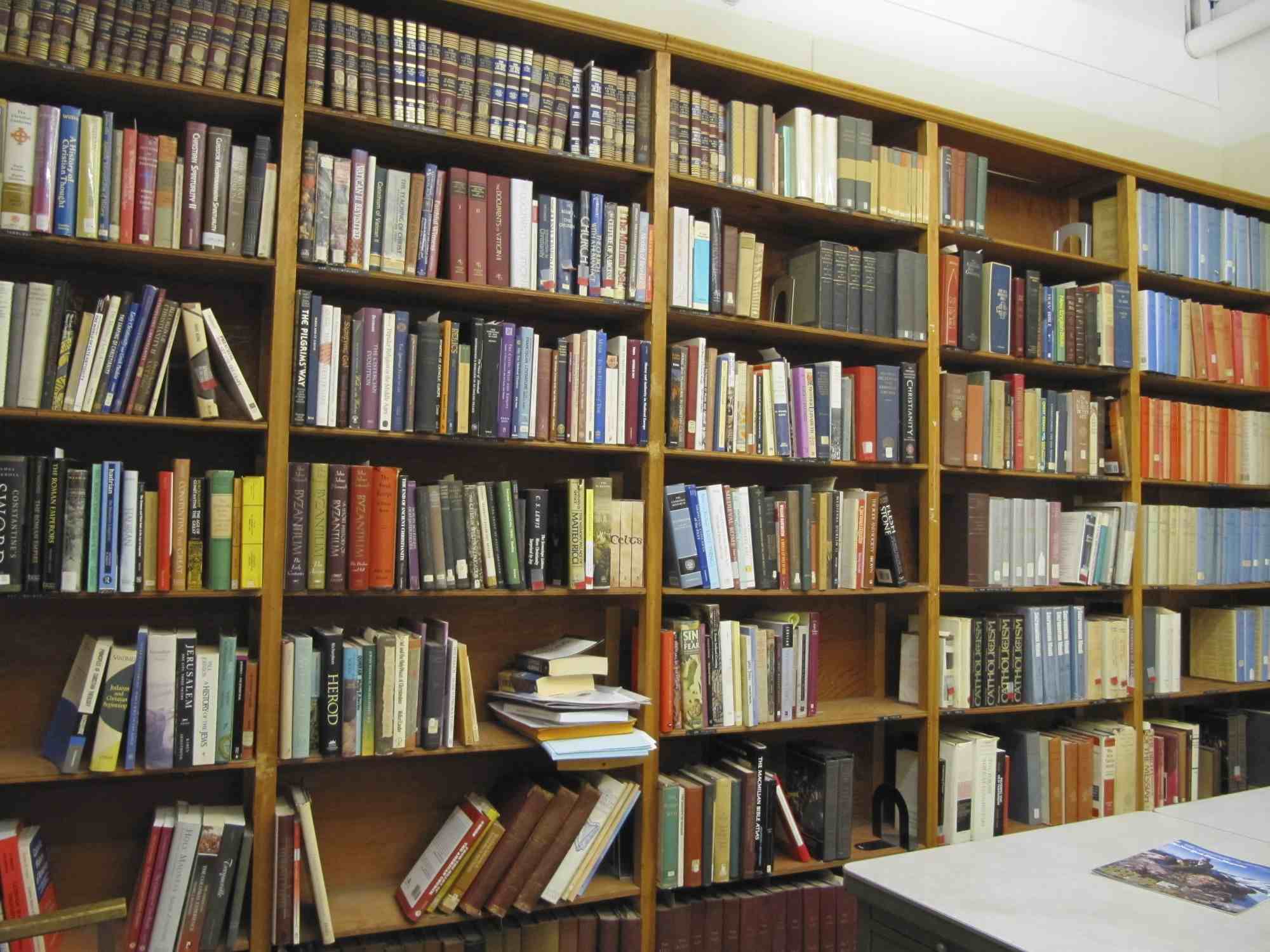
From time to time I like browsing through the large collection of books we have downstairs. Libraries, bookstores, now the internet, are treasuries and junkyards all at once. You never know when you’re going to stumble upon something that sparks questions or open your mind.
Awhile ago, I stumbled on a book called Pride of Place: The Role of Bishops in the Development of Catechesis in the United States, by Sr. Mary Charles Bryce. It’s a study of catechisms and catechesis in our country from the time of Bishop John Carroll, way back in the 18th century, to the 1980’s. How are we going to teach and form our people in faith? That’s the question they were asking then. It’s a question we face now.
Catechesis is on my mind lately. We’ve had a big development in theology and scripture and liturgy since the Second Vatican Council in the 1960s, but has that reached the ordinary people of the church, young or old? I think we need a better way to make the riches of our faith available to them. Catechesis is one of our prime needs as Catholic schools decline and dioceses, parishes, religious orders and their resources diminish.
“Pride of Place” Sister Bryce called her book, a title from an old pastoral letter of the American bishops on catechesis. Not a bad priority for the church today. How are we going to pass on the faith we have received in our time. What are the words and ways we’re going to use? Pope Francis in his recent letter Desiderio Desideravi calls us to see the liturgy as a catechetical school.
The Eternal Word needs to become incarnate from age to age:
“For last year’s words belong to last year’s language And next year’s words await another voice.” (T.S. Eliot)
We need to renew our liturgical life. We need good catechetical sites online and there’s still something to be said for the books in our library downstairs. They were gathered by people before me, who were wondering about things as I am now. Someone recognized Sister Bryce’s book was a good book to hold on to.
Reading the scriptures daily and on Sundays in the lectionary and the Liturgy of the Hours is one of the great reforms begun by the Catholic Church after the Second Vatican Council. It’s an effort to seek renewal through the Word of God, yet after 60 or so years we’re still getting used to it. Not too many individuals or parishes or other groups in the Catholic Church focus on it, in my view.
Early Christianity saw the scriptures as daily bread. Today we may think the scriptures old and and not up to offering wisdom to our age. More than ever, we have to trust if we search for “the face of God” in scripture we will find it there.
“If today you hear his voice, harden not your hearts.” The daily scriptures are daily bread, but they may not be easy to digest. We go from Matthew, preoccupied with the tensions of his church with Pharisaic Judaism, to Luke preoccupied with an outreach to the gentiles, to the other New Testament writings, each with its own purpose.
Then there are the various readings of the Old Testament. They can be hard to understand, but the church wisely keeps them side by side with the New Testament. They hold a treasure all their own. We need to understand them better.
We need help to appreciate this daily bread, this varied diet served up. We need people like those hosts on the cooking shows on television who not only tell you what to eat but make those strange dishes appetizing and appealing. We need good homilists and good catechists.
We need a “lamp, shining in a dark place.” So we ask: Come, Holy Spirit, fill our hearts with your light.”
At Mass today we hear St. Paul reflecting on his life in his Second Letter to the Corinthians. “We walk by faith and not by sight,” he says. You can look at yourself by faith or by sight. Obviously, some at Corinth are looking at Paul “by sight,” what they think he is, but Paul sees himself in another way, by faith.
“We are treated as deceivers and yet are truthful;
as unrecognized and yet acknowledged;
as dying and behold we live;
as chastised and yet not put to death;
as sorrowful yet always rejoicing;
as poor yet enriching many;
as having nothing and yet possessing all things.” ( 2 Corinthians 5,1-16)
Some in Corinth see Paul as a deceiver, a nobody, on his way out, beaten, sorrowful, poor, having nothing. Paul sees himself by another light. The NAB commentary on 2 Corinthians says that, though Paul speaks personally he assumes his experience is shared by other people of faith. We’re all called to walk by faith and not by sight.
And so, how do we see ourselves today?
Today, the 58th year of my priestly ordination, I’m beginning a Mission at St. Mary’s Church in Kingston, New York at 7 PM. It’s the last of the Revive Missions sponsored by the Archdiocese of New York that I’m taking part in.
Some would say the church is responsible for the ills of our world, it’s passing away, beaten, a sad thing, having nothing to say any more. But, Paul begins his reflections proclaiming “Now is an acceptable time. Now is the way to salvation.” So, “We walk by faith, not by sight.”
The death of Fidel Castro, Cuban dictator, brought joy to many and sadness to others. In Miami there were celebrations in the streets of Little Havana. In Cuba there were nine days of mourning. Many of my friends ask how I feel about the death of Fidel. I’m neither happy nor sad. As a Christian I don’t rejoice in someone’s death. What I do is put them in Your capable hands, my Lord. I’m no one to judge!
I’ve been praying for Fidel’s soul. Unfortunately I can’t forget that because of his political views and cruel policies generations lost their country and way of life. Torture, executions, imprisonment, all took place if you dared to disagree with any of his policies. Freedom no longer existed. Indoctrination began! Your churches, Lord, were closed. Prayer and religion were no longer necessary, we now had Fidel.
My mother decided that she needed to leave Cuba for my sake and her own. In 1962 we became refugees. Thanks to the U.S., which opened its arms to us, we began a new life. It wasn’t easy, my God. Here we were penniless in a new land facing a new language and new obstacles. But with the help of family, the U.S. government, and the Catholic Church hope began to spring up and we survived.
We left Cuba, my God, afraid and without much hope. We left Cuba because one man lost his way and the need for power overwhelmed his ideals. Fidel did have wonderful ideals, but the dark side won, in his case.
I’ve been in the U.S. now for over fifty years. I’m in love with You, my Lord Jesus and I have to admit that happened here in the U.S.. Good things happened to most Cuban refugees. Most of us survived. We progressed. We lived full lives. But we never will know what could have been. The Cuba of today is nothing like the Cuba of yesterday. For some it’s very sad, for others it’s life. For me it is Your will, my God! May You, our Lord and Savior have the mercy on Fidel that he neglected to have for many of his people.



 The Victor's Place