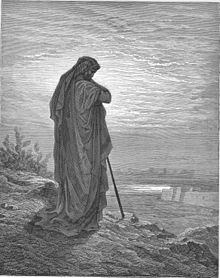
We’re reading from the Prophet Amos this week at Mass. His message to 8th century Israel is “one of unrelieved gloom,” one commentator says. Free from wars, Israel was far from gloomy. Its rich were getting richer and enjoying the “good life”, at the expense of the poor. The religious authorities said nothing. The only voice raised was the voice of a poor, uneducated farmer who cultivated figs, Amos.
Amos spoke for God: “I hate, I spurn your feasts…I take no pleasure in your solemnities…Away with your noisy songs! I will not listen to the melodies of your harps.” Destruction awaited a people unconcerned about the poor.
Still, God offers mercy to his people as we hear on Saturday in one of Amos’ most beautiful passages, echoes of which inspired Martin Luther KIng’s “I Have a Dream” speech:
“On that day I will raise up
the fallen hut of David;
I will wall up its breaches,
raise up its ruins,
and rebuild it as in the days of old…
Yes, days are coming,
says the LORD,
When the plowman shall overtake the reaper,
and the vintager, him who sows the seed;
The juice of grapes shall drip down the mountains,
and all the hills shall run with it.
I will bring about the restoration of my people Israel;
they shall rebuild and inhabit their ruined cities,
Plant vineyards and drink the wine,
set out gardens and eat the fruits.
I will plant them upon their own ground;
never again shall they be plucked
From the land I have given them,
say I, the LORD, your God.” (Amos 9,11-15)
A beautiful definition of mercy. God comes to humanity at its worst, in its sham, its blindness, its evil, and raises it up again. Mercy does not depend on merit. It’s God loving us in spite of ourselves.
We see mercy best as it’s exemplified in the Passion of Jesus. In spite of hypocrisy and injustice, God offers his love to heedless humanity and the promise of a kingdom.
To listen to today’s homily, please select the audio file below:
The last two Sunday’s our first reading has been from the Prophet Amos. Today’s reading from Amos is linked to the story that Jesus tells in Luke’s gospel. He speaks of a rich man living very comfortably, living luxuriously, who can’t see the poor beggar, Lazarus, outside his door. God judges him severely.
Having these two readings together, we can understand why some people in Jesus’ time thought he was a prophet. Jesus’ message about the poor was like that of the prophets. We can see also how important social justice is in the gospel. We can’t have religion without justice. Religion without justice is an affront to God who wishes all his children be justly cared for and loved.
Let’s take a look, first, at Amos, the prophet. Amos was ordinary sheepbreeder, he bred sheep in northern Israel about 700 years before Christ. In his time Israel was very prosperous and so were the countries around her, Syria, Phoenicia, Egypt, but their prosperity came at a price. They had everything they wanted–at least, the elite of those societies had everything they wanted. More often than not, though, their prosperity came at the expense of the poor.
In our readings these last two Sunday’s you hear Amos’ severe indictment, not only of the people of Israel, but of her neighbors as well. They’re trampling on the needy. He fiercely attacks those who are well off and don’t see the poor of the land.
“…lying upon beds of ivory, stretched comfortably on their couches,” eating the best food, drinking the best wines, not caring at all about those who are falling apart around them.
Amos was an ordinary sheep herder, but he knew what was going on, and he wasn’t afraid to say what he saw. He calls out everyone, kings, rulers, political people, priests, religious leaders, business people, anyone who’s cashing in on the needy and the poor of the land.
The Lord won’t forget what you have done, he tells them.
God won’t forget what you have done. Notice, the prophet doesn’t appeal to economics and say it’s not good economics to neglect the poor and have a society of “have’s and have nots.” No. The prophet doesn’t appeal to politics and say a fractured society isn’t good for a community; it’s going to lead to violence, riots, internal instability. No. The prophet doesn’t appeal to human good feeling and say that being good to the poor will help you feel better about yourself. No.
A prophet like Amos sees the world through God’s eyes and God’s values. That’s who the prophet is: one who sees the world through God’s eyes and God’s values. “Your kingdom come. Your will be done.” The goods of this world are not just for some people, for the few. This world is God’s world, and it’s meant for the good of all. That’s what the prophets say. That’s what the saints say, saints like Mother Theresa say the same thing. They see the world through God’s eyes and God’s values. That’s what social justice means, it’s justice for all.
That’s what Jesus says in his parable today. Notice, Jesus doesn’t say much about the rich man who’s dressed well and eats well. He doesn’t tell anything about the house he lived in, or his status in society or the way he got his money, or his wealthy friends, or where he spends his vacations. No. In fact, he doesn’t even tell us his name.
The only name Jesus offers in the parable is the poor man’s name, Lazarus, who has the same name as the man Jesus raised from the dead. How different too that is from our society, which knows the names of all the rich and famous and forgets the names of the poor.
We need to listen to prophets and saints. We need to listen to the teaching of Jesus in the gospel. We need to see things right. We need to see this world as God sees it.
And we need to act justly in our world, justly to all.
As our young people begin school we pray for them, but let’s not forget to pray for good teachers for them. When I entered my community, The Passionists, in 1950, I was fortunate to have a teacher who went on to become one of the leading figures in the environmental movement. His name was Father Thomas Berry. You can find information about him on Wikipedia. He died in 2009.
I remember the first day he came into class with a stack of booklets in his hands. “We have to know what’s going on today in the world,” he said, “and so we’re going to study The Communist Manifesto.”
Now remember, this was 1950. Senator Joe McCarthy had begun a witch-hunt to root out Communist sympathizers and I think The Communist Manifesto was on the church’s list of forbidden books. We studied it.
Fr. Tom never mentioned Joe Mc Carthy or the threats of a Communist takeover in Europe or what was happening then in China. No, he was interested in where the Communist Manifesto came from. Beyond Karl Marx and Lenin, he traced it back to the Jewish prophets and their demands for justice for the poor and human rights. Probably the prophet with the strongest voice against injustice to the poor was the prophet we hear in our first reading today: the Prophet Amos.
Amos was sheepbreeder, he bred sheep in northern Israel about 700 years before Christ. In those days Israel prospering and so were the countries around her, Syria, Phoenicia, Egypt, yet prosperity came at a cost. They were getting everything they wanted–at least, the elite of those societies were getting everything they wanted– and more often than not it was at the expense of the poor.
You can hear Amos’ indictment, not only the people of Israel, but her neighbors as well, for trampling on the needy and destroying the poor of the land.
“When will the new moon be over,” you ask,
“that we may sell our grain,
and the sabbath, that we may display the wheat?
We will diminish the ephah,
add to the shekel,
and fix our scales for cheating!
We will buy the lowly for silver,
and the poor for a pair of sandals;
even the refuse of the wheat we will sell!”
Amos was an ordinary sheep herder, but he knew what was going on, and he wasn’t afraid to say what he saw. A prophet calls out everyone, kings, rulers, political people, priests, religious leaders, business people, anyone who’s cashing in on the needy and the poor of the land.
The Lord won’t forget what you have done, he tells them.
God won’t forget what you have done. Notice, the prophet doesn’t appeal to economics and say it’s not good economics to neglect the poor and have a society of “have’s and have nots.” The prophet doesn’t appeal to politics and say a fractured society isn’t good for a community; it will lead to or to violence, riots, internal instability. The prophet doesn’t appeal to human good feeling and say that being good to the poor will help you feel better about yourself. No.
A prophet like Amos sees the world through God’s eyes and God’s values. “Your kingdom come. Your will be done.” Saints like Mother Theresa do the same thing. They see the world through God’s eyes and God’s values.
That’s why we need to listen to prophets and saints. They help us see things, even the complicated things, right.
 The Victor's Place