22nd Week: Readings and Feasts

SEPTEMBER 4 Mon Weekday 1 Thes 4:13-18/Lk 4:16-30 

5 Tue Weekday 1 Thes 5:1-6, 9-11/Lk 4:31-37 

6 Wed Weekday Col 1:1-8/Lk 4:38-44 

7 Thu Weekday Col 1:9-14/Lk 5:1-11 

8 Fri Nativity of Mary Mi 5:1-4a or Rom 8:28-30/Mt 1:1-16, 18-23 

9 Sat USA: Saint Peter Claver,  Col 1:21-23/Lk 6:1-5 

10 SUN TWENTY-THIRD SUNDAY  Ez 33:7-9/Rom 13:8-10/Mt 18:15-20 

This week we begin reading from the Gospel of Luke and continue with Luke till the beginning of Advent. Luke takes the account of Jesus in the synagogue of Nazareth from Mark’s gospel (Mark 6:1-6), a story summarizing the whole ministry of Jesus in Galilee from Mark’s gospel (Mark 6:1-6), and puts it at the beginning of Jesus Galilean ministry. Initially he was received favorably, then rejected violently. Here’s the Introduction to Luke’s Gospel from the New American Bible.

Readings from I Thessalonians end Tuesday with Paul’s teaching on the last days. Then we begin the Letter to the Colossians.  Good introduction and notes from the American Bible .

St. Gregory the Great, September 3, is one of the most important popes in the history of the church and one of its great spiritual teachers. A “Servant of the Servants of God.” This year we don’t celebrate his feast because it falls on a Sunday. At a time the Roman Empire was falling apart, Gregory not only kept the church afloat but reached out to peoples afar to bring them the gospel. Reminds me of Pope Francis and his visit to Mongolia.

St. Peter Claver reminds us of the slave trade and its terrible consequences for millions of people.

Friday is one of Mary’s major feasts, her Nativity. Mary’s birth is one of three important births celebrated in the Roman calendar: the birth of Jesus (December 25), John the Baptist (June 24) and Mary (September 8). Though her birth is not mentioned in the scriptures, an early tradition of the Jerusalem church says she was born near the temple and the pool of Bethsaida (John 5, 1-9), where the church of St. Ann stands today. As far back as the 5th century a feast celebrated her birth there. By the 8th century the feast was also celebrated in Rome. Today it is celebrated by churches of the east and west. 

The family record of Jesus Christ from the Gospel of Matthew (Matthew 1,1-23) is the principal reading for this feast because Mary completes “the book of the genealogy of Jesus Christ, the Son of David.” She conceives by the Holy Spirit and gives birth to him who is “God with us.” Generations awaited the Word who became flesh. Her birth is the “daybreak of salvation for all the world”  (Prayer after Communion)

“Mary the dawn; Christ the perfect day.”
22nd Sunday a: Common Sense

For this week’s homily please watch the video below.

Woe to Us Too!

Woe to Us Too!

We’re reading from the 23rd  Chapter of Matthew today, always a tough section to talk about.

One benefit modern scriptural studies give us– and we should be thankful for it– is a better understanding of the past. For instance, as we read from the 23rd chapter of Matthew’s gospel today, it helps to understand the times they were written. Otherwise, we can get a distorted picture of the people whom Jesus loved, the Jews, whom he seems to condemn exclusively in our gospel today.

Matthew’s gospel was written in Syria or Galilee about 40 or 50 years after Jesus had died and rose again. By then, relations between his followers and the followers of the Pharisees had soured as Pharisaic Judaism tried to pull together Jewish life after the terrible destruction of Jerusalem and its temple in 70 AD.

Relations between the two groups were not amicable, to say the least, and as we know, when tempers flare, words can become unfair.

We’re hearing some unfair words in Matthew’s gospel today. Matthew’s sharp polemic, says Rudolf Schnackenburg, a modern commentator on the gospel, “does not really do justice to the conduct of the scribes and Pharisees, not even for the time of alienation between Judaism and Christianity.“ In other words, Matthew’s exaggerating the faults and weaknesses of his opponents.

So, should we ignore these powerful “woes” Jesus speaks? Better, perhaps, to apply them to a wider audience than Matthew does. The 19th century British historian Lord Acton famously said, “Power tends to  corrupt, and absolute power corrupts absolutely.” He was speaking about the temptation that affects anybody in power to use it for his or her own aims.

Matthew’s woes apply just as well to Christians and their leaders. They can be hypocritical, proud and opinionated too. Instead of hearing Jesus’ words meant only for others, then, let’s hear them meant for his followers–and ourselves as well.

Woe to us too!

God doesn’t demonize

We’re reading Paul’s Second Letter to the Thessalonians and the Gospel of Matthew this week at Mass. Paul’s letter was written about the year 55 AD, 20 years or so after the death and resurrection of Jesus. The Gospel of Matthew was written about the year 85 AD, some 40 years later.

Paul’s letters illustrate his practice of going first into Jewish synagogues to preach the gospel. Before his conversion to Christianity, he went to the synagogues as a Pharisee to pursue and arrest Christians. Now members of the Pharisaic movement sharply confront him..

The Gospel of Matthew reflects this same confrontation. Matthew’s gospel was written at a highpoint of Jewish-Christian controversy, after the destruction of the temple in 70 AD.  Passages from the 23rd chapter of Matthew’s gospel would lead you to think that the Pharisees were Jesus’ fiercest enemies.

In reality, a number of Pharisees, like Nicodemus and Paul himself, became his most important followers, The Pharisees were certainly antagonistic to Jesus in his lifetime; he was angry with them for their blindness to him and his message, but he didn’t see them as mortal, eternal enemies.

We have to read the scriptures with an eye on the time they were written; It helps us understand the hot rhetoric we hear in Matthew’s reading for today.

What lesson can we learn from learn from readings like these? Don’t demonize your enemies. God doesn’t do that and neither should we.

That’s an important lesson to remember today as we look at the Muslim world. Jesus didn’t demonize people; he turned to the thief on the cross, he told the story of a prodigal son, he received back the disciples who abandoned him.,

When we bring the bread and wine to the altar at Mass, we bring to God all of creation, not just a part of it. “Blessed are you, Lord God of all creation,” we say. All creation is God’s creation. He wishes to bless it and see it at peace and harmony. God wishes us to see things as he see them.

God doesn’t demonize.

Monica’ Last Days at Ostia

In a beautiful section of his Confessions St. Augustine describes his mother Monica’s last days at Ostia, the seaport of Rome, where they were preparing to sail for their home in Africa. Monica, taken sick, was on her way to another homeland.  

The two of them were “leaning against a window looking out on a garden…inquiring what you are and what the eternal life of the saints would be like, for ‘Eye has not seen nor ear heard no human heart conceived it’”

“For my part, my son, I no longer find pleasure in anything this life holds,” his mother said, “ What I am doing here still, or why I am still here, I do not know, for worldly hope has withered away for me. There was only one thing I desired to live for in this life: to see you a Catholic Christian before I died. And my God has granted this to me more lavishly than I could have hoped, letting me see even you spurning earthly happiness to be his servant. What am I still doing here?”

Shortly after, Monica fell unconscious from the fever. 

She revived and said to Augustine and his brother at her side, “You are to bury your mother here”. 

“It would be better for you to be buried in your own homeland,” his brother said to her.

 “‘What silly talk!’ she replied, ‘Lay this body anywhere, and take no trouble over it. One thing only do I ask of you, that you remember me at the altar of the Lord wherever you may be.’ 

“Having made her meaning clear to us with such words as she could manage, she fell silent, and the pain of the disease grew worse.”

His mother’s death was a graced time when they drank in their thirst from “the fountain of life which is you”, Augustine wrote.  

21st Week: Readings and Feasts

AUGUST 28 Mon St Augustine 1 Thes 1:1-5, 8b-10/Mt 23:13-22 

29 Tue  Passion of John the Baptist 1 Thes 2:1-8 /Mk 6:17-29 

30 Wed Weekday 1 Thes 2:9-13/Mt 23:27-32

31 Thu Weekday 1 Thes 3:7-13/Mt 24:42-51

SEPTEMBER 1 Fri Weekday 1 Thes 4:1-8/Mt 25:1-13 (Day of Prayer for Creation)

2 Sat Weekday[BVM] 1 Thes 4:9-11/Mt 25:14-30 

3 SUN 22ND SUNDAY  Jer 20:7-9/Rom 12:1-2/Mt 16:21-27 

This week we’re leaving the Old Testament to read from Paul’s Letter to the Thessalonians, which may be the earliest writing of the New Testament. We’ll be reading from Thessalonians most days till next Tuesday.

About 4 scripture readings in our morning and evening prayers are from Thessalonians, so this is a good time to deepen our understanding of this book of scripture.

We’re also leaving Matthew’s gospel at the end of this week; next Monday we start reading weekdays from Luke’s Gospel. Every year we follow this same schedule of gospel and scripture readings. Why the repetition?

We’re deepening our understanding of the scriptures through deep reading. Deep reading is different than reading for facts. Some of our learning, like learning from the gospels, from prayers and saints, takes time. We learn little by little. We are slow learners. 

Deep reading applies to the way we’re called to read and listen to our prayers. It also applies to the saints, especially to important saints, like St. Augustine, whom we recall each year.

Finally, deep reading also applies to the events and situations of our day. That’s why we celebrate a Day for Creation this Friday, September 1st. We need to see creation and other issues in a deeper way than a scientific way. From September 1 to October 4, the Feast of Francis of Assisi we’re celebrating with other Christians a Season of Creation.

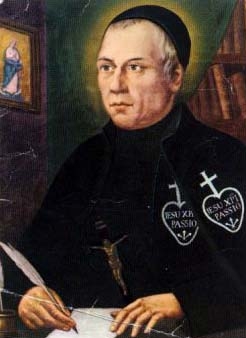
Blessed Dominic Barberi

img-Blessed-Dominic-Barberi

August 26th,  the Passionists remember one of their great missionaries, Blessed Dominic Barberi, born in Viterbo, Italy, in 1792. Early on, God inspired him to be a missionary to England. The desire to work for Christian unity grew after Dominic entered the Passionist community, where he taught theology and was a spiritual director.

In 1840, Dominic left Italy to bring the Passionist community to Ere, Belgium. In 1842, he went to England and became a popular preacher of missions and retreats, establishing a Passionist retreat at Aston Hall, near Stone. Initially,  he tried to engage the leading religious scholars at Oxford in dialogue. The Industrial Revolution was changing that country, however, and thousands of poor Catholic immigrants from Ireland and England were flocking to the great English factory towns, fleeing poverty and looking for work. Priests were needed and Dominic, though he never spoke English well, tirelessly preached and ministered to them.

Dominic never got his wish to engage the learned scholars of England as a lecturer at Oxford, but he was noticed by them all the same. One of  England’s greatest intellectuals, John Henry Newman, was attracted to Dominic, not by the religious tracts he sent to him, but by his zeal and humility. Newman was looking for those qualities in the Roman church at the time.

“If they want to convert England,” Newman wrote earlier, “let them go barefoot into our manufacturing towns, let them preach to the people like St Francis Xavier–let them be pelted and trampled on, and I will own they do what we cannot…Let them use the proper arms of the Church and they will prove they are the Church.”

Dominic, humble, zealous and faithful, used the proper arms of the Church of his time, popular missions and retreats which stressed basic catechesis and devotional prayer. They were the primary way the Roman Catholic Church reached out then to the peoples of Europe and also the Americas.

When Newman decided to enter the Catholic Church, he asked for Father Dominic Barberi to receive him. He said he was Dominic’s “convert and penitent”.

Domenic died in Reading, near London, England on August 27, 1849. His grave in Sutton, St. Helens, England is a place of pilgrimage for the English people. Pope Paul VI declared him “Blessed” on October 27, 1963 during Vatican II, calling him an example of ecumenism and an apostle of unity.

Lord, you sent Blessed Dominic to seek out the lost sheep of your flock by preaching your truth and witnessing to your love.

May we follow his example and build up the unity of your Church as a sign of faith and love. Through our Lord Jesus Christ, your Son, who lives and reigns with you in the unity of the Holy Spirit one God, for ever and ever.

Longer biography here:

Writings of Blessed Dominic can be found here.

Remembering Mary

This daughter of Jerusalem is lovely and beautiful as she ascends to heaven like the rising sun at daybreak.           
Canticle Morning Prayer


It wasn’t unusual in the liturgy in the past to have an octave following a major feast and for 8 days to continue celebrating and reflecting on this mystery of faith. After all, we’re slow learners.

We celebrated the Feast of the Assumption last week, and as a slow learner I’m still thinking about it.

I recall that Carl Jung, the famous Swiss psychiatrist and psychotherapist, an unbeliever, saw tremendous implications in the promulgation of the Dogma of the Assumption by Pius XII on November 1, 1959.

Those were dark days for humanity.  World War I ended in 1918 after four years of bloody conflict when millions perished. Millions more were killed during World War II ending in 1945.We witnessed the tragedy of the Holocaust.

Before the Feast of the Assumption we recalled two saints who died in Auschwitz during that time: St. Teresa Benedicta, Eiith Stein, the Jewish convert to Catholicism and St. Maximilian Kolbe, the Polish priest who gave his life for a companion in the camp.

The times are still dark. Conventual war and nuclear weapons still threaten the human race and the planet. Other threats are joining them now. Climate change, for example, is now part of our dark picture. And if that were not enough, we have the scandal of sexual abuse in our own church shaking an institution that should bring hope and wisdom and stability to our world.

The Assumption of Mary is a mystery of God to hold onto. She is a sign that God sees human life and creation itself sacred. When Jesus was raised from the dead, he brought a promise of life to humanity and all creation.

Mary is among the first fruits of his resurrection. She too was raised up, body and soul. Her Assumption has tremendous implications for our salvation and the salvation of our world. She’s a sign that God reaches into the darkness of death, in all its forms, and brings life.

The Feast of Mary’s Assumption is the oldest and most important feast of Mary in our church calendar. We planted a Mary Garden in our garden a few years ago. We need to remember Mary.

“Barbarized by Continuous Wars”

The Jewish Encyclopedia describes the period of the Judges, the period we’re reading about this week in our lectionary, in this way:

“Israel remained for some time a rough people, barbarized by continuous wars. Sword law and the vendetta reigned supreme. Neither expeditions undertaken for pillage and plunder (comp. Judges xvii. et seq.), nor treacherous dealings with the enemy, as practiced by Samson, nor assassinations, as those committed by Jael and Ehud, gave offense; and even the lives of those nearest and dearest were sacrificed to satisfy a vow, as in the case of Jephthah.”

“Barbarized by continuous wars.” War became the only way to settle things at this time, and that led to warrior leaders, some more measured than others. The allegory of the trees which we will hear tomorrow from the Book of Judges ends with the buckhorn tree ruling over the people. That’s Abimelech, the vicious son of Gideon, who kills anyone in his way and, in turn, suffers a violent death.

The Book of Judges was an admonition to the Jewish people to beware of seeing war and violence as a way of life. It creates a barbarous society. It’s a way to death.

An admonition to us too?