“Hail Holy Queen, mother of mercy, our life, our sweetness and our hope.” Why is Mary called “mother of mercy?” First of all, because she knew she had received the mercy of God which, like the oil poured on kings and priests, gave her power “to fulfill what is beyond human capabilities.” (Anthony Bloom)
Her cousin Elizabeth declared her “blessed among women and blessed is the fruit of your womb.” Mary’s responded: ‘The Lord who is mighty has done great things to me, holy is his name.” She knew God’s mercy was a work in her to restore the human race. (Luke 1, 43-48)
How, then, was Mary merciful? How did she do what Jesus taught “Be merciful as your heavenly Father is merciful?” How did she live a merciful life? How did she do those works of mercy that tradition ascribes to the merciful person: • Feed the hungry • Give drink to the thirsty • Clothe the naked • Shelter the homeless • Visit the sick • Visit the imprisoned • Bury the dead
• Admonish the sinner • Instruct the ignorant Comfort the sorrowful Bear wrongs patiently • Forgive all injuries • Pray for the living and the dead
The scriptures say hardly anything about her. “Do whatever he tells you.” she says at the marriage feast of Cana. She had no teaching of her own, but always points to the teaching of her Son. The mystery of the Incarnation says that Jesus took his human nature from Mary, his mother. Can we say he who became like us became like her and Joseph, the man who raised him as a child and into his adult years? From Jesus we can tell what Mary was like, a woman of mercy, and her first school was Nazareth. Now she is a teacher in the church.
The rosary is a prayer we say with Mary, the Mother of Jesus, who leads us into the presence of God and the mysteries of her Son.
“Hail Mary, full of grace” the angel said to her, inviting her to become the Mother of God. (Luke 1:28 ) Mary helps us know Jesus Christ as she did.
“Blessed are you among the women, and blessed is the fruit of your womb, Jesus” her cousin Elizabeth said to her when she came to visit. (Luke 1:42) Mary is ready always to visit with us.
“Pray for us sinners, now and at the hour of our death” we say to her. In the rosary, as we slowly repeat the words of her prayer and reflect on the mysteries of her Son. Mary helps us see our lives with faith and the promise of life to come. The mysteries of the rosary are our mysteries too.
The School of the Rosary
Tradition suggests we remember certain mysteries of Jesus while praying the rosary: the Joyful, luminous, sorrowful, and glorious mysteries. The rosary has been called a “School of Mary”, for she knows the mysteries of Jesus well and can teach them to us.
The Joyful Mysteries are found mostly in Luke’s Gospel 1-2.
The Annunciation of the Angel to Mary
The Visitation of Mary to Elizabeth
The Birth of Jesus
The Presentation of Jesus in the Temple
The Finding of Jesus in the Temple
The Luminous Mysteries are events in Jesus’ ministry found in all the gospels:
The Baptism of Jesus
The Wedding Feast at Cana
The Proclamation of the Kingdom
The Transfiguration of Jesus
The Last Supper
The Sorrowful Mysteries are events in his passion and death described in the gospels:
The Agony in the Garden
The Scourging at the Pillar
The Crowning with Thorns
The Carrying of the Cross
The Crucifixion
The Glorious Mysteries follow his resurrection, founds in the New Testament.
The Resurrection of Jesus
The Ascension of Jesus into Heaven
The Descent of the Holy Spirit
The Assumption of Mary into Heaven
The Crowning of Mary Queen of Heaven
As we say prayers on our rosaries, Mary quietly, gracefully, as a mother and wise friend, leads us into the presence of God and helps us see the mysteries of faith with her eyes; she knows them better than any scholar or follower of Jesus.
How to Pray the Rosary
There are many ways to say the rosary and reflect on its mysteries. The single beads of an ordinary rosary represent the Our Father, the prayer Jesus taught us to say. The series of ten beads represent the Hail Mary and the mysteries of Jesus Christ. The crucifix on the rosary reminds us to say the Apostles’ Creed, for the rosary is a prayer of faith.
The rosary is not a rigid prayer demanding it be said strictly word by word. It’s a prayer meant for us personally. It welcomes us as we are, unsure, joyful, sorrowful, looking for hope for what’s ahead.
Mary, the Mother of Jesus, is a woman who welcomes us as we are. “Pray for us, O holy Mother of God, that we may be made worthy of the promises of Christ. “
When to Pray the Rosary
The rosary can be an everyday prayer for some, and occasional prayer for others. On Sundays it can be a prayer for recalling the mysteries of the resurrection of Jesus; on Friday’s for recalling the mysteries of his passion and death.
Every week, day by day, the joyful, luminous, sorrowful and glorious mysteries can be remembered in the prayer..
The rosary is a prayer for Advent, when we remember we live in a waiting world, a world Mary knew so well. The Christmas season recalls the birth of Jesus in detail, the flight into Egypt, the slaughter of the Innocents, the return to Nazareth and the hidden years. “The Word was made flesh,” St. John writes. Mary received the Word as her only Son.
The seasons of Lent and Easter offer further revelations of God in Jesus Christ. Mary went up with him and his disciples from Galilee to Jerusalem. She was there when he was crucified; she stood beneath his Cross. Then, she witnessed his resurrection and the beginnings of his church. She understands the scriptures that speak of him.
Every month of the year a feast of Mary occurs on our church calendar, reminding us of her continual presence in the unfolding plan of God.
The Rosary is a beautiful prayer. It brings wisdom to us as our lives unfold with their joys and sorrows, contradictions and questions. “Hail Mary, full of grace.” “Pray for us, O holy Mother of God, that we may be made worthy of the promises of Christ.”
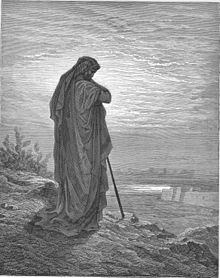
We’re reading from the Prophet Amos this week at Mass. His message to 8th century Israel is “one of unrelieved gloom,” one commentator says. Free from wars, Israel was far from gloomy. Its rich were getting richer and enjoying the “good life”, at the expense of the poor. The religious authorities said nothing. The only voice raised was the voice of a poor, uneducated farmer who cultivated figs, Amos.
Amos spoke for God: “I hate, I spurn your feasts…I take no pleasure in your solemnities…Away with your noisy songs! I will not listen to the melodies of your harps.” Destruction awaited a people unconcerned about the poor.
Still, God offers mercy to his people as we hear on Saturday in one of Amos’ most beautiful passages, echoes of which inspired Martin Luther KIng’s “I Have a Dream” speech:
“On that day I will raise up
the fallen hut of David;
I will wall up its breaches,
raise up its ruins,
and rebuild it as in the days of old…
Yes, days are coming,
says the LORD,
When the plowman shall overtake the reaper,
and the vintager, him who sows the seed;
The juice of grapes shall drip down the mountains,
and all the hills shall run with it.
I will bring about the restoration of my people Israel;
they shall rebuild and inhabit their ruined cities,
Plant vineyards and drink the wine,
set out gardens and eat the fruits.
I will plant them upon their own ground;
never again shall they be plucked
From the land I have given them,
say I, the LORD, your God.” (Amos 9,11-15)
A beautiful definition of mercy. God comes to humanity at its worst, in its sham, its blindness, its evil, and raises it up again. Mercy does not depend on merit. It’s God loving us in spite of ourselves.
We see mercy best as it’s exemplified in the Passion of Jesus. In spite of hypocrisy and injustice, God offers his love to heedless humanity and the promise of a kingdom.
For this week’s homily, please watch the video below.
We’re reading two miracle stories that Mark puts together in his Gospel.
The story of the little girl from Capernaum, who dies and rises from the dead is obviously the most spectacular. There are so many interesting details in this story. A little girl is dying. Her father, an official of the Synagogue named Jairus went to Jesus to ask that he put his hands on her and make her well. Before Jesus gets to the house, followed by a large crowd, the girl has died and word comes: it’s no use,
But Jesus tells them to have faith, the child’s not dead, but asleep, and they ridicule him. Jesus goes into the house with the girls’ father and mother and some of his own disciples. He takes the dead girl’s hand and says “Talitha koum” , Aramaic, the language Jesus spoke, which means “Little girl, get up..” ” The girl, a child of twelve, gets up and walks around.. Jesus says not to tell anyone, and then he says to them, give her something to eat.
The main lesson of the story is that Jesus has the power to raise us from the dead, yet you can hear in the crowd the human reaction. No, it’s not possible. This is a resurrection story.
Besides that big lesson, there are so many beautiful little details. “Talitha koum.” “Little girl get up. “Give her something to eat.”
Then, there’s the other story Mark wants us to hear. He interrupts the dramatic story of the little girl to tell us about a woman– she has no name– who has had hemorrhages for twelve years and spent all her money on doctors. Obviously she’s poor, broke and stressed out. She pushes through the crowd that’s on the way to Jairus’ house and touches Jesus cloak and is cured.
Jesus recognizes her and calls for her. “In fear and trembling” she approaches him. “Daughter,” Jesus says to her, “ your faith has saved you. Go in peace and be cured of your affliction.” To Jesus the woman is his “daughter,” like the daughter of Jairus. The woman who comes in the crowd, even if she seems like a nobody, is also someone dear to him.
Maybe Mark wants us to be aware that she represents the many ordinary people God loves and the many simple cures God works for them. You don’t have to be the daughter of a synagogue official. Someone known in the church. The power of Jesus goes out to all kinds of people in the crowd. Every one of us is known to him.
I read somewhere recently that the picture of the woman touching Jesus’ garment was one of the most popular pictures in the catacombs in Rome where early Christians buried their death. I wonder if her story reminded them that Jesus loved ordinary people too.
After the 2nd Vatican Council they published a catechism and the Vatican ask the publishers of the catechism to put the picture of the woman touching Jesus’ garments at the beginning of the section on the sacraments. The sacraments as the garments of Christ. When we touch them his power goes out to us.
It’s so simple, isn’t it? “Do to others what you would have them do to you. This is the law and the prophets.” (Matthew 7:14) They call it the Golden Rule, because it can be so broadly applied. Though it’s found among the teachings of Jesus in the Sermon on the Mount, it’s not only a Christian, or Catholic rule. It could apply to any religion, Moslem, Buddhist, Hindu, or for people with no religion at all.
It’s a rule that stands out among all the teachings of Jesus.
It’s more than a rule for individuals, a norm for personal conduct. If it were adopted by the community of nations, it would bring peace to our world, fairness to the way we live together. It would bring equality to our present unequal world. How could the strong exploit the weak, if they did to others what they would have them do to them?
“How would you like it if someone did that to you? How would you like it if someone thought that about you? How would you like it if someone wished that happen to you? It’s a rule so simple, yet we shy away from it from making it our own.
“Do to others what you would have them do to you.”
“The prayer continues: Thy kingdom come. We ask that the kingdom of God may appear to us, just as we ask that his name may be sanctified in us…We are praying that our kingdom, which has been promised to us by God, may come, the kingdom that was acquired by the blood and passion of Christ; and that we who started off as his subjects in this world may hereafter reign with Christ when he reigns, as he himself promised when he said: Come, you whom my Father has blessed, take up the kingdom which has been prepared for you from the beginning of the world.
We add: Thy will be done, on earth as it is in heaven. This is not that God should do what he wills, but so that we may be able to do what God wills. For who could resist God in such a way as to prevent him doing what he wills? But since the devil hinders us from obeying, by thought and by deed, God’s will in all things, we pray and ask that God’s will may be done in us. For this to happen, we need God’s good will – that is, his help and protection, since no-one is strong in and of himself but is kept safe by the grace and mercy of God. Moreover, the Lord, showing the weakness of the humanity which he bore, said Father, if it is possible, let this cup pass from me, and showing his disciples an example, that they should do not their own will but God’s, he went on to say nevertheless, let it not be my will, but yours.” St. Cyprian
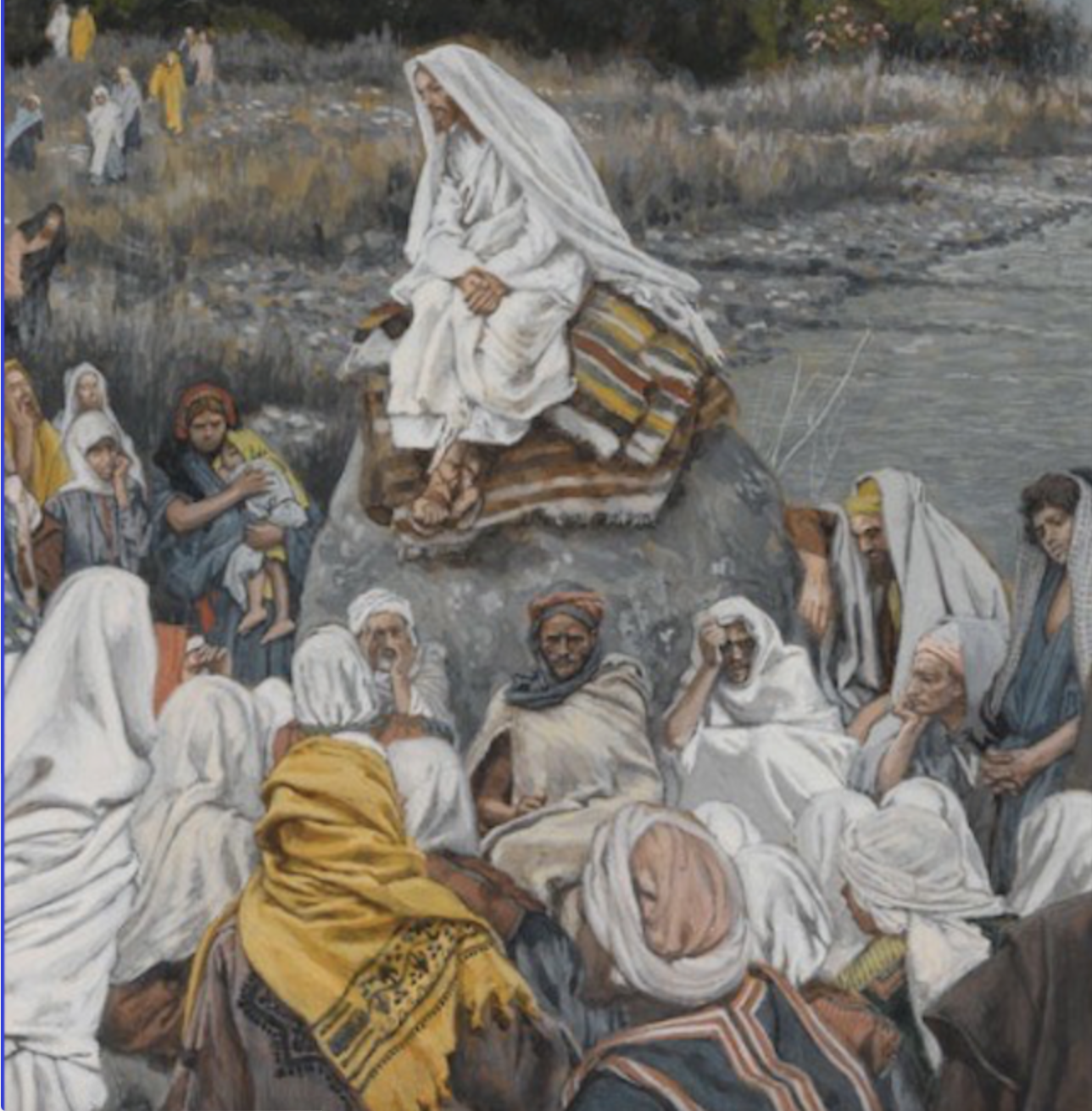
Jesus says in today’s gospel : “In praying, do not babble like the pagans, who think that they will be heard because of their many words. Do not be like them.Your Father knows what you need before you ask him.” (Matthew 6, 8)
Gerhard Lohfink in his book “The Our Father” notes that ancient Near Eastern prayers began with a long address to the god who was approached. An Akkadian prayer, for example, begins: “God of heaven and earth, firstborn of Anu, Dispenser of kingship, Chief Executive of the Assembly of the gods, Father of gods and men, Granter of agriculture, Lord of the air”.
“One senses that the forms of address had to be precise; otherwise the god would not listen. It’s not a simple matter to speak to him without making a mistake. Correct language and competence in praying are required. Above all, one must know the deity’s proper name.
Nothing of the kind in the Our Father! ‘Abba’ that’s the only address. It’s familial.”
The creed and other Christian prayers keep that address first. “I believe in God, the Father Almighty, creator of heaven and earth.” The Creator is our Father. The creed tells us what we as God’s children have received from our Father and what we are promised.
“We would not dare claim such a name in prayer, unless God himself had given us permission to pray this. And so, we should remember that when we call God our Father, we must live as children of God, so that whatever pleasure we take in having God for our Father, he may take the same pleasure in us.” (St. Cyprian, Commentary on the Our Father}
God doesn’t need many words from us; he hears us when we call “Father.”
How are liturgical prayer – the Mass, the sacraments, the liturgy of the hours– and devotional prayers like the rosary, the stations of the cross, and other spiritual practices related ? As we hear the teaching of Jesus on prayer this week, we need to consider this important question for understanding the prayer of our church today and how we should pray.
According to a 2001 church study on prayer liturgical prayer after the Council of Trent “entered a static period of substantial uniformity while popular piety entered a period of extraordinary development.” Devotional prayers like the rosary and spiritual exercises like novenas, parish missions and retreats “were seen as an important means of defending the Catholic faith and of nourishing the piety of the faithful…they still continue to nourish the faith and religious experience of the faithful.” At the approach of the Second Vatican Council ordinary Catholics, particularly in the western world, were deeply attached to the Catholic devotional tradition.
In pastoral practice, devotional prayers and the spiritual exercises that marked devotional Catholicism “were sometimes more important than the Liturgy and accentuated a detachment from Sacred Scripture and lacked a sufficient emphasis on the centrality of the Paschal mystery of Christ, foundation and summit of all Christian worship, and its privileged expression in Sunday.” (Directory on Popular Piety and Liturgy, Rome, 2001, 41)
The Second Vatican Council sought to restore and renew the prayer of the church in its constitution, Sacrosanctum Concilium. It envisioned the church’s liturgical prayer renewing the faith of its people and aiding the church’s outreach to the world and to separated believers. (SC 1) It also saw it more important than devotional prayer.
In the council’s program for reforming the church’s prayer, the transition from a church strongly attached to devotional tradition to a church praying through the liturgy received little attention, however. The council acknowledged popular devotions in one short paragraph: “Such devotions should be so drawn up that they harmonize with the sacred seasons, accord with the sacred liturgy, and are in some way derived from it, and lead the people to it, since in fact the liturgy is by its nature far superior to any of them.” (SC 13)
At the time of the council many believed the harmonization of the liturgical and devotional traditions would occur easily, but in fact that harmonization is still going on and will likely take time.
Some examples? The reformed liturgy, while emphasizing “its privileged expression in Sunday”, also emphasized daily prayer, the liturgy of the hours, a prayer rooted in the scriptures and flowing from the sacraments, especially the Eucharist. How many have made some form of the liturgy of the hours their daily prayer?
Our present church calendar offers a rich selection of the mysteries of Mary in feasts throughout the year corresponding to her mysteries recalled in the rosary and the church’s devotional tradition. I’m not sure we appreciate this treasury of prayer in our church calendar as much as we do the rosary.
Popular saints from the devotional tradition are also celebrated in the liturgy. Our church calendar is a wonderful way to study the saints. Do we use it?
The seasons of advent, lent and easter are times for deepening our understanding of the mysteries of Christ each year. Have they become ways for us to enter the mysteries of our Savior?
In the church’s liturgy, the ordinary Fridays of the year are days for recalling the Passion of Jesus, the ordinary Saturdays are days to keep Mary, the Mother of Jesus, in mind. The liturgical prayers and readings for these days have been chosen to recall their meaning. Have these days become holy for us?
Liturgical prayer roots devotions, devotional practices and prayers more deeply in the scriptures and in the spiritual experience of the church. The liturgical celebrations of Mary in our calendar reveal her place in the mysteries of Christ through the scriptures. The liturgical celebrations of the saints place them in the context of saintly companions who reveal other patterns of holiness from other times and places.
The liturgy brings us beyond the writings and revelations of mystics and visionaries and the devotions they made recommend. In calling for the spiritual restoration of Friday and Saturday, for example, our liturgy made every Friday and Saturday a First Friday or First Saturday, as it situates them in the light of the scriptures and the larger spirituality of the church.
So, say the Rosary, pray the Stations of the Cross, keep your other devotions? Keep our devotional tradition, the church says, but harmonize it with the liturgy and enter the prayer of the church.
We never finish the work of prayer and learning to pray. The Lord teaches us.




 The Victor's Place