Reading First Corinthians

We’re reading from the 1st Letter of Paul to the Corinthians for almost the next three weeks at weekday Mass. A long stretch for one of Paul’s letters in our lectionary. It’s an important letter because it gives us a view of what an early 1st century Christian community was like better than any other book of the New Testament. We may learn from it how to look at our churches and communities today.

The first thing you notice– this isn’t a perfect church. It has strengths and weaknesses, but its weaknesses seem more obvious than its strengths. That’s because Paul’s letter is written to correct abuses and answer questions that were troubling members of this church. What’s the first thing we might learn? Our churches will never be perfect.

But Paul does not begin the letter enumerating abuses, he speaks of the faithfulness of God, who is always at work purifying and strengthening his church.

Corinth was one of the great port cities of the Roman world, a melting pot for people and cultures of every kind. It had a reputation for moral depravity. Paul went there in the year 51, after visiting Athens where he tried with all his skill to bring the gospel to the Athenians. Evidently, his visit was disappointing. Moving on to Corinth, he went first to the Jews to announce the gospel, as he customarily did, but they turned him away. Then, gentile hearers mostly from the poorer elements of the city embraced the faith.

The situation caused Paul to reflect on what he has experienced. The church is a mystery of God. You can’t judge it by human wisdom or explain it in human terms. It’s God’s church, God’s community, and the Spirit of God is at work. It grows according to God’s plan, not human planning. His task, Paul realizes, is to discern what God wills as the work unfolds.

In Ist Corinthians we have Paul’s humble acknowledgment that, though he is founder of this church, he is a servant among many servants. Other teachers, Apollos and perhaps Peter, have labored in this church and factions have gathered around them. There’s a danger when human teachers take the place of God, Paul writes.

I planted, Apollos watered, but God caused the growth.Therefore, neither the one who plants nor the one who waters is anything, but only God, who causes the growth. He who plants and he who waters are one, and each will receive wages in proportion to his labor. For we are God’s co-workers; you are God’s field, God’s building. (1 Corinthians 3, 6-9)

We’re God’s field, God’s building. What’s God planting? What’s God building? Questions for us to ask.

The Gospel of Luke and First Corinthians Go Together

We’re reading Paul’s 1st Letter to the Corinthians and the Gospel of Luke together these days at Mass. The two may be more closely connected than we suspect. Luke wrote some years later than Paul, but his audience would be much like those found in the church of Corinth.

Theophilus, to whom Luke dedicates his gospel, could easily be one of Corinth’s better-off Christians, who surely  would recognize  the lack of concern for the poor that Jesus condemns in Luke’s gospel as present in his own community as well. That unconcern appeared at table, in the celebration of the Eucharist in the Corinthian church, and Paul condemns it. (1 Corinthians 11, 17-22) Luke presents Jesus, over and over, at table, condemning the same unconcern for the poor as well.

Luke begins Jesus’ ministry in Galilee with his visit to Nazareth (Luke 4, 16-30) where he’s not recognized by his own who know him too well and are ready to throw him to his death over the hill.

The Corinthians–how many we are unsure– fail to recognize the humble Savior whom Paul preaches. “I did not come with sublimity of words or of wisdom. For I resolved to know nothing while I was with you except Jesus Christ, and him crucified.” (1 Corinthians 2, 1-5)

In Luke’s gospel, Jesus is the teacher and Lord bringing God’s word to the towns of Galilee. He brings God’s word to Corinth as well, but the Corinthians are attracted to the various disciples of Jesus, causing “jealousy and rivalry among you…Whenever someone says, ‘I belong to Paul,’ and another,’I belong to Apollos,’ are you not merely men? What is Apollos, after all, and what is Paul? Ministers through whom you became believers, just as the Lord assigned each one.”

God plants and waters the growth of his church; the disciples are disciples, only disciples, who must have “the mind of Christ.” (1 Corinthians, 3, 1-9)

Luke has a church like Corinth in mind when he writes his gospel. How about our church too, as we take  sides. “I belong to…” Good to read these two readings together now.

Readings.

The Season of Creation: September 1-October 4                                                                                                                                                                                            

The Season of Creation begins September 1 with an opening day of ecumenical prayer and ends on the Feast of St. Francis of Assisi, October 4. In 1989 the Ecumenical Patriarch Dimitrios I proclaimed 1 September, start of the Orthodox Church year, a day for the Orthodox Church to pray for creation. The Orthodox church year begins on that day, with a reading from the Book of Genesis.

Later, the World Council of Churches recommended extending the celebration for a season, from September 1 until October 4, the Feast of St. Francis of Assisi.

 Pope Francis included the Roman Catholic Church in the celebration in 2015.

Christians throughout the world come together to renew their relationship with our Creator and all creation in this season through prayer, reflection and action.

We need to take action to care for creation, but as Pope Francis reminds us we need to begin by looking at creation in a deeper way:

“The best antidote against the misuse of our common home, creation, is contemplation. If someone has not learned to stop and admire something beautiful, we should not be surprised if he or she treats everything as an object to be used and abused without scruple Creation is not a mere ‘resource’. Creatures have a value in and of themselves and each one reflects in its own way a ray of God’s infinite wisdom and goodness. Its value and ray of divine light must be discovered and to discover it, we need to be silent, we need to listen, and we need to contemplate. Contemplation heals the soul.” 

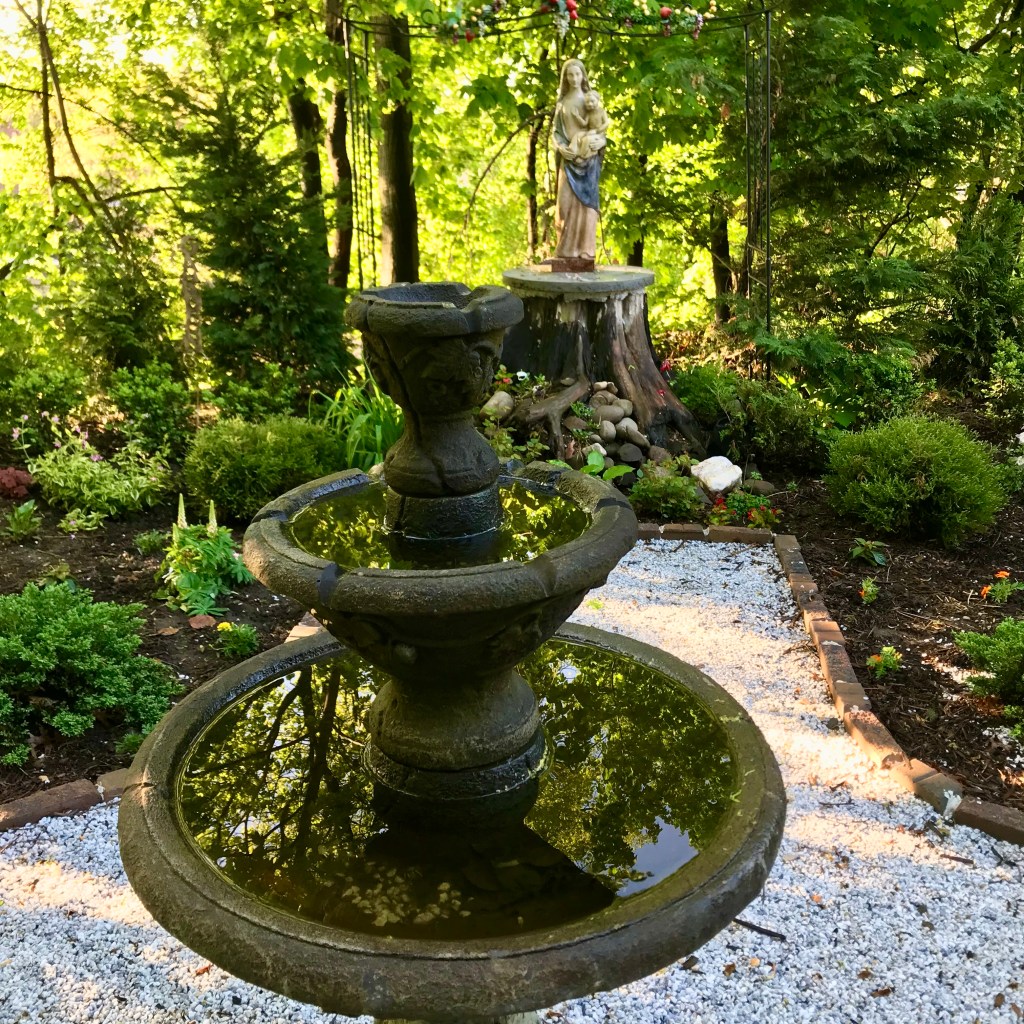
In our chapel we have a small Mary Garden the mirrors creation. Soil, rocks, a fern recalling the beginning of plant life 400 million years ago, an herb, Basil, and a flowering plant recalling the plant life that made possible the appearance of humans.

A statue of Mary with her Son holding in his hand a globe of the world stands in the midst of creation. The statue is from Kenya, a gift from Father Gilbert Omolo, CP.

Join the Passionists in celebrating the Season of Creation at https://www.passionistsolidaritynetwork.org

22nd Sunday b: Gifts

For this week’s homily please watch the video below.

Now and at the Hour of our Death

DSC00169

In the Hail Mary we ask Mary to pray for us sinners, “now and at the hour of our death.” These are the two most important moments in life. We have the past and the future, for sure, but they’re far less important than now and the hour of our death.

“Now” is the time we live in, the present moment. Whether it’s a time of joy or sorrow, a time of satisfaction or disappointment, a time of sickness or health, it’s the time we have to love, to give, to endure, to act, to live.

“The hour of death” is God’s time, when God brings us from this life to the next. It may be instantaneous or prolonged, but it’s the time when God who gave us life takes this life away.

Both of those moments benefit from faith. Mary, the Mother of Jesus, was a believer who trusted in the power and presence of God through these same moments of life. They’re challenging moments.

After the angel left Mary in Nazareth, no other angel came; she walked by faith from the Child’s birth to the death and resurrection of her Son. As we face the mysteries of life, we ask her in our weakness to be with us as a believer and a mother, who knows the goodness and power of God as it is revealed in Jesus Christ her Son.

“Pray for us sinners, now and at the hour of our death.”

Fountain of Wisdom and Love

The desire Augustine saw in himself he also saw in all of us, a desire that brings a restlessness and thirst only satisfied at the fountain of true wisdom and everlasting love – Jesus Christ. 

“‘If anyone is thirsty, let him come to me and drink.’

  “The Lord himself, our God Jesus Christ, is the fountain of life; and he calls us to himself so that we may drink from him. Who will drink? Whoever loves; whoever is filled with the word of God; whoever adores enough, whoever desires enough; whoever is on fire with the love of wisdom.

  See the source from which that fountain flows. It comes from the same place that the manna came from in the wilderness – for the same person is both bread and fountain, Christ our Lord and God, for whom we should always hunger. Even if we eat him, the bread, with love, even if we devour him with desire, let us still hunger for him like starving people. So when we drink him, the fountain, let us always drink him with overflowing love, filled with longing and delighting in the gentle taste of his sweetness.

  For the Lord is gentleness and delight. We may eat and drink of him but still we will be hungry and thirst for more; for he is our food and drink that can never be entirely consumed. He can be eaten but there will always be more left. He can be drunk but he can never be drained dry. Our bread is eternal; our fountain lasts for ever, our fountain is sweet. 

So Isaiah says: come to the water all you who are thirsty – the fountain is for the thirsty, not for the surfeited. He calls the hungry and the thirsty to himself, and they can never drink enough: the more they drink, the more they desire to drink.

 Spiritual writers after Augustine took up the Augustine’s insights:

 If you are thirsty, drink from the fountain of life; if you are hungry, eat the bread of life. Blessed are they who hunger for that bread and thirst for that fountain; they eat and drink for ever and still they desire to eat and drink. For it is lovely above all things, that which is always eaten and drunk, always hungered and thirsted for. ‘Taste and see that the Lord is good.’”  St.Columbanus

The Church repeats his teaching in the prayer for his feast:

Deep Reading, Deep Listening

This week at Mass we’re reading Paul’s 1st Letter to the Thessalonians, which may be the earliest writing of the New Testament. On Friday, we leave Matthew’s gospel and Monday we start Luke’s Gospel weekdays. 

We repeat these gospel readings every year. Every other year we repeat the same Old Testament or New Testament readings. Why keep reading them? 

Because God reveals himself to us gradually, day by day. The scriptures are a privileged place where God speaks St. Paul says today to the Thessalonians: “We thank God unceasingly, that, in receiving the word of God from hearing us, you received it not as the word of men, but as it truly is, the word of God, which is now at work in you who believe.”

God is at work in our readings. “They make the voice of the Holy Spirit sound again and again in the words of the prophets and apostles…The Father who is in heaven comes lovingly to meet his children and talk with them,” the Constitution on Divine Revelation says. (DV 21,22) “The Lord be with you,” we say, announcing the gospel. Jesus is with us now, speaking to us here and now in our readings..

How should we hear and read God’s word? Some say by reading and listening deeply. Deep listening, deep reading is more than listening and reading for facts. “Give us 20 minutes we’ll give you the world,” one news stations says. and for 20 minutes we hear facts. We browse online, looking for facts, for news, for entertainment. The worldwide web is awash with facts. That kind of reading and listening, some say, endangers our capacity for deep listening and deep reading, for contemplation.     

We need to listen deeply and read the scriptures deeply. Prophets like Ezechiel say they devoured God’s word. They ate it, chewed on it, digested it. That’s because God feeds us little by little. We learn little by little. We absorb little by little. We are slow learners. 

Deep reading not only applies to the scriptures we read, it applies also to the prayers we say and saints, like St. Augustine, St. John the Baptist, we celebrate. September 1st, Pope Francis asked that we celebrate a Day of Creation, and from September 1st to October 4, the Feast of Francis of Assisi, to celebrate with other Christians a Season of Creation. We need to see creation and other issues prayerfully in a deeper way than a scientific way. 

Our prayerful deep reading and listening leads to more than facts. It leads to what God wishes to say, and we never know what that will be. “When you open your sails to the Holy Spirit, you never know on what shores you will land,” St. Jerome said.

“The word of God is now at work in you who believe.”  

21st Sunday of the Year: Look First to God

For this week’s homily please watch the video below.

Bartholomew, the Apostle: August 24

IMG (160)
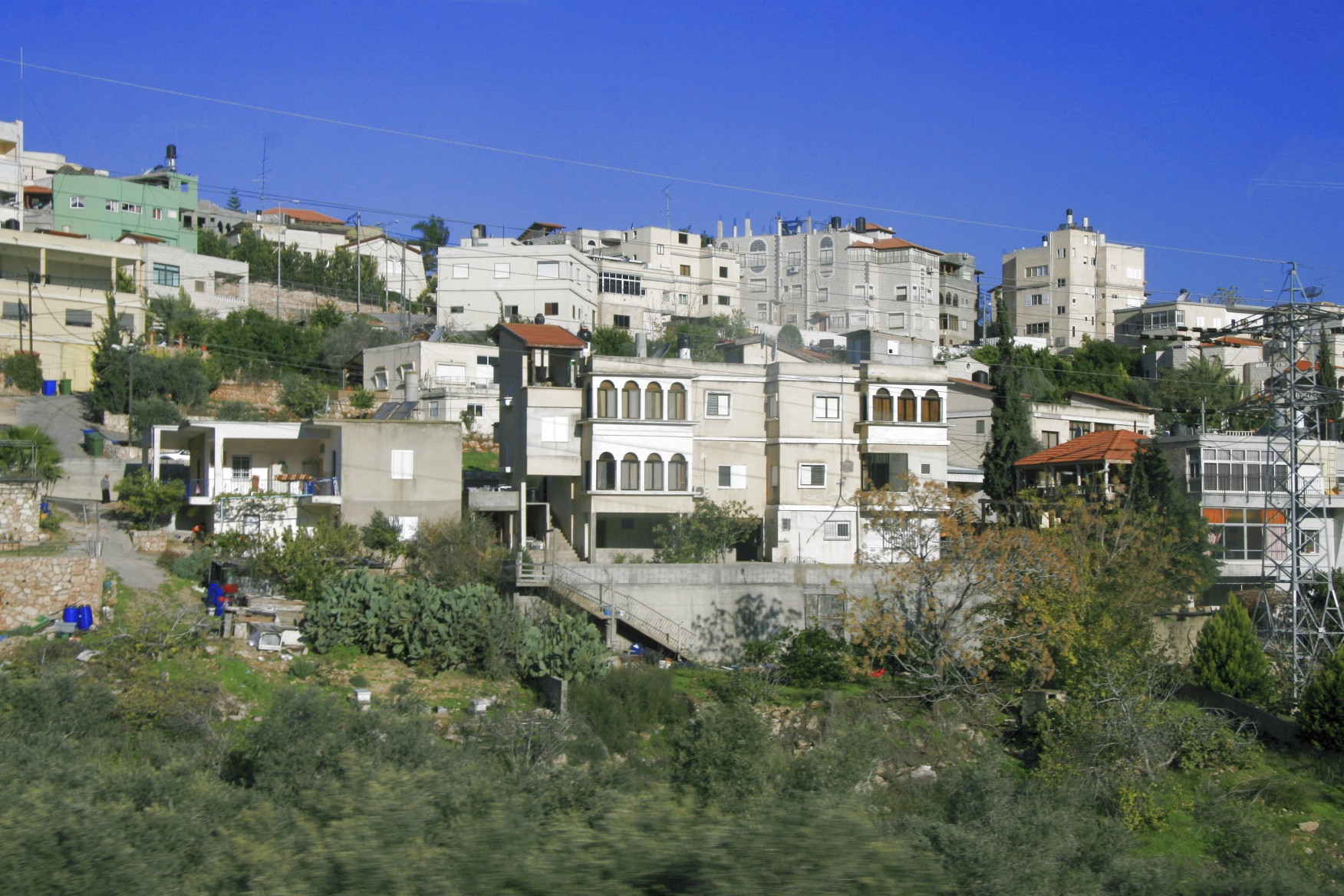
Cana today

August 24th is the feast of the apostle Bartholomew, also identified as Nathaniel,  from Cana in Galilee, only a few miles from Nazareth.  Like Nazareth, Cana attracted little interest in Jesus’ time, yet it played  a major role in Jesus’ early life and  mission.

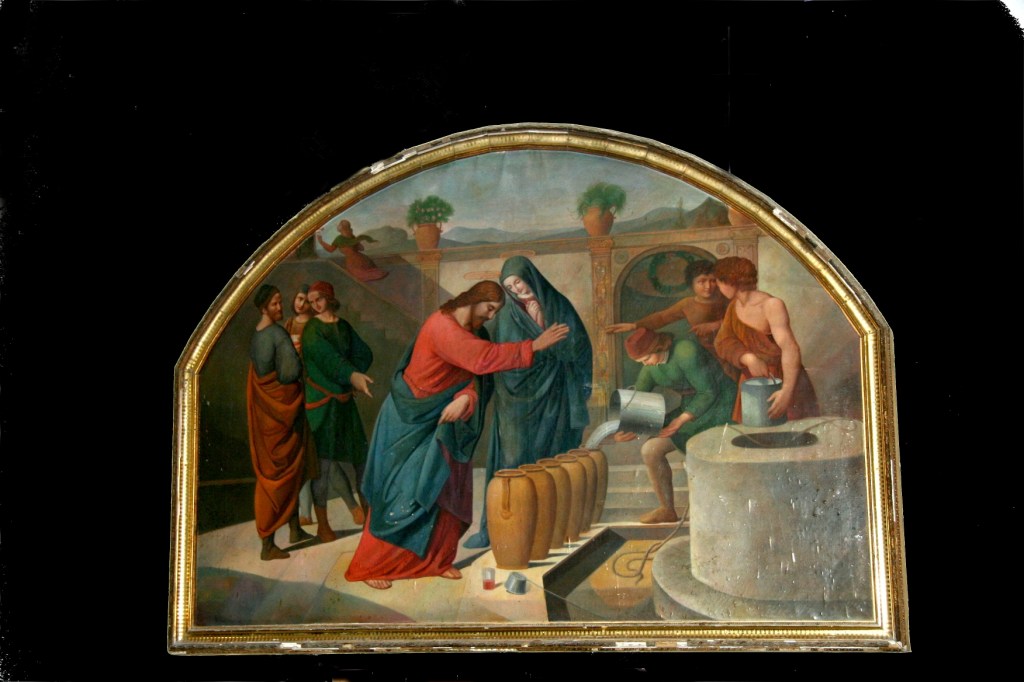
In John’s gospel,  Jesus turns water into wine at a wedding in Cana, his first “sign” that God’s kingdom would come. (Jn 2, 1-12) The family faced a wedding nightmare: the wine was running out and embarrassment was sure to come.

Catholic Church, Cana
cana carol rothstein 7

Was the family related to Jesus? Or Bartholomew?  At least they were close. Why else would Jesus, his mother and his disciples be at the celebration?

The miracle was special,. More than saving a family from embarrassment, it’s a sign in John’s gospel of God’s great love for ordinary people in ordinary towns everywhere. God delights in them, says the Prophet Isaiah, whose words often accompany the Cana miracle,  Cana signifies poor Israel, whom God loves with all the ardor of a “young man marrying a virgin,” God’s love, bountiful, restoring, overflowing with delight, goes out to this poor place, as well as poor places everywhere.

Jesus performed another miracle at Cana, John’s gospel says, another sign of the coming kingdom. Besides the miracle at the wedding, Jesus cured the dying son of a government official from Capernaum, whose ” father came to Cana because he heard that Jesus was there. (John 4.46-54) Jesus saved his son from death.

cana carol rothstein

Through the centuries Cana hasn’t prospered much. It’s not much to look at today.  In the late 19th century, a visiting English vicar described it this way:

“ (Kefr Kenna) lies on high ground, but not on a hill…A broad prickly pear led to the group of houses which perhaps represents the New Testament Cana. Loose stones were scattered around the slope. There may be, possibly, 150 inhabitants, but one cannot envy them their huts of mud and stone, with dunghills at every corner. Huge mud ovens, like great beehives, stood at the sides of some of the houses.

“ In one house a worthy Moslem was squatting on the ground with a number of children, all with slates on which verses of the Koran had been written, which they repeated together. It was the village school, perhaps like that at Nazareth eighteen hundred years ago.

“ A small Franciscan church of white stone with a nice railed wall, with a beautiful garden at the side, had over its doorway these startling words in Latin: ‘Here Jesus Christ from water made wine.’ Some large water jars are shown inside as actually those used in the miracle, but such mock relics, however believed in by simple monks, do the faith of other people more harm than good.”

Cana’s still a poor town. Like other poor places in the world it’s waiting to be raised up to share in the splendor of the heavenly Jerusalem. God loves poor places like this, the Cana miracle says. Bartholomew came from here.

cana carol rothstein 11
Church of St. Bartholomew, Cana