In our readings for Advent today Second Isaiah calls out to exiles in Babylon to come home. “Look, God your shepherd is coming, in his arms “he holding the lambs, carrying them in his bosom, leading the ewes with care.” The gospel tells us Jesus is the shepherd who comes leading the flock and holding in his arms the sheep that have strayed. Our Old Testament readings. especially in its first weeks, are taken from the Book of the Prophet Isaiah. The gospel readings these first weeks are chosen particularly to amplify the meaning of Isaiah. We see that in today’s readings.
Our responsorial psalm amplifies that further: God the powerful shepherd is coming, not only leading Jewish exiles, but all nations in exile. God brings about a universal salvation. So “Let the heavens be glad and the earth rejoice; let the sea and what fills it resound; let the plains be joyful and all that is in them! Then let all the trees of the forest rejoice.”
We’re reading from Second Isaiah all this week. Scholars say that readings from the 40th chapter of Isaiah on come, not from Isaiah the priest who spoke in Jerusalem about the year 587 when Assyrian armies destroyed Jerusalem, but from an unknown prophet speaking in Babylon to Jewish exiles about 60 years later, urging them to return to Jerusalem. Perhaps he uses Isaiah’s name and language to avoid trouble with Babylonian’s leaders for suggesting such a thing .
Historians say that not many Jews returned to Jerusalem at his call. Some did, but others were not interested in the prophet’s invitation. They had become acculturated; Babylon’s now their home. They have families and jobs there; Jerusalem is far away and its future uncertain.
They’re the stray sheep Second Isaiah addresses. Like Jesus he’s searching for the strays.
We need to study Judaism more fully as a template for our own church today, Walter Brueggemann, the Lutheran Old Testament scholar says, especially the mystery of Exile.
“The metaphor of exile may be useful to American Christians as a way of understanding the social context of the church in American culture. The exile of the contemporary American church is that we are bombarded by definitions of reality that are fundamentally alien to the gospel, definitions that come from the military-industrial-scientific empire which may be characterized as ‘consumer capitalism.’” (Hopeful Imagination: Prophetic Voices in Exile, Fortress Press 1987)
At the time of Second Isaiah the Jews were singing the songs of Babylon, not the songs of Zion. What songs are we singing? The Good Shepherd still goes in search of his strays.
We celebrate the Feast of the Immaculate Conception of Mary December 8, 9 months before celebrating her birth September 7. Her feast also takes place, appropriately, in the early weeks of Advent, as we prepare for the birth of her Son.
Pope Pius IX proclaimed the Immaculate Conception of Mary a dogma of faith in 1854. The feast became a solemn feast in the church calendar of the Roman Catholic Church 9 years later.
Did Christians before then reflect on and celebrate this mystery? Yes, they did. Mary was the mother of Jesus Christ, and from the beginning Christians asked who she was and what was her role in the mystery of Jesus.
Christians never thought of Mary as someone no different than anyone else.
She brought Jesus Christ into the world and with Joseph of Nazareth raised him as a child. She had an important part in his first miracle in Cana in Galilee. She witnessed his life and kept “all these things in her heart.” She stood by Jesus on his cross and saw him die. After his resurrection she joined his followers making him known to the world. She was “full of grace” and “blessed among women.”
The gospel writers depended on Mary’s words as they wrote of her Son. From earliest times, ordinary Christians honored her. Christians flocking to the Holy Land found her in the places where Jesus was born, where he taught and died and rose again. They took her as their guide, for she knew him best of all.
They prayed to her and asked for her intercession.
Before any doctrinal formula, then, Christians knew that Jesus “was born of the Virgin Mary.” She had a key place in their faith.
What was her role in God’s plan? The readings at Mass for the Feast of the Immaculate Conception tell us. The first reading for her feast from the Book of Genesis invites us to see her in the story of Adam and Eve. Just as her Son became the new Adam, Mary was the new Eve, “mother of all the living.” (Genesis 3: 5-6,20)
God, the Father of our Lord Jesus Christ,” blessed us in Christ with every spiritual blessing in heaven, choosing us in Him before the world was even created.” God blessed Mary with special blessings for her unique role in the mystery of our Redemption, the second reading for her feast says. (Ephesian 1:3-6, 11-12)
God created her as a “worthy dwelling for his Son” and “placed her above all others to be for your people an advocate of grace and a model of holiness.” (Preface for the Mass)
An angel presented her with that unique role. “ Hail, full of grace, the Lord is with you.” “Be it done to me according to your word,” Mary answered. (Luke 1:26-38) She needed great faith, and God gave her great faith. She followed her Son sharing his Cross. She shared in the glory of his resurrection.
After consulting the faithful, Pope Pius IX solemnly proclaimed the Dogma of the Immaculate Conception in 1854: “We declare, pronounce, and define that the doctrine which holds that the most Blessed Virgin Mary, in the first instance of her conception, by a singular grace and privilege granted by Almighty God, in view of the merits of Jesus Christ, the Savior of the human race, was preserved free from all stain of original sin” (Ineffabilis Deus, 1854)
In the church’s Office of Readings for her feast St. Anselm, exploring Mary’s role as “mother of all the living”, speaks of her relationship to all creation:
Blessed Lady, sky and stars, earth and rivers, day and night – everything that is subject to the power or use of man – rejoice that through you they are in some sense restored to their lost beauty and are endowed with inexpressible new grace. All creatures were dead, as it were, useless for men or for the praise of God, who made them. The world, contrary to its true destiny, was corrupted and tainted by the acts of men who served idols. Now all creation has been restored to life and rejoices that it is controlled and given splendour by men who believe in God.
The universe rejoices with new and indefinable loveliness. Not only does it feel the unseen presence of God himself, its Creator, it sees him openly, working and making it holy. These great blessings spring from the blessed fruit of Mary’s womb.
Through the fullness of the grace that was given you, dead things rejoice in their freedom, and those in heaven are glad to be made new. Through the Son who was the glorious fruit of your virgin womb, just souls who died before his life-giving death rejoice as they are freed from captivity, and the angels are glad at the restoration of their shattered domain.
Lady, full and overflowing with grace, all creation receives new life from your abundance. Virgin, blessed above all creatures, through your blessing all creation is blessed, not only creation from its Creator, but the Creator himself has been blessed by creation.
To Mary God gave his only-begotten Son, whom he loved as himself. Through Mary God made himself a Son, not different but the same, by nature Son of God and Son of Mary. The whole universe was created by God, and God was born of Mary. God created all things, and Mary gave birth to God. The God who made all things gave himself form through Mary, and thus he made his own creation. He who could create all things from nothing would not remake his ruined creation without Mary.
God, then, is the Father of the created world and Mary the mother of the re-created world. God is the Father by whom all things were given life, and Mary the mother through whom all things were given new life. For God begot the Son, through whom all things were made, and Mary gave birth to him as the Saviour of the world. Without God’s Son, nothing could exist; without Mary’s Son, nothing could be redeemed.
Truly the Lord is with you, to whom the Lord granted that all nature should owe as much to you as to himself.
Why does Mary, the Mother of Jesus, have such a big place in our church? The words of the angel in Luke’s gospel, words we often repeat in prayer, are an answer: “Hail, full of grace, the Lord is with you.”
Mary is filled with God’s grace, gifted with unique spiritual gifts from her conception, because she was to be the mother of Jesus Christ, God’s only Son.
She would be the “resting place of the Trinity,” and would give birth to, nourish, guide and accompany Jesus in his life and mission in this world. To fulfill that unique role she needed a unique gift. She would be free from original sin that clouds human understanding and slows the way we believe God and his plan for us.
“How slow you are to believe” Jesus said to the two disciples on the way to Emmaus. Jesus made that complaint repeatedly as he preached the coming of God’s kingdom. “How slow you are to believe!” “What little faith you have!” “Do you still not understand!” Human slowness to believe didn’t end in gospel times. We have it too.
Mary was freed from that slowness to believe. “Be it done to me according to your word,” she immediately says to the angel. Yet, her acceptance of God’s will does not mean she understood everything that happened to her. “How can this be?” she asks the angel about the conception of the child. “The Holy Spirit will come upon you.” But the angel’s answer seems so incomplete, so mysterious.
Surely, Mary would have liked to know more, but the angel leaves, never to return. There’s no daily message, no new briefing or renewed assurance by heavenly messengers. The years go by in Nazareth as the Child grows in wisdom and age and grace, but they’re years of silence. Like the rest of us, Mary waits and wonders and keeps these things in her heart.
That’s why we welcome her as a believer walking with us. She is an assuring presence who calls us to believe as she did, without knowing all. She does not pretend to be an expert with all the answers. She has no special secrets she alone knows. “Do whatever he tells you,” is her likely advice as we ponder the mysteries of her Son.
The feast of the Immaculate Conception is celebrated 9 months before the feast of the Birth of Mary (September 8). The feast was extended to the universal Church by Pope Clement XI in 1708.
Pope Pius IX solemnly proclaimed the Dogma of the Immaculate Conception in 1854: “We declare, pronounce, and define that the doctrine which holds that the most Blessed Virgin Mary, in the first instance of her conception, by a singular grace and privilege granted by Almighty God, in view of the merits of Jesus Christ, the Savior of the human race, was preserved free from all stain of original sin” (Ineffabilis Deus, 1854)
Graces will be given you; shepherds will guide you. That’s the message we hear this 2nd week of Advent from Second Isaiah. (Isaiah 40 ff)
The way to God’s holy mountain is not by sea, the easiest way to Jerusalem from Babylon, Second Isaiah tells Jewish exiles in Babylon this week. God will bring you over mountains and through a wilderness, but the valleys will be filled, the mountains made low, the crooked ways straight.
The writer is called Second Isaiah. Why? Because chapters 40-55 of Isaiah are generally attributed to an anonymous poet who prophesied toward the end of the Babylonian exile, possibly 50 years after Jerusalem fell to the Assyrians. Adopting the name and style of the earlier prophet, Second Isaiah urges Jewish exiles to come back to the land where they belong.
Yet, not everyone listened. Many gave up on that land far away and God who calls them there. They’re fitting in. Babylon is their home now. This week’s readings describe how changed the exiles were. No longer singing songs of Zion, they’re singing Babylon’s songs.
This week’s Advent readings, mostly from Second Isaiah, recognize how hard the wilderness journey was for them and now for us. It’s hard for a prophet to win over exiles comfortable in a foreign land. But the desert will bloom and a highway will be there, a holy way. (Monday) God speaks tender, comforting words to his people on the way. (Tuesday) Those who hope in him will renew their strength, soaring on eagle’s wings. (Wednesday) Though we’re as insignificant as a worm, God grasps our hand and says: “Fear not; I am with you.” (Thursday) God, our teacher, shows us the way to go. (Friday) Great prophets like Elijah also accompany us. (Saturday)
Jesus is with exiles like us, the Gospel readings say. We are like the paralyzed man lowered through the roof in Capernaum.. (Monday) Like stray sheep, the Good Shepherd finds us. (Tuesday) “Come to me all who are weary…” he says. (Wednesday) He sends prophets and guides like John the Baptist and Elijah. (Thursday) Rejected like John the Baptist, Jesus still teaches. (Friday) He will save us, unrecognized like John and Elijah. (Saturday)
John the Baptist takes up the cry of Second Isaiah this week. His is the strong voice featured in the gospel readings in the following days of Advent.
Mary, the mother of Jesus, is remembered December 8, the Feast of her Immaculate Conception, and on December 12, feast of Our Lady of Guadalupe. It was not an easy way Mary was given. She had to go the way of the exiles: over mountains and deserts and wilderness. She gives us an example. Follow her.
Today’s the feast of St. Nicholas, the model for Santa Claus. He’s also patron of Russia and one of the most important saints of the eastern churches.
Nicholas lived in the 5th century in Myria, a seaport in Asia Minor. When Moslems overran that region in the 11th century, sailors from Bari, Italy, took his relics from his shrine in Myria and installed them on May 9,1087 in a shrine in Bari, along the Adriatic coast.
Since then, the Basilica of St. Nicolas has been a pilgrimage destination for eastern and western Christians. Russian pilgrims are especially prominent, but pilgrims from other eastern churches also come. Pope John Paul wanted Nicholas’ shrine to be place for dialogue with the Russian Orthodox Church. In 1966, an Orthodox chapel was built in the basilica for celebrating the Orthodox liturgy. In 2018 Pope Francis met with religious leaders from the Middle East to pray for peace in Syria, Nicholas’ birthplace.
In 2007, Vladimir Putin himself came to Bari as a pilgrim and knelt before St. Nicholas’ tomb. In 2017, Pope Francis lent relics of Nicholas to Patriarch Kirill of Moscow as a gesture to improve relations. Mr. Putin kissed the glass cased relic at its arrival.
I would guess there are pilgrims in Bari today from Russia and its allies and Ukraine and its allies mixing uneasily around the saint’s grave. We pray today leaders of those troubled lands quietly and quickly find the gift of peace.
Some years ago Pope Francis joked that “The communists stole some of our Christian values. Some others, they made a disaster out of them.“ Has St. Nicholas been an inspiration for communism?
A story of Nicholas that stands out is the story of his rescue of three girls who were to be sold off into slavery because they have no money for a dowry. Dropping gold through the window of their house at night, Nicholas disappears. His gift gave the girls the promise of a better life.
Help the poor, the story says, they deserve a better life.
The girls’ father tracked Nicholas down and asked why he did what he did and wants no thanks or recognition. It’s better only God knows, Nicholas answers. He want’s no power over others or credit. He’s an example of “quiet giving,” a high form of love.
We see that kind of love in Jesus Christ; he taught it to his disciples.
St. Bernard says there are three comings of Jesus Christ, who is our rock, our support, our comfort.
“We know that the coming of the Lord is threefold: the third coming is between the other two and it is not visible in the way they are. At his first coming the Lord was seen on earth and lived among men, who saw him and hated him. At his last coming All flesh shall see the salvation of our God, and They shall look on him whom they have pierced. In the middle, the hidden coming, only the chosen see him, and they see him within themselves; and so their souls are saved. The first coming was in flesh and weakness, the middle coming is in spirit and power, and the final coming will be in glory and majesty.
“This middle coming is like a road that leads from the first coming to the last. At the first, Christ was our redemption; at the last, he will become manifest as our life; but in this middle way he is our rest and our consolation.
“If you think that I am inventing what I am saying about the middle coming, listen to the Lord himself: If anyone loves me, he will keep my words, and the Father will love him, and we shall come to him. Elsewhere I have read: Whoever fears the Lord does good things. – but I think that what was said about whoever loves him was more important: that whoever loves him will keep his words. Where are these words to be kept? In the heart certainly, as the Prophet says I have hidden your sayings in my heart so that I do not sin against you. Keep the word of God in that way: Blessed are those who keep it. Let it penetrate deep into the core of your soul and then flow out again in your feelings and the way you behave; because if you feed your soul well it will grow and rejoice.
Two blind men were given sight by Jesus, Matthew’s gospel read on the Friday of the 1st Week of Advent says. They’re healed together. (Matthew 9: 27-31) Do they represent the blind whom the Prophet Isaiah says in our first reading will see when the Messiah comes. “And out of gloom and darkness, the eyes of the blind shall see.” (Isaiah 29: 17-34)
Notice there are two blind men, not one. Are they just physically blind, or could the two together represent those blinded by certain issues and common prejudices?
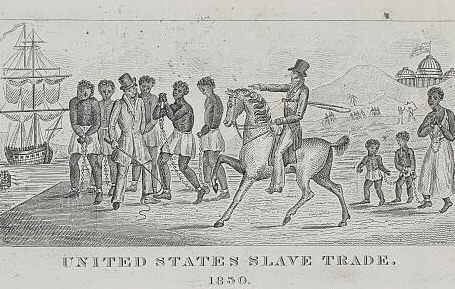
When John Newton, captain of an 18th century African slave ship, wrote the famous hymn “Amazing grace,” he said he “was blind, but now I see.” It wasn’t physical blindness he described. The tough seaman was converted after reading Thomas a Kempis’ “The Imitation of Christ” on a voyage. Gradually he came to see the horrific evil of slavery and other vices he had fallen into.
In 1788 after years of debate over the issue in England, Prime Minister William Pitt called a committee to investigate the slave trade. Until then, slavery was accepted by England and other countries as necessary for the country’s economic welfare.
England, like other nations, was blind to the evil. A star witnesses during the investigation was John Newton, whose detailed descriptions of the slave trade made people see what a horrendous practice it was.
This advent may Jesus help our world, our nation, our church and us to see. There are always things we don’t see. The blindness the prophets describe isn’t a thing of the past.
Pope Francis spoke of our society’s blind acceptance of the “tyranny of the financial markets.” We pay attention to a 2% drop in the stock market and ignore the death of a homeless man who dies in the cold. We’re a throw-away society, we waste so much. Not only do we discard things, we discard people. We exploit immigrants and then throw them away. We’re blind to the plight of the economically unproductive, who have lost their jobs or don’t have the skills for work today.
Lord, help us to see.
I’m following an online Advent resource of paintings and commentary from the Victoria Albert Museum in London, England. Some paintings everyday. Here’s where you can get it. vcs@kcl.ac.uk
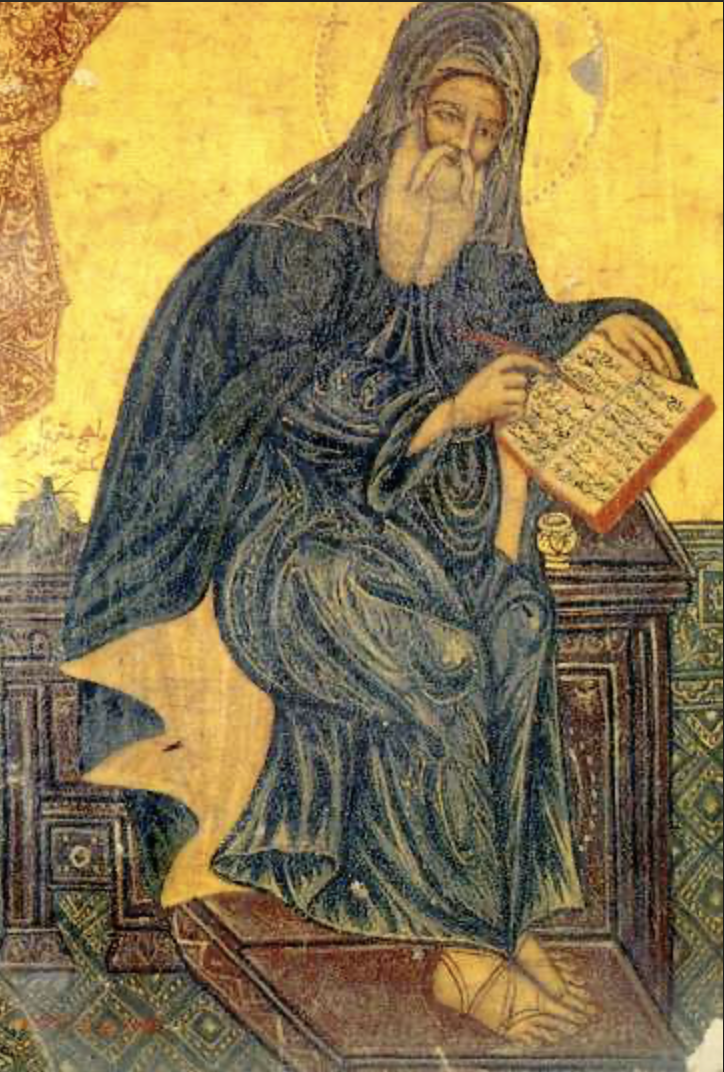
St. John Damascene was born in Damascus, Syria, in the middle of the 7th century. Declared a doctor of the Roman Catholic Church in 1890 by Pope Leo XIII, he was brilliant teacher who explained the faith in simple understandable terms. Maybe that’s why he defended the use of icons against those who saw them as unworthy of God. John Damascene believed God can be known through images. Jesus Christ is “the image of the invisible God”.
So John Damascene not only stood up for icons, but he also stood up for the statues, stain glass windows and art of all kind. He validated the work of Michelangelo and Bach and generations of Christian artists. How could we celebrate Christmas without images?
Now, perhaps, we need to defend against their loss, as our world becomes more secularized. Our Christmas carols are drowned out by “Jingle Bell Rock” and a thousand other noisy songs. Our Christmas tree, our Christmas cribs are lost under a lot of junk; Santa Claus is turned into a salesman in Macys, the small humble light of our advent wreath is swallowed up by bigger, brighter decorations.
Anyway, listen to some words from John Damascene:
O Lord, You brought me naked into the light of day, and by the blessing of the Holy Spirit, you created me, not by human will or desire, but by your ineffable grace.
The birth you prepared for me surpassed the laws of our nature. You sent me forth into the light as your adopted son and you enrolled me among the children of your holy and spotless Church.
You nursed me with the spiritual milk of your words. You kept me alive with the solid food of the body of Jesus Christ, your only-begotten Son and our God, and you let me drink his life-giving blood, poured out to save the whole world.
You loved us, O Lord, and gave up your only-begotten Son for our redemption. And he came willingly, not shrinking from the task. Although he was God, he became man, and in his human will, became obedient to you, God his Father, unto death, even death on a cross.
You humbled yourself, Christ my God, so that you might carry me, your stray sheep, on your shoulders. You let me graze in green pastures, refreshing me with the waters of orthodox teaching at the hands of your shepherds. You pastured these shepherds, and now they in turn tend your chosen and special flock.
Now you have called me, Lord, by the hand of your bishop to minister to your people. I do not know why you have done so; you alone know. Lord, lighten the heavy burden of my sins. Purify my mind and heart. Like a shining lamp, lead me along the straight path. When I open my mouth, tell me what I should say. By the fiery tongue of your Spirit make my own tongue ready. Stay with me always and keep me in your sight.
Lead me to pastures, Lord, and graze there with me. Do not let my heart lean either to the right or to the left, but let your good Spirit guide me along the straight path. Whatever I do, let it be in accordance with your will, now until the end.
And you, Church of God, most excellent assembly, summit of perfect purity, whose assistance comes from God. You in whom God lives, receive from us a teaching of faith that is free from error, to strengthen the Church, just as our Fathers handed it down to us.
Isaiah 26:1-6: On the day of the Lord those who depend on God will enter God’s city.
Matthew 7: 21-24-27: Build your house on rock.
Ancient peoples built their cities on rocky heights because they promised safety. With water, food and strong defenses they were less likely to be invaded. That’s why the Jews chose Jerusalem. Built high on a rocky mountain, it was safe.
There’s a city on God’s holy mountain, Isaiah says in today’s reading, where all peoples will dwell. Yet even now, our cities and places where we live are meant to be an image of the Holy City. Don’t depend on natural resources or human skills or human planning alone to build your earthly cities, the prophets warn. Don’t rely on them; they can’t save you. The strongest city becomes “a city of chaos” without God.
God builds the strong city, the prophet says; he is our Rock, our strong city: he admits through its gates “ a nation that is just; one that keeps faith.”
Build your lives on rock, Jesus says in the gospel. Don’t rely on a token faith (Lord, Lord) or be like fools who build on sand .
“Everyone who listens to these words of mine and acts on them will be like a wise person who built a house on rock.”
That’s true for our homes and the cities and places where we live.
A secular society like ours often sees religion as a destructive force or a brake on progress or something to be dispensed of. It turns to “human reason” alone.
So how do we see our cities and countries today? Should be turn away from them and wait for the City on the Mountain? Time to wait for the right politician or a better economy, and take care of yourself?
I don’t think that’s the answer we get in this Season of Advent which proclaims the coming of Jesus Christ in the flesh to an earthly city.
“It is better to take refuge in the LORD, than to trust in man. It is better to take refuge in the LORD than to trust in princes.” (Psalm 118)



 The Victor's Place