READINGS FOR THE 16TH WEEK

JULY 22 Mon Saint Mary Magdalene Feast Sg 3:1-4b or 2 Cor 5:14-17/Jn 20:1-2, 11-18

23 Tue Weekday [Saint Bridget, Religious] Ex 14:21—15:1/Mt 12:46-50

24 Wed Weekday [Saint Sharbel Makhlūf, Priest] Ex 16:1-5, 9-15/Mt 13:1-9

25 Thu Saint James, Apostle Feast 2 Cor 4:7-15/Mt 20:20-28

26 Fri Saints Joachim and Anne, Parents of Mary (Memorial) Ex 20:1-17/Mt 13:18-23

27 Sat Weekday Ex 24:3-8/Mt 13:24-30

28 SUN SEVENTEENTH SUNDAY IN ORDINARY TIME Gn 18:20-32/Col 2:12-14/Lk 11:1-13

Some important saints are remembered this week. Mary Magdalene, Bridget of Sweden, James the Apostle, and Joachim and Anne. They’re instruments God uses to teach and support the church. I will be commenting on them on their feasts.

The Passionists celebrate the Feast of their Martyrs of Damiel on July 24.

The readings from Exodus continue the story of Moses.

16th Sunday c: Martha, Martha


For this week’s homily please play the video below.

Sisters of Mercy

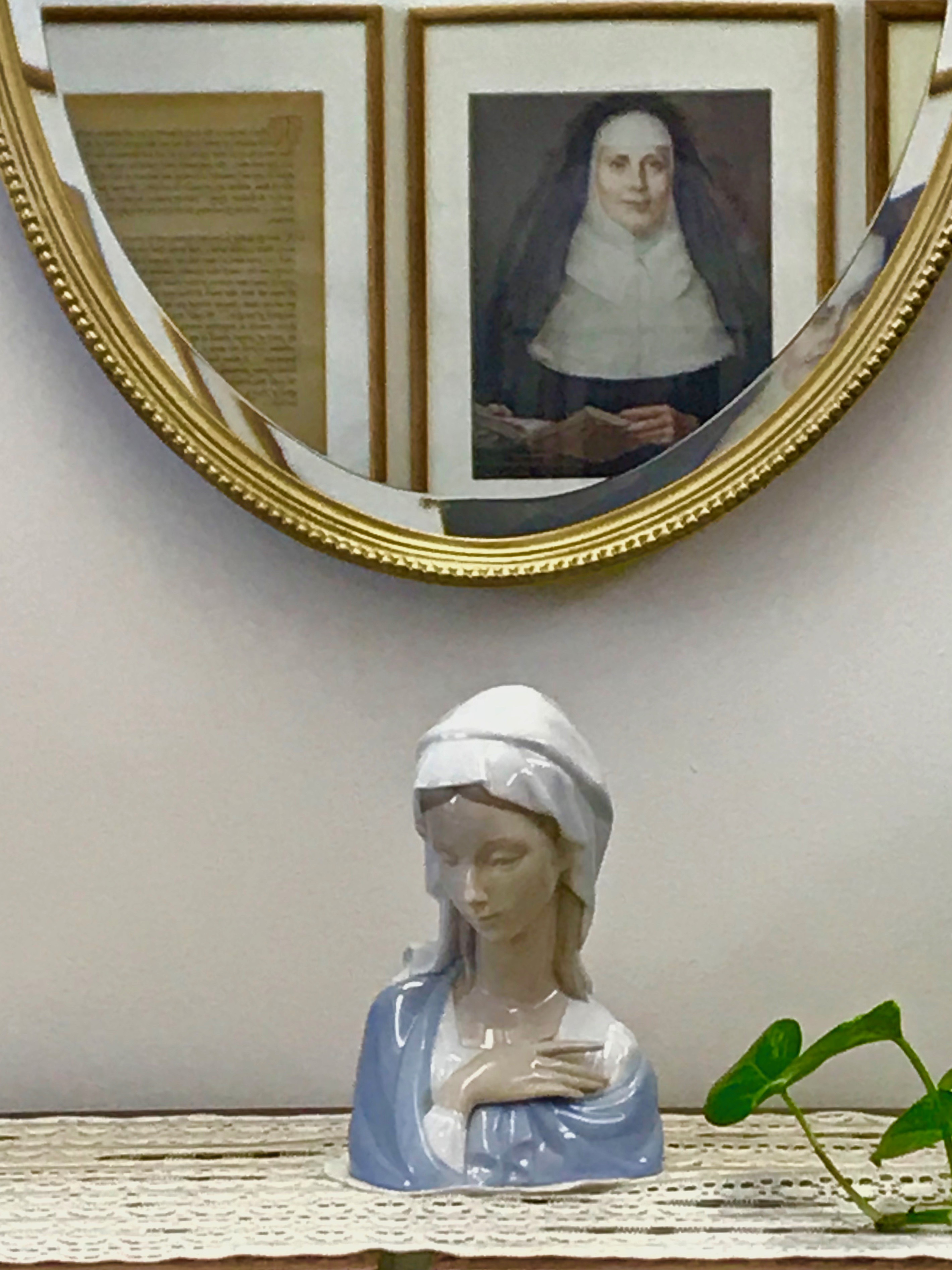
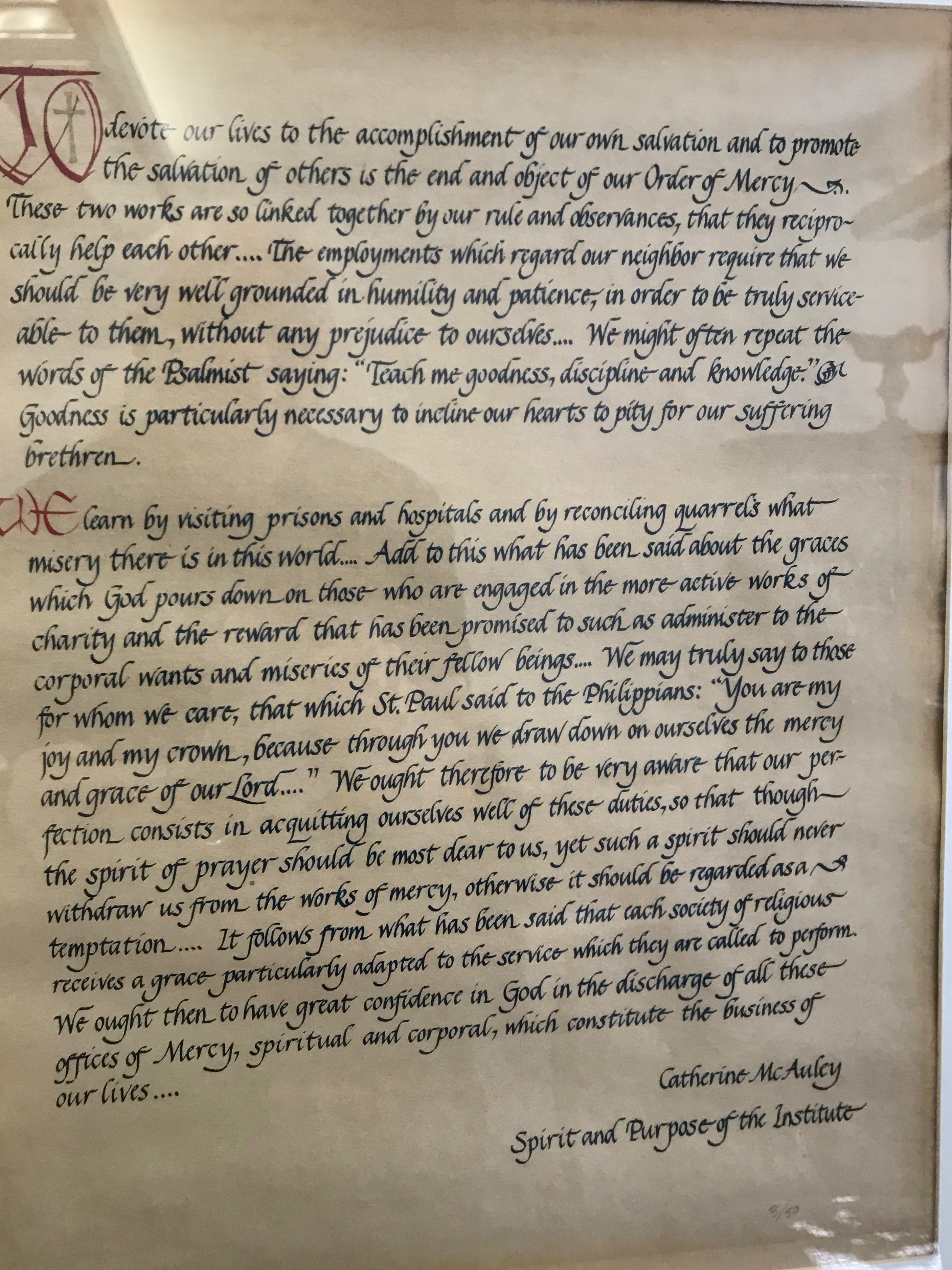
Just ended a week long  retreat for the Sisters of Mercy at Parsons Boulevard in Queens, New York. I sat some time facing a small statue of Mary (above) and the image in a mirror of Catherine McAuley, the Irish woman who founded the community. Next to her image is what she wrote about the spirit and purpose of her institute:

“Each religious institute receives a grace particularly adapted to the service they are called to perform. We ought, then, to have great confidence in God in the discharge of all these offices of Mercy, spiritual and corporal, which constitute the business of our lives…visiting prisons and hospitals and by reconciling quarrels…the spirit of prayer should be most dear to us, yet such a spirit should never withdraw us from the works of mercy.”

May God give the Sisters of Mercy grace for that mission today. The world needs to be blessed by the works of mercy.

READINGS FOR THE 15TH WEEK

JULY15 Mon Saint Bonaventure, Bishop and Doctor of the Church Memorial Ex 1:8-14, 22/Mt 10:34—11:1 16

Tue Weekday [Our Lady of Mount Carmel] Ex 2:1-15a/Mt 11:20-24

17 Wed Weekday Ex 3:1-6, 9-12/Mt 11:25-27

18 Thu Weekday [USA: Saint Camillus de Lellis, Priest] Ex 3:13-20/Mt 11:28-30

19 Fri Weekday Ex 11:10—12:14/Mt 12:1-8 20 Sat Weekday [Saint Apollinaris, Bishop and Martyr] Ex 12:37-42/Mt 12:14-21

21 SUN SIXTEENTH SUNDAY IN ORDINARY TIME Gn 18:1-10a/Col 1:24-28/Lk 10:38-42

The readings from the Book of Exodus this week tell the story of another of our ancestors in faith, Moses, whom God sends to bring his people from Egypt to the Promised Land.

St. Bonaventure, whose feast is celebrated on Monday, has an important role in the development of the Franciscan movement. He brought intellectual gifts to Francis’ tradition. The saints (and important figures) of any tradition bring new dimensions to the original charism of the founder.

Mary, the Mother of Jesus, enriches the charism of so many great religious traditions in the church by her presence. Our Lady of Mount Carmel (July 16) enriches the Carmelite tradition.

15th Sunday c: The Good Samaritan

For this week’s homily please play the video below.

We Are Sent

by Orlando Hernandez

    The Gospels from Wednesday to Saturday of the 14th Week in Ordinary time all deal with Jesus’ words in the tenth chapter of Matthew’s Gospel.  Our Lord instructs His Apostles on their Mission and what it entails. 


    In the previous chapter (Mt 9: 35-38) Jesus has been moved to pity for the people He has come to teach and heal. Even in our present time, as back then, his Heart is filled with sorrow and compassion for humanity because we seem so “troubled and abandoned, like sheep without a shepherd.” Are we to join Him in crying, “My God, my God, why have You abandoned me?” I would rather try to stand up straight and cry out, even in my moments of desolation: “Resurrected Divine One, I trust in You!”


    The Biblical Jesus must have accepted that this harvest of hungry souls was too much, even for him. The Kingdom of love and salvation would require recruitment of more “laborers for the harvest” to help Him guide Humanity to Him. So in chapter 10, Jesus turns twelve of His disciples (Latin: “pupils”) into Apostles (Gk: “messengers,” “apo”: off, “stellein”: send), to be “sent off”, to teach His Message and help Him heal the world. They are listed each by name. We see that they are individual persons, imperfect human beings, like all of us. We can relate to them, try to imagine what each one of them was like, even now when we venerate them as Saints. Ready or not, Our Lord sent them out to their own people, to proclaim this “Kingdom of Heaven.”


    I always hope that I am a “disciple” of Christ, learning from Him, being with Him every day, but I just cannot dare to call myself “apostle.”   No, only priests, theologically trained preachers, healers and missionaries deserve this title. But, upon reading chapter 10, I feel as if Jesus is talking to me, inviting me to go out and bring this message of love and healing to the world, precisely at a moment when my discipleship is not going so well and my soul is in turmoil. I feel called to start, as always, with those nearest to me, family, friends, acquaintances, people I run into. What can I say to them? How can I become a living, talking Gospel? Is He really sending me? Is He grabbing me and shaking me out of my stupor, saying, “I need you NOW!”


    Over the last few days I have read a number of spiritual writers who in different ways seem to be saying that this Apostolic mission has been lovingly given to each one of us by God, as our true journey in life: “Before I formed you in the womb I knew you, before you were born I dedicated you, a prophet to the nations I appointed you “(Jer 1:5). It makes sense, when we see the incredible power of newborn babies to bring joy, gratitude, and healing to those around. The deep mystery of Love seems to emanate from them as they grow up around us. But eventually they seem to lose this gift as the roughness of life begins to hurt them more and more and they become “troubled and abandoned” like most of us. The laborers for the harvest become fewer and fewer.  


    But the Invitation is still there, whispering within us. For His own reasons, Our Lord blesses some of us with a louder calling. The gift and grace of this invitation is the luminous Presence of our God, Who gives us the unexpected wisdom and strength to attempt the things that Jesus demands of us: to proclaim Him, to go out into the road of life and bring healing and salvation to others, beginning with our very selves. Only in abundant prayerful contact with our Lord, knowing that He is always with us, can we gain the peaceful attitude to go out as “lambs among wolves,” or “as simple as doves” in a beautiful but often hostile world.  Only by following His example can we attain the humility and freedom to let go of so many luxuries and things that encumber us on our way. Only through Him can we become trusting and dependent on the kindness of other human beings as we “enter their house” and share our peace with them. It seems to me that only in the power of this Divine invitation to mutual understanding, compassion, and trust, can we begin to find healing and truly preach the Gospel to each other. 


    Not every one will be that “nice” to us. Again, only by prayer and constant reminder by our God that we are His beloved children, can we bear the dust of rejection, the scourge of hate, the mistrust of a wounded world, and not become discouraged, cynical, or indifferent in our quest for for souls to love. That is our mission, to love, no matter what. Quietly, in trust and meekness, can we hear in the darkness the whisper of the Spirit, Who tells us “Do not be afraid.”, and infuses us with the desire and courage to proclaim, as if “on the rooftops”, before our oppressors, before the powerful and those oppressed and bitter, at the top of our lungs, that we are so intimately known by the Infinite Power Who loves us so much as to count every hair in our heads, every chemical reaction in every one of our cells, every hope or dream, shining or broken, within our souls. 


    How to begin?  We all have our ways; I am confident of that. As for myself, yesterday I did the best I could. It has been getting harder for me to feel comfortable with my grand children. They seem more detached, cynical, argumentative, and mistrustful of their elders (may God deliver me from judging!). But I know that I love them with a crazy love that fills me with gratitude. So my wife and I ( we go out “in pairs”) decided, even though we were not in our best moods, to take all four of them to the movies. It turned out fine. They did not fight or seem bored, and gave me a surprising amount of joy. On our way back to the car I got the urge to tell them: “Listen, I just paid for your movie and for your snacks, so you have to humor me. I’m gonna pray over each of you. Think really hard about something that is bothering you or hurting you, in your body, or in your heart.  Don’t tell us what it is; just think about it really hard. I will pray for God to free you from it. OK?


    So I went individually to each one of them, laid my hands on their shoulders, and reminded them of how much God loved them. I told them to feel that love and asked for the power of God to heal that problem or hurt, IN THE NAME OF JESUS. Later I asked each one of them if they had just been putting up with me or if they were really concentrating on the prayer. Each one, from the eight-year old to the fourteen-year old, seemed very serious when they remembered the moment and the thing they had been praying for. This is the first time I ever did something like this with them. Too little too late? Nothing is too little with God, nor is it ever too late. Blessed be Your Name, Beloved.
As Lambs Among Wolves

In the gospels read at Mass this week, from the 10th chapter of Matthew, Jesus sends the Twelve on a mission. They have a restricted mission: “Jesus summoned his Twelve disciples and gave them authority over unclean spirits to drive them out and to cure every disease and every illness.” (Matthew 10, 1)

They have authority over unclean spirits and can cure every kind of disease, important gifts, but they haven’t received power to teach yet. That will come after Jesus’ resurrection.They’re also told not to go into pagan territory or Samaritan towns. but to the “lost sheep of the house of Israel.”

They’re on a restricted mission.

The evangelists differ. In Luke’s gospel, read last Sunday, Jesus not only sends the twelve, but seventy two others. No restrictions are given them. Go to every town and place I intend to visit, Jesus says to them.

In both gospels, the disciples are told to have no walking stick, no traveling bag, no sandals.. They’re not promised economic security or assurance they’ll be received well and their mission will be successful.

Ministry will never be easy, under any circumstances. It will always be “as lambs among wolves.” Ministry changes as times and circumstances change, but whatever the time and circumstances, we’re sent.

What are we called to do today? Something must be done today, something we don’t see. “The kingdom of heaven is at hand.” And Jesus repeatedly says, “Don’t be afraid to do it.”

His

READINGS FOR THE 14th WEEK OF THE YEAR: C

JULY 8 Mon Weekday

Gn 28:10-22a/Mt 9:18-26 (383)

9 Tue Weekday

[Saint Augustine Zhao Rong, Priest, and Companions, Martyrs]

Gn 32:23-33/Mt 9:32-38 (384)

10 Wed Weekday

Gn 41:55-57; 42:5-7a, 17-24a/Mt 10:1-7 (385)

11 Thu Saint Benedict, Abbot Memorial

Gn 44:18-21, 23b-29; 45:1-5/Mt 10:7-15 (386)

12 Fri Weekday

Gn 46:1-7, 28-30/Mt 10:16-23 (387)

13 Sat Weekday [Saint Henry; BVM]

Gn 49:29-32; 50:15-26a/Mt 10:24-33 (388)

14 SUN FIFTEENTH SUNDAY IN ORDINARY TIME

Dt 30:10-14/Col 1:15-20/Lk 10:25-37 (105)

The Jewish Scriptures this week are about Jacob and his sons, seeking the land God wishes to give them. It’s an eventful search, involving marriages, children born, famine, treachery. The final readings find Jacob and his sons in Egypt, where Joseph, one of his sons, was sold into slavery, only to become an important leader in Egypt.

Our lectionary omits much of this story, probably because it would be too shocking to be read in church. But we should see this story for what it is: God moves humanity, sinful as it can be, towards the Promised Land.

Tuesday is the feast of Saint Augustine Zhao Rong, Priest, and Companions,  are martyrs from the church in China.

Thursday is the feast of Saint Benedict, who made monastic life an everyday school of spirituality and means for advancing humanity on its journey to God.

Readings for the 13th Week of the Year

July 1  Mon Weekday

[USA: Saint Junípero Serra, Priest]

Gn 18:16-33/Mt 8:18-22 

2 Tue Weekday

Gn 19:15-29/Mt 8:23-27 

3 Wed Saint Thomas, Apostle Feast

Eph 2:19-22/Jn 20:24-29 

4 Thu Weekday

[USA: Independence Day]

Gn 22:1b-19/Mt 9:1-8, or “For Peace and Justice,” nos. 887-891

5 Fri Weekday

[Saint Anthony Zaccaria, Priest; USA: Saint Elizabeth of Portugal]

Gn 23:1-4, 19; 24:1-8, 62-67/Mt 9:9-13 (381)

6 Sat Weekday

[Saint Maria Goretti, Virgin and Martyr; 

Gn 27:1-5, 15-29/Mt 9:14-17 (382)

7 SUN FOURTEENTH SUNDAY IN ORDINARY TIME

Is 66:10-14c/Gal 6:14-18/Lk 10:1-12, 17-20 or 10:1-9 (102)

The calendar brings three “hot-button” issues before us this week.

 Monday: What do we think of our missionary work among the native peoples? (St. Junipero Serra)

Thursday: What do we mean by “All men are created equal?” (Independence Day}

 Saturday: Is purity still possible in today’s world? (St. Maria Gorretti)

Our calendar is not just a bland recital of nice things that should comfort us. Celebrations bring questions.