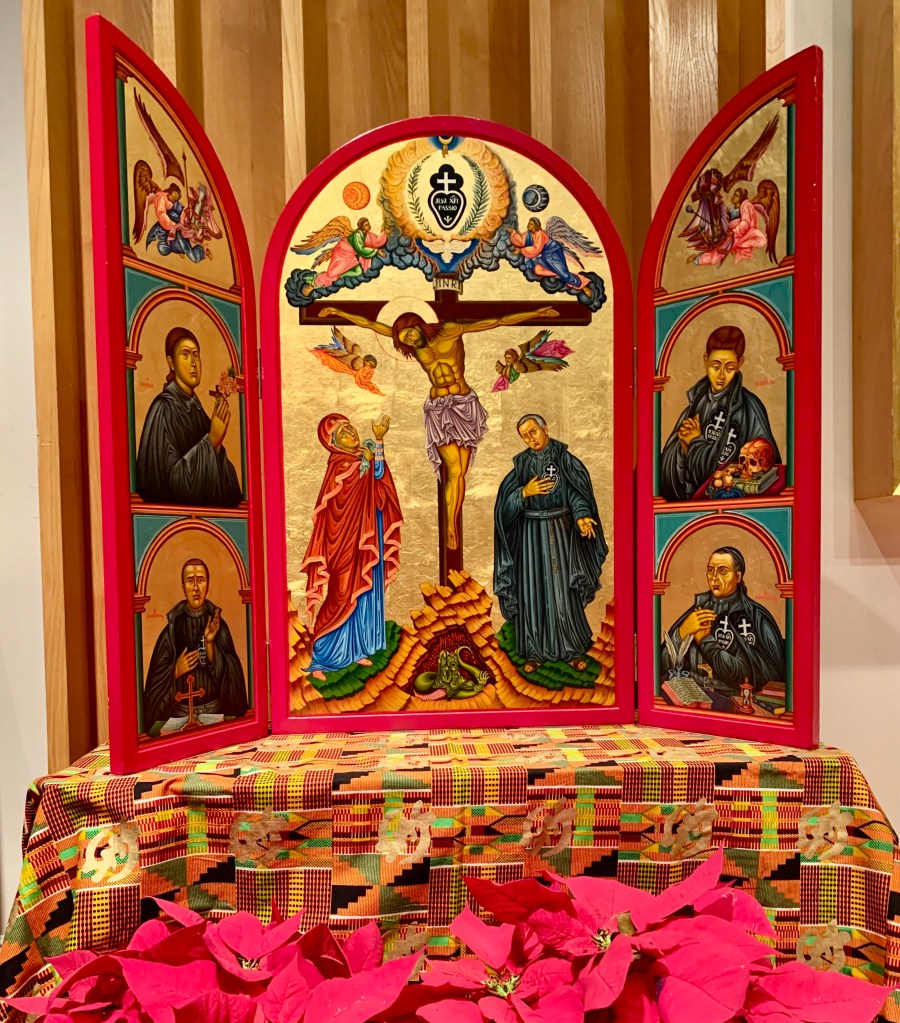
The Passsonists recently commissioned the painting of an icon to celebrate their founding 300 years ago.This year and part of next year the icon, a tryptic painted by a prominent European iconographer, is traveling to different Passionist communities throughout the world.
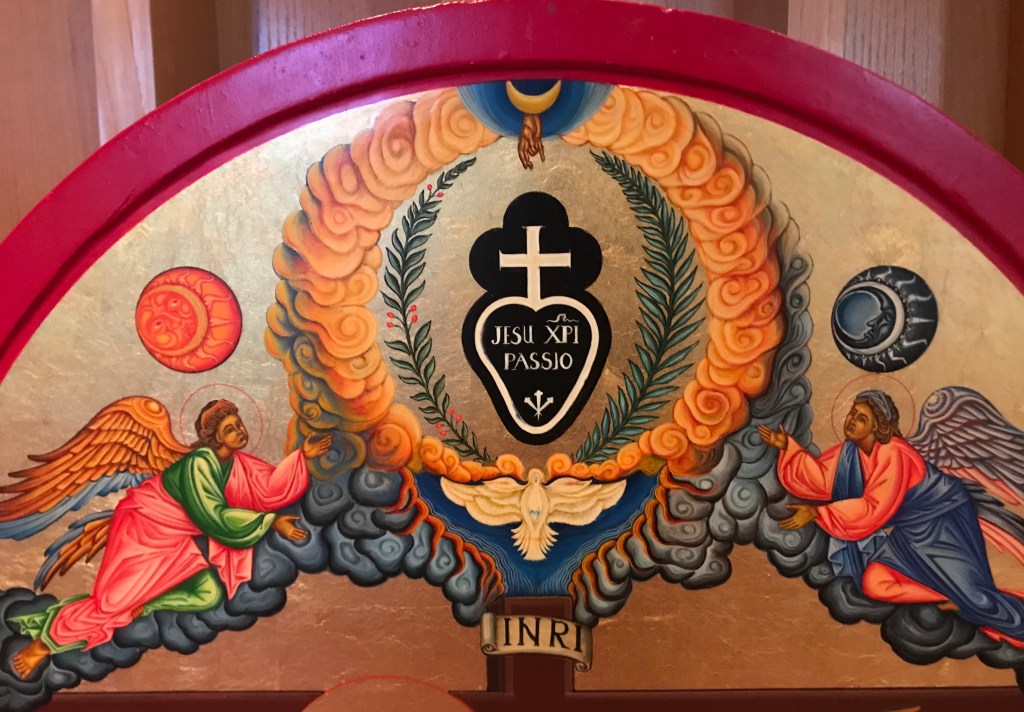
The top part of the icon shows the heavenly origins of our congregation. The hand of God the Father surrounded by his angels offers the Passionist Sign, symbol of the community, to the world, signified by the sun and the moon. The Dove, the Holy Spirit, brings this gift into the world.
Our congregation is not just a human creation, it’s from the hand of God, through the Holy Spirit. It’s not simply human in its origin.
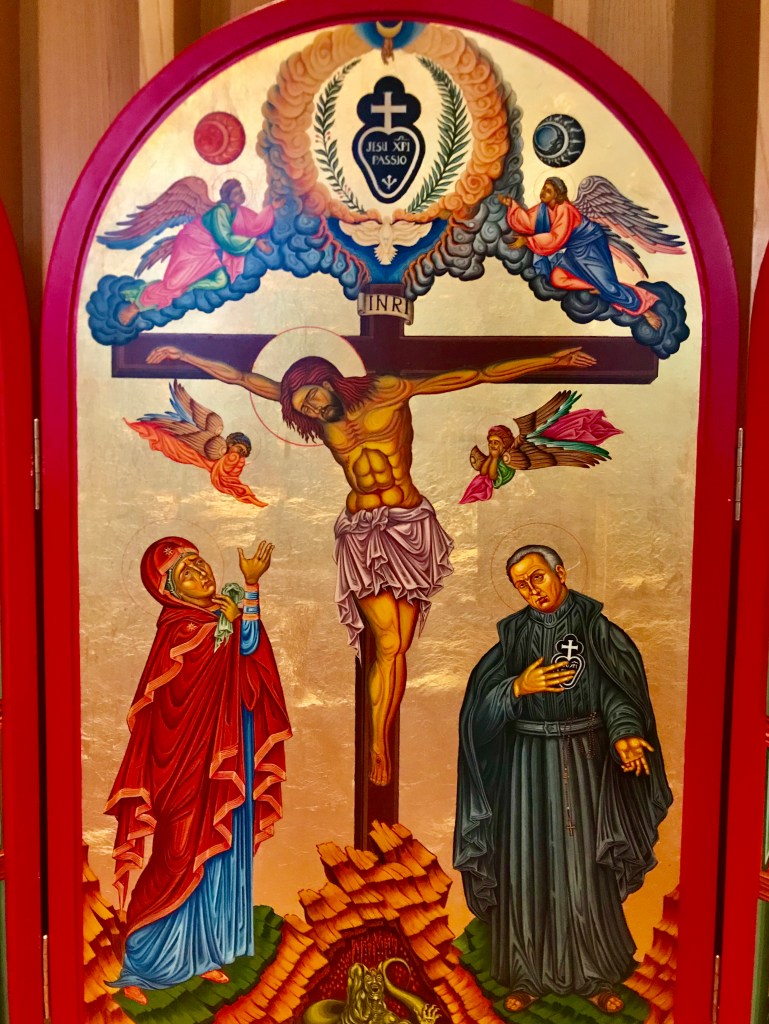
The congregation is to keep alive the mystery of the Passion of Jesus in the world. The central panel of the icon is focused on Jesus Crucified.
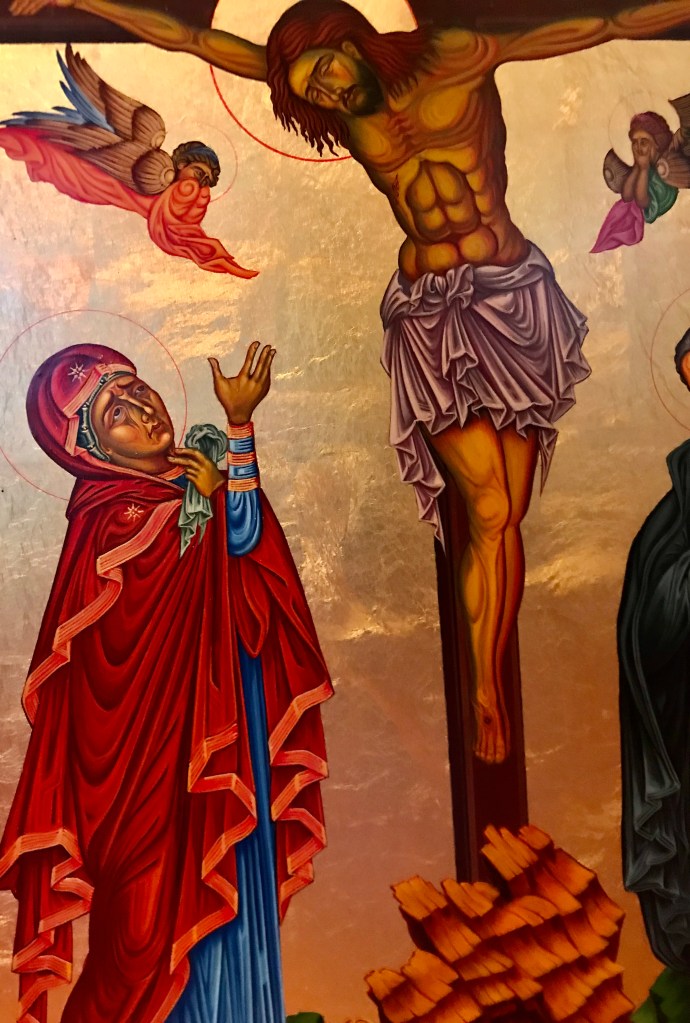
Mary, his mother, points to her Son. She’s the sorrowful mother, holding a cloth to her tearful face; two angels surrounding the Cross weep with her.
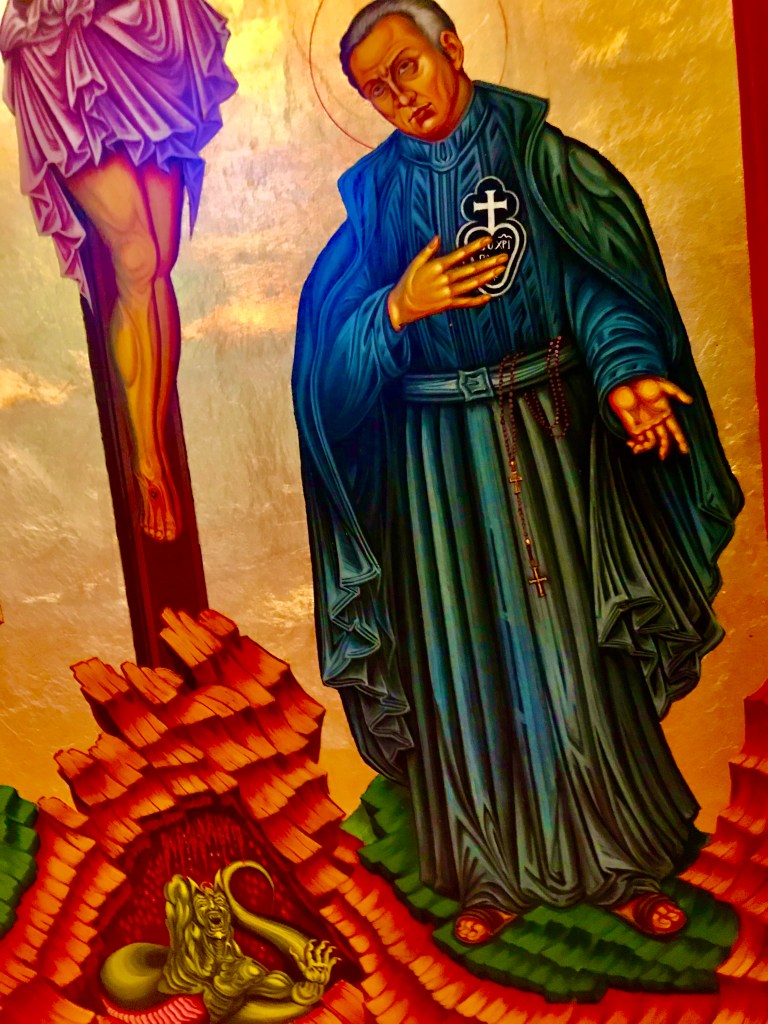
Paul of the Cross stands on the other side of the Crucified Jesus, looking at us. He has one hand on his heart and the other extended to us. His mission to proclaim this mystery to the world.
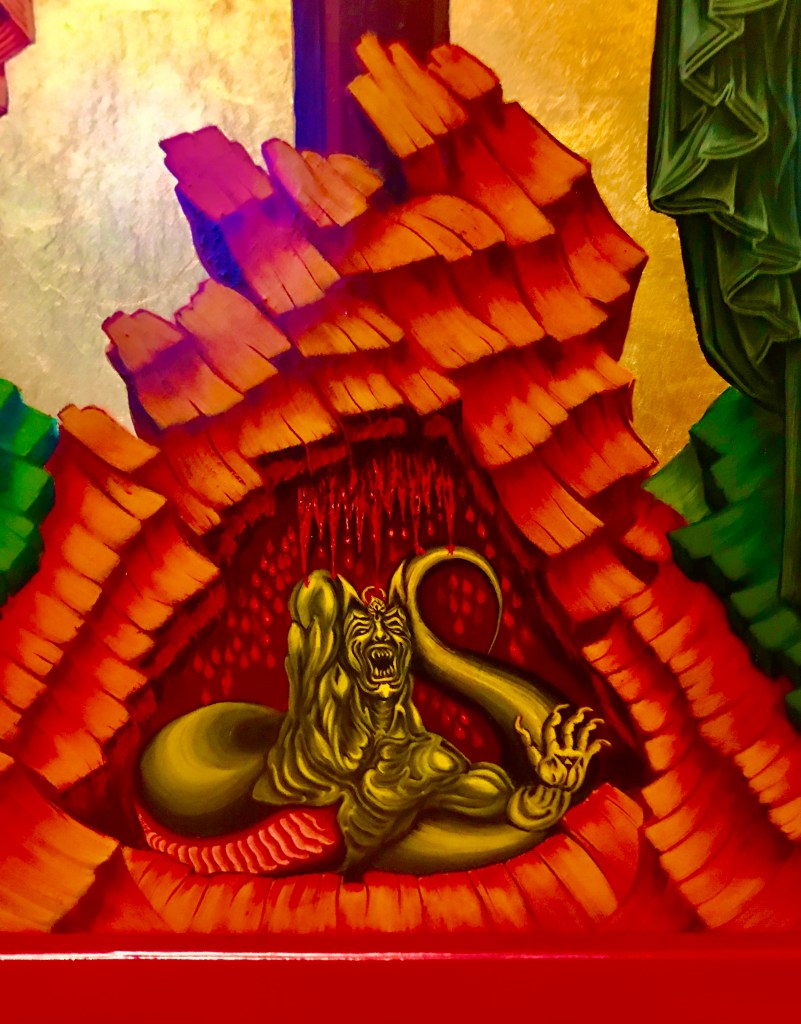
The Cross stands on a rocky cave containing a coiled monster in yellowish green. Artists sometimes place the bones of Adam and Eve beneath the Cross, which brings them new life, but here the artist has a symbol of evil that must be defeated.
That evil is the “forgetfulness of the passion of Jesus” that Paul saw affecting the world of his day. Great changes were taking place in his time, the 18th century. The Enlightenment, a movement still affecting our world today, had begun. It fostered a new enthusiasm for human learning and human progress. It brought about a scientific revolution and an industrial revolution that changed the way we live and think in our western world.
The Enlightenment has brought benefits, but it also brought about a forgetfulness of religion. diminishing religion’s importance in western society. It also brought about a forgetfulness of creation, as Pope Francis claims in his letter on the environment, Laudato Si. Human flourishing came before the flourishing of creation.
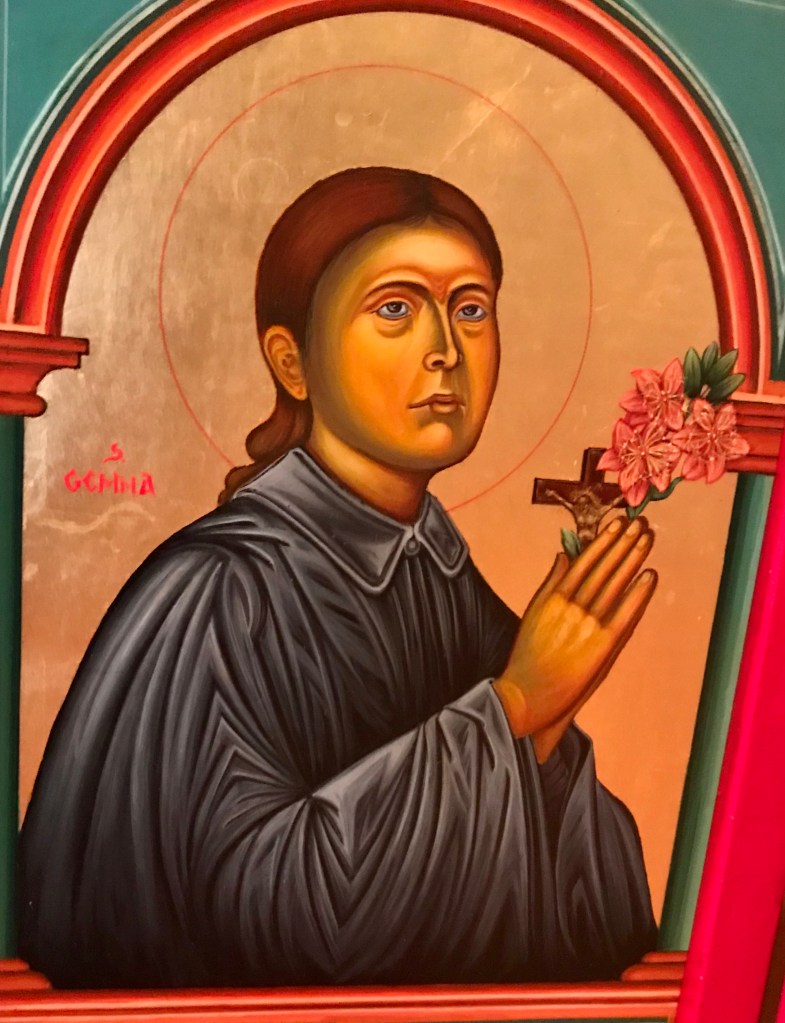
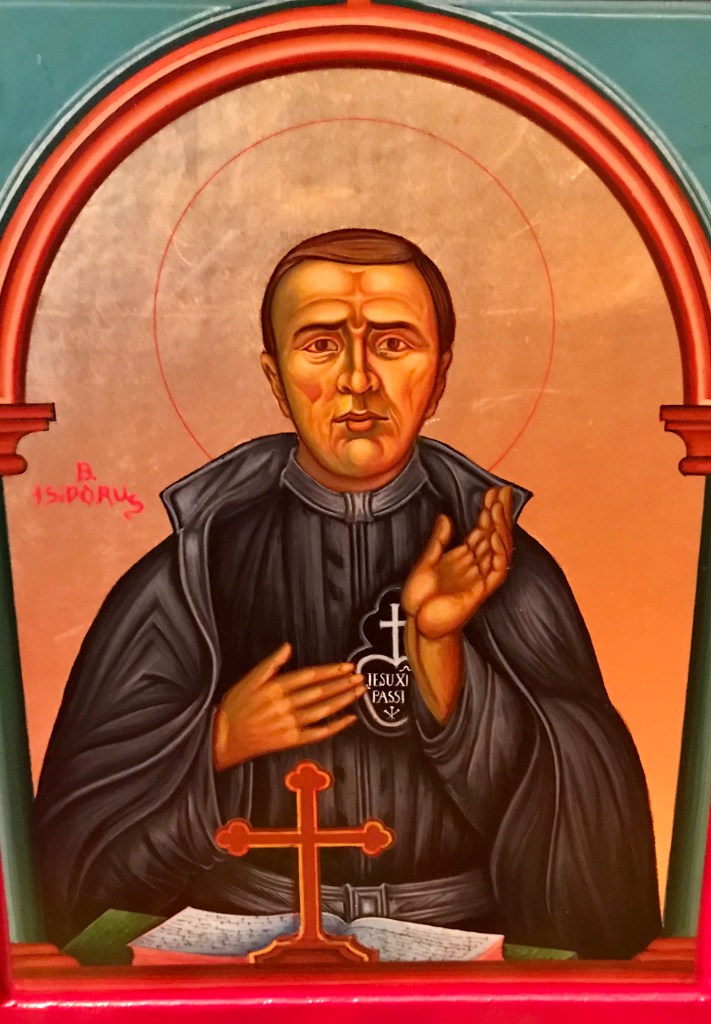
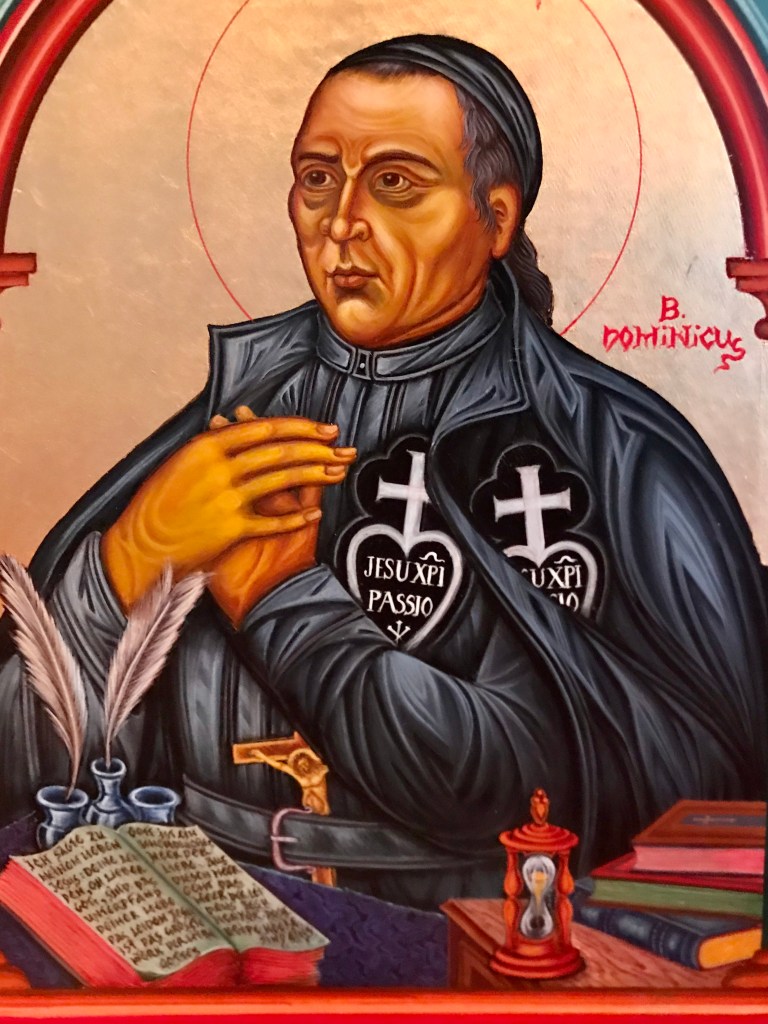
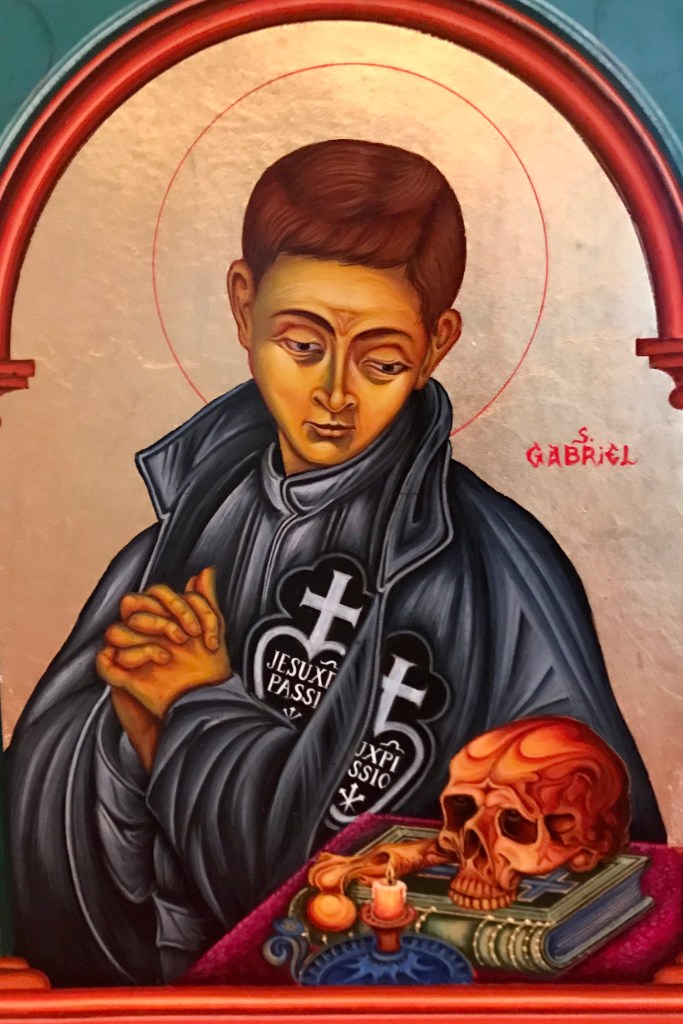
The side panels of our icon have portraits of Passionist saints and blesseds. St. Gabriel Possenti and Blessed Dominic Barberi on the right facing us, and St. Gemma Galgani and Blessed Isidore de Loor on the left. They follow Paul of the Cross in his mission.
Gemma certainly represents the women called to share in the Passionist charism, religious women and laywomen.
Isidore de Loor, represents the religious brothers who embrace the Passionist vocation, but he also represents all those who, from beyond Italy, from Europe and the rest of the world, would follow the Passionist charism. Isidore bears a cross on his forehead; he suffered from cancer during the Nazi wartime occupation of Belgium.
Blessed Dominic Barberi represents the missionary outreach of the Passionists. As a zealous missionary to England he received Cardinal Newman into the Catholic Church.
Gabriel Possenti grew up in 18th century Spoleto, a center of the Italian Enlightenment. He was an Enlightenment child, who found the wisdom of the Cross as a Passionist.
The angels at the top of the panels of the saints link them and those who come after them with the heavenly mystery revealed to Paul Danei 300 years ago. Recalling the past, the icon points to years ahead.
By Orlando Hernández Both the Gospel for the First Sunday in Ordinary Time, and the one for the Second Sunday, tell the story of the Baptism of Jesus at the Jordan River. In both Gospels the Spirit of God is seen descending upon our Lord in the form of a dove. It is a supernatural event where the Holy Trinity shines before the eyes of John the Baptist. (Mt 3: 13-17, Jn 1: 29-34)
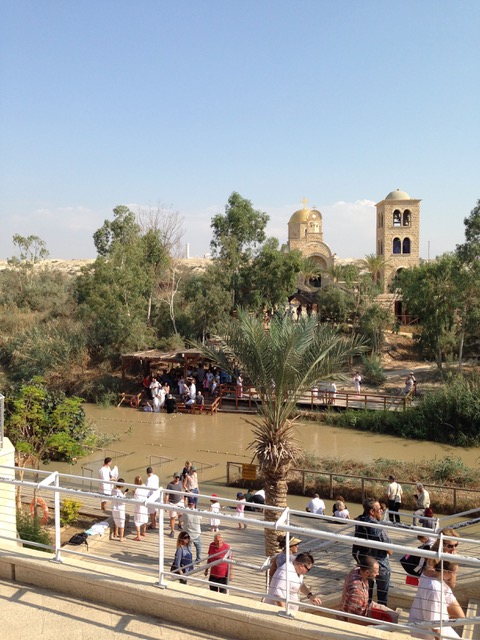
Most religious tours to the Holy Land take their pilgrims to a place where they can prayerfully remember this moment. The site that years ago was used by all tours was a small dammed-in reservoir at the source of the river, very near the Sea of Galilee, all stocked with bathrooms, showers, rental of white gowns, restaurant, and souvenir shops. It was losing its popularity because it seemed so commercialized and artificial. So the Israeli government created a national park much farther south along the river bed, near Jericho and the “Mount of Temptation”, closer to the area where Jesus was probably baptized by John.
The place has a new Visitor Center, which charges for the showers and gowns for Evangelical Pilgrims who want to go into the waters of the small stream where the Israeli army allows water to flow just for this purpose. There are platforms and stairs leading into the water. It is a rather lovely place in the middle of the Judean desert. The Jordanians on the other side have a similar facility, with an Orthodox Church at the site.
Young, Evangelical Christians were having a ball sloshing around in the river. We Catholics would not dare go into those brown waters, but Fr. Charles poured a small amount over each of our heads, and we renewed our Baptismal vows. It was a very solemn experience. Then, everyone went off to take pictures.
I had to sit down by the water. I could not leave the spot. I was overwhelmed by being there, and so was my wife. Perhaps it was the hot desert sun, but I sensed a shimmer all around. My Lord was once there, and still is now! I felt our Abba leaning over us. Was He well-pleased with us? One of our fellow pilgrims, Felicia, a Nigerian-American from the Bronx, stayed with us. She is Catholic Charismatic like us, and somehow we found ourselves standing up, holding hands, and praising God at the top of our lungs. We did not care how crazy we looked. It felt so right. I lost all sense of where I was in the dazzling light. I ran out of things to say in either English or Spanish, and starting praising in words that I did not understand. We sang, we cried, we laughed like children. The tour guide had to come and tell us that it was time to go. We went back up to the bus “like men dreaming,” big smiles on our faces. We looked into each others’ shining eyes, lovingly.
The Baptist said, “On whomever you see the Spirit come down and remain, He is the One Who will baptize with the Holy Spirit.” (Jn 1: 33b) That’s what the Baptized Prince of Peace had done to us that day, no one can tell me otherwise. The Lord gave us a “Baptism of the Spirit” right then and there! The beauty of our Faith is that we do not need to travel thousands of miles to have this experience. Our beautiful Father can open up the clouds of our distraction and doubt, and look lovingly upon His “Beloved Son” right within our hearts. Their Living Spirit is constantly “coming upon” us if we just invite Him in prayer.
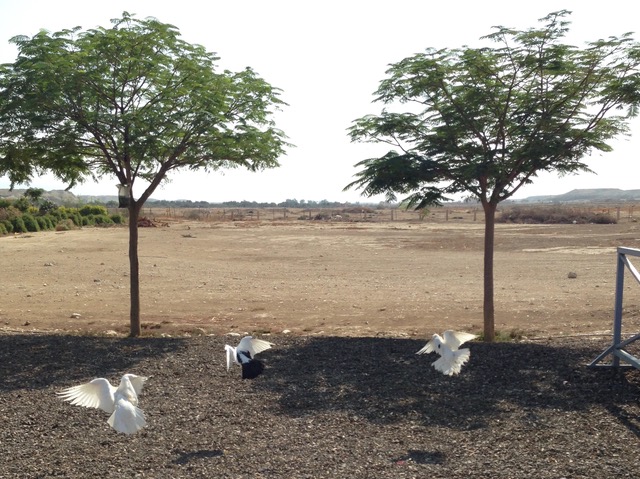
That day in Palestine, on the way back to the bus, we saw a spot where it seems someone leaves bird seed, and white pigeons come to feed. They were so wonderful to see, symbols of the Spirit of Peace. A few feet away, behind the barbed-wire fence, the desert is still littered with unexploded land mines left there by the retreating Jordanian Army back in 1967. The Israeli Army has just left them there, a reminder that after all, we live in a very dangerous world. One could say that 2000 years ago, on that blessed day at the Jordan, Jesus’ pilgrimage would begin: His long, holy journey to the Cross, so that today I can dare to pray:
Holy Spirit, Beloved of my soul, I adore You. You enlighten me, guide me, strengthen me, console me. Thank You precious God! Let there be peace on earth.
Rocks. Ropes. Nature. Trees everywhere. Figures climbing, But not many are there.
What could it be? A forest? God’s creation? An adventure ahead? Maybe so.
What are the figures doing? Perhaps setting up gear. Tying knots everywhere. Ropes swinging down a mountain.
A tent. A sleeping bag. On walls of galore. Maybe the figures are scaling the walls.
As I help set up the ropes, There’s this strong feeling inside me, saying, I’m scared! What if I fall?
Will I see God’s creation? Are there spiders, leaves, or caterpillars? Perhaps I will see a stream of water flowing from a rock. On the journey up the wall, will I fall?
As my hand touches the hard rocks, I say in my mind, You can do this!
When I slip, I try again. Although the rock is rough, no matter what, I try again.
If I do succeed, I scream Shouts of happiness and fear At the same time.
When I’m up there, I thank God that I’m all right. As I stand up at the top, I see seagulls and many other birds. What wonderful creations God has made!
My father got paid once a month. We were all aware of this, especially toward the end of the month. On payday my mother did a huge shopping. Several carts needed. Endless trips back and forth from the station wagon to the kitchen counter. My brothers and I scoping out the doubled-up paper bags as we carried. Week one was a feast, my mother needing to hide bags of chips and Peanut Chews in her room. Week two was a hardy week. Good solid meals, controlled deserts. Week three saw a steady decline. The bags of egg noodles taking center stage. If the hidden chips or Chews weren’t already found they’d make a celebrated appearance. Week four saw creative stretching: the jar of Ragu getting a splash of tap water to further the sauce. What we didn’t realize at the time was why my father often sat watching our plates. One of our favorites, chicken cutlets sizzling in the electric frying pan. The large dish in the middle of the table coated with paper towels to soak up the excess oil. Four forks poked away at the pile. My mother standing over the pan and moving cutlet by cutlet onto the center dish. My father watching. Four growing boys getting their fill. Young eagles devouring their parents’ kill. I thought my father was just being patient or holding off for some other cigarette-related reason, but mostly I didn’t think at all. Not until years later. The heart of the father now within my chest. He was waiting for us to finish. To be satisfied. Then he’d stab at the lone cutlet left in a pool of canola. But mostly he gathered. Collecting the remains from his sons’ plates. Scraps from their master’s table.
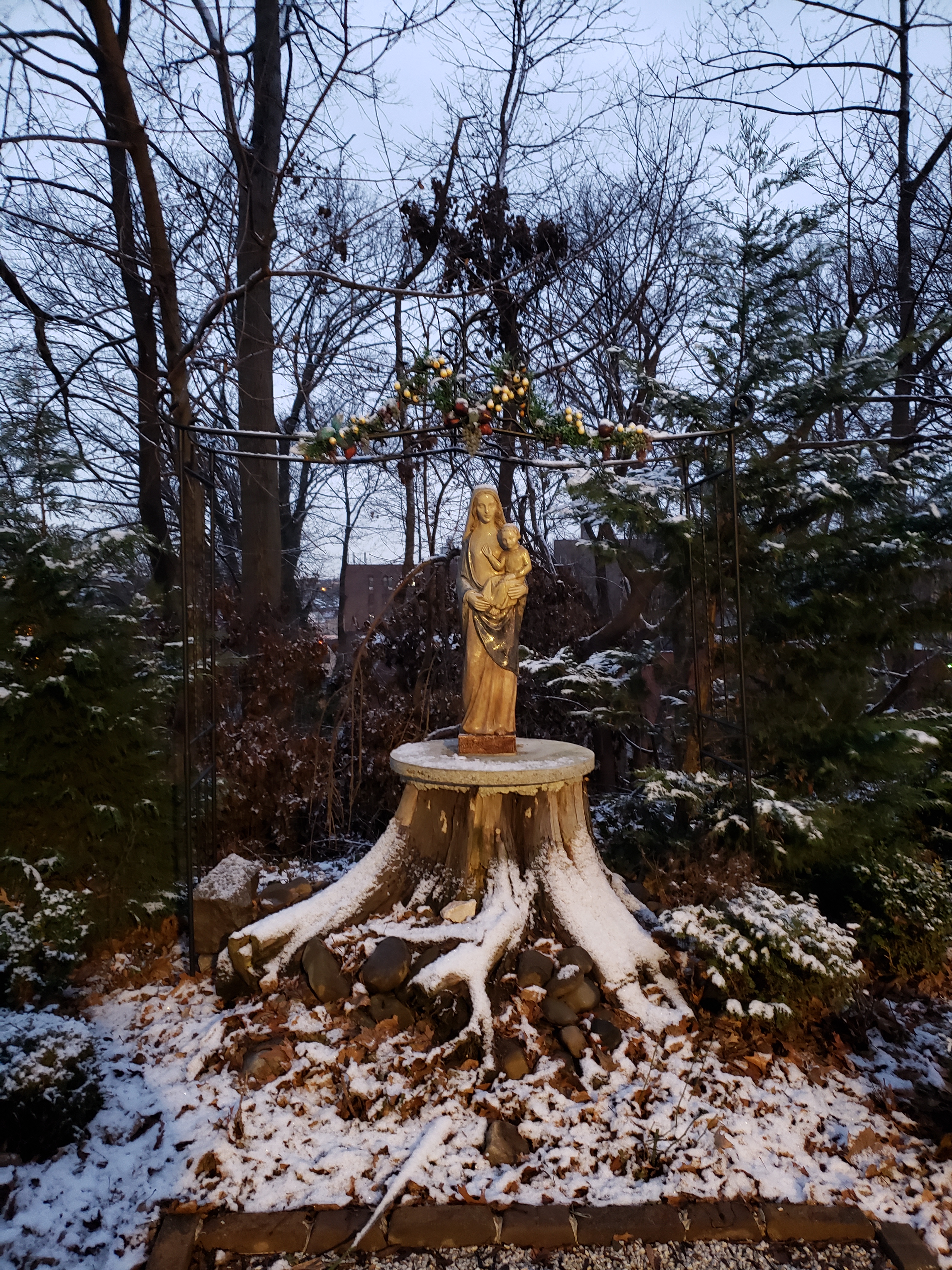
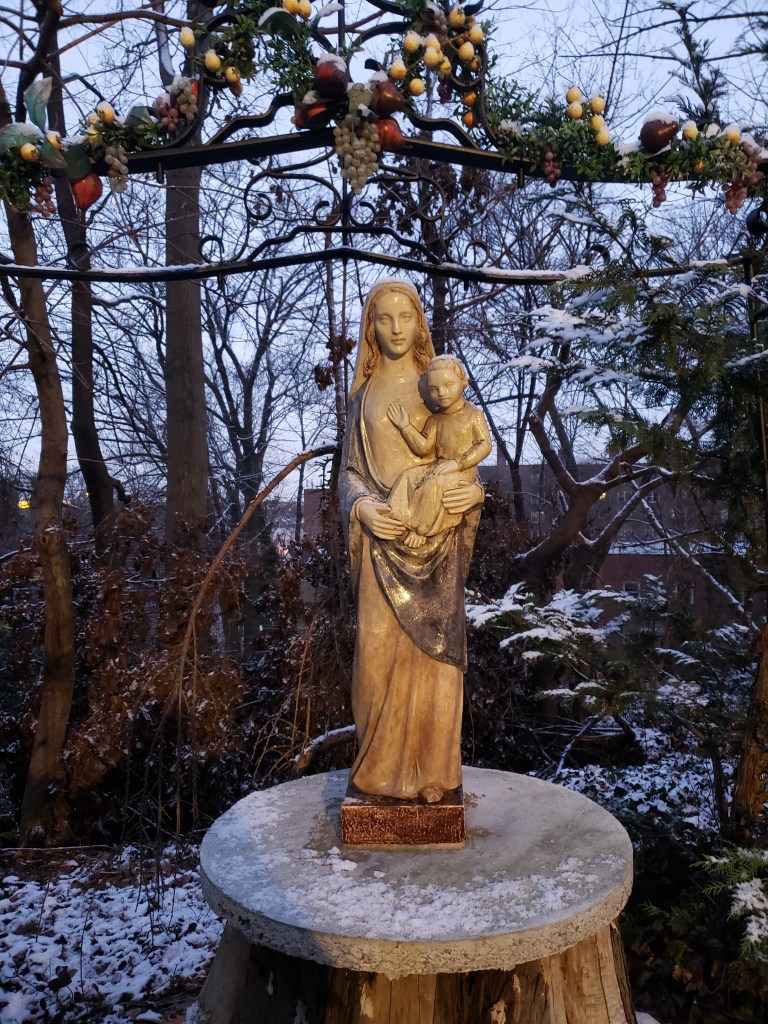
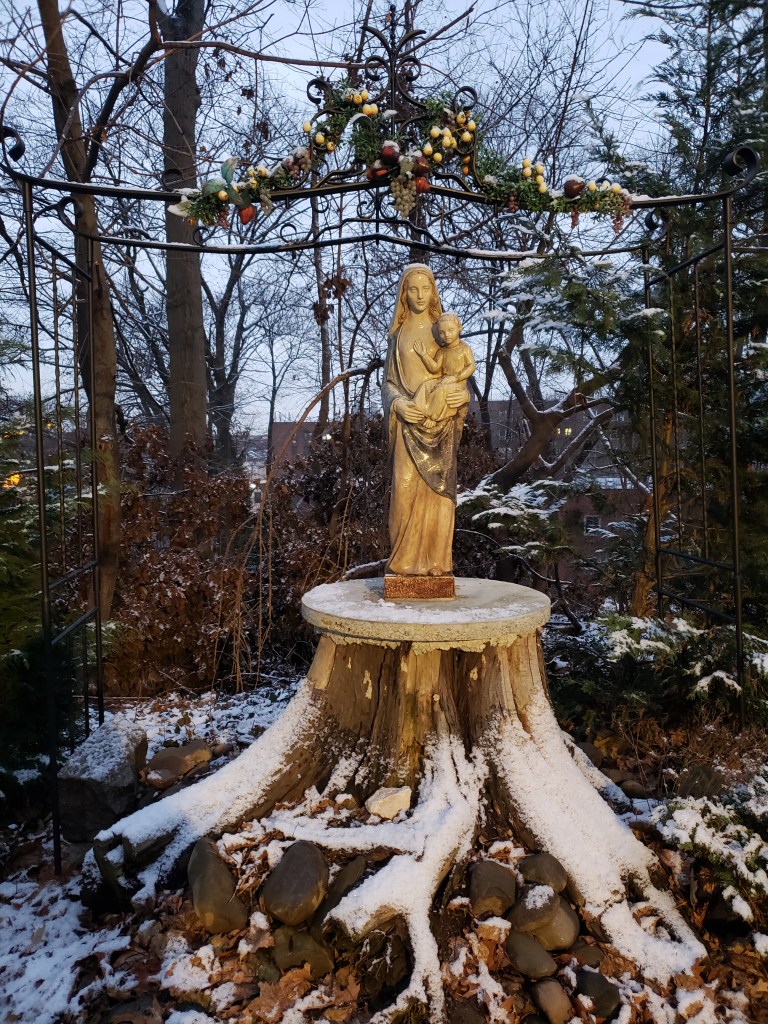
I was in the garden the other day. And I found a warm arena. A circle of evergreens. And standing upon a stump a mother holding her child. Homeless per se. A cold dark morning, the beginning of a new January day. Never what you’d expect, porcelain instead of stone. Pottery colors. So easily it could be broken. Like the snow beneath my feet. Crunched back into liquid. Yet some flakes drifted back up. Warmth neither melted nor shed. And there I stood halo of frost upon the head. A mother and child. An orphan within the wood. Take me with you. But nowhere do they go. Still and silent, porcelain afterglow. The sun will rise and the frost will flee. Mother and child took me home.
I know you are a thinking man. A man who values virtues. A man who swims in the pool of wisdom. So I share a little reflection.
How do you teach a child to read?
Well, there’s a prerequisite; you’re a reader yourself, one who loves to read, who reads well, and desires for those around you to fall in love with the word.
That in place, one can teach.
First, you read to the child, allowing him or her to see the pictures and the words while hearing your voice. A clear, kind, enthusiastic voice.
Second, you have the child follow your finger as you skim the words, allowing the ears to hear the sounds of the alphabet and the phonetic utterances the child is beginning to grasp.
Third, she sits with you attempting to connect the letters, words, and utterances with the images, while you fill in the gaps, spaces, and necessary connections. All the while audibly and visibly full of wonder at her progress.
Fourth, you listen to her read, not based on images but on the letters and words themselves that create images, as the child begins to take command of language. You gently encourage and correct and praise.
Fifth, the child reads to you. You listen with great attentiveness.
Then, you begin to read separately while sitting side by side.
Finally, the child reads on her own, knowing she will never again be alone.
You smile, thinking of the great joy that lies ahead.
You continue to read, endlessly encountering not only the words but the silence from which they spring.
 The Victor's Place