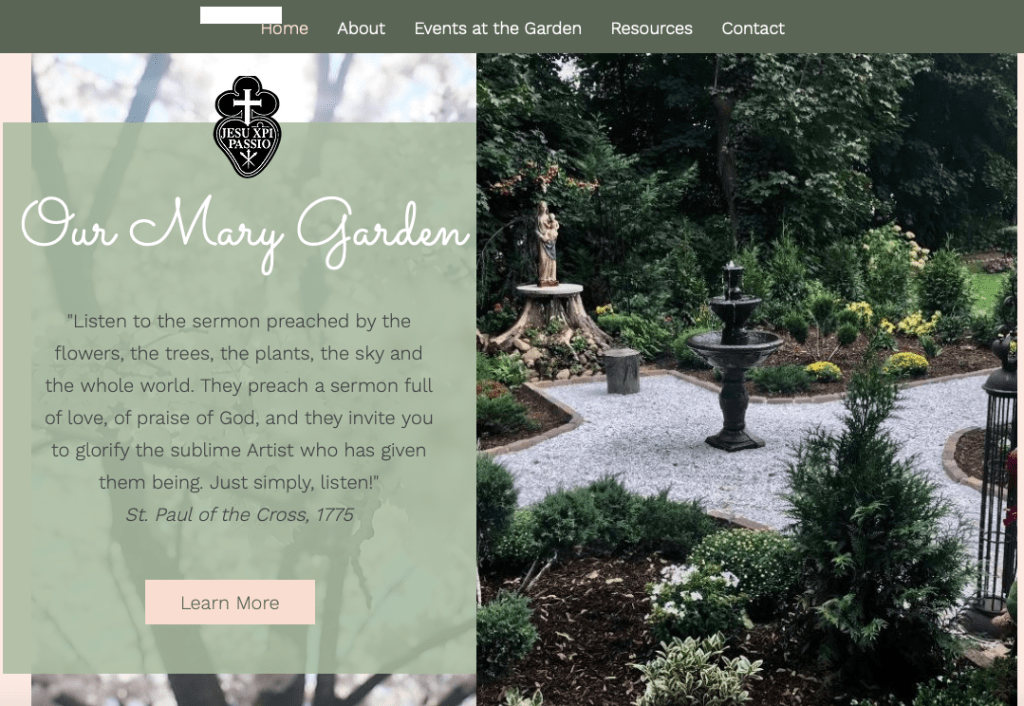
Take a look at our new website,http://www.ourmarygarden.com which tells you about our Mary Garden at Immaculate Conception Monastery, Jamaica, New York. It’s a treat for the eyes and the heart. A sermon of another kind. A sermon we need to hear.
The Gospel (Mk 4: 35-41) for the Saturday of the third week in Ordinary Time tells the dramatic story of Jesus’ miracle when He saved His disciples from the “violent squall” that befell their boats in the middle of the Sea of Galilee. I love how Jesus was peacefully sleeping in the stern.
According to the fourth chapter of Mark He had just finished a long day, standing on perhaps this very same boat, preaching to the many people that were on the shore. Our human Brother got tired, like all of us. The disciples had to wake Him and even dared to reprimand their Master: “ Teacher, do you not care that we are perishing ?” Our Lord swiftly takes care of the situation, as if this dangerous natural phenomenon were just a little, unruly child: “ Quiet! Be still!”
Jesus is apparently disappointed at their lack of faith, and they seemed to confirm His opinion as they say (One of my most beloved sentences in the Bible!): “Who then is this whom even wind and sea obey?” They still did not understand the incredible Blessing that they were living with. Even now, some of us, at certain moments find ourselves at the perilous edge of our faith in difficult, stormy times. The Loving One is sleeping quietly within us, and we just can’t find the way to “wake Him”, or so we think. I also find myself suddenly, even in the midst of my most recollected moments, asking Him the question: “Who ARE You? “
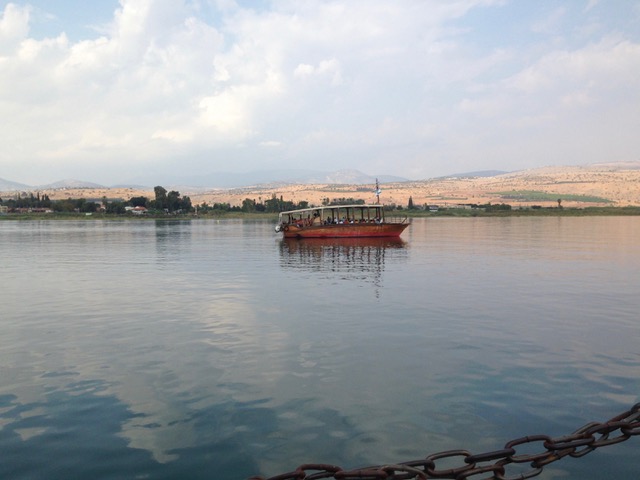
I was thinking about this Gospel on our Pilgrimage to the Holy Land, as I stood on the prow of the wooden ship that was giving us a ride on the Sea of Galilee. Conditions were totally different from those in the Gospel. The blue waters of the Lake were totally calm, reflecting the clouds in the sky. It was very beautiful and comforting. On the shore we could discern the traditional sites of the Sermon on the Mount, of the place where Jesus asked Peter, “Do you love me?”, and of the ruins of the ancient town of Capernaum. I wondered where along that shore was the cove where Jesus stood on the boat and told His parables. To think that some 2,000 years ago He WAS here, at this lake, filled me with emotion.
Everyone in the boat was so quiet. The vessel was large enough for us to walk around, from one side to the other. The water was so still that we did not have to sit down. There was such peace, and yet I remembered the Gospel, how from one minute to the other a dreadful storm could come along and threaten our lives. Either way, our Lord is always with us, resting in our hearts.
As we were returning, the boat staff played recorded music, well-known religious hymns like “Amazing Grace”, “How Great Thou Art”, and Gospel songs at a faster tempo. Many of us started to hum or sing along, even lift our arms, clap our hands, and “dance”. The Holy Spirit of joy was palpable. We would move around, look into each others eyes without fear, and smile, even laugh. There was such fellowship to this group of Pilgrims, so much love. I thank God every time I think of them.
The boat on the Sea of Galilee can be seen as a symbol of our Church, carrying the people of God. We move on, forward, to where Jesus is taking us. Sometimes it gets turbulent, but no matter what our problems, we’re in this boat together and our ship’s Master is always with us.
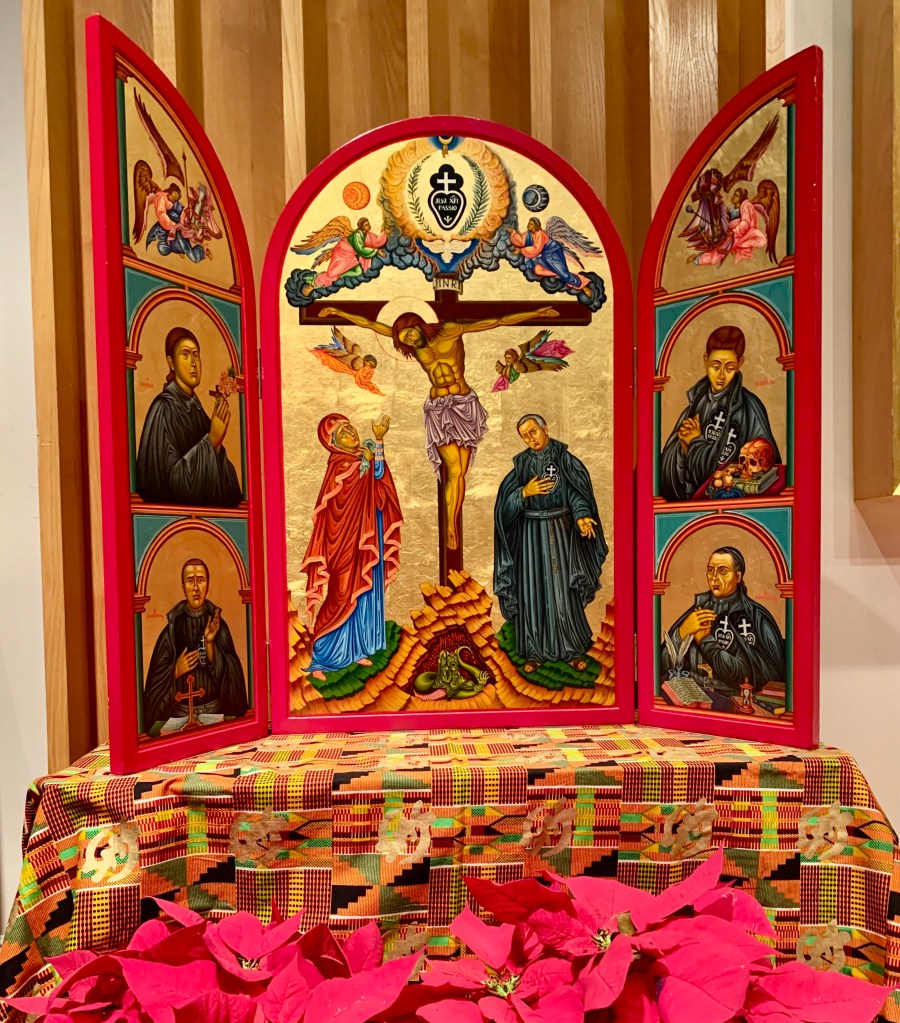
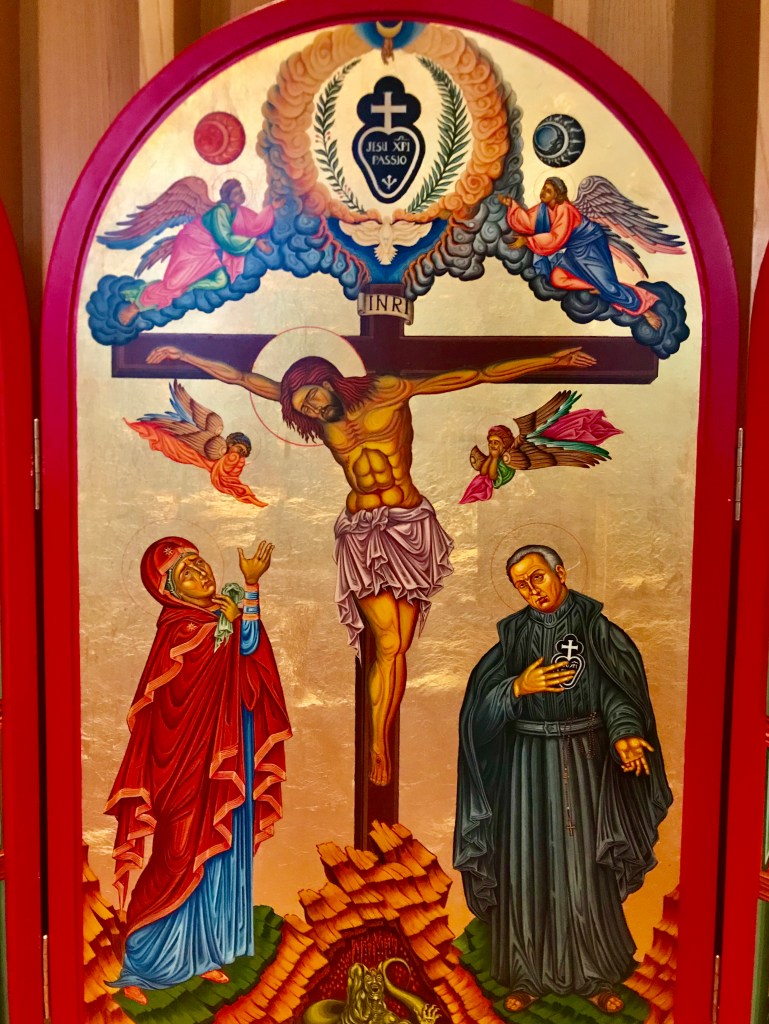
The Passsonists recently commissioned the painting of an icon to celebrate their founding 300 years ago.This year and part of next year the icon, a tryptic painted by a prominent European iconographer, is traveling to different Passionist communities throughout the world.
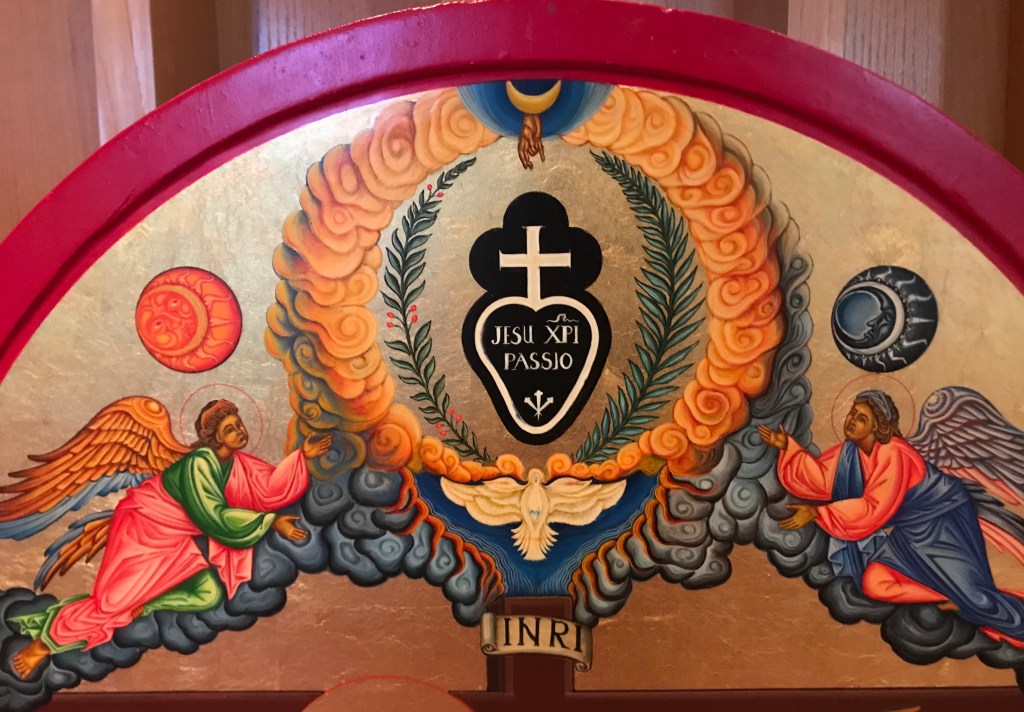
The top part of the icon shows the heavenly origins of our congregation. The hand of God the Father surrounded by his angels offers the Passionist Sign, symbol of the community, to the world, signified by the sun and the moon. The Dove, the Holy Spirit, brings this gift into the world.
Our congregation is not just a human creation, it’s from the hand of God, through the Holy Spirit. It’s not simply human in its origin.
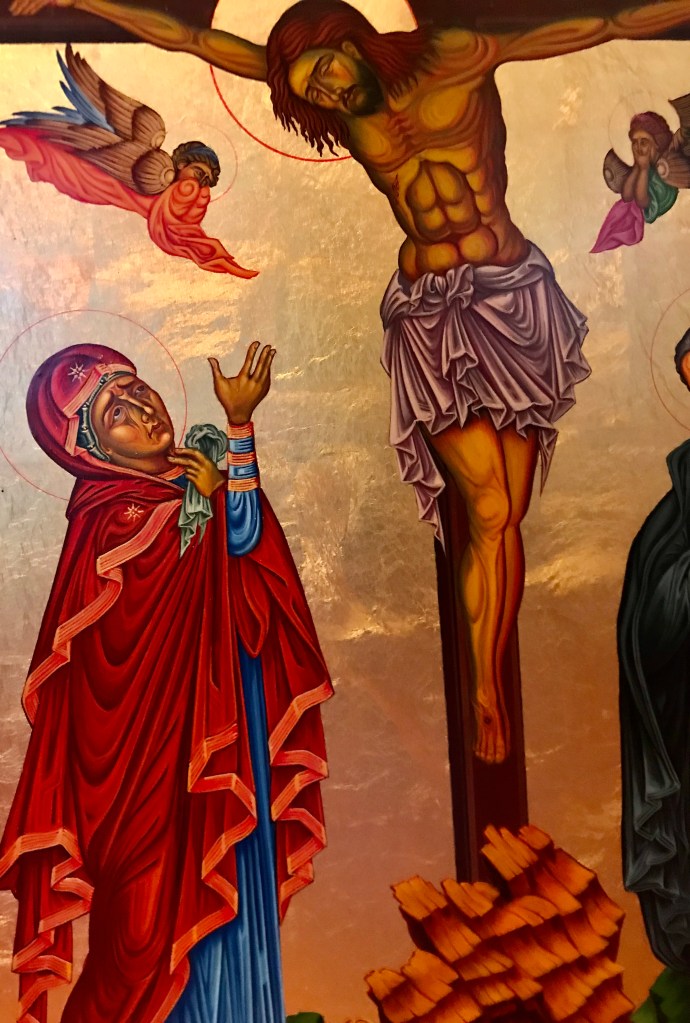
The congregation is to keep alive the mystery of the Passion of Jesus in the world. The central panel of the icon is focused on Jesus Crucified.
Mary, his mother, points to her Son. She’s the sorrowful mother, holding a cloth to her tearful face; two angels surrounding the Cross weep with her.
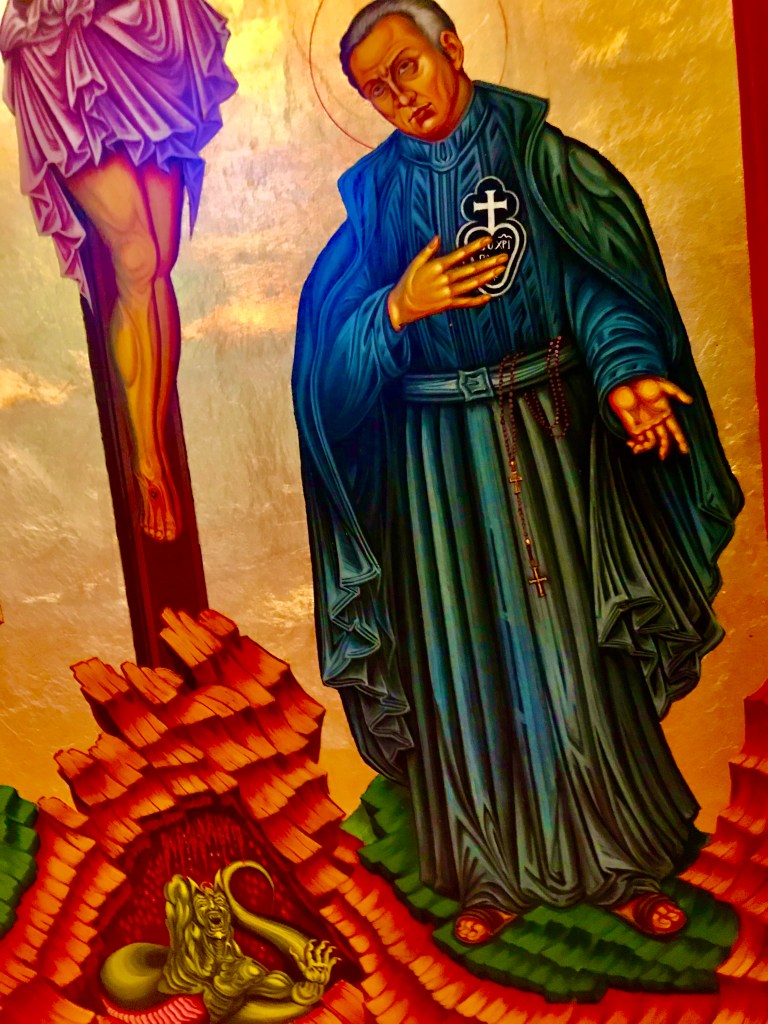
Paul of the Cross stands on the other side of the Crucified Jesus, looking at us. He has one hand on his heart and the other extended to us. His mission to proclaim this mystery to the world.
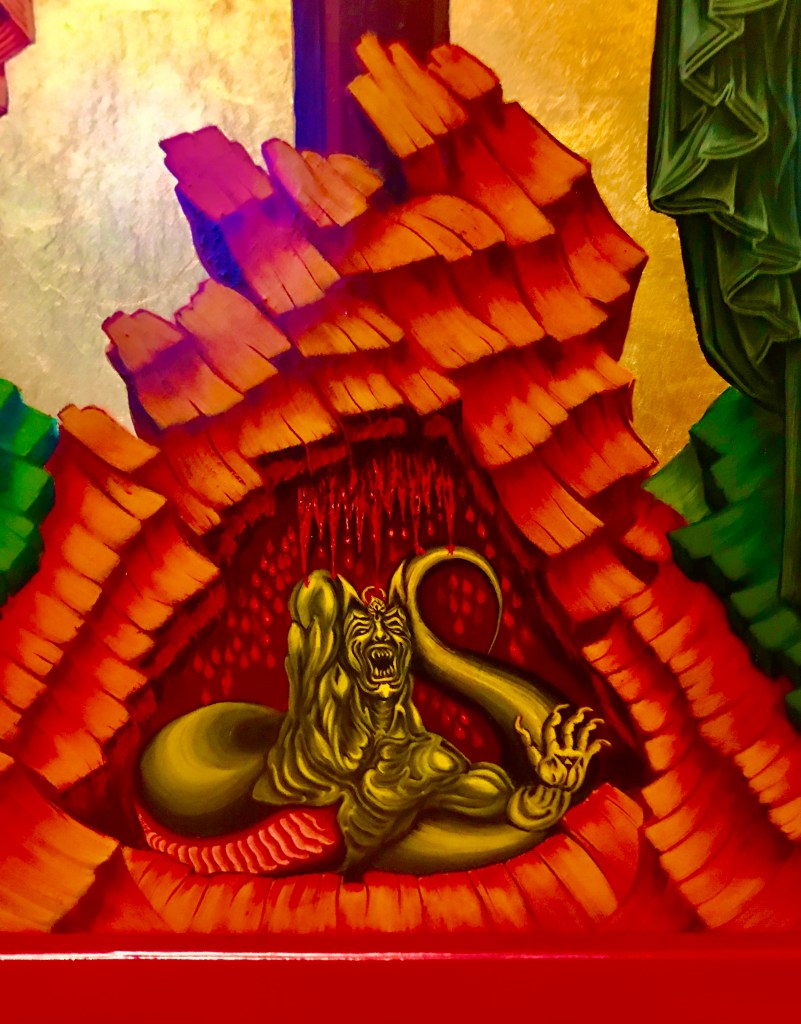
The Cross stands on a rocky cave containing a coiled monster in yellowish green. Artists sometimes place the bones of Adam and Eve beneath the Cross, which brings them new life, but here the artist has a symbol of evil that must be defeated.
That evil is the “forgetfulness of the passion of Jesus” that Paul saw affecting the world of his day. Great changes were taking place in his time, the 18th century. The Enlightenment, a movement still affecting our world today, had begun. It fostered a new enthusiasm for human learning and human progress. It brought about a scientific revolution and an industrial revolution that changed the way we live and think in our western world.
The Enlightenment has brought benefits, but it also brought about a forgetfulness of religion. diminishing religion’s importance in western society. It also brought about a forgetfulness of creation, as Pope Francis claims in his letter on the environment, Laudato Si. Human flourishing came before the flourishing of creation.
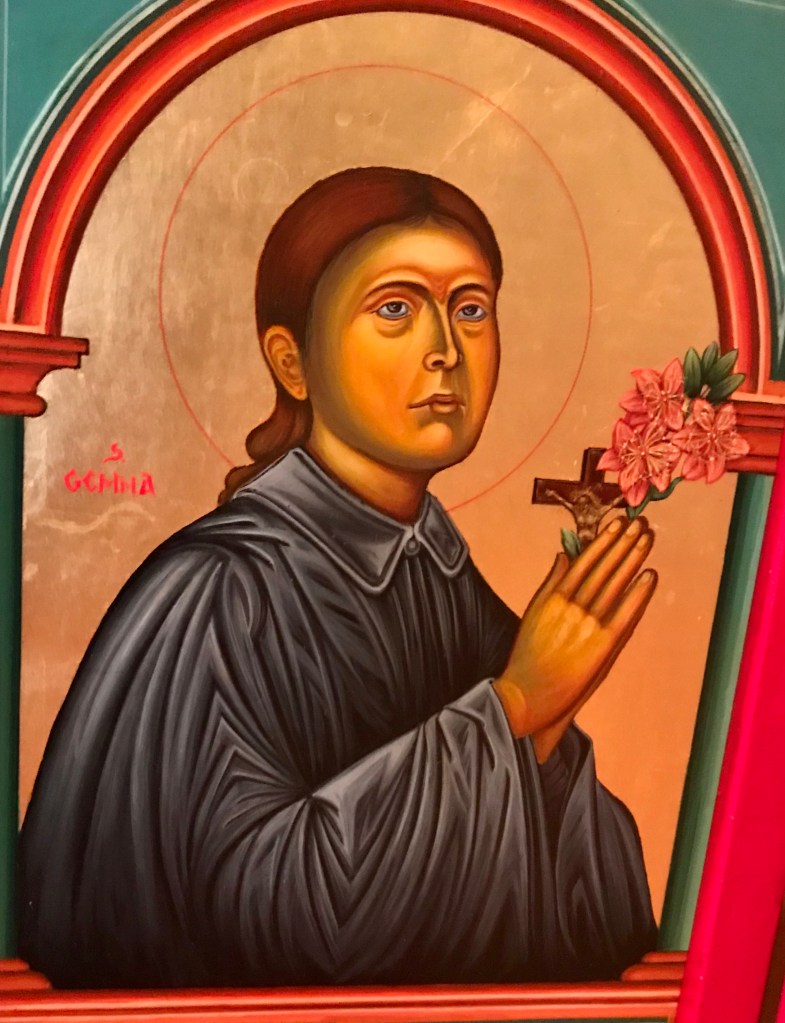
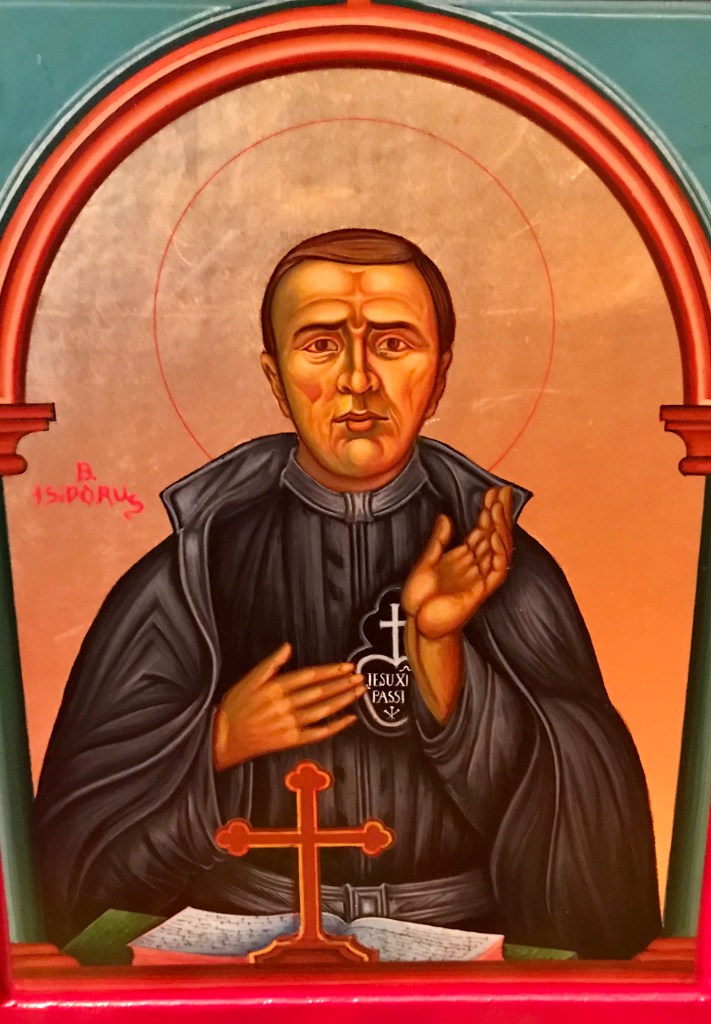
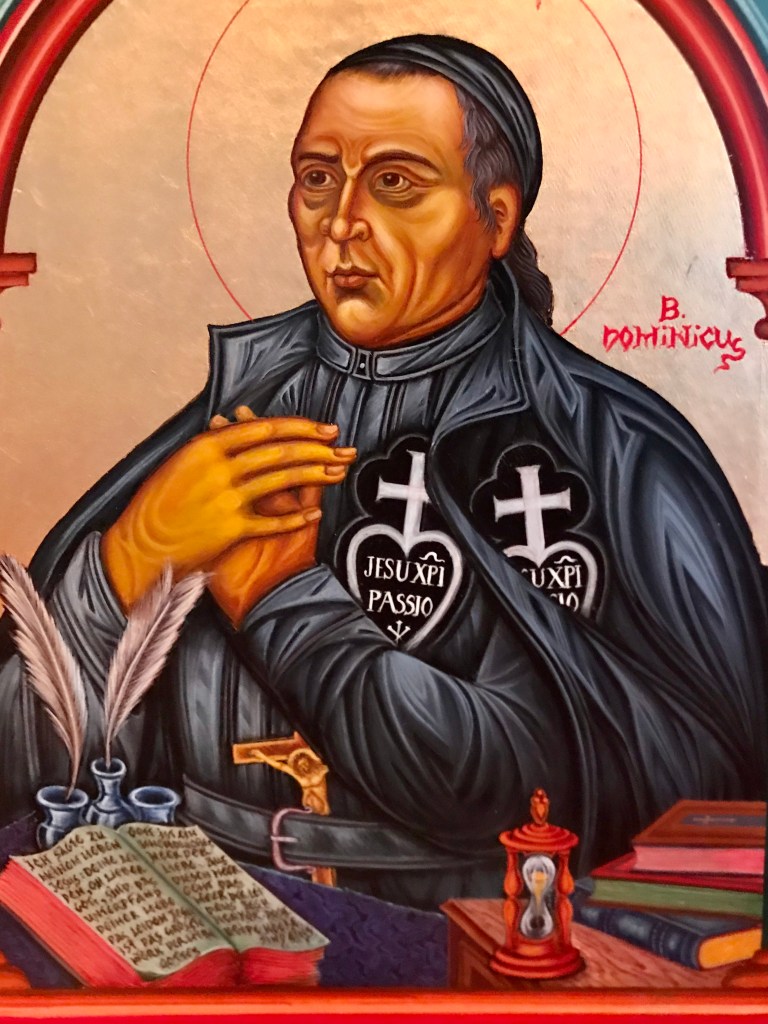
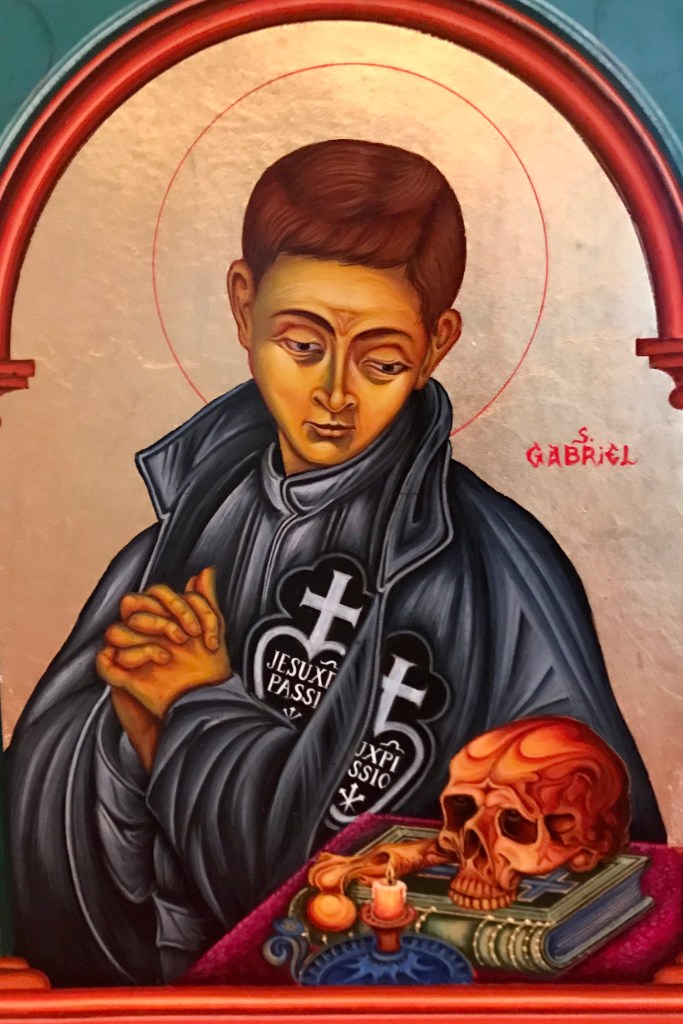
The side panels of our icon have portraits of Passionist saints and blesseds. St. Gabriel Possenti and Blessed Dominic Barberi on the right facing us, and St. Gemma Galgani and Blessed Isidore de Loor on the left. They follow Paul of the Cross in his mission.
Gemma certainly represents the women called to share in the Passionist charism, religious women and laywomen.
Isidore de Loor, represents the religious brothers who embrace the Passionist vocation, but he also represents all those who, from beyond Italy, from Europe and the rest of the world, would follow the Passionist charism. Isidore bears a cross on his forehead; he suffered from cancer during the Nazi wartime occupation of Belgium.
Blessed Dominic Barberi represents the missionary outreach of the Passionists. As a zealous missionary to England he received Cardinal Newman into the Catholic Church.
Gabriel Possenti grew up in 18th century Spoleto, a center of the Italian Enlightenment. He was an Enlightenment child, who found the wisdom of the Cross as a Passionist.
The angels at the top of the panels of the saints link them and those who come after them with the heavenly mystery revealed to Paul Danei 300 years ago. Recalling the past, the icon points to years ahead.

 The Victor's Place