The Passion of Jesus is a “word to the weary”. This is how to hear the story of the Passion of Jesus, the Prophet Isaiah says in our first reading for Palm Sunday. (Isaiah 50:4-7)
It will “rouse them” the prophet says.
Who are the weary? The gospel of Mark points them out. They’re the disciples of Jesus who fall asleep in the Garden before the challenges of faith. They’re the religious leaders and political leaders who can’t see beyond their nation and its security. They’re the crowd that cries out for the death of One promising them a kingdom. They’re the soldiers blindly carrying out an unjust sentence.
Mark’s Gospel, like the others, tells a story that takes place mostly in darkness. In a dark garden Jesus prays and is betrayed, on a dark day he is sentenced and crucified, the day ends in the darkness of a tomb.
But there are moments of light for seeing more. There’s the room in Bethany where costly perfume is poured on Jesus’ head, anointing him for his death. There’s the room near the temple where Jesus took bread and wine and gave them to his followers, pledging to bring them to his Kingdom. There’s the centurion who suddenly sees “ the Son of God” as Jesus breathes his last breath. There’s Joseph of Arimathea and the women who do not abandon him but carefully buried him.
Who are the weary? We are, for we also look on in the darkness, not seeing God’s great Love and its promises. Yet Isaiah says, speaking of Jesus, “the Lord GOD has given me a well-trained tongue, that I might know how to speak to the weary a word that will rouse them.” He speaks to us in his Passion, a story to rouse us.
For this week’s homily please watch the video below.
Fr Rick Frechette is a Passionist, a priest and a physician, who has spent most of his priesthood in developing countries.
He was born in 1953 in Connecticut, joined he Passionists as a novice in 1974, was ordained in 1979, and received a Doctorate in Osteopathic Medicine in 1998.
The movement he started in Haiti to both improve the lives of the very poor and empower them with leadership, is under the patronage of St Luke, evangelist and physician.
Mk 11:1-10 or Jn 12:12-16 /Is 50:4-7/Phil 2:6-11/Mk 14:1—15:47 or 15:1-39
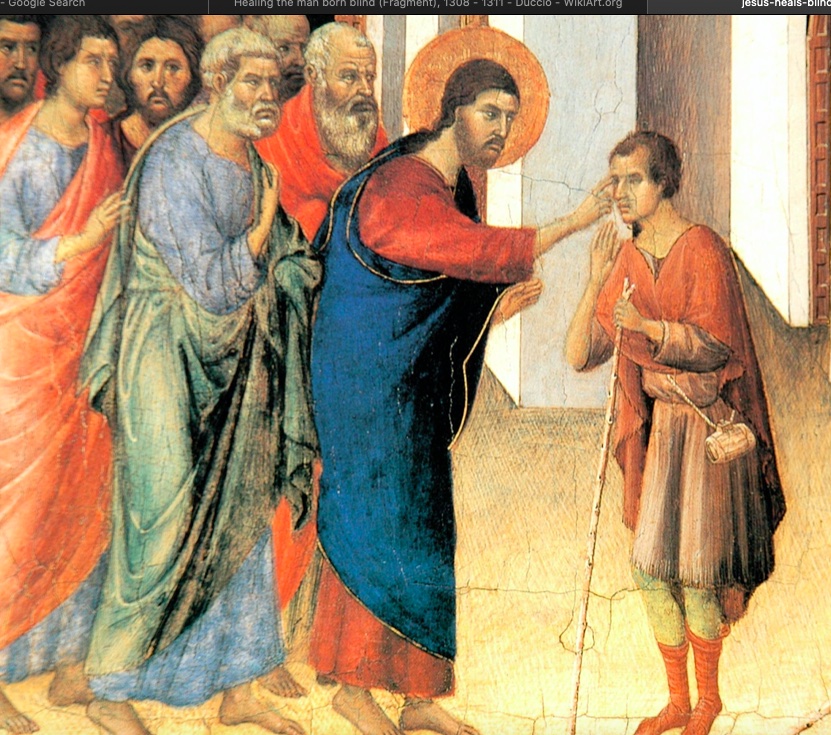
John’s Gospel, recalling Jesus’ days in Jerusalem, is read most days this week. Because of their importance in the mission of Jesus, the account of the Man Born Blind (John 9:1-41) and the Raising of Lazarus (John 11:1-45) may be read on any lenten weekday this week. Jesus brings light and life to the world.
The ancient Feast of the Annunciation of the Lord, March 25th, announces who Jesus is and why he came among us. In early times many believed this day was the same day Jesus was crucified and the world its was created.
Even though the pandemic still prevents celebrating the lenten mysteries in our churches, we can still follow them online. The readings for this week are here. Morning and Evening Prayers for this week, week I, can be found here. Suggestions for praying with children can be found here.
The Passion Narrative for Palm Sunday is from Mark’s Gospel, which is read on most Sundays this year. A commentary on Mark’s Passion Narrative is here.
For this week’s homily please watch the video below.
Fr Rick Frechette is a Passionist, a priest and a physician, who has spent most of his priesthood in developing countries.
He was born in 1953 in Connecticut, joined he Passionists as a novice in 1974, was ordained in 1979, and received a Doctorate in Osteopathic Medicine in 1998.
The movement he started in Haiti to both improve the lives of the very poor and empower them with leadership, is under the patronage of St Luke, evangelist and physician.
For this week’s homily please watch the video below.
Fr Rick Frechette is a Passionist, a priest and a physician, who has spent most of his priesthood in developing countries.
He was born in 1953 in Connecticut, joined he Passionists as a novice in 1974, was ordained in 1979, and received a Doctorate in Osteopathic Medicine in 1998.
The movement he started in Haiti to both improve the lives of the very poor and empower them with leadership, is under the patronage of St Luke, evangelist and physician.
Readings In Matthew’s gospel, chapters 5-7, Jesus speaks to his disciples from a mountain, a place Moses once chose to speak to the Jews, but Jesus speaks God’s revelation to a wider world from a mountain. His words are loyal to the Jewish traditions and laws that Moses taught. He’s not abolishing them. He came “not to abolish them but to fulfill them.”
First, remember them. That’s what the Jewish scriptures tell us to do. “Take care and be earnestly on your guard not to forget the things which your own eyes have seen, nor let them slip from your memory as long as you live, but teach them to your children and to your children’s children.”
Lent calls us to remember.
Second, practice them, from the greatest of the commandments to the least. Lent leads us to great thoughts and great visions of faith, but this season reminds us to remember and to do small things as well. “A cup of cold water,” a prisoner, someone sick visited, someone naked clothed, someone hungry fed, “a word to the weary to rouse them.”
The law of God often comes down to small things like these. They’re always at hand, readily available. They’re within our power to do, and the greatest in God’s kingdom are best at doing them.
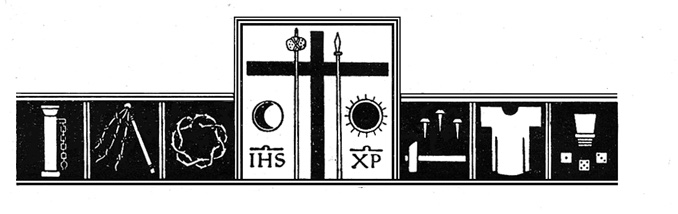

 The Victor's Place