Mary, the Mother of God

Virgin and Child

The Feast of Mary, the Mother of God (January 1) is celebrated by the Roman Catholic Church as the Christmas celebrations end and a new year begins. This feast begins a month named for the Roman god Janus, the two faced god who looks ahead and looks back. Mary connects us to the world ahead as well as the world of the past, and so we pray to her “that we may be made worthy of the promises of Christ.”

Christian churches of the east have a similar feast at this time honoring the Virgin Mary as the Mother of God. .

“Marvelous is the mystery proclaimed today
Our nature is made new as God becomes man;
He remains what he was and becomes what he was not,
Yet each nature stays distinct and undivided.” Canticle, Morning Prayer

Mary’s Son who came “in the fullness of time” blesses all time:
“The LORD bless you and keep you!
The LORD let his face shine upon you,
and be gracious to you!
The LORD look upon you kindly and give you peace!” (Numbers 6, 22-27)

On this feast of Mary, the Mother of God, I think of a PBS special “What Darwin Never Knew” produced awhile ago on Nova. I don’t remember or understand a lot of the program’s scientific material, but its description of DNAs and embryos caught my attention.

According to scientists, embryos from different living beings–humans, animals, birds, fish– appear remarkably alike at an early stage of development, as if they were from the same source. Then, something triggers a different development in each species. Humans sprout arms and legs and begin human development. The other species develop in their own way.

A few years ago, I visited an exhibit called “Deep Time” at the Smithsonian Museum in Washington which described the development of the earth through 4.5 billion years. One section described our development as human beings from 4.5 billion years ago. Our human species developed over time in an evolving world.

In Mary’s womb, the Word became flesh, connected with the world of the past and the world of the future. Early theologians, like St. Irenaeus, say the Word became truly human, and therefore went through the same process of development as we do. They also say the Word had to assume all that he would redeem. Can we say that in his early embryonic journey in Mary’s womb the Word assumed the creation he would renew? The embryonic journey is a sacred journey that needs to be cared for and recognized.

“Blessed is the fruit of your womb,” Elizabeth says to Mary before Jesus’ birth. (Luke 1,42) At that moment, the Word of God gave the promise of redemption to another infant– Elizabeth’s son John. Was that promise also communicated to the rest of creation in Mary’s womb, by the Word made flesh, who dwelt among us– Jesus Christ, maker and Savior of all?

Nazareth: Where Jesus Was Raised


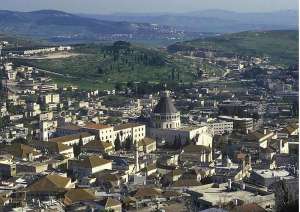
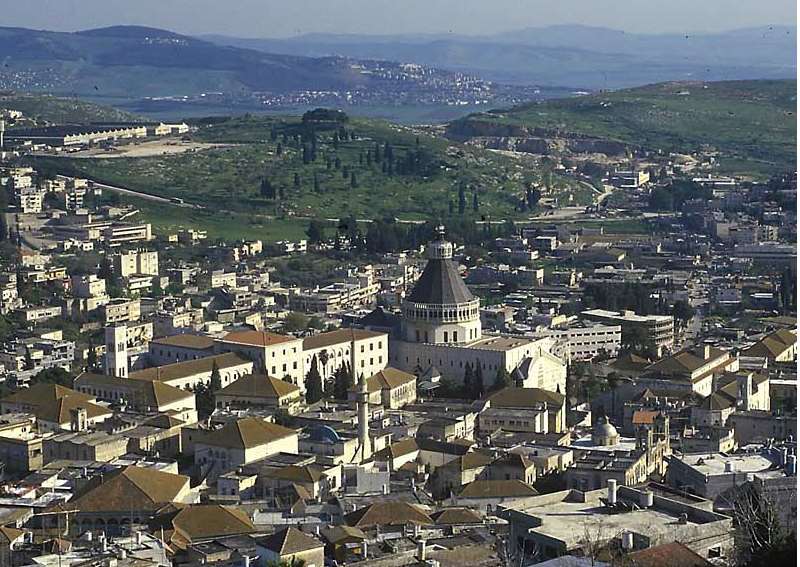
What was Nazareth like? We might think it was a quiet little town far from anywhere else in Jesus’ time; the gospels indicate his early years were spent in such a place.  Recent historical studies tell a different story. The town was not as isolated as once believed.  Just four miles away was the thriving Greco-Roman city of Sepphoris, recently uncovered by archeologists, and nearby were roads to Tiberias, Jerusalem, the sea coast and the rest of the world.

 Galilee’s economy was booming then, thanks to the rich soil of the Esdraelon plains, the fishing villages along the Sea of Galilee, the stability of Roman rule and Herod Antipas, a skillful administrator and builder who was firmly in charge then.  His new regional capital, Tiberias–a model of Greco-Roman city planning– dominated the shores of the Sea of Galilee. A new port, Caesaria Maritima linked Galilee to the rest of the Roman world. 

Could Nazareth, 15 miles east of the Sea of Galilee and 20 miles west of the Mediterranean Sea, situated in a thriving province, be shut off from this world?

How did Jesus get there?

Some historians say Joseph and Mary were not from Nazareth in Galilee, but from Judea.  Matthew’s gospel, in contrast to Luke’s, indicates that Joseph was a Judean associated with Bethlehem, David’s city. Mary’s family may have been associated with the temple in Jerusalem. The Church of St. Ann there claims to mark Mary’s birthplace in that city. 

Another tradition, however, says Mary was born in Sepphoris, near Nazareth. After Jesus’ birth in Bethlehem, the gospels indicate his family moved north to the small town of Nazareth to escape the clutches of Herod the Great, who ordered the slaughter of infants. When Herod died, he was succeeded by his son Archelaeus, who was just as unstable as his father. Herod Antipas, another of Herod’s sons yet slightly less dangerous than Archelaeus, inherited power in Galilee after his father’s death in 6 BC and ruled till about 36 AD, in the lifetime of Jesus. He began building the city of Sepphoris in 3 BC. Workers from nearby Nazareth would likely have been recruited to build that city.

Jesus and his followers rejected

Whatever its history, Nazareth will always be a mystery. Instead of supporting Jesus, the Nazareans turned their backs to him, the gospels say. They drove him out of their synagogue when he announced his mission and said he was mad. (Mt 13,54-58)  After his resurrection, there is no evidence Jesus appeared there; his followers in Nazareth were few. “No prophet is without honor except in his native place,” Jesus said. (Mt 13,54)

A Christian Minority through the Centuries

Followers of Jesus in the town where he was raised continued to be few, it seems. By the time Matthew’s Gospel was written, around the year 90, after the destruction of Jerusalem and the temple in 70 AD,  scribes and temple officials as well as the pharisees from that city had moved to the Galilean cities of Tiberias and Sepphoris, near Nazareth, and began a powerful new movement in Judaism.

Did they drive the followers of Jesus out of the Galilean synagogues just as his contemporaries drove him out of Nazareth?  Matthew’s gospel offers numerous warnings that the disciples would be handed over to the courts and scourged in the synagogues. (cf. Mt 10, 17)

“Slender evidence suggests that a Jewish Christian community survived in Nazareth during the C2 and C3 AD, “ writes Jerome Murphy-O”Connor. (The Holy Land, 423) The nun Egeria, one of the few early Christian visitors to Nazareth, found a cave considered part of Mary’s house in the 4th century,  but she did not stay long in the town.  In 570 AD a pilgrim from Piacenza found Nazareth a hostile place:  “there is no love lost in the town between Christians and Jews.” Two Christian churches were built at that time, but after the Muslim conquest of Palestine in the 7th century the number of Christians in Nazareth declined further and their churches were destroyed.

When the Crusaders conquered the town in the 11th century, they rebuilt the Byzantine shrines and added their own buildings; some remains are visible today. But after the defeat of the Christians in the 12th century, Nazareth once more became a Muslim stronghold and Christians a minority.

Through the ages, the Christian presence in Galilee remained small, dependent mostly on Christian pilgrims to the Holy Land. After the crusades, it was considered dangerous for Christians to enter Nazareth.  In 1620 the Franciscans bought a site in the  town where the house of Mary was said to be and they continued to nourish a Christian presence in the town. Through their efforts the large Basilica of the Annunciation, built over the early Byzantine and Crusader churches and archeological remains from the ancient town, was dedicated in 1968. The Greek Orthodox church also continued its ministry in this revered spot.

Nazareth itself remained poor and undeveloped from the time of Jesus until recently, when it became the provincial capital of Galilee and its population soared. From less than 1,000 inhabitants in Jesus’ time, the number has grown today to 70,000, mostly Muslim.

The large basilica of the Annunciation, with its extensive collection of art from all over the world honoring this mystery, is a gathering place for Catholic pilgrims. Here faith attempts to interpret this mysterious town “where our feeble senses fail.”

19th Century Nazareth

An English vicar left this quaint description  as he approached Nazareth towards the end of the 19th century. Unlike its neighbor, Cana, the town then was experiencing a modest revival:

“Our horses began to climb the steep ascent of 1,000 feet that brings one to the plateau in a fold of which, three miles back among its own hills, lies Nazareth.

“At last, all at once, a small valley opened below, set round with hills, and a pleasant little town appeared to the west. Its straggling houses of white soft limestone, and mostly new, rose row over row up the steep slope. A fine large building,with slender cypresses around it, stood nearest to us; a minaret looked down from the rear.

“Fig trees, single and in clumps, were growing here and there in the valley, which was covered with crops of grain, lentils and beans. Above the town, the hills were steep and high, with thick pasture, sheets of rock, fig trees now and then in an enclosed spot.   Such was Nazareth , the home of our Lord. (p 513)

“The town is only a quarter of a mile long, so that it is a small place, at best; the population made up of about 2,000 Mohammedans, 1,000 Roman Catholics, 2,500 Greek Catholics and 100 Protestants – not quite 6000 in all; but its growth to this size is only recent, for thirty years ago Nazareth was a poor village.”  (p 516)

The Catholic shrines of Nazareth were not among the English vicar’s favorite places to visit, but he does recognize one of the town’s enduring holy places:

“The water of Nazareth is mainly derived from rain-cisterns, for there  is only one spring, and in autumn the supply is precarious. A momentous interest, however, gathers around this single fountain, for it has been in use for immemorial ages, and, no doubt, often saw the Virgin and her Divine Child among those who frequented it morning and evening, as the mothers of the town, many with children at their side, do now.” (p.515)

“The Virgin’s Spring bursts out of the ground inside the Greek Church of the Annunciation, which is modern, though a church stood on the same site at least as early as 700 AD.They say that it was on this spot that the Angel Gabriel appeared to the Virgin; and if there is nothing to prove the legend there is nothing to contradict it.  Indeed, the association of the visit with the outflow of living water from the rock has a certain congruity that is pleasing. “ (p.516)

The Word Made Flesh

Nazareth, where Jesus lived most of his time on earth, offers few traces of the town he knew. Those were hidden years when the Son of God “humbled himself” by living inconspicuously, immersed in the steady, ordinary rhythms of a small 1st century Jewish town.  Jesus “became flesh” in Nazareth,  “one like us in all things but sin.”

Instead of Nazareth of the past, then, we may find him just as well in Nazareth of the present–or in any town or city or anyplace today, for that matter.

Jesus did not come only for the world then, he comes also for the world now, to dwell among us. Nazareth may help us understand the mystery of his Incarnation in our town and place.

Feast of the Holy Family

The Feast of the Holy Family became a feast in the Christmas season of the universal church calendar only in 1920. Before that it was a feast celebrated by the church in Canada. 

The First World War, which had gone on for 4 year and brought about a massive dislocation in family life all over the world, was just ending. Like the Family in Matthew’s Gospel today, families  were trying to escape violence, keep together and get a safe place to live and bring up children. The church placed this feast in her calendar for that reason.

“Rise, take the child and his mother, flee to Egypt, and stay there until I tell you. Herod is going to search for the child to destroy him,” the angel says to Joseph. There’s a promise to every family in God’s promise to Joseph. It’s a promise so many immigrant families displaced by wars, political situations, climate change, need to hear now. God cares for them. Think of families in Ukraine and some war-torn parts of Africa, families on our southern borders escaping political instability. 

The Family of this feast is not a model of a perfect family, safe in secure Nazareth, but an embattled family trying to find its way. It’s a model for embattled families today. 

The Feast of the Holy Family also offers a promise young people in our society, afraid to get married and have children, need to hear. Don’t be afraid of the commitment that is marriage and the children that come to you. God will see you through.

Finally, it’s a promise we all must work to see fulfilled as much as we can.

More than we realize, feasts and seasons alert us to real situations in life. They are graces from God. We need to pay more attention to the feasts we celebrate on our church calendar.

“For people are instructed in the truths of faith, and brought to appreciate the inner joys of religion far more effectually by the annual celebration of our sacred mysteries than by any official pronouncement of the teaching of the Church. Such pronouncements usually reach only a few and the more learned among the faithful; feasts reach them all; the former speak but once, the latter speak every year – in fact, forever. The church’s teaching affects the mind primarily; her feasts affect both mind and heart, and have a salutary effect upon the whole of man’s nature” (Pius X.Encyclical Quas primas, 11 December 1925).”

At Shepherds’ Field

By Orlando Hernández

     East of the Palestinian city of Bethlehem lies the mostly Christian suburb of Beit Sahur. It is believed that somewhere in the area of this town is the site where the hosts of angels appeared to the shepherds on Christmas morning (Lk 2: 8-20). In a large open space one can visit ruins of Byzantine monasteries and churches doing back to the 4th Century. An Orthodox Church and a nearby Catholic Church commemorate the event. This place, known as Shepherd’s Field, is beautiful, located on a high point looking into a barren valley that is believed to once have been the field where Boaz and Ruth first met, surrounded by hills dotted with modern Israeli settlements in the distance. It is certainly a good vantage point from which to see heavenly things on a starry night. 

     Grottoes can be visited, where the ancient shepherds once kept their animals, and where artifacts from the 1st Century have been found, In these grottoes Franciscan priests celebrate the Mass with pilgrims all day long. One place that caught my attention and devotion was the “Chapel of the Angels”, designed by Antonio Barluzzi in the early 1950’s. It has a strange dodecagonal ( twelve-sided)shape, with a steep dome, supposed to resemble a shepherd’s tent. Inside it is graceful, peaceful, and filled with light from the many star-like openings in the dome. There are three semicircular chapels, each with a painted mural telling the story of the shepherds on Christmas morning. I have tried everywhere to find the name of the artist but I have not been able to. Our guide said that if we look carefully at the murals we can see the different reactions that persons of different ages can have in the presence of the Divine. 

In the first mural one can see that their initial reaction was one of dread and awe as “the glory of the Lord shone around them and they were struck with great fear.”(v 9b) The young shepherd looks shocked, but still dares to look up at the angel. There is even a sort of smile on his face, showing the child-like wonderment that a young person can still feel. The adult shepherd cannot even get up. He looks scared and puts up his hand to shield himself from the Light (don’t we do that too!), but still he peeks through! The old man (to whom I relate the most), cannot even look up. Is it reverence, or a sense of guilt and unworthiness before such a Holy Presence? 

     The angel reassures them: “Do not be afraid; for behold, I proclaim to you good news of great joy that will be for all the people.”(v 10) Then the angel sends them on a mission (“You will find an infant …”). So many times in our own lives our loving God soothes our fears and doubts, and then inspires us to action. 

In the second mural their mission takes place: “They went in haste and found Mary and Joseph and the infant lying on the manger.”(v 16) The mural depicts a scene of light and peace. Time seems to almost stand still. The young man kneels relaxed, but respectful, transfixed. He holds the little lamb with care, as if holding a baby. The adult shepherd, no longer afraid, is inspired to activity, to play a lullaby to the child Jesus. He seems moved by tenderness (God is Love!). The old man genuflects with open hands, in reverence , worship, invitation. He no longer shows fear. Instead he seems peaceful. He dares to look, smiles, loves, fells gratitude in the comfort of God’s benign presence. St. Joseph has an expression of contentment, maybe even a father’s pride. Mary, who is our greatest example of the Christian life, seems thoughtful, in meditation: “Mary kept all these things reflecting on them in her heart.”(v 19) All this happens in the light of the Divine Presence of the Newborn King: a sweet little baby!

     In the third mural we see the shepherds returning to their hill, still being showered by Grace, displaying the fruits of such intense contact with God. The youth is full of wild, delirious joy. He dances and sings. The adult channels this energy in a creative way, making a music that calms the sheep. The old man displays incredible joy in his eyes. We see such gratitude and love as he touches his heart and looks up to heaven. “Then the shepherds returned, glorifying and praising God for all they had heard and seen, just as it had been told to them .”(LK 2:20)

  Dear Sisters and Brothers. I pray that your Christmas experiences in 2023 leave you with some of the grace, wonder, and glory that the shepherds found on that Christmas morning at Beit Sahur/

The Humanity of God

You can’t say it more beautifully than St. Bernard does in this sermon.

“The kindness and love of God our savior have appeared.  Thanks be to God, we receive such abundant kindness in this pilgrimage, this exile, this distress through him.

” Before his humanity appeared, God’s kindness lay concealed. Yes, it was already there, because the mercy of the Lord is eternal, but how could we know it was so great? It was promised but not yet experienced, and so many did not believe in it.  At various times and in various different ways, God spoke through the prophets, saying I know the plans I have in mind for you: plans for peace, not disaster.

“Now at last let us believe our own eyes, because all God’s promises are to be trusted. So  even our troubled eyes can see, He has set up his tabernacle in the sun. Peace is no longer promised, but given; no longer delayed, but present; no longer predicted, but here.

“Behold, God has sent down to earth a message of mercy, at his passion our ransom was poured out on us. A small child was given to us, but all the fulness of the Godhead dwells in him.

“After the fulness of time had come, there came too the fulness of the Godhead. He came in the flesh to reveal himself to our earthly minds; his kindness would be known when his humanity appeared. Where the humanity of God appears, his kindness can no longer be hidden. Could he better reveal his kindness than by assuming my flesh? My flesh, that is, not Adam’s, as it was before the fall.

“What greater proof could God give of his mercy than by taking upon himself that very thing which needed mercy? Could there be a better loving-kindness than for our sake the Word of God became perishable like the grass? Lord, what is man, that you make much of him or pay him any heed?

“Let us know  how much God cares for us from this. Let us know from this what God thinks of us, what he feels about us. Do not ask about your own sufferings; but about what God suffered. Learn from what he became for you what he wishes you to become. Know his kindness from his humanity.

“The more he humbled himself in his humanity, the greater has he shown his kindness. The more he humbles himself on my account, the more I love him. The kindness and humanity of God our Saviour appeared says St Paul. The humanity of God shows the greatness of his kindness.

The One who added humanity to the name of God gave proof of God’s kindness.”

Christmas 2022

We don’t learn about the mystery of Christmas in a day. That’s why we have Advent and the whole Christmas season. We learn the mystery of Christmas, and other mysteries of our faith, gradually.

The church begins reading from St. Luke’s Infancy account December 17th. St.Luke takes us to the temple of Jerusalem, where you expect to hear God’s voice.  An angel announces to Zechariah the priest that he and his wife Elizabeth will have a son, John the Baptist.  “We’re too old,” Zechariah says, and he’s struck dumb in his unbelief.

The next day Luke takes us to Nazareth, hardly a place to expect God to speak, but there Mary fully believes in a mystery far more difficult to accept than two old people having a child. “The Holy Spirit will come upon you,” the angel says too her.
“and the power of the Most High will overshadow you. Therefore the child to be born
will be called holy, the Son of God.” 

“Behold the handmaid of the Lord,” Mary answers, “Be it done to me according to your word.”

Mary goes “in haste” to visit her cousin Elizabeth, Luke’s gospel continues. She goes, not panicked by fear, but filled with joy because she believes that “nothing is impossible with God.” Mary is a powerful voice in the Christmas story and in all the mysteries of our faith.

On Christmas we read St. Luke’s account of Christ’s birth. Notice how humbly he comes into our world. “In those days a decree went out from Caesar Augustus
that the whole world should be enrolled.” The powerful seem to dominate his world.  Joseph must bring his pregnant wife to Bethlehem, where she gives birth to Jesus, “laying him in a manger, because there is no room in the inn.” Jesus comes unknown.

This is God’s Son. True God from true God, Jesus begins a long humbling experience. How else can we explain his life?  He shares our humanity, even its suffering and death. As an infant he narrowly escapes death when King Herod slaughters young children in Bethlehem. He joins those exiled from their own country seeking safety in another, He lives almost thirty years in a small obscure town in northern Palestine, unknown. He takes to himself our humanity.

Even as he begins his public ministry of teaching and does marvelous things, he’s rejected, called a menace to society, crucified, but then rises from the dead. He saves humanity in all its life and death.

The Mystery of Christmas is the first great reminder of the way God is present, dwelling among us. We ask for Mary’s faith, who believes “nothing is impossible with God.” “What wondrous love is this, O my soul, O my soul. What wondrous love is this.” 

A Haitian Christmas Vespers

Fr. Rich Frechette sent this video from troubled Haiti, where the Passsionists sing for the feast of Christmas.

Behold a Rose of Judah

Behold a rose of Judah. From tender branch has sprung, From Jesse’s lineage coming, As men of old have sung. It came a flower bright Amid the cold of winter When half spent was the night.

Isaiah has foretold it,
In words of promise sure,
And Mary’s arms enfold it,
A Virgin meek and pure.
Through God’s eternal will
She bore to men a Savior
At midnight calm and still.
Text: 15th Century; Melody: Es Ist Ein Ros Entsprungen

We sing this centuries old German hymn at this time of Advent. At Mass Luke’s Gospel announced to Mary, the “rose of Judah”, that she was called to be the mother of the Lord and she said yes. Here’s a rendition from YouTube.

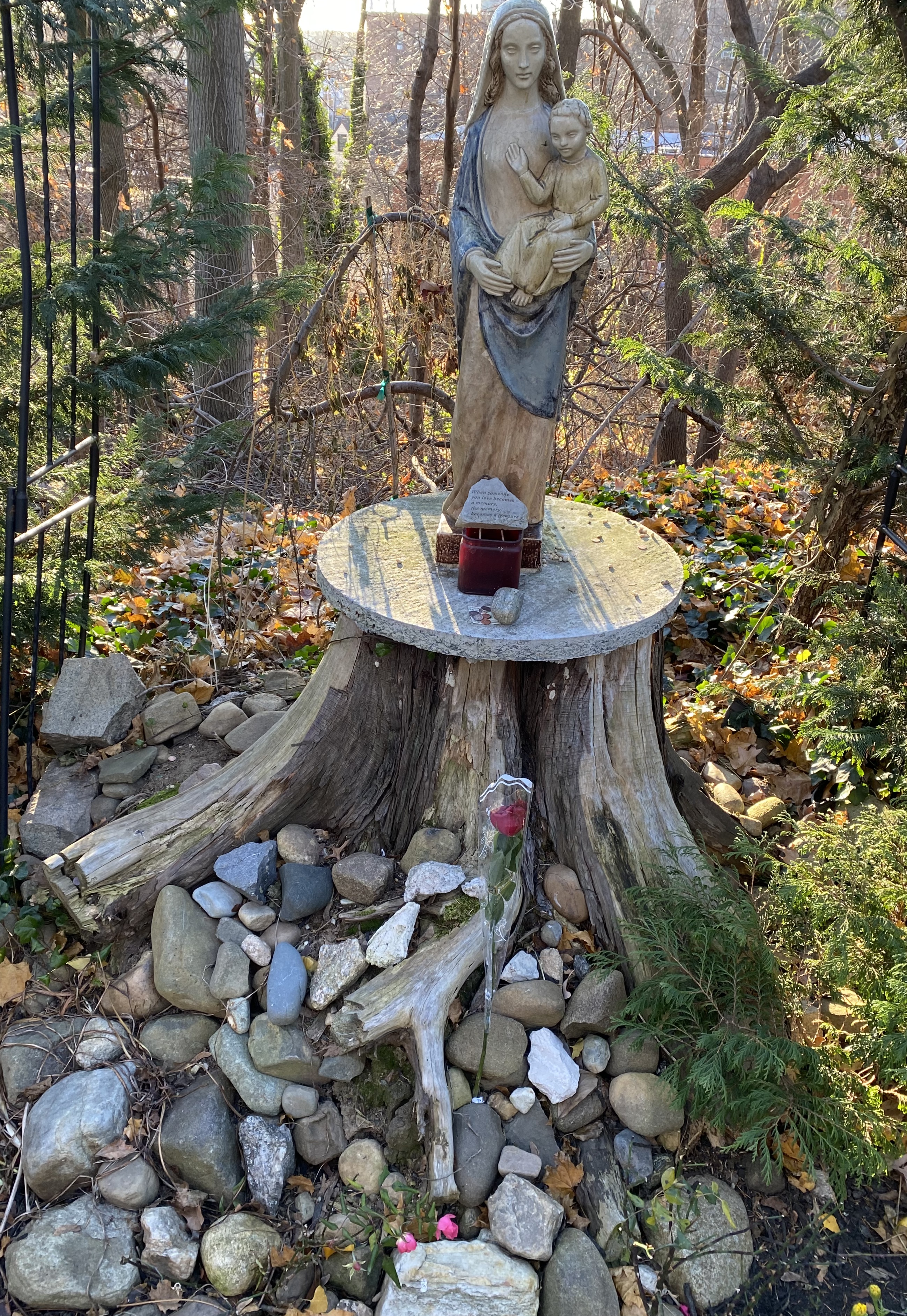
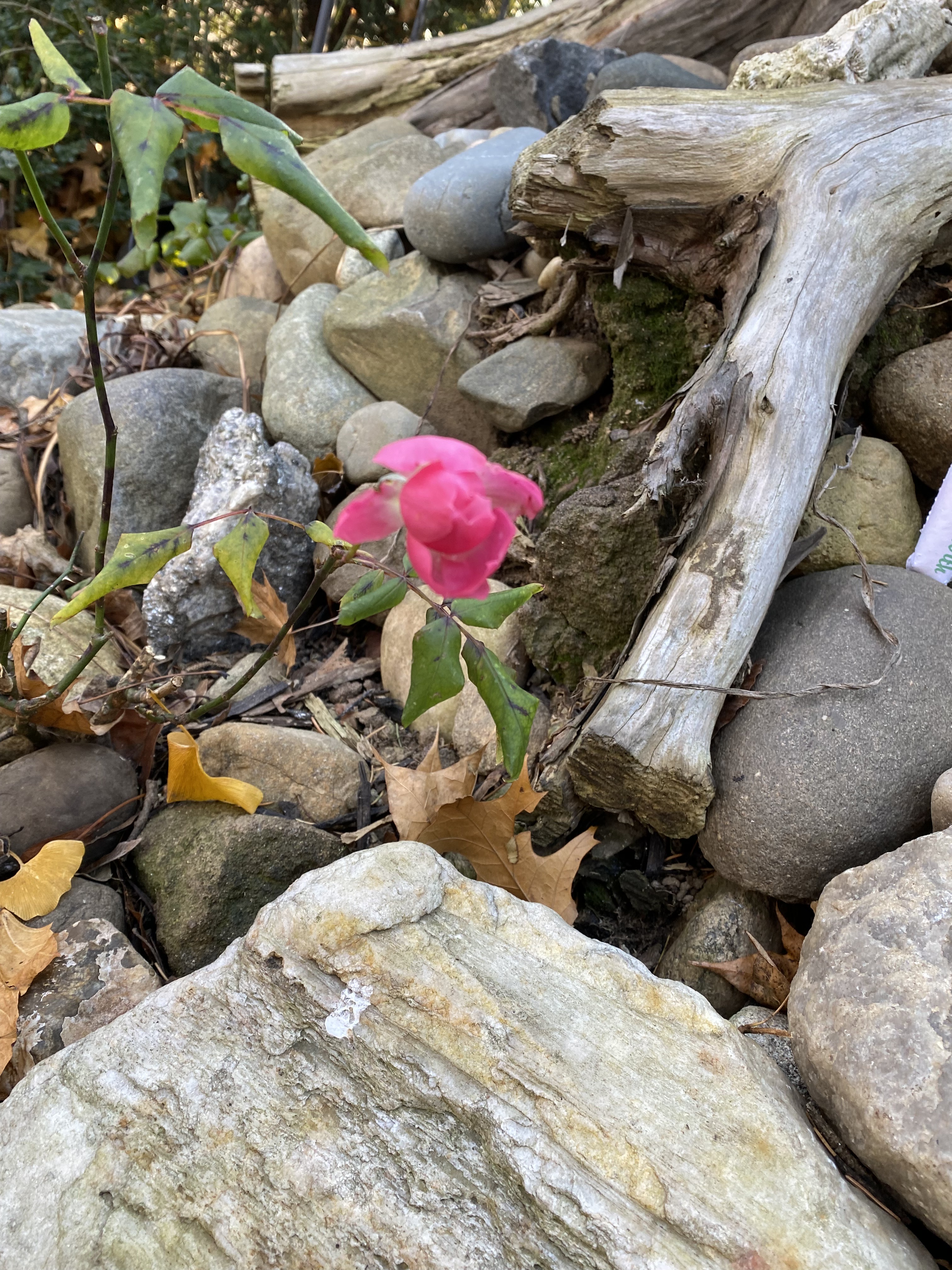
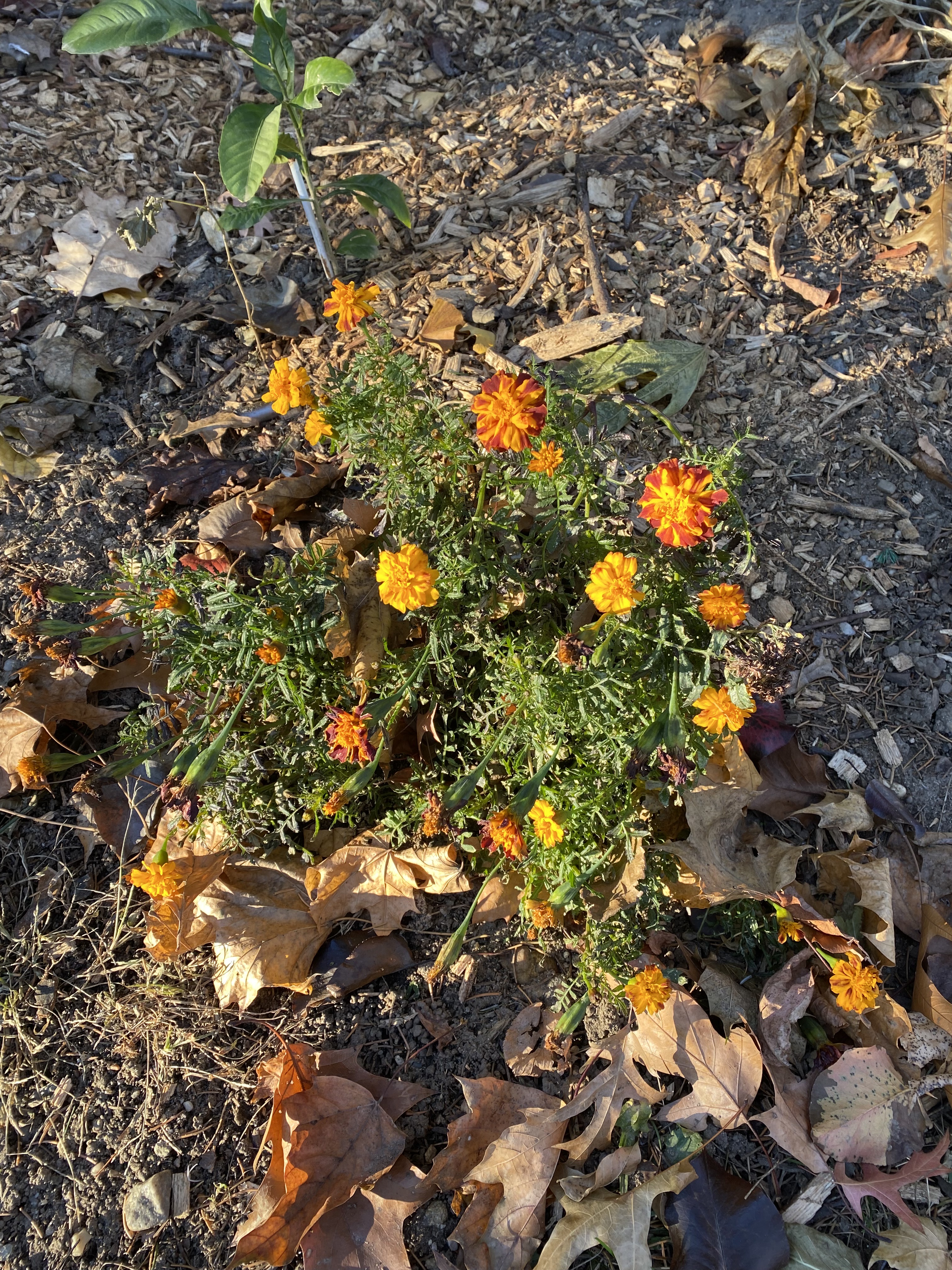
 I went out yesterday to our Mary Garden and, sure enough, a rose was there, in fact a number of them. One brought by someone who came to pray, the others growing in the cold of winter.  I  also noticed some marigolds, “Mary’s gold”,  still there. We feed on centuries of faith during this season.

Brother Michael Stomber says he can’t celebrate Christmas without singing a Christmas carol attributed to the St. John de Brebeauf, the Jesuit martyr who brought faith to the Huron tribes in Ontario, Canada, centuries ago. So I asked him to sing it. Here he is: 

The World Waits for Mary’s Reply

The world waited for Mary's reply, St. Bernard says:
The price of our salvation is offered to you. We shall be set free at once if you consent. In the eternal Word of God we all came to be, and behold, we die. In your brief response we are to be remade in order to be recalled to life.
Tearful Adam with his sorrowing family begs this of you, O loving Virgin, in their exile from Paradise. Abraham begs it, David begs it. All the other holy patriarchs, your ancestors, ask it of you, as they dwell in the country of the shadow of death. This is what the whole earth waits for, prostrate at your feet. It is right in doing so, for on your word depends comfort for the wretched, ransom for the captive, freedom for the condemned, indeed, salvation for all the sons of Adam, the whole of your race.
Answer quickly, O Virgin. Reply in haste to the angel, or rather through the angel to the Lord. Answer with a word, receive the Word of God. Speak your own word, conceive the divine Word. Breathe a passing word, embrace the eternal Word…
And Mary says, ‘I am the handmaid of the Lord. Be it done to me according to your word.'”