Category Archives: Travel

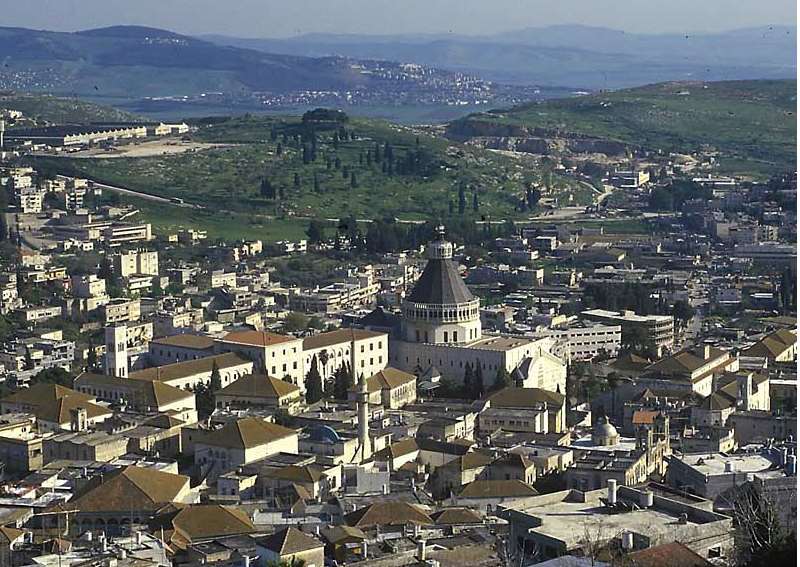
Nazareth: Where Jesus Was Raised


What was Nazareth like? We might think it was a quiet little town far from anywhere else in Jesus’ time; the gospels indicate his early years were spent in such a place.  Recent historical studies tell a different story. The town was not as isolated as once believed.  Just four miles away was the thriving Greco-Roman city of Sepphoris, recently uncovered by archeologists, and nearby were roads to Tiberias, Jerusalem, the sea coast and the rest of the world.

 Galilee’s economy was booming then, thanks to the rich soil of the Esdraelon plains, the fishing villages along the Sea of Galilee, the stability of Roman rule and Herod Antipas, a skillful administrator and builder who was firmly in charge then.  His new regional capital, Tiberias–a model of Greco-Roman city planning– dominated the shores of the Sea of Galilee. A new port, Caesaria Maritima linked Galilee to the rest of the Roman world. 

Could Nazareth, 15 miles east of the Sea of Galilee and 20 miles west of the Mediterranean Sea, situated in a thriving province, be shut off from this world?

How did Jesus get there?

Some historians say Joseph and Mary were not from Nazareth in Galilee, but from Judea.  Matthew’s gospel, in contrast to Luke’s, indicates that Joseph was a Judean associated with Bethlehem, David’s city. Mary’s family may have been associated with the temple in Jerusalem. The Church of St. Ann there claims to mark Mary’s birthplace in that city. 

Another tradition, however, says Mary was born in Sepphoris, near Nazareth. After Jesus’ birth in Bethlehem, the gospels indicate his family moved north to the small town of Nazareth to escape the clutches of Herod the Great, who ordered the slaughter of infants. When Herod died, he was succeeded by his son Archelaeus, who was just as unstable as his father. Herod Antipas, another of Herod’s sons yet slightly less dangerous than Archelaeus, inherited power in Galilee after his father’s death in 6 BC and ruled till about 36 AD, in the lifetime of Jesus. He began building the city of Sepphoris in 3 BC. Workers from nearby Nazareth would likely have been recruited to build that city.

Jesus and his followers rejected

Whatever its history, Nazareth will always be a mystery. Instead of supporting Jesus, the Nazareans turned their backs to him, the gospels say. They drove him out of their synagogue when he announced his mission and said he was mad. (Mt 13,54-58)  After his resurrection, there is no evidence Jesus appeared there; his followers in Nazareth were few. “No prophet is without honor except in his native place,” Jesus said. (Mt 13,54)

A Christian Minority through the Centuries

Followers of Jesus in the town where he was raised continued to be few, it seems. By the time Matthew’s Gospel was written, around the year 90, after the destruction of Jerusalem and the temple in 70 AD,  scribes and temple officials as well as the pharisees from that city had moved to the Galilean cities of Tiberias and Sepphoris, near Nazareth, and began a powerful new movement in Judaism.

Did they drive the followers of Jesus out of the Galilean synagogues just as his contemporaries drove him out of Nazareth?  Matthew’s gospel offers numerous warnings that the disciples would be handed over to the courts and scourged in the synagogues. (cf. Mt 10, 17)

“Slender evidence suggests that a Jewish Christian community survived in Nazareth during the C2 and C3 AD, “ writes Jerome Murphy-O”Connor. (The Holy Land, 423) The nun Egeria, one of the few early Christian visitors to Nazareth, found a cave considered part of Mary’s house in the 4th century,  but she did not stay long in the town.  In 570 AD a pilgrim from Piacenza found Nazareth a hostile place:  “there is no love lost in the town between Christians and Jews.” Two Christian churches were built at that time, but after the Muslim conquest of Palestine in the 7th century the number of Christians in Nazareth declined further and their churches were destroyed.

When the Crusaders conquered the town in the 11th century, they rebuilt the Byzantine shrines and added their own buildings; some remains are visible today. But after the defeat of the Christians in the 12th century, Nazareth once more became a Muslim stronghold and Christians a minority.

Through the ages, the Christian presence in Galilee remained small, dependent mostly on Christian pilgrims to the Holy Land. After the crusades, it was considered dangerous for Christians to enter Nazareth.  In 1620 the Franciscans bought a site in the  town where the house of Mary was said to be and they continued to nourish a Christian presence in the town. Through their efforts the large Basilica of the Annunciation, built over the early Byzantine and Crusader churches and archeological remains from the ancient town, was dedicated in 1968. The Greek Orthodox church also continued its ministry in this revered spot.

Nazareth itself remained poor and undeveloped from the time of Jesus until recently, when it became the provincial capital of Galilee and its population soared. From less than 1,000 inhabitants in Jesus’ time, the number has grown today to 70,000, mostly Muslim.

The large basilica of the Annunciation, with its extensive collection of art from all over the world honoring this mystery, is a gathering place for Catholic pilgrims. Here faith attempts to interpret this mysterious town “where our feeble senses fail.”

19th Century Nazareth

An English vicar left this quaint description  as he approached Nazareth towards the end of the 19th century. Unlike its neighbor, Cana, the town then was experiencing a modest revival:

“Our horses began to climb the steep ascent of 1,000 feet that brings one to the plateau in a fold of which, three miles back among its own hills, lies Nazareth.

“At last, all at once, a small valley opened below, set round with hills, and a pleasant little town appeared to the west. Its straggling houses of white soft limestone, and mostly new, rose row over row up the steep slope. A fine large building,with slender cypresses around it, stood nearest to us; a minaret looked down from the rear.

“Fig trees, single and in clumps, were growing here and there in the valley, which was covered with crops of grain, lentils and beans. Above the town, the hills were steep and high, with thick pasture, sheets of rock, fig trees now and then in an enclosed spot.   Such was Nazareth , the home of our Lord. (p 513)

“The town is only a quarter of a mile long, so that it is a small place, at best; the population made up of about 2,000 Mohammedans, 1,000 Roman Catholics, 2,500 Greek Catholics and 100 Protestants – not quite 6000 in all; but its growth to this size is only recent, for thirty years ago Nazareth was a poor village.”  (p 516)

The Catholic shrines of Nazareth were not among the English vicar’s favorite places to visit, but he does recognize one of the town’s enduring holy places:

“The water of Nazareth is mainly derived from rain-cisterns, for there  is only one spring, and in autumn the supply is precarious. A momentous interest, however, gathers around this single fountain, for it has been in use for immemorial ages, and, no doubt, often saw the Virgin and her Divine Child among those who frequented it morning and evening, as the mothers of the town, many with children at their side, do now.” (p.515)

“The Virgin’s Spring bursts out of the ground inside the Greek Church of the Annunciation, which is modern, though a church stood on the same site at least as early as 700 AD.They say that it was on this spot that the Angel Gabriel appeared to the Virgin; and if there is nothing to prove the legend there is nothing to contradict it.  Indeed, the association of the visit with the outflow of living water from the rock has a certain congruity that is pleasing. “ (p.516)

The Word Made Flesh

Nazareth, where Jesus lived most of his time on earth, offers few traces of the town he knew. Those were hidden years when the Son of God “humbled himself” by living inconspicuously, immersed in the steady, ordinary rhythms of a small 1st century Jewish town.  Jesus “became flesh” in Nazareth,  “one like us in all things but sin.”

Instead of Nazareth of the past, then, we may find him just as well in Nazareth of the present–or in any town or city or anyplace today, for that matter.

Jesus did not come only for the world then, he comes also for the world now, to dwell among us. Nazareth may help us understand the mystery of his Incarnation in our town and place.

Ezekiel, Words for Hard Times

jewsinexile
Jewish captives led to Babylon, 6th century BC


We begin reading the Prophet Ezekiel weekdays at Mass. He was a priest brought captive to Babylon along with King Johoiachin and members of the Jewish elite after the Babylonians crushed the Jewish revolt  in 597 BC. He could be one of those pictured above, on their way to exile .

The Jewish elite taken to Babylon were convinced God would never permit Jerusalem to be destroyed. When it was destroyed, they were just as convinced it would be rebuilt quickly. You’re wrong in both cases, Ezekiel tells them. Jerusalem will be destroyed and it won’t be God’s fault– it’s yours. You are unfaithful leaders.

“Thus says the Lord GOD: Woe to the shepherds of Israel
who have been pasturing themselves!
Should not shepherds, rather, pasture sheep?
You have fed off their milk, worn their wool,
and slaughtered the fatlings,
but the sheep you have not pastured.
You did not strengthen the weak nor heal the sick
nor bind up the injured.”

Jerusalem won’t be restored by your power either, Ezekiel says. It will take time, and it will come in God’s time, not yours, by God’s power, not yours. In the meantime, ask God to take away your hearts of stone and give you natural hearts.

The Jewish leaders didn’t like Ezekiel’s message:

“Son of man, listen! The house of Israel is saying, ‘The vision he sees is a long time off; he prophesies for distant times!’ Say to them therefore: Thus says the Lord GOD: None of my words shall be delayed any longer. Whatever I say is final; it shall be done.”

Hard times lead to impatience, to blaming others, to thinking God is absent, but hard times are blessed times, Ezekiel says, when God is more present than ever. God will save his people.

“Thus says the Lord GOD,”

I swear I am coming… I will claim my sheep…I will save my sheep…
I myself will look after and tend my sheep.” (Ezekiel 34,1-11)

Good words for us today?

A Book for Lent

St. Paul Cross

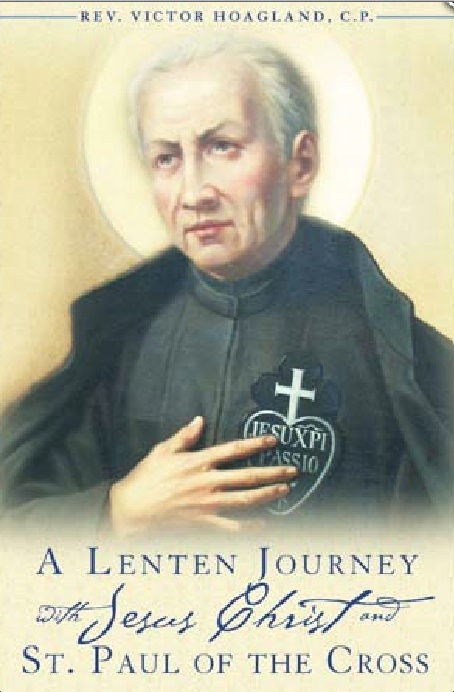
Lent begins next Wednesday, February 14th. Some years ago a publisher asked me to write a book entitled A Lenten Journey with Jesus Christ and St. Paul of the Cross, to be part of a series of reflections on the daily lenten gospels that included thoughts of saints of different religious orders. The book has just been translated into Japanese.

I was initially skeptical about the project. From early on I’ve seen lent as a time to give up something and take up some devotional practice like the Stations of the Cross. Yes, Lent was a journey with Jesus, and I appreciate the daily scriptures that take us through the season with him, but where does a saint come in, even a saint important to me, like St. Paul of the Cross, the 18th century founder of my community the Passionists ?

Working on the book made me see lent differently. First, for St. Paul of the Cross lent was a time to leave the quiet mountain at the edge of the Mediterranean Sea where he lived and prayed and go to work in the Tuscan Maremma, then a swampy, malaria infested region of Italy, overrun with robbers and desperately poor. All through lent, carrying a cross and a bible Paul went from village to village preaching God’s love to people whose lives were often on edge with fear and lost hope.

Lent isn’t a time for turning inward, away from world you live in, Paul reminds me. Lent is a time to go out to the wounded world before you.

Secondly, Paul engaged his world, the world of the Tuscan Maremma, in the light of the gospel, especially the Passion of Jesus Christ. For him that mystery was not limited to a time long ago, when Jesus suffered on a Cross; it was there in the people before him. From village to village, he held up a Cross to anyone who would hear as a mirror of their reality and a pledge of the great mercy of God. Jesus died and rose again.

The Passionists celebrate two feasts immediately before Ash Wednesday to prepare for Lent. Last Friday we celebrated the Commemoration of the Passion of Jesus Christ. Tomorrow, Tuesday before Ash Wednesday, we celebrate the Prayer of Jesus in the Garden. Both feasts come from our missionary founder.

I can see him packing his bags for his lenten journey down the quiet mountain for the villages and towns of the Tuscan Maremma. He must remind himself what he will see. He must pray so he doesn’t forget.

“May the Passion of Jesus Christ be always in our hearts.”

Feast of the Epiphany

For this week’s homily, please play the video below:

The Journey to Jerusalem

Jesus begins to set out for Jerusalem in today’s reading at Mass from the 10th chapter of Mark’s gospel. Matthew offers a similar account in the 19th and 20th chapters of his gospel.

Jesus doesn’t go to Jerusalem alone, he invites others to go with him. It’s a journey to resurrection and life and more than a couple of days, but as they hear Jesus describe the way to Jerusalem, people react like people do,

You can’t miss human weakness in the journey stories of Mark’s and Matthew’s gospel, beginning with the Pharisees. I suppose they represent human doubt and questioning that’s always there. The disciples rebuked the women bringing their children forJesus’ blessing, and Jesus rebukes them. Be like children to make the journey, Jesus tells them.

The rich young man wants to hold on to what he has, so he goes away sad. Peter says proudly he’ s given up everything to follow Jesus, but we know how inconstant he is. The story of the brothers, James and John, is obviously a story of human ambition.

1 Hundred Guilder Print
Rembrandt Hundred Guilder Print

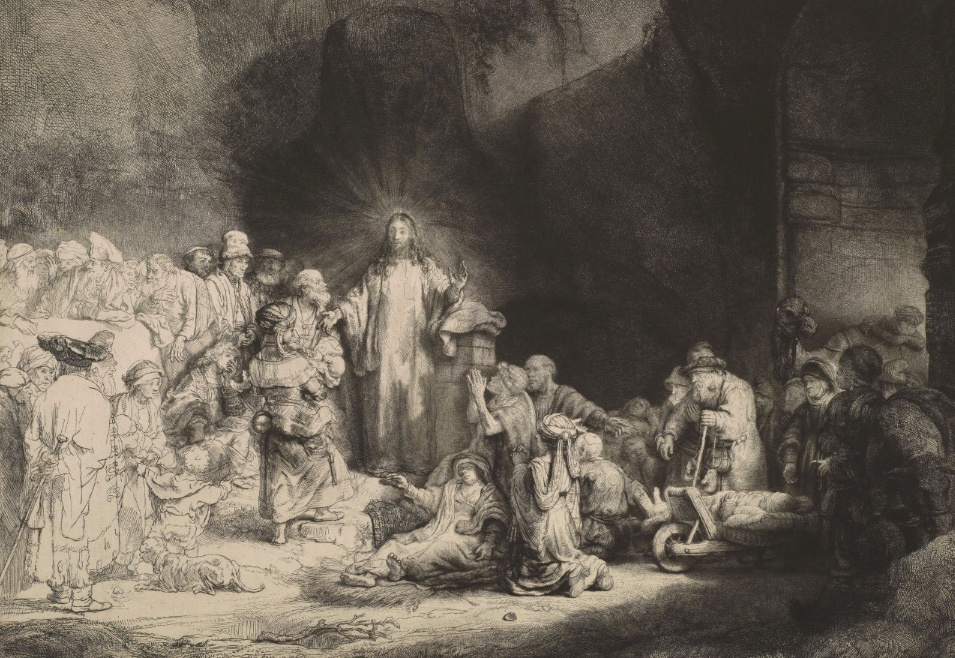
Matthew offers Mark’s stories in chapter 19 and 20 of his gospel. The artist Rembrandt drew a remarkable picture of the 19th and 20th chapter of Matthew called the Hundred Guilder Print.

Jesus stands at the center of Rembrandt’s work, bathed in light, his hands outstretched to the crowds before him.

Peter stands at Jesus right, close by. Other disciples, probably James and John, are next to him. Women and their children, whom the disciples told to go away, are next to them. The rich young man is also there in the crowd. Is he reconsidering?

Some of the enemies of Jesus who plotted against him and argued with him are also there, talking among themselves, but they’re still in the picture. Rembrandt even pictures the camel, back by the city gates.

Jesus sheds his light on them all. His arms are open to them all. Rembrandt has it right. Grace is more powerful than human weakness. It’s everywhere.

Document on Human Fraternity for World Peace and Living Together


Screen Shot 2019-02-06 at 8.49.53 AM

Pope Francis and the Grand Imama of Al-Azhar, Ahmad el-Tayeb,

“Something is happening.” That’s the way the great reading for our Holy Saturday liturgy, taken from an ancient homily, begins. We don’t see clearly yet, but something is happening.

And that’s the way I felt yesterday watching on YouTube a Mass at Abu Dhabi in the United Arab Emirates where more than one hundred thousand Christian migrant workers in the Middle East celebrated their faith with Pope Francis. Christianity is alive in the Middle East.

In the “Document on Human Fraternity for World Peace and Living Together” signed on Monday afternoon in Abu Dhabi by Pope Francis and the Grand Imama of Al-Azhar, Ahmad el-Tayeb, a path for the two religions and the world itself opened. Something is happening.

The document from leaders of these two great religious traditions, Christian and Muslim, is worth reflecting on.

It begins:
“In the name of God who has created all human beings equal in rights, duties and dignity, and who has called them to live together as brothers and sisters, to fill the earth and make known the values of goodness, love and peace,”

The document speaks for innocent human life, the poor, the destitute and the marginalized, the victims of destruction, calamities and war. It invokes the name of freedom, fraternity, peace and justice, the name of all people everywhere:

“In the name of God and of everything stated thus far; Al-Azhar al-Sharif and the Muslims of the East and West, together with the Catholic Church and the Catholics of the East and West, declare the adoption of a culture of dialogue as the path; mutual cooperation as the code of conduct; reciprocal understanding as the method and standard.”

“We, who believe in God and in the final meeting with Him and His judgment, on the basis of our religious and moral responsibility, and through this Document, call upon ourselves, upon the leaders of the world as well as the architects of international policy and world economy, to work strenuously to spread the culture of tolerance and of living together in peace; to intervene at the earliest opportunity to stop the shedding of innocent blood and bring an end to wars, conflicts, environmental decay and the moral and cultural decline that the world is presently experiencing.”

One commentator Tuesday said a meeting like this takes time for its meaning to be felt. “Something is happening.”

17th Sunday: Give Us This Bread

For this week’s homily, please play the video below.

15th Sunday b: Get your Walking Stick!

For this week’s homily, please play the video below.

“Where are you?”


“Where are you?”

I’m beginning a retreat today with the Franciscan Sisters of Christian Charity in Manitowoc, Wisconsin, near Lake Michigan. The sisters have a college and a large motherhouse here. They serve the church as educators and spiritual directors and in health care.

We’re reflecting in the retreat on Pope Francis’ recent exhortation on holiness, Gaudete et exultate. “Where are you?” God asks us:

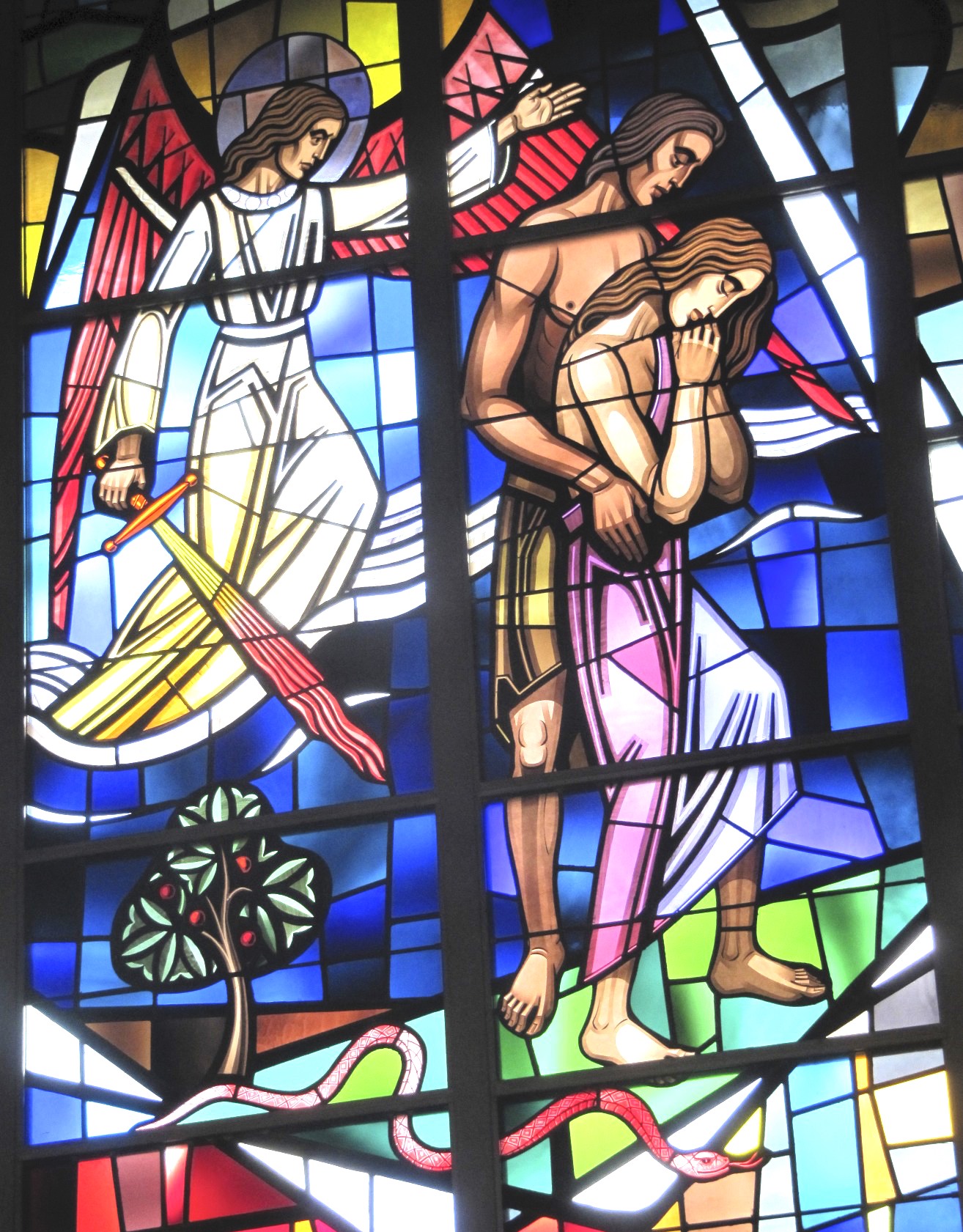
“The LORD God then called to the man and asked him: Where are you? He answered, “I heard you in the garden; but I was afraid, because I was naked, so I hid.” (Genesis 3)
That call of God to Adam is also a call to Eve, to all humanity, to you and me. “Where are you?”
It’s not an angry call that God makes in the garden. In the end there’s mercy.

Yes, man and woman, humanity, you and I, are part of a fallen world and must recognize our nakedness, our nothingness. Before God no one can boast, but addressing the serpent, God announces a merciful redemption:
“I will put enmity between you and the woman,
and between your offspring and hers;
They will strike at your head,
while you strike at their heel.” (Genesis 3, 15)

We’re promised victory in the battle of life.

“Where are you?” God asks. In a retreat we hear that question, try to answer it and wait for the merciful grace of God.

Pray for us.

The Mary Garden

OLYMPUS DIGITAL CAMERA

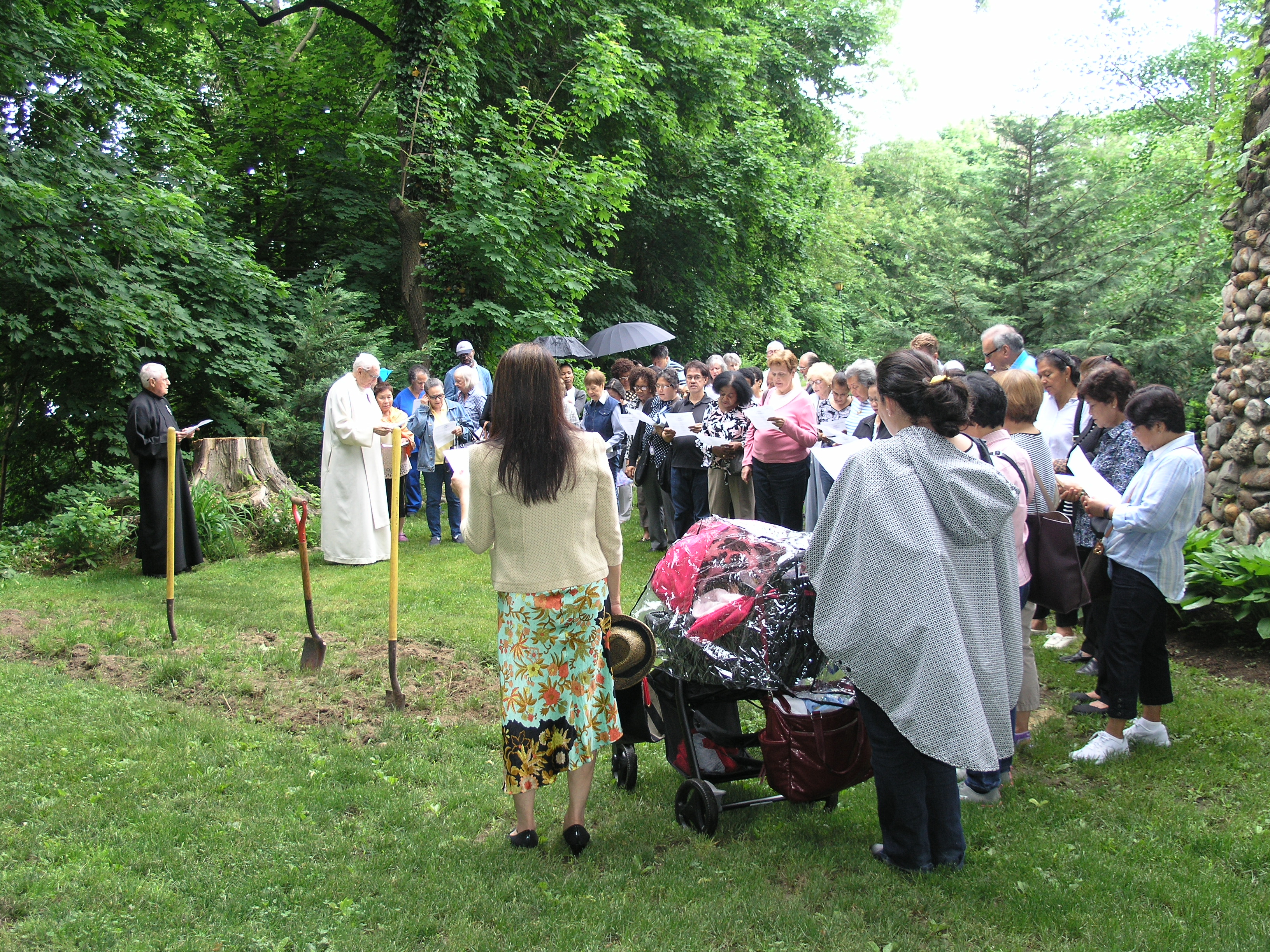
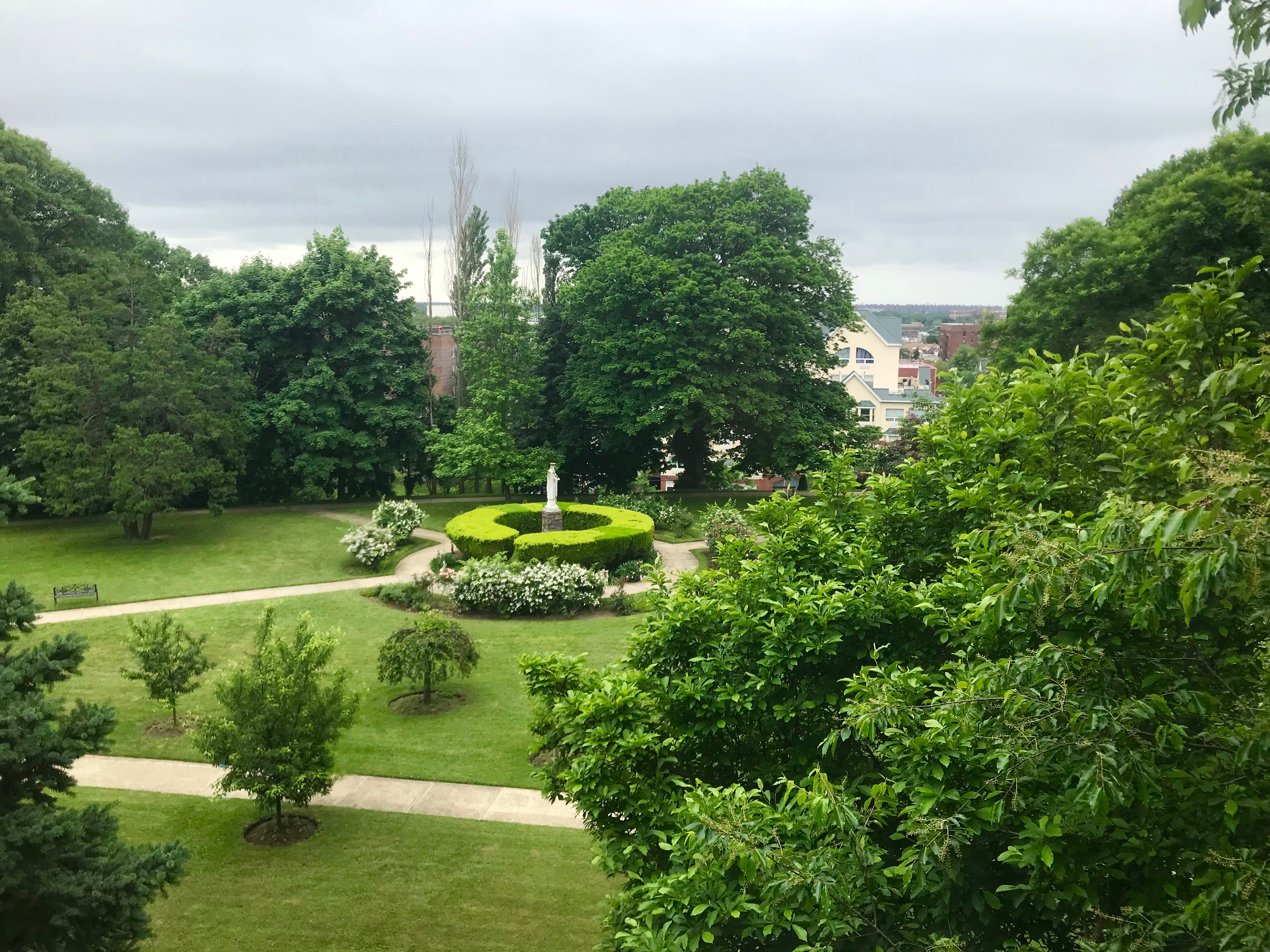
On the Feast of the Visitation of Mary to Elizabeth, May 31, we began our Mary Garden at Immaculate Conception Monastery in Jamaica, New York.

Mary Gardens, dedicated to Mary, the Mother of Jesus, appeared in 14th century Europe following the Black Death, a pandemic that caused millions to die in that part of the world. The gardens, usually found in monasteries and religious shrines, brought hope to people who feared the earth was bringing them death.

God gave Adam and Eve a garden, the Book of Genesis says. (Genesis 2, 8-28) Rising from the dead, Jesus proclaimed eternal life in a garden. (John 20,11-18) For early and medieval Christians, Mary, the Mother of Jesus, was like a garden enclosed, flowers, plants and trees surrounded her, “our life, our sweetness and our hope.” As the “Mother of the living” she brought the promise of life to our world, Jesus, her Son.

Can a Mary Garden bring hope today to our world that faces climate change and environmental degradation? Mary reminds us creation is a gift of God’s love. A Mary Garden teaches reverence for creation, for the soil, for plants that feed and bring us healing, for flowers that nourish our sense of beauty.

Yes, science and technology play their part in an environmental crisis, but faith has a part to play. We’re planting a Mary Garden!

A Reading from the Book of Genesis
This is the story of the heavens and the earth at their creation. When the LORD God made the earth and the heavens there were no plants on the earth, no grass on the fields, for the LORD God had sent no rain and there were no human beings to till the ground, but a stream was welling up out of the earth and watering all the surface of the ground and the LORD God formed a human being out of the dust of the ground and blew into his nostrils the breath of life, and he came to life.
The LORD God planted a garden in Eden, in the east,* and placed there the one whom he had formed… to cultivate and care for it. (Gen 2, 4-15)

Let us Pray

Praise the Lord who is good,
Sing to our God who is loving,
To the Lord our praise is due.

Who covers the heavens with clouds
and prepares the rain for the earth.
And makes mountains sprout with grain
and plants to serve our needs

You know the number of the stars
and call each one by name.
Bless the earth we break open today
O Lord,
to be a garden in praise of your name,
where we honor Mary, the mother of your Son.

We remember your blessings here
which you never cease to send
through Jesus Christ our Lord.